

Multidrug Resistant Bacteria Market Report 2026
Global Outlook – By Disease (Urinary Tract Infection, Intra-Abdominal Infections, Blood Stream Infections, Clostridium Difficile Infections, Acute Bacterial Skin And Skin Structure Infections, Hospital Acquired Bacterial Pneumonia, Acquired Bacterial Pneumonia, Other Diseases), By Drug Class (Oxazolidinones, Lipoglycopeptides, Tetracyclines, Cephalosporins, Combination Therapies, Other Drug Classes), By Route Of Administration (Oral, Parenteral, Other Routes Of Administration), By End-User (Hospitals, Specialty Clinics, Homecare, Other End-Users) – Market Size, Trends, Strategies, and Forecast to 2030
Multidrug Resistant Bacteria Market Overview
• Multidrug Resistant Bacteria market size has reached to $13.27 billion in 2025 • Expected to grow to $18.77 billion in 2030 at a compound annual growth rate (CAGR) of 7.4% • Growth Driver: Surging Prevalence Of Infectious Diseases Accelerates Growth In Multidrug-Resistant Bacteria Market • Market Trend: Innovative Drug Approvals Chart New Course In The Fight Against Multidrug-Resistant Bacteria • North America was the largest region in 2025.What Is Covered Under Multidrug Resistant Bacteria Market?
Multidrug-resistant bacteria refer to strains of bacteria that have developed resistance to multiple types or classes of antibiotics. These bacteria are no longer susceptible to the effects of several different antibiotics that would typically be effective in treating bacterial infections. Multidrug-resistant organisms tend to occur in hospitals and medical care facilities when antibiotics are used for longer than necessary or when they are not needed. The main types of diseases caused by multidrug-resistant bacteria are urinary tract infections, intra-abdominal infections, bloodstream infections, clostridium difficile infections, acute bacterial skin and skin structure infections, hospital-acquired bacterial pneumonia and others. A urinary tract infection refers to an infection that affects any part of the urinary system, which includes the kidneys, bladder and ureters. These diseases can be treated by various drugs, such as oxyazolidinones, lipoglycopeptides, tetracyclines, cephalosporins, combination therapies and others by administering through oral, parenteral and others. The different end-users includes hospitals, specialty clinics, homecare and others.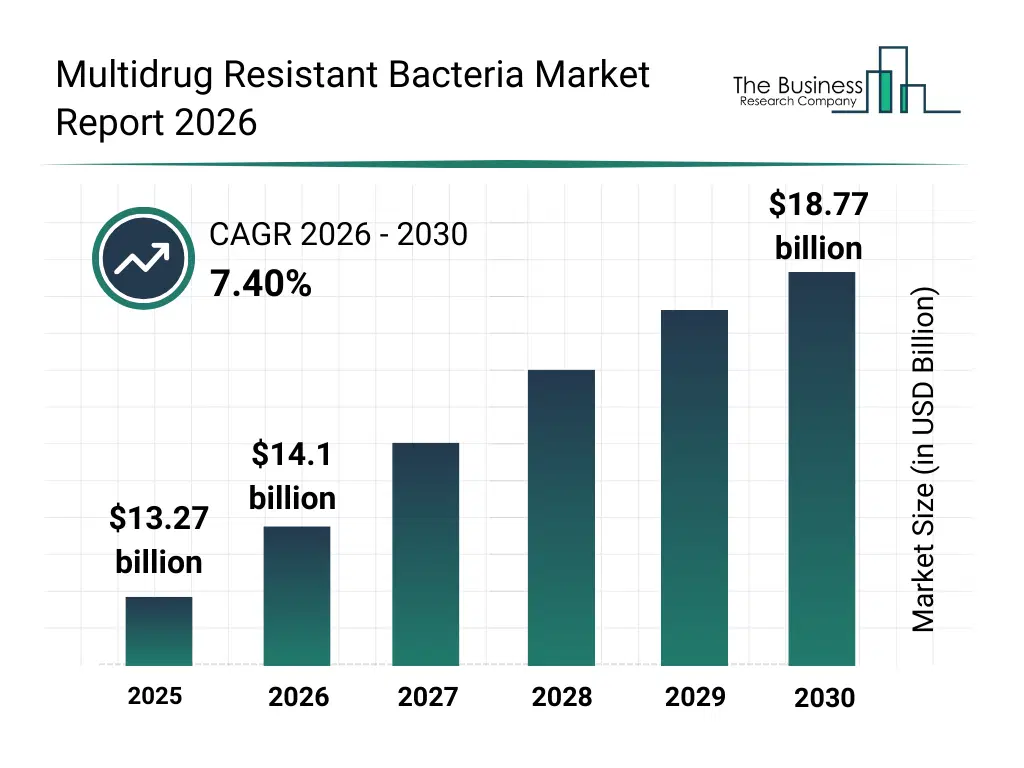
What Is The Multidrug Resistant Bacteria Market Size and Share 2026?
The multidrug resistant bacteria market size has grown strongly in recent years. It will grow from $13.27 billion in 2025 to $14.1 billion in 2026 at a compound annual growth rate (CAGR) of 6.2%. The growth in the historic period can be attributed to overuse of antibiotics in hospitals, inadequate infection control protocols, slow adoption of rapid diagnostics, limited treatment options for resistant strains, high incidence of bloodstream infections.What Is The Multidrug Resistant Bacteria Market Growth Forecast?
The multidrug resistant bacteria market size is expected to see strong growth in the next few years. It will grow to $18.77 billion in 2030 at a compound annual growth rate (CAGR) of 7.4%. The growth in the forecast period can be attributed to increasing investment in antimicrobial R&D, adoption of AI-driven diagnostic tools, development of precision medicine therapies, government initiatives on AMR containment, expansion of homecare and outpatient infection management services. Major trends in the forecast period include rising prevalence of hospital-acquired infections, increasing antibiotic resistance awareness programs, development of novel antibacterial therapies, growth of point-of-care diagnostic technologies, expansion of home healthcare services.
Global Multidrug Resistant Bacteria Market Segmentation
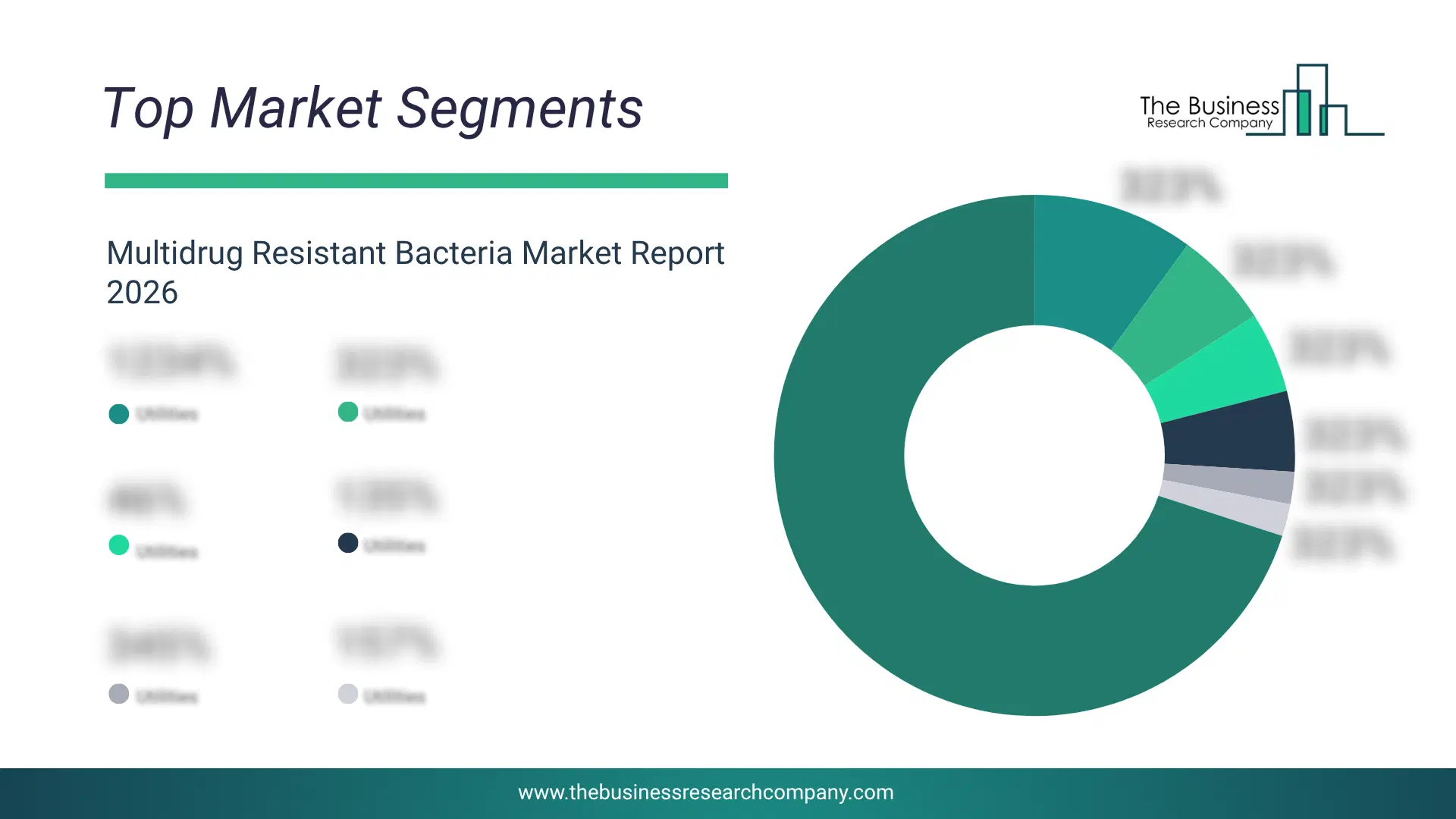
1) By Disease: Urinary Tract Infection, Intra-Abdominal Infections, Blood Stream Infections, Clostridium Difficile Infections, Acute Bacterial Skin And Skin Structure Infections, Hospital Acquired Bacterial Pneumonia, Acquired Bacterial Pneumonia, Other Diseases 2) By Drug Class: Oxazolidinones, Lipoglycopeptides, Tetracyclines, Cephalosporins, Combination Therapies, Other Drug Classes 3) By Route Of Administration: Oral, Parenteral, Other Routes Of Administration 4) By End-User: Hospitals, Specialty Clinics, Homecare, Other End-Users Subsegments: 1) By Urinary Tract Infection: Cystitis, Pyelonephritis 2) By Intra-Abdominal Infections: Appendicitis, Peritonitis 3) By Blood Stream Infections: Bacteremia, Sepsis 4) By Clostridium Difficile Infections: Mild CDI, Severe CDI 5) By Acute Bacterial Skin And Skin Structure Infections: Cellulitis, Abscesses 6) By Hospital Acquired Bacterial Pneumonia: Ventilator-Associated Pneumonia, Hospital-Acquired Pneumonia 7) By Acquired Bacterial Pneumonia: Community-Acquired Pneumonia, Aspiration Pneumonia 8) By Other Diseases: Bone and Joint Infections, EndocarditisWhat Is The Driver Of The Multidrug Resistant Bacteria Market?
The increasing prevalence of infectious diseases is expected to propel the growth of the multidrug-resistant bacteria market going forward. Infectious diseases refer to illnesses brought on by harmful microorganisms, such as bacteria, viruses, fungi, or parasites. Multidrug-resistant bacteria are closely associated with infectious diseases due to their ability to cause infections that are difficult to treat using conventional antibiotics. These bacteria have developed resistance to multiple antibiotics, making them less susceptible to the medications commonly used to combat bacterial infections. For instance, in November 2023, according to an article published by Centers for Disease Control and Prevention, a US-based national public health agency, the number of tuberculosis patients in the USA has increased from 8,320 in 2022 to 9,615 in 2023 indicating an increase of 1,295 cases. Therefore, the increasing prevalence of infectious diseases will drive the multidrug-resistant bacteria market.Key Players In The Global Multidrug Resistant Bacteria Market
Major companies operating in the multidrug resistant bacteria market are Pfizer Inc., Johnson And Johnson Private Limited, F. Hoffmann-La Roche Ltd., Merck And Co. Inc., Bayer AG, Novartis AG, Sanofi S.A., Bristol-Myers Squibb Company, AstraZeneca plc, GlaxoSmithKline plc, Eli Lilly and Company, Boehringer Ingelheim International GmbH, Gilead Sciences Inc., Teva Pharmaceutical Industries Ltd., Mylan N.V., Dr. Reddy's Laboratories Ltd., Lupin Pharmaceuticals Inc., BioMarin Pharmaceuticals Inc., Zydus Lifesciences Limited, Glenmark Pharmaceuticals Ltd., Sun Pharmaceutical Industries Ltd., Alkem Laboratories, Wockhardt Ltd., Basilea Pharmaceutica Ltd., Paratek Pharmaceuticals Inc., Theravance Biopharma Inc., Melinta Therapeutics Inc., Armata Pharmaceuticals Inc., Tetraphase Pharmaceuticals Inc.
This chart is for illustrative purposes; the full report includes a detailed competitor analysis and comprehensive overview of the top 10 companies in the market.
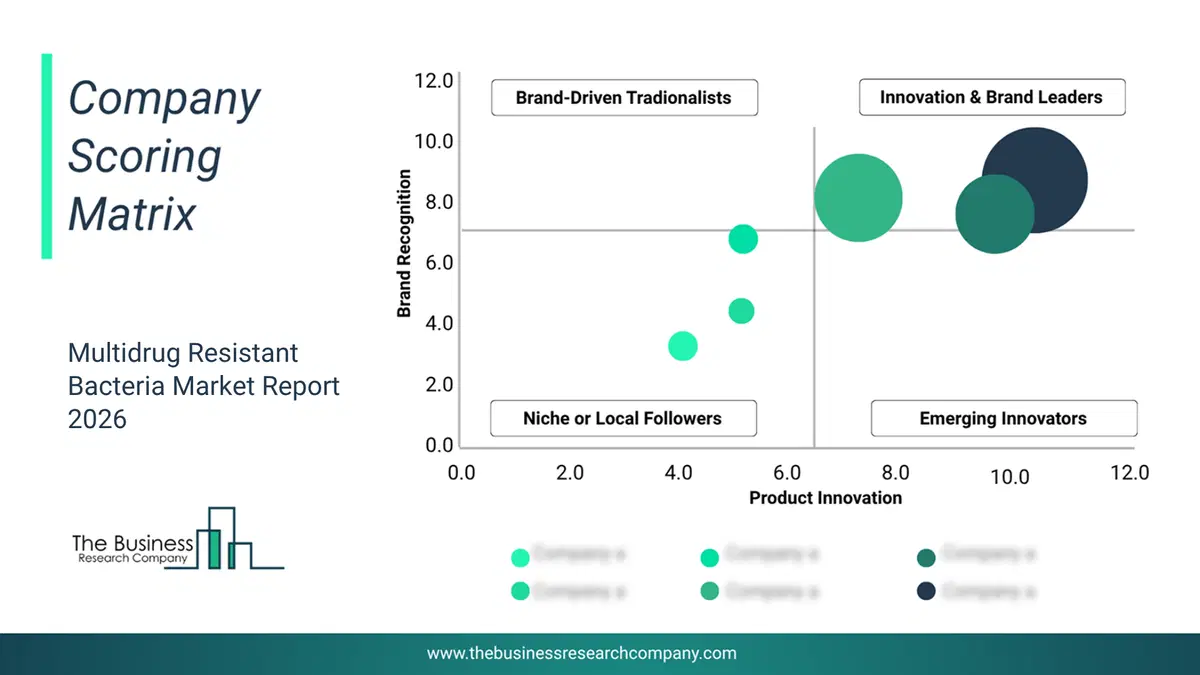
This chart maps companies by product innovation and brand strength, with bubble size indicating relative revenue, helping identify market leaders, challengers, and niche players. This is an illustrative chart; the full report provides a complete and accurate competitive analysis.
Global Multidrug Resistant Bacteria Market Trends and Insights
Major companies operating in the multidrug-resistant bacteria market are focusing on developing innovative drugs and getting approvals to meet the needs of a new segment of consumers. The approval of drugs for multidrug-resistant bacteria is vital to prevent the spread of antibiotic resistance. For instance, in May 2023, Entasis Therapeutics Inc., a US-based biotech company, received Food and Drug Administration (FDA) approval for Xacduor, a combination antibiotic to treat hospital-acquired bacterial pneumonia (HABP) and ventilator-associated bacterial pneumonia (VAP) caused by acinetobacter baumannii. This pathogen can be difficult to treat. It is a combination of ceftolozane and tedizolid phosphate. Ceftolozane is a cephalosporin antibiotic, while tedizolid phosphate is a new one in the oxazolidinone class. Additionally, it provides a new option for patients infected with Acinetobacter baumannii who have not responded to other treatments. It can be used as an injection that combines the antibiotic beta-lactam sulbactam with the beta-lactamase inhibitor broad-spectrum durlobactam, which reduces acinetobacter resistance and allows the antibiotic to work.What Are Latest Mergers And Acquisitions In The Multidrug Resistant Bacteria Market?
In January 2024, Basilea Pharmaceutica Ltd, a Switzerland based biopharmaceutical company, acquired a preclinical antibiotics program from Spexis AG for up to CHF 2 million (≈ US$ 2.2 million). With this acquisition, Basilea aims to strengthen its antimicrobial resistance (AMR) pipeline by adding a novel class of Gram negative antibiotics that directly target multidrug resistant strains, thereby addressing high priority unmet medical needs. Spexis AG is a Switzerland-based biotech company that develops outer membrane protein targeting antibiotics (OMPTA) designed to disrupt lipopolysaccharide transport in Gram-negative bacteria, including multidrug-resistant species.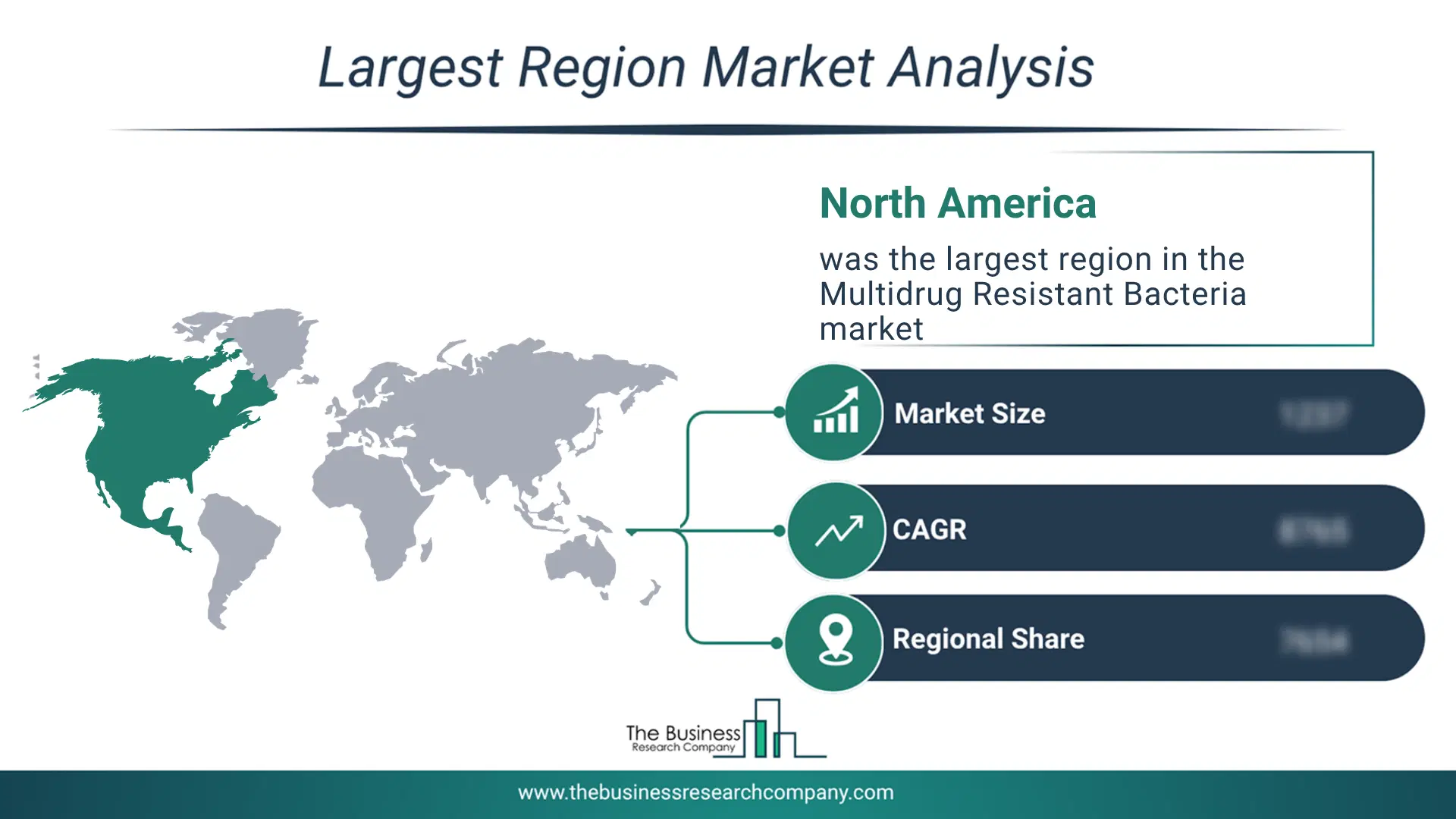
Regional Insights
North America was the largest region in the multidrug-resistant bacteria market in 2025. The regions covered in this market report are Asia-Pacific, South East Asia, Western Europe, Eastern Europe, North America, South America, Middle East, Africa. The countries covered in this market report are Australia, Brazil, China, France, Germany, India, Indonesia, Japan, Taiwan, Russia, South Korea, UK, USA, Canada, Italy, Spain.What Defines the Multidrug Resistant Bacteria Market?
The multidrug-resistant bacteria market consists of revenues earned by entities by providing services such as infection diagnosis and combination therapy, surgery and antimicrobial stewardship. The market value includes the value of related goods sold by the service provider or included within the service offering. The multidrug-resistant bacteria market also consists of sales of colistin, polymyxins, aminoglycosides, antibiotic synergy kits, monoclonal antibodies and vaccines. Values in this market are ‘factory gate’ values, that is the value of goods sold by the manufacturers or creators of the goods, whether to other entities (including downstream manufacturers, wholesalers, distributors and retailers) or directly to end customers. The value of goods in this market includes related services sold by the creators of the goods.How is Market Value Defined and Measured?
The market value is defined as the revenues that enterprises gain from the sale of goods and/or services within the specified market and geography through sales, grants, or donations in terms of the currency (in USD unless otherwise specified). The revenues for a specified geography are consumption values that are revenues generated by organizations in the specified geography within the market, irrespective of where they are produced. It does not include revenues from resales along the supply chain, either further along the supply chain or as part of other products.
This chart presents market attractiveness based on a quantitative evaluation of growth, competition, strategic alignment, and risk, offering a clear view of opportunity areas for decision-making. This chart is for illustrative purposes; the full report contains the complete analysis.

This chart highlights the Total Addressable Market (TAM) by estimating the maximum revenue opportunity using an assumption-driven approach, supporting strategic planning and opportunity sizing across markets. The chart is illustrative; the full report provides a more comprehensive analysis.
What Key Data and Analysis Are Included in the Multidrug Resistant Bacteria Market Report 2026?
The multidrug resistant bacteria market research report is one of a series of new reports from The Business Research Company that provides market statistics, including industry global market size, regional shares, competitors with the market share, detailed market segments, market trends and opportunities, and any further data you may need to thrive in the multidrug resistant bacteria industry. The market research report delivers a complete perspective of everything you need, with an in-depth analysis of the current and future state of the industry.Multidrug Resistant Bacteria Market Report Forecast Analysis
| Report Attribute | Details |
|---|---|
| Market Size Value In 2026 | $14.1 billion |
| Revenue Forecast In 2030 | $18.77 billion |
| Growth Rate | CAGR of 6.2% from 2026 to 2030 |
| Base Year For Estimation | 2025 |
| Actual Estimates/Historical Data | 2020-2025 |
| Forecast Period | 2026 - 2030 |
| Market Representation | Revenue in USD Billion and CAGR from 2026 to 2030 |
| Segments Covered | Disease, Drug Class, Route Of Administration, End-User |
| Regional Scope | Asia-Pacific, Western Europe, Eastern Europe, North America, South America, Middle East, Africa |
| Country Scope | The countries covered in the report are Australia, Brazil, China, France, Germany, India, Indonesia, Japan, Taiwan, Russia, South Korea, UK, USA, Canada, Italy, Spain. |
| Key Companies Profiled | Pfizer Inc., Johnson And Johnson Private Limited, F. Hoffmann-La Roche Ltd., Merck And Co. Inc., Bayer AG, Novartis AG, Sanofi S.A., Bristol-Myers Squibb Company, AstraZeneca plc, GlaxoSmithKline plc, Eli Lilly and Company, Boehringer Ingelheim International GmbH, Gilead Sciences Inc., Teva Pharmaceutical Industries Ltd., Mylan N.V., Dr. Reddy's Laboratories Ltd., Lupin Pharmaceuticals Inc., BioMarin Pharmaceuticals Inc., Zydus Lifesciences Limited, Glenmark Pharmaceuticals Ltd., Sun Pharmaceutical Industries Ltd., Alkem Laboratories, Wockhardt Ltd., Basilea Pharmaceutica Ltd., Paratek Pharmaceuticals Inc., Theravance Biopharma Inc., Melinta Therapeutics Inc., Armata Pharmaceuticals Inc., Tetraphase Pharmaceuticals Inc. |
| Customization Scope | Request for Customization |
| Pricing And Purchase Options | Explore Purchase Options |