
Multimodal Mobility-as-a-Service (MaaS) Platform Market Report 2026
Global Outlook – By Service Type (Ride Hailing, Car Sharing, Bike Sharing, Public Transit, Micro-mobility, Other Service Types), By Solution (Technology Platforms, Payment Engines, Navigation Solutions, Other Solutions), By Application (Urban Mobility, Intercity Travel, Corporate and Employee Mobility, Airport and Tourism Mobility), By End-User (Personal, Business, Government, Other End-Users) – Market Size, Trends, Strategies, and Forecast to 2030
Multimodal Mobility-as-a-Service (MaaS) Platform Market Overview
• Multimodal Mobility-as-a-Service (MaaS) Platform market size has reached to $18.07 billion in 2025 • Expected to grow to $55.48 billion in 2030 at a compound annual growth rate (CAGR) of 25.2% • Growth Driver: Growing Smartphone Penetration And Mobile Application Usage Fueling The Growth Of The Market Due To Demand For Real-time Journey Planning And Booking • Market Trend: Innovations In Multimodal Mobility-As-A-Service (MaaS) Platforms Enhance Integrated Urban Transport And Demand-Responsive Transit (DRT) Efficiency • Asia-Pacific was the largest region and fastest growing region.What Is Covered Under Multimodal Mobility-as-a-Service (MaaS) Platform Market?
A multimodal mobility-as-a-service (MaaS) platform is a centralized digital system that connects various transport options within a single application. It allows users to seamlessly plan routes, compare options, book services, and make unified payments across multiple mobility providers. A multimodal mobility-as-a-service (MaaS) platform’s core objective is to streamline urban travel, improve accessibility and efficiency, minimize dependence on private vehicles, and promote more sustainable and integrated transportation networks. The main service types of the multimodal mobility-as-a-service (MaaS) platform market include ride hailing, car sharing, bike sharing, public transit, micro-mobility, and other service types. Ride hailing refers to an on-demand transportation service that allows passengers to book rides with nearby drivers through a mobile application. The solutions include technology platforms, payment engines, navigation solutions, and other solutions. The applications include urban mobility, intercity travel, corporate and employee mobility, and airport and tourism mobility with key end-users that include personal, business, government, and others.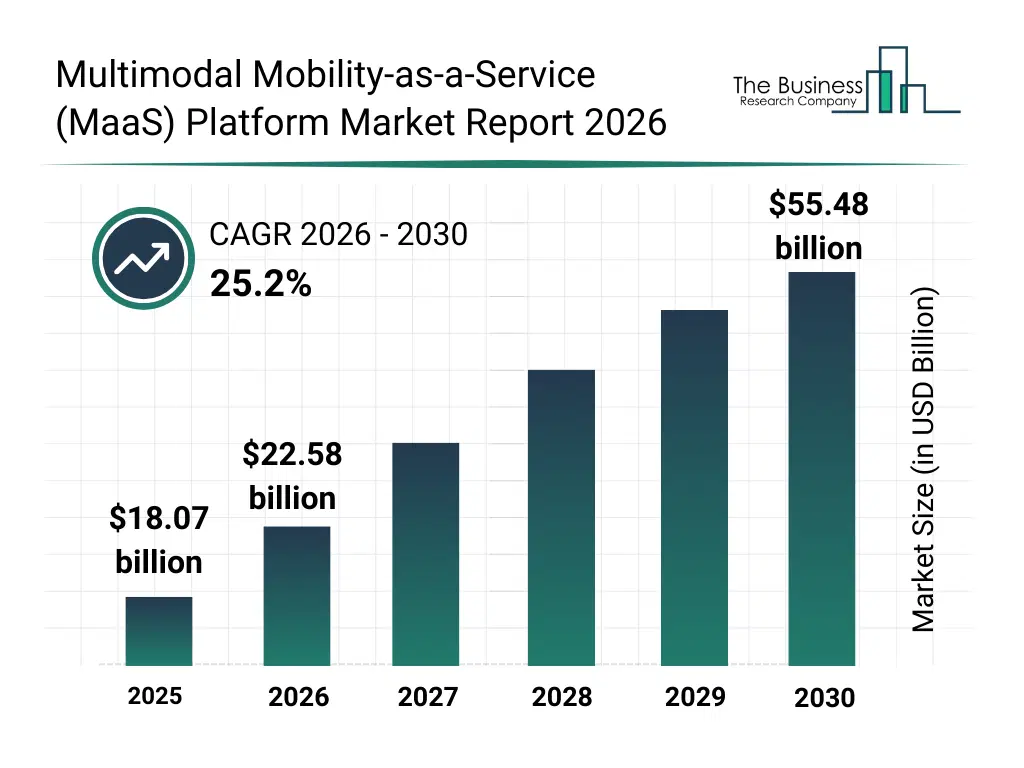
What Is The Multimodal Mobility-as-a-Service (MaaS) Platform Market Size and Share 2026?
The multimodal mobility-as-a-service (maas) platform market size has grown exponentially in recent years. It will grow from $18.07 billion in 2025 to $22.58 billion in 2026 at a compound annual growth rate (CAGR) of 25.0%. The growth in the historic period can be attributed to increasing urbanization rates, rising smartphone penetration, growing traffic congestion in metropolitan cities, expansion of shared mobility services, government initiatives promoting public transit integration.What Is The Multimodal Mobility-as-a-Service (MaaS) Platform Market Growth Forecast?
The multimodal mobility-as-a-service (maas) platform market size is expected to see exponential growth in the next few years. It will grow to $55.48 billion in 2030 at a compound annual growth rate (CAGR) of 25.2%. The growth in the forecast period can be attributed to growing smart city development projects, increasing adoption of EV fleets in shared mobility, rising demand for subscription-based mobility services, expansion of 5G-enabled mobility platforms, growing emphasis on low-carbon urban transport systems. Major trends in the forecast period include increasing adoption of unified ticketing and fare integration, growing integration of multi-provider payment gateways, rising demand for real-time vehicle availability monitoring, expansion of carbon footprint tracking features, increasing focus on seamless intermodal route planning.
Global Multimodal Mobility-as-a-Service (MaaS) Platform Market Segmentation
1) By Service Type: Ride Hailing, Car Sharing, Bike Sharing, Public Transit, Micro-mobility, Other Service Types 2) By Solution: Technology Platforms, Payment Engines, Navigation Solutions, Other Solutions 3) By Application: Urban Mobility, Intercity Travel, Corporate and Employee Mobility, Airport and Tourism Mobility 4) By End-User: Personal, Business, Government, Other End-Users Subsegments: 1) By Ride Hailing: On-Demand Rides, Scheduled or Pre-Booked Rides, Shared or Pooled Rides, Premium or Luxury Rides, Corporate or Business Rides, Electric or Eco-Friendly Rides, Accessible or Special-Needs Rides 2) By Car Sharing: Free-Floating Car Sharing, Station-Based Car Sharing, Peer-to-Peer (P2P) Car Sharing, Short-Term Car Sharing, Long-Term or Subscription-Based Car Sharing, Electric Vehicle Car Sharing, Corporate or Enterprise Car Sharing 3) By Bike Sharing: Docked Bike Sharing, Dockless Bike Sharing, Electric Bike (E-Bike) Sharing, Conventional Bike Sharing, Subscription-Based Bike Sharing, Tourist or Leisure Bike Sharing, Campus or Community Bike Sharing 4) By Public Transit: Bus Services, Metro or Subway Services, Light Rail or Tram Services, Commuter Rail, Ferry or Water Transit, Demand-Responsive Transit, Paratransit Services 5) By Micro-mobility: E-Scooter Sharing, Electric Bike Sharing, Electric Moped Sharing, Sit-Down Scooter Sharing, Dockless Micro-mobility, Subscription-Based Micro-mobility, Last-Mile Micro-mobility 6) By Other Service Types: On-Demand Shuttle Services, Carpool or Vanpool Services, Corporate Mobility Services, School or Campus Mobility, Tourism and Sightseeing Mobility, Logistics and Delivery Mobility, Event-Based or Temporary MobilityWhat Is The Driver Of The Multimodal Mobility-as-a-Service (MaaS) Platform Market?
The growing smartphone penetration and mobile application usage are expected to propel the growth of the multimodal mobility-as-a-service (MaaS) platform market going forward. Smartphone penetration and mobile application usage refer to the widespread ownership of internet-enabled smartphones and the frequency with which users rely on mobile apps for daily services, communication, transactions, and real-time information access. Smartphone penetration and mobile application usage are increasing due to the widespread availability of affordable smartphones and low-cost internet access, driving higher adoption of digital mobility and on-demand service platforms. High smartphone penetration and frequent mobile application usage enable MaaS platforms to deliver real-time journey planning, seamless booking and payments, and personalized multimodal travel experiences at scale through a single digital interface. For instance, in February 2023, according to the GSM Association (GSMA), a UK-based industry organization that represents the interests of mobile network operators and companies, smartphone penetration in sub-Saharan Africa is projected to rise significantly, reaching 87% by 2030, up from 51% in 2022, reflecting rapid digital adoption across the region. Therefore, the growing smartphone penetration and mobile application usage are driving the growth of the multimodal mobility-as-a-service (MaaS) platform industry.Key Players In The Global Multimodal Mobility-as-a-Service (MaaS) Platform Market
Major companies operating in the multimodal mobility-as-a-service (MaaS) platform market are Uber Technologies Inc., Transdev Group SA, Siemens Mobility GmbH, Hitachi Rail STS S.p.A., Grab Holdings Limited, Bolt Technology OÜ, Via Transportation, Masabi Ltd, Mobimeo GmbH, PT GoTo Gojek Tokopedia Tbk, Ridango AS, FOD Mobility Group Limited, Cubic Transportation Systems Inc., Fostering Mobility S.L., IoMob Technologies S.L., SkedGo Pty Ltd, RideAmigos Inc., Asia Mobiliti, Xplor Rides Private Limited, and UbiGo Innovation AB.
This chart is for illustrative purposes; the full report includes a detailed competitor analysis and comprehensive overview of the top 10 companies in the market.
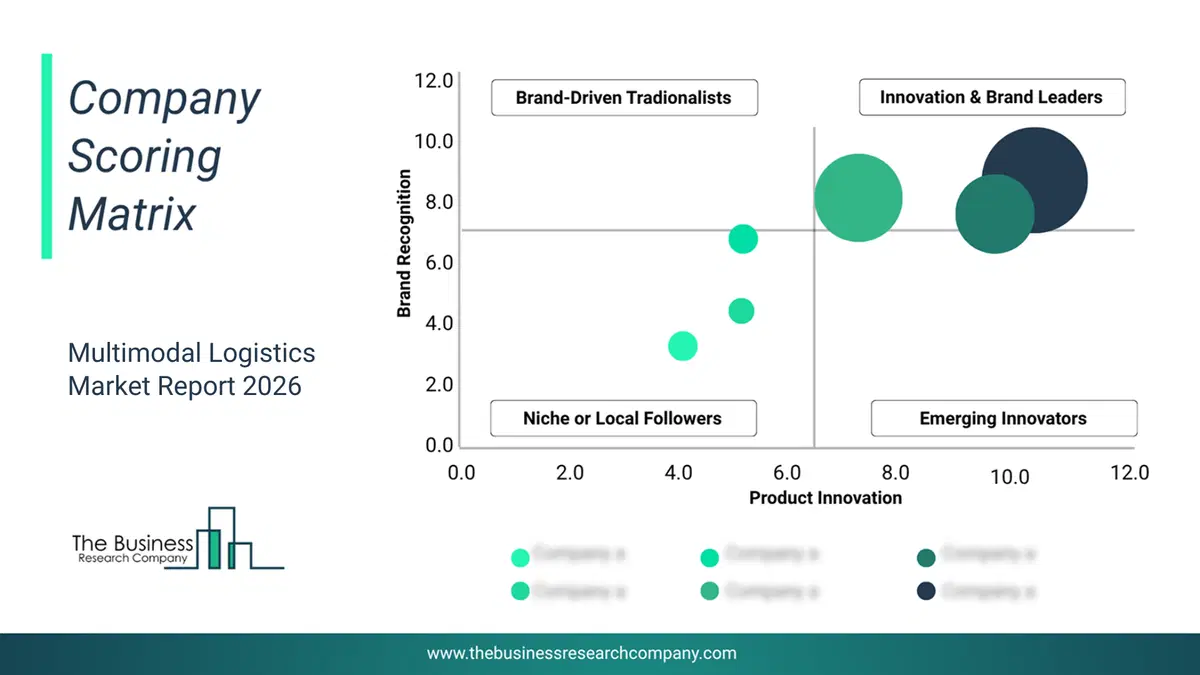
This chart maps companies by product innovation and brand strength, with bubble size indicating relative revenue, helping identify market leaders, challengers, and niche players. This is an illustrative chart; the full report provides a complete and accurate competitive analysis.
Global Multimodal Mobility-as-a-Service (MaaS) Platform Market Trends and Insights
Major companies operating in the multimodal mobility-as-a-service (MaaS) platform market are focusing on developing advanced solutions such as the Multimodal MaaS App to integrate journey planning, ticketing, real-time transit updates, and payment services into a single digital interface. A multimodal mobility-as-a-service (MaaS) app is a digital platform that integrates multiple transportation modes and enables users to plan, book, manage, and pay for end-to-end journeys seamlessly across different transport providers within one application. For instance, in March 2024, Asia Mobiliti, a Malaysia-based digital mobility platform provider, launched multimodal journey planning and ticketing in the Trek app, a multimodal mobility-as-a-service (MaaS) app. The platform enables users to seamlessly plan, book, and pay for journeys across multiple transport modes, including public transit, shared mobility, and on-demand services through a unified digital interface. It integrates real-time routing, ticketing, and demand-responsive transport management and enhances urban transport coordination, optimizes fleet utilization, and supports sustainable mobility initiatives across Southeast Asian cities.What Are Latest Mergers And Acquisitions In The Multimodal Mobility-as-a-Service (MaaS) Platform Market?
In April 2024, umob, a Netherlands-based provider of a Mobility-as-a-Service (MaaS) platform, acquired MaaS Global Ltd for an undisclosed amount. With this acquisition, umob aimed to accelerate its global scaling by integrating MaaS Global’s decade of multimodal mobility experience and technology into its platform. MaaS Global Ltd is a Finland-based provider of the Whim app, a pioneering integrated mobility service that allows users to plan, book, and pay for multiple transport modes via a single interface.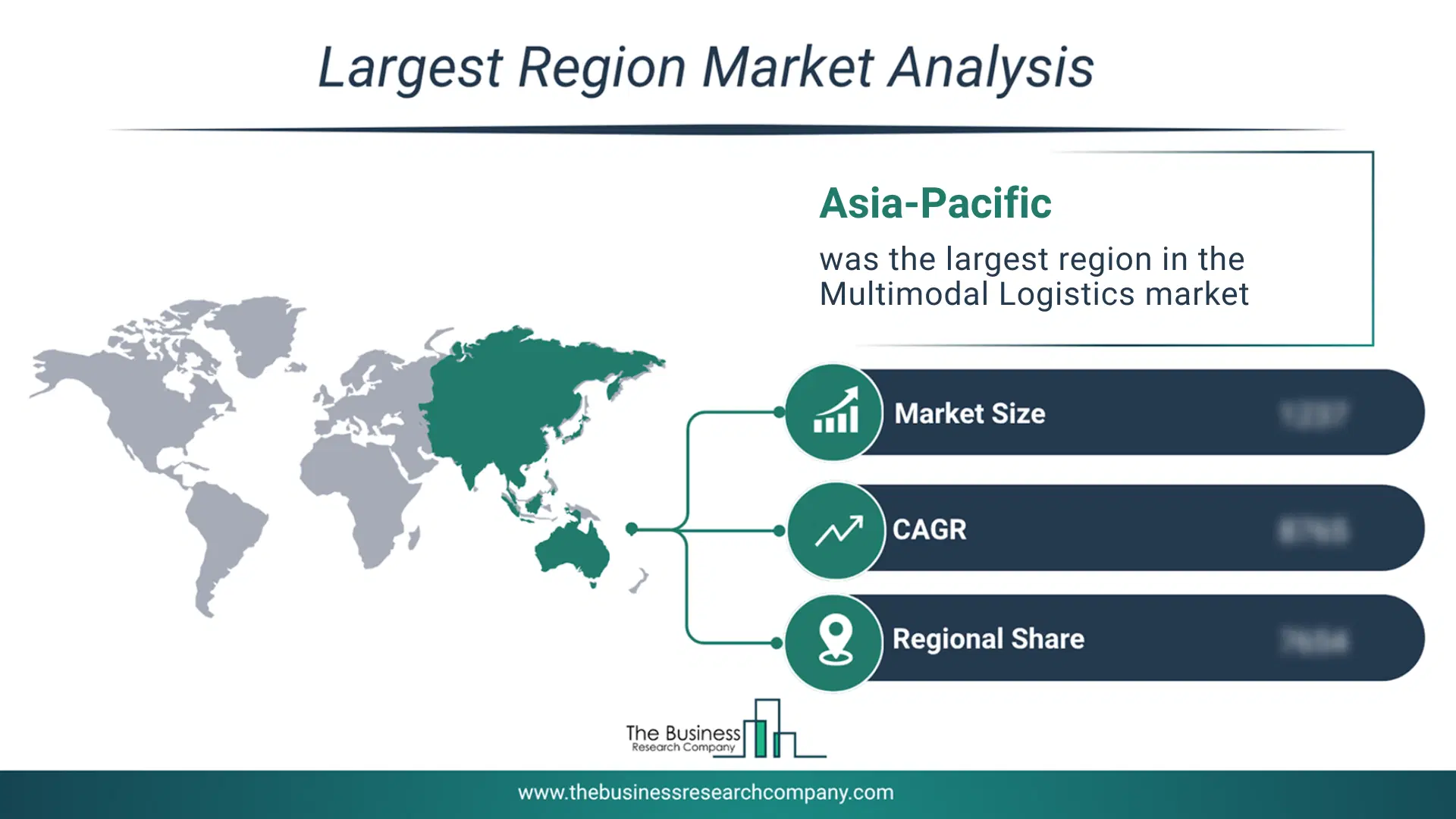
Regional Insights
Asia-Pacific was the largest region in the multimodal mobility-as-a-service (MaaS) platform market in 2025. Asia-Pacific is expected to be the fastest-growing region in the forecast period. The regions covered in this market report are Asia-Pacific, South East Asia, Western Europe, Eastern Europe, North America, South America, Middle East, Africa. The countries covered in this market report are Australia, Brazil, China, France, Germany, India, Indonesia, Japan, Taiwan, Russia, South Korea, UK, USA, Canada, Italy, Spain.What Defines the Multimodal Mobility-as-a-Service (MaaS) Platform Market?
The multimodal mobility-as-a-service (MaaS) platform market consists of revenues earned by entities by providing services such as unified ticketing and fare management, carbon footprint tracking, vehicle availability monitoring, sustainable route suggestions, and payment integration. The market value includes the value of related goods sold by the service provider or included within the service offering. The multimodal mobility-as-a-service (MaaS) platform market also includes sales of open payment gateways, mobility analytics, and navigation engines. Values in this market are ‘factory gate’ values; that is, the value of goods sold by the manufacturers or creators of the goods, whether to other entities (including downstream manufacturers, wholesalers, distributors, and retailers) or directly to end customers. The value of goods in this market includes related services sold by the creators of the goods.How is Market Value Defined and Measured?
The market value is defined as the revenues that enterprises gain from the sale of goods and/or services within the specified market and geography through sales, grants, or donations in terms of the currency (in USD unless otherwise specified). The revenues for a specified geography are consumption values that are revenues generated by organizations in the specified geography within the market, irrespective of where they are produced. It does not include revenues from resales along the supply chain, either further along the supply chain or as part of other products.
This chart presents market attractiveness based on a quantitative evaluation of growth, competition, strategic alignment, and risk, offering a clear view of opportunity areas for decision-making. This chart is for illustrative purposes; the full report contains the complete analysis.

This chart highlights the Total Addressable Market (TAM) by estimating the maximum revenue opportunity using an assumption-driven approach, supporting strategic planning and opportunity sizing across markets. The chart is illustrative; the full report provides a more comprehensive analysis.
What Key Data and Analysis Are Included in the Multimodal Mobility-as-a-Service (MaaS) Platform Market Report 2026?
The multimodal mobility-as-a-service (MaaS) platform market research report is one of a series of new reports from The Business Research Company that provides multimodal mobility-as-a-service (MaaS) platform market statistics, including multimodal mobility-as-a-service (MaaS) platform industry global market size, regional shares, competitors with a multimodal mobility-as-a-service (MaaS) platform market share, detailed multimodal mobility-as-a-service (MaaS) platform market segments, market trends and opportunities, and any further data you may need to thrive in the multimodal mobility-as-a-service (MaaS) platform industry. This multimodal mobility-as-a-service (MaaS) platform market research report delivers a complete perspective of everything you need, with an in-depth analysis of the current and future scenario of the industry.Multimodal Mobility-as-a-Service (MaaS) Platform Market Report Forecast Analysis
| Report Attribute | Details |
|---|---|
| Market Size Value In 2026 | $22.58 billion |
| Revenue Forecast In 2030 | $55.48 billion |
| Growth Rate | CAGR of 25.2% from 2026 to 2030 |
| Base Year For Estimation | 2025 |
| Actual Estimates/Historical Data | 2020-2025 |
| Forecast Period | 2026 - 2030 |
| Market Representation | Revenue in USD Billion and CAGR from 2026 to 2030 |
| Segments Covered | Service Type, Solution, Application, End-User |
| Regional Scope | Asia-Pacific, Western Europe, Eastern Europe, North America, South America, Middle East, Africa |
| Country Scope | The Countries Covered In This Market Report Are Australia, Brazil, China, France, Germany, India, Indonesia, Japan, Taiwan, Russia, South Korea, Uk, Usa, Canada, Italy, Spain. |
| Key Companies Profiled | Uber Technologies Inc., Transdev Group SA, Siemens Mobility GmbH, Hitachi Rail STS S.p.A., Grab Holdings Limited, Bolt Technology OÜ, Via Transportation, Masabi Ltd, Mobimeo GmbH, PT GoTo Gojek Tokopedia Tbk, Ridango AS, FOD Mobility Group Limited, Cubic Transportation Systems Inc., Fostering Mobility S.L., IoMob Technologies S.L., SkedGo Pty Ltd, RideAmigos Inc., Asia Mobiliti, Xplor Rides Private Limited, and UbiGo Innovation AB. |
| Customization Scope | Request for Customization |
| Pricing And Purchase Options | Explore Purchase Options |