

Multiple Sclerosis Treatment Market Report 2026
Global Outlook – By Treatment Type (Immunomodulators, Corticosteroids, Symptomatic Treatments, Monoclonal Antibodies, Oral Therapies), By DiseaseType (Clinically Isolated Syndrome, Relapse-Remitting Multiple Sclerosis, Primary Progressive Multiple Sclerosis, Secondary Progressive Multiple Sclerosis), By Route Of Administration (Oral, Injectable, Intravenous), By Distribution Channel (Hospital Pharmacies, Retail Pharmacies, Online Pharmacies), By End-Users (Hospitals, Specialty Clinics, Homecare, Other End-Users) – Market Size, Trends, Strategies, and Forecast to 2030
Multiple Sclerosis Treatment Market Overview
• Multiple Sclerosis Treatment market size has reached to $26.13 billion in 2025 • Expected to grow to $33.02 billion in 2030 at a compound annual growth rate (CAGR) of 4.7% • Growth Driver: The Growing Prevalence Of Neurological Disorders Drives The Growth Of The Market Due To Increasing Incidence Of Age-Related Conditions • Market Trend: Advancements In Monoclonal Antibody Therapies Are Transforming Multiple Sclerosis Treatment Outcomes • North America was the largest region in 2025 and Asia-Pacific is the fastest growing region.What Is Covered Under Multiple Sclerosis Treatment Market?
Multiple sclerosis (MS) treatment refers to the medical strategies and therapies used to manage the symptoms, slow the progression, and improve the quality of life for people with multiple sclerosis, a chronic autoimmune disease that affects the central nervous system. It includes disease-modifying therapies (DMTs) and symptomatic treatments to address fatigue, muscle spasms, and mobility challenges. These treatments aim to support neurological function and improve the patient's overall quality of life. The main types of multiple sclerosis treatment are immunomodulators, corticosteroids, symptomatic therapies, monoclonal antibodies, and oral therapies. Immunomodulators are drugs that alter immune activity to reduce inflammation and MS relapses, with common examples including interferon beta and glatiramer acetate. The various diseases include clinically isolated syndrome, relapse-remitting multiple sclerosis, primary progressive multiple sclerosis, and secondary progressive multiple sclerosis. These treatments are administered via oral, injectable, or intravenous routes and are distributed through various distribution channels such as hospital pharmacies, retail pharmacies, and online pharmacies, serving end users including hospitals, specialty clinics, homecare settings, and others.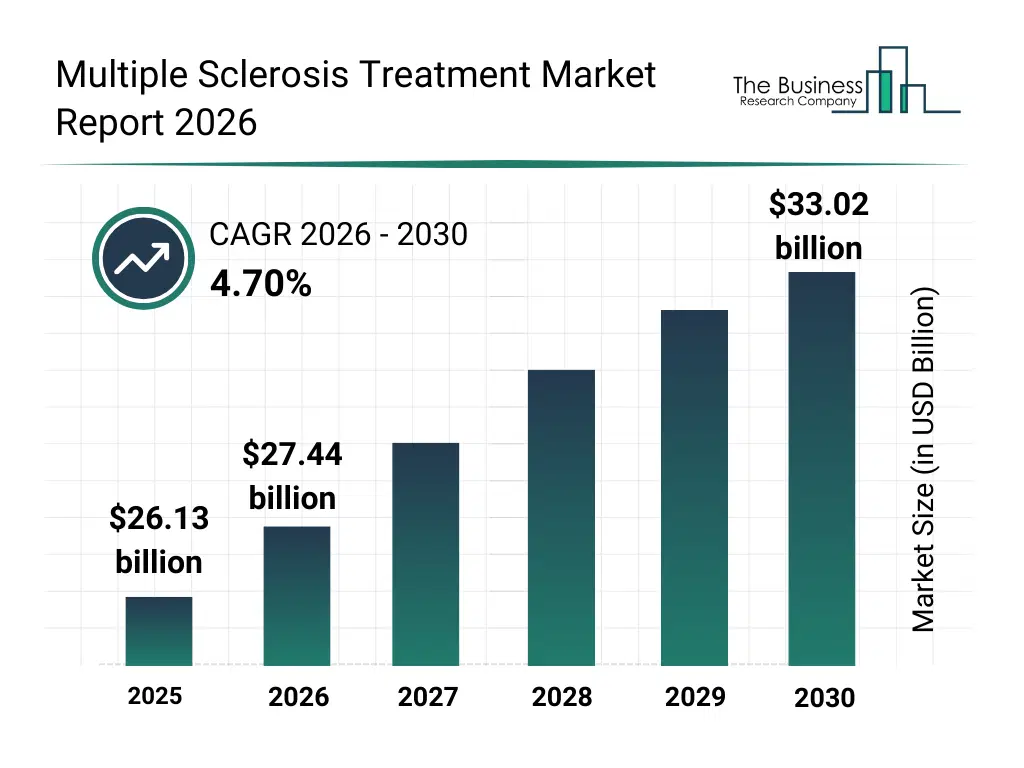
What Is The Multiple Sclerosis Treatment Market Size and Share 2026?
The multiple sclerosis treatment market size has grown strongly in recent years. It will grow from $26.13 billion in 2025 to $27.44 billion in 2026 at a compound annual growth rate (CAGR) of 5.0%. The growth in the historic period can be attributed to autoimmune disease research, injectable ms therapies, neurology clinic expansion, hospital-based treatment, biologics development.What Is The Multiple Sclerosis Treatment Market Growth Forecast?
The multiple sclerosis treatment market size is expected to see steady growth in the next few years. It will grow to $33.02 billion in 2030 at a compound annual growth rate (CAGR) of 4.7%. The growth in the forecast period can be attributed to oral therapy adoption, home-based ms care, long-term disease management, advanced imaging diagnostics, personalized immunotherapy. Major trends in the forecast period include expansion of disease-modifying therapies, growth of oral ms medications, increased focus on early diagnosis, rising use of monoclonal antibodies, personalized treatment approaches.
Global Multiple Sclerosis Treatment Market Segmentation
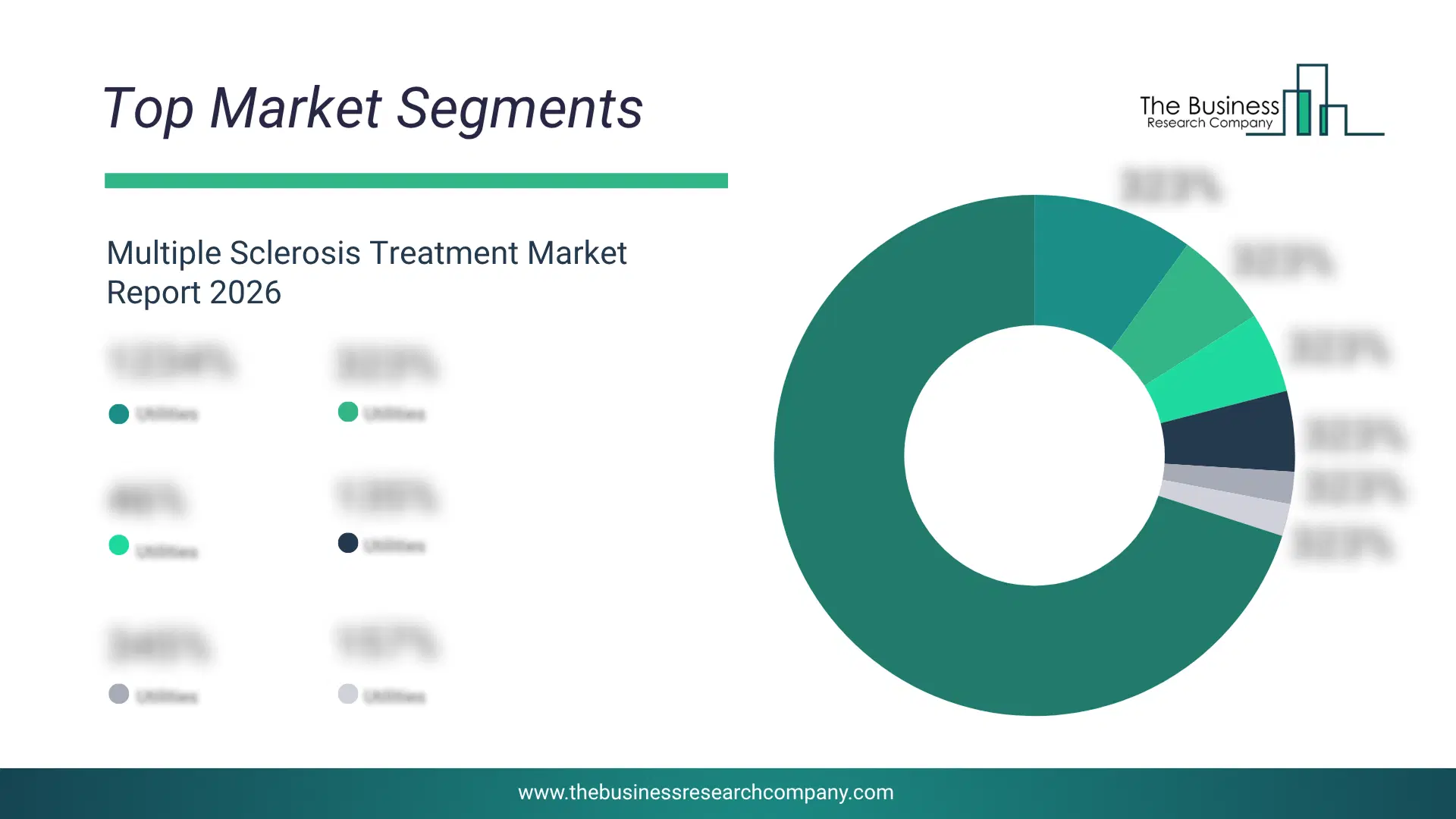
1) By Treatment Type: Immunomodulators, Corticosteroids, Symptomatic Treatments, Monoclonal Antibodies, Oral Therapies 2) By DiseaseType: Clinically Isolated Syndrome, Relapse-Remitting Multiple Sclerosis, Primary Progressive Multiple Sclerosis, Secondary Progressive Multiple Sclerosis 3) By Route Of Administration: Oral, Injectable, Intravenous 4) By Distribution Channel: Hospital Pharmacies, Retail Pharmacies, Online Pharmacies 5) By End-Users: Hospitals, Specialty Clinics, Homecare, Other End-Users Subsegments: 1) By Immunomodulators: Interferon Beta-1A, Interferon Beta-1B, Glatiramer Acetate 2) By Corticosteroids: Methylprednisolone, Prednisone, Dexamethasone 3) By Symptomatic Treatments: Muscle Relaxants, Antidepressants, Anticonvulsants, Bladder Dysfunction Drugs 4) By Monoclonal Antibodies: Natalizumab, Ocrelizumab, Alemtuzumab, Ofatumumab 5) By Oral Therapies: Fingolimod, Dimethyl Fumarate, Teriflunomide, Cladribine, SiponimodWhat Is The Driver Of The Multiple Sclerosis Treatment Market?
The growing prevalence of neurological disorders is expected to propel the growth of the multiple sclerosis treatment market going forward. Neurological disorders are medical conditions that affect the brain, spinal cord, and nerves throughout the body, leading to problems with movement, communication, behavior, or bodily functions. The rise in neurological disorders is due to an aging population, as longer lifespans increase the risk of age-related conditions such as Alzheimer’s. Multiple sclerosis treatment helps manage neurological disorders by targeting the immune system to reduce inflammation, prevent nerve damage, and alleviate symptoms, thereby improving the quality of life for patients. For instance, in October 2023, according to the World Federation of Neurology, a UK-based association of national neurological societies, more than 40% of the global population currently experiences some form of neurological condition, and this burden is expected to nearly double by 2050. Therefore, the growing prevalence of neurological disorders is driving the growth of the multiple sclerosis treatment industry.Key Players In The Global Multiple Sclerosis Treatment Market
Major companies operating in the multiple sclerosis treatment market are Biogen Inc., F. Hoffmann-La Roche Ltd, Novartis AG, Bayer AG, Teva Pharmaceutical Industries Ltd, Sanofi Genzyme, Merck KGaA, Bristol Myers Squibb, AbbVie Inc., Johnson & Johnson (Janssen), TG Therapeutics Inc., Acorda Therapeutics Inc., Takeda Pharmaceutical Company Ltd, Mitsubishi Tanabe Pharma Corporation, Chugai Pharmaceutical Co. Ltd., Pfizer Inc., Almirall S.A., Otsuka Pharmaceutical Co. Ltd., Apitope International NV, BrainStorm Cell Therapeutics Inc., Roche Diagnostics, InnoCare Pharma, NervGen Pharma Corp., Receptos Inc., Biogen Idec International GmbH, MedDay Pharmaceuticals SA, Genentech Inc., Roche Holding AG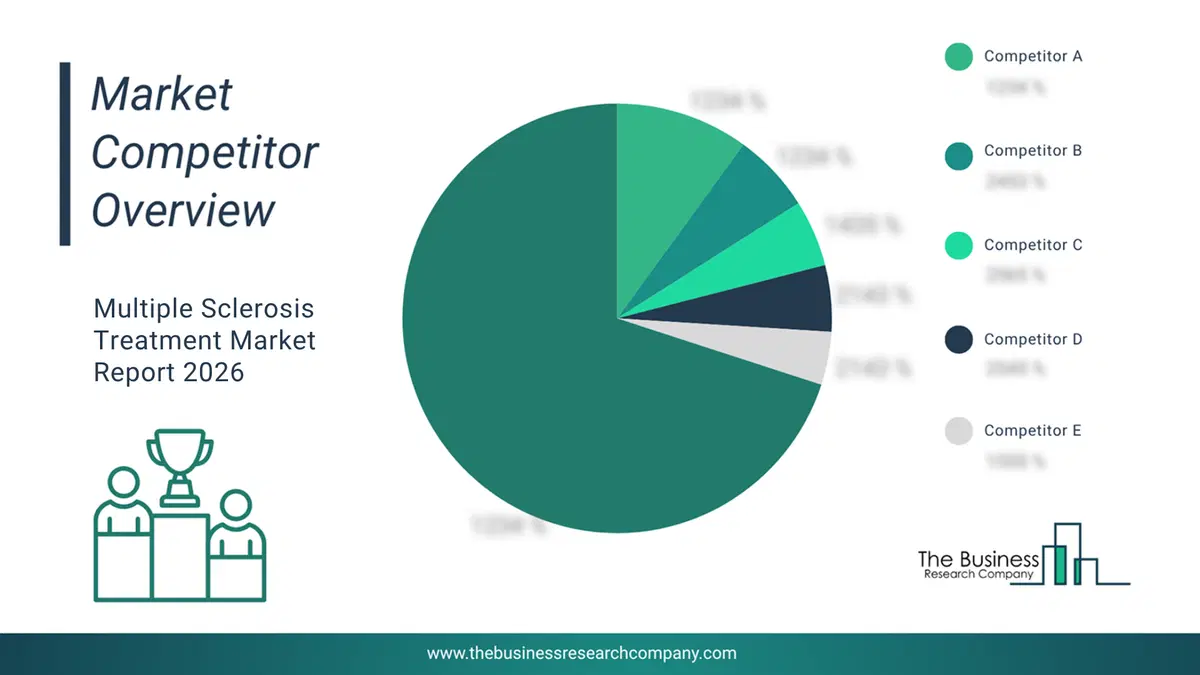
This chart is for illustrative purposes; the full report includes a detailed competitor analysis and comprehensive overview of the top 10 companies in the market.
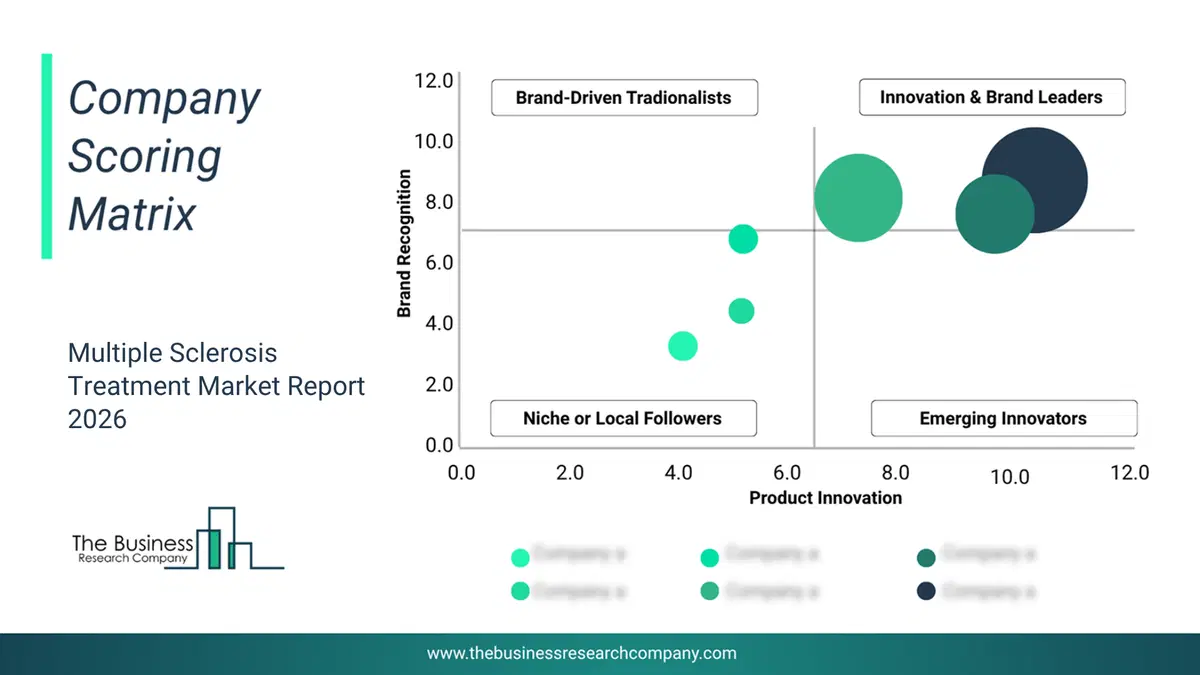
This chart maps companies by product innovation and brand strength, with bubble size indicating relative revenue, helping identify market leaders, challengers, and niche players. This is an illustrative chart; the full report provides a complete and accurate competitive analysis.
Global Multiple Sclerosis Treatment Market Trends and Insights
Major companies operating in the multiple sclerosis treatment market are developing advanced products, such as monoclonal antibody drugs, to enhance treatment efficacy and improve patient outcomes. Monoclonal antibody drugs refer to laboratory-made molecules designed to target specific antigens, and in multiple sclerosis, they help by reducing inflammation and preventing immune cells from attacking the nerve fibers, thereby managing disease progression. For instance, in February 2024, Roche Pharma India, an India-based pharmaceutical company, introduced Ocrevus (Ocrelizumab) for treating multiple sclerosis (MS). These drug targets CD20-positive B cells, helping to reduce inflammation and nerve damage in MS. It is the first approved therapy for both relapsing and primary progressive forms of MS, significantly decreasing relapse rates and slowing disability progression with the convenience of twice-yearly infusions.What Are Latest Mergers And Acquisitions In The Multiple Sclerosis Treatment Market?
In March 2024, Juvisé Pharmaceuticals, a France-based pharmaceutical company, acquired the multiple sclerosis drug from Actelion Pharmaceuticals Ltd. for an undisclosed amount. With the acquisition, Juvisé Pharmaceuticals aims to expand its neurology portfolio outside the US and Canada while simultaneously opening its capital to Bpifrance and Pemberton to support future growth initiatives. Actelion Pharmaceuticals Ltd. is a Switzerland-based pharmaceutical company that is actively involved in the treatment of multiple sclerosis.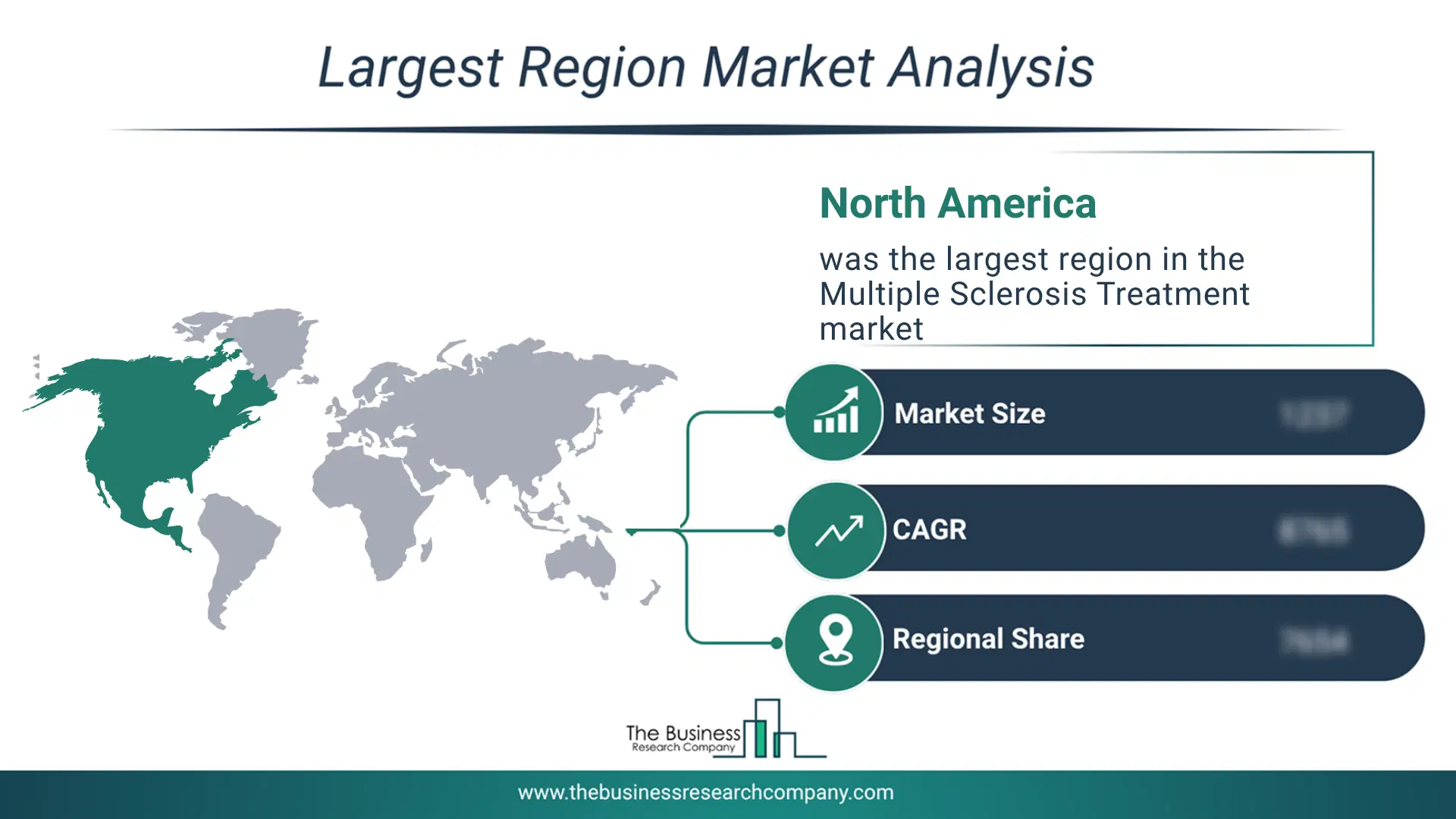
Regional Insights
North America was the largest region in the multiple sclerosis treatment market in 2025. Asia-Pacific is expected to be the fastest-growing region in the forecast period. The regions covered in this market report are Asia-Pacific, South East Asia, Western Europe, Eastern Europe, North America, South America, Middle East, Africa. The countries covered in this market report are Australia, Brazil, China, France, Germany, India, Indonesia, Japan, Taiwan, Russia, South Korea, UK, USA, Canada, Italy, Spain.What Defines the Multiple Sclerosis Treatment Market?
The multiple sclerosis treatment market consists of sales of products including disease-modifying therapies, synthetic polypeptides, cannabinoid-based therapies, interferon beta products, and plasma exchange. Values in this market are ‘factory gate’ values, that is, the value of goods sold by the manufacturers or creators of the goods, whether to other entities (including downstream manufacturers, wholesalers, distributors, and retailers) or directly to end customers. The value of goods in this market includes related services sold by the creators of the goods.How is Market Value Defined and Measured?
The market value is defined as the revenues that enterprises gain from the sale of goods and/or services within the specified market and geography through sales, grants, or donations in terms of the currency (in USD unless otherwise specified). The revenues for a specified geography are consumption values that are revenues generated by organizations in the specified geography within the market, irrespective of where they are produced. It does not include revenues from resales along the supply chain, either further along the supply chain or as part of other products.
This chart presents market attractiveness based on a quantitative evaluation of growth, competition, strategic alignment, and risk, offering a clear view of opportunity areas for decision-making. This chart is for illustrative purposes; the full report contains the complete analysis.

This chart highlights the Total Addressable Market (TAM) by estimating the maximum revenue opportunity using an assumption-driven approach, supporting strategic planning and opportunity sizing across markets. The chart is illustrative; the full report provides a more comprehensive analysis.
What Key Data and Analysis Are Included in the Multiple Sclerosis Treatment Market Report 2026?
The multiple sclerosis treatment market research report is one of a series of new reports from The Business Research Company that provides market statistics, including industry global market size, regional shares, competitors with the market share, detailed market segments, market trends and opportunities, and any further data you may need to thrive in the multiple sclerosis treatment industry. The market research report delivers a complete perspective of everything you need, with an in-depth analysis of the current and future state of the industry.Multiple Sclerosis Treatment Market Report Forecast Analysis
| Report Attribute | Details |
|---|---|
| Market Size Value In 2026 | $27.44 billion |
| Revenue Forecast In 2030 | $33.02 billion |
| Growth Rate | CAGR of 5.0% from 2026 to 2030 |
| Base Year For Estimation | 2025 |
| Actual Estimates/Historical Data | 2020-2025 |
| Forecast Period | 2026 - 2030 |
| Market Representation | Revenue in USD Billion and CAGR from 2026 to 2030 |
| Segments Covered | Treatment Type, DiseaseType, Route Of Administration, Distribution Channel, End-Users |
| Regional Scope | Asia-Pacific, Western Europe, Eastern Europe, North America, South America, Middle East, Africa |
| Country Scope | The countries covered in the report are Australia, Brazil, China, France, Germany, India, Indonesia, Japan, Taiwan, Russia, South Korea, UK, USA, Canada, Italy, Spain. |
| Key Companies Profiled | Biogen Inc., F. Hoffmann-La Roche Ltd, Novartis AG, Bayer AG, Teva Pharmaceutical Industries Ltd, Sanofi Genzyme, Merck KGaA, Bristol Myers Squibb, AbbVie Inc., Johnson & Johnson (Janssen), TG Therapeutics Inc., Acorda Therapeutics Inc., Takeda Pharmaceutical Company Ltd, Mitsubishi Tanabe Pharma Corporation, Chugai Pharmaceutical Co. Ltd., Pfizer Inc., Almirall S.A., Otsuka Pharmaceutical Co. Ltd., Apitope International NV, BrainStorm Cell Therapeutics Inc., Roche Diagnostics, InnoCare Pharma, NervGen Pharma Corp., Receptos Inc., Biogen Idec International GmbH, MedDay Pharmaceuticals SA, Genentech Inc., Roche Holding AG |
| Customization Scope | Request for Customization |
| Pricing And Purchase Options | Explore Purchase Options |