
Muscle Spasticity Market Report 2026
Global Outlook – By Drug Type (Baclofen, Botulinum Toxin, Diazepam, Dantrolene Sodium, Other Drugs), By Route Of Administration (Oral, Intramuscular, Other Routes Of Administrations), By Distribution Channel (Hospital Pharmacies, Retail Pharmacies, Online Pharmacies) - Market Size, Trends, Strategies, and Forecast to 2030
Muscle Spasticity Market Overview
• Muscle Spasticity market size has reached to $4.55 billion in 2025 • Expected to grow to $6.91 billion in 2030 at a compound annual growth rate (CAGR) of 8.7% • Growth Driver: Impact Of Rising Musculoskeletal Disorders On The Muscle Pain Treatment Market • Market Trend: Development of Baclofen Oral Suspension for Muscle Spasticity • North America was the largest region in 2025 and Asia-Pacific is the fastest growing region.What Is Covered Under Muscle Spasticity Market?
Muscle spasticity is a condition characterized by an abnormal increase in muscle tone or stiffness, which can interfere with movement and speech. It is often a result of damage to the brain or spinal cord that controls voluntary muscle movement. The main types of drugs in the muscle spasticity market are baclofen, botulinum toxin, diazepam, dantrolene sodium, and others. The various routes of administration include oral, intramuscular, and others, and several distribution channels including hospital pharmacies, retail pharmacies, and online pharmacies.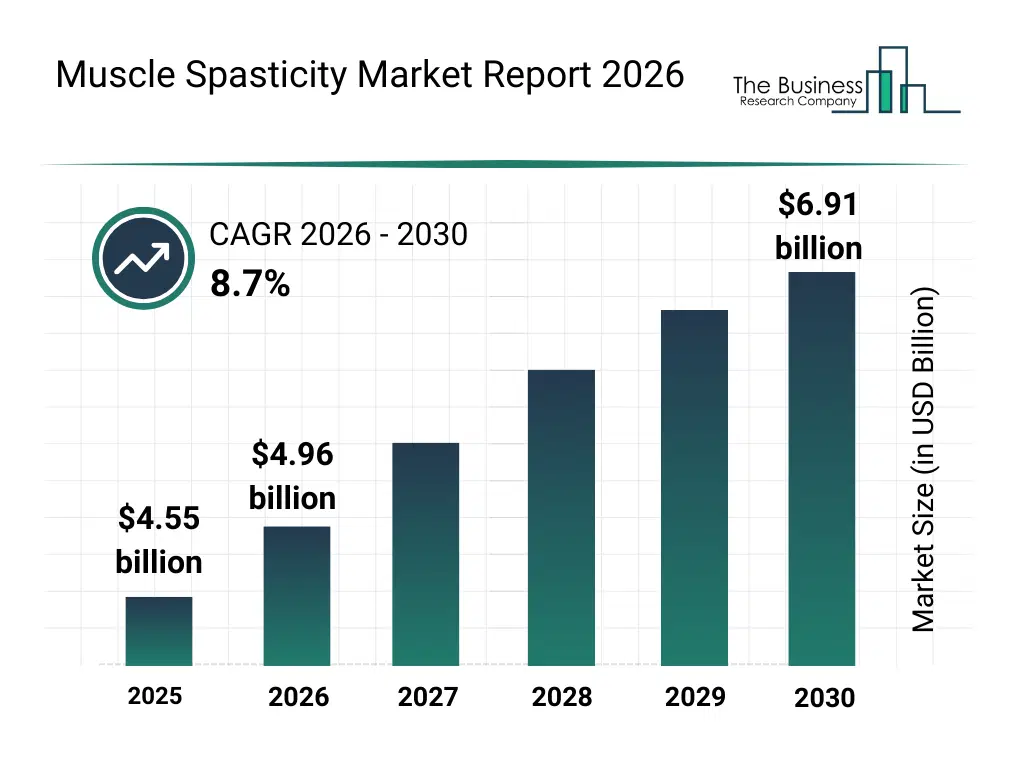
What Is The Muscle Spasticity Market Size and Share 2026?
The muscle spasticity market size has grown strongly in recent years. It will grow from $4.55 billion in 2025 to $4.96 billion in 2026 at a compound annual growth rate (CAGR) of 8.8%. The growth in the historic period can be attributed to rise in neurological injury cases, increased prevalence of spinal cord disorders, growth in post-stroke complications, early use of oral muscle relaxants, limited access to targeted therapies.What Is The Muscle Spasticity Market Growth Forecast?
The muscle spasticity market size is expected to see strong growth in the next few years. It will grow to $6.91 billion in 2030 at a compound annual growth rate (CAGR) of 8.7%. The growth in the forecast period can be attributed to advancement in drug delivery systems, increasing adoption of botox-based treatments, growth in home-based rehabilitation solutions, rising investment in neurological care, expanding clinical research in spasticity therapies. Major trends in the forecast period include increasing preference for botulinum toxin treatments, rising adoption of intrathecal baclofen therapy, growing demand for oral muscle relaxants, expansion in rehabilitation and physical therapy programs, increasing focus on personalized spasticity management.
Global Muscle Spasticity Market Segmentation
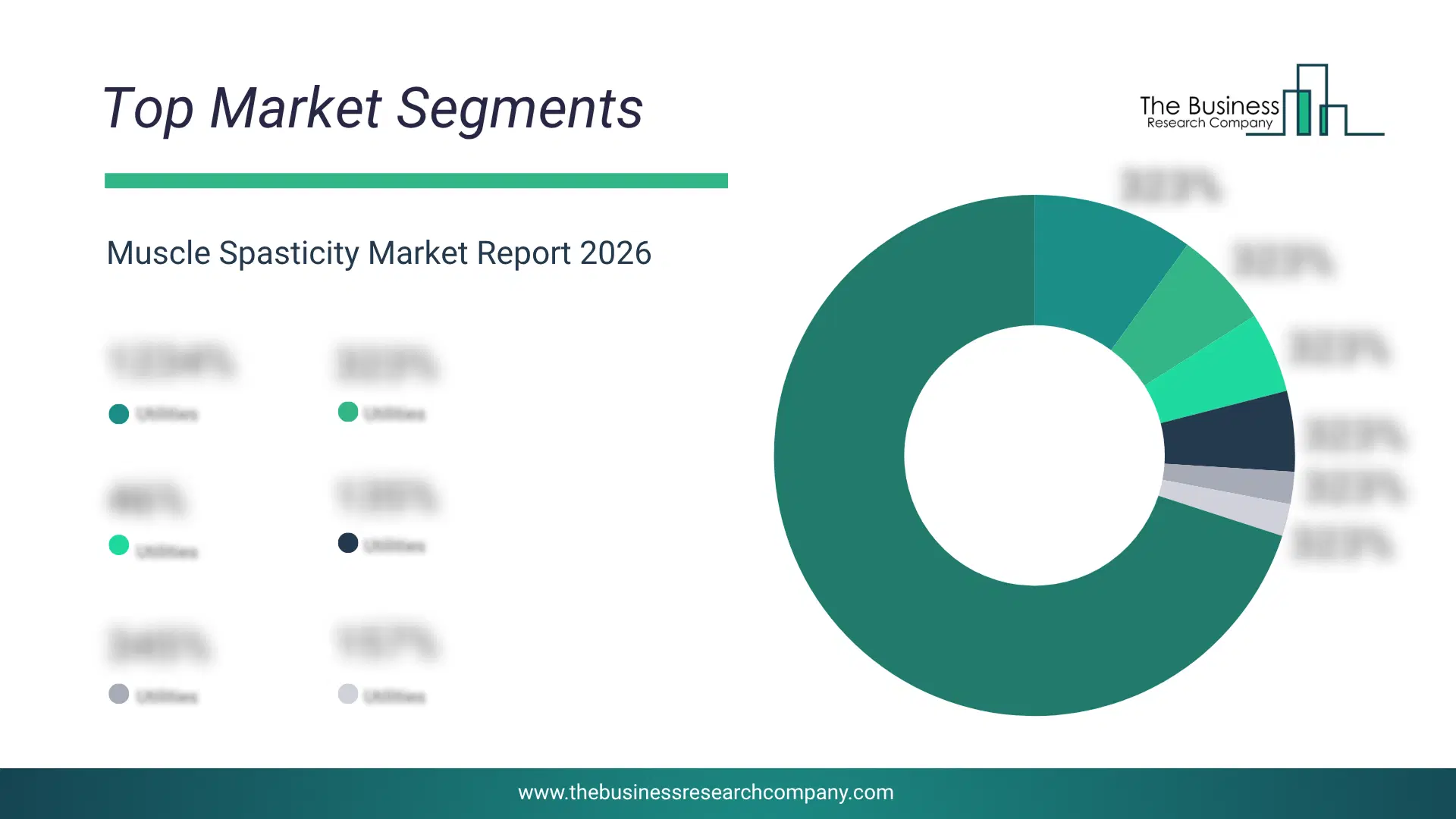
1) By Drug Type: Baclofen, Botulinum Toxin, Diazepam, Dantrolene Sodium, Other Drugs 2) By Route Of Administration: Oral, Intramuscular, Other Routes Of Administrations 3) By Distribution Channel: Hospital Pharmacies, Retail Pharmacies, Online Pharmacies Subsegments: 1) By Baclofen: Oral Baclofen, Intrathecal Baclofen (Pump) 2) By Botulinum Toxin: Botox (Botulinum Toxin Type A), Dysport (Botulinum Toxin Type A), Xeomin (Botulinum Toxin Type A), Myobloc (Botulinum Toxin Type B) 3) By Diazepam: Oral Diazepam, Injectable Diazepam 4) By Dantrolene Sodium: Oral Dantrolene, Injectable Dantrolene 5) By Other Drugs: Tizanidine, Clonidine, GabapentinWhat Is The Driver Of The Muscle Spasticity Market?
The increasing prevalence of musculoskeletal disorders is expected to drive the muscle spasticity market going forward. Musculoskeletal disorders refer to conditions affecting the muscles, bones, and joints of the body, often causing pain, stiffness, and impaired movement. The rise in musculoskeletal cases is attributed to factors such as aging populations, sedentary lifestyles, and the increasing prevalence of chronic conditions. Muscle spasticity aims to alleviate symptoms of musculoskeletal disorders by reducing pain, improving mobility, preventing complications, and enhancing patients' overall quality of life and functional abilities. For instance, in January 2024, according to the Office for Health Improvement and Disparities, a UK-based government department, in 2023, 18.4% of people aged 16 and over reported having a long-term musculoskeletal condition, up slightly from 17.6% in 2022. These conditions were reported less frequently by males (15.8%) compared with females (20.9%). Therefore, the increasing prevalence of musculoskeletal disorders is driving the muscle spasticity industry.Key Players In The Global Muscle Spasticity Market
Major companies operating in the muscle spasticity market are F. Hoffmann‑La Roche AG, AbbVie Inc., Abbott Laboratories, Novartis AG, Teva Pharmaceutical Industries Ltd., Ipsen Pharma, Endo Pharmaceuticals Inc., Neurocrine Biosciences Inc., Merz Pharmaceuticals GmbH, Revance Therapeutics Inc., Acorda Therapeutics Inc., Zydus Cadila, Pfizer Inc., Merck & Co. Inc., Sanofi S.A., UCB Pharma S.A., Jazz Pharmaceuticals plc, Daiichi Sankyo Company Limited, GlaxoSmithKline plc, InMed Pharmaceuticals Inc., MediciNova Inc., Genentech Inc., Beximco Pharmaceuticals Ltd., Sun Pharmaceutical Industries Ltd., Taj Pharmaceuticals Limited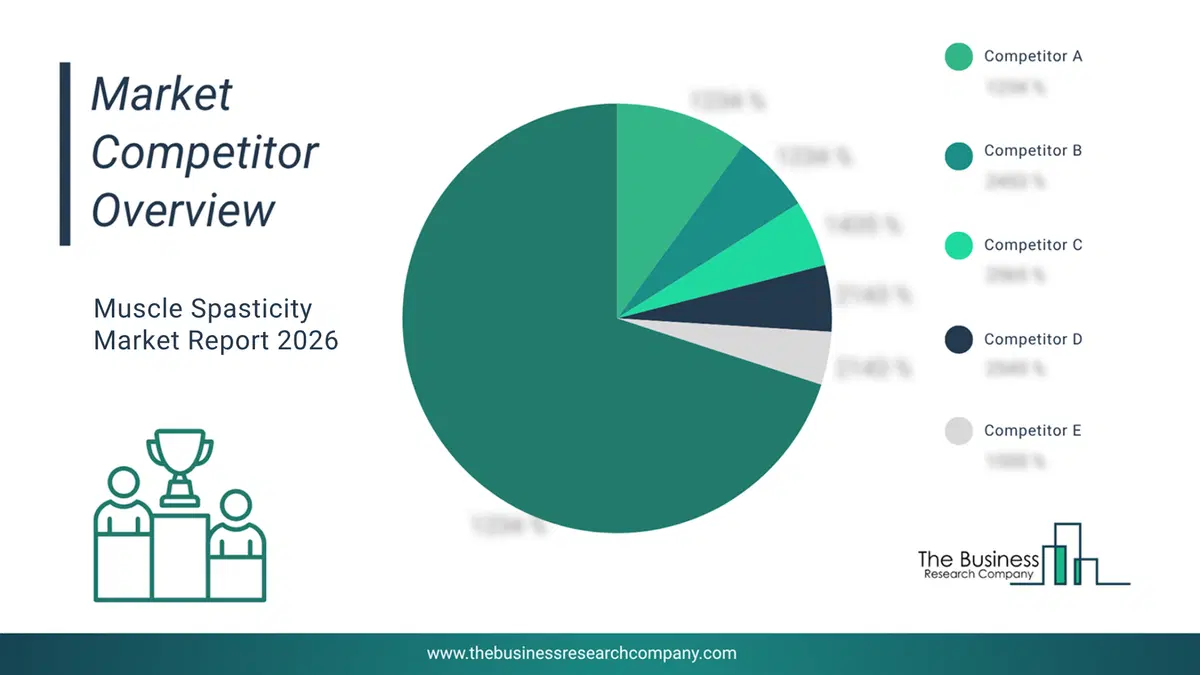
This chart is for illustrative purposes; the full report includes a detailed competitor analysis and comprehensive overview of the top 10 companies in the market.
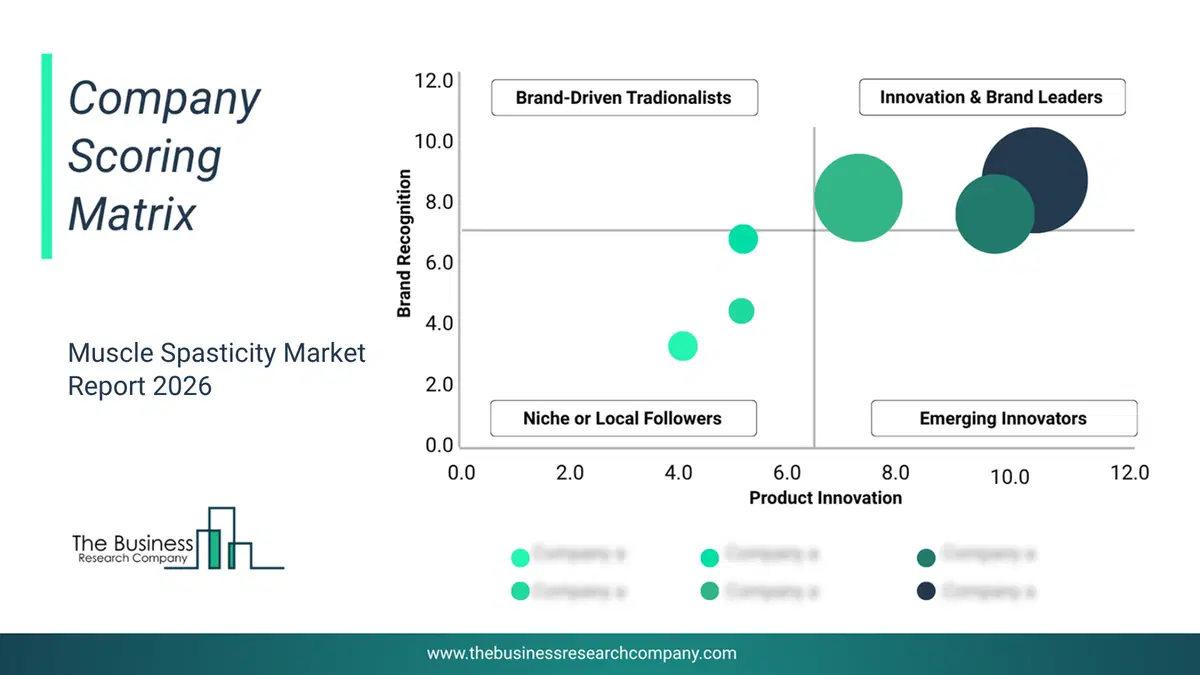
This chart maps companies by product innovation and brand strength, with bubble size indicating relative revenue, helping identify market leaders, challengers, and niche players. This is an illustrative chart; the full report provides a complete and accurate competitive analysis.
Global Muscle Spasticity Market Trends and Insights
Major companies operating in the muscle spasticity market are focusing on developing novel oral muscle-relaxant formulations to improve dosing flexibility, enhance patient adherence, and address the needs of individuals who experience difficulty swallowing traditional solid-dose therapies. Novel oral muscle-relaxant formulations refer to liquid or otherwise modified oral dosage forms designed to deliver established antispasmodic agents in a more accessible, patient-friendly format that supports precise dosing and improved tolerability. For instance, in April 2024, ANI Pharmaceuticals, a US-based pharmaceutical manufacturing company, launched baclofen oral suspension. Baclofen oral suspension, a generic version of fleqsuvy is used to treat muscle spasms caused by conditions such as multiple sclerosis and spinal cord injuries by helping to relax the muscles.What Are Latest Mergers And Acquisitions In The Muscle Spasticity Market?
In November 2025, CNX Therapeutics, a UK-based specialty pharmaceutical company, acquired Sativex (nabiximols) from Jazz Pharmaceuticals plc for an undisclosed amount. With this acquisition, CNX aims to deepen its CNS portfolio and strengthen its presence in neurology by adding a well-established, plant-derived spasticity treatment to its offerings. Jazz Pharmaceuticals plc is an Ireland-based biopharmaceutical company that developed and commercialized Sativex, a cannabinoid-based medicine indicated for moderate to severe muscle spasticity in multiple sclerosis.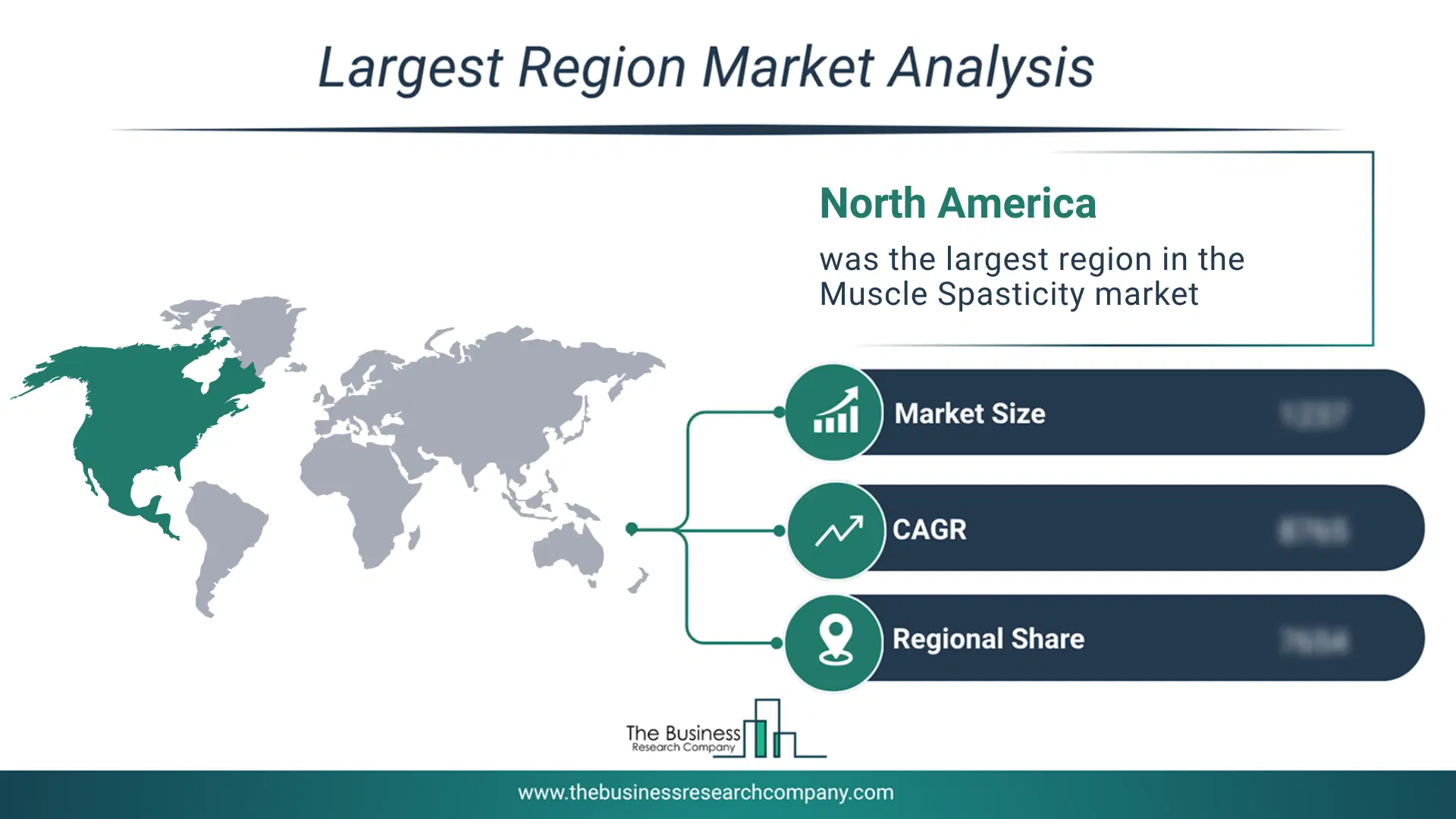
Regional Outlook
North America was the largest region in the muscle spasticity market in 2025. Asia-Pacific is expected to be the fastest-growing region in the forecast period. The regions covered in this market report are Asia-Pacific, South East Asia, Western Europe, Eastern Europe, North America, South America, Middle East, Africa. The countries covered in this market report are Australia, Brazil, China, France, Germany, India, Indonesia, Japan, Taiwan, Russia, South Korea, UK, USA, Canada, Italy, Spain.What Defines the Muscle Spasticity Market?
The muscle spasticity market consists of revenues earned by entities by providing services such as pharmaceutical treatments, physical therapy, and occupational therapy. The market value includes the value of related goods sold by the service provider or included within the service offering. The muscle spasticity market also includes sales of tizanidine, gabapentin, and pregabalin. Values in this market are ‘factory gate’ values, that is the value of goods sold by the manufacturers or creators of the goods, whether to other entities (including downstream manufacturers, wholesalers, distributors and retailers) or directly to end customers. The value of goods in this market includes related services sold by the creators of the goods.How is Market Value Defined and Measured?
The market value is defined as the revenues that enterprises gain from the sale of goods and/or services within the specified market and geography through sales, grants, or donations in terms of the currency (in USD unless otherwise specified). The revenues for a specified geography are consumption values that are revenues generated by organizations in the specified geography within the market, irrespective of where they are produced. It does not include revenues from resales along the supply chain, either further along the supply chain or as part of other products.
This chart presents market attractiveness based on a quantitative evaluation of growth, competition, strategic alignment, and risk, offering a clear view of opportunity areas for decision-making. This chart is for illustrative purposes; the full report contains the complete analysis.

This chart highlights the Total Addressable Market (TAM) by estimating the maximum revenue opportunity using an assumption-driven approach, supporting strategic planning and opportunity sizing across markets. The chart is illustrative; the full report provides a more comprehensive analysis.
What Key Data and Analysis Are Included in the Muscle Spasticity Market Report 2026?
The muscle spasticity market research report is one of a series of new reports from The Business Research Company that provides market statistics, including industry global market size, regional shares, competitors with the market share, detailed market segments, market trends and opportunities, and any further data you may need to thrive in the muscle spasticity industry. The market research report delivers a complete perspective of everything you need, with an in-depth analysis of the current and future state of the industry.Muscle Spasticity Market Report Forecast Analysis
| Report Attribute | Details |
|---|---|
| Market Size Value In 2026 | $4.96 billion |
| Revenue Forecast In 2030 | $6.91 billion |
| Growth Rate | CAGR of 8.7% from 2026 to 2030 |
| Base Year For Estimation | 2025 |
| Actual Estimates/Historical Data | 2020-2025 |
| Forecast Period | 2026 - 2030 |
| Market Representation | Revenue in USD Billion and CAGR from 2026 to 2030 |
| Segments Covered | Drug Type, Route Of Administration, Distribution Channel |
| Regional Scope | Asia-Pacific, Western Europe, Eastern Europe, North America, South America, Middle East, Africa |
| Country Scope | The countries covered in the report are Australia, Brazil, China, France, Germany, India, Indonesia, Japan, Taiwan, Russia, South Korea, UK, USA, Canada, Italy, Spain |
| Key Companies Profiled | F. Hoffmann‑La Roche AG, AbbVie Inc., Abbott Laboratories, Novartis AG, Teva Pharmaceutical Industries Ltd., Ipsen Pharma, Endo Pharmaceuticals Inc., Neurocrine Biosciences Inc., Merz Pharmaceuticals GmbH, Revance Therapeutics Inc., Acorda Therapeutics Inc., Zydus Cadila, Pfizer Inc., Merck & Co. Inc., Sanofi S.A., UCB Pharma S.A., Jazz Pharmaceuticals plc, Daiichi Sankyo Company Limited, GlaxoSmithKline plc, InMed Pharmaceuticals Inc., MediciNova Inc., Genentech Inc., Beximco Pharmaceuticals Ltd., Sun Pharmaceutical Industries Ltd., Taj Pharmaceuticals Limited |
| Customization Scope | Request for Customization |
| Pricing And Purchase Options | Explore Purchase Options |