

Muscle Tension Dysphonia Treatment Market Report 2026
Global Outlook – By Treatment Type (Nonsteroidal Anti-Inflammatory Drugs (NSAIDs), Analgesics, Voice Therapy, Behavioral Counseling), By Age Group (Pediatrics, Adults, Elderly), By Cause (Muscle Tension, Vocal Cord Damage, Other Causes), By Distribution Channel (Institutional Sales, Hospitals, Clinics, Specialized Centers, Retail Sales, Retail Pharmacies, Online Pharmacies, Drug Store) - Market Size, Trends, Strategies, and Forecast to 2030
Muscle Tension Dysphonia Treatment Market Overview
• Muscle Tension Dysphonia Treatment market size has reached to $13.29 billion in 2025 • Expected to grow to $16.17 billion in 2030 at a compound annual growth rate (CAGR) of 4% • Growth Driver: Impact Of Rising Voice Disorder Prevalence On The Muscle Tension Dysphonia Treatment Market • Market Trend: Advancements In Muscle Tension Dysphonia Treatment Market • North America was the largest region in 2025 and Europe is the fastest growing region.What Is Covered Under Muscle Tension Dysphonia Treatment Market?
Muscle tension dysphonia (MTD) refers to a voice disorder characterized by excessive tension in the muscles surrounding the voice box (larynx) during speech. Treatment for muscle tension dysphonia typically involves a combination of techniques aimed at reducing muscle tension, improving vocal habits, and enhancing overall vocal health. The main types of treatments in muscle tension dysphonia treatment are drugs, nonsteroidal anti-inflammatory drugs (NSAIDs), proton-pump inhibitors, analgesics, antacids, voice therapy, and behavioral counseling. Drugs for muscle tension dysphonia (MTD) treatment refer to medications that aim to alleviate symptoms or address underlying causes contributing to vocal cord tension and strain. This approach benefits diverse age groups, including pediatrics, adults, and the elderly, for various causes such as muscle tension, vocal cord damage, and others. These treatments are typically available through various channels, including institutional sales, hospitals, clinics, specialized centers, retail sales, retail pharmacies, online pharmacies, and drug stores.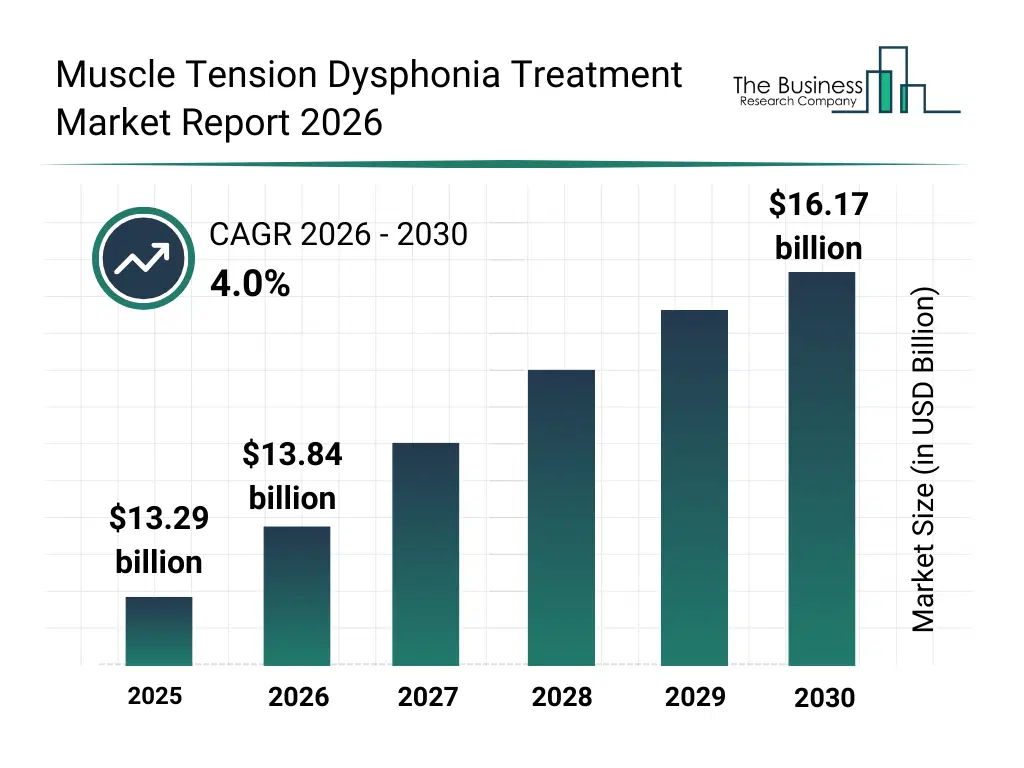
What Is The Muscle Tension Dysphonia Treatment Market Size and Share 2026?
The muscle tension dysphonia treatment market size has grown steadily in recent years. It will grow from $13.29 billion in 2025 to $13.84 billion in 2026 at a compound annual growth rate (CAGR) of 4.1%. The growth in the historic period can be attributed to rise in vocal strain cases, increased awareness of speech therapy, growth in ent clinical visits, early adoption of nsaids for voice disorders, prevalence of chronic stress-related vocal issues.What Is The Muscle Tension Dysphonia Treatment Market Growth Forecast?
The muscle tension dysphonia treatment market size is expected to see steady growth in the next few years. It will grow to $16.17 billion in 2030 at a compound annual growth rate (CAGR) of 4.0%. The growth in the forecast period can be attributed to advancement in digital voice therapy tools, rising adoption of telehealth for vocal treatment, increasing demand for personalized vocal rehabilitation, growth in behavioral therapy integration, expansion of home-based therapeutic programs. Major trends in the forecast period include increasing adoption of voice therapy programs, rising demand for behavioral counseling, growth in use of anti-inflammatory medications, expanding utilization of proton-pump inhibitors, rising focus on stress and anxiety management.
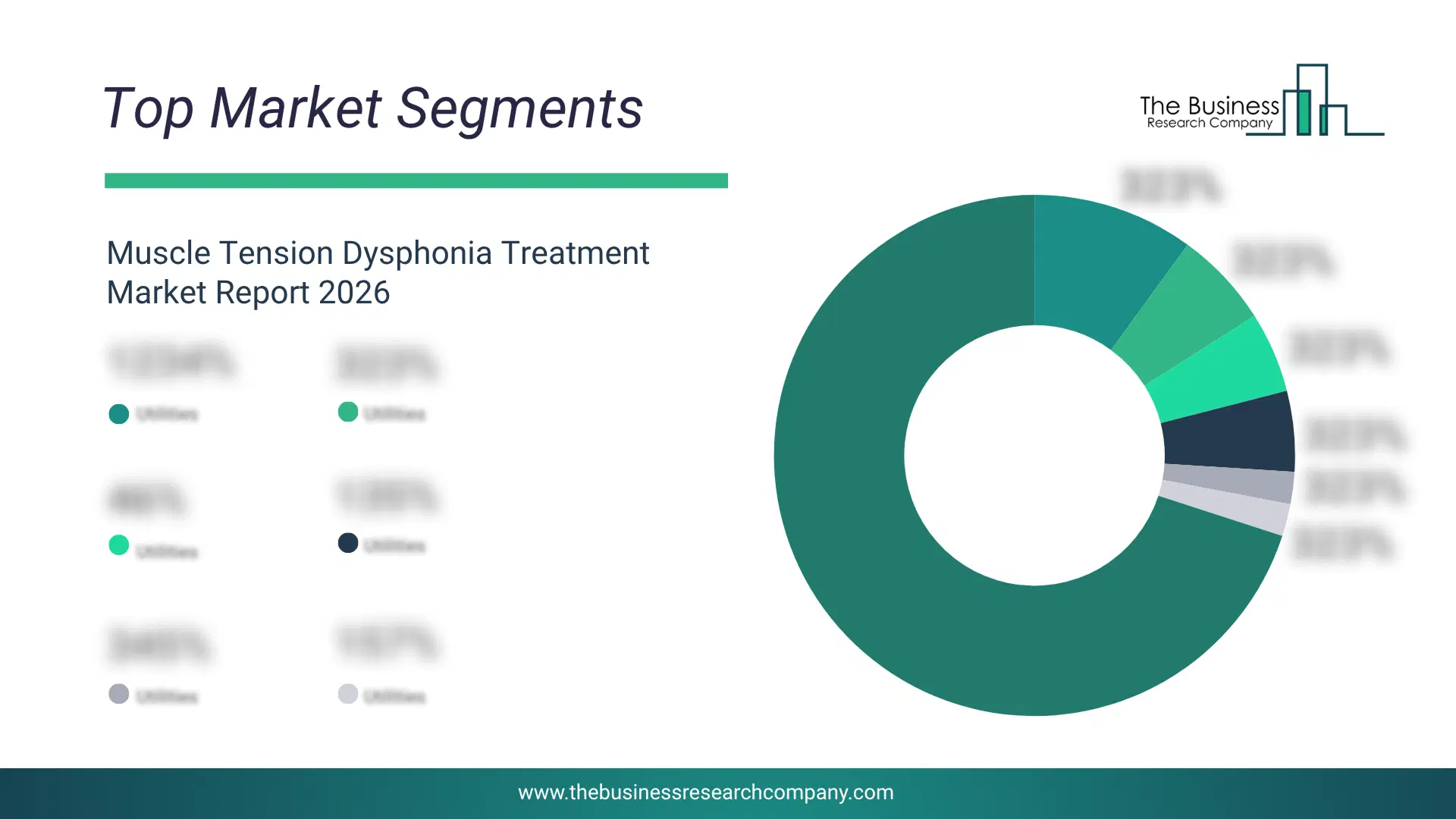
Global Muscle Tension Dysphonia Treatment Market Segmentation
1) By Treatment Type: Nonsteroidal Anti-Inflammatory Drugs (NSAIDs), Analgesics, Voice Therapy, Behavioral Counseling 2) By Age Group: Pediatrics, Adults, Elderly 3) By Cause: Muscle Tension, Vocal Cord Damage, Other Causes 4) By Distribution Channel: Institutional Sales, Hospitals, Clinics, Specialized Centers, Retail Sales, Retail Pharmacies, Online Pharmacies, Drug Store Subsegments: 1) By Nonsteroidal Anti-Inflammatory Drugs (NSAIDs): Ibuprofen, Naproxen, Aspirin 2) By Analgesics: Acetaminophen, Opioid Analgesics, Combination Analgesics 3) By Voice Therapy: Resonant Voice Therapy, Semi-Occluded Vocal Tract Exercises, Lee Silverman Voice Treatment (LSVT) 4) By Behavioral Counseling: Stress Management Techniques, Cognitive Behavioral Therapy (CBT), Relaxation TrainingWhat Are The Drivers Of The Muscle Tension Dysphonia Treatment Market?
The rising prevalence of voice disorders is expected to propel the growth of the muscle tension dysphonia treatment market going forward. Voice disorders refer to conditions that affect the pitch, volume, tone, and quality of a person's voice. The prevalence of voice disorders is rising due to several factors, including increased vocal strain from excessive talking, loud environments, and the growing demand for voice-dependent professions. Treatment for muscle tension dysphonia is beneficial for treating voice disorders by addressing excessive muscle tension around the larynx through therapies like voice therapy, physical exercises, and stress management techniques. For instance, in March 2024, according to the National Institutes of Health, a US-based government agency, in the past year, approximately 17.9 million U.S. adults aged 18 or older, constituting 7.6% of the population, reported experiencing voice problems, with around 9.4 million (4.0%) having issues lasting a week or more. Therefore, the rising prevalence of voice disorders is driving the growth of the muscle tension dysphonia treatment industry. An increasing risk of benign laryngeal development is expected to propel the growth of the muscle tension dysphonia treatment market going forward. Benign laryngeal conditions refer to non-cancerous growths or abnormalities in the larynx, such as nodules or polyps, that can cause symptoms like hoarseness but are not malignant and typically have a favorable prognosis. The risk of developing benign laryngeal conditions may rise due to factors such as chronic irritation from smoking or vocal strain and exposure to environmental pollutants. Muscle tension dysphonia (MTD) treatment can be beneficial for benign laryngeal conditions by addressing excessive muscle tension and strain in the larynx that can exacerbate or mimic benign issues such as nodules or polyps. For instance, in January 2024, according to the American Cancer Society, a US-based professional organization company, in 2024, around 12,650 new laryngeal cancer cases are anticipated, with 10,030 in men and 2,620 in women, while about 3,880 deaths are expected, including 3,120 men and 760 women. The lifetime risk of developing laryngeal cancer is roughly 1 in 200 for men and 1 in 840 for women. Therefore, the increased risk of benign laryngeal development is driving the growth of the muscle tension dysphonia treatment industry.Key Players In The Global Muscle Tension Dysphonia Treatment Market
Major companies operating in the muscle tension dysphonia treatment market are Mayo Clinic, Cleveland Clinic, Mount Sinai Health System, Johns Hopkins Medicine, NYU Langone Hospitals, University of Michigan Health System, UCLA Health, Children’s Hospital of Philadelphia, Emory Healthcare, Massachusetts General Hospital, American Laryngological Association, Weill Cornell Medicine, Duke University Health System, The Center for Voice Northwestern Medicine, UT Southwestern Medical Center Voice Care, IU Health Voice Disorders, Lions Voice Clinic University of Minnesota, Royal National ENT and Eastman Dental Hospitals, UCL Ear Institute, Medical Voice Center Russia, British Voice Association, The Voice Foundation, Karnataka ENT Hospital Voice Clinic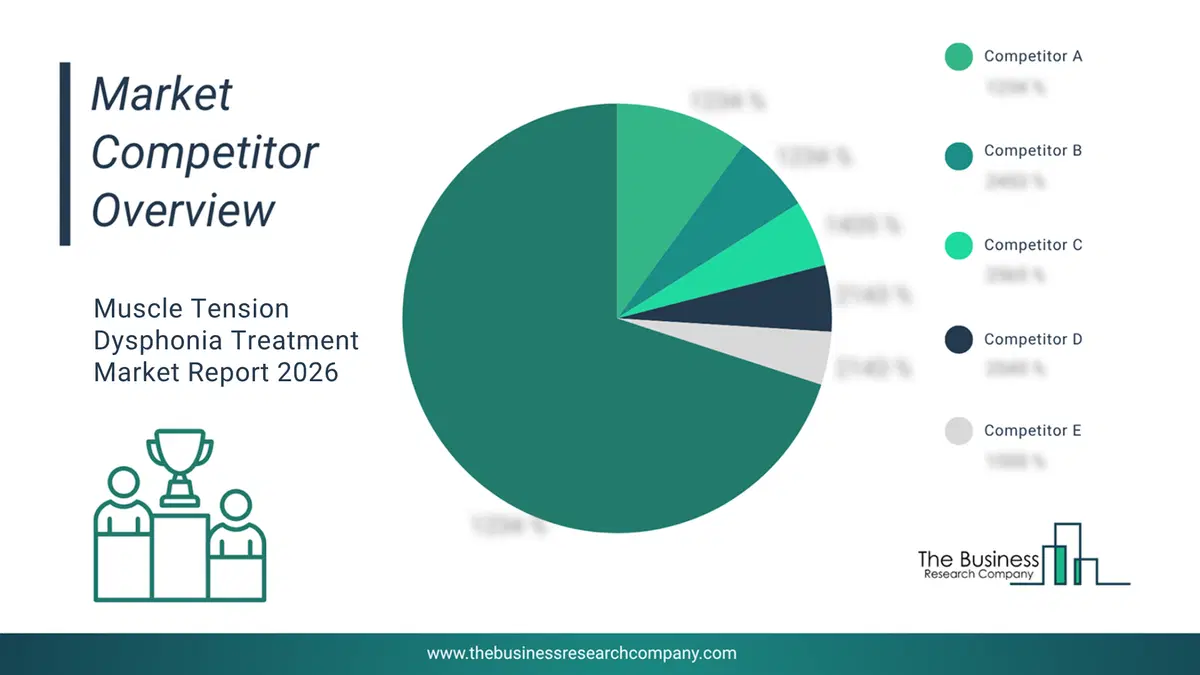
This chart is for illustrative purposes; the full report includes a detailed competitor analysis and comprehensive overview of the top 10 companies in the market.
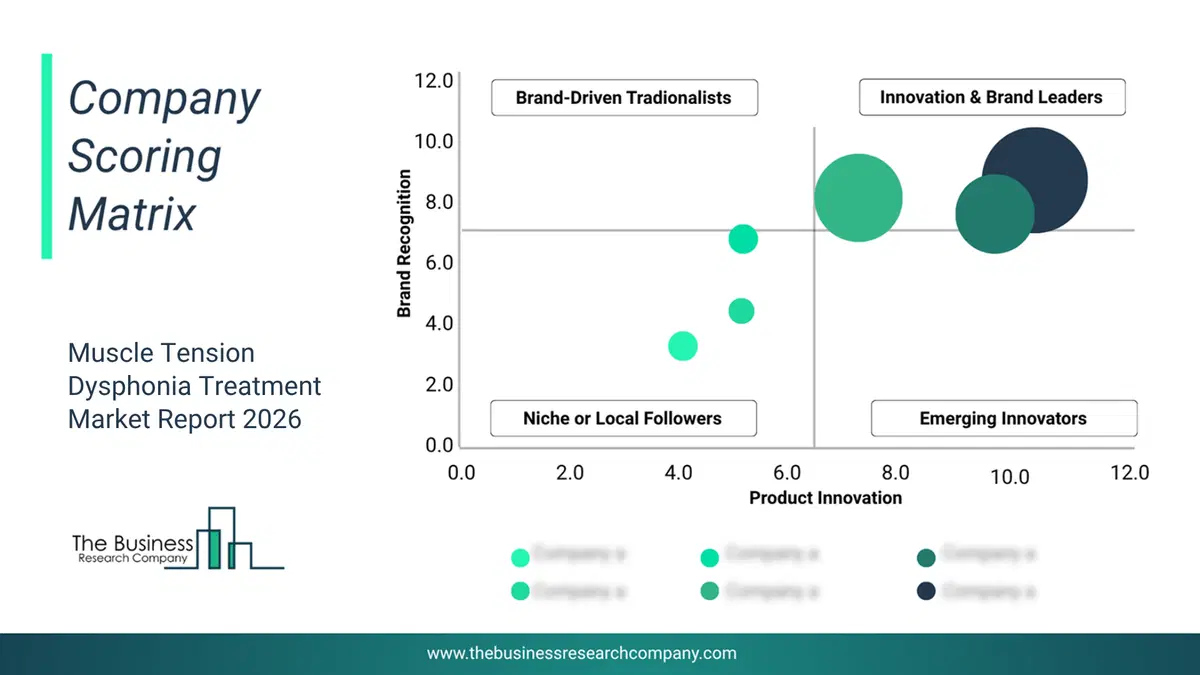
This chart maps companies by product innovation and brand strength, with bubble size indicating relative revenue, helping identify market leaders, challengers, and niche players. This is an illustrative chart; the full report provides a complete and accurate competitive analysis.
Global Muscle Tension Dysphonia Treatment Market Trends and Insights
Major companies operating in the muscle tension dysphonia treatment market are focusing on developing technologically advanced medical solutions, such as the medication to treat cervical dystonia, to treat conditions such as cervical dystonia, aiming to enhance treatment efficacy and patient outcomes. Cervical dystonia is a neurological condition where involuntary muscle contractions in the neck lead to abnormal movements and postures. For instance, in August 2023, Daxxify, a US-based pharmaceutical company, received FDA approval for its first therapeutic indication, which is to treat cervical dystonia in adults. This approval is based on data from phase 3 clinical trials, including ASPEN-1 and ASPEN-OLS. The primary endpoint of ASPEN-1, which involved 382 participants, was met, showing significant improvement in the Toronto Western Spasmodic Torticollis Rating Scale (TWSTRS) at weeks 4 and 6. The median duration of effect was 20.3 weeks for the high-dose group and 24.0 weeks for the low-dose group. Common treatment-related adverse events included dysphagia, muscular weakness, and injection site pain. In ASPEN-OLS, 357 participants received up to 4 sequential doses of Daxxify, showing improvements in TWSTRS with a median duration of 19.9 to 26.0 weeks. Common adverse events in this study were injection site pain, headache, and injection site erythema.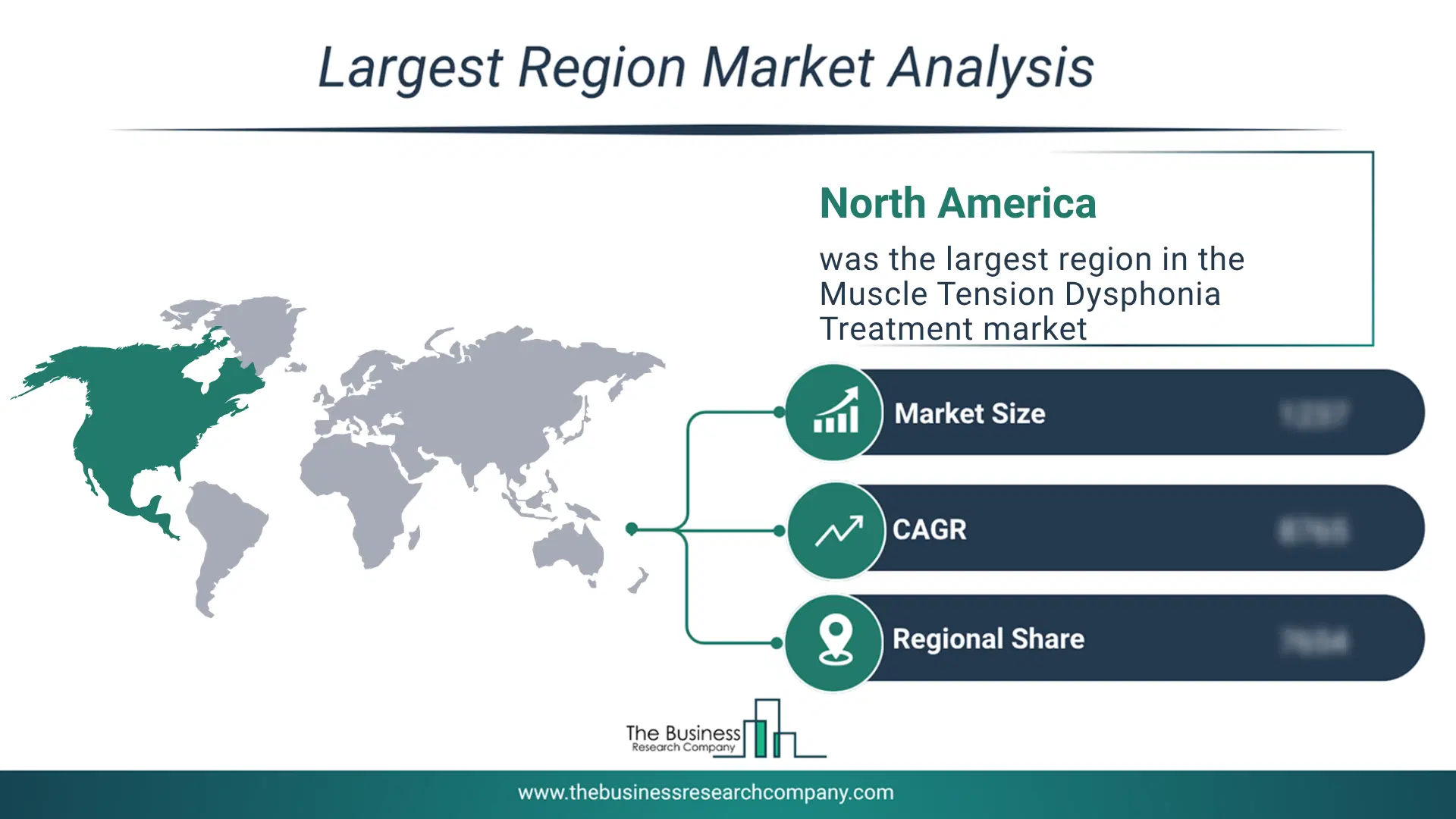
Regional Outlook
North America was the largest region in the muscle tension dysphonia treatment market in 2025. Europe is expected to be the fastest-growing region in the forecast period. The regions covered in this market report are Asia-Pacific, South East Asia, Western Europe, Eastern Europe, North America, South America, Middle East, Africa. The countries covered in this market report are Australia, Brazil, China, France, Germany, India, Indonesia, Japan, Taiwan, Russia, South Korea, UK, USA, Canada, Italy, Spain.What Defines the Muscle Tension Dysphonia Treatment Market?
The muscle tension dysphonia treatment market includes revenues earned by entities by providing services such as voice therapy, behavioral modifications, medication management, and patient education. Values in this market are ‘factory gate’ values, that is the value of goods sold by the manufacturers or creators of the goods, whether to other entities (including downstream manufacturers, wholesalers, distributors and retailers) or directly to end customers. The value of goods in this market includes related services sold by the creators of the goods.How is Market Value Defined and Measured?
The market value is defined as the revenues that enterprises gain from the sale of goods and/or services within the specified market and geography through sales, grants, or donations in terms of the currency (in USD unless otherwise specified). The revenues for a specified geography are consumption values that are revenues generated by organizations in the specified geography within the market, irrespective of where they are produced. It does not include revenues from resales along the supply chain, either further along the supply chain or as part of other products.
This chart presents market attractiveness based on a quantitative evaluation of growth, competition, strategic alignment, and risk, offering a clear view of opportunity areas for decision-making. This chart is for illustrative purposes; the full report contains the complete analysis.

This chart highlights the Total Addressable Market (TAM) by estimating the maximum revenue opportunity using an assumption-driven approach, supporting strategic planning and opportunity sizing across markets. The chart is illustrative; the full report provides a more comprehensive analysis.
What Key Data and Analysis Are Included in the Muscle Tension Dysphonia Treatment Market Report 2026?
The muscle tension dysphonia treatment market research report is one of a series of new reports from The Business Research Company that provides market statistics, including industry global market size, regional shares, competitors with the market share, detailed market segments, market trends and opportunities, and any further data you may need to thrive in the muscle tension dysphonia treatment industry. The market research report delivers a complete perspective of everything you need, with an in-depth analysis of the current and future state of the industry.Muscle Tension Dysphonia Treatment Market Report Forecast Analysis
| Report Attribute | Details |
|---|---|
| Market Size Value In 2026 | $13.84 billion |
| Revenue Forecast In 2030 | $16.17 billion |
| Growth Rate | CAGR of 4% from 2026 to 2030 |
| Base Year For Estimation | 2025 |
| Actual Estimates/Historical Data | 2020-2025 |
| Forecast Period | 2026 - 2030 |
| Market Representation | Revenue in USD Billion and CAGR from 2026 to 2030 |
| Segments Covered | Treatment Type, Age Group, Cause, Distribution Channel |
| Regional Scope | Asia-Pacific, Western Europe, Eastern Europe, North America, South America, Middle East, Africa |
| Country Scope | The countries covered in the report are Australia, Brazil, China, France, Germany, India, Indonesia, Japan, Taiwan, Russia, South Korea, UK, USA, Canada, Italy, Spain |
| Key Companies Profiled | Mayo Clinic, Cleveland Clinic, Mount Sinai Health System, Johns Hopkins Medicine, NYU Langone Hospitals, University of Michigan Health System, UCLA Health, Children’s Hospital of Philadelphia, Emory Healthcare, Massachusetts General Hospital, American Laryngological Association, Weill Cornell Medicine, Duke University Health System, The Center for Voice Northwestern Medicine, UT Southwestern Medical Center Voice Care, IU Health Voice Disorders, Lions Voice Clinic University of Minnesota, Royal National ENT and Eastman Dental Hospitals, UCL Ear Institute, Medical Voice Center Russia, British Voice Association, The Voice Foundation, Karnataka ENT Hospital Voice Clinic |
| Customization Scope | Request for Customization |
| Pricing And Purchase Options | Explore Purchase Options |