
Mycosis Fungoides Treatment Market Report 2026
Global Outlook – By Drug Type (Topical Steroids, Mechlorethamine), By Treatment Type (Photodynamic Therapy, Radiation Therapy, Targeted Therapy, Chemotherapy), By End-user (Hospitals, Private Clinics, Specialty Clinics) - Market Size, Trends, Strategies, and Forecast to 2030
Mycosis Fungoides Treatment Market Overview
• Mycosis Fungoides Treatment market size has reached to $1.03 billion in 2025 • Expected to grow to $1.37 billion in 2030 at a compound annual growth rate (CAGR) of 5.7% • Growth Driver: Increasing Lymphoma Cancer Incidence Fuels Growth Of The Mycosis Fungoides Treatment Market • Market Trend: Citius Pharmaceuticals Expands Mycosis Fungoides Treatment Options With LYMPHIR Approval • North America was the largest region in 2025 and Asia-Pacific is the fastest growing region.What Is Covered Under Mycosis Fungoides Treatment Market?
Mycosis fungoides treatment refers to the use of various therapies, medications, and procedures to manage and alleviate the symptoms of a disease called cutaneous T-cell lymphoma, a rare form of non-Hodgkin lymphoma that primarily affects the skin. This treatment typically involves a combination of therapies, such as topical medications and systemic treatments like immunotherapy, depending on the stage and severity of the disease. The main types of mycosis fungoides treatment are topical steroids and mechlorethamine. Topical steroids are medications that are applied directly to the skin to reduce inflammation and irritation. Various treatments are included, such as photodynamic therapy, radiation therapy, targeted therapy, and chemotherapy, which are used by several end-users, including hospitals, private clinics, and specialty clinics.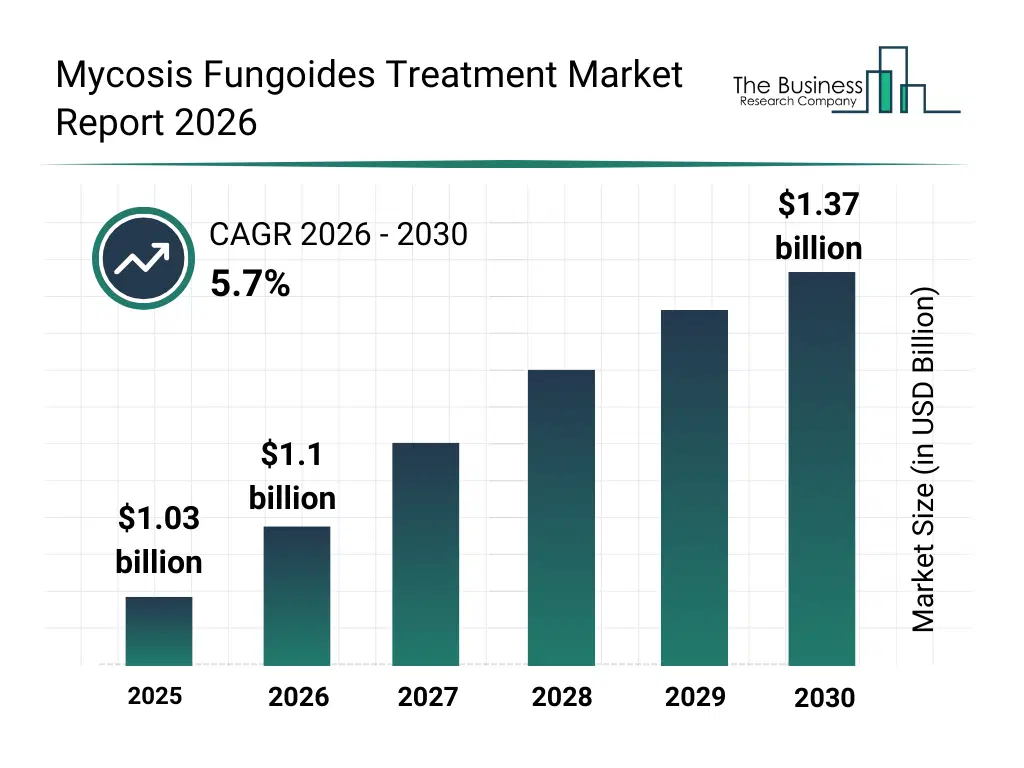
What Is The Mycosis Fungoides Treatment Market Size and Share 2026?
The mycosis fungoides treatment market size has grown strongly in recent years. It will grow from $1.03 billion in 2025 to $1.1 billion in 2026 at a compound annual growth rate (CAGR) of 6.7%. The growth in the historic period can be attributed to limited treatment options, increasing prevalence of cutaneous t-cell lymphoma, reliance on radiation therapy, delayed diagnosis rates, dependence on topical steroids.What Is The Mycosis Fungoides Treatment Market Growth Forecast?
The mycosis fungoides treatment market size is expected to see strong growth in the next few years. It will grow to $1.37 billion in 2030 at a compound annual growth rate (CAGR) of 5.7%. The growth in the forecast period can be attributed to growth in targeted therapies, rising use of immunotherapy, expansion of dermatology oncology centers, improved diagnostic capabilities, increased investment in rare cancer research. Major trends in the forecast period include growing adoption of combination therapy approaches, increasing use of topical steroids for early-stage management, rising preference for targeted therapies and immunotherapy, expansion of photodynamic and radiation therapy options, higher demand for specialized dermatology and oncology clinics.
Global Mycosis Fungoides Treatment Market Segmentation
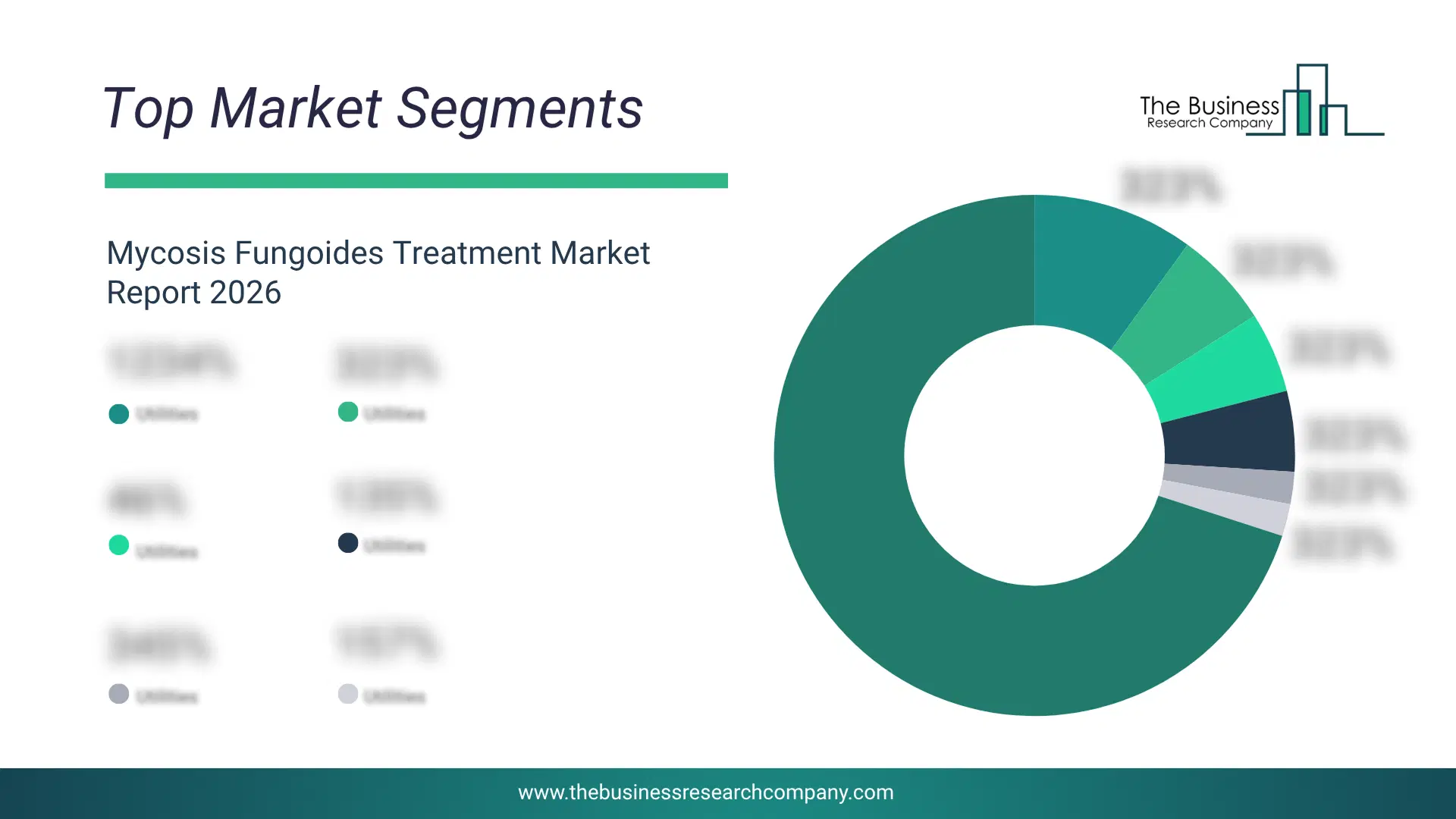
1) By Drug Type: Topical Steroids, Mechlorethamine 2) By Treatment Type: Photodynamic Therapy, Radiation Therapy, Targeted Therapy, Chemotherapy 3) By End-user: Hospitals, Private Clinics, Specialty Clinics Subsegments: 1) By Topical Steroids: Corticosteroid Creams Or Ointments ( Hydrocortisone, Clobetasol), Topical Steroid Lotions 2) By Mechlorethamine: Topical Mechlorethamine ( Nitrogen Mustard Cream), Injectable MechlorethamineWhat Is The Driver Of The Mycosis Fungoides Treatment Market?
The rise in lymphoma cancer incidence is expected to propel the growth of the mycosis fungoides treatment market going forward. Lymphoma refers to a cancer of the lymphatic system, which includes the lymph nodes, spleen, thymus gland, and bone marrow. Lymphoma cancer incidence is on the rise due to a combination of various factors, including environmental exposures, increasing viral infections, an aging population, and several lifestyle factors. Mycosis fungoides treatments, such as topical corticosteroids, phototherapy, and systemic therapies, are used in managing cutaneous T-cell lymphomas. These therapies aim to control skin lesions, reduce symptoms, and manage disease progression in lymphoma patients. For instance, in January 2024, according to the American Cancer Society, a US-based non-profit organization, non-Hodgkin lymphoma (NHL) was one of the most common cancers in the United States, accounting for about 4% of all cancers. It was estimated that approximately 80,620 people (44,590 males and 36,030 females) would be diagnosed with NHL, and about 20,140 people (11,780 males and 8,360 females) would die from this cancer in 2024. Therefore, the rise in lymphoma cancer incidence is driving the growth of the mycosis fungoides treatment industry.Key Players In The Global Mycosis Fungoides Treatment Market
Major companies operating in the mycosis fungoides treatment market are Pfizer Inc., Merck & Co. Inc., Bristol Myers Squibb, Abbott Laboratories, Novartis AG, GlaxoSmithKline plc, Tocris Bioscience, Viatris Inc., Astellas Pharma Inc., Daiichi Sankyo Company, Takeda Pharmaceutical Company Limited, Bausch Health, Eisai Co. Ltd., Horizon Therapeutics plc, Varian Medical Systems, Kyowa Kirin Co. Ltd., Seattle Genetics Inc., Azurity Pharmaceuticals Inc., Innate Pharma S.A., Helsinn Therapeutics, Jubilant Cadista Pharmaceuticals Inc., Elorac Inc., Soligenix Inc., Ceptaris Therapeutics Inc.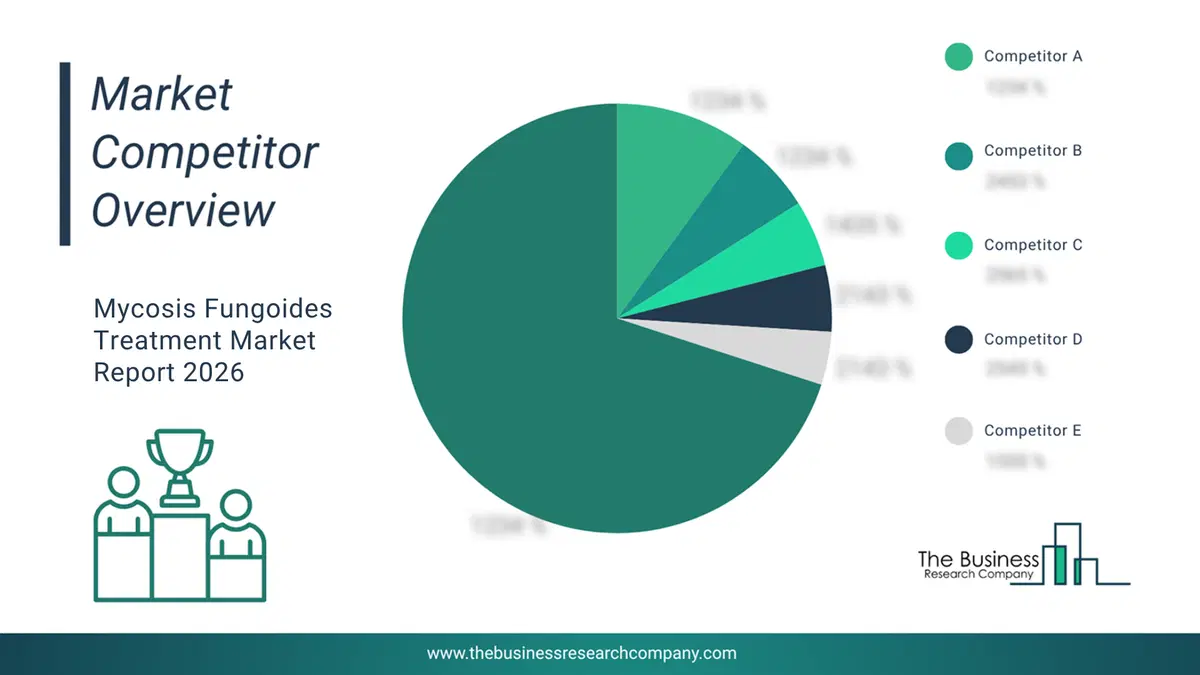
This chart is for illustrative purposes; the full report includes a detailed competitor analysis and comprehensive overview of the top 10 companies in the market.
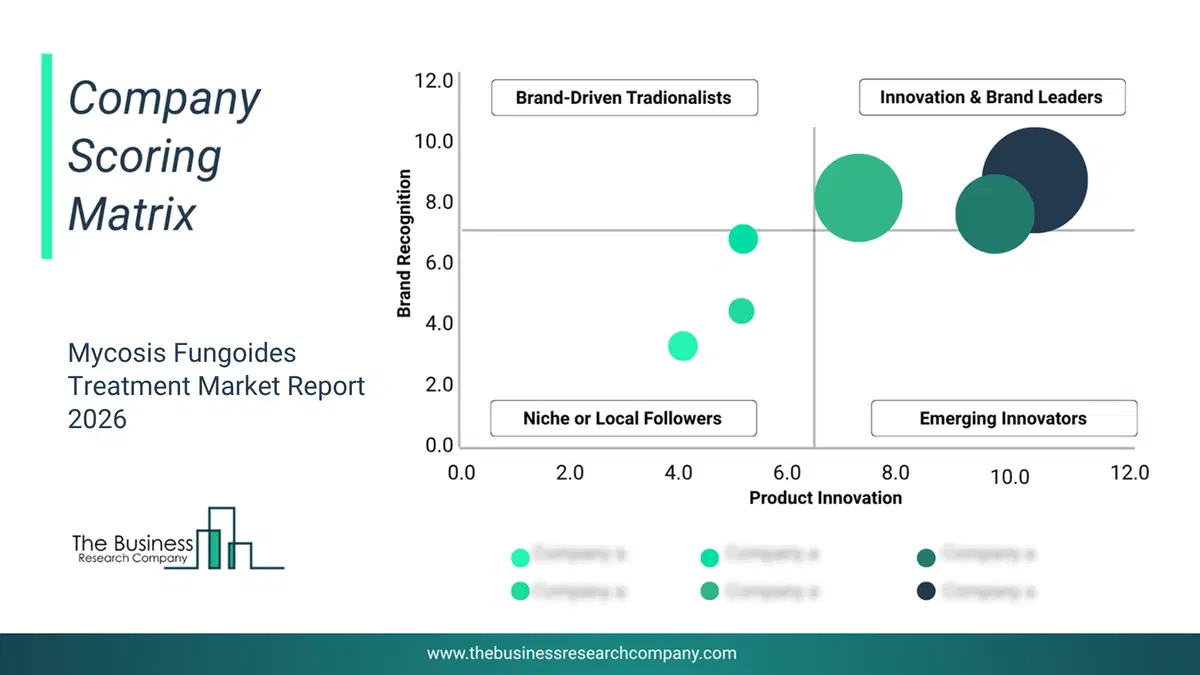
This chart maps companies by product innovation and brand strength, with bubble size indicating relative revenue, helping identify market leaders, challengers, and niche players. This is an illustrative chart; the full report provides a complete and accurate competitive analysis.
Global Mycosis Fungoides Treatment Market Trends and Insights
Major companies operating in the mycosis fungoides treatment market are focusing on developing advanced solutions such as targeted immunotherapy to enhance treatment effectiveness and patient quality of life. Targeted immunotherapy is designed to selectively attack malignant T-cells and regulatory T-cells while preserving healthy tissue, providing faster disease control and reducing adverse effects. For instance, in August 2024, Citius Pharmaceuticals, a US-based biopharmaceutical company, announced today that the U.S. Food and Drug Administration (FDA) approved LYMPHIR (denileukin diftitox-cxdl) featuring IL-2 receptor-targeted immunotherapy. The therapy is approved for adults with relapsed or refractory cutaneous T-cell lymphoma, including mycosis fungoides, after at least one prior systemic treatment. LYMPHIR offers a novel mechanism of action that directly kills malignant T-cells and depletes Tregs to boost the immune response. Clinical data demonstrated a 36% objective response rate with a rapid median time to response of 1.4 months. The treatment reduced skin disease in 84% of patients and improved pruritus without cumulative toxicity. LYMPHIR provides a unique systemic option for Stage I-III patients and addresses the need for effective therapies in a population with limited treatment alternatives.What Are Latest Mergers And Acquisitions In The Mycosis Fungoides Treatment Market?
In October 2023, Shorla Oncology, an Ireland -based pharmaceutical company acquired Jylamvo from Therakind for an undisclosed amount. With this acquisition, Shorla intends to bring Jylamvo to the US market, where it has been approved for treating conditions like acute lymphoblastic leukemia and mycosis fungoides. Therakind Limited is a UK-based pharmaceutical company pharmaceutical that focuses on developing niche medicines.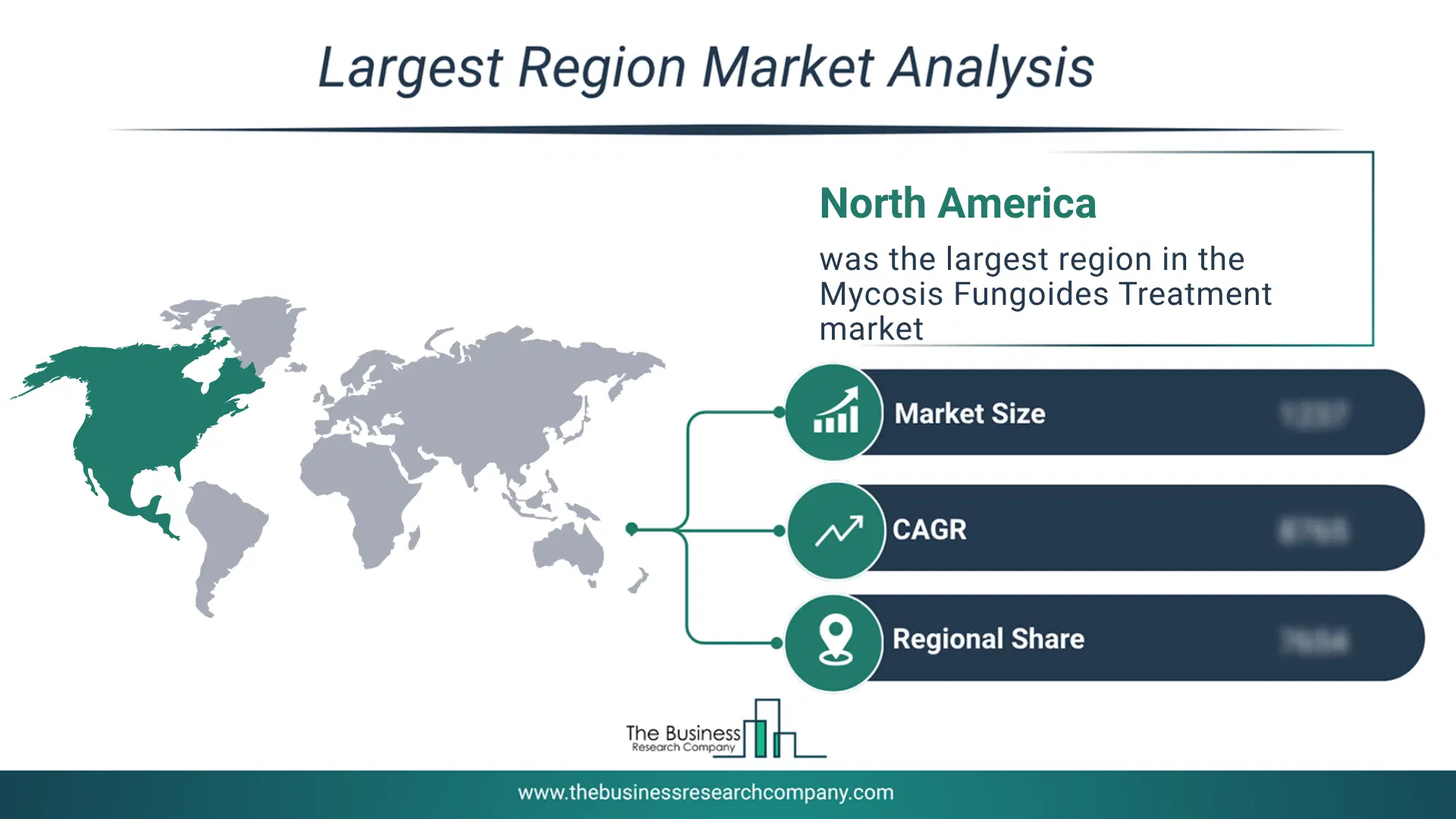
Regional Outlook
North America was the largest region in the mycosis fungoides treatment market in 2025. Asia-Pacific is expected to be the fastest-growing region in the forecast period. The regions covered in this market report are Asia-Pacific, South East Asia, Western Europe, Eastern Europe, North America, South America, Middle East, Africa. The countries covered in this market report are Australia, Brazil, China, France, Germany, India, Indonesia, Japan, Taiwan, Russia, South Korea, UK, USA, Canada, Italy, Spain.What Defines the Mycosis Fungoides Treatment Market?
The mycosis fungoides treatment market consists of revenues earned by entities by providing services, such as phototherapy, dermatological care, and specialized therapies. The market value includes the value of related services provided by the treatment creators or included within the treatment offering. The mycosis fungoides treatment market also includes sales of oral retinoids, interferons, monoclonal antibodies, and nitrogen mustard. Values in this market are ‘factory gate’ values, that is, the value of treatments sold by the manufacturers or creators of the treatments, whether to other entities (including downstream healthcare providers and pharmacies) or directly to end customers. The value of treatments in this market includes related services sold by the creators of the treatments.How is Market Value Defined and Measured?
The market value is defined as the revenues that enterprises gain from the sale of goods and/or services within the specified market and geography through sales, grants, or donations in terms of the currency (in USD unless otherwise specified). The revenues for a specified geography are consumption values that are revenues generated by organizations in the specified geography within the market, irrespective of where they are produced. It does not include revenues from resales along the supply chain, either further along the supply chain or as part of other products.
This chart presents market attractiveness based on a quantitative evaluation of growth, competition, strategic alignment, and risk, offering a clear view of opportunity areas for decision-making. This chart is for illustrative purposes; the full report contains the complete analysis.

This chart highlights the Total Addressable Market (TAM) by estimating the maximum revenue opportunity using an assumption-driven approach, supporting strategic planning and opportunity sizing across markets. The chart is illustrative; the full report provides a more comprehensive analysis.
What Key Data and Analysis Are Included in the Mycosis Fungoides Treatment Market Report 2026?
The mycosis fungoides treatment market research report is one of a series of new reports from The Business Research Company that provides market statistics, including industry global market size, regional shares, competitors with the market share, detailed market segments, market trends and opportunities, and any further data you may need to thrive in the mycosis fungoides treatment industry. The market research report delivers a complete perspective of everything you need, with an in-depth analysis of the current and future state of the industry.Mycosis Fungoides Treatment Market Report Forecast Analysis
| Report Attribute | Details |
|---|---|
| Market Size Value In 2026 | $1.1 billion |
| Revenue Forecast In 2030 | $1.37 billion |
| Growth Rate | CAGR of 5.7% from 2026 to 2030 |
| Base Year For Estimation | 2025 |
| Actual Estimates/Historical Data | 2020-2025 |
| Forecast Period | 2026 - 2030 |
| Market Representation | Revenue in USD Billion and CAGR from 2026 to 2030 |
| Segments Covered | Drug Type, Treatment Type, End-user |
| Regional Scope | Asia-Pacific, Western Europe, Eastern Europe, North America, South America, Middle East, Africa |
| Country Scope | The countries covered in the report are Australia, Brazil, China, France, Germany, India, Indonesia, Japan, Taiwan, Russia, South Korea, UK, USA, Canada, Italy, Spain |
| Key Companies Profiled | Pfizer Inc., Merck & Co. Inc., Bristol Myers Squibb, Abbott Laboratories, Novartis AG, GlaxoSmithKline plc, Tocris Bioscience, Viatris Inc., Astellas Pharma Inc., Daiichi Sankyo Company, Takeda Pharmaceutical Company Limited, Bausch Health, Eisai Co. Ltd., Horizon Therapeutics plc, Varian Medical Systems, Kyowa Kirin Co. Ltd., Seattle Genetics Inc., Azurity Pharmaceuticals Inc., Innate Pharma S.A., Helsinn Therapeutics, Jubilant Cadista Pharmaceuticals Inc., Elorac Inc., Soligenix Inc., Ceptaris Therapeutics Inc. |
| Customization Scope | Request for Customization |
| Pricing And Purchase Options | Explore Purchase Options |