
Myelodysplastic Syndrome Drugs Market Report 2026
Global Outlook – By Therapeutic Class (Immunomodulatory Drugs, Hypomethylating Agents, Anti-anemics), By Type of Syndrome (Refractory Cytopenia With Multilineage Dysplasia, Refractory Anemia, Refractory Anemia With Excess Blasts, Refractory Anemia With Ringed Sideroblasts), By Route of Administration (Oral, Parenteral), By Applications (Original, Generics), By End-User (Hospitals, Clinics, Ambulatory Surgical Centers) – Market Size, Trends, Strategies, and Forecast to 2030
Myelodysplastic Syndrome Drugs Market Overview
• Myelodysplastic Syndrome Drugs market size has reached to $2.44 billion in 2025 • Expected to grow to $3.84 billion in 2030 at a compound annual growth rate (CAGR) of 9.6% • Growth Driver: Rising Demand For Personalized Medicine Drives Growth In The Myelodysplastic Syndrome Drugs Market • Market Trend: Advancements In Myelodysplastic Syndrome Treatments Geron Corporation Launches Rytelo, A Telomerase Inhibitor • North America was the largest region in 2025 and Asia-Pacific is the fastest growing region.What Is Covered Under Myelodysplastic Syndrome Drugs Market?
Myelodysplastic syndrome (MDS) is a diverse set of illnesses in which the bone marrow fails to create enough healthy blood cells (red blood cells, white blood cells, and platelets) due to aberrant cell formation and maturation. This condition is caused by uncontrolled cell growth and division that damages tissue. Myelodysplastic syndrome drugs include epoetin alfa, darbepoetin alfa, filgrastim, and other MDS drugs. The main types of myelodysplastic syndrome drug therapeutics are immunomodulatory drugs, hypomethylating agents, and anti-anemics. Immunomodulatory drugs (IMiDs) are a class of medications that modulate or regulate the immune system's response and have direct effects on bone marrow cells. The various types of syndromes include refractory cytopenia with multilineage dysplasia, refractory anemia, refractory anemia with excess blasts, and refractory anemia with ringed side oblasts, which can be administered through various routes, such as oral and parenteral. These are used for several applications, including original and generic, and are used by several end-users, including hospitals, clinics, and ambulatory surgical centers.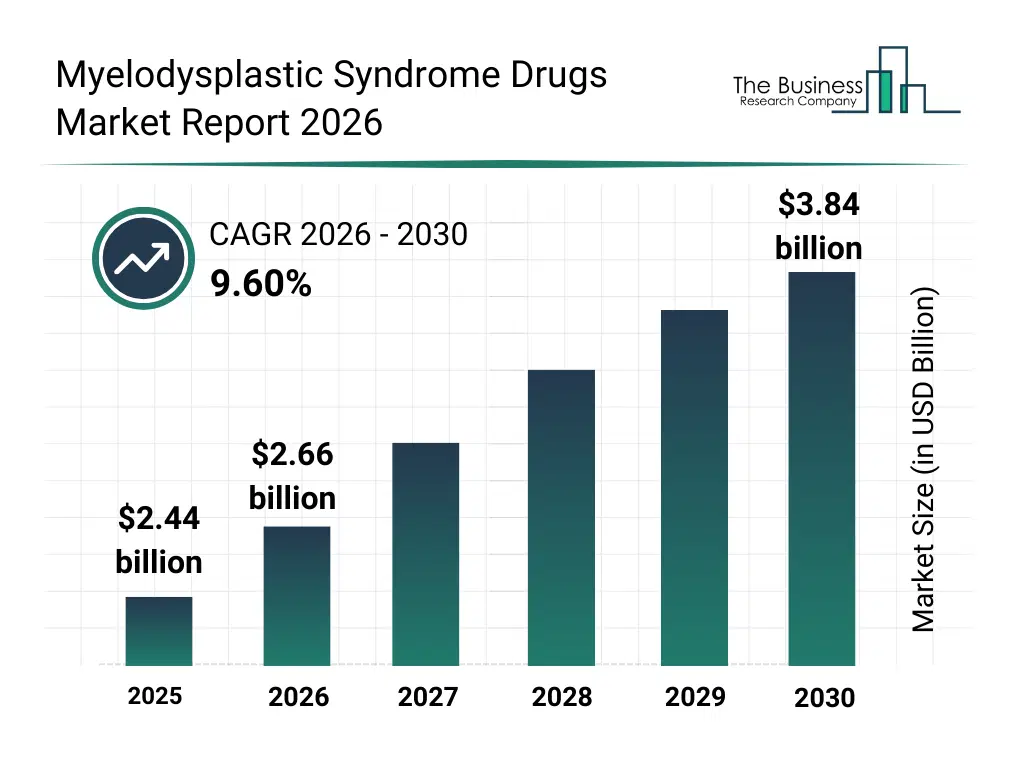
What Is The Myelodysplastic Syndrome Drugs Market Size and Share 2026?
The myelodysplastic syndrome drugs market size has grown strongly in recent years. It will grow from $2.44 billion in 2025 to $2.66 billion in 2026 at a compound annual growth rate (CAGR) of 8.9%. The growth in the historic period can be attributed to limited availability of targeted mds therapies, reliance on blood transfusions, low awareness of mds subtypes, limited r&d investments, high treatment costs in emerging markets.What Is The Myelodysplastic Syndrome Drugs Market Growth Forecast?
The myelodysplastic syndrome drugs market size is expected to see strong growth in the next few years. It will grow to $3.84 billion in 2030 at a compound annual growth rate (CAGR) of 9.6%. The growth in the forecast period can be attributed to rising incidence of mds due to aging populations, increased investment in precision medicine, advancements in genomics-based therapies, growing healthcare infrastructure in apac, expansion of reimbursement policies for mds drugs. Major trends in the forecast period include personalized mds therapies, increased adoption of erythropoiesis-stimulating agents (esas), expansion of outpatient treatment centers, growing preference for parenteral administration, rising focus on generic mds drug development.
Global Myelodysplastic Syndrome Drugs Market Segmentation
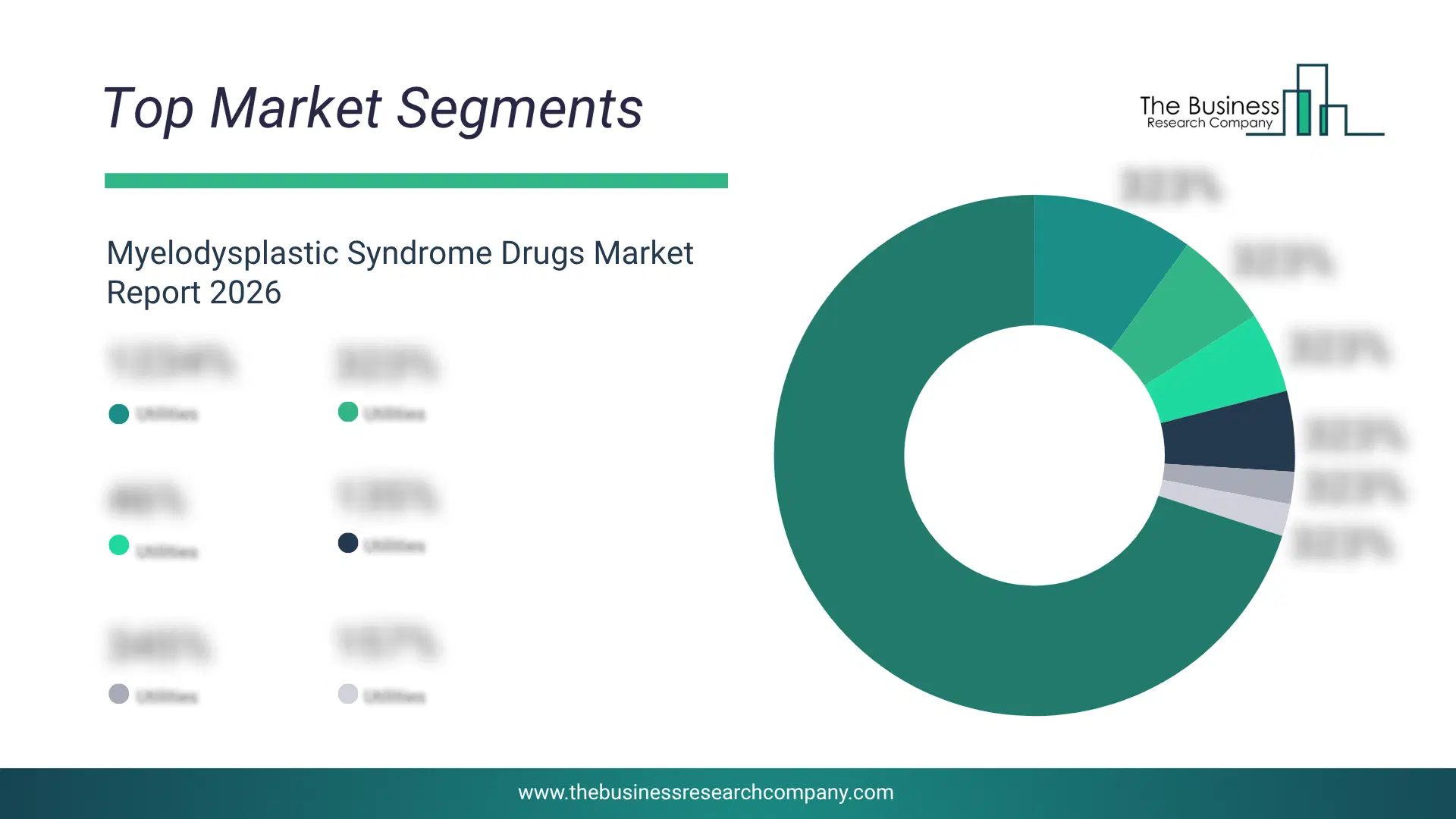
1) By Therapeutic Class: Immunomodulatory Drugs, Hypomethylating Agents, Anti-anemics 2) By Type of Syndrome: Refractory Cytopenia With Multilineage Dysplasia, Refractory Anemia, Refractory Anemia With Excess Blasts, Refractory Anemia With Ringed Sideroblasts 3) By Route of Administration: Oral, Parenteral 4) By Applications: Original, Generics 5) By End-User: Hospitals, Clinics, Ambulatory Surgical Centers Subsegments: 1) By Immunomodulatory Drugs: Thalidomide, Lenalidomide, Pomalidomide 2) By Hypomethylating Agents: Azacitidine, Decitabine, Guadecitabine 3) By Anti-anemics: Erythropoiesis-Stimulating Agents (ESAs), Iron Supplements, Blood Transfusion ProductsWhat Is The Driver Of The Myelodysplastic Syndrome Drugs Market?
Rising demand for personalized medicine is expected to propel the growth of the myelodysplastic syndrome drugs market going forward. Personalized medicine is a medical approach that involves dividing individuals into separate groups based on their medical history, genetic profile, and other factors. For myelodysplastic syndrome, personalized medicine involves tailoring treatment based on an individual's unique genetic and molecular characteristics. This helps to optimize therapeutic outcomes and minimize adverse effects when managing this heterogeneous hematological disorder. For instance, in February 2024, according to the Personalized Medicine Coalition, a US-based nonprofit organization, the USFDA approved 16 new personalized treatments for rare disease patients in 2023, a significant increase from 6 personalized treatments in 2022. Therefore, the rising demand for personalized medicine is driving the growth of the myelodysplastic syndrome drugs industry.Key Players In The Global Myelodysplastic Syndrome Drugs Market
Major companies operating in the myelodysplastic syndrome drugs market are Amgen Inc., Celgene Corporation, Otsuka Pharmaceutical Co. Ltd., Takeda Pharmaceutical Company Limited, Cipla Limited, Dr. Reddy's Laboratories Ltd., Lupin Ltd., Onconova Therapeutics Inc., Sun Pharmaceutical Industries Limited, Aprea Therapeutics, Bayer AG, Bristol Myers Squibb, Celator Pharmaceuticals, AbbVie Inc., Geron Co., Hikma Pharmaceuticals plc, Jazz Pharmaceuticals Inc., Mylan NV, Novartis AG, Sandoz Inc., Teva Pharmaceutical Industries Ltd., Incyte Corporation, MEI Pharma Inc.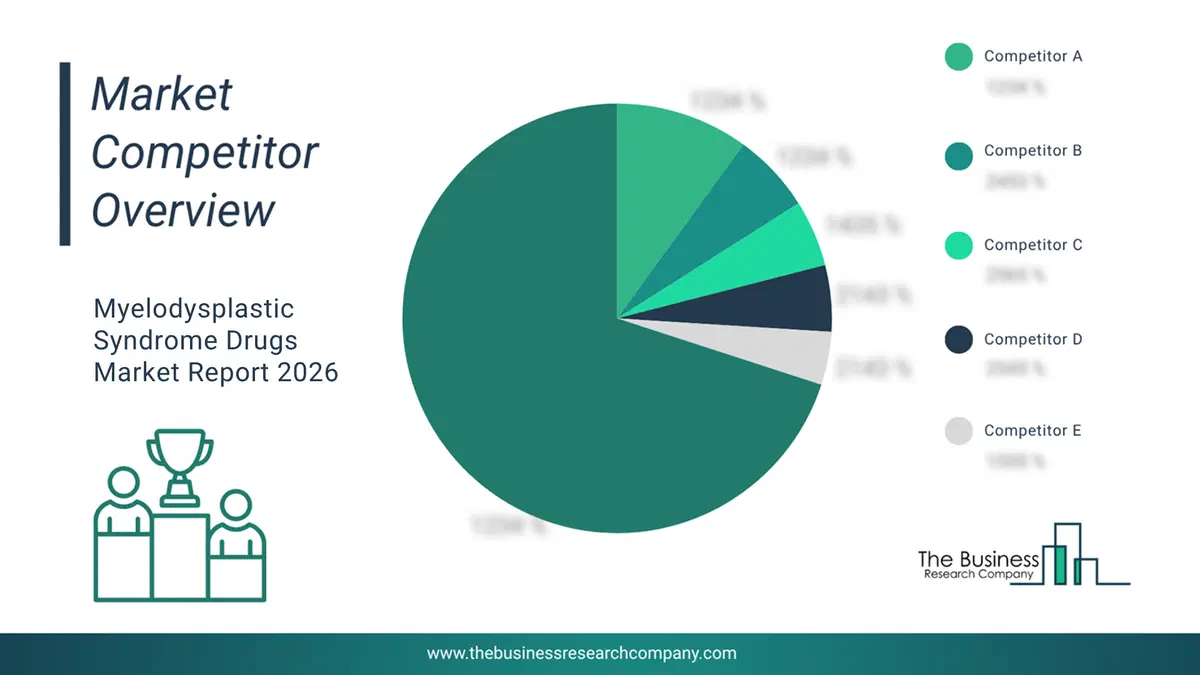
This chart is for illustrative purposes; the full report includes a detailed competitor analysis and comprehensive overview of the top 10 companies in the market.
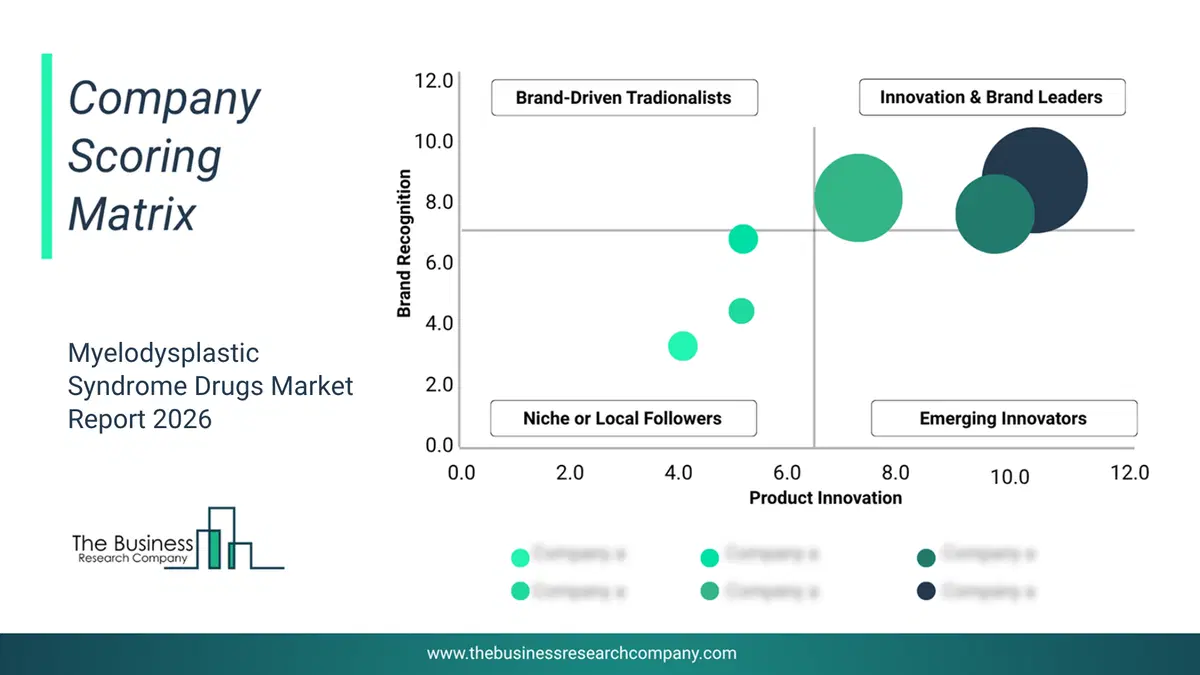
This chart maps companies by product innovation and brand strength, with bubble size indicating relative revenue, helping identify market leaders, challengers, and niche players. This is an illustrative chart; the full report provides a complete and accurate competitive analysis.
Global Myelodysplastic Syndrome Drugs Market Trends and Insights
Major companies operating in the myelodysplastic syndrome drugs market are developing telomerase inhibitors to target the enzyme telomerase, aiming to slow down the progression of the disease by limiting the uncontrolled division of abnormal cells. Telomerase inhibitors are helpful in myelodysplastic syndrome drugs as they work by inhibiting the enzyme telomerase, which slows the proliferation of abnormal cells, potentially improving patient outcomes. For instance, in June 2024, Geron Corporation, a US-based biotechnology company, launched rytelo (imetelstat), an FDA-approved intravenous telomerase inhibitor for adults with low to intermediate-1 risk myelodysplastic syndromes (LR-MDS) and transfusion dependent anemia unresponsive to and ineligible for ESA. Rytelo offers durable transfusion independence, improved hemoglobin levels, and addresses an unmet need in the myelodysplastic syndrome drugs market with a manageable safety profile.What Are Latest Mergers And Acquisitions In The Myelodysplastic Syndrome Drugs Market?
In January 2023, Merck, a US-based pharmaceutical company, acquired Imago Biosciences, Inc. for an undisclosed amount. Through this acquisition, Merck aims to enhance its hematology capabilities by integrating Imago BioSciences' innovative therapies. Imago BioSciences, Inc. is a US-based company specializing in developing innovative therapies for hematologic malignancies, including myelodysplastic syndromes (MDS).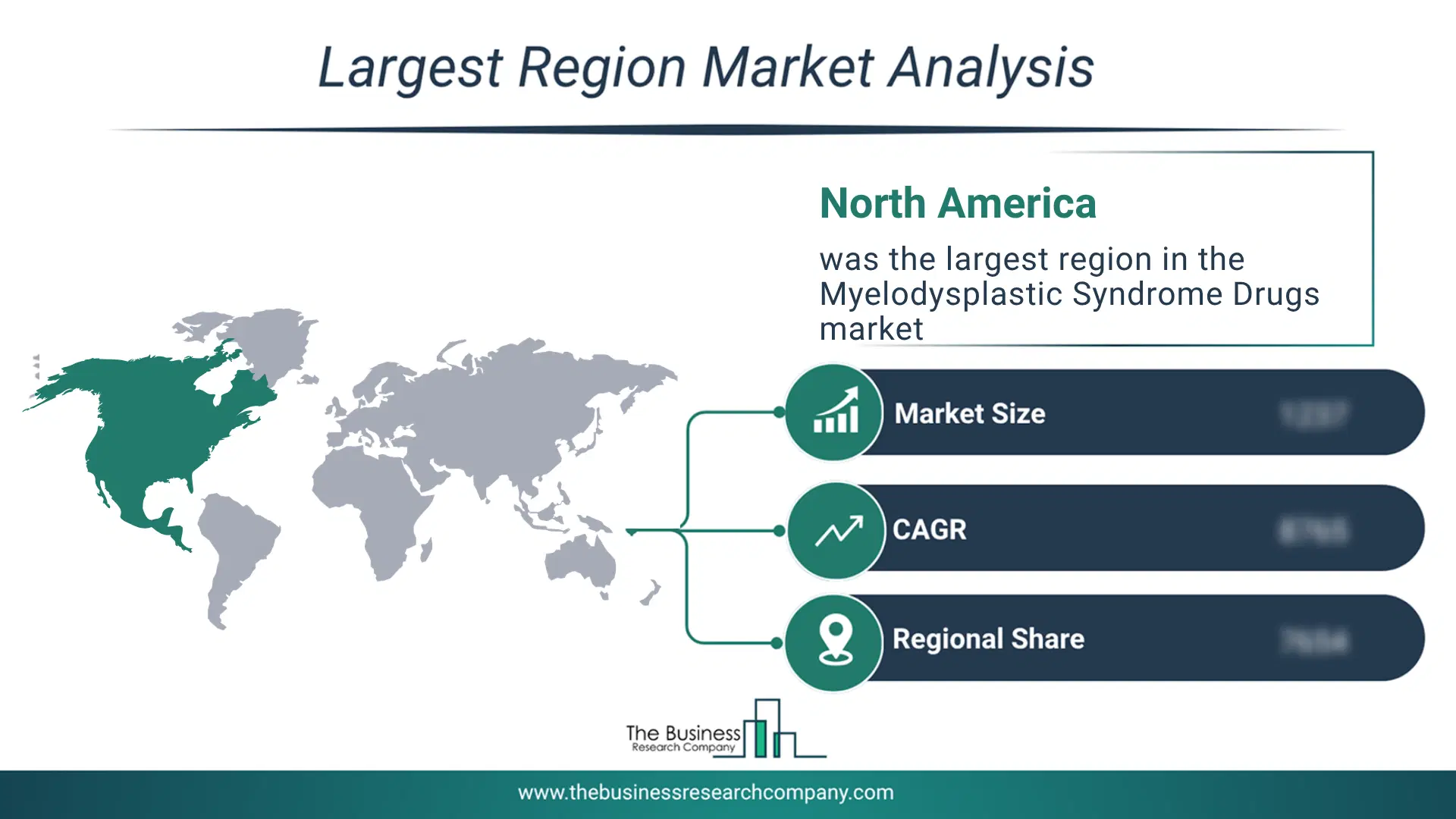
Regional Insights
North America was the largest region in the Myelodysplastic syndrome drugs market in 2025. Asia-Pacific is expected to be the fastest growing region in the global myelodysplastic syndrome drugs market report during the forecast period. The regions covered in this market report are Asia-Pacific, South East Asia, Western Europe, Eastern Europe, North America, South America, Middle East, Africa. The countries covered in this market report are Australia, Brazil, China, France, Germany, India, Indonesia, Japan, Taiwan, Russia, South Korea, UK, USA, Canada, Italy, Spain.What Defines the Myelodysplastic Syndrome Drugs Market?
The myelodysplastic syndrome drug market consists of sales of drugs such as azacytidine, decitabine, and lenalidomide. Values in this market are ‘factory gate’ values, that is the value of goods sold by the manufacturers or creators of the goods, whether to other entities (including downstream manufacturers, wholesalers, distributors, and retailers) or directly to end customers. The value of goods in this market includes related services sold by the creators of the goods.How is Market Value Defined and Measured?
The market value is defined as the revenues that enterprises gain from the sale of goods and/or services within the specified market and geography through sales, grants, or donations in terms of the currency (in USD unless otherwise specified). The revenues for a specified geography are consumption values that are revenues generated by organizations in the specified geography within the market, irrespective of where they are produced. It does not include revenues from resales along the supply chain, either further along the supply chain or as part of other products.
This chart presents market attractiveness based on a quantitative evaluation of growth, competition, strategic alignment, and risk, offering a clear view of opportunity areas for decision-making. This chart is for illustrative purposes; the full report contains the complete analysis.

This chart highlights the Total Addressable Market (TAM) by estimating the maximum revenue opportunity using an assumption-driven approach, supporting strategic planning and opportunity sizing across markets. The chart is illustrative; the full report provides a more comprehensive analysis.
What Key Data and Analysis Are Included in the Myelodysplastic Syndrome Drugs Market Report 2026?
The myelodysplastic syndrome drugs market research report is one of a series of new reports from The Business Research Company that provides market statistics, including industry global market size, regional shares, competitors with the market share, detailed market segments, market trends and opportunities, and any further data you may need to thrive in the myelodysplastic syndrome drugs industry. The market research report delivers a complete perspective of everything you need, with an in-depth analysis of the current and future state of the industry.Myelodysplastic Syndrome Drugs Market Report Forecast Analysis
| Report Attribute | Details |
|---|---|
| Market Size Value In 2026 | $2.66 billion |
| Revenue Forecast In 2030 | $3.84 billion |
| Growth Rate | CAGR of 8.9% from 2026 to 2030 |
| Base Year For Estimation | 2025 |
| Actual Estimates/Historical Data | 2020-2025 |
| Forecast Period | 2026 - 2030 |
| Market Representation | Revenue in USD Billion and CAGR from 2026 to 2030 |
| Segments Covered | Therapeutic Class, Type of Syndrome, Route of Administration, Applications, End-User |
| Regional Scope | Asia-Pacific, Western Europe, Eastern Europe, North America, South America, Middle East, Africa |
| Country Scope | The countries covered in the report are Australia, Brazil, China, France, Germany, India, Indonesia, Japan, Taiwan, Russia, South Korea, UK, USA, Canada, Italy, Spain. |
| Key Companies Profiled | Amgen Inc., Celgene Corporation, Otsuka Pharmaceutical Co. Ltd., Takeda Pharmaceutical Company Limited, Cipla Limited, Dr. Reddy's Laboratories Ltd., Lupin Ltd., Onconova Therapeutics Inc., Sun Pharmaceutical Industries Limited, Aprea Therapeutics, Bayer AG, Bristol Myers Squibb, Celator Pharmaceuticals, AbbVie Inc., Geron Co., Hikma Pharmaceuticals plc, Jazz Pharmaceuticals Inc., Mylan NV, Novartis AG, Sandoz Inc., Teva Pharmaceutical Industries Ltd., Incyte Corporation, MEI Pharma Inc. |
| Customization Scope | Request for Customization |
| Pricing And Purchase Options | Explore Purchase Options |