
Myelofibrosis (MF) Market Report 2026
Global Outlook – By Drug Type (Jak Inhibitor, Immunomodulators, Hydroxyurea, Other Drug Types), By Treatment Type (Chemotherapy, Targeted Therapy, Other Treatment Types), By Route Of Administration (Oral, Parenteral, Other Routes Of Administration), By Distribution Channel (Hospital Pharmacy, Online Pharmacy, Retail Pharmacy), By End-User (Hospitals, Homecare, Specialty Clinics, Other End-Users) - Market Size, Trends, Strategies, and Forecast to 2030
Myelofibrosis (MF) Market Overview
• Myelofibrosis (MF) market size has reached to $1.55 billion in 2025 • Expected to grow to $1.8 billion in 2030 at a compound annual growth rate (CAGR) of 3% • Growth Driver: Rising Demand For Targeted Therapies Driving The Market Growth • Market Trend: Advancements In Targeted Therapies In The Market • North America was the largest region in 2025 and Asia-Pacific is the fastest growing region.What Is Covered Under Myelofibrosis (MF) Market?
Myelofibrosis (MF) refers to a rare bone marrow disorder characterized by excessive scar tissue formation, which disrupts normal blood cell production. This condition can lead to anemia, an enlarged spleen, and symptoms such as fatigue, night sweats, and bone pain. The main drug types of myelofibrosis (MF) are JAK inhibitors, immunomodulators, hydroxyurea, and other therapies. A JAK inhibitor is a type of medication that blocks Janus kinase enzymes, which play a key role in the signaling pathways that drive inflammation, immune response, and cell growth, often used to treat diseases like rheumatoid arthritis and myelofibrosis. Treatment approaches for MF include chemotherapy, targeted therapy, and other treatment types. The route of administration includes oral, parenteral, and other routes. It is distributed through various channels, such as hospital pharmacies, online pharmacies, and retail pharmacies, and is used by several end users, such as hospitals, home care settings, specialty clinics, and other healthcare facilities.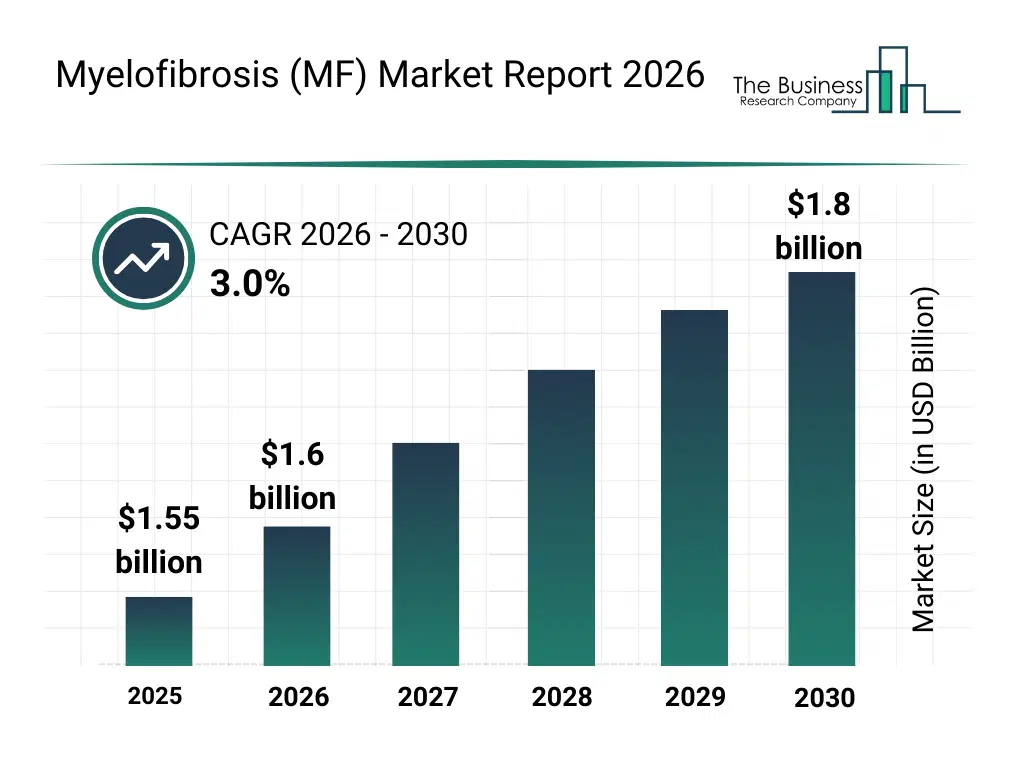
What Is The Myelofibrosis (MF) Market Size and Share 2026?
The myelofibrosis (mf) market size has grown steadily in recent years. It will grow from $1.55 billion in 2025 to $1.6 billion in 2026 at a compound annual growth rate (CAGR) of 3.2%. The growth in the historic period can be attributed to limited treatment options available, high prevalence of anemia in mf patients, rise in autoimmune-related conditions, increased diagnostic challenges, reliance on corticosteroid-based management.What Is The Myelofibrosis (MF) Market Growth Forecast?
The myelofibrosis (mf) market size is expected to see steady growth in the next few years. It will grow to $1.8 billion in 2030 at a compound annual growth rate (CAGR) of 3.0%. The growth in the forecast period can be attributed to advancements in jak inhibitor development, growing adoption of precision medicine, increased investment in hematology r&d, expanding stem-cell therapy advancements, rising availability of targeted oral therapies. Major trends in the forecast period include increasing adoption of jak inhibitor-based therapies, growing focus on combination treatment approaches, rising emphasis on early diagnosis and screening programs, expanding research in stem-cell transplantation and regenerative care, increased use of supportive care to manage symptom burden.
Global Myelofibrosis (MF) Market Segmentation
1) By Drug Type: Jak Inhibitor, Immunomodulators, Hydroxyurea, Other Drug Types 2) By Treatment Type: Chemotherapy, Targeted Therapy, Other Treatment Types 3) By Route Of Administration: Oral, Parenteral, Other Routes Of Administration 4) By Distribution Channel: Hospital Pharmacy, Online Pharmacy, Retail Pharmacy 5) By End-User: Hospitals, Homecare, Specialty Clinics, Other End-Users Subsegments: 1) By Jak Inhibitor: Ruxolitinib, Fedratinib, Momelotinib, Itacitinib 2) By Immunomodulators: Thalidomide, Lenalidomide, Pomalidomide 3) By Hydroxyurea: Oral Hydroxyurea, Injectable Hydroxyurea 4) By Other Drug Types: Erythropoiesis-Stimulating Agents (ESAs), Danazol, Monoclonal Antibodies, Chemotherapy AgentsWhat Is The Driver Of The Myelofibrosis (MF) Market?
Growing demand for targeted therapies is expected to propel the growth of the myelofibrosis (MF) market going forward. Targeted therapies are a medical approach that tailors treatments and healthcare decisions based on individual genetic, environmental, and lifestyle factors. The increasing demand for targeted therapies is driven by advancements in genomics, biotechnology, and data analytics, enabling more precise, effective, and individualized treatments. Myelofibrosis (MF) provides a critical framework for the development of targeted therapies by identifying key molecular pathways, such as JAK-STAT signaling, which enable the design of precision treatments like JAK inhibitors (Ruxolitinib, Fedratinib, and Pacritinib) to manage symptoms and slow disease progression. For instance, in May 2024, according to the American Cancer Society, a US-based non-profit organization, approximately 81,610 new kidney cancer cases (52,380 men and 29,230 women) are expected in the United States in 2024, along with an estimated 14,390 deaths (9,450 men and 4,940 women). Therefore, growing demand for targeted therapies is driving the growth of the myelofibrosis (MF) industry.Key Players In The Global Myelofibrosis (MF) Market
Major companies operating in the myelofibrosis (mf) market are Pfizer Inc, Novartis AG, Incyte Corporation, CTI BioPharma Corp, Karyopharm Therapeutics Inc, Sierra Oncology Inc, Kartos Therapeutics Inc, NS Pharma Inc, Keros Therapeutics Inc, Pharmaxis Ltd, Sumitomo Pharma Oncology, Galecto Biotech AB, Actuate Therapeutics Inc, AbbVie Inc, Bristol‑Myers Squibb Company, Chia Tai Tianqing Pharmaceutical Group Co Ltd, Taiga Biotechnologies Inc, Rigel Pharmaceuticals Inc, Imago BioSciences Inc, Samus Therapeutics Inc.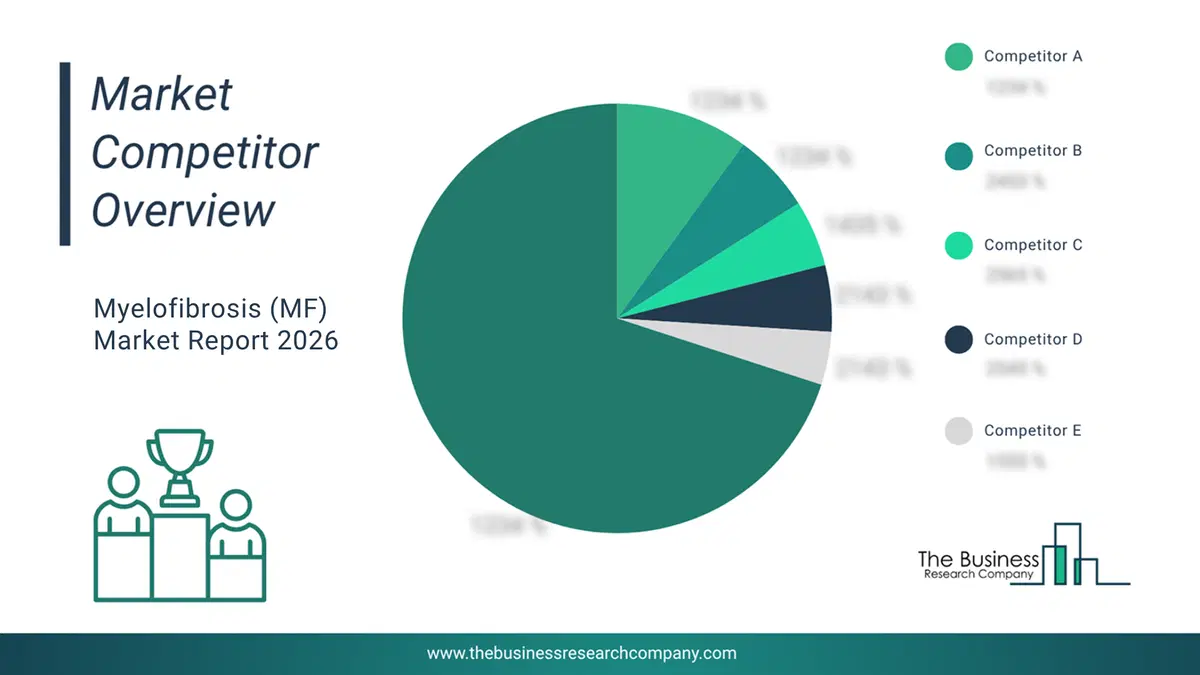
This chart is for illustrative purposes; the full report includes a detailed competitor analysis and comprehensive overview of the top 10 companies in the market.
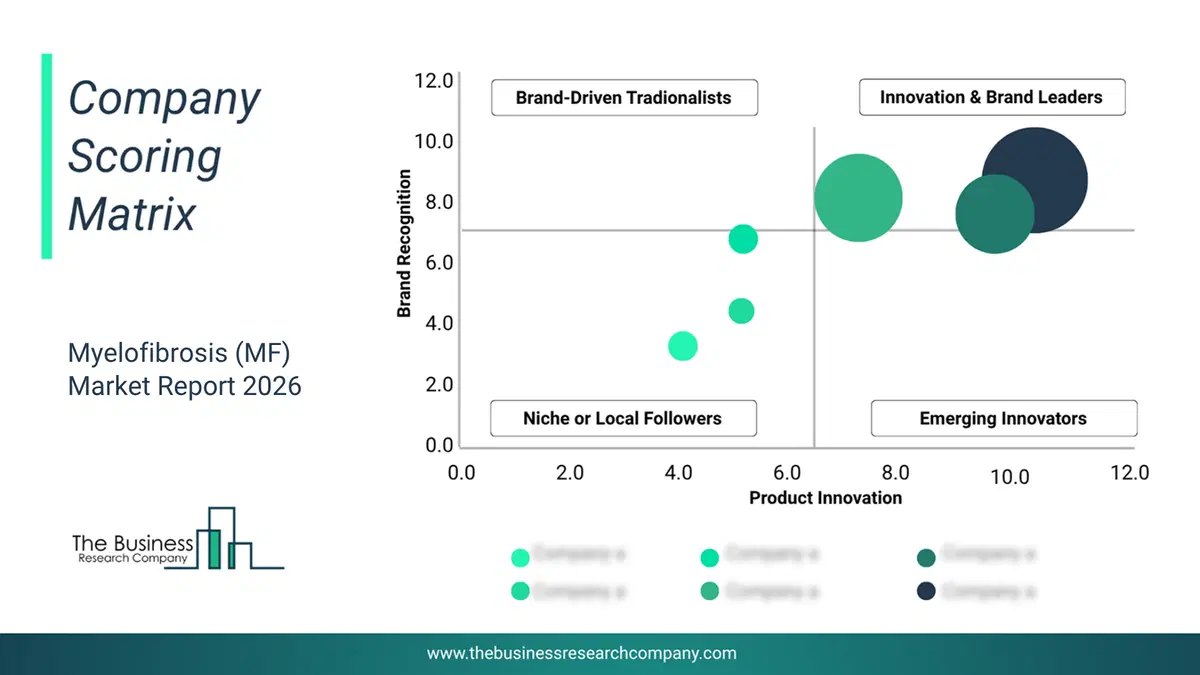
This chart maps companies by product innovation and brand strength, with bubble size indicating relative revenue, helping identify market leaders, challengers, and niche players. This is an illustrative chart; the full report provides a complete and accurate competitive analysis.
Global Myelofibrosis (MF) Market Trends and Insights
Major companies operating in the myelofibrosis (MF) market are focusing on the expansion of targeted therapies, such as JAK1/JAK2 and ACVR1 inhibitors, to enhance treatment efficacy, address disease progression, and improve patient outcomes in myelofibrosis (MF). JAK1/JAK2 inhibitors target the Janus kinase pathway to reduce inflammation and abnormal blood cell production in myelofibrosis, while ACVR1 inhibitors block activin receptor-like kinase 2 (ALK2) to regulate bone marrow fibrosis and disease progression. For instance, in September 2023, GSK plc, a UK-based pharmaceutical company, has received US Food and Drug Administration (FDA) approval for Ojjaara (momelotinib), indicated for the treatment of intermediate- or high-risk myelofibrosis. Its dual mechanism of action, targeting both JAK1/JAK2 and ACVR1, helps regulate inflammatory pathways while also improving hemoglobin levels, reducing the need for transfusions. This approval not only expands treatment options but also sets a new standard in MF management for patients struggling with anemia, a major unmet need in the disease landscape.What Are Latest Mergers And Acquisitions In The Myelofibrosis (MF) Market?
In February 2024, Novartis AG, a Switzerland-based pharmaceutical corporation, acquired MorphoSys AG for EUR 2.7 billion ($2.91 billion). With this acquisition, Novartis AG aims to gain full ownership of pelabresib (CPI-0610), a promising treatment combined with ruxolitinib for myelofibrosis patients, and tulmimetostat (CPI-0209), an investigational dual EZH1/EZH2 inhibitor under evaluation for solid tumors and lymphomas, strengthening its oncology portfolio with innovative therapies addressing critical unmet medical needs. MorphoSys AG is a Germany-based company that develops innovative cancer treatments and medicines, offering pelabresib in combination with ruxolitinib for patients with myelofibrosis (MF).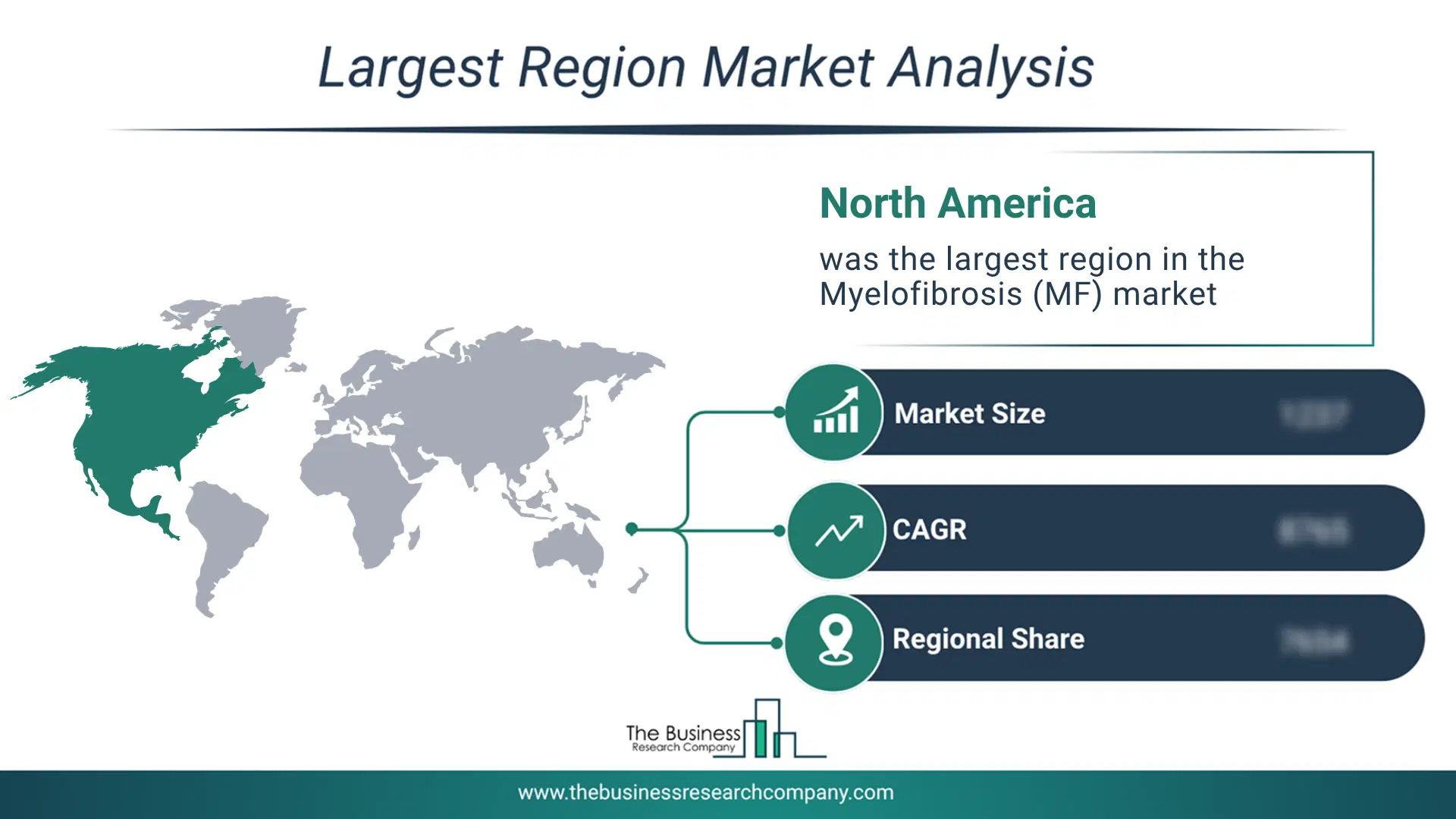
Regional Outlook
North America was the largest region in the myelofibrosis (MF) market in 2025. Asia-Pacific is expected to be the fastest-growing region in the forecast period. The regions covered in this market report are Asia-Pacific, South East Asia, Western Europe, Eastern Europe, North America, South America, Middle East, Africa. The countries covered in this market report are Australia, Brazil, China, France, Germany, India, Indonesia, Japan, Taiwan, Russia, South Korea, UK, USA, Canada, Italy, Spain.What Defines the Myelofibrosis (MF) Market?
The myelofibrosis (MF) market consists of revenues earned by entities by providing services such as diagnostic services, patient support programs, and clinical trials. The market value includes the value of related goods sold by the service provider or included within the service offering. The myelofibrosis (MF) market also includes sales of hematological diagnostic tools, novel fibrosis-targeting drugs, and evolving regenerative therapies. Values in this market are ‘factory gate’ values, that is, the value of goods sold by the manufacturers or creators of the goods, whether to other entities (including downstream manufacturers, wholesalers, distributors, and retailers) or directly to end customers. The value of goods in this market includes related services sold by the creators of the goods.How is Market Value Defined and Measured?
The market value is defined as the revenues that enterprises gain from the sale of goods and/or services within the specified market and geography through sales, grants, or donations in terms of the currency (in USD unless otherwise specified). The revenues for a specified geography are consumption values that are revenues generated by organizations in the specified geography within the market, irrespective of where they are produced. It does not include revenues from resales along the supply chain, either further along the supply chain or as part of other products.
This chart presents market attractiveness based on a quantitative evaluation of growth, competition, strategic alignment, and risk, offering a clear view of opportunity areas for decision-making. This chart is for illustrative purposes; the full report contains the complete analysis.

This chart highlights the Total Addressable Market (TAM) by estimating the maximum revenue opportunity using an assumption-driven approach, supporting strategic planning and opportunity sizing across markets. The chart is illustrative; the full report provides a more comprehensive analysis.
What Key Data and Analysis Are Included in the Myelofibrosis (MF) Market Report 2026?
The myelofibrosis (mf) market research report is one of a series of new reports from The Business Research Company that provides market statistics, including industry global market size, regional shares, competitors with the market share, detailed market segments, market trends and opportunities, and any further data you may need to thrive in the myelofibrosis (mf) industry. The market research report delivers a complete perspective of everything you need, with an in-depth analysis of the current and future state of the industry.Myelofibrosis (MF) Market Report Forecast Analysis
| Report Attribute | Details |
|---|---|
| Market Size Value In 2026 | $1.6 billion |
| Revenue Forecast In 2030 | $1.8 billion |
| Growth Rate | CAGR of 3% from 2026 to 2030 |
| Base Year For Estimation | 2025 |
| Actual Estimates/Historical Data | 2020-2025 |
| Forecast Period | 2026 - 2030 |
| Market Representation | Revenue in USD Billion and CAGR from 2026 to 2030 |
| Segments Covered | Drug Type, Treatment Type, Route Of Administration, Distribution Channel, End-User |
| Regional Scope | Asia-Pacific, Western Europe, Eastern Europe, North America, South America, Middle East, Africa |
| Country Scope | The countries covered in the report are Australia, Brazil, China, France, Germany, India, Indonesia, Japan, Taiwan, Russia, South Korea, UK, USA, Canada, Italy, Spain |
| Key Companies Profiled | Pfizer Inc, Novartis AG, Incyte Corporation, CTI BioPharma Corp, Karyopharm Therapeutics Inc, Sierra Oncology Inc, Kartos Therapeutics Inc, NS Pharma Inc, Keros Therapeutics Inc, Pharmaxis Ltd, Sumitomo Pharma Oncology, Galecto Biotech AB, Actuate Therapeutics Inc, AbbVie Inc, Bristol‑Myers Squibb Company, Chia Tai Tianqing Pharmaceutical Group Co Ltd, Taiga Biotechnologies Inc, Rigel Pharmaceuticals Inc, Imago BioSciences Inc, Samus Therapeutics Inc. |
| Customization Scope | Request for Customization |
| Pricing And Purchase Options | Explore Purchase Options |