

Myeloproliferative Disorders Drugs Market Report 2026
Global Outlook – By Type (Primary Myelofibrosis, Polycythemia Vera (PV), Essential Thrombocythemia (ET), Chronic Eosinophilic Leukemia Or Hyper eosinophilic Syndrome (HES), Systemic Masto cytosis (SM)), By Drug Type (JAK2 Inhibitors, Anti-Neoplastics, Demethylation Agents, Imatinib Mesylate, Other Drug Types), By Route Of Administration (Oral, Parenteral, Other Routes Of Administration), By Distribution Channel (Hospital Pharmacy, Retail Stores, Drug Stores) – Market Size, Trends, Strategies, and Forecast to 2030
Myeloproliferative Disorders Drugs Market Overview
• Myeloproliferative Disorders Drugs market size has reached to $9.83 billion in 2025 • Expected to grow to $12.17 billion in 2030 at a compound annual growth rate (CAGR) of 4.6% • Growth Driver: Increasing Incidence Of Myeloproliferative Disorders Drives Growth In The Myeloproliferative Disorders Drugs Market • Market Trend: Key Players Secure Agencies’ Approval For Products To Elevate Myeloproliferative Disorders Drugs Market Access • North America was the largest region in 2025 and Asia-Pacific is the fastest growing region.What Is Covered Under Myeloproliferative Disorders Drugs Market?
Myeloproliferative disorder drugs refer to the drugs that are used for the medication of blood cancers caused by changes in the stem cells inside the bone marrow, the tissue that makes blood cells. The drug is used for the treatment of various types of blood malignancies, including myelodysplastic/myeloproliferative disorders. The main myeloproliferative disorders drugs types are primary myelofibrosis, polycythemia vera (PV), essential thrombocythemia (et), chronic eosinophilic leukemia or hyper eosinophilic syndrome (HES), and systemic mastocytosis (SM). Primary myelofibrosis refers to a rare chronic blood condition characterized by aberrant fibrous tissue synthesis in the bone marrow, resulting in diminished blood cell generation and scar tissue formation. The various drug types are jak2 inhibitors, anti-neoplastic, demethylation agents, imatinib mesylate, others, that are taken through oral, parenteral, and other mediums. These are distributed through hospital pharmacy, retail stores, and drug stores.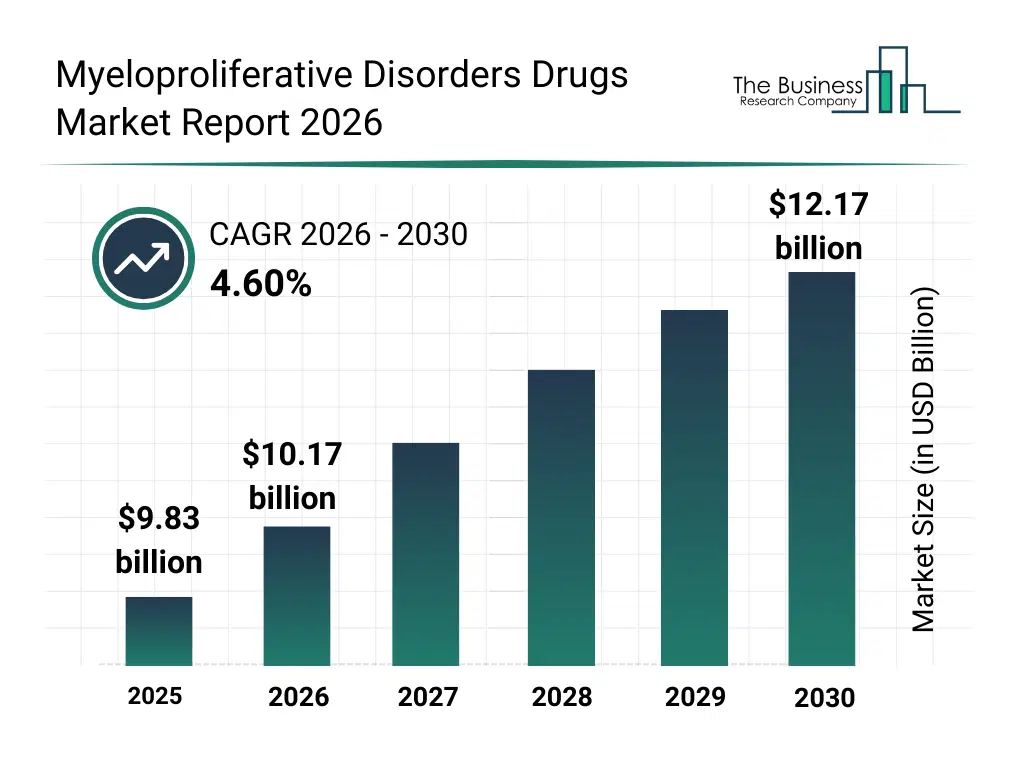
What Is The Myeloproliferative Disorders Drugs Market Size and Share 2026?
The myeloproliferative disorders drugs market size has grown steadily in recent years. It will grow from $9.83 billion in 2025 to $10.17 billion in 2026 at a compound annual growth rate (CAGR) of 3.5%. The growth in the historic period can be attributed to high prevalence of myeloproliferative disorders, advancements in chemotherapy, growing awareness of blood cancers, availability of generic drugs, supportive care improvements.What Is The Myeloproliferative Disorders Drugs Market Growth Forecast?
The myeloproliferative disorders drugs market size is expected to see steady growth in the next few years. It will grow to $12.17 billion in 2030 at a compound annual growth rate (CAGR) of 4.6%. The growth in the forecast period can be attributed to emergence of targeted therapies, increasing r&d investments, adoption of precision medicine, expansion of healthcare infrastructure in emerging markets, favorable regulatory approvals. Major trends in the forecast period include personalized treatment development, increased focus on rare blood disorders, advancements in targeted therapies, expansion of clinical trials, rising investment in orphan drugs.
Global Myeloproliferative Disorders Drugs Market Segmentation
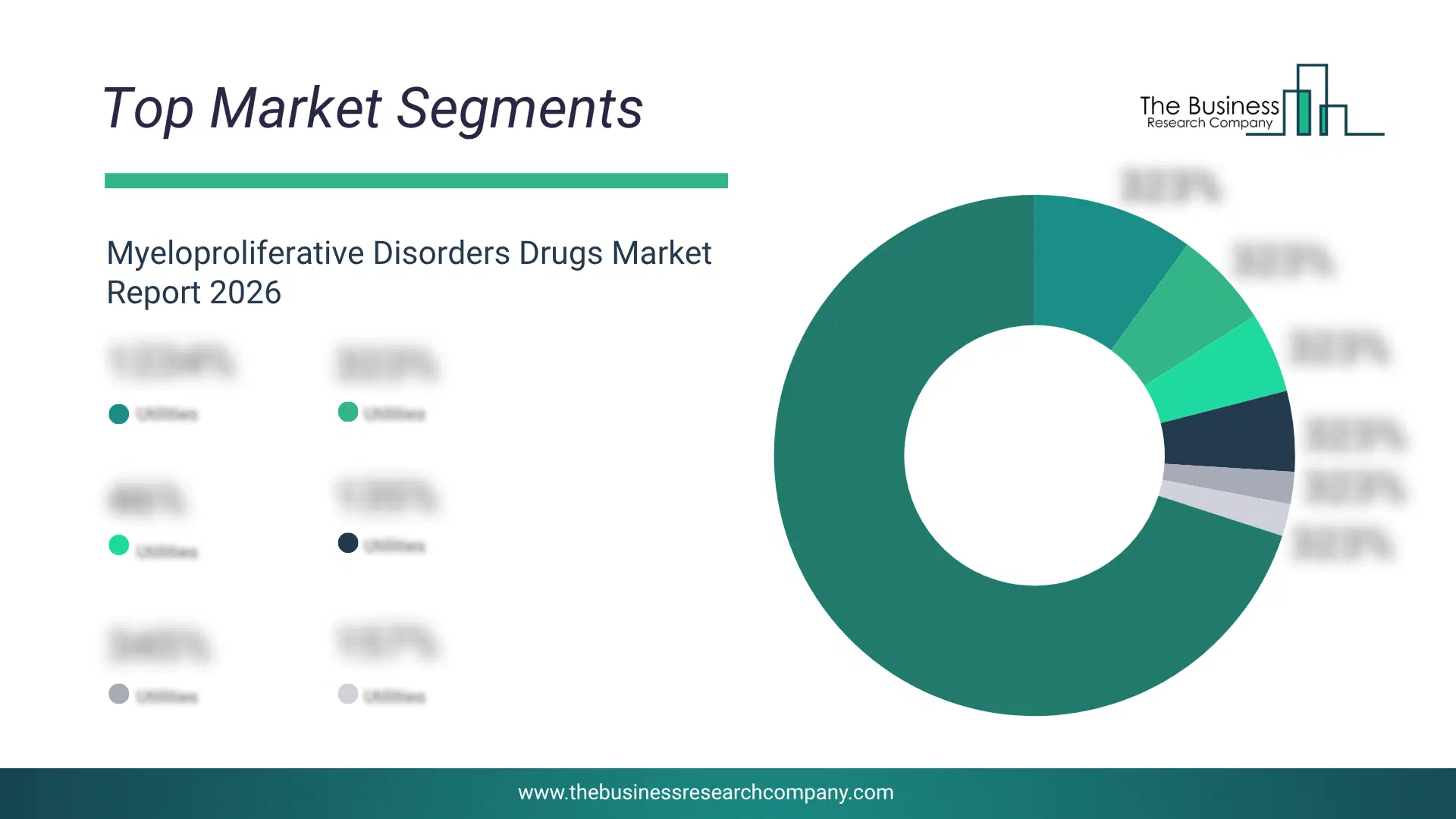
1) By Type: Primary Myelofibrosis, Polycythemia Vera (PV), Essential Thrombocythemia (ET), Chronic Eosinophilic Leukemia Or Hyper eosinophilic Syndrome (HES), Systemic Masto cytosis (SM) 2) By Drug Type: JAK2 Inhibitors, Anti-Neoplastics, Demethylation Agents, Imatinib Mesylate, Other Drug Types 3) By Route Of Administration: Oral, Parenteral, Other Routes Of Administration 4) By Distribution Channel: Hospital Pharmacy, Retail Stores, Drug Stores Subsegments: 1) By Primary Myelofibrosis: JAK Inhibitors, Immunomodulatory Agents, Supportive Care 2) By Polycythemia Vera (PV): JAK Inhibitors, Hydroxyurea, Phlebotomy, Interferon-alpha 3) By Essential Thrombocythemia (ET): JAK Inhibitors, Hydroxyurea, Anagrelide, Interferon-alpha 4) By Chronic Eosinophilic Leukemia or Hyper Eosinophilic Syndrome (HES): Tyrosine Kinase Inhibitors, Corticosteroids, Interferon-alpha 5) By Systemic Mastocytosis (SM): Tyrosine Kinase Inhibitors, Corticosteroids, Antihistamines, ImmunotherapyWhat Is The Driver Of The Myeloproliferative Disorders Drugs Market?
The rise in the incidence of myeloproliferative disorders is expected to propel the growth of the myeloproliferative disorder’s drugs market going forward. Myeloproliferative disorders refer to a diverse category of diseases distinguished from acute leukemia by the cellular growth of one or more hematologic cell lines in the peripheral blood. The rise in myeloproliferative disorders is mostly driven by genetic disorders, overexposure to radiation, electrical wiring, or chemicals, the geriatric population. Myeloproliferative disease drugs block the BCR-ABL protein by binding to the ATP pocket in the active site, inhibiting downstream phosphorylation of the target protein, which helps in the treatment of the myeloproliferative disorder. For instance, in June 2025, according to the American Cancer Society, a US-based non-profit organization, with roughly 9,560 new diagnoses and 1,290 deaths annually, chronic myeloid leukemia which represents about 15% of all new U.S. leukemia cases affects approximately 1 in 500 people over a lifetime and is typically diagnosed around age 66, though 2% of cases occur in individuals under 20. Therefore, the rise in the incidence of myeloproliferative disorders is driving the growth of the myeloproliferative disorders drug industry.Key Players In The Global Myeloproliferative Disorders Drugs Market
Major companies operating in the myeloproliferative disorders drugs market are Novartis AG, Bristol-Myers Squibb Company, Pfizer Inc., Takeda Pharmaceutical Company Limited, Teva Pharmaceutical Industries Ltd., Incyte Corporation, Eli Lilly and Co, F Hoffmann-La Roche Ltd., Mylan NV, Hikma Pharmaceuticals plc, Bayer AG, Sun Pharmaceutical Industries Ltd., Boehringer Ingelheim International GmbH, Sanofi Aventis Inc., AstraZeneca AB, Apotex Inc, Celgene Co., Geron Co., Promedior Inc., Johnson & Johnson Private Limited, AbbVie Inc., Astellas Pharma Inc., Daiichi Sankyo Chemical Pharma Co. Ltd.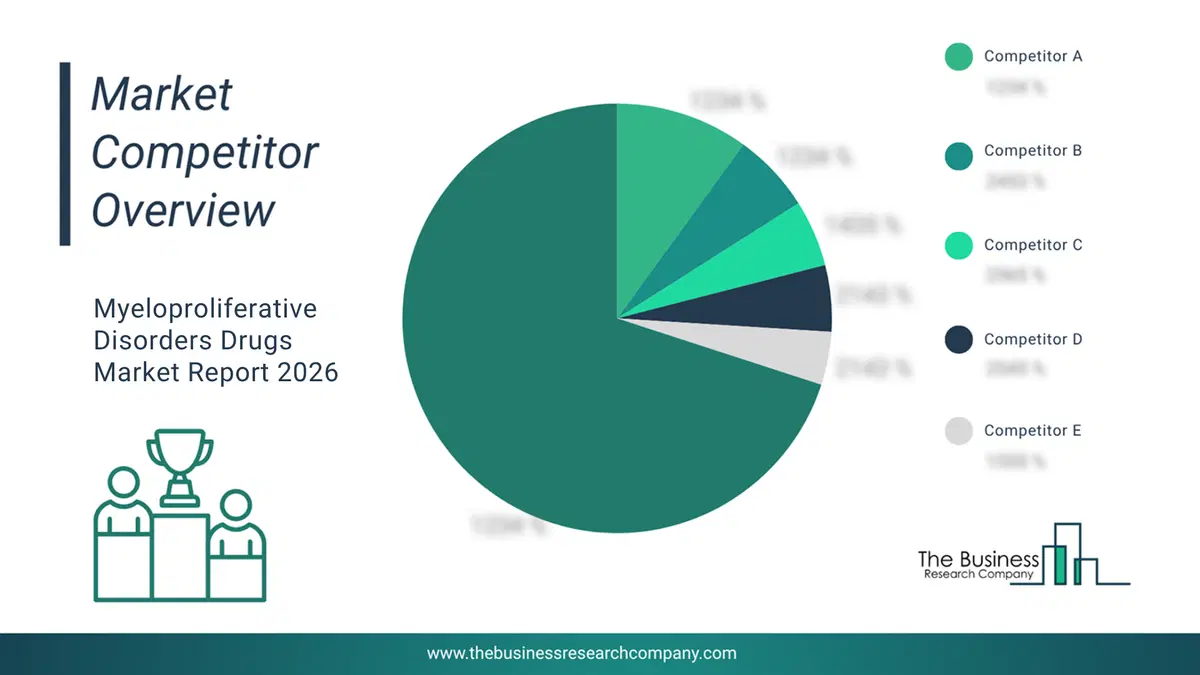
This chart is for illustrative purposes; the full report includes a detailed competitor analysis and comprehensive overview of the top 10 companies in the market.
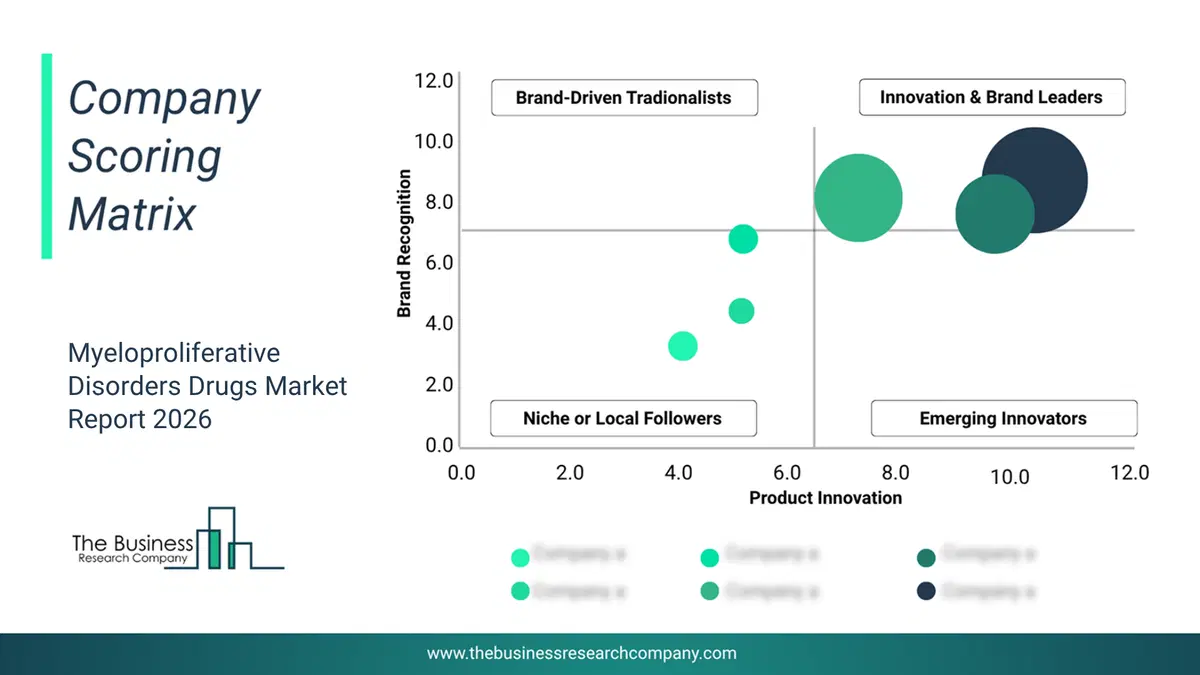
This chart maps companies by product innovation and brand strength, with bubble size indicating relative revenue, helping identify market leaders, challengers, and niche players. This is an illustrative chart; the full report provides a complete and accurate competitive analysis.
Global Myeloproliferative Disorders Drugs Market Trends and Insights
Major companies operating in the myeloproliferative disorder drugs market are focused on introducing advanced drug solutions and getting them approved by national government agencies to gain a competitive edge in the market. The introduction and approval of novel drug solutions aim to significantly impact the availability of advanced therapies for patients with myeloproliferative disorders. For instance, in September 2023, Novartis AG, a Switzerland-based pharmaceutical corporation, announced the National Institute for Health and Care Excellence’s (NICE) approval for Jakavi (ruxolitinib), a JAK 1/2 inhibitor authorized to treat polycythaemia vera (PV). Patients in England and Wales will now have access to Ruxolitinib, which helps address the unmet treatment need for eligible patients, as approximately 24% of patients treated with hydroxycarbamide or hydroxyurea (HC or HU) will develop resistance or intolerance. PV, a subtype of myeloproliferative disorder, is an uncommon and deadly blood malignancy linked to an excess of red blood cells that, if ignored, can result in a heart attack or stroke. In the UK, there are thought to be 1,130 new PV diagnoses given per year.What Are Latest Mergers And Acquisitions In The Myeloproliferative Disorders Drugs Market?
In November 2025, Galecto, Inc., a U.S.-based clinical-stage biopharmaceutical company, acquired Damora Therapeutics for an undisclosed amount. With this acquisition, Galecto aims to expand and strengthen its pipeline in myeloproliferative neoplasms by integrating Damora’s anti-mutant calreticulin (mutCALR) antibody programs to accelerate the development of next-generation targeted therapies. Damora Therapeutics is a U.S.-based biotechnology company focused on advancing antibody therapeutics targeting mutCALR-driven myeloproliferative neoplasms.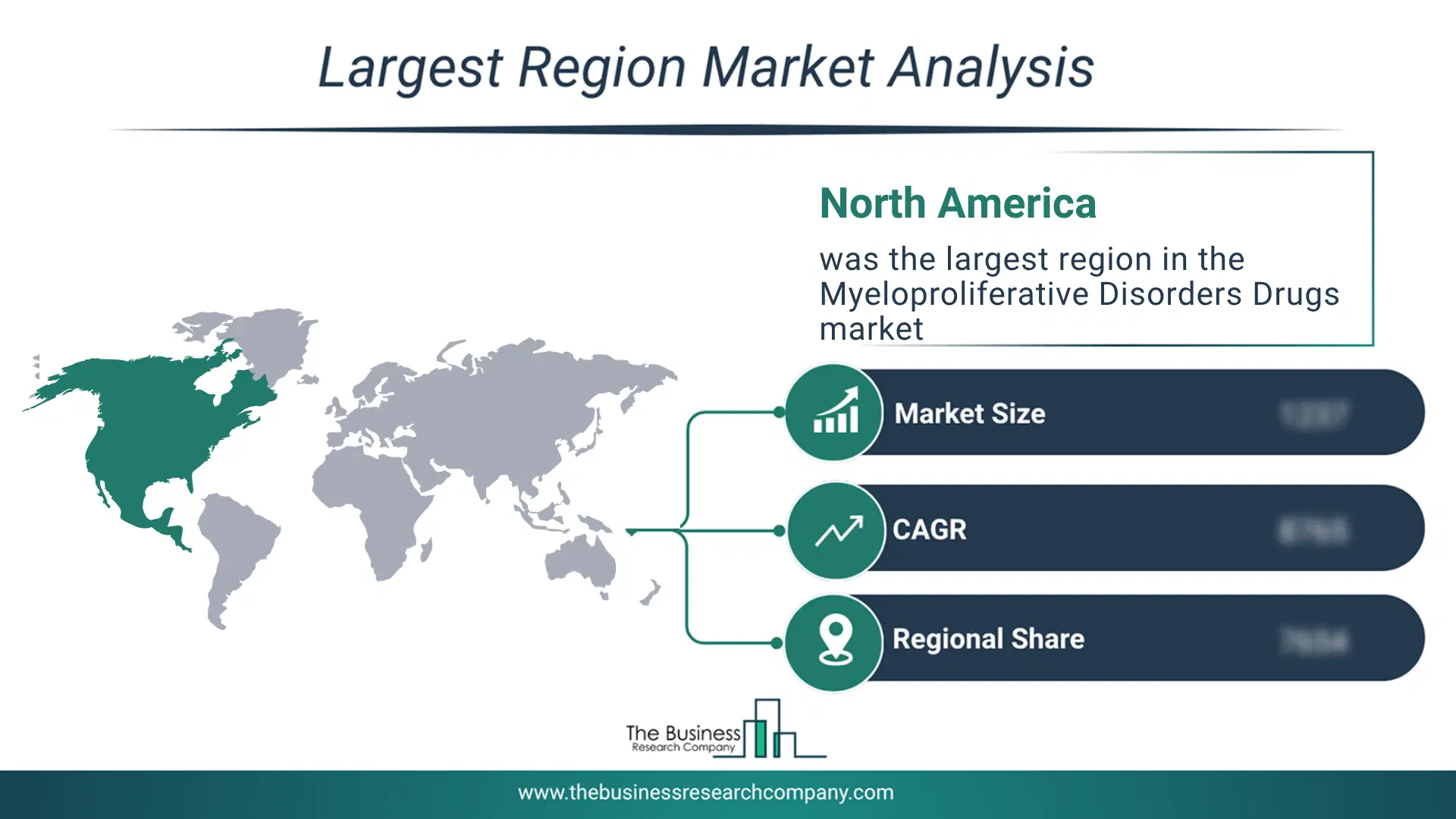
Regional Insights
North America was the largest region in the myeloproliferative disorder drugs market in 2025. Asia-Pacific is expected to be the fastest-growing region in the global myeloproliferative disorder drugs market report during the forecast period. The regions covered in this market report are Asia-Pacific, South East Asia, Western Europe, Eastern Europe, North America, South America, Middle East, Africa. The countries covered in this market report are Australia, Brazil, China, France, Germany, India, Indonesia, Japan, Taiwan, Russia, South Korea, UK, USA, Canada, Italy, Spain.What Defines the Myeloproliferative Disorders Drugs Market?
The myeloproliferative disorder drugs market consists of sales of jasatinib, nilotinib, jakafi, hydroxyurea, and gleevec. Values in this market are ‘factory gate’ values, that is the value of goods sold by the manufacturers or creators of the goods, whether to other entities (including downstream manufacturers, wholesalers, distributors, and retailers) or directly to end customers. The value of goods in this market includes related services sold by the creators of the goods.How is Market Value Defined and Measured?
The market value is defined as the revenues that enterprises gain from the sale of goods and/or services within the specified market and geography through sales, grants, or donations in terms of the currency (in USD unless otherwise specified). The revenues for a specified geography are consumption values that are revenues generated by organizations in the specified geography within the market, irrespective of where they are produced. It does not include revenues from resales along the supply chain, either further along the supply chain or as part of other products.
This chart presents market attractiveness based on a quantitative evaluation of growth, competition, strategic alignment, and risk, offering a clear view of opportunity areas for decision-making. This chart is for illustrative purposes; the full report contains the complete analysis.

This chart highlights the Total Addressable Market (TAM) by estimating the maximum revenue opportunity using an assumption-driven approach, supporting strategic planning and opportunity sizing across markets. The chart is illustrative; the full report provides a more comprehensive analysis.
What Key Data and Analysis Are Included in the Myeloproliferative Disorders Drugs Market Report 2026?
The myeloproliferative disorders drugs market research report is one of a series of new reports from The Business Research Company that provides market statistics, including industry global market size, regional shares, competitors with the market share, detailed market segments, market trends and opportunities, and any further data you may need to thrive in the myeloproliferative disorders drugs industry. The market research report delivers a complete perspective of everything you need, with an in-depth analysis of the current and future state of the industry.Myeloproliferative Disorders Drugs Market Report Forecast Analysis
| Report Attribute | Details |
|---|---|
| Market Size Value In 2026 | $10.17 billion |
| Revenue Forecast In 2030 | $12.17 billion |
| Growth Rate | CAGR of 3.5% from 2026 to 2030 |
| Base Year For Estimation | 2025 |
| Actual Estimates/Historical Data | 2020-2025 |
| Forecast Period | 2026 - 2030 |
| Market Representation | Revenue in USD Billion and CAGR from 2026 to 2030 |
| Segments Covered | Type, Drug Type, Route Of Administration, Distribution Channel |
| Regional Scope | Asia-Pacific, Western Europe, Eastern Europe, North America, South America, Middle East, Africa |
| Country Scope | The countries covered in the report are Australia, Brazil, China, France, Germany, India, Indonesia, Japan, Taiwan, Russia, South Korea, UK, USA, Canada, Italy, Spain. |
| Key Companies Profiled | Novartis AG, Bristol-Myers Squibb Company, Pfizer Inc., Takeda Pharmaceutical Company Limited, Teva Pharmaceutical Industries Ltd., Incyte Corporation, Eli Lilly and Co, F Hoffmann-La Roche Ltd., Mylan NV, Hikma Pharmaceuticals plc, Bayer AG, Sun Pharmaceutical Industries Ltd., Boehringer Ingelheim International GmbH, Sanofi Aventis Inc., AstraZeneca AB, Apotex Inc, Celgene Co., Geron Co., Promedior Inc., Johnson & Johnson Private Limited, AbbVie Inc., Astellas Pharma Inc., Daiichi Sankyo Chemical Pharma Co. Ltd. |
| Customization Scope | Request for Customization |
| Pricing And Purchase Options | Explore Purchase Options |