

Nanocarriers Market Report 2026
Global Outlook – By Type (Polymeric Nanocarriers, Lipid-Based Nanocarriers, Inorganic Nanocarriers, Other Types), By Application (Drug Delivery, Diagnostics, Vaccines, Gene Therapy, Other Applications), By End-User (Pharmaceutical And Biotechnology Companies, Hospitals And Clinics, Research Institutes, Other End-Users) – Market Size, Trends, Strategies, and Forecast to 2030
Nanocarriers Market Overview
• Nanocarriers market size has reached to $11.61 billion in 2025 • Expected to grow to $26.74 billion in 2030 at a compound annual growth rate (CAGR) of 18.1% • Growth Driver: Rise In Demand For Personalized Medicines Driving The Growth Of The Market Due To Targeted And Patient-Specific Drug Delivery • Market Trend: Advancements In Lipid Nanoparticle Manufacturing For Targeted Therapeutics • North America was the largest region in 2025.Market Gains By 2030 – Top Opportunities By Segment
Market Gain identifies the most promising market opportunities by highlighting the segments or products expected to generate the highest incremental revenue growth over the next five years.
What Is Covered Under Nanocarriers Market?
Nanocarriers refer to nanoscale delivery systems that are specifically engineered to carry drugs, genes, or other therapeutic agents with high precision, ensuring they reach the intended cells or tissues in the body. These advanced carriers improve the stability and bioavailability of therapeutic compounds, allow for controlled and sustained release, and help minimize potential side effects by reducing exposure to healthy tissues. The main types of nanocarriers are polymeric nanocarriers, lipid-based nanocarriers, inorganic nanocarriers, and others. Polymeric Nanocarriers are nanoscale polymer-based systems designed to deliver drugs or therapeutic agents efficiently to targeted sites in the body. It is used for applications such as drug delivery, diagnostics, vaccines, gene therapy, and others, serving end-users including pharmaceutical and biotechnology companies, hospitals and clinics, research institutes, and others.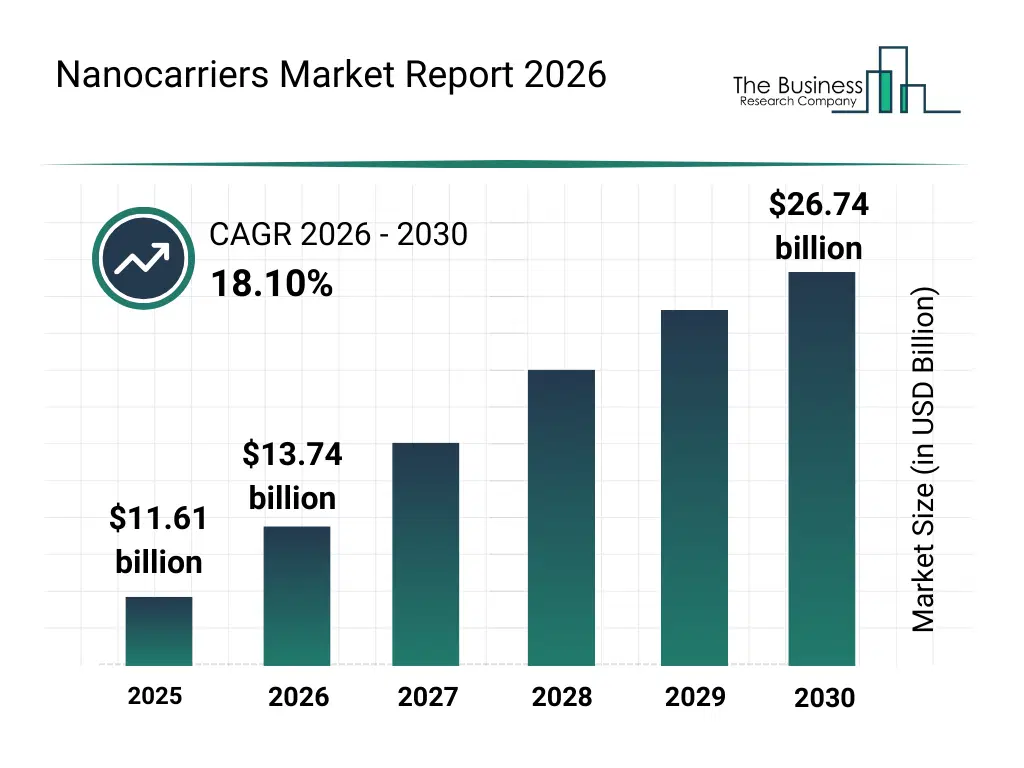
What Is The Nanocarriers Market Size and Share 2026?
The nanocarriers market size has grown rapidly in recent years. It will grow from $11.61 billion in 2025 to $13.74 billion in 2026 at a compound annual growth rate (CAGR) of 18.4%. The growth in the historic period can be attributed to advancements in nanotechnology research, increasing pharmaceutical R&D investments, growing need for improved drug bioavailability, early adoption of nanoparticle-based therapeutics, expansion of academic and clinical research.What Is The Nanocarriers Market Growth Forecast?
The nanocarriers market size is expected to see rapid growth in the next few years. It will grow to $26.74 billion in 2030 at a compound annual growth rate (CAGR) of 18.1%. The growth in the forecast period can be attributed to increasing demand for personalized therapeutics, rising investments in advanced drug delivery systems, expansion of nanocarrier applications in oncology and gene therapy, growing focus on reducing drug side effects, continued innovation in nanoscale engineering. Major trends in the forecast period include increasing development of targeted drug delivery platforms, growing adoption of lipid and polymeric nanocarriers, rising focus on controlled and sustained release systems, expansion of nanocarriers in gene and vaccine delivery, enhanced integration with precision medicine approaches.
Global Nanocarriers Market Segmentation
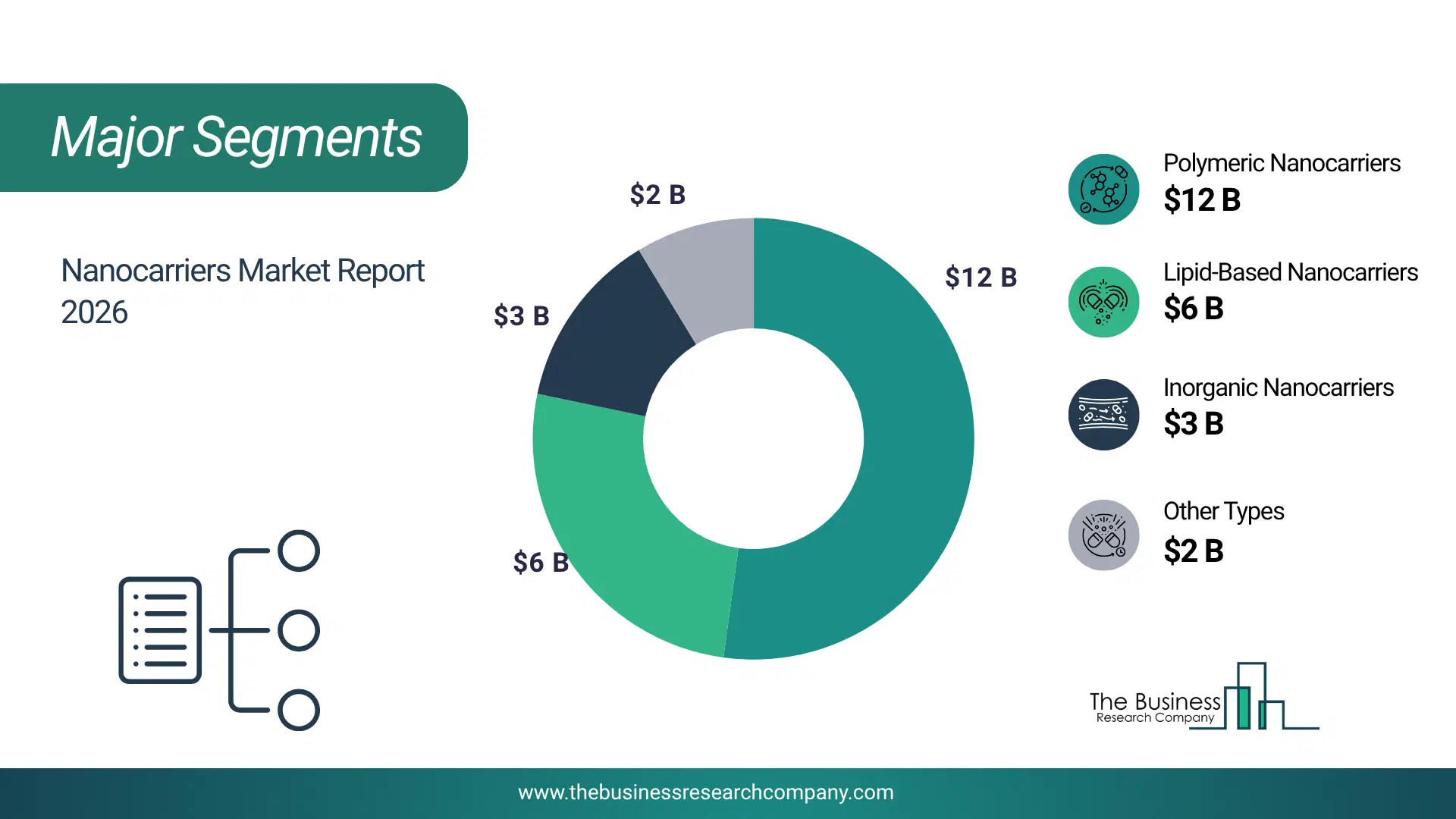
1) By Type: Polymeric Nanocarriers, Lipid-Based Nanocarriers, Inorganic Nanocarriers, Other Types 2) By Application: Drug Delivery, Diagnostics, Vaccines, Gene Therapy, Other Applications 3) By End-User: Pharmaceutical And Biotechnology Companies, Hospitals And Clinics, Research Institutes, Other End-Users Subsegments: 1) By Polymeric Nanocarriers: Nanoparticles Of Poly Lactic Acid, Nanoparticles Of Poly Lactic-Co-Glycolic Acid, Nanoparticles Of Chitosan, Nanoparticles Of Gelatin, Nanoparticles Of Polycaprolactone 2) By Lipid-Based Nanocarriers: Solid Lipid Nanoparticles, Nanostructured Lipid Carriers, Liposomes, Nanoemulsions, Self-Emulsifying Drug Delivery Systems 3) By Inorganic Nanocarriers: Gold Nanoparticles, Silver Nanoparticles, Silica Nanoparticles, Magnetic Nanoparticles, Quantum Dots 4) By Other Types: Dendrimers, Protein-Based Nanocarriers, Carbon Nanotubes, Nanocrystals, Exosomes The top segments in the nanocarriers market will be: • Polymeric Nanocarriers will reach $12.21 Billion by 2030. • Lipid-Based Nanocarriers will reach $5.83 Billion by 2030. • Inorganic Nanocarriers will reach $2.98 Billion by 2030. • Other Types will reach $2.44 Billion by 2030.What Is The Driver Of The Nanocarriers Market?
The rise in demand for personalized medicines is expected to propel the growth of the nanocarriers market going forward. Personalized medicine refers to the practice of tailoring medical treatment to the individual characteristics of each patient, particularly by using genetic, biomarker, and molecular information. The emphasis on personalized medicine is growing as it allows doctors to tailor cancer treatments to a patient’s genetic profile, improving effectiveness and reducing unnecessary side effects. Nanocarriers enable personalized medicine deliver drugs precisely to patient-specific targets, controlling release, improving bioavailability, and allowing tailored combination therapies based on individual biological profiles. For instance, in February 2024, according to the Personalized Medicine Coalition, a US-based non-profit organization, in 2023, the United States Food and Drug Administration (FDA) approved 16 new personalized therapies for patients with rare diseases, marking a sharp increase from just six approvals in 2022. Therefore, the rise in demand for personalized medicines is driving the growth of the nanocarriers industry.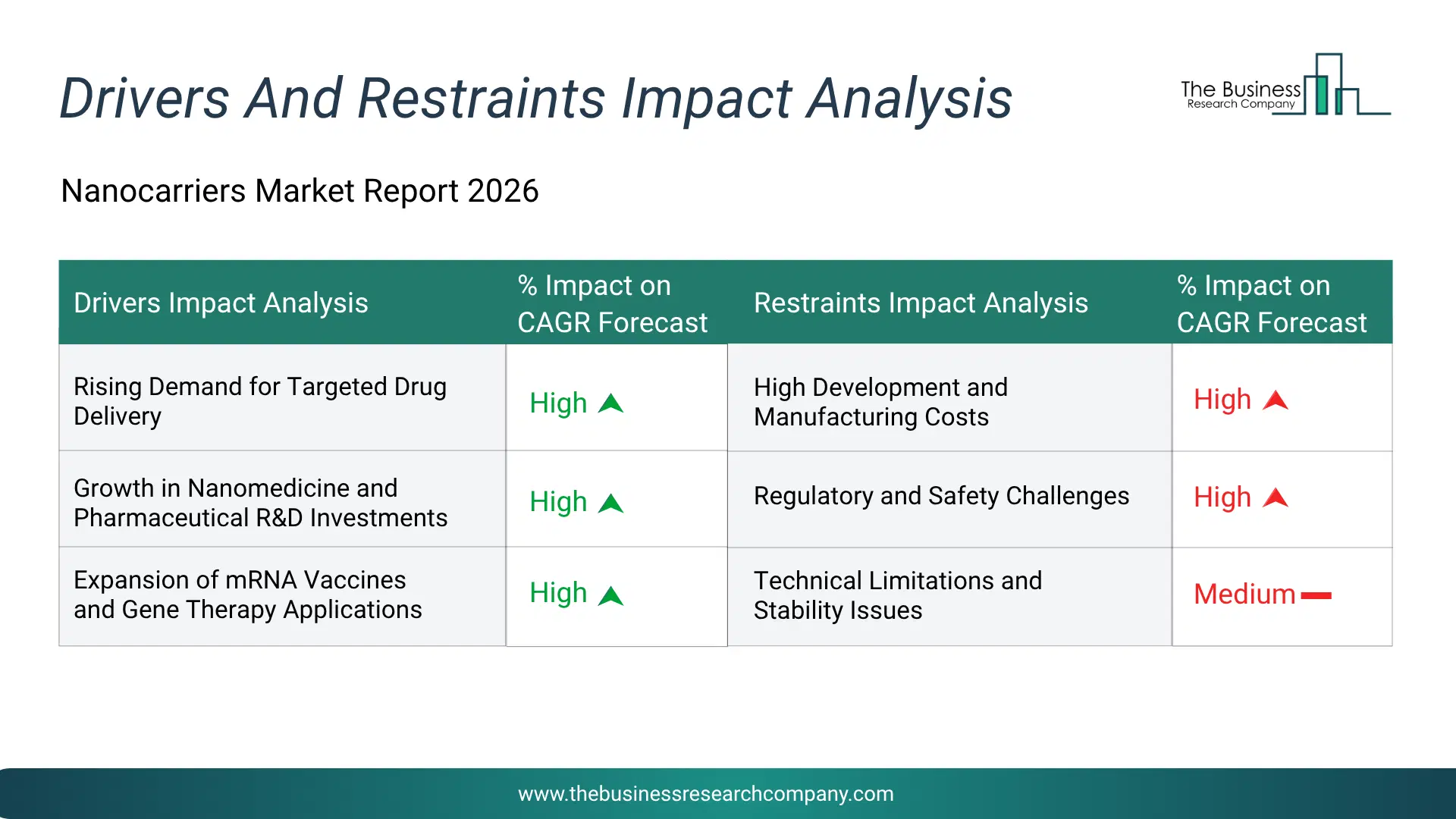
Infographic Chart Showing Key Market Drivers Analysis And Restraints For Nanocarriers Market
The chart presents an impact analysis of key drivers and restraints, quantifying their relative influence on the market's growth rate and helping assess the balance between growth enablers and limiting factors. This chart offers a high-level perspective; the full report contains more detailed insights.
How Will The Drivers Impact Growth In The Global Nanocarriers Market?
• Rising Demand for Targeted Drug Delivery (High) – During the forecast period, the rising demand for targeted drug delivery is expected to become a key growth driver for the nanocarriers market by 2030. Nanocarriers enable precise delivery of therapeutic agents directly to diseased tissues, especially in cancer treatment. This improves drug efficacy while reducing toxicity and side effects on healthy cells. Pharmaceutical companies are increasingly adopting nanocarrier systems for oncology, gene therapy, and chronic disease treatment. The growing preference for personalized medicine is also accelerating demand for advanced nanocarrier platforms. Increasing success of lipid nanoparticle-based therapies has further strengthened market growth. • Growth in Nanomedicine and Pharmaceutical R&D Investments (High) – During the forecast period, the growth in nanomedicine and pharmaceutical r&d investments is expected to emerge as a major factor driving the expansion of the nanocarriers market by 2030. Governments, biotechnology firms, and pharmaceutical companies are heavily investing in nanomedicine research. Continuous innovation in polymeric and lipid-based nanoparticles is improving drug stability, bioavailability, and controlled release capabilities. Expanding clinical trials and regulatory approvals for nanoparticle therapeutics are supporting commercialization. Academic collaborations and public funding programs are also increasing technology development activities globally. These investments are creating strong long-term growth opportunities for the nanocarriers market. • Expansion of mRNA Vaccines and Gene Therapy Applications (High) – During the forecast period, the expansion of mRNA vaccines and gene therapy applications is expected to act as a key growth catalyst for the nanocarriers market by 2030. The success of lipid nanoparticle technology in mRNA vaccines significantly boosted awareness and adoption of nanocarriers. Nanocarriers are now widely explored for RNA therapeutics, gene editing, and nucleic acid delivery applications. Their ability to protect sensitive biomolecules and improve cellular uptake makes them highly valuable in advanced therapeutics. Increasing focus on rare diseases and precision medicine is further supporting demand. The biotechnology sector continues to expand the use of nanocarriers beyond traditional drug delivery.How Will The Restraints Impact Growth In The Global Nanocarriers Market?
• High Development and Manufacturing Costs (High) – During the forecast period, the nanocarrier production requires sophisticated equipment, high-purity raw materials, and advanced formulation technologies. Manufacturing processes are often complex and difficult to scale commercially while maintaining consistency. Small and mid-sized companies may face financial barriers in product development and commercialization. Regulatory compliance and quality testing further increase operational costs. These factors can limit widespread adoption, especially in cost-sensitive healthcare markets. • Regulatory and Safety Challenges (High) – During the forecast period, the regulatory approval for nanocarrier-based therapeutics remains complicated because of limited long-term toxicity data. Concerns related to biocompatibility, nanoparticle accumulation, and immune system reactions continue to affect product approvals. Different regions also have varying regulatory standards for nanomedicine products. Extensive clinical validation is required before commercialization, increasing development timelines. Safety uncertainties remain a major challenge for inorganic and experimental nanocarrier systems. • Technical Limitations and Stability Issues (High) – During the forecast period, the some nanocarriers face challenges related to stability, drug leakage, aggregation, and short shelf life. Maintaining consistent particle size and drug loading efficiency during storage and transport can be difficult. Complex formulations may also face scalability problems during mass production. Certain nanocarriers show limited effectiveness in crossing biological barriers or targeting specific tissues efficiently. These technical limitations can reduce commercial viability for some applications.Key Players In The Global Nanocarriers Market
Major companies operating in the nanocarriers market are F. Hoffmann-La Roche Ltd, Pfizer Inc., Sanofi S.A., Novartis AG, Bristol-Myers Squibb Company, Amgen Inc., Evonik Industries AG, Matinas BioPharma Holdings Inc., Luye Pharma Group Ltd., Ascendia Pharmaceuticals Inc., Arcturus Therapeutics Holdings Inc., Nanobiotix S.A., Polymun Scientific Immunbiologische Forschung GmbH, ReCode Therapeutics Inc., Celsion Corporation, Starpharma Holdings Limited, EnGeneIC Ltd., Acuitas Therapeutics Inc., Altamira Therapeutics Ltd., Nanexa AB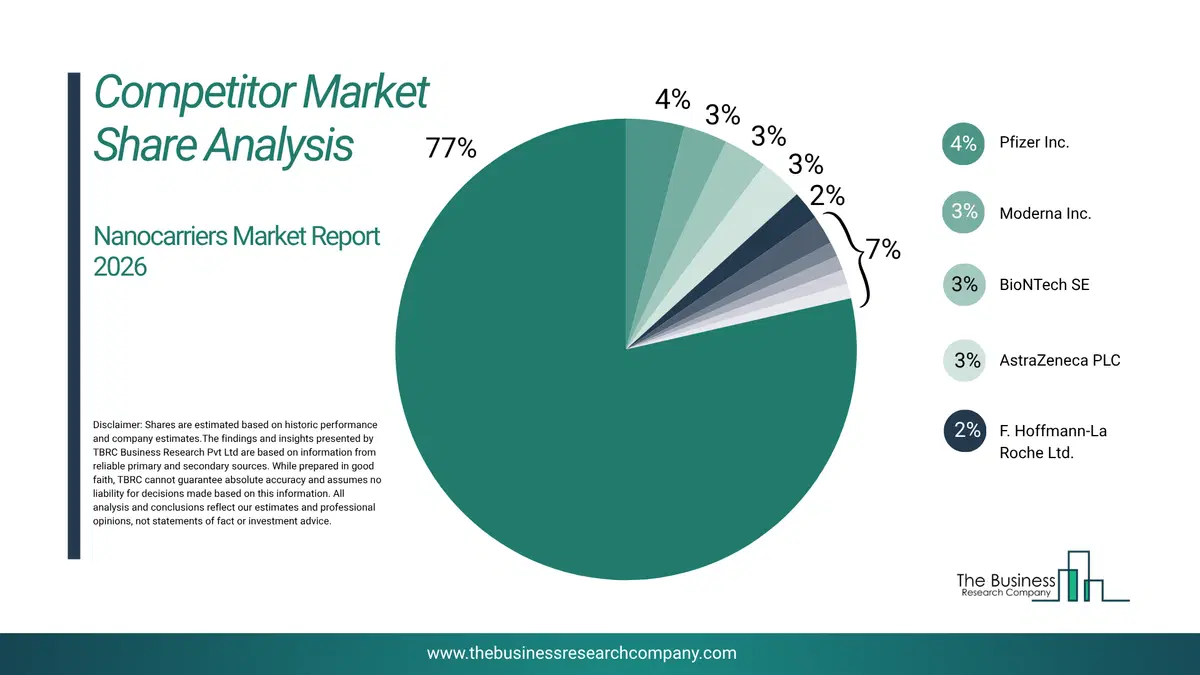
This chart is for illustrative purposes; the full report includes a detailed competitor analysis and comprehensive overview of the top 10 companies in the market.
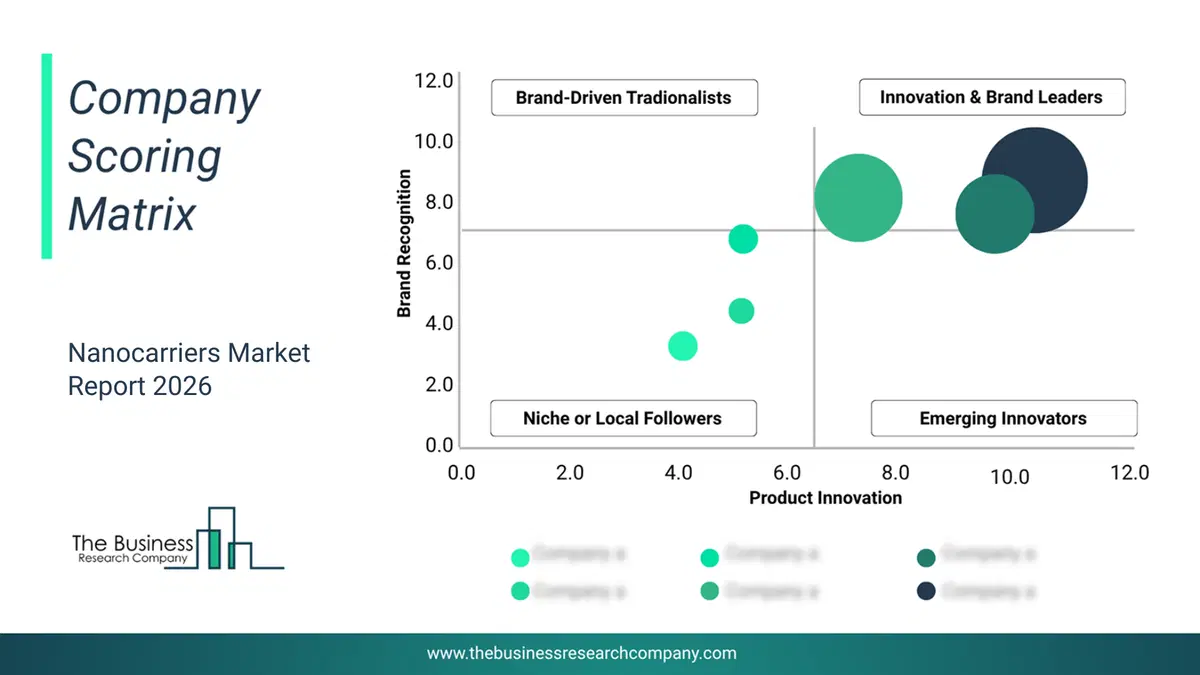
This chart maps companies by product innovation and brand strength, with bubble size indicating relative revenue, helping identify market leaders, challengers, and niche players. This is an illustrative chart; the full report provides a complete and accurate competitive analysis.
Global Nanocarriers Market Trends and Insights
Major companies operating in the nanocarriers market are prioritizing the development of advanced formulations, including lipid nanoparticle technologies, to enhance targeted drug delivery and improve therapeutic efficacy. Lipid nanoparticle technologies are nanoscale, fat-based carriers designed to deliver drugs or genetic therapies safely and efficiently to targeted cells or tissues. For instance, in July 2023, Cytiva, a US-based biotechnology company, launched the NanoAssemblr commercial formulation system, a single-use, fully automated platform designed to enable end-to-end clinical and commercial manufacturing of lipid nanoparticle (LNP) medicines. This system uses Cytiva’s NxGen technology to provide controlled, reproducible mixing for consistent quality throughout all stages from research to large-scale manufacturing under cGMP conditions. The platform reduces cross-contamination risk with its single-use fluid path and supports efficient multi-product manufacturing in one facility. It also features intuitive software compliant with regulatory standards that automates workflows and enables electronic batch records, streamlining production of genomic medicines such as mRNA vaccines, gene therapies, and cancer vaccines.What Are Latest Mergers And Acquisitions In The Nanocarriers Market?
In August 2024, VION Biosciences LLC, a US-based life science platform company, acquired Echelon Biosciences Inc. for an undisclosed amount. With this acquisition, VION Biosciences aims to effectively serve customers focused on delivering a variety of mRNA and gene-based biotherapeutics by expanding VION's portfolio, strengthening its drug discovery and preclinical capabilities, and enabling its entry into the drug manufacturing space. Echelon Biosciences Inc. is a US-based biotechnology company that manufactures lipid nanoparticles (LNPs), a type of nanocarrier crucial for delivering mRNA-based therapies.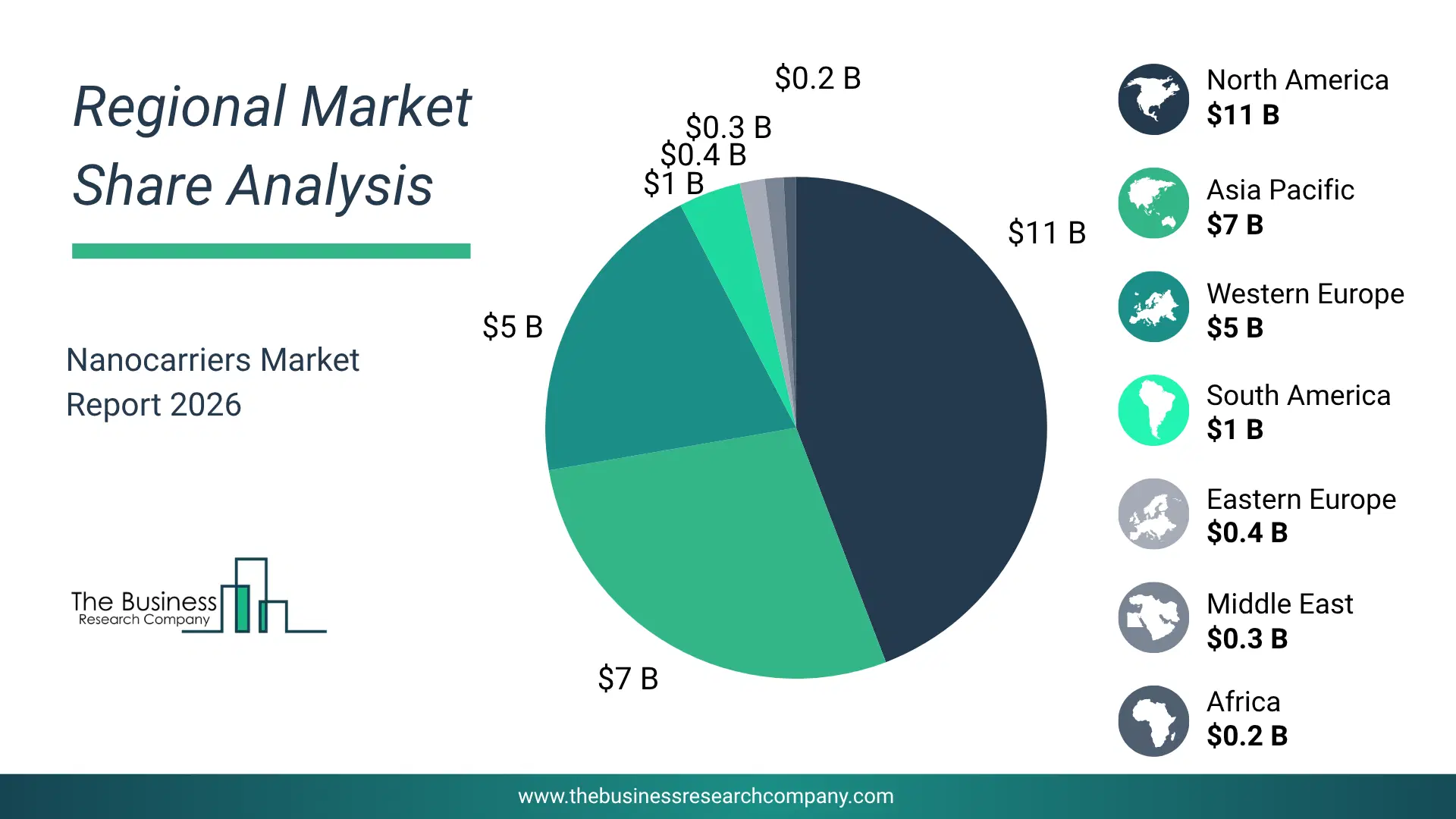
Regional Insights
North America was the largest region in the nanocarriers market in 2025. The regions covered in this market report are Asia-Pacific, South East Asia, Western Europe, Eastern Europe, North America, South America, Middle East, Africa. The countries covered in this market report are Australia, Brazil, China, France, Germany, India, Indonesia, Japan, Taiwan, Russia, South Korea, UK, USA, Canada, Italy, Spain.What Defines the Nanocarriers Market?
The nanocarriers market consists of sales of polymeric nanoparticles, nanocrystals, carbon nanotubes, exosomes, and quantum dots. Values in this market are ‘factory gate’ values, that is, the value of goods sold by the manufacturers or creators of the goods, whether to other entities (including downstream manufacturers, wholesalers, distributors, and retailers) or directly to end customers. The value of goods in this market includes related services sold by the creators of the goods.How is Market Value Defined and Measured?
The market value is defined as the revenues that enterprises gain from the sale of goods and/or services within the specified market and geography through sales, grants, or donations in terms of the currency (in USD unless otherwise specified). The revenues for a specified geography are consumption values that are revenues generated by organizations in the specified geography within the market, irrespective of where they are produced. It does not include revenues from resales along the supply chain, either further along the supply chain or as part of other products.
This chart presents market attractiveness based on a quantitative evaluation of growth, competition, strategic alignment, and risk, offering a clear view of opportunity areas for decision-making. This chart is for illustrative purposes; the full report contains the complete analysis.

This chart highlights the Total Addressable Market (TAM) by estimating the maximum revenue opportunity using an assumption-driven approach, supporting strategic planning and opportunity sizing across markets. The chart is illustrative; the full report provides a more comprehensive analysis.
What Key Data and Analysis Are Included in the Nanocarriers Market Report 2026?
The nanocarriers market research report is one of a series of new reports from The Business Research Company that provides market statistics, including industry global market size, regional shares, competitors with the market share, detailed market segments, market trends and opportunities, and any further data you may need to thrive in the nanocarriers industry. The market research report delivers a complete perspective of everything you need, with an in-depth analysis of the current and future state of the industry.Nanocarriers Market Report Forecast Analysis
| Report Attribute | Details |
|---|---|
| Market Size Value In 2026 | $13.74 billion |
| Revenue Forecast In 2030 | $26.74 billion |
| Growth Rate | CAGR of 18.4% from 2026 to 2030 |
| Base Year For Estimation | 2025 |
| Actual Estimates/Historical Data | 2020-2025 |
| Forecast Period | 2026 - 2030 |
| Market Representation | Revenue in USD Billion and CAGR from 2026 to 2030 |
| Segments Covered | Type, Application, End-User |
| Regional Scope | Asia-Pacific, Western Europe, Eastern Europe, North America, South America, Middle East, Africa |
| Country Scope | The countries covered in the report are Australia, Brazil, China, France, Germany, India, Indonesia, Japan, Taiwan, Russia, South Korea, UK, USA, Canada, Italy, Spain. |
| Key Companies Profiled | F. Hoffmann-La Roche Ltd, Pfizer Inc., Sanofi S.A., Novartis AG, Bristol-Myers Squibb Company, Amgen Inc., Evonik Industries AG, Matinas BioPharma Holdings Inc., Luye Pharma Group Ltd., Ascendia Pharmaceuticals Inc., Arcturus Therapeutics Holdings Inc., Nanobiotix S.A., Polymun Scientific Immunbiologische Forschung GmbH, ReCode Therapeutics Inc., Celsion Corporation, Starpharma Holdings Limited, EnGeneIC Ltd., Acuitas Therapeutics Inc., Altamira Therapeutics Ltd., Nanexa AB |
| Customization Scope | Request for Customization |
| Pricing And Purchase Options | Explore Purchase Options |