
Nanoparticle Analysis Market Report 2026
Global Outlook – By Type (Dynamic Light Scattering (DLS), Nanoparticle Tracking Analysis (NTA), Other Types), By Type Of Nanoparticles (Metal Nanoparticles, Lipid Nanoparticles, Other Types of Nanoparticles), By End User (Research Laboratories, Pharmaceutical Companies, Nanotechnology Companies, Environmental Agencies, Electronics Manufactures) – Market Size, Trends, Strategies, and Forecast to 2030
Nanoparticle Analysis Market Overview
• Nanoparticle Analysis market size has reached to $5.77 billion in 2025 • Expected to grow to $9.17 billion in 2030 at a compound annual growth rate (CAGR) of 9.5% • Growth Driver: The Role Of Nanoparticle Analysis In Addressing The Rising Prevalence Of Cancer • Market Trend: Development Of Real-time Nanoparticle Detection And Analysis Technologies • North America was the largest region in 2025 and Asia-Pacific is the fastest growing region.What Is Covered Under Nanoparticle Analysis Market?
Nanoparticle analysis refers to the process of characterizing and studying nanoparticles, which are particles typically ranging in size from 1 to 100 nanometers. This analysis involves various techniques to determine nanoparticles' physical, chemical, structural, and morphological properties. The goal of nanoparticle analysis is to understand nanoparticles' behavior, properties, and potential applications in materials science, medicine, environmental science, and electronics. The main types of nanoparticle analysis are dynamic light scattering (DLS), nanoparticle tracking analysis (NTA), laser diffraction method (LDM), and others. Dynamic light scattering (DLS), referred to as quasi-elastic light scattering or photon correlation spectroscopy, is used to evaluate the size distribution of particles in suspension or solution at the nanoscale. The types of nanoparticles include metal nanoparticles, lipid nanoparticles, and other types of nanoparticles and are used by various end-users such as research laboratories, pharmaceutical companies, nanotechnology companies, environmental agencies, and electronics manufacturers.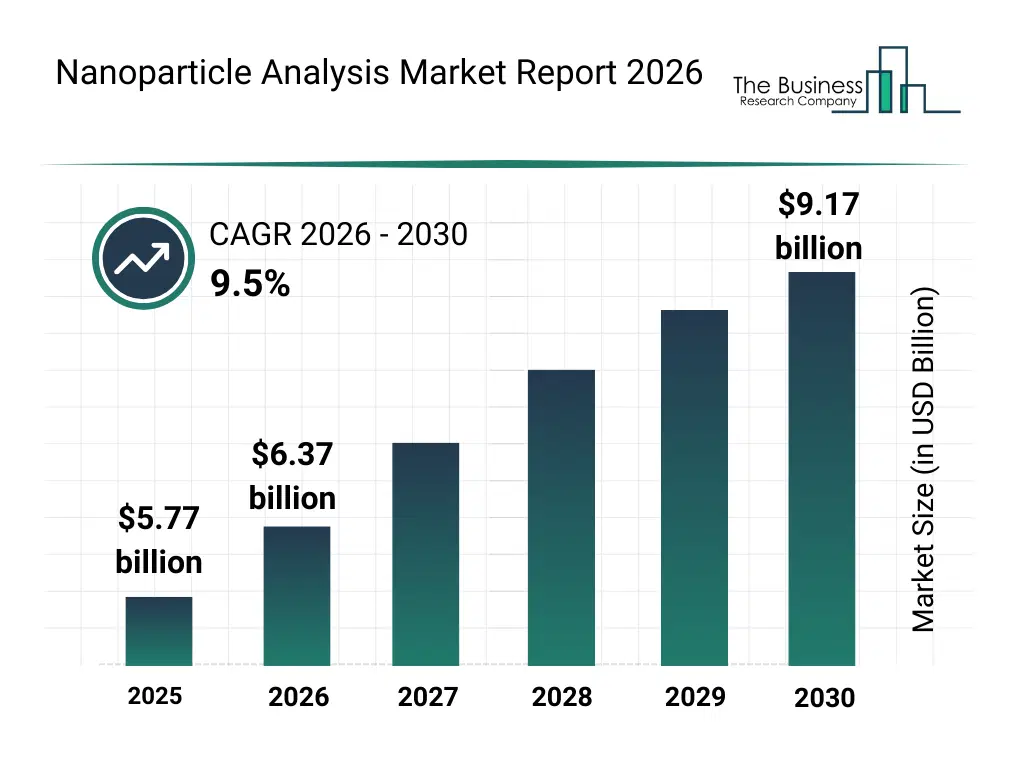
What Is The Nanoparticle Analysis Market Size and Share 2026?
The nanoparticle analysis market size has grown rapidly in recent years. It will grow from $5.77 billion in 2025 to $6.37 billion in 2026 at a compound annual growth rate (CAGR) of 10.5%. The growth in the historic period can be attributed to growing nanotechnology research, increasing pharmaceutical innovation, rising need for precision measurement, expanding academic research funding, early scientific exploration of nanomaterials.What Is The Nanoparticle Analysis Market Growth Forecast?
The nanoparticle analysis market size is expected to see strong growth in the next few years. It will grow to $9.17 billion in 2030 at a compound annual growth rate (CAGR) of 9.5%. The growth in the forecast period can be attributed to increasing medical nanotechnology applications, rising demand for advanced analytical instruments, expansion of nanomaterial manufacturing, growing environmental monitoring needs, increasing investment in scientific research infrastructure. Major trends in the forecast period include rising adoption of advanced nanoparticle characterization techniques, increasing use of nanotechnology in pharmaceuticals and biotechnology, growing demand for high precision particle measurement solutions, expansion of research activities in nanoscience and material engineering, increasing utilization of nanoparticles in electronics and environmental studies.
Global Nanoparticle Analysis Market Segmentation
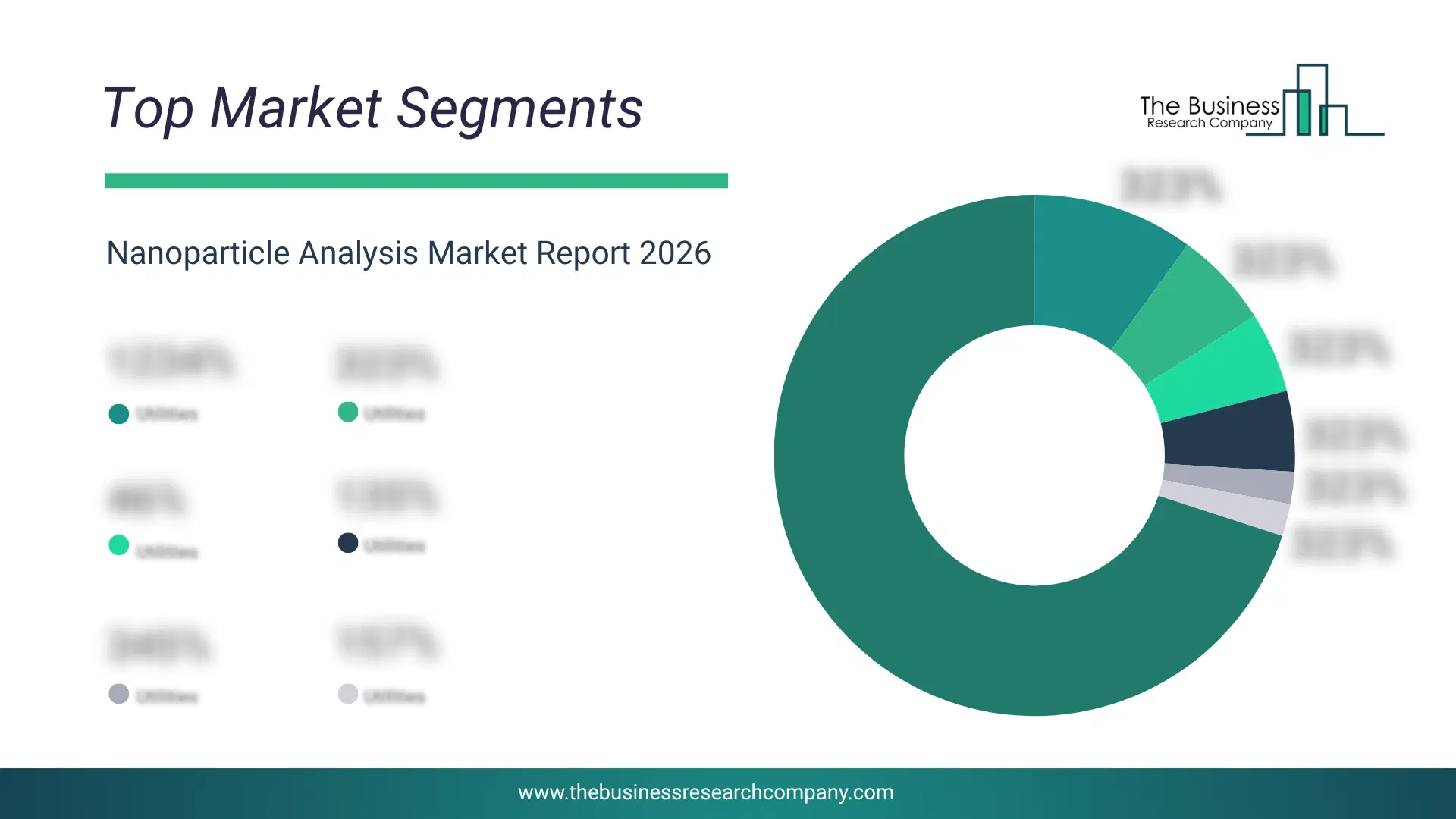
1) By Type: Dynamic Light Scattering (DLS), Nanoparticle Tracking Analysis (NTA), Other Types 2) By Type Of Nanoparticles: Metal Nanoparticles, Lipid Nanoparticles, Other Types of Nanoparticles 3) By End User: Research Laboratories, Pharmaceutical Companies, Nanotechnology Companies, Environmental Agencies, Electronics Manufactures Subsegments: 1) By Dynamic Light Scattering (DLS): Single-Wavelength DLS, Multi-Wavelength DLS 2) By Nanoparticle Tracking Analysis (NTA): Video Microscopy-Based NTA, Fluorescence-Based NTA 3) By Other Types: Atomic Force Microscopy (AFM), Small-Angle X-Ray Scattering (SAXS)What Is The Driver Of The Nanoparticle Analysis Market?
The increasing prevalence of cancer is expected to propel the growth of the nanoparticle analysis market going forward. Cancer is a collection of disorders defined by abnormal cell proliferation that can invade and spread throughout the body. The increasing prevalence of cancer can be attributed to factors such as aging populations, lifestyle changes, environmental exposures, and improved detection and diagnosis methods. Nanoparticle analysis is crucial in driving innovation in cancer research and treatment. It enables researchers to comprehend the unique characteristics of nanoparticles, facilitating the development of targeted drug delivery systems, improvements in cancer imaging, and the progression of personalized medicine approaches. For instance, in February 2024, according to the World Health Organization, a Switzerland-based international organization specializing in global health policy and public health initiatives, over 35 million new cancer cases are predicted in 2050, a 77% increase from the estimated 20 million cases in 2022. Therefore, the increasing prevalence of cancer is driving the development of the nanoparticle analysis industry.Key Players In The Global Nanoparticle Analysis Market
Major companies operating in the nanoparticle analysis market report are Thermo Fisher Scientific Inc., Agilent Technologies Inc., Beckman Coulter Inc., Shimadzu Corporation, Bruker Corporation, Malvern Panalytical Ltd., Horiba Ltd., Particle Measuring Systems Inc., Sympatec GmbH, TSI Incorporated, Micromeritics Instrument Corporation, EAG Laboratories, Anton Paar GmbH, Polytec GmbH, Quantum Design International, Wyatt Technology, Microtrac Inc., Aimsizer Scientific Ltd., Hitachi High-Tech Analytical Science, Brookhaven Instruments Corporation, Cordouan Technologies, Dispersion Technology Inc., Nanophoton Corporation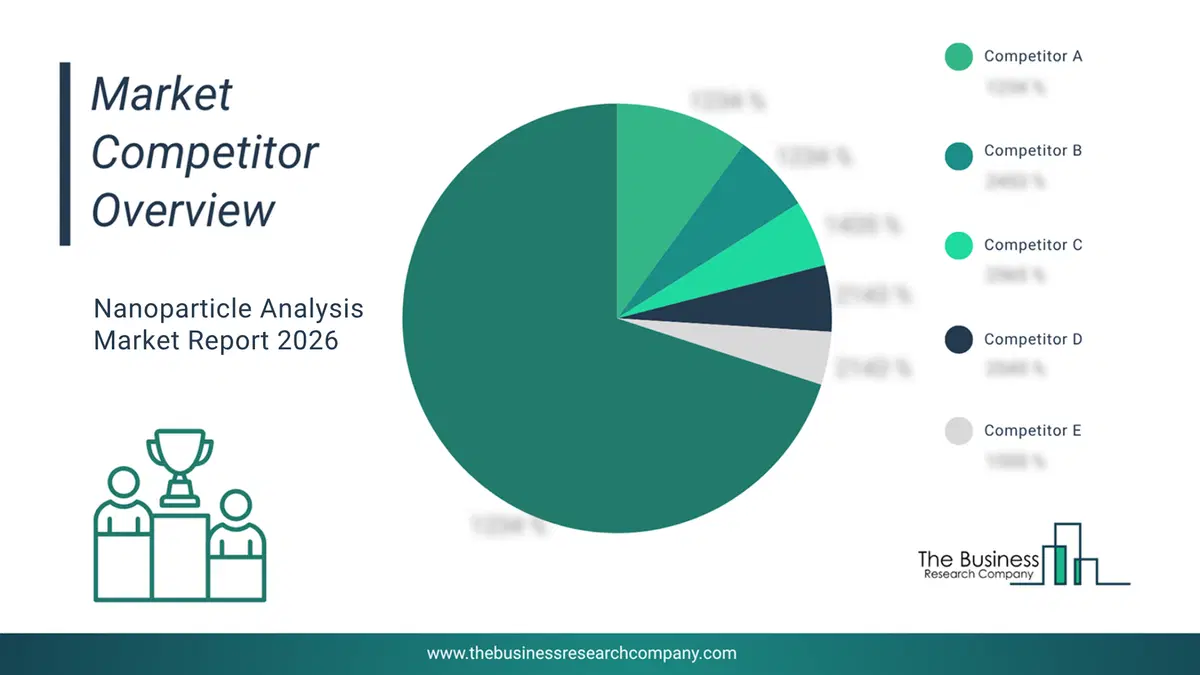
This chart is for illustrative purposes; the full report includes a detailed competitor analysis and comprehensive overview of the top 10 companies in the market.
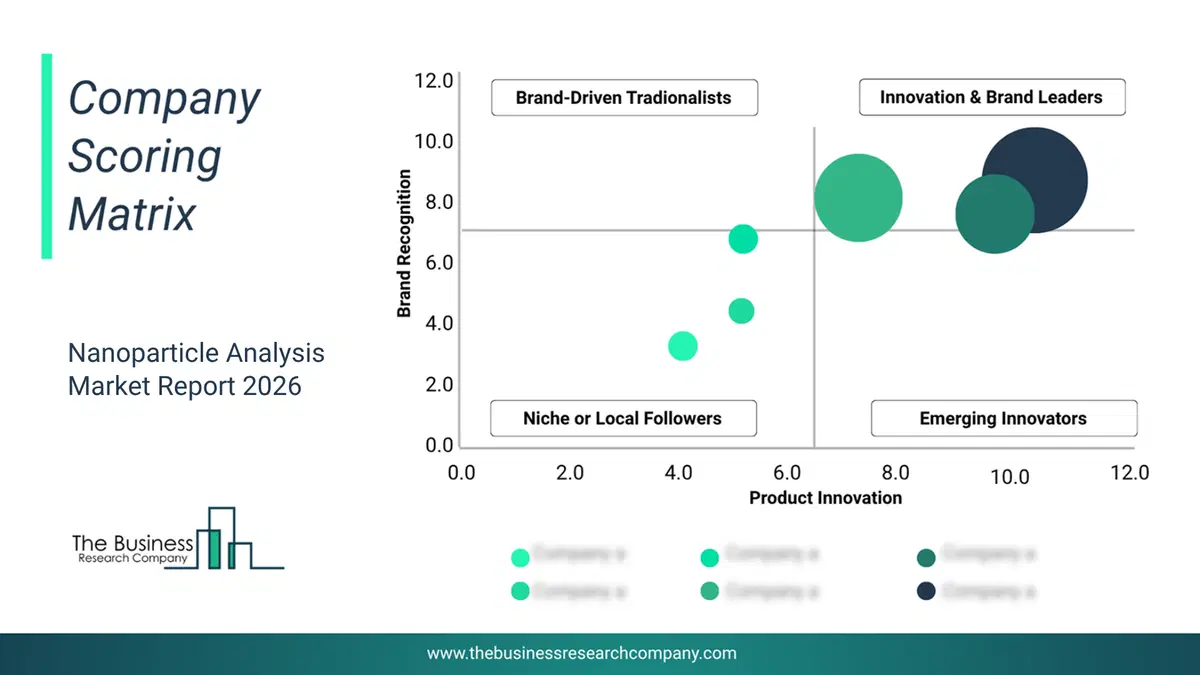
This chart maps companies by product innovation and brand strength, with bubble size indicating relative revenue, helping identify market leaders, challengers, and niche players. This is an illustrative chart; the full report provides a complete and accurate competitive analysis.
Global Nanoparticle Analysis Market Trends and Insights
Major companies operating in the nanoparticle analysis market are focusing on developing real-time nanoparticle detection and analysis solutions to gain a competitive edge in the market. Nanoparticle detection and analysis solutions are technologies and methods used to detect, characterize, and analyze nanoparticles, which are particles with sizes ranging from 1 to 100 nanometers. For instance, in August 2023, Corning Inc., a US-based technology company, launched Videodrop, an optical technology that revolutionizes real-time nanoparticle detection and analysis. This technology is based on interferometric microscopy, which can quantify the size and concentration of nanoparticles in less than 60 seconds, using only a 5–10 µl drop of sample material. Videodrop can collect a physical titer of viral vectors such as lentivirus, retrovirus, adenovirus, and extracellular vehicles (EVs) in the 80–500 nanometers range. It can be used as an in-process control throughout the purification process, providing real-time data to help optimize the bioprocessing workflow.What Are Latest Mergers And Acquisitions In The Nanoparticle Analysis Market?
In September 2023, Sartorius AG, a Germany-based biopharmaceutical company, partnered with SPARTA Biodiscovery to develop and commercialize SPARTA's novel nanoparticle analysis platform. This partnership is expected to accelerate the development, manufacture, and quality control of nanoparticles used for gene therapies, vaccines, and cancer drugs, ultimately benefiting patients and the healthcare industry. SPARTA Biodiscovery is a UK-based biopharmaceutical startup that specializes in providing nanoparticle analysis platforms.
Regional Outlook
North America was the largest region in the nanoparticle analysis market in 2025. Asia-Pacific is expected to be the fastest-growing region in the forecast period. The regions covered in this market report are Asia-Pacific, South East Asia, Western Europe, Eastern Europe, North America, South America, Middle East, Africa. The countries covered in this market report are Australia, Brazil, China, France, Germany, India, Indonesia, Japan, Taiwan, Russia, South Korea, UK, USA, Canada, Italy, SpainWhat Defines the Nanoparticle Analysis Market?
The nanoparticle analysis market consists of revenues earned by entities by providing services such as resonant mass measurement, x-ray diffraction and atomic force microscopy (AFM). The market value includes the value of related goods sold by the service provider or included within the service offering. The nanoparticle analysis market also includes sales of dynamic image analysis (DIA), surface plasmon resonance (SPR) spectroscopy, and inductively coupled plasma mass spectrometry (ICP-MS). Values in this market are ‘factory gate’ values, that is the value of goods sold by the manufacturers or creators of the goods, whether to other entities (including downstream manufacturers, wholesalers, distributors and retailers) or directly to end customers. The value of goods in this market includes related services sold by the creators of the goods.How is Market Value Defined and Measured?
The market value is defined as the revenues that enterprises gain from the sale of goods and/or services within the specified market and geography through sales, grants, or donations in terms of the currency (in USD unless otherwise specified). The revenues for a specified geography are consumption values that are revenues generated by organizations in the specified geography within the market, irrespective of where they are produced. It does not include revenues from resales along the supply chain, either further along the supply chain or as part of other products.
This chart presents market attractiveness based on a quantitative evaluation of growth, competition, strategic alignment, and risk, offering a clear view of opportunity areas for decision-making. This chart is for illustrative purposes; the full report contains the complete analysis.

This chart highlights the Total Addressable Market (TAM) by estimating the maximum revenue opportunity using an assumption-driven approach, supporting strategic planning and opportunity sizing across markets. The chart is illustrative; the full report provides a more comprehensive analysis.
What Key Data and Analysis Are Included in the Nanoparticle Analysis Market Report 2026?
The nanoparticle analysis market research report is one of a series of new reports from The Business Research Company that provides market statistics, including industry global market size, regional shares, competitors with the market share, detailed market segments, market trends and opportunities, and any further data you may need to thrive in the nanoparticle analysis industry. The market research report delivers a complete perspective of everything you need, with an in-depth analysis of the current and future state of the industry.Nanoparticle Analysis Market Report Forecast Analysis
| Report Attribute | Details |
|---|---|
| Market Size Value In 2026 | $6.37 billion |
| Revenue Forecast In 2030 | $9.17 billion |
| Growth Rate | CAGR of 10.5% from 2026 to 2030 |
| Base Year For Estimation | 2025 |
| Actual Estimates/Historical Data | 2020-2025 |
| Forecast Period | 2026 - 2030 - 2030 |
| Market Representation | Revenue in USD Billion and CAGR from 2026 to 2030 |
| Segments Covered | Type, Type Of Nanoparticles, End User |
| Regional Scope | Asia-Pacific, Western Europe, Eastern Europe, North America, South America, Middle East, Africa |
| Country Scope | The countries covered in the report are Australia, Brazil, China, France, Germany, India, Indonesia, Japan, Taiwan, Russia, South Korea, UK, USA, Canada, Italy, Spain. |
| Key Companies Profiled | Thermo Fisher Scientific Inc., Agilent Technologies Inc., Beckman Coulter Inc., Shimadzu Corporation, Bruker Corporation, Malvern Panalytical Ltd., Horiba Ltd., Particle Measuring Systems Inc., Sympatec GmbH, TSI Incorporated, Micromeritics Instrument Corporation, EAG Laboratories, Anton Paar GmbH, Polytec GmbH, Quantum Design International, Wyatt Technology, Microtrac Inc., Aimsizer Scientific Ltd., Hitachi High-Tech Analytical Science, Brookhaven Instruments Corporation, Cordouan Technologies, Dispersion Technology Inc., Nanophoton Corporation |
| Customization Scope | Request for Customization |
| Pricing And Purchase Options | Explore Purchase Options |