
Nanopharmaceuticals Market Report 2026
Global Outlook – By Type (Liposomes, Polymeric Micelles, Solid Lipid Nanoparticles, Microemulsion, Nanoemulsion, Other Product Types), By Route Of Administration (Oral, Injectable, Topical, Pulmonary, Other Routes Of Administration), By Application (Oncology, Neurology, Anti-inflammatory, Anti-infective, Cardiovascular, Other Applications), By End-User (Hospitals And Clinics, Specialty Pharmacies, Research Institutions, Other End Users) – Market Size, Trends, Strategies, and Forecast to 2030
Nanopharmaceuticals Market Overview
• Nanopharmaceuticals market size has reached to $112.49 billion in 2025 • Expected to grow to $254.37 billion in 2030 at a compound annual growth rate (CAGR) of 17.7% • Growth Driver: Chronic Disease Burden Fuels Demand For Innovative Nano pharmaceutical Solutions • Market Trend: Strategic Partnerships Driving Innovation In The Nanopharmaceuticals Market • North America was the largest region in 2025 and Asia-Pacific is the fastest growing region.What Is Covered Under Nanopharmaceuticals Market?
Nanopharmaceuticals are a class of pharmaceutical drugs that utilize nanotechnology for therapeutic agents' delivery, targeting, and efficacy. These drugs are formulated at the nanoscale (typically 1 to 100 nanometers) and designed to improve drug solubility, stability, bioavailability, and targeted delivery to specific cells or tissues. Nanopharmaceuticals represent a cutting-edge approach in medicine, offering the potential for more precise, effective, and safer treatments for a wide range of diseases. The main types of nanopharmaceuticals are liposomes, polymeric micelles, solid lipid nanoparticles, microemulsion, nanoemulsion, and others. Liposomes are tiny, spherical vesicles made from phospholipids that can encapsulate drugs, improving their delivery to specific cells or tissues. They help protect the drug from degradation and can enhance the drug's absorption. This medicine can be taken through several routes of administration including oral, injectable, topical, pulmonary, and others. The various applications include oncology, neurology, anti-inflammatory, anti-infective, cardiovascular, and others and they are provided by several end-users such as hospitals and clinics, specialty pharmacies, research institutions, and others.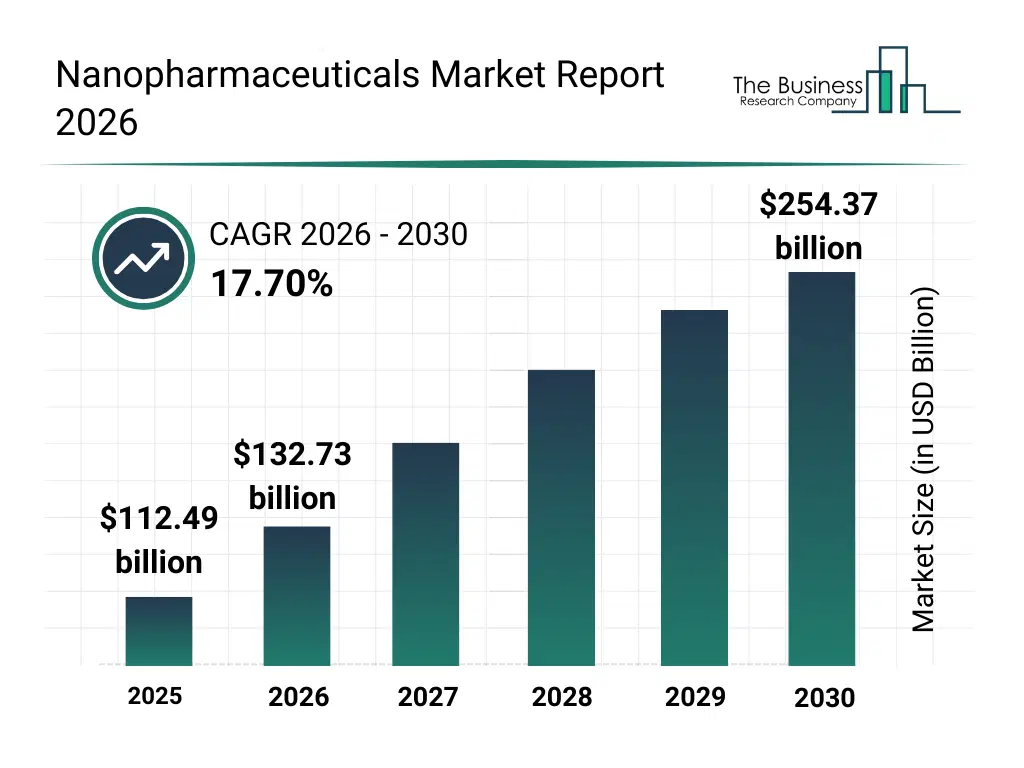
What Is The Nanopharmaceuticals Market Size and Share 2026?
The nanopharmaceuticals market size has grown rapidly in recent years. It will grow from $112.49 billion in 2025 to $132.73 billion in 2026 at a compound annual growth rate (CAGR) of 18.0%. The growth in the historic period can be attributed to limited nanotechnology applications in early pharmaceutical development, reliance on conventional drug delivery systems, growing research in oncology and neurology, regulatory approvals for initial nanopharmaceuticals, increasing awareness of targeted therapies.What Is The Nanopharmaceuticals Market Growth Forecast?
The nanopharmaceuticals market size is expected to see rapid growth in the next few years. It will grow to $254.37 billion in 2030 at a compound annual growth rate (CAGR) of 17.7%. The growth in the forecast period can be attributed to advancement in liposomal and polymeric micelle technologies, growth of nanoemulsions and solid lipid nanoparticles, increasing adoption of personalized medicine, expansion of research in cardiovascular and anti-infective applications, rising investment in scalable nanopharmaceutical manufacturing. Major trends in the forecast period include rising adoption of targeted nanopharmaceutical therapies in oncology, growth in nano-based drug delivery systems for neurology, increased focus on anti-inflammatory and anti-infective applications, expansion of pulmonary and injectable nanopharmaceutical formulations, development of lipid-based and polymeric nanocarriers with enhanced bioavailability.
Global Nanopharmaceuticals Market Segmentation
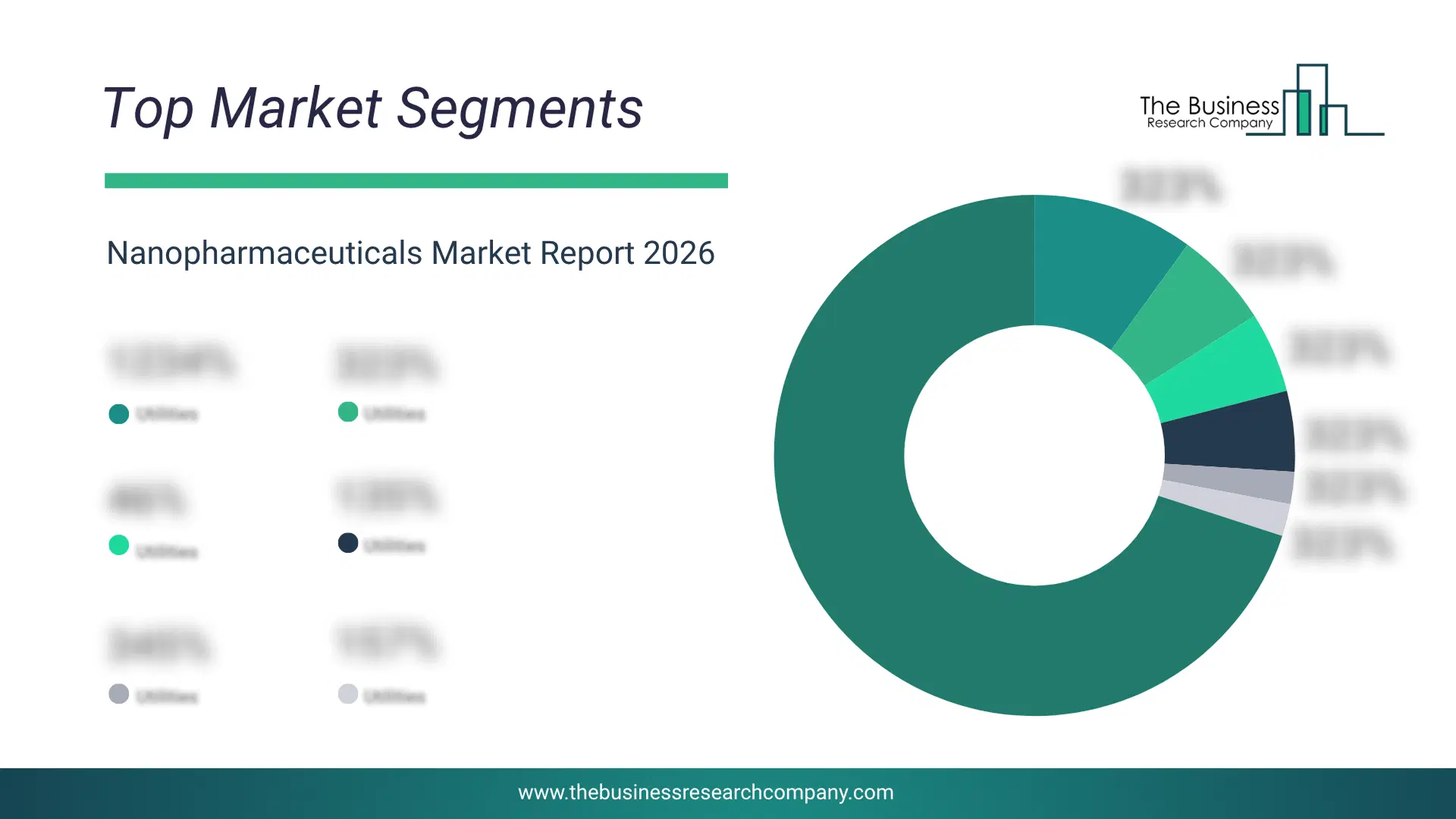
1) By Type: Liposomes, Polymeric Micelles, Solid Lipid Nanoparticles, Microemulsion, Nanoemulsion, Other Product Types 2) By Route Of Administration: Oral, Injectable, Topical, Pulmonary, Other Routes Of Administration 3) By Application: Oncology, Neurology, Anti-inflammatory, Anti-infective, Cardiovascular, Other Applications 4) By End-User: Hospitals And Clinics, Specialty Pharmacies, Research Institutions, Other End Users Subsegments: 1) By Liposomes: Conventional Liposomes, Pegylated Liposomes, Cationic Liposomes, Anionic Liposomes, Immunoliposomes, Stealth Liposomes, Thermosensitive Liposomes, 2) By Polymeric Micelles: Block Copolymer Micelles, Amphiphilic Polymer Micelles, Biodegradable Polymeric Micelles, Nanoparticle-Polymer Hybrid Micelles, pH-Sensitive Micelles, Thermo-responsive Micelles 3) By Solid Lipid Nanoparticles (SLNs): Conventional SLNs, Nanostructured Lipid Carriers (NLCs), SLNs for Drug Delivery, SLNs with Targeting Ligands, SLNs for Vaccine Delivery 4) By Microemulsion: Oil-in-Water (O/W) Microemulsions, Water-in-Oil (W/O) Microemulsions, Multi-Phase Microemulsions, Microemulsions for Drug Delivery, Microemulsions with Active Ingredients 5) By Nanoemulsion: Oil-in-Water (O/W) Nanoemulsions, Water-in-Oil (W/O) Nanoemulsions, Nanoemulsions for Parenteral Administration, Nanoemulsions for Oral Delivery, Nanoemulsions with Enhanced Stability, 6) By Other Product Types: Nanocrystals, Dendrimers, Nanocomposites, Nanospheres, Nanotubes, Quantum Dots, Magnetic NanoparticlesWhat Is The Driver Of The Nanopharmaceuticals Market?
The rising prevalence of chronic diseases is expected to propel the growth of the nanopharmaceuticals market going forward. Chronic diseases are long-lasting conditions that typically require ongoing medical attention and management over years or even a lifetime, such as cancer, diabetes, heart disease, asthma, and others. The prevalence of chronic diseases is fueled by factors such as unhealthy diets, lack of physical activity, tobacco use, excessive alcohol consumption, genetic predisposition, and environmental influences. Nanopharmaceuticals are used for chronic diseases by providing targeted drug delivery, enhanced bioavailability, controlled release, reduced side effects, and advanced combination therapies, improving treatment efficacy and patient outcomes. For instance, in April 2025, according to the Centers for Disease Control and Prevention, a US-based federal agency, in 2023, about 76.4% of U.S. adults reported having at least one of 12 selected chronic conditions. 51.4% of U.S. adults reported multiple chronic conditions. Therefore, the rising prevalence of chronic diseases is driving the growth of the nanopharmaceuticals industry.Key Players In The Global Nanopharmaceuticals Market
Major companies operating in the nanopharmaceuticals market are Selecta Biosciences Inc., Pfizer Inc., Hoffmann-La Roche Ltd., Merck & Co. Inc., AbbVie Inc., Bayer AG, Sanofi S.A., Bristol Myers Squibb Company, AstraZeneca plc, Abbott Laboratories, Novartis AG, GlaxoSmithKline plc, Eli Lilly and Company, Boehringer Ingelheim International GmbH, Par Pharmaceutial Inc., Samyang Biopharm Corporation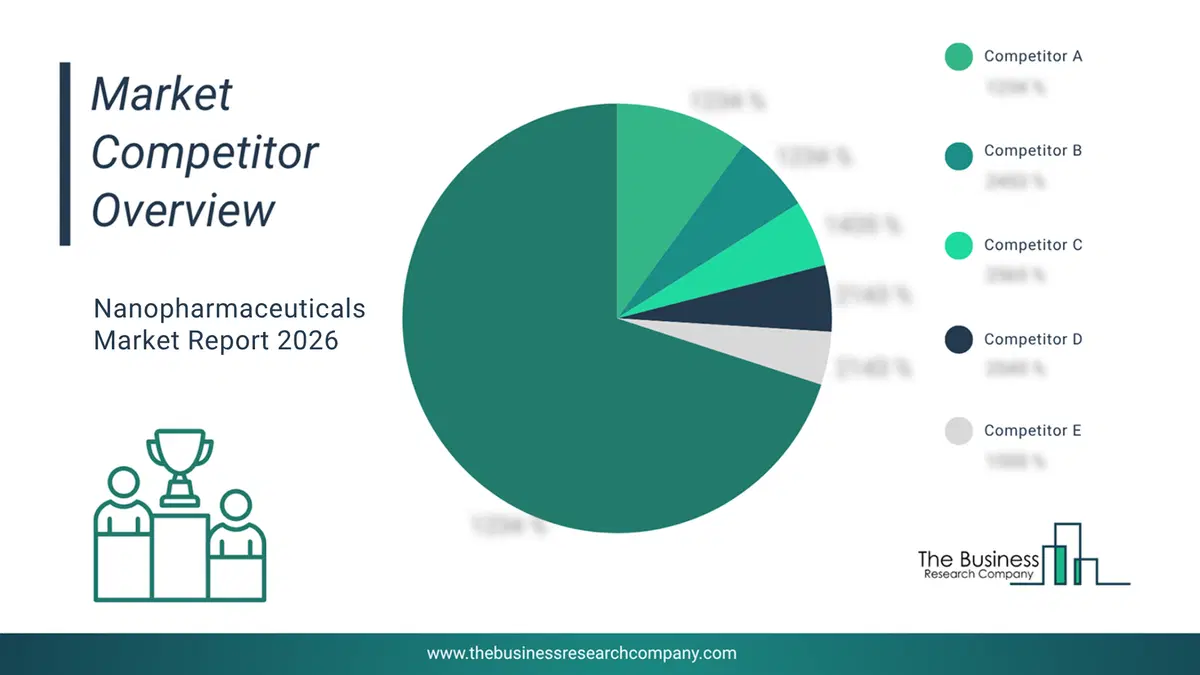
This chart is for illustrative purposes; the full report includes a detailed competitor analysis and comprehensive overview of the top 10 companies in the market.
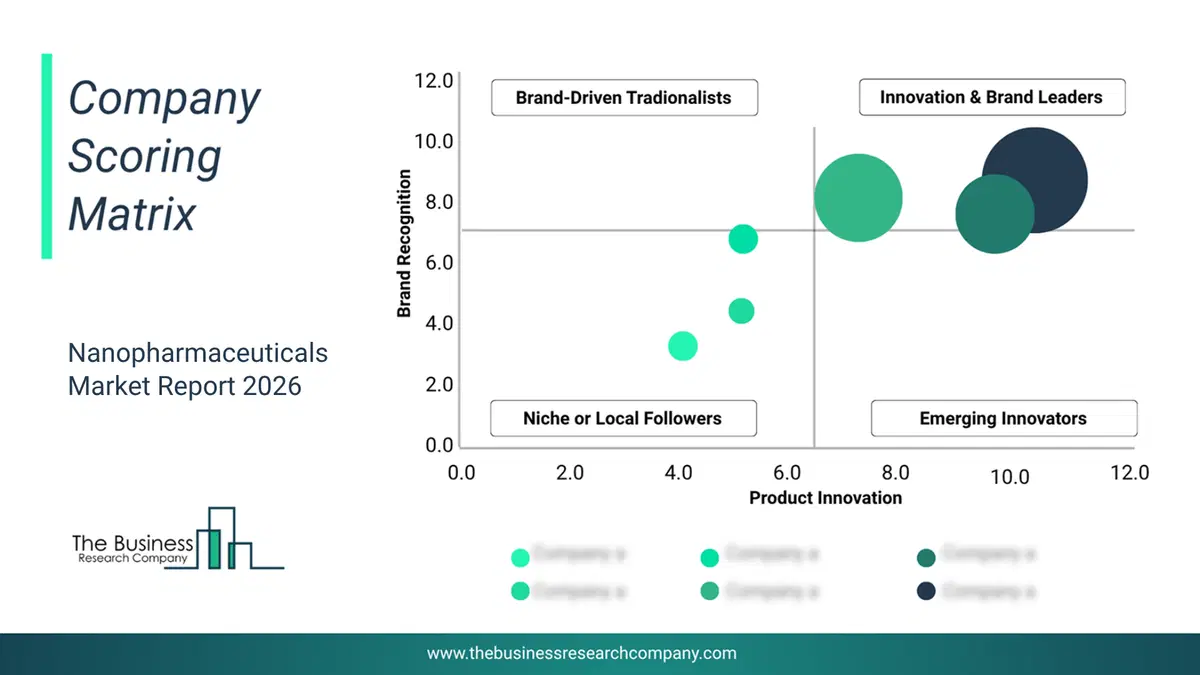
This chart maps companies by product innovation and brand strength, with bubble size indicating relative revenue, helping identify market leaders, challengers, and niche players. This is an illustrative chart; the full report provides a complete and accurate competitive analysis.
Global Nanopharmaceuticals Market Trends and Insights
Major companies operating in the nanopharmaceuticals market are adopting a strategic partnerships approach to provide essential communication services to individuals, businesses, and governments. Strategic partnerships refer to a process in which companies leverage each other's strengths and resources to achieve mutual benefits and success. For instance, in April 2024, Nanoform Finland Plc, a Finland-based nanoparticle medicine company, partnered with CBC Co. Ltd. a Japan-based development-type trading company to explore opportunities for Nanoform’s advanced nanomedicine engineering technologies. This strategic collaboration marks a key milestone in their efforts to leverage cutting-edge nanotechnology to enhance medicines for patients worldwide.What Are Latest Mergers And Acquisitions In The Nanopharmaceuticals Market?
In August 2025, AbbVie, an US-based pharmaceutical or biopharma company, acquired Capstan Therapeutics for undisclosed amount. With this acquisition, AbbVie strengthened its immunology pipeline and gained in vivo cell-engineering capabilities. Capstan Therapeutics is a US-based biotechnology company that specializes in a targeted lipid nanoparticle (tLNP) nanopharmaceutical platform, including an mRNA-based in vivo CAR-T therapy candidate (CPTX2309).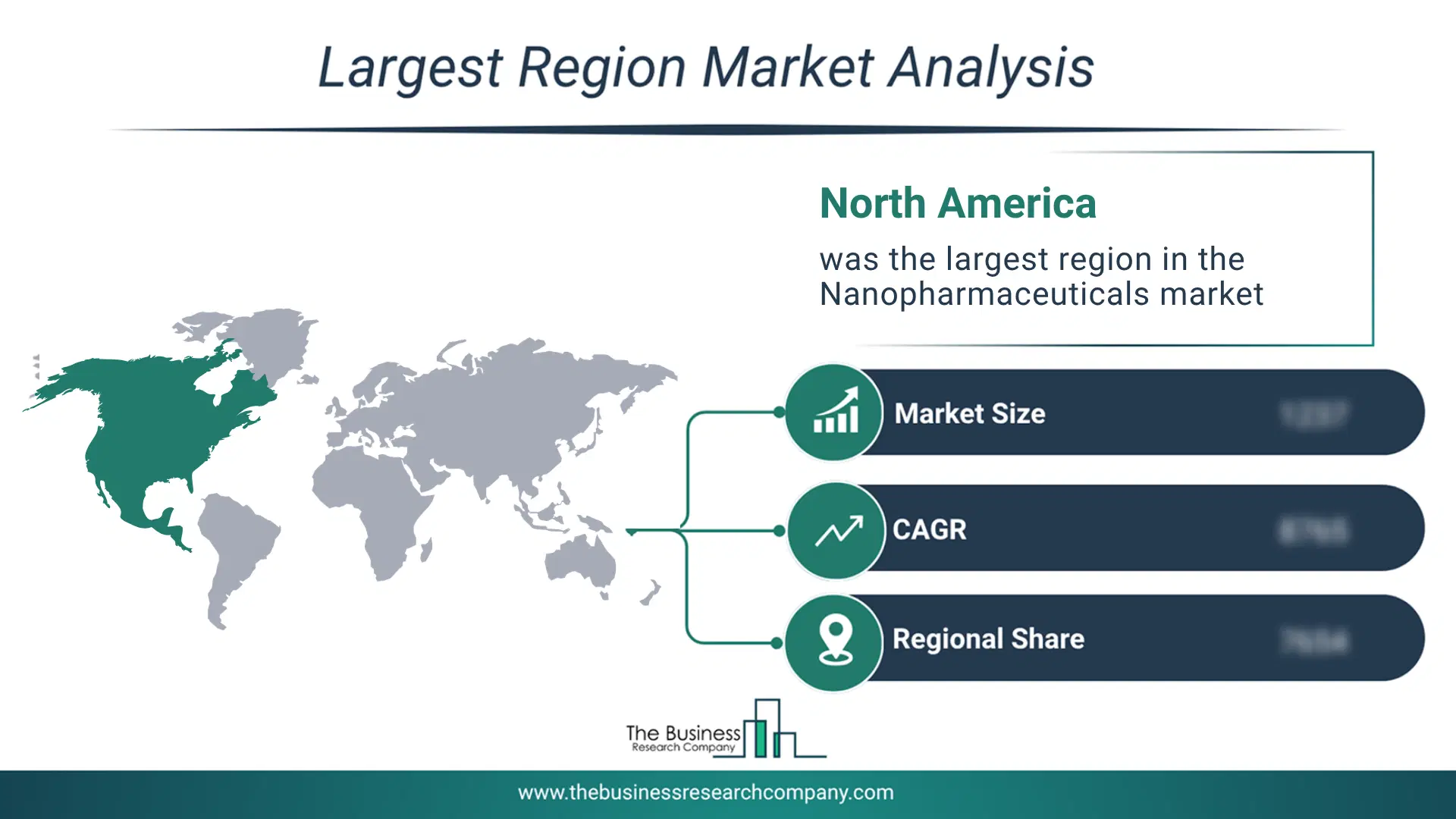
Regional Insights
North America was the largest region in the global nanopharmaceuticals market in 2025. Asia-Pacific is expected to be the fastest-growing region in the forecast period. The regions covered in this market report are Asia-Pacific, South East Asia, Western Europe, Eastern Europe, North America, South America, Middle East, Africa. The countries covered in this market report are Australia, Brazil, China, France, Germany, India, Indonesia, Japan, Taiwan, Russia, South Korea, UK, USA, Canada, Italy, Spain.What Defines the Nanopharmaceuticals Market?
The nanopharmaceuticals market consists of sales of dendritic nanoparticles, quantum dots, micellar nanoparticles, and gene delivery systems. Values in this market are ‘factory gate’ values, that is the value of goods sold by the manufacturers or creators of the goods, whether to other entities (including downstream manufacturers, wholesalers, distributors and retailers) or directly to end customers. The value of goods in this market includes related services sold by the creators of the goods.How is Market Value Defined and Measured?
The market value is defined as the revenues that enterprises gain from the sale of goods and/or services within the specified market and geography through sales, grants, or donations in terms of the currency (in USD unless otherwise specified). The revenues for a specified geography are consumption values that are revenues generated by organizations in the specified geography within the market, irrespective of where they are produced. It does not include revenues from resales along the supply chain, either further along the supply chain or as part of other products.
This chart presents market attractiveness based on a quantitative evaluation of growth, competition, strategic alignment, and risk, offering a clear view of opportunity areas for decision-making. This chart is for illustrative purposes; the full report contains the complete analysis.

This chart highlights the Total Addressable Market (TAM) by estimating the maximum revenue opportunity using an assumption-driven approach, supporting strategic planning and opportunity sizing across markets. The chart is illustrative; the full report provides a more comprehensive analysis.
What Key Data and Analysis Are Included in the Nanopharmaceuticals Market Report 2026?
The nanopharmaceuticals market research report is one of a series of new reports from The Business Research Company that provides market statistics, including industry global market size, regional shares, competitors with the market share, detailed market segments, market trends and opportunities, and any further data you may need to thrive in the nanopharmaceuticals industry. The market research report delivers a complete perspective of everything you need, with an in-depth analysis of the current and future state of the industry.Nanopharmaceuticals Market Report Forecast Analysis
| Report Attribute | Details |
|---|---|
| Market Size Value In 2026 | $132.73 billion |
| Revenue Forecast In 2030 | $254.37 billion |
| Growth Rate | CAGR of 18.0% from 2026 to 2030 |
| Base Year For Estimation | 2025 |
| Actual Estimates/Historical Data | 2020-2025 |
| Forecast Period | 2026 - 2030 |
| Market Representation | Revenue in USD Billion and CAGR from 2026 to 2030 |
| Segments Covered | Type, Route Of Administration, Application, End-User |
| Regional Scope | Asia-Pacific, Western Europe, Eastern Europe, North America, South America, Middle East, Africa |
| Country Scope | The countries covered in the report are Australia, Brazil, China, France, Germany, India, Indonesia, Japan, Taiwan, Russia, South Korea, UK, USA, Canada, Italy, Spain. |
| Key Companies Profiled | Selecta Biosciences Inc., Pfizer Inc., Hoffmann-La Roche Ltd., Merck & Co. Inc., AbbVie Inc., Bayer AG, Sanofi S.A., Bristol Myers Squibb Company, AstraZeneca plc, Abbott Laboratories, Novartis AG, GlaxoSmithKline plc, Eli Lilly and Company, Boehringer Ingelheim International GmbH, Par Pharmaceutial Inc., Samyang Biopharm Corporation |
| Customization Scope | Request for Customization |
| Pricing And Purchase Options | Explore Purchase Options |