
Nanorobotics Market Report 2026
Global Outlook – By Type (Nanomanipulator, Bio-Nanorobotics, Magnetically Guided, Bacteria-Based), By Operation Mode (Self-driven, Remote Controlled), By Application (Nanomedicine, Biomedical, Mechanical, Other Applications) – Market Size, Trends, Strategies, and Forecast to 2030
Nanorobotics Market Overview
• Nanorobotics market size has reached to $7.94 billion in 2025 • Expected to grow to $13.11 billion in 2030 at a compound annual growth rate (CAGR) of 10.5% • Growth Driver: Rising Incidence Of Periodontal Diseases Drives Nanorobotics Market • Market Trend: Technological Innovations in Electron Microscopy for Nanorobotics • North America was the largest region in 2025 and Asia-Pacific is the fastest growing region.What Is Covered Under Nanorobotics Market?
Nanorobotics refers to the discipline of creating and using tiny robots or artificial intelligence (AI)-powered machines to perform tasks. The main goal of future nanorobotics is to infuse multiple robotic functions such as sensing, processing of information, and communication at a scale smaller than the size of a microprocessor or a single cell. The main types of nanorobotics include nano manipulator, electron microscope, transmission electron microscope, scanning probe microscope, bio-nanorobotics, magnetically-guided, and bacteria-based. The nano manipulator refers to a specialized nanorobot and microscopic viewing system for working with objects on a small scale. These systems consist of a large microscope probe that can enlarge an image up to 1 million times the size of the original object operated by self-driven and remote controlled. The nanorobotics is used in nanomedicine, biomedical, mechanical, and other applications.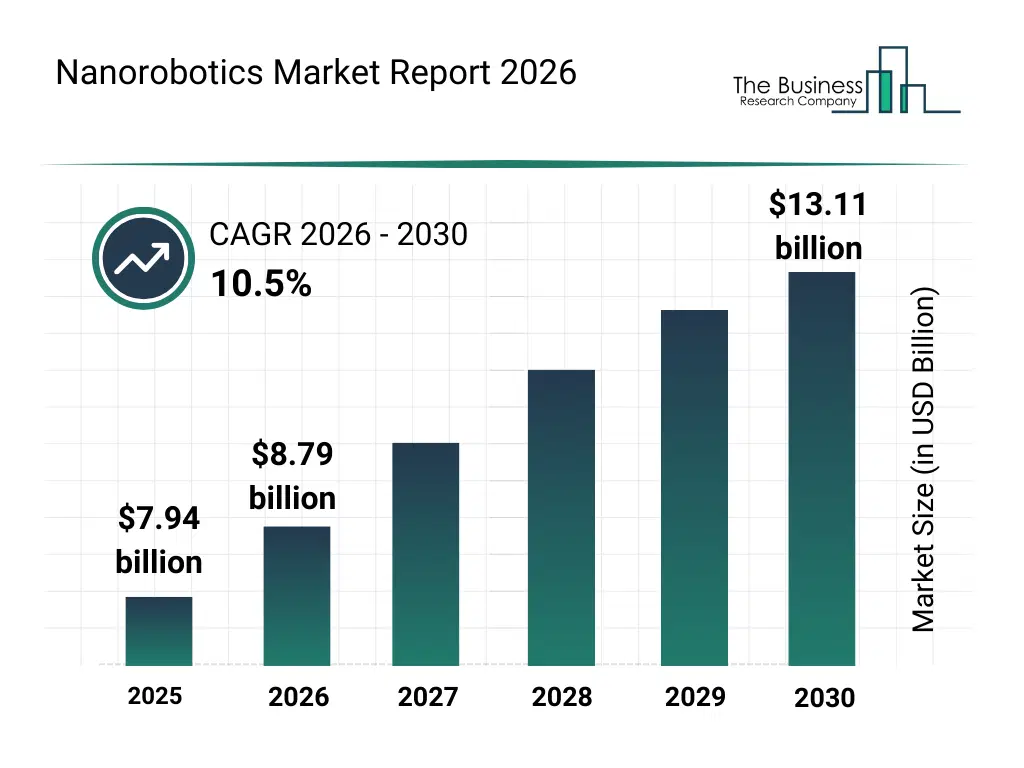
What Is The Nanorobotics Market Size and Share 2026?
The nanorobotics market size has grown rapidly in recent years. It will grow from $7.94 billion in 2025 to $8.79 billion in 2026 at a compound annual growth rate (CAGR) of 10.7%. The growth in the historic period can be attributed to advancements in nanotechnology research, early development of electron microscopy tools, growth in biomedical research funding, increasing demand for minimally invasive medical solutions, progress in molecular biology.What Is The Nanorobotics Market Growth Forecast?
The nanorobotics market size is expected to see rapid growth in the next few years. It will grow to $13.11 billion in 2030 at a compound annual growth rate (CAGR) of 10.5%. The growth in the forecast period can be attributed to rising demand for precision medicine, increasing investment in nanomedicine research, advancements in AI driven nanosystems, growth in targeted cancer therapies, expanding collaboration between academia and industry. Major trends in the forecast period include advancement in bio nanorobotic design, rising focus on targeted drug delivery, integration of nanorobots with imaging systems, growth in magnetically guided nanorobots, development of self driven nanoscale robots.Tariff Impact On Nanorobotics Market
Tariffs have impacted the nanorobotics market by increasing costs of imported high precision instruments, microscopy systems, and specialized electronic components used in nanoscale research and development. Higher duties have affected research institutions and biomedical companies, particularly in North America, Europe, and Asia Pacific where advanced nanotechnology infrastructure is concentrated. These cost pressures have slowed equipment procurement and experimental scalability for smaller players. However, tariffs have also encouraged domestic manufacturing of scientific instruments and boosted local innovation ecosystems supporting nanorobotics development.
Global Nanorobotics Market Segmentation
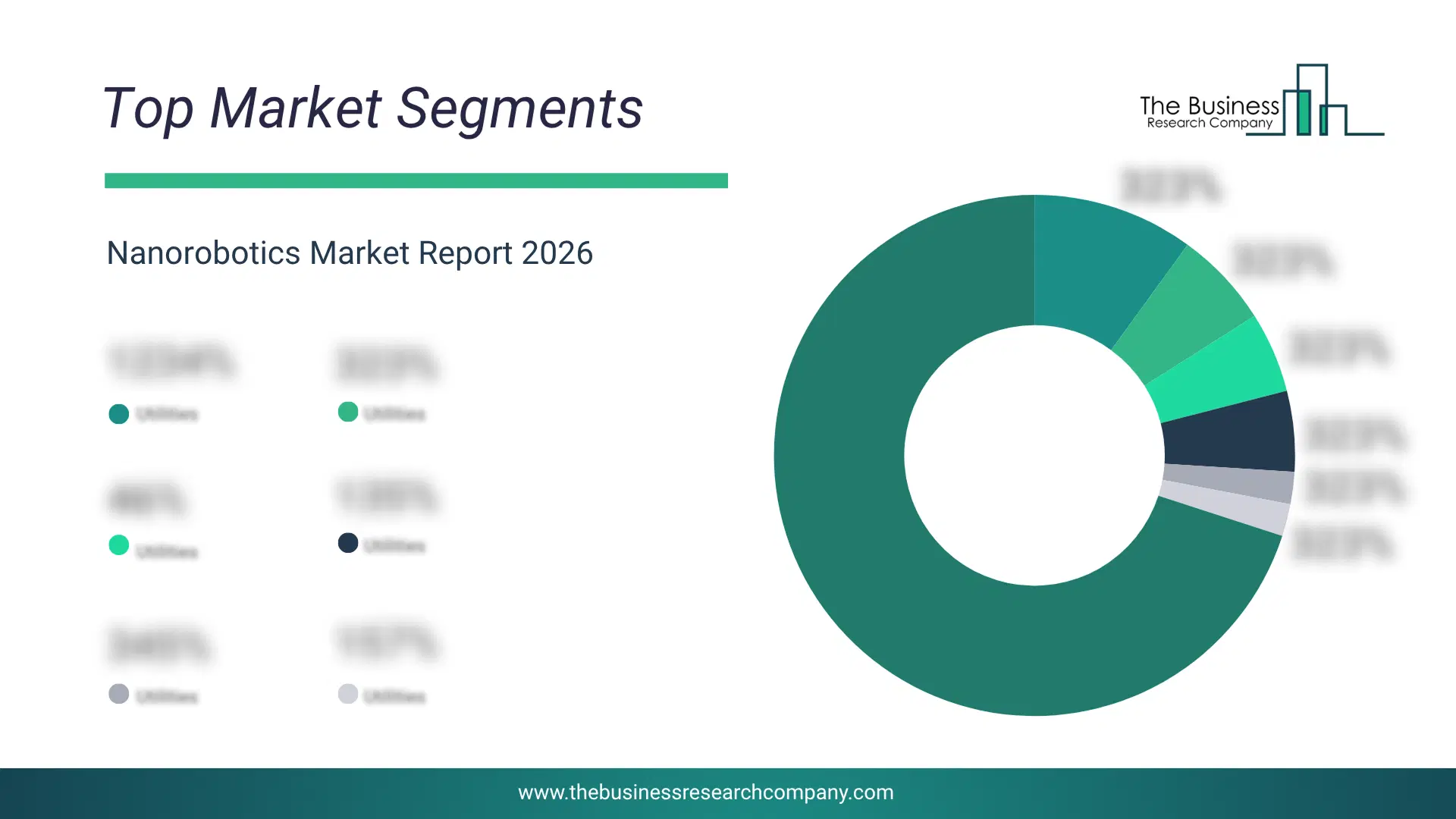
1) By Type: Nanomanipulator, Bio-Nanorobotics, Magnetically Guided, Bacteria-Based 2) By Operation Mode: Self-driven, Remote Controlled 3) By Application: Nanomedicine, Biomedical, Mechanical, Other Applications Subsegments: 1) By Nanomanipulator: Mechanical Nanomanipulators, Optical Nanomanipulators, Electrostatic Nanomanipulators 2) By Bio-Nanorobotics: DNA-Based Nanorobots, Protein-Based Nanorobots, Cellular Nanorobots 3) By Magnetically Guided: Magnetic Nanoparticle-Based Systems, Magnetic Field-Controlled Delivery Systems 4) By Bacteria-Based: Engineered Bacteria Nanorobots, Motile Bacteria For Drug Delivery, Bacterial Swimmers For Targeted TherapyWhat Are The Drivers Of The Nanorobotics Market?
The rising incidence of periodontal diseases is expected to propel the growth of the nanorobotics market. Periodontal diseases are the result of infections and inflammation of the gums and bones that will be surrounding and supporting the teeth. The growing interest in the dental applications of nanotechnology has led to the development of a new field called Nano dentistry. Dental nanorobots are being developed to destroy caries-causing or to repair tooth blemishes where decay sets in through computers to direct these tiny robots. For instance, in March 2025, according to the World Health Organization (WHO), a Switzerland-based international public health agency, the global burden of oral diseases affected nearly 3.7 billion people, with periodontal diseases being one of the most common oral conditions. Therefore, the rising prevalence of periodontal diseases is driving the growth of the nanorobotics industry. Rising focus on regenerative medicine is expected to propel the growth of the nanorobotics market. Regenerative medicine is a multidisciplinary field of medical science that focuses on developing innovative therapies and techniques to repair, replace, or regenerate damaged, diseased, or injured cells, tissues, and organs within the human body. By harnessing nanorobotics' potential, researchers and clinicians are advancing the development of innovative regenerative treatments, offering promising prospects for tissue repair and regeneration, ultimately driving the market's growth. For instance, in June 2024, according to a report published by Centre for Commercialization of Regenerative Medicine (CCRM), a Canada-based nonprofit organization focused on regenerative medicine, there were 2,848 cell and gene therapy (CGT) developers worldwide, marking an 11% increase over Q4 2023. Therefore, the rising focus on regenerative medicine is driving the growth of the nanorobotics industry.Key Players In The Global Nanorobotics Market
Major companies operating in the nanorobotics market are Ginkgo Bioworks, Imina Technologies SA, Thermo Fisher Scientific Inc., Klocke Nanotechnik GmbH, Oxford Instruments plc, Bruker Corporation, JEOL Ltd., Nanonics Imaging Ltd., Toronto Nano Instrumentation Inc., Nanosurf AG, Nanotec Electronica S.L., SmarAct GmbH, Novascan Technologies, Hummingbird Scientific, Agilent Technologies Inc., Park Systems, Angstrom Advanced Inc., NT-MDT Spectrum Instruments, Zyvex Labs LLC, Nanobiotix, Nanospectra Biosciences Inc.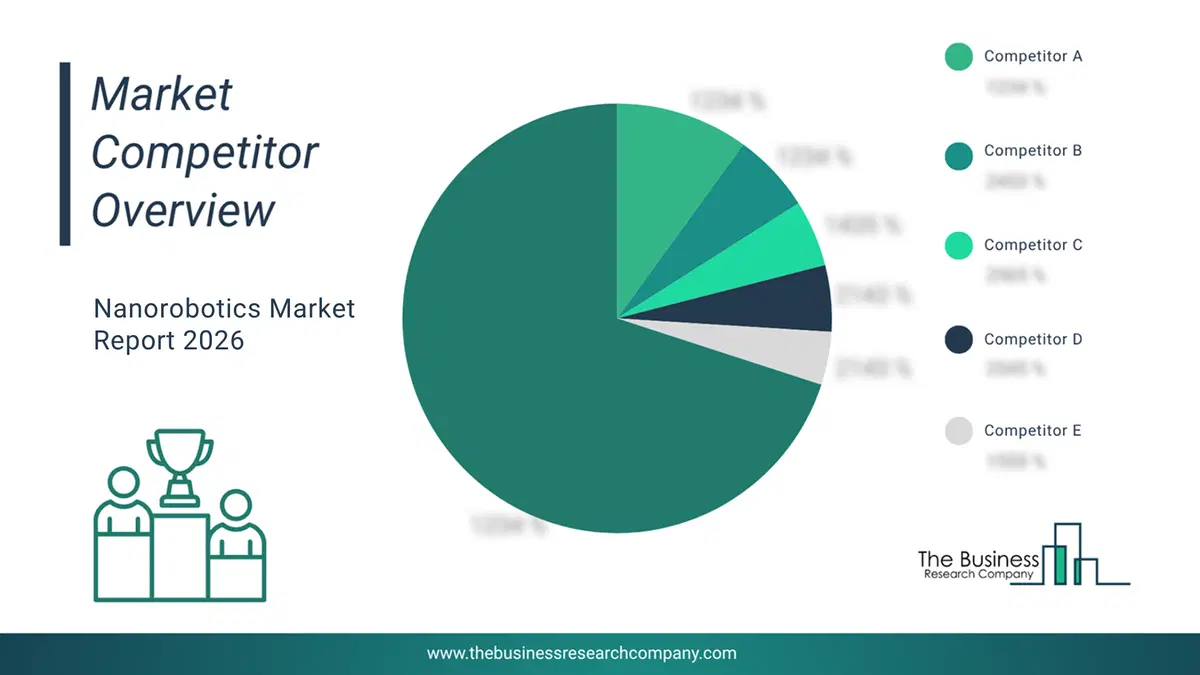
This chart is for illustrative purposes; the full report includes a detailed competitor analysis and comprehensive overview of the top 10 companies in the market.
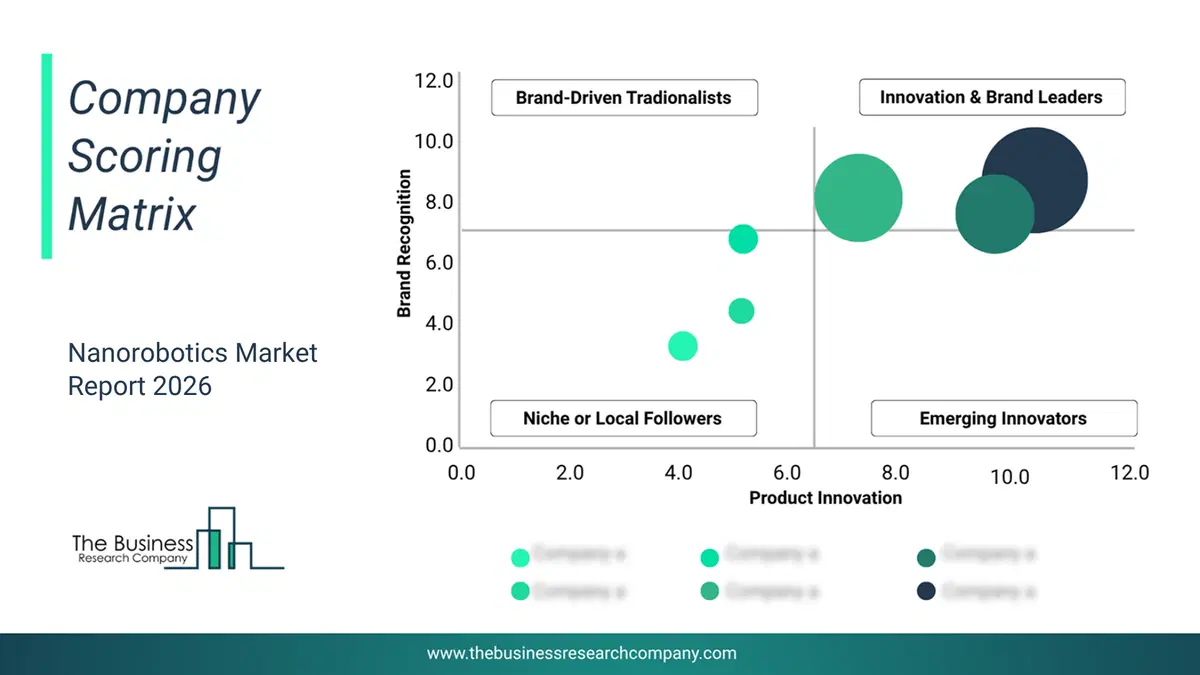
This chart maps companies by product innovation and brand strength, with bubble size indicating relative revenue, helping identify market leaders, challengers, and niche players. This is an illustrative chart; the full report provides a complete and accurate competitive analysis.
Global Nanorobotics Market Trends and Insights
Major companies operating in the nanorobotics market are developing technologically advanced solutions, such as electron microscopes, to to achieve significantly higher resolution. Electron microscopes are powerful imaging tools that use a beam of electrons to achieve high-resolution images of samples at the microscopic and nanoscale levels, allowing for detailed observation of their internal structures and surfaces. For instance, in May 2024, Hitachi High-Tech Corporation, a Japan-based electronics company, launched the SU3900SE and SU3800SE High-Resolution Schottky Scanning Electron Microscopes. It provides highly accurate and efficient observation of large and heavy specimens at the nanoscale. The SU3900SE specimen stage allows operators to examine heavy specimens weighing up to 5 kg. This stage is the largest among Hitachi High-Tech's scanning electron microscope (SEM) models, accommodating specimens up to 300 mm in diameter and 130 mm in height, which is approximately 1.5 times larger than its SU5000 predecessor. This capability reduces the need for additional specimen preparations, such as cutting, thereby enhancing overall process efficiency. Furthermore, the specimen is manipulated using a 5-axis motorized stage (X, Y, Z, tilt, and rotation).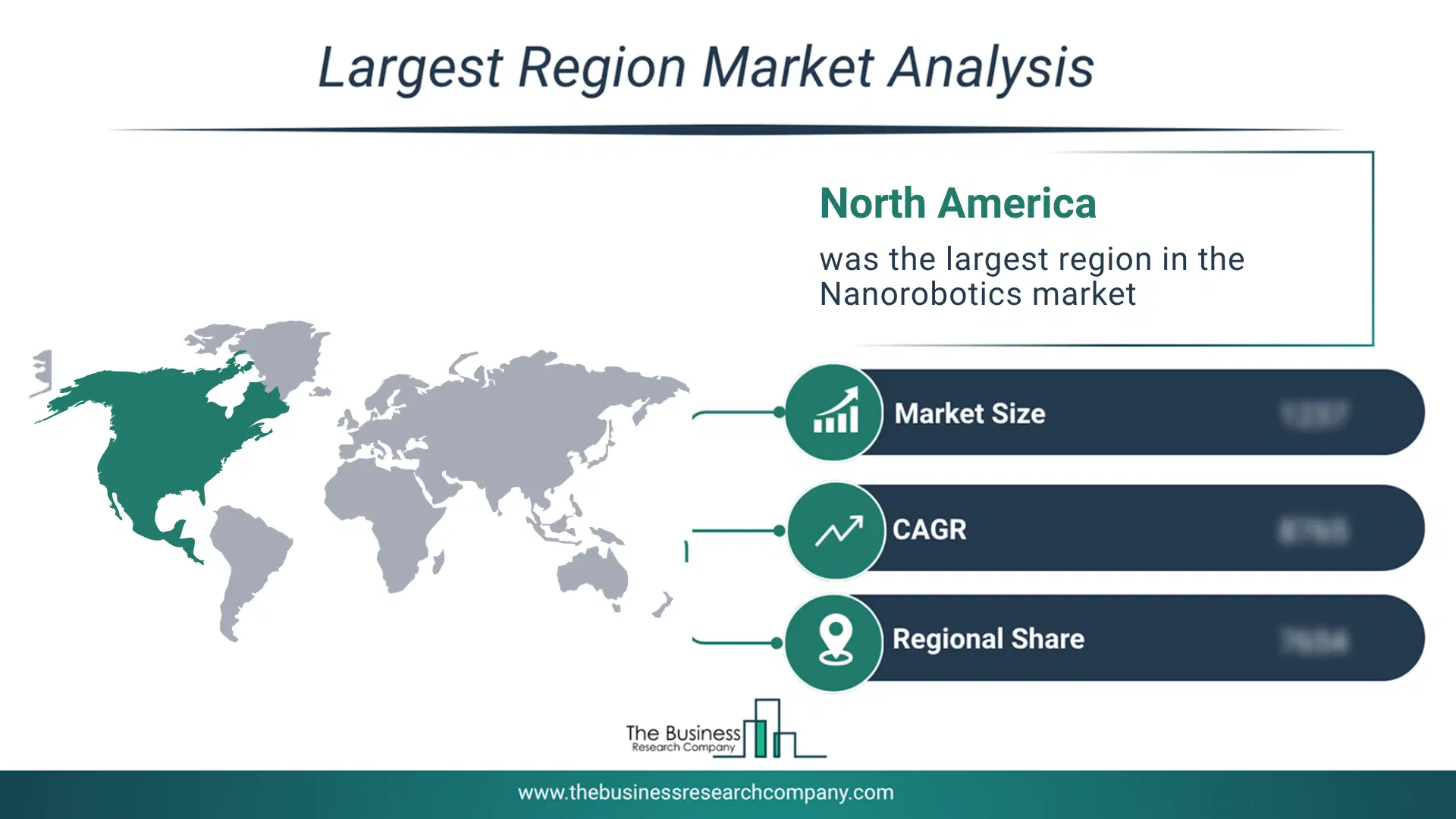
Regional Outlook
North America was the largest region in the nanorobotics market in 2025. Asia-Pacific is expected to be the fastest-growing region in the forecast period. The regions covered in this market report are Asia-Pacific, South East Asia, Western Europe, Eastern Europe, North America, South America, Middle East, Africa The countries covered in this market report are Australia, Brazil, China, France, Germany, India, Indonesia, Japan, Taiwan, Russia, South Korea, UK, USA, Canada, Italy, Spain.What Defines the Nanorobotics Market?
The nanorobotics market includes revenues earned by entities such by providing servies such as arteriosclerosis, tissue engineering, dental surgery, pharmacokinetics monitoring of drug delivery. The market value includes the value of related goods sold by the service provider or included within the service offering. Only goods and services traded between entities or sold to end consumers are included.How is Market Value Defined and Measured?
The market value is defined as the revenues that enterprises gain from the sale of goods and/or services within the specified market and geography through sales, grants, or donations in terms of the currency (in USD unless otherwise specified). The revenues for a specified geography are consumption values that are revenues generated by organizations in the specified geography within the market, irrespective of where they are produced. It does not include revenues from resales along the supply chain, either further along the supply chain or as part of other products.
This chart presents market attractiveness based on a quantitative evaluation of growth, competition, strategic alignment, and risk, offering a clear view of opportunity areas for decision-making. This chart is for illustrative purposes; the full report contains the complete analysis.

This chart highlights the Total Addressable Market (TAM) by estimating the maximum revenue opportunity using an assumption-driven approach, supporting strategic planning and opportunity sizing across markets. The chart is illustrative; the full report provides a more comprehensive analysis.
What Key Data and Analysis Are Included in the Nanorobotics Market Report 2026?
The nanorobotics market research report is one of a series of new reports from The Business Research Company that provides market statistics, including industry global market size, regional shares, competitors with the market share, detailed market segments, market trends and opportunities, and any further data you may need to thrive in the nanorobotics industry. The market research report delivers a complete perspective of everything you need, with an in-depth analysis of the current and future state of the industry.Nanorobotics Market Report Forecast Analysis
| Report Attribute | Details |
|---|---|
| Market Size Value In 2026 | $8.79 billion |
| Revenue Forecast In 2030 | $13.11 billion |
| Growth Rate | CAGR of 10.5% from 2026 to 2030 |
| Base Year For Estimation | 2025 |
| Actual Estimates/Historical Data | 2020-2025 |
| Forecast Period | 2026 - 2030 |
| Market Representation | Revenue in USD Billion and CAGR from 2026 to 2030 |
| Segments Covered | Type, Operation Mode, Application |
| Regional Scope | Asia-Pacific, Western Europe, Eastern Europe, North America, South America, Middle East, Africa |
| Key Companies Profiled | Ginkgo Bioworks, Imina Technologies SA, Thermo Fisher Scientific Inc., Klocke Nanotechnik GmbH, Oxford Instruments plc, Bruker Corporation, JEOL Ltd., Nanonics Imaging Ltd., Toronto Nano Instrumentation Inc., Nanosurf AG, Nanotec Electronica S.L., SmarAct GmbH, Novascan Technologies, Hummingbird Scientific, Agilent Technologies Inc., Park Systems, Angstrom Advanced Inc., NT-MDT Spectrum Instruments, Zyvex Labs LLC, Nanobiotix, Nanospectra Biosciences Inc. |
| Customization Scope | Request for Customization |
| Pricing And Purchase Options | Explore Purchase Options |