

Narcolepsy Market Report 2026
Global Outlook – By Type (Type 1, Type 2), By Treatment (Antidepressants, Stimulants, Sodium Oxybate, Other Treatments), By Diagnosis (Polysomnogram, Multiple Sleep Latency Test) - Market Size, Trends, And Global Forecast 2026-2030
Narcolepsy Market Overview
• Narcolepsy market size has reached to $3.95 billion in 2025 • Expected to grow to $6.62 billion in 2030 at a compound annual growth rate (CAGR) of 10.9% • Growth Driver: Obesity Fueling Narcolepsy Market Growth • Market Trend: Development Of Extended-Release Medications In The Narcolepsy Market • North America was the largest region in 2025 and Asia-Pacific is the fastest growing region.Market Gains By 2030 – Top Opportunities By Segment
Market Gain identifies the most promising market opportunities by highlighting the segments or products expected to generate the highest incremental revenue growth over the next five years.
What Is Covered Under Narcolepsy Market?
Narcolepsy is a chronic neurological disorder that affects the brain's ability to regulate sleep-wake cycles. People with narcolepsy often experience excessive daytime sleepiness and uncontrollable episodes of falling asleep during the day, which can occur during any type of activity. Narcolepsy is frequently accompanied by cataplexy, a sudden loss of muscle tone triggered by strong emotions. The main types of narcolepsy are type 1 and type 2. Type 1 narcolepsy, also known as NT1, is characterized by excessive daytime sleepiness and cataplexy, which is a sudden loss of muscle tone often triggered by strong emotions. The treatment of narcolepsy includes antidepressants, stimulants, sodium oxybate, and others, and it is diagnosed by a polysomnogram and multiple sleep latency tests. The various end users include hospitals, retail pharmacies, and others.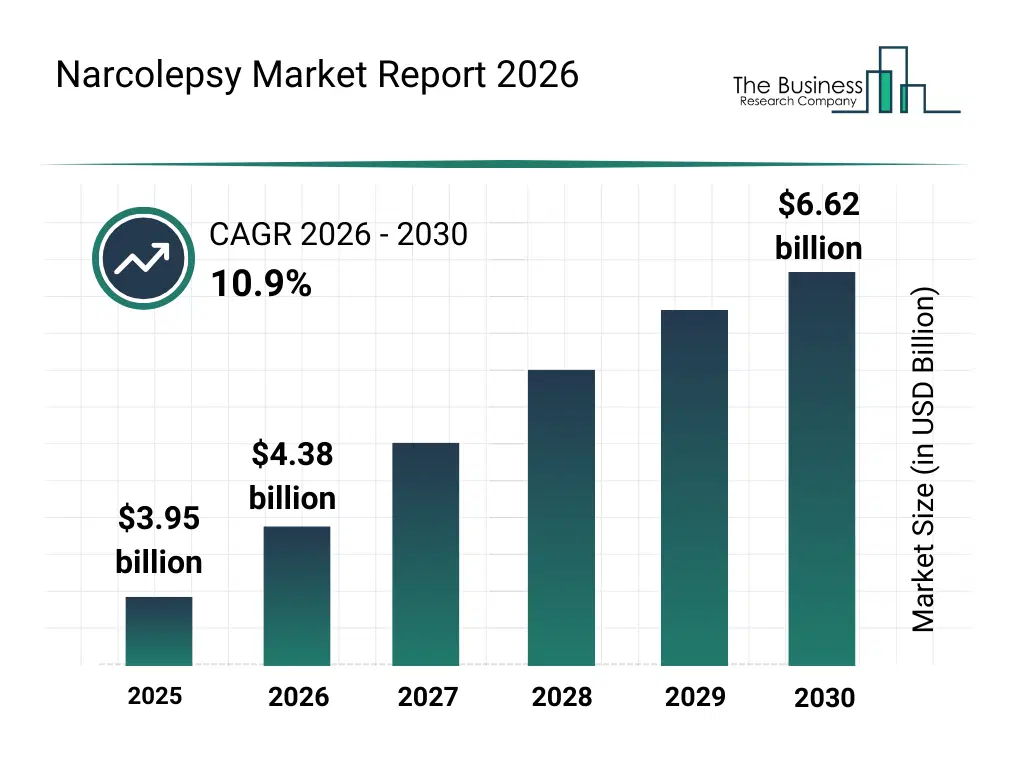
What Is The Narcolepsy Market Size and Share 2026?
The narcolepsy market size has grown rapidly in recent years. It will grow from $3.95 billion in 2025 to $4.38 billion in 2026 at a compound annual growth rate (CAGR) of 10.8%. The growth in the historic period can be attributed to limited awareness of narcolepsy, delayed diagnosis rates, reliance on stimulant medications, introduction of sodium oxybate, growth in sleep disorder research.What Is The Narcolepsy Market Growth Forecast?
The narcolepsy market size is expected to see rapid growth in the next few years. It will grow to $6.62 billion in 2030 at a compound annual growth rate (CAGR) of 10.9%. The growth in the forecast period can be attributed to rising prevalence of sleep disorders, increasing r&d investment, expanding non-stimulant therapeutic pipeline, growing patient education initiatives, advancements in precision medicine approaches. Major trends in the forecast period include rising awareness and diagnosis of narcolepsy, increasing adoption of combination therapy, growing demand for long-acting therapeutics, expansion of non-stimulant treatment options, enhanced focus on cataplexy-specific therapeutics.
Global Narcolepsy Market Segmentation
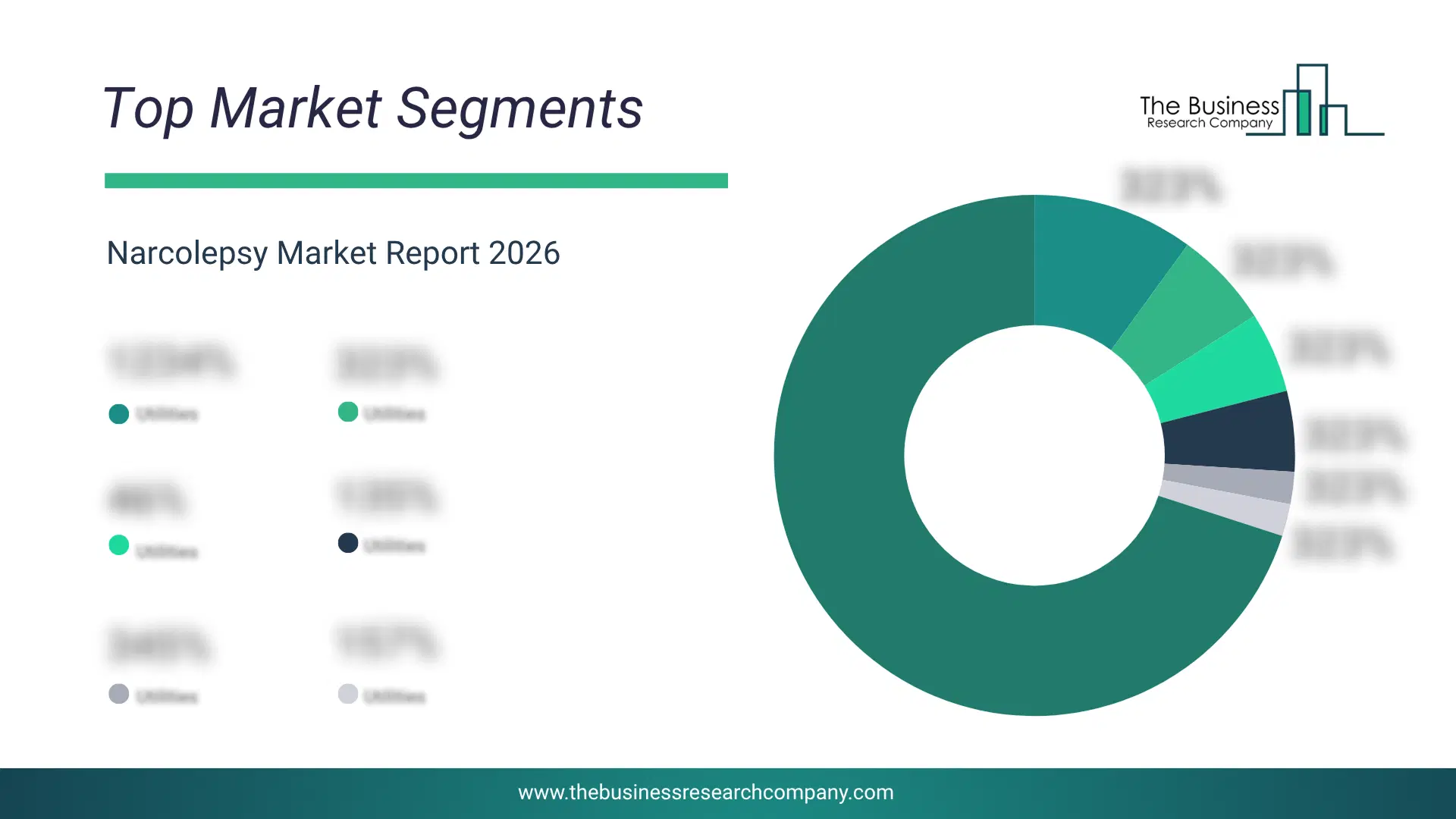
1) By Type: Type 1, Type 2 2) By Treatment: Antidepressants, Stimulants, Sodium Oxybate, Other Treatments 3) By Diagnosis: Polysomnogram, Multiple Sleep Latency Test Subsegments: 1) By Type 1: Stimulant Medications, Antidepressants, Sodium Oxybate, Immunosuppressive Treatments 2) By Type 2: Stimulant Medications, Sodium Oxybate, Antidepressants The top segments in the narcolepsy market will be: • Type 1 will reach $3.72 Billion by 2030. • Type 2 will reach $2.78 Billion by 2030.What Is The Driver Of The Narcolepsy Market?
The growing number of obese people is expected to propel the growth of the narcolepsy market going forward. Obesity is a medical condition characterized by an excessive accumulation of body fat, which poses a health risk. The number of obese people is rising due to increasingly sedentary lifestyles, poor dietary habits, and environmental factors that promote calorie-dense food consumption and reduce physical activity. Obesity can contribute to narcolepsy by disrupting metabolic and hormonal balances, potentially leading to changes in sleep patterns and the regulation of wakefulness. For instance, in May 2025, according to the Office for Health Improvement & Disparities, a UK-based government department, an estimated 64.5 percent of adults aged 18 and over in England were overweight or living with obesity in 2023–2024, up from 64.0 percent in 2022–2023, reflecting a continuing upward trend. Therefore, the growing number of obese people is driving the growth of the narcolepsy industry.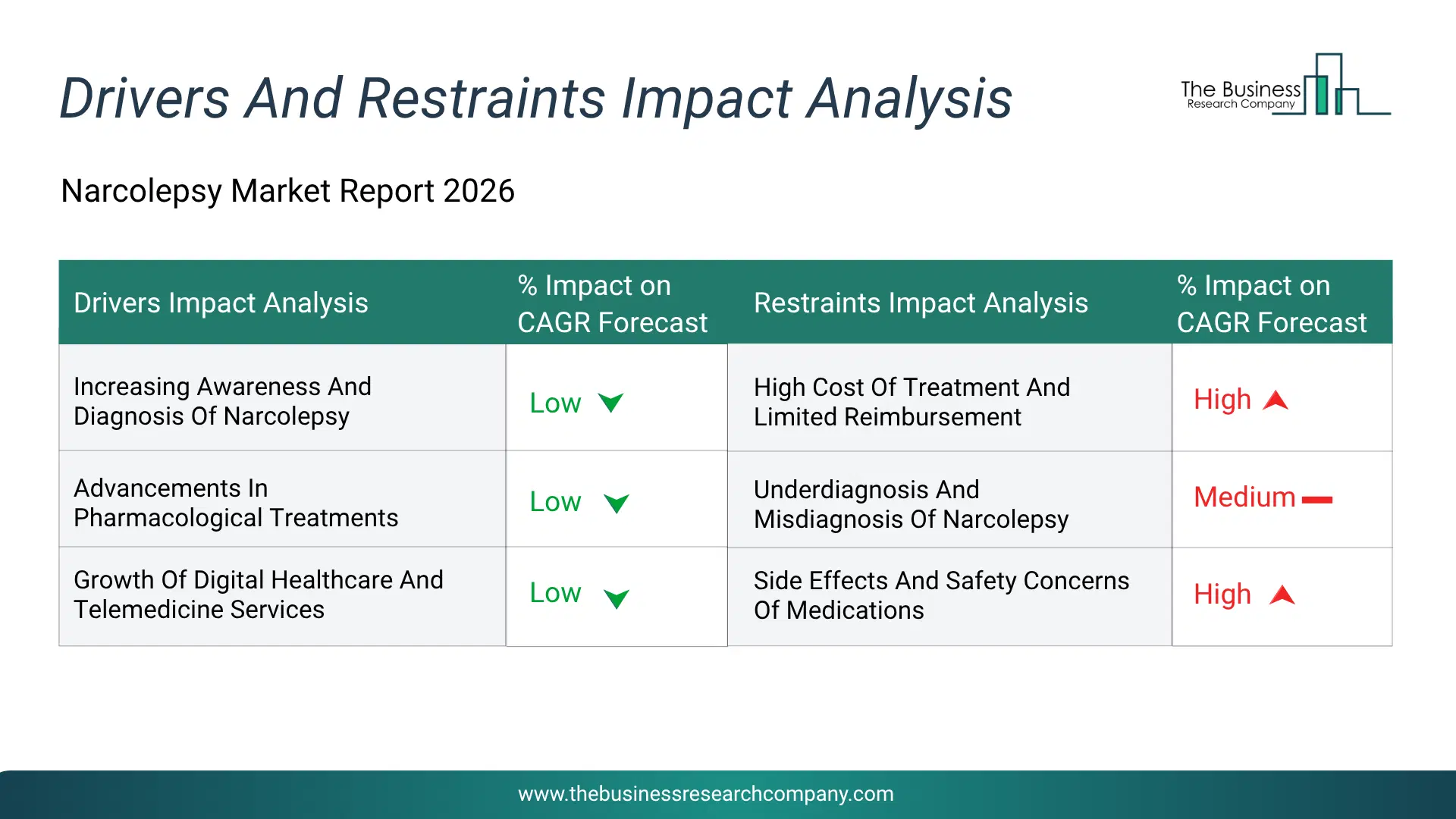
Infographic Chart Showing Key Market Drivers Analysis And Restraints For Narcolepsy Market
The chart presents an impact analysis of key drivers and restraints, quantifying their relative influence on the market's growth rate and helping assess the balance between growth enablers and limiting factors. This chart offers a high-level perspective; the full report contains more detailed insights.
How Will The Drivers Impact Growth In The Global Narcolepsy Market?
• Increasing Awareness And Diagnosis Of Narcolepsy (Low) – During the forecast period, the increasing awareness and diagnosis of narcolepsy is expected to become a key growth driver for the narcolepsy market by 2030. Rising awareness among healthcare professionals and the general population is significantly improving diagnosis rates of narcolepsy. Historically underdiagnosed, the condition is now being identified more accurately due to educational campaigns, improved diagnostic tools, and better clinical understanding. Early diagnosis increases demand for treatment options such as medications, behavioral therapy, and patient support programs. Healthcare providers are also more vigilant in identifying symptoms like excessive daytime sleepiness and cataplexy. • Advancements In Pharmacological Treatments (Low) – During the forecast period, the advancements in pharmacological treatments is expected to emerge as a major factor driving the expansion of the narcolepsy market by 2030. Continuous advancements in drug development, including therapies such as pitolisant, modafinil, and armodafinil, are driving market growth. These medications offer improved efficacy, fewer side effects, and better patient adherence compared to older treatments. Pharmaceutical companies are investing in research and clinical trials to develop innovative therapies targeting sleep-wake regulation. Regulatory approvals are expanding access to these drugs across multiple regions. • Growth Of Digital Healthcare And Telemedicine Services (Low) – During the forecast period, the growth of digital healthcare and telemedicine services is expected to act as a key growth catalyst for the narcolepsy market by 2030. The rapid adoption of telemedicine and digital healthcare platforms is improving access to narcolepsy care. Patients can consult specialists remotely, reducing geographical and logistical barriers. Telemedicine supports continuous monitoring and follow-up, which is essential for chronic conditions like narcolepsy. Digital tools such as sleep tracking applications and virtual therapy programs enhance patient engagement and adherence to treatment. This shift toward remote healthcare solutions is particularly beneficial in underserved areas.How Will The Restraints Impact Growth In The Global Narcolepsy Market?
• High Cost Of Treatment And Limited Reimbursement (Low) – During the forecast period, high cost of treatment and limited reimbursement are significantly restricting the growth of the narcolepsy market. Expensive long-term pharmacological therapies combined with inadequate insurance coverage in many regions are creating financial burdens for patients and limiting treatment accessibility. • Underdiagnosis And Misdiagnosis Of Narcolepsy (Low) – During the forecast period, underdiagnosis and misdiagnosis of narcolepsy are significantly restricting the growth of the narcolepsy market. Overlapping symptoms with other sleep and neurological disorders, along with limited specialist availability, are leading to delayed or incorrect diagnosis, reducing timely treatment initiation. • Side Effects And Safety Concerns Of Medications (Low) – During the forecast period, side effects and safety concerns of medications are significantly restricting the growth of the narcolepsy market. Adverse reactions associated with stimulant and wakefulness-promoting agents are leading to treatment discontinuation or hesitation among patients and healthcare providers, thereby limiting overall therapy adoption.Key Players In The Global Narcolepsy Market
Major companies operating in the narcolepsy market are Pfizer Inc., Merck & Co. Inc, Novartis AG, Takeda Pharmaceutical Company Limited, Teva Pharmaceutical Industries, Otsuka Pharmaceutical, Sumitomo Pharma Company Limited, Jazz Pharmaceuticals, Alkermes, Harmony Biosciences, Cerevel Therapeutics, Axsome Therapeutics Inc., Avadel Pharmaceuticals, NLS Pharmaceutics AG, KemPharm, Bioprojet Pharma, Centessa Pharmaceuticals, Hikma Pharmaceuticals, Theranexus SA, Eisai Co Ltd, Ligand Pharmaceuticals, Graymark Healthcare Inc, H Lundbeck A/S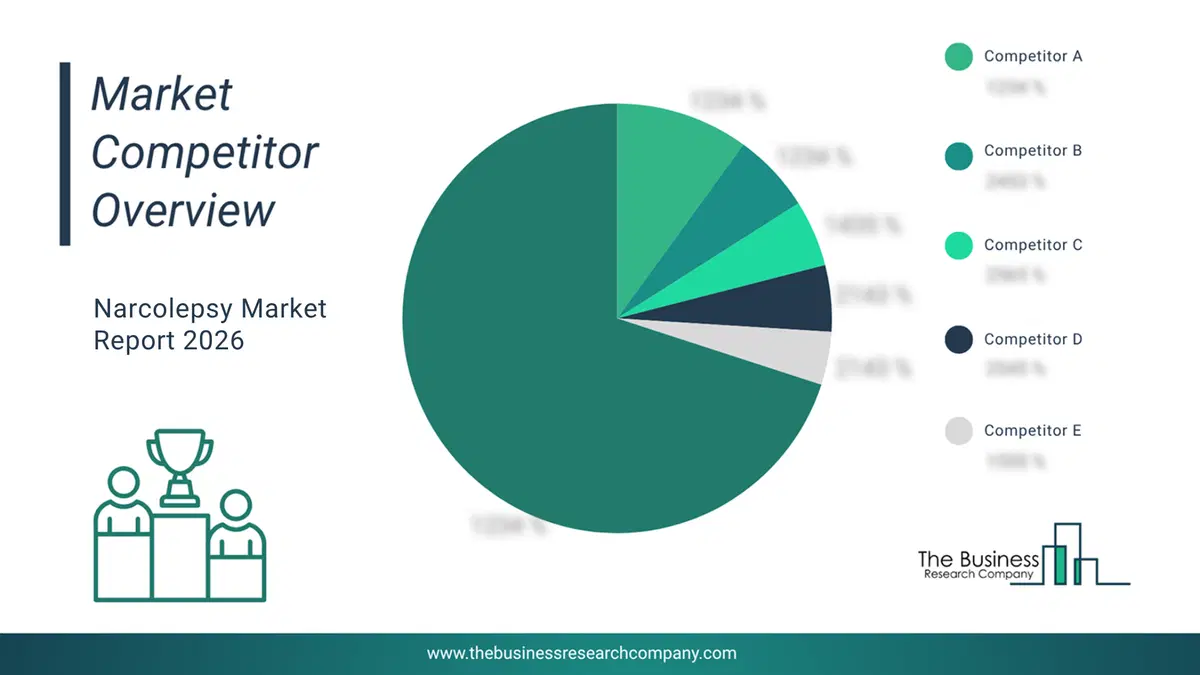
This chart is for illustrative purposes; the full report includes a detailed competitor analysis and comprehensive overview of the top 10 companies in the market.
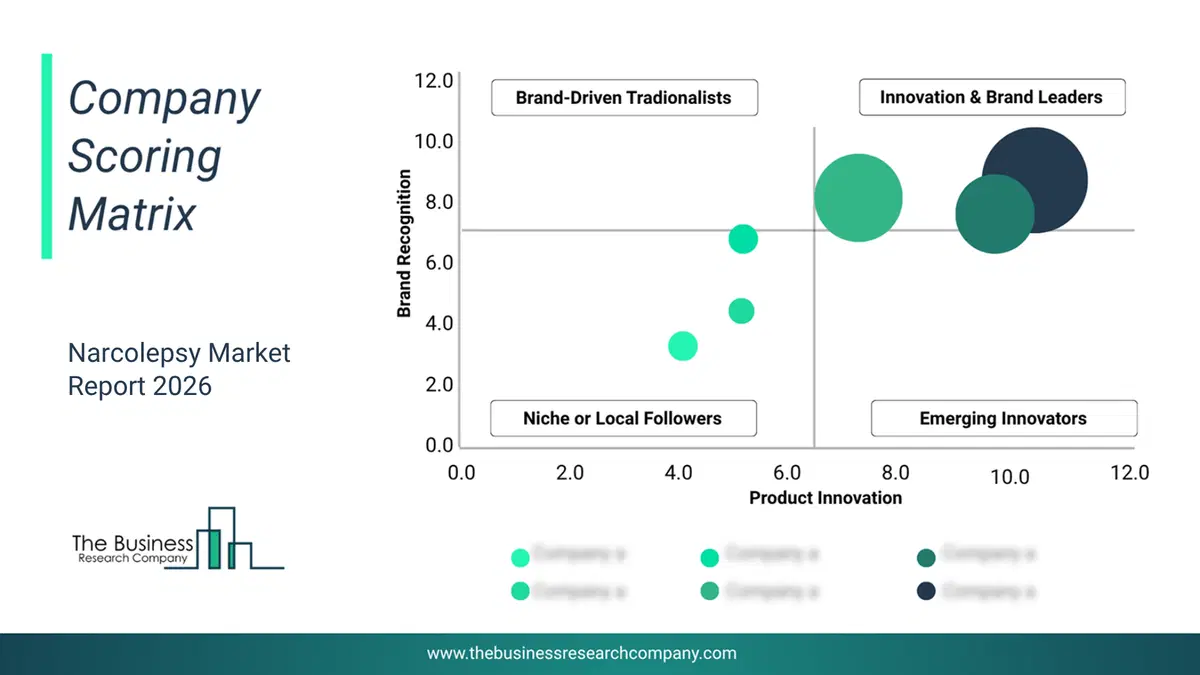
This chart maps companies by product innovation and brand strength, with bubble size indicating relative revenue, helping identify market leaders, challengers, and niche players. This is an illustrative chart; the full report provides a complete and accurate competitive analysis.
Global Narcolepsy Market Trends and Insights
Major companies operating in the narcolepsy market are increasing their focus on developing novel medications, such as extended-release sodium oxybate, to address the growing demand for effective treatments. Extended-release sodium oxybate is a medication used in the treatment of narcolepsy. The extended-release formulation allows for controlled release of the medication over a longer period, providing sustained symptom relief throughout the night and improving sleep quality for individuals with narcolepsy. For instance, in June 2023, Avadel Pharmaceuticals plc, an Ireland-based pharmaceutical company, launched LUMRYZ in the United States. LUMRYZ is an extended-release formulation of sodium oxybate approved by the FDA for the treatment of cataplexy or excessive daytime sleepiness (EDS) in adults with narcolepsy. It is the first and only once-at-bedtime oxybate treatment for narcolepsy, offering a significant improvement over twice-nightly oxybate products by avoiding the need to wake up for a second dose at night.What Are Latest Mergers And Acquisitions In The Narcolepsy Market?
In December 2023, NLS Pharmaceutics AG, a Switzerland-based pharmaceutical company, acquired a dual orexin receptor agonist platform from Aexon Labs Inc. for an undisclosed amount. The acquisition grants NLS Pharmaceutics the option to in-license all of Aexon Labs' assets for the treatment of narcolepsy and other neurodegenerative disorders, as well as global rights to multiple highly selective orexin-1/orexin-2 receptor agonists. Aexon Labs Inc. is a US-based company involved in the development of treatments for narcolepsy and neurodegenerative disease.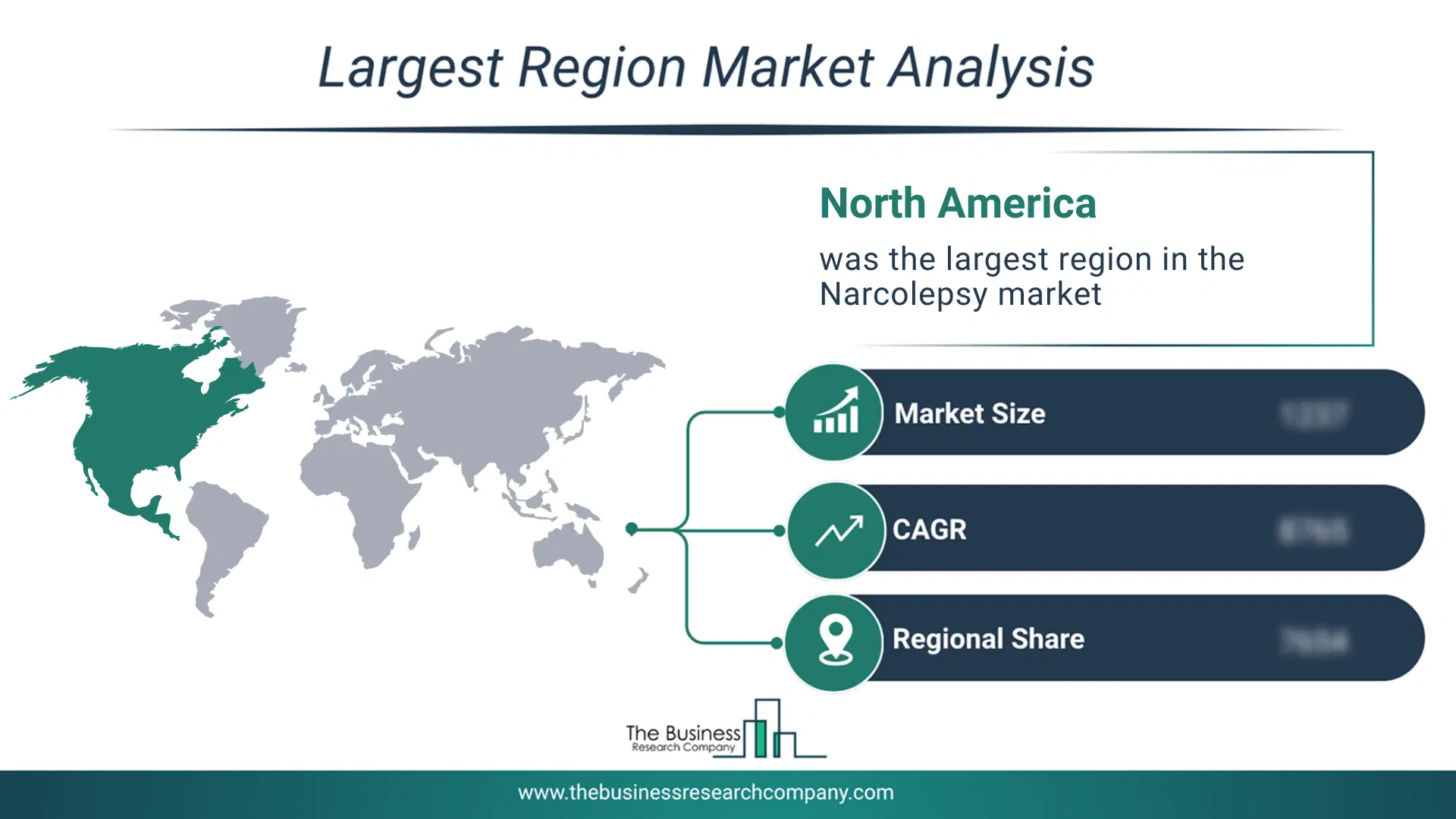
Regional Outlook
North America was the largest region in the narcolepsy market in 2025. Asia-Pacific is expected to be the fastest-growing region in the forecast period. The regions covered in this market report are Asia-Pacific, South East Asia, Western Europe, Eastern Europe, North America, South America, Middle East, Africa. The countries covered in this market report are Australia, Brazil, China, France, Germany, India, Indonesia, Japan, Taiwan, Russia, South Korea, UK, USA, Canada, Italy, Spain.What Defines the Narcolepsy Market?
The narcolepsy market consists of revenues earned by entities by providing services such as cognitive behavioral therapy, telemedicine consultations, lifestyle management programs, and patient education programs. The market value includes the value of related goods sold by the service provider or included within the service offering. The narcolepsy market also includes sales of dietary supplements, Pitolisant, Modafinil, and Armodafinil. Values in this market are ‘factory gate’ values, that is, the value of goods sold by the manufacturers or creators of the goods, whether to other entities (including downstream manufacturers, wholesalers, distributors, and retailers) or directly to end customers. The value of goods in this market includes related services sold by the creators of the goods.How is Market Value Defined and Measured?
The market value is defined as the revenues that enterprises gain from the sale of goods and/or services within the specified market and geography through sales, grants, or donations in terms of the currency (in USD unless otherwise specified). The revenues for a specified geography are consumption values that are revenues generated by organizations in the specified geography within the market, irrespective of where they are produced. It does not include revenues from resales along the supply chain, either further along the supply chain or as part of other products.
This chart presents market attractiveness based on a quantitative evaluation of growth, competition, strategic alignment, and risk, offering a clear view of opportunity areas for decision-making. This chart is for illustrative purposes; the full report contains the complete analysis.

This chart highlights the Total Addressable Market (TAM) by estimating the maximum revenue opportunity using an assumption-driven approach, supporting strategic planning and opportunity sizing across markets. The chart is illustrative; the full report provides a more comprehensive analysis.
What Key Data and Analysis Are Included in the Narcolepsy Market Report 2026?
The narcolepsy market research report is one of a series of new reports from The Business Research Company that provides market statistics, including industry global market size, regional shares, competitors with the market share, detailed market segments, market trends and opportunities, and any further data you may need to thrive in the narcolepsy industry. The market research report delivers a complete perspective of everything you need, with an in-depth analysis of the current and future state of the industry.Narcolepsy Market Report Forecast Analysis
| Report Attribute | Details |
|---|---|
| Market Size Value In 2026 | $4.38 billion |
| Revenue Forecast In 2030 | $6.62 billion |
| Growth Rate | CAGR of 10.8% from 2026 to 2030 |
| Base Year For Estimation | 2025 |
| Actual Estimates/Historical Data | 2020-2025 |
| Forecast Period | 2026 - 2030 |
| Market Representation | Revenue in USD Billion and CAGR from 2026 to 2030 |
| Segments Covered | Type, Treatment, Diagnosis |
| Regional Scope | Asia-Pacific, Western Europe, Eastern Europe, North America, South America, Middle East, Africa |
| Country Scope | The countries covered in the report are Australia, Brazil, China, France, Germany, India, Indonesia, Japan, Taiwan, Russia, South Korea, UK, USA, Canada, Italy, Spain. |
| Key Companies Profiled | Pfizer Inc., Merck & Co. Inc, Novartis AG, Takeda Pharmaceutical Company Limited, Teva Pharmaceutical Industries, Otsuka Pharmaceutical, Sumitomo Pharma Company Limited, Jazz Pharmaceuticals, Alkermes, Harmony Biosciences, Cerevel Therapeutics, Axsome Therapeutics Inc., Avadel Pharmaceuticals, NLS Pharmaceutics AG, KemPharm, Bioprojet Pharma, Centessa Pharmaceuticals, Hikma Pharmaceuticals, Theranexus SA, Eisai Co Ltd, Ligand Pharmaceuticals, Graymark Healthcare Inc, H Lundbeck A/S |
| Customization Scope | Request for Customization |
| Pricing And Purchase Options | Explore Purchase Options |