
Nausea Medicine Market Report 2026
Global Outlook – By Type (Antagonists, Antihistamines, Canabinoids, Other Types), By Indication (Oncology, Gastroesophageal Reflux Disease, Motion Sickness and Seasickness, Other Indications), By Route of Administration (Oral, Injectable, Transdermal, Rectal, Other Route of Administrations), By Distribution Channel (Retail Pharmacies, Hospital Pharmacies, Online Pharmacies, Other Distribution Channels), By End User (Hospitals, Homecare settings, Ambulatory Surgical centres, Long-term Care Facilities, Individual Consumers) – Market Size, Trends, Strategies, and Forecast to 2030
Nausea Medicine Market Overview
• Nausea Medicine market size has reached to $3.22 billion in 2025 • Expected to grow to $4.5 billion in 2030 at a compound annual growth rate (CAGR) of 6.9% • Growth Driver: Rising Consumption Unhealthy Diets Fueling The Growth Of The Market Due To Increasing Incidence Of Diet-Related Gastrointestinal Distress • Market Trend: Innovative Chemotherapy-Induced Nausea Medications Enhance Patient Outcomes And Compliance • North America was the largest region in 2025 and Asia-Pacific is the fastest growing region.What Is Covered Under Nausea Medicine Market?
Nausea medicine is a type of drug designed to counteract the body's emetic response by targeting specific receptors in the brain or gastrointestinal tract that trigger the sensation of nausea and the act of vomiting. It is used to relieve or prevent nausea and vomiting caused by motion sickness, anesthesia, chemotherapy, gastrointestinal disorders, or pregnancy-related conditions. The main types of nausea medicine are antagonists, cannabinoids, and others. Antagonists are substances (often drugs) that bind to receptors in the body and block or dampen a biological response by preventing the action of other substances, such as hormones or neurotransmitters. It is used for various indications, such as oncology, gastroesophageal reflux disease, motion sickness, seasickness, and others, through various routes of administration, including oral, injectable, transdermal, rectal, and others. It is distributed through retail pharmacies, hospital pharmacies, online pharmacies, and others, catering to various end users, including hospitals, home care settings, ambulatory surgical centers, long-term care facilities, and individual consumers.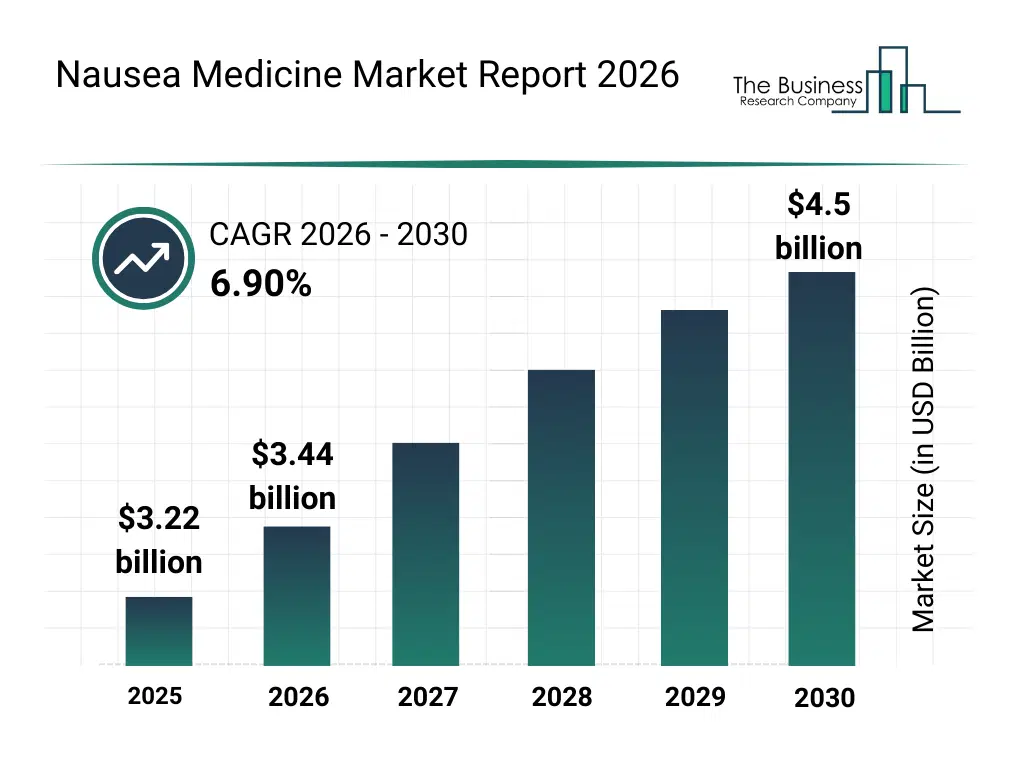
What Is The Nausea Medicine Market Size and Share 2026?
The nausea medicine market size has grown strongly in recent years. It will grow from $3.22 billion in 2025 to $3.44 billion in 2026 at a compound annual growth rate (CAGR) of 7.0%. The growth in the historic period can be attributed to widespread use of chemotherapy-induced nausea drugs, rising prevalence of gastrointestinal disorders, increased travel-related motion sickness, expansion of hospital pharmacy networks, availability of otc antiemetic products.What Is The Nausea Medicine Market Growth Forecast?
The nausea medicine market size is expected to see strong growth in the next few years. It will grow to $4.5 billion in 2030 at a compound annual growth rate (CAGR) of 6.9%. The growth in the forecast period can be attributed to growth in cancer treatment volumes, increasing elderly population, rising demand for home-based nausea management, advancements in antiemetic drug development, expansion of online pharmacy channels. Major trends in the forecast period include increasing use of antiemetics in oncology care, growing demand for motion sickness medications, rising adoption of combination antiemetic therapies, expansion of over-the-counter nausea treatments, increasing focus on patient-friendly drug formulations.
Global Nausea Medicine Market Segmentation
1) By Type: Antagonists, Antihistamines, Canabinoids, Other Types 2) By Indication: Oncology, Gastroesophageal Reflux Disease, Motion Sickness and Seasickness, Other Indications 3) By Route of Administration: Oral, Injectable, Transdermal, Rectal, Other Route of Administrations 4) By Distribution Channel: Retail Pharmacies, Hospital Pharmacies, Online Pharmacies, Other Distribution Channels 5) By End User: Hospitals, Homecare settings, Ambulatory Surgical centres, Long-term Care Facilities, Individual Consumers Subsegments: 1) By Antagonists: Serotonin Antagonists, Neurokinin-1 (NK1) Receptor Antagonists, Dopamine Antagonists 2) By Antihistamines: H1 Antihistamines, H2 Antihistamines 3) By Cannabinoids: THC (Tetrahydrocannabinol), CBD (Cannabidiol) 4) By Other Types: Corticosteroids, Benzodiazepines, Ginger-Based MedicationsWhat Is The Driver Of The Nausea Medicine Market?
The rising consumption of unhealthy diets is expected to propel the growth of the nausea medicine market going forward. An unhealthy diet is consuming excessive amounts of processed foods, sugars, unhealthy fats, and salt while lacking essential nutrients such as vitamins, minerals, and fiber. The rise in unhealthy diets is due to the convenience and affordability of processed and fast foods, which are easier to access than healthier options. Nausea medicine supports health by relieving nausea caused by gastrointestinal issues, motion sickness, or side effects from medications, helping reduce the urge to vomit and providing symptomatic relief.For instance, in April 2025, according to the American Journal of Preventive Medicine, a US-based government organization, each year, the number of deaths caused by ultra-processed foods in the United States is over 124,000. Therefore, rising unhealthy diets are driving the growth of the nausea medicine industry.Key Players In The Global Nausea Medicine Market
Major companies operating in the nausea medicine market are Pfizer Inc., Johnson & Johnson, AbbVie Inc., Bayer Aktiengesellschaft, Merck & Co. Inc., Sanofi S.A., Novartis AG, AstraZeneca PLC, Abbott Laboratories, GlaxoSmithKline plc, Takeda Pharmaceutical Company Limited, Eli Lilly and Company, Helsinn Healthcare SA, Mylan N.V., Viatris Inc., Baxter International Inc., Teva Pharmaceutical Industries Limited, Sun Pharmaceutical Industries Limited, Zydus Lifesciences Limited, Amneal Pharmaceuticals Inc.
This chart is for illustrative purposes; the full report includes a detailed competitor analysis and comprehensive overview of the top 10 companies in the market.
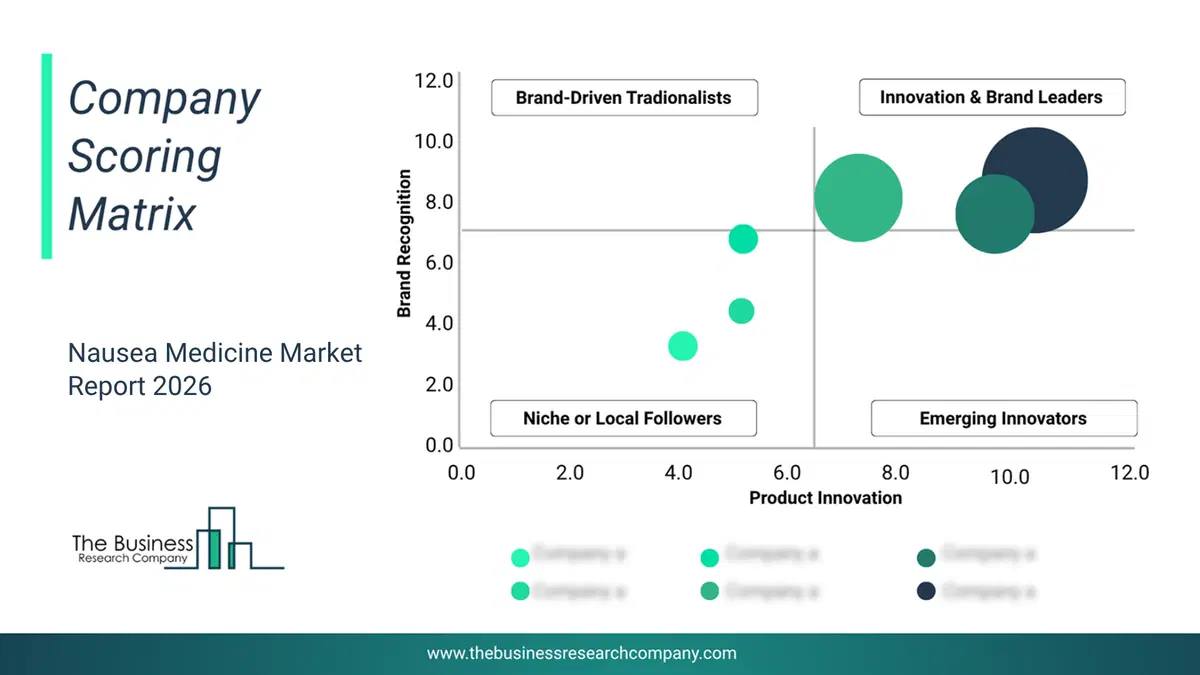
This chart maps companies by product innovation and brand strength, with bubble size indicating relative revenue, helping identify market leaders, challengers, and niche players. This is an illustrative chart; the full report provides a complete and accurate competitive analysis.
Global Nausea Medicine Market Trends and Insights
Major companies operating in the nausea medicine market are focusing on developing innovative solutions, such as chemotherapy-induced nausea medication, to improve patient outcomes and address treatment-resistant cases. Chemotherapy-induced nausea medication refers to drugs specifically designed to prevent or relieve nausea and vomiting caused by cancer chemotherapy, often by targeting serotonin or neurokinin receptors in the brain. For instance, in January 2023, Glenmark Pharmaceuticals, an India-based pharmaceutical company, introduced AKYNZEO I.V., a ready-to-dilute intravenous injection combining fosnetupitant and palonosetron, to prevent chemotherapy-induced nausea and vomiting (CINV). This single-dose intravenous medication combines fosnetupitant and palonosetron, offering protection against both acute and delayed phases of CINV. This single 30-minute infusion effectively covers both acute and delayed phases of CINV, simplifying treatment by reducing the need for multiple antiemetic drugs and improving patient compliance.What Are Latest Mergers And Acquisitions In The Nausea Medicine Market?
In January 2025, Knight Therapeutics, a Canada‑based specialty pharmaceutical companyacquired Helsinn Healthcare SA for an undisclosed amount. With this partnership, Knight Therapeutics aims to expand access and commercial reach of antiemetic therapies in Latin American markets, strengthening the distribution of chemotherapy‑induced nausea and vomiting treatments. Helsinn Healthcare SA is a Switzerland‑based biopharma companythat offers nausea medicine.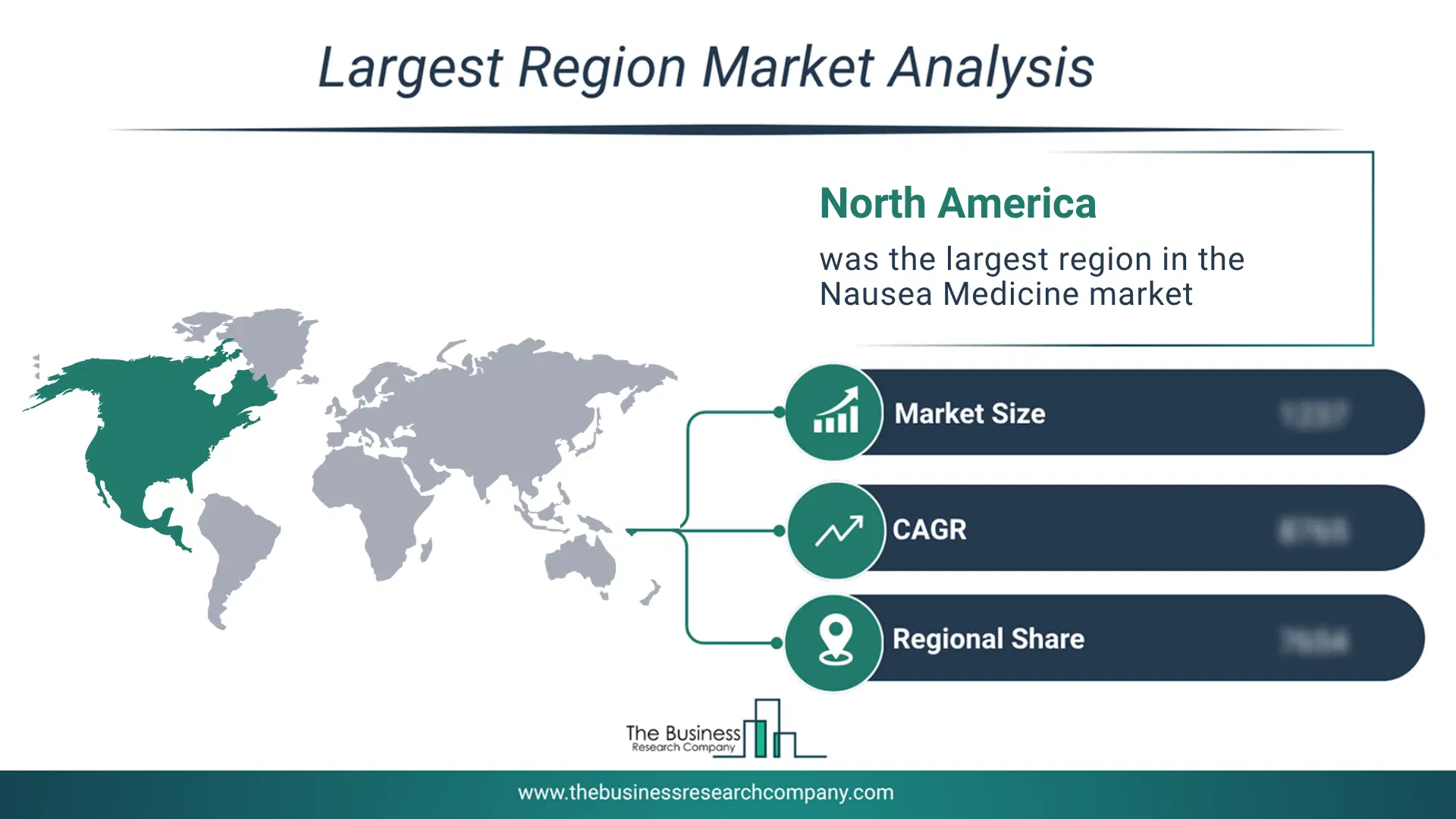
Regional Insights
North America was the largest region in the nausea medicine market in 2025. Asia-Pacific is expected to be the fastest-growing region in the forecast period. The regions covered in this market report are Asia-Pacific, South East Asia, Western Europe, Eastern Europe, North America, South America, Middle East, Africa. The countries covered in this market report are Australia, Brazil, China, France, Germany, India, Indonesia, Japan, Taiwan, Russia, South Korea, UK, USA, Canada, Italy, Spain.What Defines the Nausea Medicine Market?
The nausea medicine market consists of sales of products including dopamine antagonists, ginger supplements, serotonin antagonists, anticholinergics, and antihistamines. Values in this market are ‘factory gate’ values, that is, the value of goods sold by the manufacturers or creators of the goods, whether to other entities (including downstream manufacturers, wholesalers, distributors, and retailers) or directly to end customers. The value of goods in this market includes related services sold by the creators of the goods.How is Market Value Defined and Measured?
The market value is defined as the revenues that enterprises gain from the sale of goods and/or services within the specified market and geography through sales, grants, or donations in terms of the currency (in USD unless otherwise specified). The revenues for a specified geography are consumption values that are revenues generated by organizations in the specified geography within the market, irrespective of where they are produced. It does not include revenues from resales along the supply chain, either further along the supply chain or as part of other products.
This chart presents market attractiveness based on a quantitative evaluation of growth, competition, strategic alignment, and risk, offering a clear view of opportunity areas for decision-making. This chart is for illustrative purposes; the full report contains the complete analysis.

This chart highlights the Total Addressable Market (TAM) by estimating the maximum revenue opportunity using an assumption-driven approach, supporting strategic planning and opportunity sizing across markets. The chart is illustrative; the full report provides a more comprehensive analysis.
What Key Data and Analysis Are Included in the Nausea Medicine Market Report 2026?
The nausea medicine market research report is one of a series of new reports from The Business Research Company that provides market statistics, including industry global market size, regional shares, competitors with the market share, detailed market segments, market trends and opportunities, and any further data you may need to thrive in the nausea medicine industry. The market research report delivers a complete perspective of everything you need, with an in-depth analysis of the current and future state of the industry.Nausea Medicine Market Report Forecast Analysis
| Report Attribute | Details |
|---|---|
| Market Size Value In 2026 | $3.44 billion |
| Revenue Forecast In 2030 | $4.5 billion |
| Growth Rate | CAGR of 7.0% from 2026 to 2030 |
| Base Year For Estimation | 2025 |
| Actual Estimates/Historical Data | 2020-2025 |
| Forecast Period | 2026 - 2030 |
| Market Representation | Revenue in USD Billion and CAGR from 2026 to 2030 |
| Segments Covered | Type, Indication, Route of Administration, Distribution Channel, End User |
| Regional Scope | Asia-Pacific, Western Europe, Eastern Europe, North America, South America, Middle East, Africa |
| Country Scope | The countries covered in the report are Australia, Brazil, China, France, Germany, India, Indonesia, Japan, Taiwan, Russia, South Korea, UK, USA, Canada, Italy, Spain. |
| Key Companies Profiled | Pfizer Inc., Johnson & Johnson, AbbVie Inc., Bayer Aktiengesellschaft, Merck & Co. Inc., Sanofi S.A., Novartis AG, AstraZeneca PLC, Abbott Laboratories, GlaxoSmithKline plc, Takeda Pharmaceutical Company Limited, Eli Lilly and Company, Helsinn Healthcare SA, Mylan N.V., Viatris Inc., Baxter International Inc., Teva Pharmaceutical Industries Limited, Sun Pharmaceutical Industries Limited, Zydus Lifesciences Limited, Amneal Pharmaceuticals Inc. |
| Customization Scope | Request for Customization |
| Pricing And Purchase Options | Explore Purchase Options |