
Naval Intelligence, Surveillance, Reconnaissance Market Report 2026
Global Outlook – By Type (Surface Naval Vessels Intelligence, Surveillance, And Reconnaissance, Underwater Naval Vessels Intelligence, Surveillance, And Reconnaissance), By Operation (Defense, Commercial), By Application (Search And Rescue Operation, Critical Infrastructure Protection, Coastal Surveillance, Maritime Monitoring, Tactical Support, Disaster Relief, Other Applications) – Market Size, Trends, Strategies, and Forecast to 2030
Naval Intelligence, Surveillance, Reconnaissance Market Overview
• Naval Intelligence, Surveillance, Reconnaissance market size has reached to $19.53 billion in 2025 • Expected to grow to $25.72 billion in 2030 at a compound annual growth rate (CAGR) of 5.6% • Growth Driver: Increasing Geopolitical Tensions Fueling The Growth Of The Market Due To Demand For Advanced Naval Strength And Versatile Warships • Market Trend: Miniaturized Passive Communications Intelligence Sensors Enhancing Technological Capabilities In The Market • North America was the largest region in 2025 and Asia-Pacific is the fastest growing region.Market Gains By 2030 – Top Opportunities By Segment
Market Gain identifies the most promising market opportunities by highlighting the segments or products expected to generate the highest incremental revenue growth over the next five years.
What Is Covered Under Naval Intelligence, Surveillance, Reconnaissance Market?
Naval intelligence, surveillance, and reconnaissance refer to the collection, processing, and analysis of information to support maritime situational awareness and decision-making. It utilizes a combination of technologies, including sensors, radar, sonar, satellites, and unmanned systems, to monitor naval operations and detect potential threats. The main types of naval intelligence, surveillance, and reconnaissance are surface naval vessels intelligence, surveillance, and reconnaissance, and underwater naval vessels intelligence, surveillance, and reconnaissance. Surface naval vessels intelligence, surveillance, and reconnaissance involves intelligence, surveillance, and reconnaissance systems integrated into surface naval ships, designed to gather, process, and analyze information through radar, sonar, electro-optical sensors, and communication networks for real-time maritime situational awareness. The various operations include defense and commercial activities with applications such as search and rescue operations, critical infrastructure protection, coastal surveillance, maritime monitoring, tactical support, disaster relief, and more.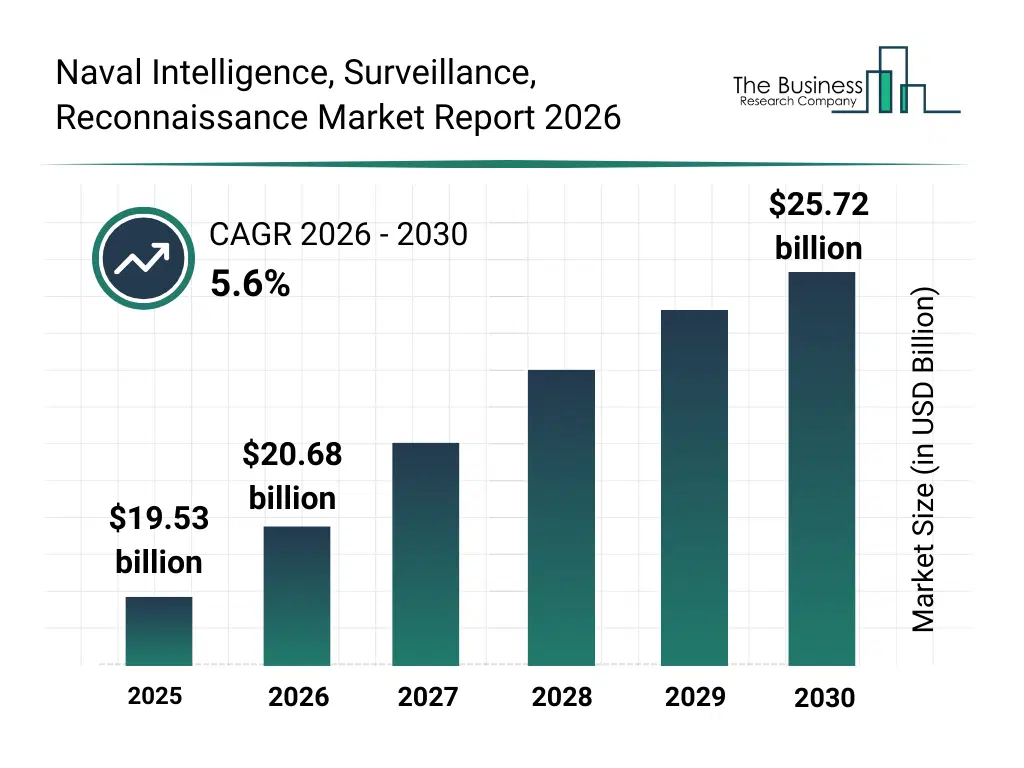
What Is The Naval Intelligence, Surveillance, Reconnaissance Market Size and Share 2026?
The naval intelligence, surveillance, reconnaissance market size has grown strongly in recent years. It will grow from $19.53 billion in 2025 to $20.68 billion in 2026 at a compound annual growth rate (CAGR) of 5.9%. The growth in the historic period can be attributed to expansion of naval surveillance networks, growth in unmanned platforms for reconnaissance, increased use of satellite-based maritime monitoring, adoption of advanced radar and sonar sensors, demand for real-time intelligence sharing.What Is The Naval Intelligence, Surveillance, Reconnaissance Market Growth Forecast?
The naval intelligence, surveillance, reconnaissance market size is expected to see strong growth in the next few years. It will grow to $25.72 billion in 2030 at a compound annual growth rate (CAGR) of 5.6%. The growth in the forecast period can be attributed to deployment of AI-driven maritime analytics, increased integration of autonomous isr platforms, expansion of network-centric warfare capabilities, rising adoption of secure communication systems, growth in multi-sensor data fusion technologies. Major trends in the forecast period include expansion of multi-domain maritime situational awareness capabilities, increased integration of advanced maritime sensors for long-range detection, growth in unmanned naval isr deployments across fleets, rising demand for secure naval communication and data-link architectures, adoption of modular isr systems for cost-efficient upgrades.
Global Naval Intelligence, Surveillance, Reconnaissance Market Segmentation
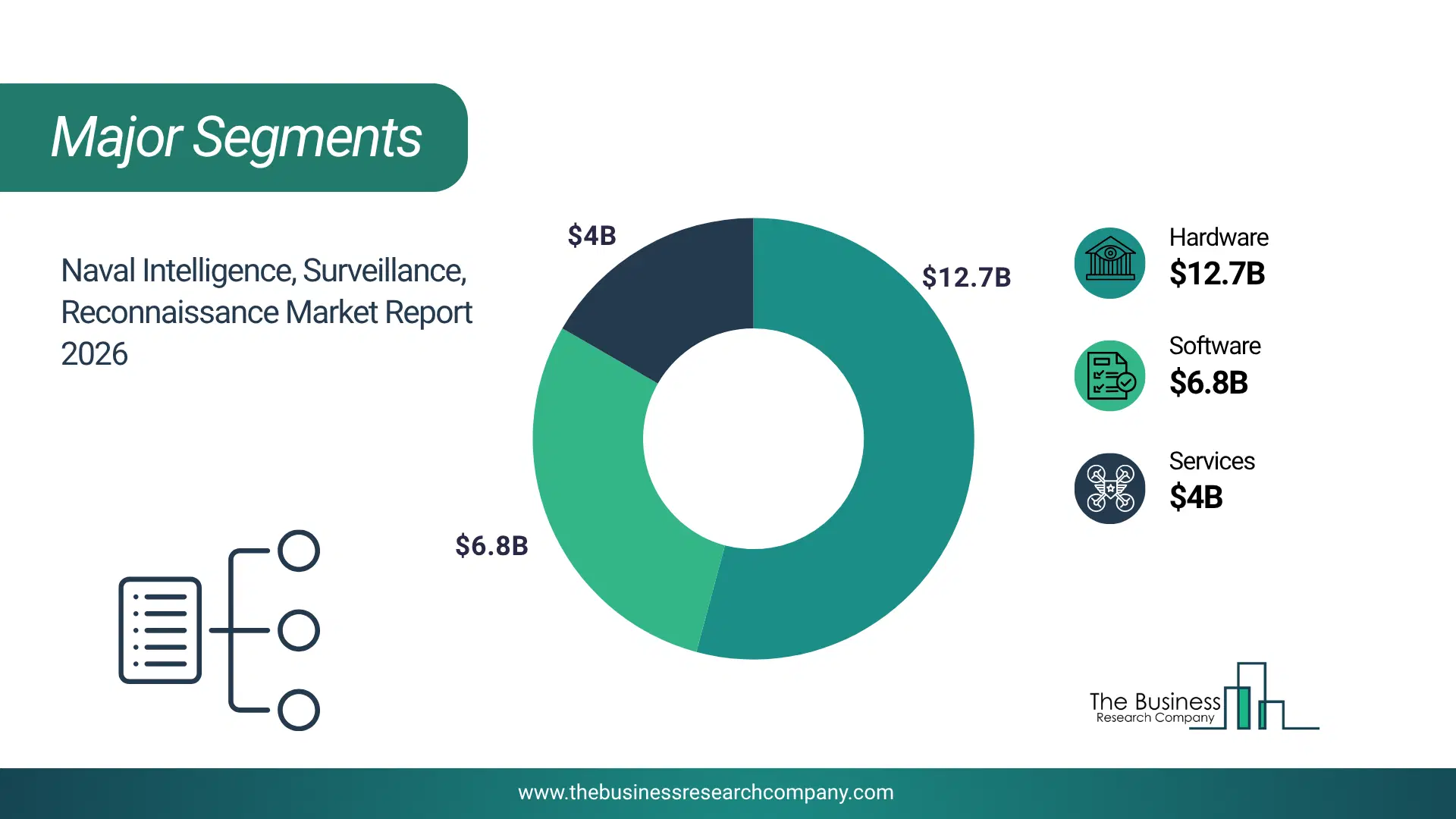
1) By Type: Surface Naval Vessels Intelligence, Surveillance, And Reconnaissance, Underwater Naval Vessels Intelligence, Surveillance, And Reconnaissance 2) By Operation: Defense, Commercial 3) By Application: Search And Rescue Operation, Critical Infrastructure Protection, Coastal Surveillance, Maritime Monitoring, Tactical Support, Disaster Relief, Other Applications Subsegments: 1) By Surface Naval Vessels Intelligence, Surveillance, And Reconnaissance: Radar Systems, Electro-Optical Or Infrared Sensors, Electronic Warfare Systems, Sonar Systems, Communication And Data Link Systems, Unmanned Surface Vehicles 2) By Underwater Naval Vessels Intelligence, Surveillance, And Reconnaissance: Hull-Mounted Sonar Systems, Towed Array Sonar Systems, Submarine-Launched Unmanned Underwater Vehicles, Underwater Acoustic Sensors, Magnetic Anomaly Detectors, Underwater Communication And Data Link Systems The top segments in the naval intelligence, surveillance, reconnaissance market will be: • Hardware will reach $12.68 billion by 2030. • Software will reach $6.71 billion by 2030. • Services will reach $3.97 billion by 2030.What Is Driver Of The Naval Intelligence, Surveillance, Reconnaissance Market?
The increasing geopolitical tensions are expected to propel the growth of the naval intelligence, surveillance, and reconnaissance market going forward. Geopolitical tensions are a state of heightened political, military, and strategic rivalry between nations that increases the likelihood of conflict and drives governments to expand defense and security measures. The geopolitical tensions are rising due to expanding defense budgets and intensifying regional conflicts that require enhanced naval presence and deterrence. Naval intelligence, surveillance, and reconnaissance (ISR) are essential for managing geopolitical tensions, as they provide accurate and timely information on enemy movements, potential threats, and developments in contested maritime areas. This helps navies monitor disputed waters, anticipate hostile actions, and make informed operational and diplomatic decisions. For instance, in July 2024, according to the Armed Conflict Location and Event Data, a US-based non-profit organization, between July 2023 and June 2024, over 165,273 incidents of political violence were reported worldwide, representing a 15% increase from the previous year. During this time, it is estimated that approximately one in seven people around the world were affected by conflict. Therefore, the increasing geopolitical tensions are driving the growth of the naval intelligence, surveillance, and reconnaissance market.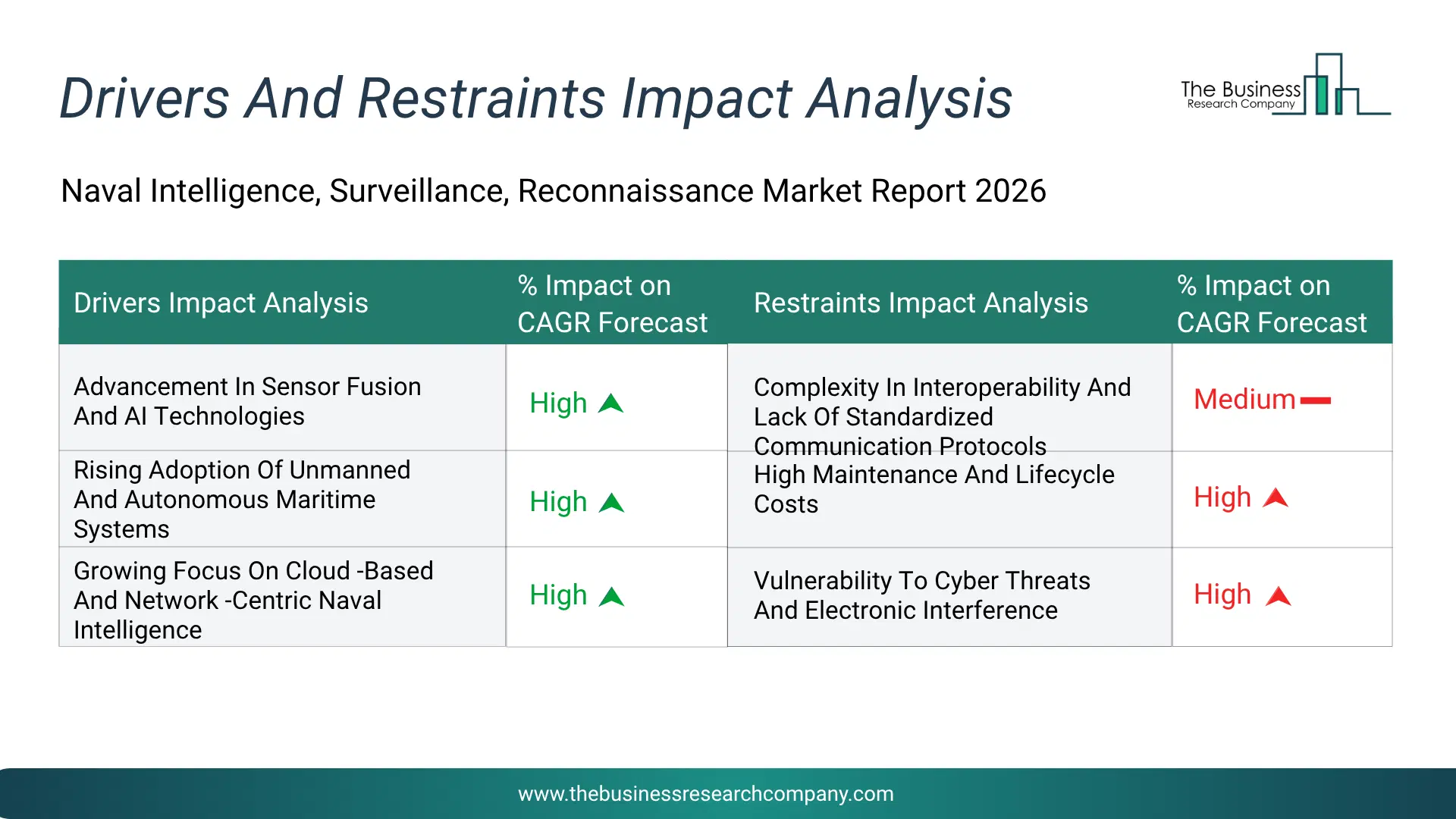
Infographic Chart Showing Key Market Drivers Analysis And Restraints For Naval Intelligence, Surveillance, Reconnaissance Market
The chart presents an impact analysis of key drivers and restraints, quantifying their relative influence on the market's growth rate and helping assess the balance between growth enablers and limiting factors. This chart offers a high-level perspective; the full report contains more detailed insights.
How Will The Drivers Impact Growth In The Global Naval Intelligence, Surveillance, Reconnaissance Market?
• Advancement In Sensor Fusion And AI Technologies (High) – During the forecast period, the advancement in sensor fusion and ai technologies is expected to become a key growth driver for the naval intelligence, surveillance, and reconnaissance market by 2030. Advancements in sensor fusion and ai technologies act as a major driver for the naval intelligence, surveillance, and reconnaissance (isr) market by enabling faster and more accurate data analysis. Sensor fusion integrates inputs from radar, sonar, electro-optical, and infrared systems to create a unified situational picture, enhancing threat detection and tracking. Artificial intelligence further improves decision-making by automating data processing and identifying patterns invisible to humans. These technologies enhance real-time situational awareness and reduce operational risks. As a result, navies are increasingly adopting ai-driven isr systems to strengthen maritime domain awareness and defense capabilities. • Rising Adoption Of Unmanned And Autonomous Maritime Systems (High) – During the forecast period, the rising adoption of unmanned and autonomous maritime systems is expected to emerge as a major factor driving the expansion of the naval intelligence, surveillance, and reconnaissance market by 2030. The rising adoption of unmanned and autonomous maritime systems acts as a major driver for the naval intelligence, surveillance, and reconnaissance (isr) market by enhancing operational efficiency and coverage. These systems enable continuous monitoring of vast ocean areas without risking human lives, providing real -time data and advanced situational awareness. Their integration with artificial intelligence and advanced sensors allows for rapid threat detection and data analysis. Additionally, they reduce operational costs compared to manned missions while improving mission endurance. As navies modernize, the demand for isr capabilities supported by autonomous systems continues to grow significantly. • Growing Focus On Cloud -Based And Network -Centric Naval Intelligence (High) – During the forecast period, the growing focus on cloud -based and network -centric naval intelligence is expected to act as a key growth catalyst for the naval intelligence, surveillance, and reconnaissance market by 2030. The growing focus on cloud -based and network -centric naval intelligence acts as a major driver for the naval intelligence, surveillance, and reconnaissance (isr) market by enhancing data integration, sharing, and real -time decision -making capabilities. Cloud platforms enable seamless storage and analysis of large volumes of intelligence data collected from multiple sources. Network -centric systems improve interoperability among naval units, ensuring faster and more coordinated responses during missions. These technologies reduce latency in information flow, leading to more accurate threat detection and situational awareness. Consequently, naval forces increasingly adopt such systems to strengthen operational efficiency and maritime security.How Will The Restraints Impact Growth In The Global Naval Intelligence, Surveillance, Reconnaissance Market?
• Complexity In Interoperability And Lack Of Standardized Communication Protocols (Medium) – During the forecast period, the complexity in interoperability and lack of standardized communication protocols act as major restraints for naval intelligence, surveillance, and reconnaissance (isr) systems by hindering seamless data exchange between diverse platforms and allied forces. Different naval assets often use incompatible systems, leading to communication delays and data loss. This limits real-time situational awareness and coordinated decision-making during missions. Integration of legacy and modern technologies further increases operational challenges. As a result, efficiency, responsiveness, and overall mission effectiveness are significantly reduced. • High Maintenance And Lifecycle Costs (High) – During the forecast period, the high maintenance and lifecycle costs act as major restraints for the naval intelligence, surveillance, and reconnaissance (isr) market. These systems require frequent upgrades, calibration, and replacement of advanced sensors, communication modules, and software to maintain operational reliability. The expenses associated with skilled personnel training, spare parts, and system integration further increase the total cost of ownership. Developing nations, in particular, find it challenging to allocate consistent budgets for such high-cost maintenance activities. As a result, these financial burdens limit large-scale adoption and modernization of naval isr capabilities. • Vulnerability To Cyber Threats And Electronic Interference (High) – During the forecast period, the vulnerability to cyber threats and electronic interference acts as a major restraint for the naval intelligence, surveillance, and reconnaissance (isr) sector because it exposes critical systems to potential disruptions and data breaches. Cyberattacks can compromise communication networks, sensor data, and command systems, leading to loss of operational secrecy and situational awareness. Electronic jamming or spoofing can degrade the accuracy of surveillance and navigation systems. These risks increase the need for advanced cybersecurity measures, raising operational costs. Consequently, they limit the efficiency and reliability of naval isr operations in hostile or digitally contested environments.Key Players In The Global Naval Intelligence, Surveillance, Reconnaissance Market
Major companies operating in the naval intelligence, surveillance, reconnaissance market are Raytheon Technologies Corporation, The Boeing Company, Airbus SE, Lockheed Martin Corporation, General Dynamics Corporation, Northrop Grumman Corporation, BAE Systems plc, L3 Harris Technologies Inc., Leonardo SpA, Bombardier Defence Inc., Science Applications International Corporation, Indra Sistemas S.A., Israel Aerospace Industries. Ltd., Embraer SA, Saab AB, General Atomics, Kratos Defense & Security Solutions Inc., QinetiQ Group plc, LIG Nex1 Co. Ltd., Teledyne Flir Inc., ATLAS ELEKTRONIK INDIA PRIVATE LIMITED, Meteksan Defence AS, Consolidated Resource Imaging Inc.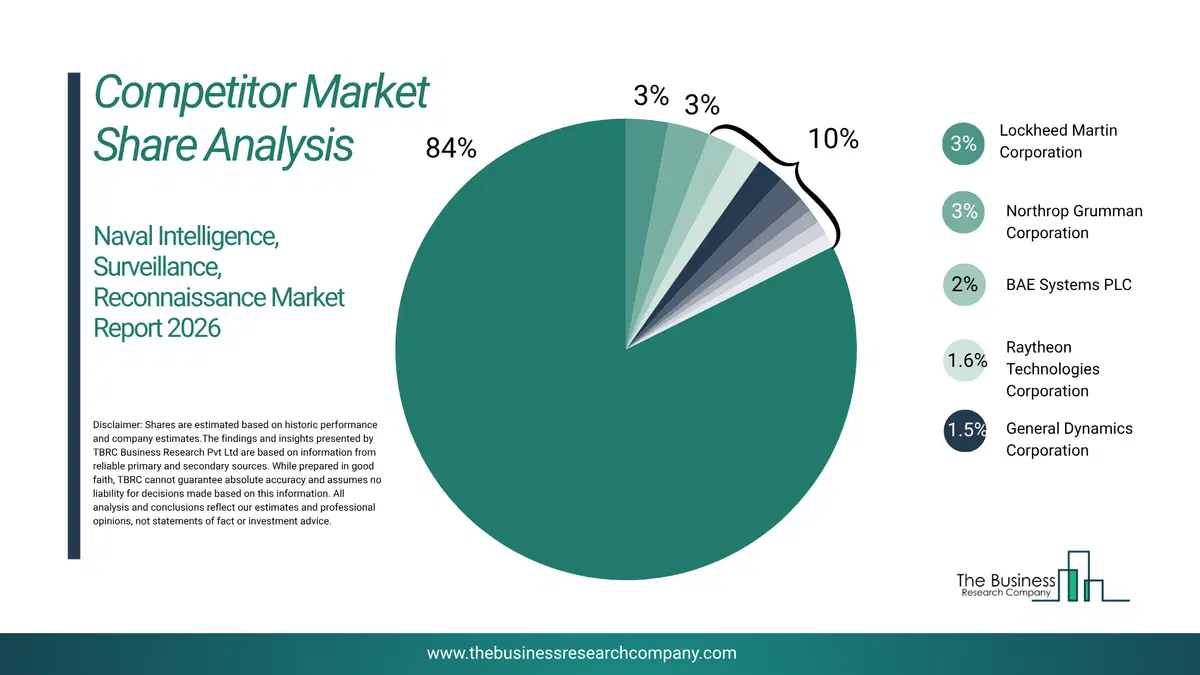
This chart is for illustrative purposes; the full report includes a detailed competitor analysis and comprehensive overview of the top 10 companies in the market.
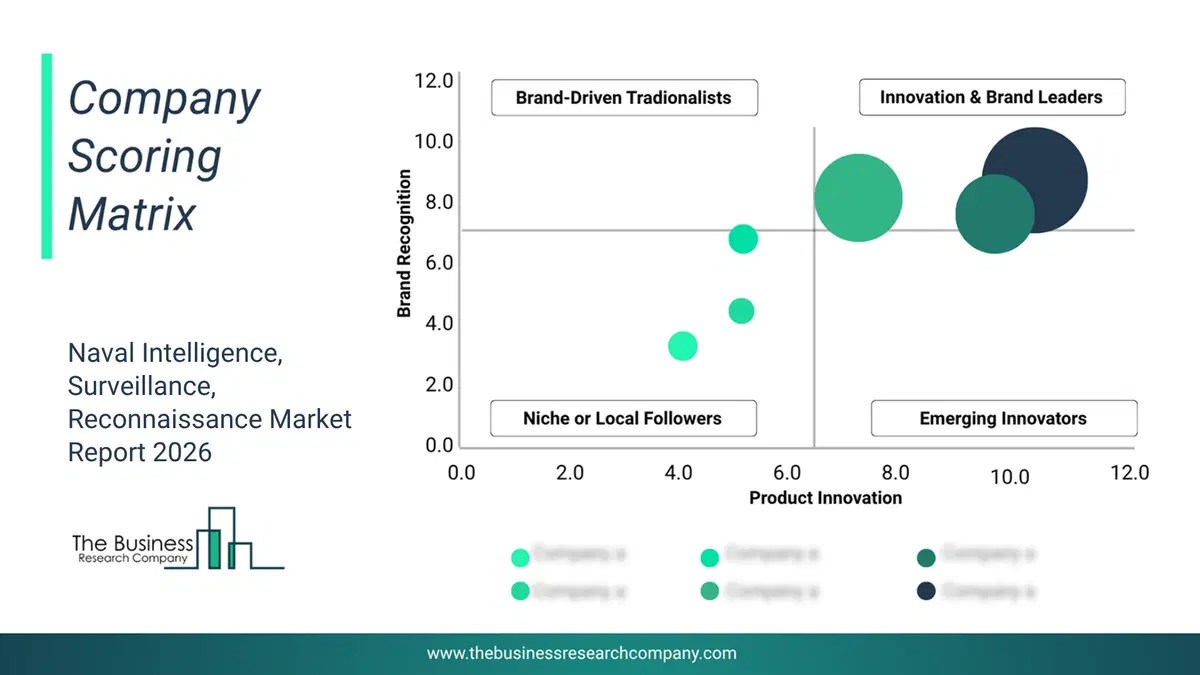
This chart maps companies by product innovation and brand strength, with bubble size indicating relative revenue, helping identify market leaders, challengers, and niche players. This is an illustrative chart; the full report provides a complete and accurate competitive analysis.
Global Naval Intelligence, Surveillance, Reconnaissance Market Trends and Insights
Major companies operating in the naval intelligence, surveillance, and reconnaissance (ISR) market are focusing on developing innovative sensors, such as miniaturized passive communications intelligence sensors, to strengthen operational effectiveness and tactical awareness. Miniaturized passive communications intelligence sensors are compact electronic support systems designed to intercept and analyze communication signals without emitting detectable transmissions, thereby enhancing stealth, survivability, and multi-domain deployment. For instance, in October 2024, Saab AB, a Sweden-based defense and security company, launched the Sirius Compact L20C, a highly mobile, passive sensor designated for tactical reconnaissance of communication signals. The Sirius Compact L20C is capable of detecting, classifying, localizing, and tracking a wide range of communication signals, including enemy radios and drone links, providing real-time situational intelligence. Its compact design allows deployment on foot, on light vehicles, or on naval platforms, while NATO-compatible interfaces ensure seamless integration into command and control systems, enhancing operational flexibility and rapid decision-making.What Are Latest Mergers And Acquisitions In The Naval Intelligence, Surveillance, Reconnaissance Market? Fincantieri Strengthens Naval Capabilities Through Acquisition Of Leonardo’s Underwater Business WASS
In January 2025, Fincantieri S.p.A., an Italy-based shipbuilding and defense company, acquired the Underwater Armaments and Systems (WASS) business from Leonardo S.p.A. for an undisclosed amount. With this acquisition, Fincantieri aimed to expand its expertise in underwater defense technologies, enhance its role as a strategic integrator in naval operations, and strengthen its autonomy in critical defense sectors. Leonardo S.p.A. is an Italy-based provider of underwater warfare systems, including sonar technologies, torpedoes, and acoustic detection systems, supporting naval intelligence, surveillance, reconnaissance (ISR), and anti-submarine warfare (ASW) operations.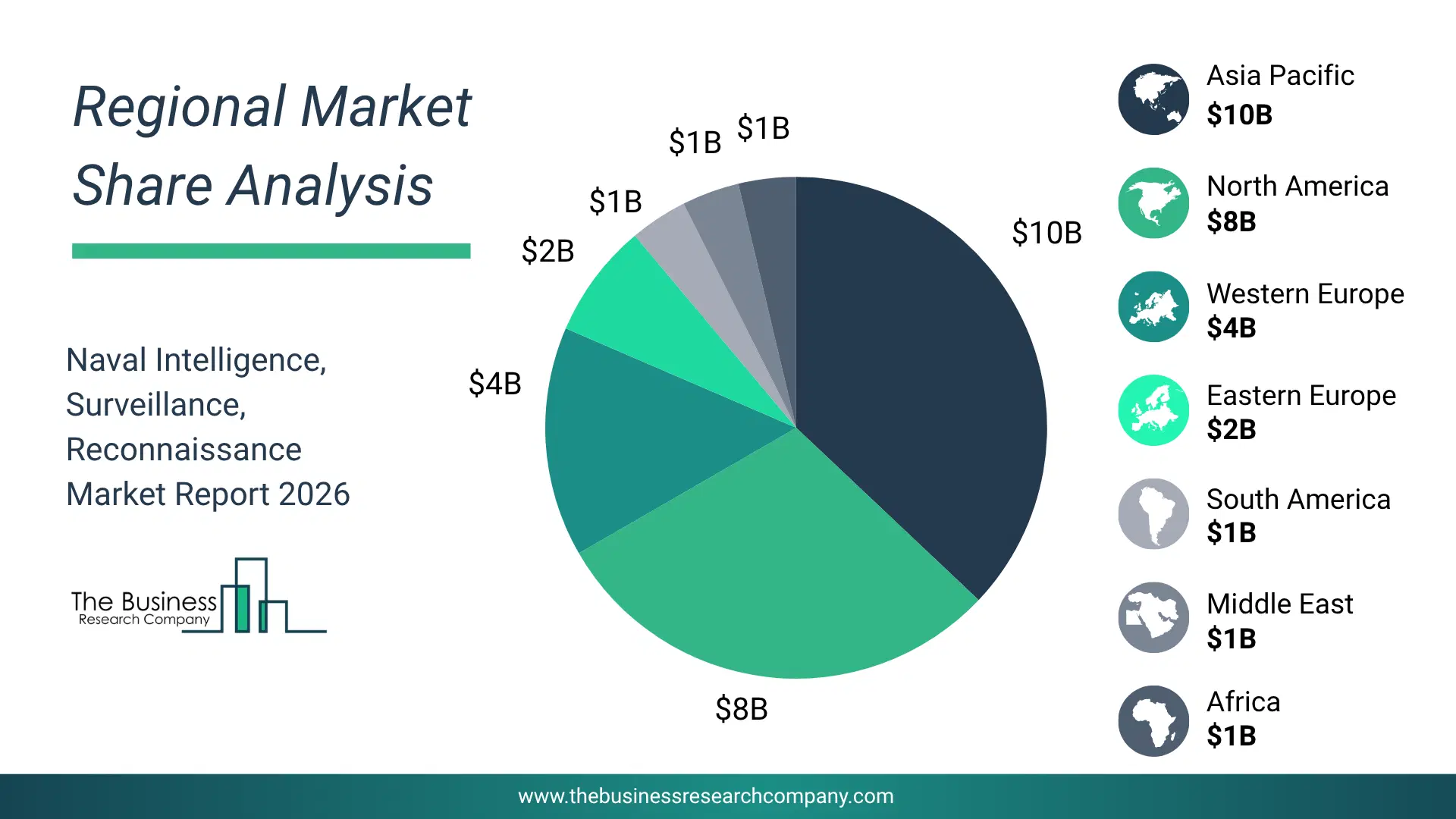
Regional Insights
North America was the largest region in the naval intelligence, surveillance, reconnaissance market in 2025. Asia-Pacific is expected to be the fastest-growing region in the forecast period. The regions covered in the naval intelligence, surveillance, reconnaissance market report are Asia-Pacific, South East Asia, Western Europe, Eastern Europe, North America, South America, Middle East, Africa. The countries covered in the naval intelligence, surveillance, reconnaissance market report are Australia, Brazil, China, France, Germany, India, Indonesia, Japan, Taiwan, Russia, South Korea, UK, USA, Canada, Italy, SpainWhat Defines the Naval Intelligence, Surveillance, Reconnaissance Market?
The naval intelligence, surveillance, and reconnaissance market consists of revenues earned by entities by providing services such as real-time intelligence gathering, surveillance monitoring, reconnaissance operations, data analysis, and secure communication solutions. The market value includes the value of related goods sold by the service provider or included within the service offering. The naval intelligence, surveillance, and reconnaissance (ISR) market includes sales of advanced sensors, unmanned platforms, communication networks, and electronic warfare systems. Values in this market are ‘factory gate’ values, that is, the value of goods sold by the manufacturers or creators of the goods, whether to other entities (including downstream manufacturers, wholesalers, distributors, and retailers) or directly to end customers. The value of goods in this market includes related services sold by the creators of the goods.How is Market Value Defined and Measured?
The market value is defined as the revenues that enterprises gain from the sale of goods and/or services within the specified market and geography through sales, grants, or donations in terms of the currency (in USD unless otherwise specified). The revenues for a specified geography are consumption values that are revenues generated by organizations in the specified geography within the market, irrespective of where they are produced. It does not include revenues from resales along the supply chain, either further along the supply chain or as part of other products.
This chart presents market attractiveness based on a quantitative evaluation of growth, competition, strategic alignment, and risk, offering a clear view of opportunity areas for decision-making. This chart is for illustrative purposes; the full report contains the complete analysis.

This chart highlights the Total Addressable Market (TAM) by estimating the maximum revenue opportunity using an assumption-driven approach, supporting strategic planning and opportunity sizing across markets. The chart is illustrative; the full report provides a more comprehensive analysis.
What Key Data and Analysis Are Included in the Naval Intelligence, Surveillance, Reconnaissance Market Report 2026?
The naval intelligence, surveillance, reconnaissance market research report is one of a series of new reports from The Business Research Company that provides market statistics, including industry global market size, regional shares, competitors with the market share, detailed market segments, market trends and opportunities, and any further data you may need to thrive in the naval intelligence, surveillance, reconnaissance industry. The market research report delivers a complete perspective of everything you need, with an in-depth analysis of the current and future state of the industry.Naval Intelligence, Surveillance, Reconnaissance Market Report Forecast Analysis
| Report Attribute | Details |
|---|---|
| Market Size Value In 2026 | $20.68 billion |
| Revenue Forecast In 2030 | $25.72 billion |
| Growth Rate | CAGR of 5.6% from 2026 to 2030 |
| Base Year For Estimation | 2025 |
| Actual Estimates/Historical Data | 2020-2025 |
| Forecast Period | 2026 - 2030 |
| Market Representation | Revenue in USD Billion and CAGR from 2026 to 2030 |
| Segments Covered | Type, Operation, Application |
| Regional Scope | Asia-Pacific, Western Europe, Eastern Europe, North America, South America, Middle East, Africa |
| Country Scope | The countries covered in the report are Australia, Brazil, China, France, Germany, India, ... |
| Key Companies Profiled | Raytheon Technologies Corporation, The Boeing Company, Airbus SE, Lockheed Martin Corporation, General Dynamics Corporation, Northrop Grumman Corporation, BAE Systems plc, L3 Harris Technologies Inc., Leonardo SpA, Bombardier Defence Inc., Science Applications International Corporation, Indra Sistemas S.A., Israel Aerospace Industries. Ltd., Embraer SA, Saab AB, General Atomics, Kratos Defense & Security Solutions Inc., QinetiQ Group plc, LIG Nex1 Co. Ltd., Teledyne Flir Inc., ATLAS ELEKTRONIK INDIA PRIVATE LIMITED, Meteksan Defence AS, Consolidated Resource Imaging Inc. |
| Customization Scope | Request for Customization |
| Pricing And Purchase Options | Explore Purchase Options |