
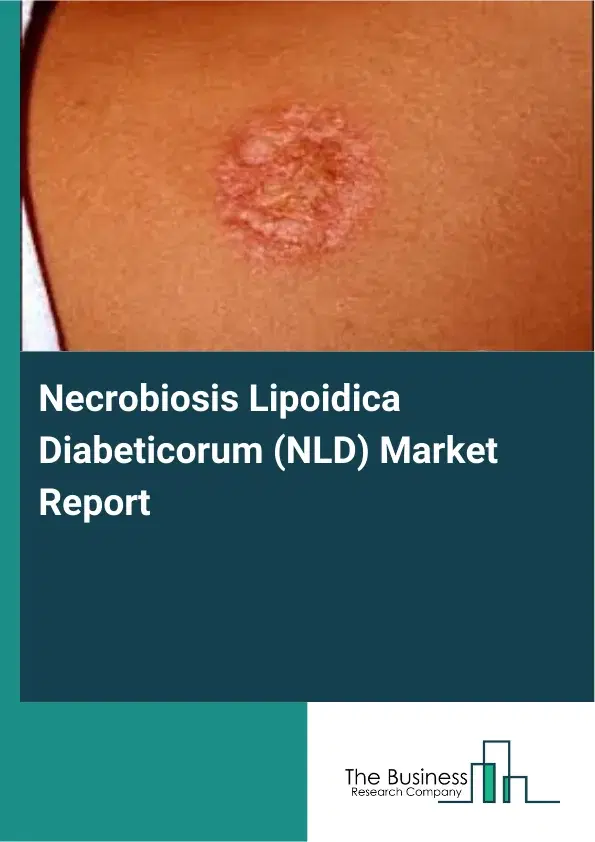
Necrobiosis Lipoidica Diabeticorum (NLD) Market Report 2026
Global Outlook – By Procedure (Treatment, Test Type), By Application (Hospitals, Ambulatory Clinics), By Distribution Channel (Hospital Pharmacies, Retail Pharmacies, E-Commerce) - Market Size, Trends, Strategies, and Forecast to 2030
Necrobiosis Lipoidica Diabeticorum (NLD) Market Overview
• Necrobiosis Lipoidica Diabeticorum (NLD) market size has reached to $4.73 billion in 2025 • Expected to grow to $6.49 billion in 2030 at a compound annual growth rate (CAGR) of 6.5% • Growth Driver: Rising Diabetes Incidence Driving Growth In The Market Due To Increasing Risk Of Skin Complications • North America was the largest region in 2025.What Is Covered Under Necrobiosis Lipoidica Diabeticorum (NLD) Market?
Necrobiosis lipoidica diabeticorum (NLD) is a rare skin condition that primarily affects people with diabetes, particularly those with poorly controlled blood sugar levels. It is characterized by developing shiny, reddish-brown patches or plaques, typically on the lower legs, that may eventually become ulcerated. The main types of necrobiosis lipoidica diabeticorum (NLD) procedures are treatment and test type. Necrobiosis lipoidica diabeticorum (NLD) treatment includes corticosteroids, immunosuppressants, anti-inflammatories, blood flow therapies, hyperbaric oxygen therapy, phototherapy, and laser therapy. It is applicable in various applications, such as hospitals and ambulatory clinics, and is distributed through several distribution channels, including hospital pharmacies, retail pharmacies, and e-commerce.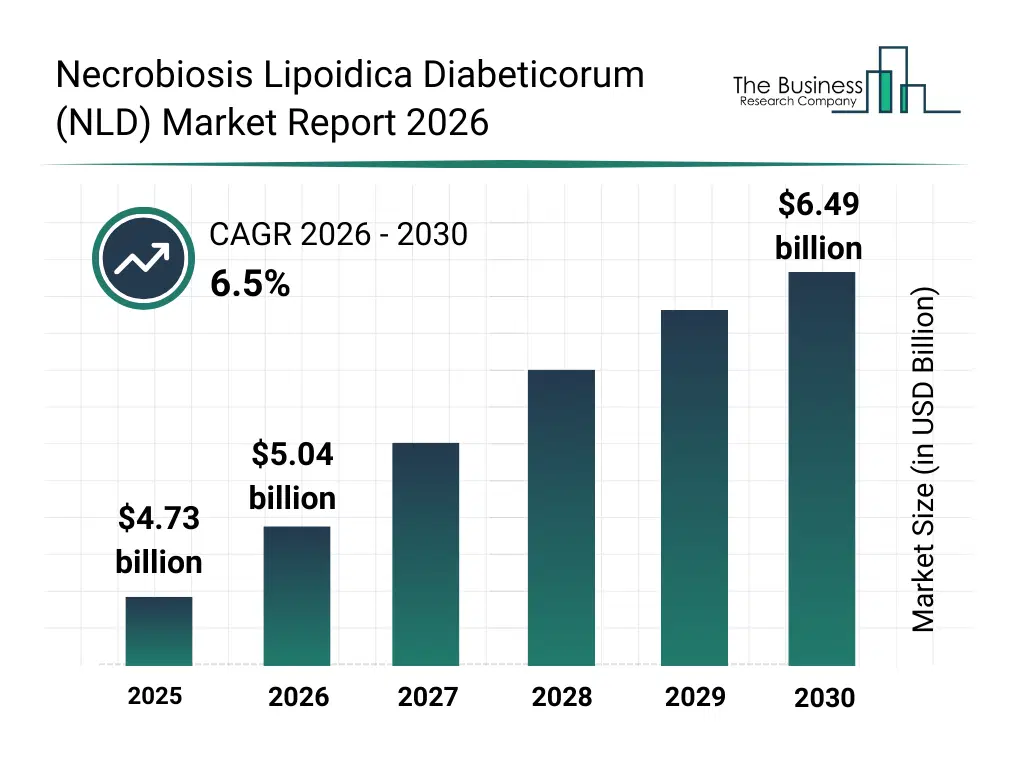
What Is The Necrobiosis Lipoidica Diabeticorum (NLD) Market Size and Share 2026?
The necrobiosis lipoidica diabeticorum (nld) market size has grown strongly in recent years. It will grow from $4.73 billion in 2025 to $5.04 billion in 2026 at a compound annual growth rate (CAGR) of 6.7%. The growth in the historic period can be attributed to rising prevalence of diabetes mellitus, limited treatment options for chronic skin conditions, delayed diagnosis due to low awareness, dependence on corticosteroid-based therapies, rising occurrence of diabetic vascular complications.What Is The Necrobiosis Lipoidica Diabeticorum (NLD) Market Growth Forecast?
The necrobiosis lipoidica diabeticorum (nld) market size is expected to see strong growth in the next few years. It will grow to $6.49 billion in 2030 at a compound annual growth rate (CAGR) of 6.5%. The growth in the forecast period can be attributed to increasing adoption of targeted immunotherapies, growth in dermatology specialty clinics, development of combination therapy approaches, rising demand for non-invasive diagnostic tools, growing focus on personalized dermatological treatment. Major trends in the forecast period include increasing adoption of topical anti-inflammatory and immunomodulatory therapies, rising preference for laser and light-based treatment approaches, growing awareness of early nld diagnosis among diabetic patients, expansion of advanced wound care solutions for ulcerated lesions, rising integration of dermatology and endocrinology care pathways.
Global Necrobiosis Lipoidica Diabeticorum (NLD) Market Segmentation
1) By Procedure: Treatment, Test Type 2) By Application: Hospitals, Ambulatory Clinics 3) By Distribution Channel: Hospital Pharmacies, Retail Pharmacies, E-Commerce Subsegments: 1) By Treatment: Topical Therapies, Systemic Therapies, Laser And Light-Based Therapies, Surgical And Advanced Wound Care Management, Alternative And Supportive Therapies 2) By Test Type: Histopathological Tests, Imaging Tests, Blood Tests And Laboratory DiagnosticsWhat Are The Drivers Of The Necrobiosis Lipoidica Diabeticorum (NLD) Market?
The increase in the incidence of diabetes is expected to propel the growth of the necrobiosis lipoidica diabeticorum (NLD) market going forward. Diabetes is a metabolic disorder characterized by high blood sugar levels over a prolonged period, resulting from insufficient insulin production (Type 1) or the body's inability to effectively use insulin (Type 2), leading to potential complications in various organs and systems. The increase in diabetes incidence is primarily due to the rising prevalence of obesity, which is closely linked to insulin resistance, significantly contributes to the growing number of diabetes cases, and sedentary lifestyles characterized by a lack of physical activity, which are a significant risk factor for the development of diabetes. The rising incidence of diabetes contributes to a higher occurrence of necrobiosis lipoidica diabeticorum (NLD), as it is closely linked to diabetes-induced microvascular issues and immune system abnormalities. For instance, in June 2024, according to the National Health Service, a UK-based government department, over half a million individuals (549,000) in England were identified as being at risk of developing type 2 diabetes in 2023, bringing the total number of people with non-diabetic hyperglycemia, or pre-diabetes, to 3,615,330. This marks a nearly 20% increase compared to the 3,065,825 individuals in 2022. Therefore, the increase in the incidence of diabetes is driving the growth of the necrobiosis lipoidica diabeticorum (NLD) industry. The increases in healthcare spending are expected to propel the growth of the necrobiosis lipoidica diabeticorum (NLD) market going forward. Healthcare expenditure is the total amount of financial resources spent on healthcare services by governments, private entities, and individuals, including prevention, treatment, and management of diseases. The increasing healthcare expenditure is due to the rising prevalence of chronic diseases, such as diabetes, cardiovascular conditions, and obesity, which require ongoing treatment and management, leading to higher healthcare costs. Rising healthcare spending fuels research and innovation for necrobiosis lipoidica diabeticorum, enhancing diagnostic capabilities, advancing treatment options, expanding access to novel therapies, and ultimately improving patient outcomes. For instance, in April 2025, according to the Office for National Statistics (ONS), a UK-based independent producer of official statistics, total healthcare expenditure rose by 6.5% in nominal terms and 2.4% in real terms between 2023 and 2024, while healthcare’s share of GDP held steady at 11.1% in 2024, matching the previous year. Therefore, the increases in healthcare spending are driving the growth of the necrobiosis lipoidica diabeticorum (NLD) industry. The growing demand for personalized medicine is expected to propel the growth of the necrobiosis lipoidica diabeticorum (NLD) market going forward. Personalized medicine is a medical approach that tailors treatments and therapies to an individual's genetic, environmental, and lifestyle factors for more precise and effective healthcare. The growing demand for personalized medicine is due to advancements in genomic technologies and molecular diagnostics, which allow for detailed insights into individual genetic profiles, enabling treatments to be tailored to each patient's unique biology and the rising prevalence of chronic and complex diseases which height the need for more effective and targeted therapies, reducing side effects and improving overall outcomes. The increasing demand for personalized medicine drives the growth of necrobiosis lipoidica diabeticorum by providing customized treatments that target patients' specific genetic and environmental factors. This approach boosts treatment effectiveness and leads to better patient outcomes. For instance, in February 2024, according to the Personalized Medicine Coalition, a US-based hospital and healthcare organization, in 2023, the Food and Drug Administration approved 16 new personalized treatments for rare disease patients, up from six in 2022. Therefore, the growing demand for personalized medicine is driving the growth of the necrobiosis lipoidica diabeticorum (NLD) industry.Key Players In The Global Necrobiosis Lipoidica Diabeticorum (NLD) Market
Major companies operating in the necrobiosis lipoidica diabeticorum (nld) market are Mount Sinai Health System, Beaumont Health, Mayo Foundation for Medical Education and Research, Thomas Jefferson University Hospitals, UCLA Health, MedStar Health Wound Healing Institute, Inova Wound Healing Centers, Brigham and Women's Hospital, UCSF Health, Healogics LLC, Phelps Hospital, Schweiger Dermatology Group, Advanced Dermatology and Skin Cancer Center, Hyperbaric Medical Solutions, Lupton Dermatology, The Primary Care Dermatology Society, Cleveland Clinic, Johns Hopkins Hospital, Massachusetts General Hospital, Stanford Health Care, NYU Langone Health, Kaiser Permanente, Cedars Sinai Medical Center
This chart is for illustrative purposes; the full report includes a detailed competitor analysis and comprehensive overview of the top 10 companies in the market.
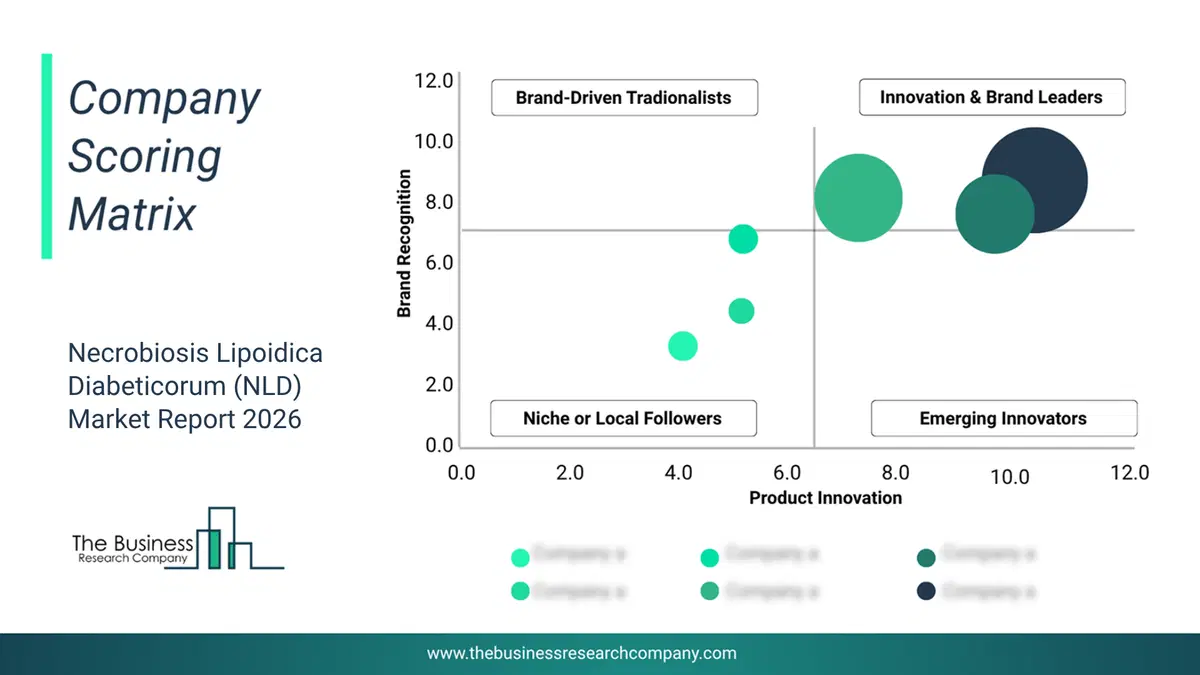
This chart maps companies by product innovation and brand strength, with bubble size indicating relative revenue, helping identify market leaders, challengers, and niche players. This is an illustrative chart; the full report provides a complete and accurate competitive analysis.
Regional Outlook
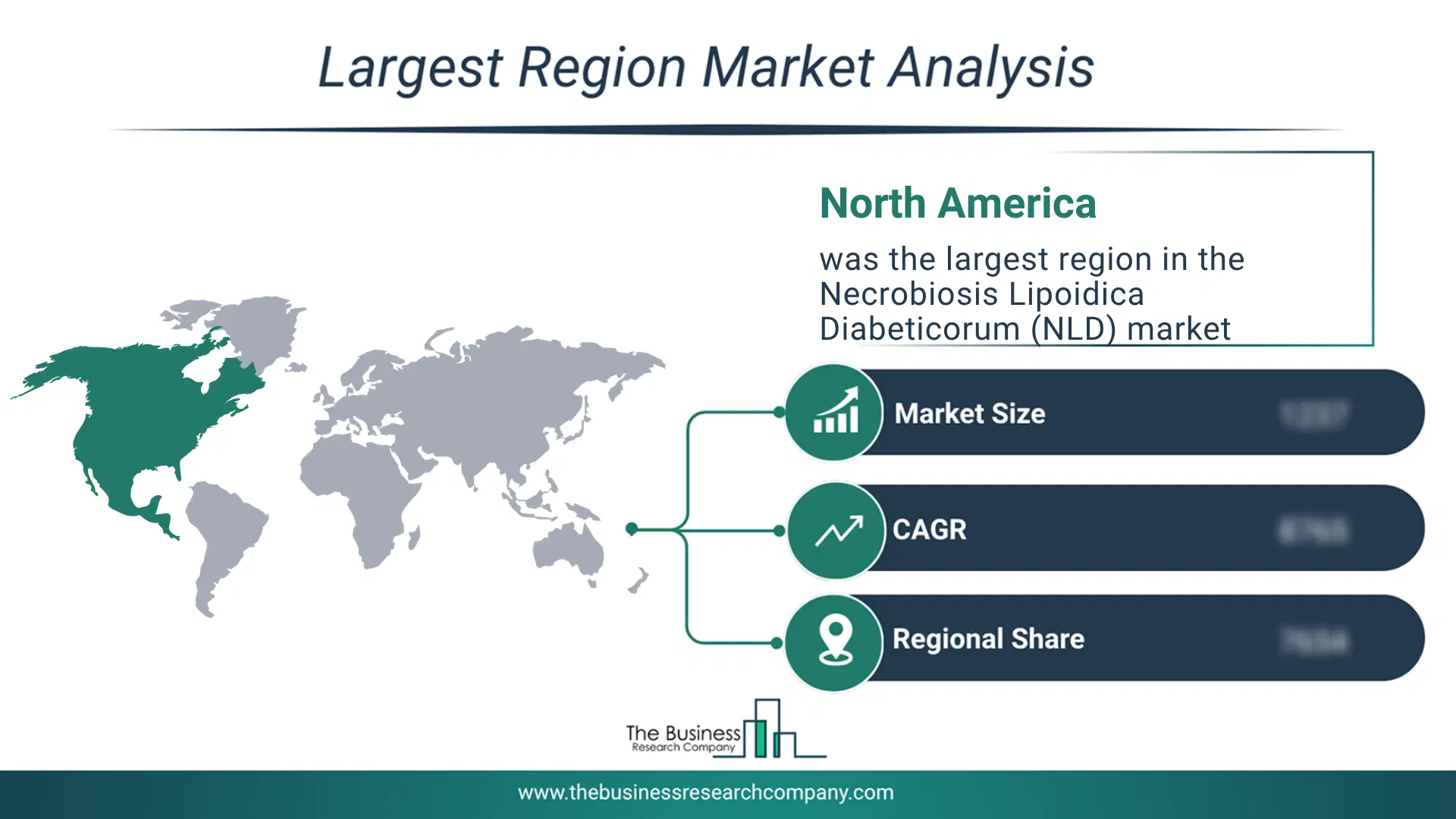
North America was the largest region in the necrobiosis lipoidica diabeticorum (NLD) market in 2025. The regions covered in this market report are Asia-Pacific, South East Asia, Western Europe, Eastern Europe, North America, South America, Middle East, Africa. The countries covered in this market report are Australia, Brazil, China, France, Germany, India, Indonesia, Japan, Taiwan, Russia, South Korea, UK, USA, Canada, Italy, Spain.What Defines the Necrobiosis Lipoidica Diabeticorum (NLD) Market?
The necrobiosis lipoidica diabeticorum (NLD) market consists of revenues earned by entities providing services such as diagnosis services, consultation services, and supportive care. The market value includes the value of related goods sold by the service provider or included within the service offering. The necrobiosis lipoidica diabeticorum (NLD) market also includes sales of laser therapy devices, immunomodulators, corticosteroids, and anti-inflammatory drugs. Values in this market are ‘factory gate’ values, that is, the value of goods sold by the manufacturers or creators of the goods, whether to other entities (including downstream manufacturers, wholesalers, distributors, and retailers) or directly to end customers. The value of goods in this market includes related services sold by the creators of the goods.How is Market Value Defined and Measured?
The market value is defined as the revenues that enterprises gain from the sale of goods and/or services within the specified market and geography through sales, grants, or donations in terms of the currency (in USD unless otherwise specified). The revenues for a specified geography are consumption values that are revenues generated by organizations in the specified geography within the market, irrespective of where they are produced. It does not include revenues from resales along the supply chain, either further along the supply chain or as part of other products.
This chart presents market attractiveness based on a quantitative evaluation of growth, competition, strategic alignment, and risk, offering a clear view of opportunity areas for decision-making. This chart is for illustrative purposes; the full report contains the complete analysis.

This chart highlights the Total Addressable Market (TAM) by estimating the maximum revenue opportunity using an assumption-driven approach, supporting strategic planning and opportunity sizing across markets. The chart is illustrative; the full report provides a more comprehensive analysis.
What Key Data and Analysis Are Included in the Necrobiosis Lipoidica Diabeticorum (NLD) Market Report 2026?
The necrobiosis lipoidica diabeticorum (nld) market research report is one of a series of new reports from The Business Research Company that provides market statistics, including industry global market size, regional shares, competitors with the market share, detailed market segments, market trends and opportunities, and any further data you may need to thrive in the necrobiosis lipoidica diabeticorum (nld) industry. The market research report delivers a complete perspective of everything you need, with an in-depth analysis of the current and future state of the industry.Necrobiosis Lipoidica Diabeticorum (NLD) Market Report Forecast Analysis
| Report Attribute | Details |
|---|---|
| Market Size Value In 2026 | $5.04 billion |
| Revenue Forecast In 2030 | $6.49 billion |
| Growth Rate | CAGR of 6.5% from 2026 to 2030 |
| Base Year For Estimation | 2025 |
| Actual Estimates/Historical Data | 2020-2025 |
| Forecast Period | 2026 - 2030 |
| Market Representation | Revenue in USD Billion and CAGR from 2026 to 2030 |
| Segments Covered | Procedure, Application, Distribution Channel |
| Regional Scope | Asia-Pacific, Western Europe, Eastern Europe, North America, South America, Middle East, Africa |
| Country Scope | The countries covered in the report are Australia, Brazil, China, France, Germany, India, Indonesia, Japan, Taiwan, Russia, South Korea, UK, USA, Canada, Italy, Spain |
| Key Companies Profiled | Mount Sinai Health System, Beaumont Health, Mayo Foundation for Medical Education and Research, Thomas Jefferson University Hospitals, UCLA Health, MedStar Health Wound Healing Institute, Inova Wound Healing Centers, Brigham and Women's Hospital, UCSF Health, Healogics LLC, Phelps Hospital, Schweiger Dermatology Group, Advanced Dermatology and Skin Cancer Center, Hyperbaric Medical Solutions, Lupton Dermatology, The Primary Care Dermatology Society, Cleveland Clinic, Johns Hopkins Hospital, Massachusetts General Hospital, Stanford Health Care, NYU Langone Health, Kaiser Permanente, Cedars Sinai Medical Center |
| Customization Scope | Request for Customization |
| Pricing And Purchase Options | Explore Purchase Options |