
Necrotizing Enterocolitis Market Report 2026
Global Outlook – By Treatment (Total Parenteral Nutrition (TPN), Gastrointestinal Decompression, Antimicrobial Therapy, Antifungal Treatment, Paracentesis, Other Treatments), By Diagnosis (Laboratory Tests, Imaging Techniques), By Stage (Stage I (Suspected Necrotizing Enterocolitis), Stage II (Definite Necrotizing Enterocolitis), Stage III (Advanced Necrotizing Enterocolitis)), By End-User (Hospitals, Neonatal Intensive Care Units (NICUs), Specialty Clinics) - Market Size, Trends, Strategies, and Forecast to 2030
Necrotizing Enterocolitis Market Overview
• Necrotizing Enterocolitis market size has reached to $5.14 billion in 2025 • Expected to grow to $6.95 billion in 2030 at a compound annual growth rate (CAGR) of 6.1% • Growth Driver: Rising Cases Of Premature Births Driving Growth In The Market Due To Increasing Risk In Preterm Infants • Market Trend: Advancements In Innovative Treatments For Necrotizing Enterocolitis In Premature Infants • North America was the largest region in 2025 and Asia-Pacific is the fastest growing region.What Is Covered Under Necrotizing Enterocolitis Market?
Necrotizing enterocolitis (NEC) is a serious, potentially life-threatening gastrointestinal condition that primarily affects premature infants. It involves the inflammation and death (necrosis) of the tissue in the intestines, which can lead to perforation, infection, and other complications. The common symptoms of necrotizing enterocolitis include feeding intolerance, abdominal distension, vomiting, and changes in bowel movements. The main treatment types of necrotizing enterocolitis are total parenteral nutrition (TPN), gastrointestinal decompression, antimicrobial therapy, antifungal treatment, paracentesis, and others. Total parenteral nutrition (TPN) delivers nutrients directly into the bloodstream, helping infants with NEC by allowing their intestines to rest and heal. It is diagnosed by various diagnoses, such as laboratory tests and imaging techniques in several different stages, including stage I (suspected necrotizing enterocolitis), stage II (definite necrotizing enterocolitis), and stage III (advanced necrotizing enterocolitis). It is distributed through various distribution channels such as direct tender, hospital pharmacy, retail pharmacy, online pharmacy, and others and is used by several end users, including hospitals, neonatal intensive care units (NICUs), and specialty clinics.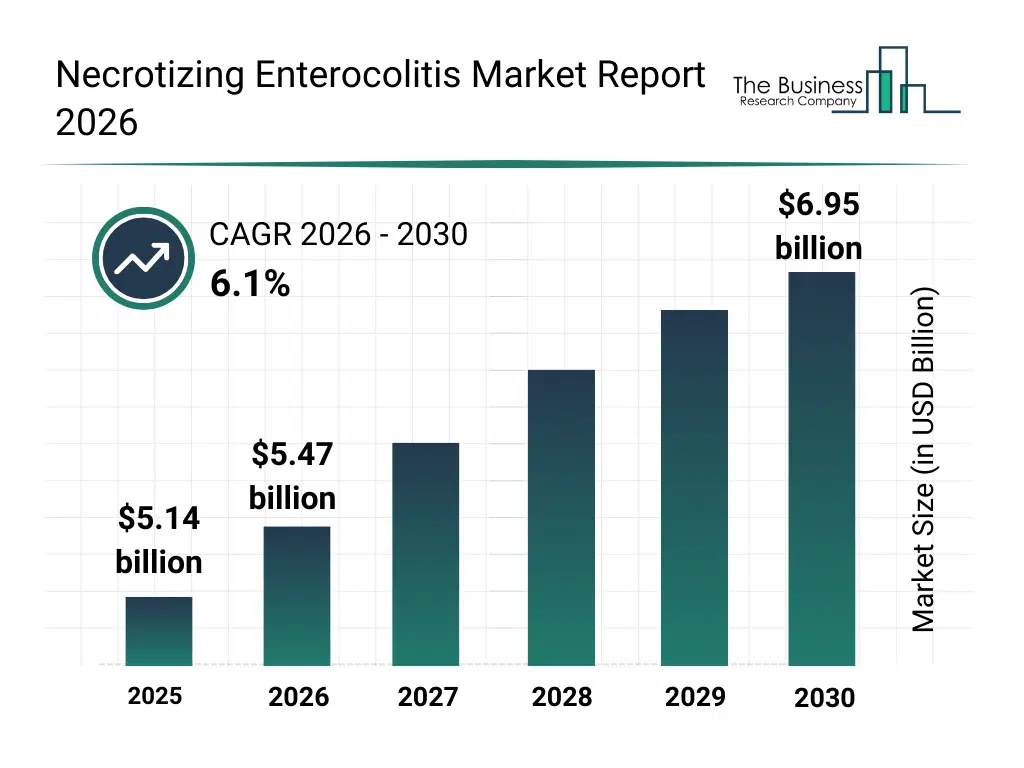
What Is The Necrotizing Enterocolitis Market Size and Share 2026?
The necrotizing enterocolitis market size has grown strongly in recent years. It will grow from $5.14 billion in 2025 to $5.47 billion in 2026 at a compound annual growth rate (CAGR) of 6.4%. The growth in the historic period can be attributed to high incidence of premature births, limited neonatal care infrastructure, reliance on broad-spectrum antibiotics, delayed diagnosis in low-resource settings, early development of parenteral nutrition.What Is The Necrotizing Enterocolitis Market Growth Forecast?
The necrotizing enterocolitis market size is expected to see strong growth in the next few years. It will grow to $6.95 billion in 2030 at a compound annual growth rate (CAGR) of 6.1%. The growth in the forecast period can be attributed to rising investment in neonatal intensive care units, advancements in regenerative and stem cell therapies, increasing awareness of early nec detection, growing adoption of precision nutrition therapies, expansion of neonatal imaging innovations. Major trends in the forecast period include rising adoption of probiotics and prebiotics for nec prevention, increased focus on early diagnosis and screening in premature infants, growing utilization of individualized tpn solutions, expansion of minimally invasive surgical interventions, advancements in neonatal critical care and monitoring.
Global Necrotizing Enterocolitis Market Segmentation
1) By Treatment: Total Parenteral Nutrition (TPN), Gastrointestinal Decompression, Antimicrobial Therapy, Antifungal Treatment, Paracentesis, Other Treatments 2) By Diagnosis: Laboratory Tests, Imaging Techniques 3) By Stage: Stage I (Suspected Necrotizing Enterocolitis), Stage II (Definite Necrotizing Enterocolitis), Stage III (Advanced Necrotizing Enterocolitis) 4) By End-User: Hospitals, Neonatal Intensive Care Units (NICUs), Specialty Clinics Subsegments: 1) By Total Parenteral Nutrition (TPN): Standard TPN Formulations, Customized Or Individualized TPN Solutions, Lipid Emulsions For TPN, Protein And Amino Acid Supplements In TPN, Micronutrient And Electrolyte-Enhanced TPN 2) By Gastrointestinal Decompression: Nasogastric Tube (NG Tube) Decompression, Orogastric Tube Decompression, Surgical Gastrostomy For Decompression, Non-Surgical Decompression Techniques 3) By Antimicrobial Therapy: Broad-Spectrum Antibiotics, Gram-Positive Coverage Antibiotics, Gram-Negative Coverage Antibiotics, Combination Antibiotic Therapy, Prophylactic Antibiotic Strategies For High-Risk Neonates 4) By Antifungal Treatment: Systemic Antifungal Therapy, Prophylactic Antifungal Therapy For Preterm Infants, Combination Antifungal And Antibiotic Therapy For Severe NEC 5) By Paracentesis: Diagnostic Paracentesis, Therapeutic Paracentesis, Guided Paracentesis using Ultrasound Or Radiological Techniques 6) By Other Treatments: Probiotics And Prebiotics for NEC Prevention, Surgical Interventions, Stem Cell Therapy And Regenerative Medicine Approaches, Immunomodulatory Therapies, Supportive CareWhat Is The Driver Of The Necrotizing Enterocolitis Market?
The increasing cases of premature births are expected to propel the growth of the necrotizing enterocolitis market going forward. Premature births, also known as preterm births, refer to the delivery of a baby before 37 weeks of gestation, compared to the typical 40-week pregnancy term. The increasing cases of premature births are due to maternal health conditions such as high blood pressure, diabetes, and infections, which increase the risk of preterm labor, and lifestyle factors, including smoking, drug use, and poor nutrition, contribute to a higher likelihood of premature births. Rising premature births lead to more cases of necrotizing enterocolitis (NEC) as premature infants have immature gastrointestinal systems, increasing susceptibility to inflammation and infection. For instance, in January 2024, according to the Centers for Disease Control and Prevention, a US-based government agency, premature births account for 8.67% of total births in the United States annually. Therefore, increasing cases of premature births are driving the growth of the necrotizing enterocolitis industry.Key Players In The Global Necrotizing Enterocolitis Market
Major companies operating in the necrotizing enterocolitis market are Abbott Laboratories, Astellas Pharma Inc., Mayo Foundation for Medical Education and Research, Cleveland Clinic, Boston Children's Hospital, Hollister Incorporated, UPMC Children's Hospital of Pittsburgh, Prolacta Bioscience Inc., Evolve BioSystems, Sigma-Tau Pharmaceuticals, Mead Johnson & Company LLC, Liminal BioSciences Inc., Noveome Biotherapeutics Inc., Infant Bacterial Therapeutics, Prometic Life Sciences Inc., Nexilico, Siolta Therapeutics, ProThera Biologics Inc., Plakous Therapeutics Inc., Chosen Diagnostics Inc.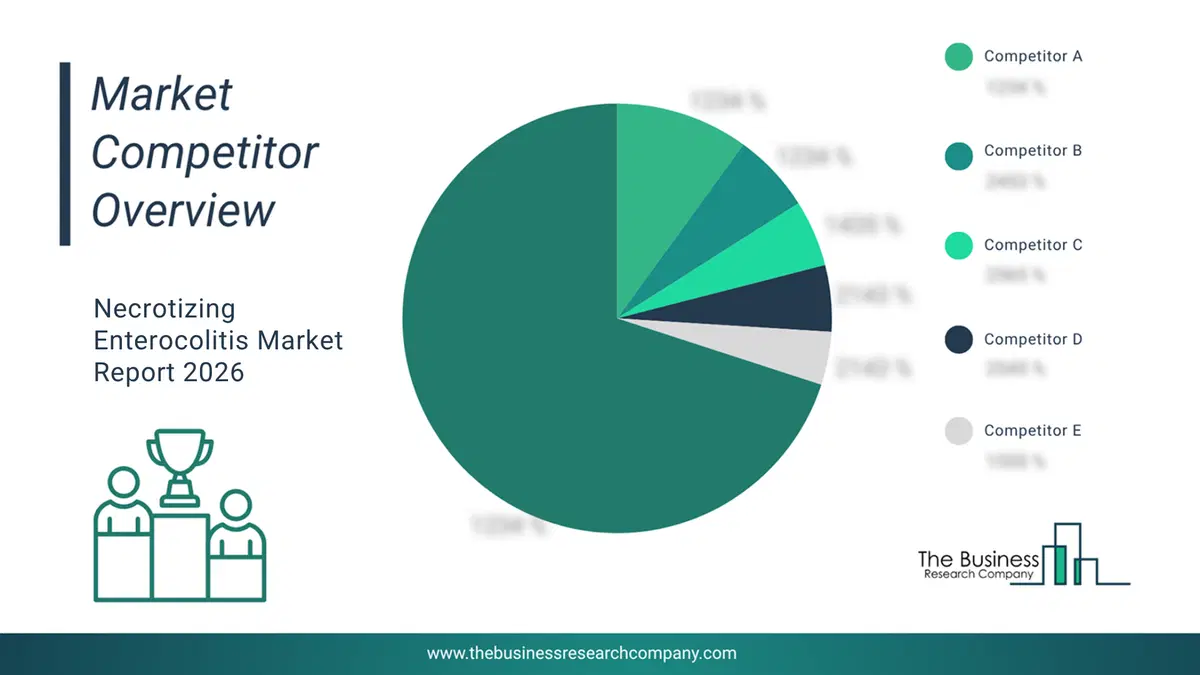
This chart is for illustrative purposes; the full report includes a detailed competitor analysis and comprehensive overview of the top 10 companies in the market.
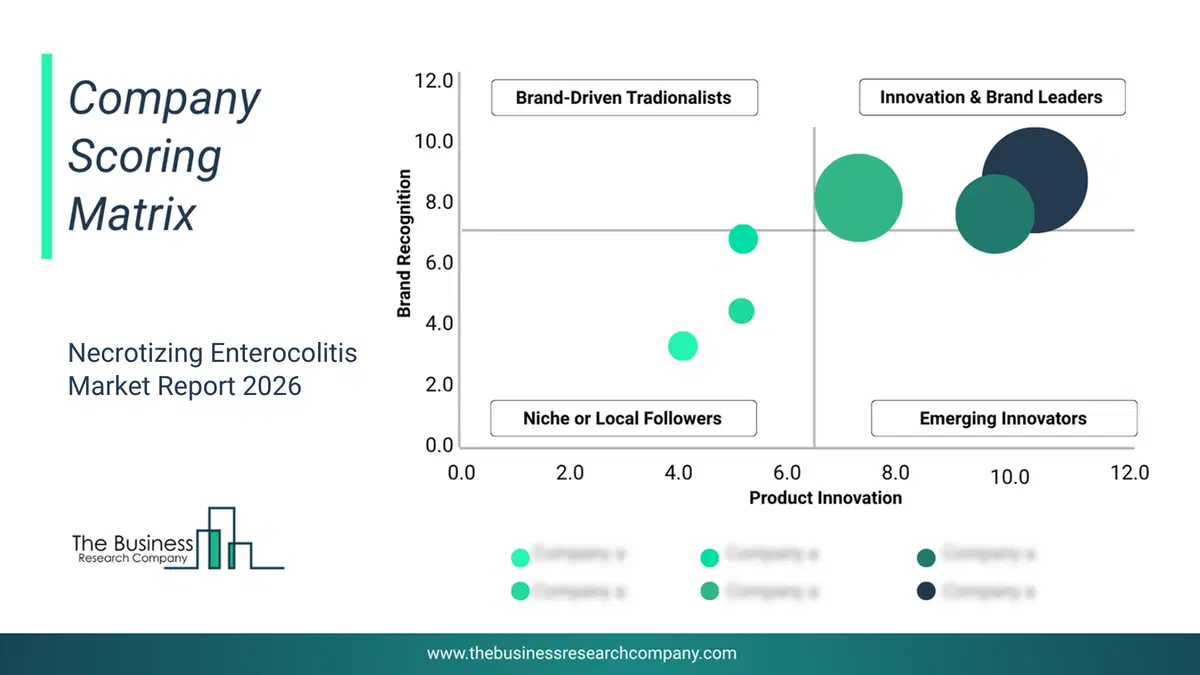
This chart maps companies by product innovation and brand strength, with bubble size indicating relative revenue, helping identify market leaders, challengers, and niche players. This is an illustrative chart; the full report provides a complete and accurate competitive analysis.
Global Necrotizing Enterocolitis Market Trends and Insights
Major companies operating in the necrotizing enterocolitis market are focusing on developing innovative product solutions, such as cell-free sterile biologic solutions, to address the critical unmet need for effective treatments and improve outcomes in premature infants. A cell-free sterile biologic solution is a purified, sterile liquid containing bioactive molecules such as proteins, growth factors, and cytokines derived from cultured cells but without any intact cells, designed to promote healing and reduce inflammation. For instance, in December 2023, Noveome Biotherapeutics, Inc., a US-based biopharmaceutical company, received notification from the U.S. Food and Drug Administration (FDA), allowing the company to proceed with its Phase 1-2 clinical trial for ST266, a novel biologic aimed at treating necrotizing enterocolitis (NEC) in premature infants. It marks a significant milestone as ST266 is anticipated to be the first major therapeutic advancement for NEC in over 30 years, addressing a critical medical need given the disease's high morbidity and mortality rates among vulnerable populations.What Are Latest Mergers And Acquisitions In The Necrotizing Enterocolitis Market?
In January 2025, Siolta Therapeutics, a US-based developer of novel live biotherapeutics for necrotizing enterocolitis, partnered with Cowellnex Co. to prevent necrotizing enterocolitis (NEC) in premature infants. This collaboration aims to combine Siolta's expertise in microbial science with Cowellnex's institutional strength, leveraging Siolta's Precision Symbiotics Platform to advance research and establish treatments in microbiome drug discovery. Cowellnex Co. Ltd. is a US-based biotechnology company advancing microbiome drug discovery.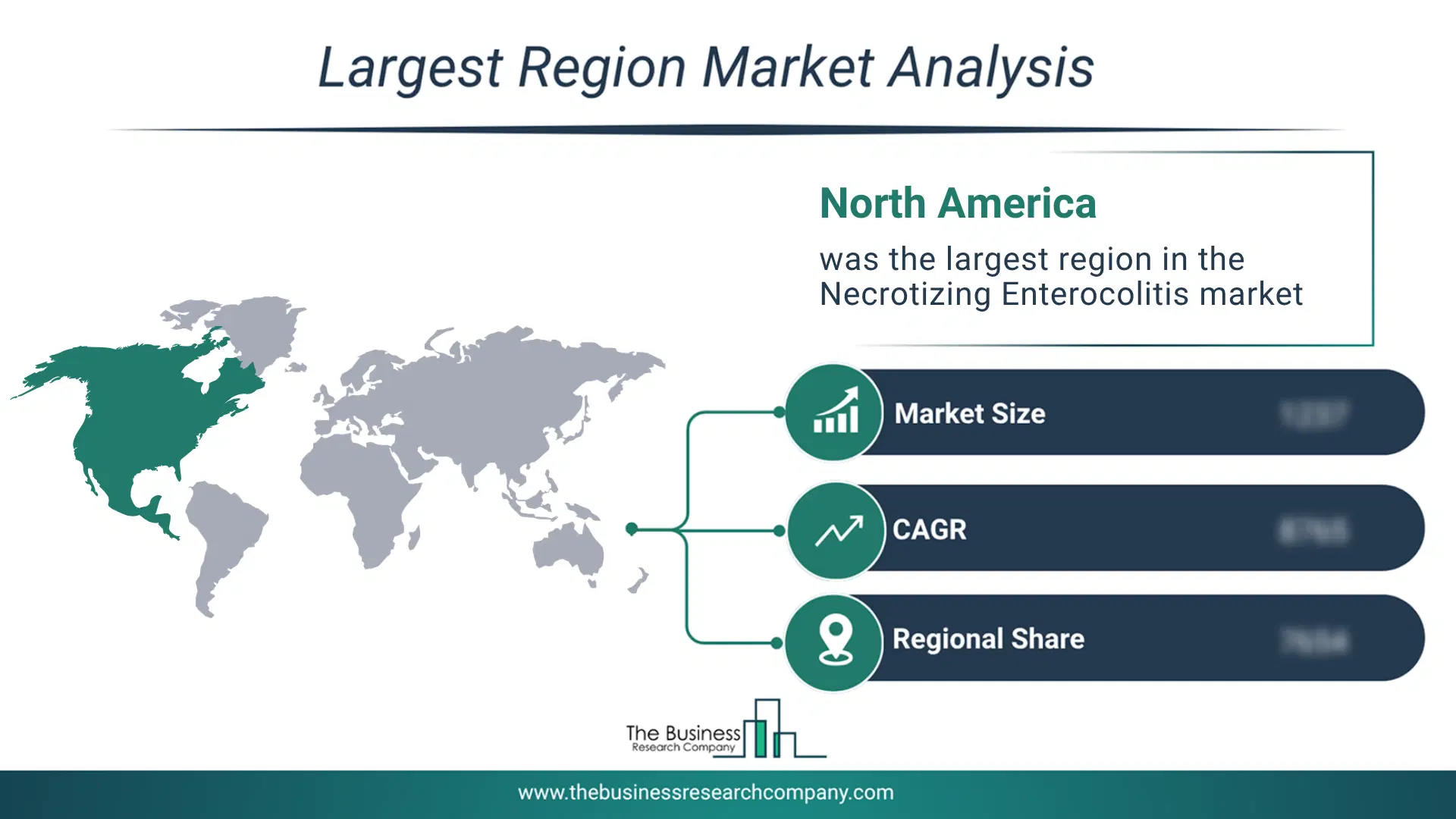
Regional Outlook
North America was the largest region in the necrotizing enterocolitis market in 2025. Asia-Pacific is expected to be the fastest-growing region in the forecast period. The regions covered in this market report are Asia-Pacific, South East Asia, Western Europe, Eastern Europe, North America, South America, Middle East, Africa. The countries covered in this market report are Australia, Brazil, China, France, Germany, India, Indonesia, Japan, Taiwan, Russia, South Korea, UK, USA, Canada, Italy, Spain.What Defines the Necrotizing Enterocolitis Market?
The necrotizing enterocolitis market consists of revenues earned by entities providing services such as neonatal intensive care, nutritional support, medical monitoring and support, and parental counseling and support. The market value includes the value of related goods sold by the service provider or included within the service offering. The necrotizing enterocolitis market also includes sales of feeding tubes, surgical instruments for resection, and anti-inflammatory drugs. Values in this market are ‘factory gate’ values, that is the value of goods sold by the manufacturers or creators of the goods, whether to other entities (including downstream manufacturers, wholesalers, distributors and retailers) or directly to end customers. The value of goods in this market includes related services sold by the creators of the goods.How is Market Value Defined and Measured?
The market value is defined as the revenues that enterprises gain from the sale of goods and/or services within the specified market and geography through sales, grants, or donations in terms of the currency (in USD unless otherwise specified). The revenues for a specified geography are consumption values that are revenues generated by organizations in the specified geography within the market, irrespective of where they are produced. It does not include revenues from resales along the supply chain, either further along the supply chain or as part of other products.
This chart presents market attractiveness based on a quantitative evaluation of growth, competition, strategic alignment, and risk, offering a clear view of opportunity areas for decision-making. This chart is for illustrative purposes; the full report contains the complete analysis.

This chart highlights the Total Addressable Market (TAM) by estimating the maximum revenue opportunity using an assumption-driven approach, supporting strategic planning and opportunity sizing across markets. The chart is illustrative; the full report provides a more comprehensive analysis.
What Key Data and Analysis Are Included in the Necrotizing Enterocolitis Market Report 2026?
The necrotizing enterocolitis market research report is one of a series of new reports from The Business Research Company that provides market statistics, including industry global market size, regional shares, competitors with the market share, detailed market segments, market trends and opportunities, and any further data you may need to thrive in the necrotizing enterocolitis industry. The market research report delivers a complete perspective of everything you need, with an in-depth analysis of the current and future state of the industry.Necrotizing Enterocolitis Market Report Forecast Analysis
| Report Attribute | Details |
|---|---|
| Market Size Value In 2026 | $5.47 billion |
| Revenue Forecast In 2030 | $6.95 billion |
| Growth Rate | CAGR of 6.1% from 2026 to 2030 |
| Base Year For Estimation | 2025 |
| Actual Estimates/Historical Data | 2020-2025 |
| Forecast Period | 2026 - 2030 |
| Market Representation | Revenue in USD Billion and CAGR from 2026 to 2030 |
| Segments Covered | Treatment, Diagnosis, Stage, End-User |
| Regional Scope | Asia-Pacific, Western Europe, Eastern Europe, North America, South America, Middle East, Africa |
| Country Scope | The countries covered in the report are Australia, Brazil, China, France, Germany, India, Indonesia, Japan, Taiwan, Russia, South Korea, UK, USA, Canada, Italy, Spain |
| Key Companies Profiled | Abbott Laboratories, Astellas Pharma Inc., Mayo Foundation for Medical Education and Research, Cleveland Clinic, Boston Children's Hospital, Hollister Incorporated, UPMC Children's Hospital of Pittsburgh, Prolacta Bioscience Inc., Evolve BioSystems, Sigma-Tau Pharmaceuticals, Mead Johnson & Company LLC, Liminal BioSciences Inc., Noveome Biotherapeutics Inc., Infant Bacterial Therapeutics, Prometic Life Sciences Inc., Nexilico, Siolta Therapeutics, ProThera Biologics Inc., Plakous Therapeutics Inc., Chosen Diagnostics Inc. |
| Customization Scope | Request for Customization |
| Pricing And Purchase Options | Explore Purchase Options |