
Nerve Entrapment Syndrome Market Report 2026
Global Outlook – By Type (Carpal Tunnel Syndrome, Cubital Tunnel Syndrome, Tarsal Tunnel Syndrome, Meralgia Parasthetica, Other Types), By Treatment Modality (Medications, Physical Therapy, Interventional Procedures, Alternative Therapies), By Administration Route (Oral Administration, Injectable Administration, Topical Administration), By Severity Of Condition (Mild, Moderate, Severe, Post-Surgical Complications) - Market Size, Trends, Strategies, and Forecast to 2030
Nerve Entrapment Syndrome Market Overview
• Nerve Entrapment Syndrome market size has reached to $4.33 billion in 2025 • Expected to grow to $6.11 billion in 2030 at a compound annual growth rate (CAGR) of 7.1% • Growth Driver: Rising Diabetes Prevalence Driving Growth In The Market Due To Increasing Risk Of Nerve Compression • Market Trend: Innovative Formulations Drive Advancements In The Market • North America was the largest region in 2025.What Is Covered Under Nerve Entrapment Syndrome Market?
Nerve entrapment syndrome refers to a condition in which a nerve is compressed or pinched, leading to pain, numbness, tingling, or weakness along the path of the affected nerve. This compression occurs at various points in the body where nerves pass through narrow spaces, such as joints, muscles, or ligaments. The main types of nerve entrapment syndrome are carpal tunnel syndrome, cubital tunnel syndrome, tarsal tunnel syndrome, meralgia paresthetica, and others. Carpal tunnel syndrome (CTS) occurs when the median nerve is compressed at the wrist, causing numbness, tingling, and hand weakness. It is treated by various treatment modalities such as medications, physical therapy, interventional procedures, and alternative therapies. It is administered through several administration routes, including oral administration, injectable administration, and topical administration with several severity of conditions such as mild, moderate, severe, and post-surgical complications.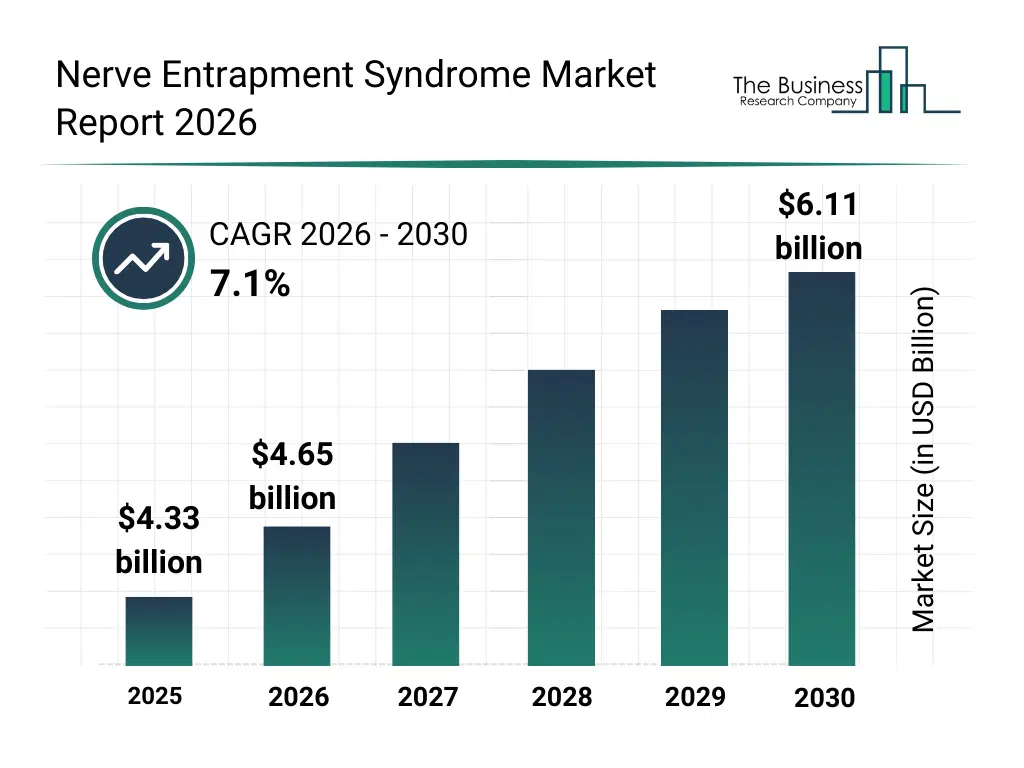
What Is The Nerve Entrapment Syndrome Market Size and Share 2026?
The nerve entrapment syndrome market size has grown strongly in recent years. It will grow from $4.33 billion in 2025 to $4.65 billion in 2026 at a compound annual growth rate (CAGR) of 7.4%. The growth in the historic period can be attributed to high prevalence of repetitive strain injuries, reliance on conservative treatment approaches, limited awareness of early nerve entrapment symptoms, dependence on opioid medications for pain relief, gradual adoption of physical therapy interventions.What Is The Nerve Entrapment Syndrome Market Growth Forecast?
The nerve entrapment syndrome market size is expected to see strong growth in the next few years. It will grow to $6.11 billion in 2030 at a compound annual growth rate (CAGR) of 7.1%. The growth in the forecast period can be attributed to advancements in imaging and diagnostic tools, growing demand for minimally invasive nerve decompression procedures, increased adoption of non-opioid therapies, rising incidence of diabetes-related neuropathies, expansion of specialized pain management centers. Major trends in the forecast period include growing adoption of minimally invasive treatment approaches, rising use of ultrasound and imaging guidance in nerve diagnostics, increased preference for physical therapy and rehabilitation-based interventions, expansion of non-opioid pain management therapies, higher incidence of repetitive strain and lifestyle-related nerve entrapments.
Global Nerve Entrapment Syndrome Market Segmentation
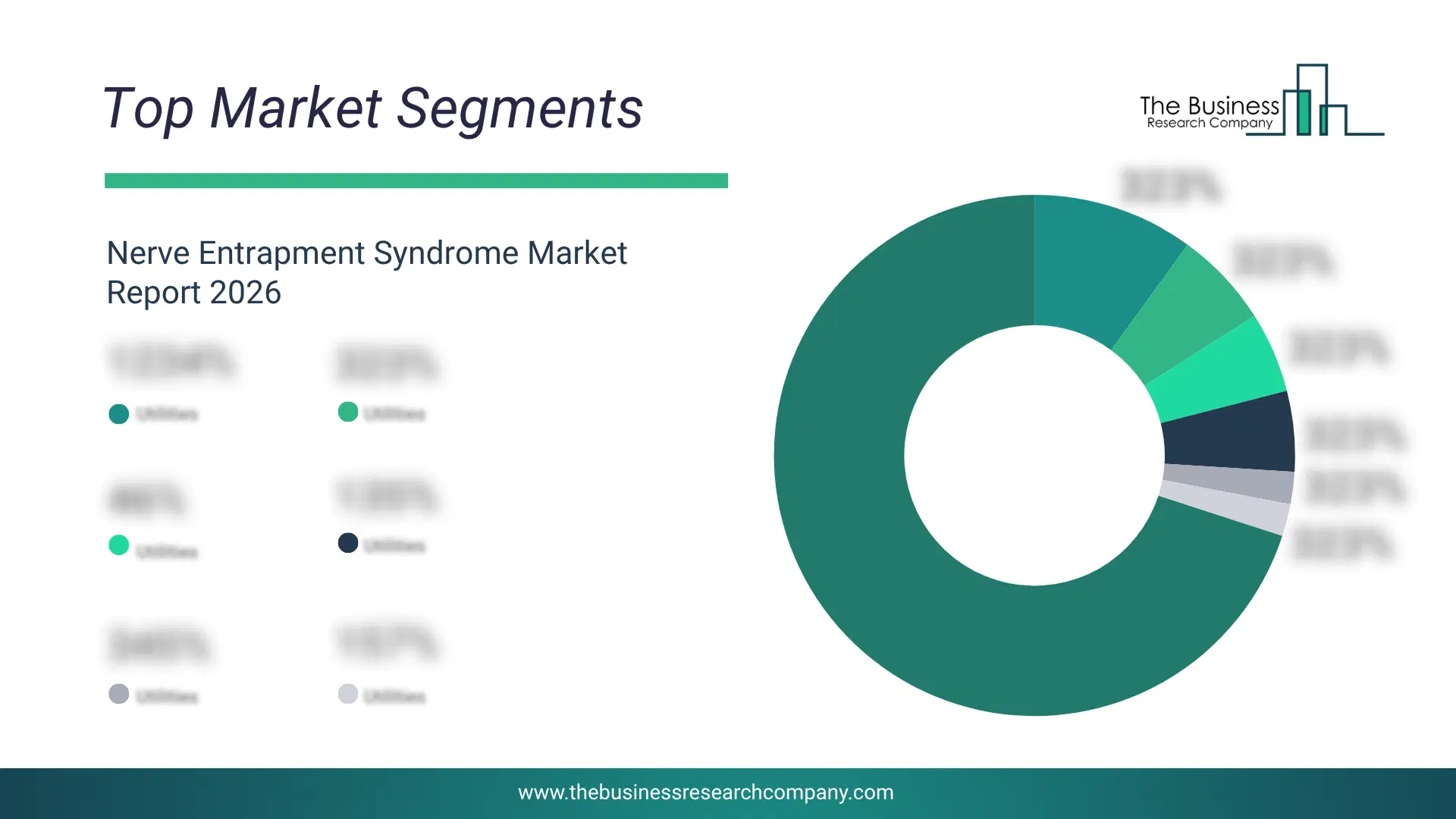
1) By Type: Carpal Tunnel Syndrome, Cubital Tunnel Syndrome, Tarsal Tunnel Syndrome, Meralgia Parasthetica, Other Types 2) By Treatment Modality: Medications, Physical Therapy, Interventional Procedures, Alternative Therapies 3) By Administration Route: Oral Administration, Injectable Administration, Topical Administration 4) By Severity Of Condition: Mild, Moderate, Severe, Post-Surgical Complications Subsegments: 1) By Carpal Tunnel Syndrome (CTS): Idiopathic Carpal Tunnel Syndrome, Work-Related/Repetitive Strain CTS, Diabetic Neuropathy-Associated CTS, Traumatic or Post-Surgical CTS, Pregnancy-Induced CTS 2) By Cubital Tunnel Syndrome: Idiopathic Cubital Tunnel Syndrome, Repetitive Motion-Induced Cubital Tunnel Syndrome, Post-Traumatic or Ulnar Nerve Injury-Related Cubital Tunnel Syndrome, Osteoarthritis-Related Cubital Tunnel Syndrome, Post-Surgical Cubital Tunnel Syndrome 3) By Tarsal Tunnel Syndrome (TTS): Idiopathic Tarsal Tunnel Syndrome, Trauma-Induced Tarsal Tunnel Syndrome, Diabetes-Associated Tarsal Tunnel Syndrome, Flatfoot-Related Tarsal Tunnel Syndrome, Post-Surgical Or Scar Tissue-Related TTS 4) By Meralgia Paresthetica (MP): Idiopathic Meralgia Paresthetica, Obesity-Associated Meralgia Paresthetica, Pregnancy-Related Meralgia Paresthetica, Post-Surgical Or Scar-Induced Meralgia Paresthetica, Diabetic Neuropathy-Related Meralgia Paresthetica 5) By Other Types: Radial Tunnel Syndrome, Thoracic Outlet Syndrome, Peroneal Nerve Entrapment, Sciatic Nerve Entrapment, Brachial Plexus Compression SyndromesWhat Is The Driver Of The Nerve Entrapment Syndrome Market?
The rising pool of diabetic patients is expected to propel the growth of the nerve entrapment syndrome market going forward. Diabetic patients are individuals with chronic conditions where the body cannot properly regulate blood sugar levels due to insufficient insulin production or ineffective insulin use. The growing number of diabetic patients is due to the increasing prevalence of obesity, and sedentary lifestyles significantly contribute to the rise in type 2 diabetes. The ever increasing number of diabetic patients raises the risk of nerve entrapment syndrome, as diabetes-induced peripheral neuropathy weakens nerves and surrounding structures, making them more prone to compression. For instance, in June 2024, according to the National Health Service, a UK-based government department, over half a million individuals (549,000) in England were identified as being at risk of developing type 2 diabetes in 2023, bringing the total number of people with non-diabetic hyperglycemia, or pre-diabetes, to 3,615,330. This marks a nearly 20% increase compared to the 3,065,825 individuals in 2022. Therefore, the rising pool of diabetic patients is driving the growth of the nerve entrapment syndrome industry.Key Players In The Global Nerve Entrapment Syndrome Market
Major companies operating in the nerve entrapment syndrome market are Pfizer Inc., Dr Reddy’s Laboratories, Glenmark Pharmaceuticals, Athletico Physical Therapy, Hinge Health, Kessler Rehabilitation Center, SPR Therapeutics, Centaur Pharmaceuticals, ProActive Physical Therapy & Rehabilitation, Grünenthal GmbH, Total Performance Physical Therapy, Back 2 Health, Cornerstone Physical Therapy, OrthoSport Physical Therapy & Rehabilitation, Physio Tattva, InvaGen Pharmaceuticals Inc., WEX Pharmaceuticals Inc., Eli Lilly and Company, Johnson & Johnson, Novartis AG, GlaxoSmithKline plc, AbbVie Inc., Teva Pharmaceutical Industries Ltd., Boston Scientific Corporation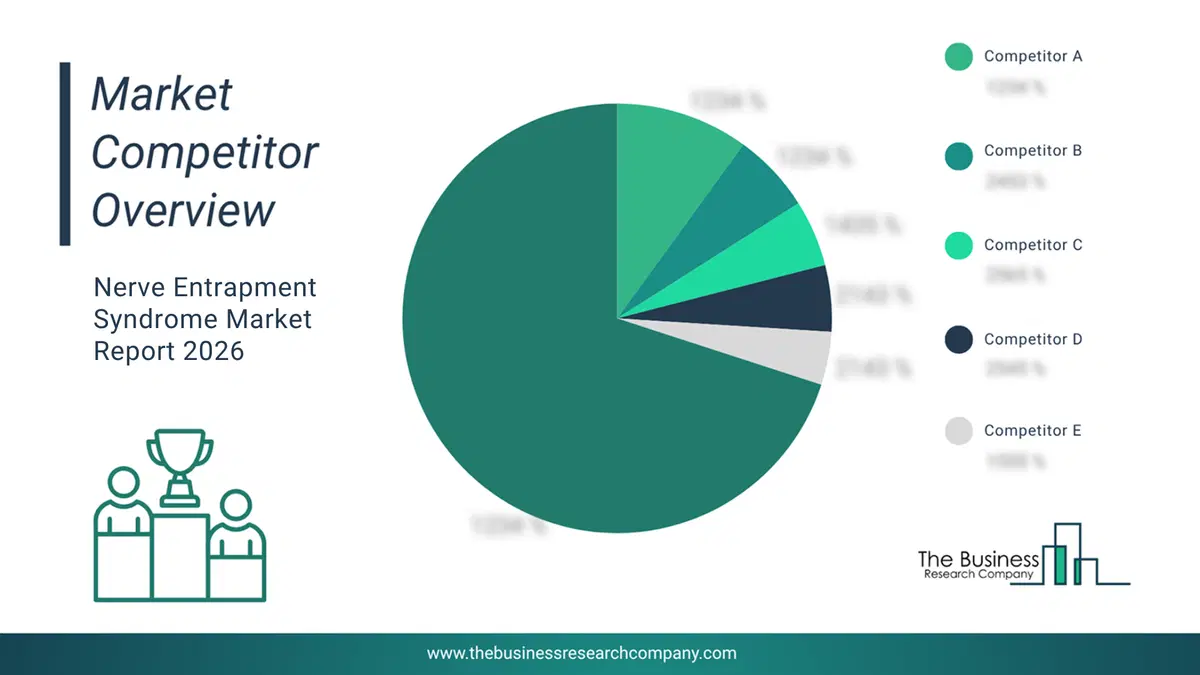
This chart is for illustrative purposes; the full report includes a detailed competitor analysis and comprehensive overview of the top 10 companies in the market.
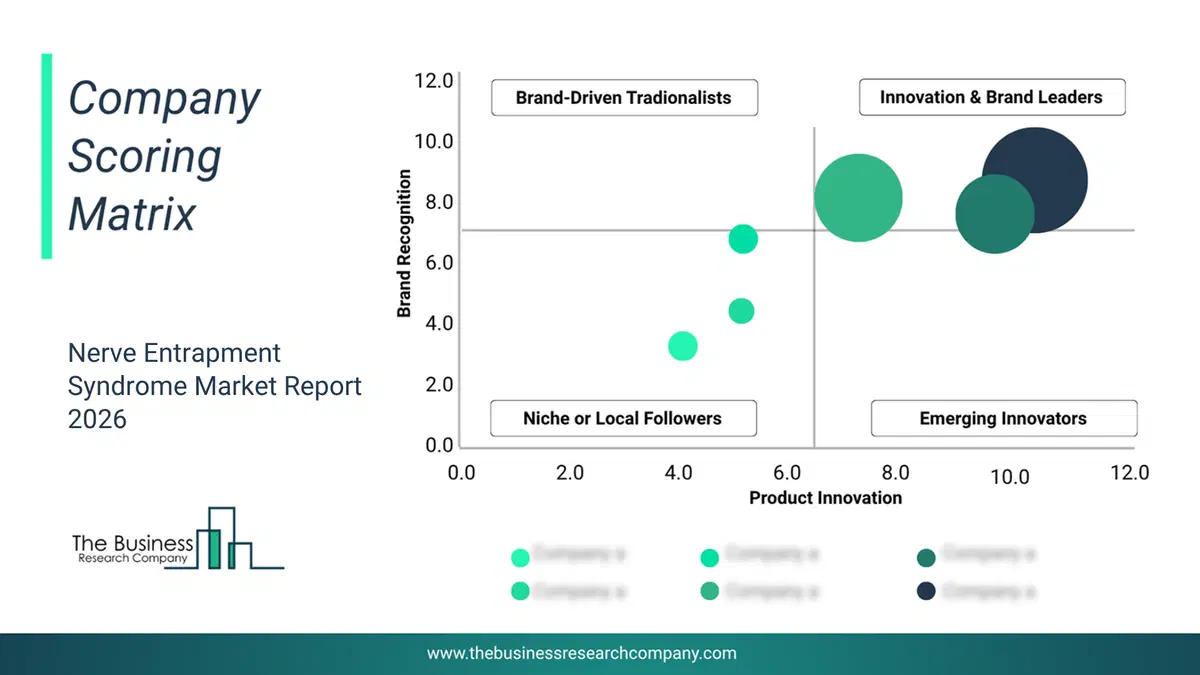
This chart maps companies by product innovation and brand strength, with bubble size indicating relative revenue, helping identify market leaders, challengers, and niche players. This is an illustrative chart; the full report provides a complete and accurate competitive analysis.
Global Nerve Entrapment Syndrome Market Trends and Insights
Major companies operating in the nerve entrapment syndrome market are focusing on developing innovative products such as peripheral nerve stimulators to improve therapeutic outcomes for patients with persistent neuropathic pain. A peripheral nerve stimulator is a minimally invasive device engineered to deliver controlled electrical impulses to specific peripheral nerves to alleviate chronic pain associated with nerve irritation or compression. For instance, in July 2025, Bioventus Inc., a US-based manufacturer of active healing and pain management therapies, announced a U.S. Food and Drug Administration (FDA) 510(k) clearance for TalisMann and StimTrial. The solutions introduce advanced electric field conduction technology and a dedicated trial lead, enabling clinicians to evaluate and deliver more precise neuromodulation therapy. These innovations broaden physician capability to treat deeper or larger nerves and strengthen the role of peripheral nerve stimulation as an effective, non-opioid treatment for chronic neuropathic pain.What Are Latest Mergers And Acquisitions In The Nerve Entrapment Syndrome Market?
In October 2025, Boston Scientific Corporation, a US-based provider of advanced medical technologies spanning cardiovascular, neurological, urological, respiratory, digestive, and oncological care, acquired Nalu Medical, Inc. for approximately $533 million. With this acquisition, Boston Scientific aims to strengthen and expand its neuromodulation portfolio by integrating a highly differentiated peripheral nerve stimulation platform that enhances its ability to serve a broader range of patients with chronic peripheral nerve pain. Nalu Medical, Inc. is a US-based developer of minimally invasive neurostimulation systems featuring a miniaturized, battery-free implantable pulse generator.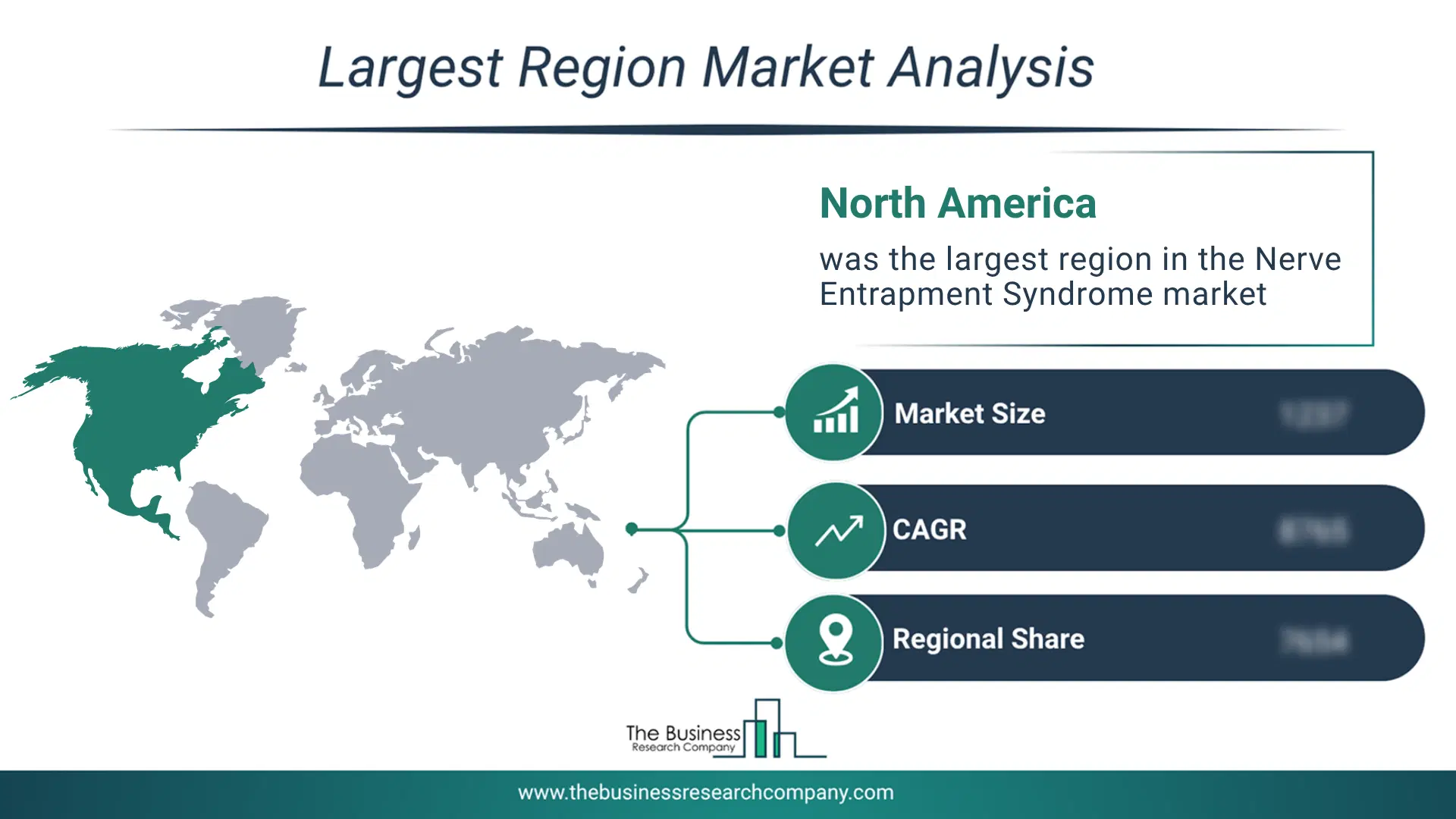
Regional Outlook
North America was the largest region in the nerve entrapment syndrome market in 2025. The regions covered in this market report are Asia-Pacific, South East Asia, Western Europe, Eastern Europe, North America, South America, Middle East, Africa. The countries covered in this market report are Australia, Brazil, China, France, Germany, India, Indonesia, Japan, Taiwan, Russia, South Korea, UK, USA, Canada, Italy, Spain.What Defines the Nerve Entrapment Syndrome Market?
The nerve entrapment syndrome market consists of revenues earned by entities providing services such as pain management, alternative therapies, lifestyle, and preventive counseling. The market value includes the value of related goods sold by the service provider or included within the service offering. The nerve entrapment syndrome market also includes sales of anticonvulsant drugs, neurostimulation, and neuromodulation devices, and pain management devices. Values in this market are ‘factory gate’ values, that is, the value of goods sold by the manufacturers or creators of the goods, whether to other entities (including downstream manufacturers, wholesalers, distributors, and retailers) or directly to end customers. The value of goods in this market includes related services sold by the creators of the goods.How is Market Value Defined and Measured?
The market value is defined as the revenues that enterprises gain from the sale of goods and/or services within the specified market and geography through sales, grants, or donations in terms of the currency (in USD unless otherwise specified). The revenues for a specified geography are consumption values that are revenues generated by organizations in the specified geography within the market, irrespective of where they are produced. It does not include revenues from resales along the supply chain, either further along the supply chain or as part of other products.
This chart presents market attractiveness based on a quantitative evaluation of growth, competition, strategic alignment, and risk, offering a clear view of opportunity areas for decision-making. This chart is for illustrative purposes; the full report contains the complete analysis.

This chart highlights the Total Addressable Market (TAM) by estimating the maximum revenue opportunity using an assumption-driven approach, supporting strategic planning and opportunity sizing across markets. The chart is illustrative; the full report provides a more comprehensive analysis.
What Key Data and Analysis Are Included in the Nerve Entrapment Syndrome Market Report 2026?
The nerve entrapment syndrome market research report is one of a series of new reports from The Business Research Company that provides market statistics, including industry global market size, regional shares, competitors with the market share, detailed market segments, market trends and opportunities, and any further data you may need to thrive in the nerve entrapment syndrome industry. The market research report delivers a complete perspective of everything you need, with an in-depth analysis of the current and future state of the industry.Nerve Entrapment Syndrome Market Report Forecast Analysis
| Report Attribute | Details |
|---|---|
| Market Size Value In 2026 | $4.65 billion |
| Revenue Forecast In 2030 | $6.11 billion |
| Growth Rate | CAGR of 7.1% from 2026 to 2030 |
| Base Year For Estimation | 2025 |
| Actual Estimates/Historical Data | 2020-2025 |
| Forecast Period | 2026 - 2030 |
| Market Representation | Revenue in USD Billion and CAGR from 2026 to 2030 |
| Segments Covered | Type, Treatment Modality, Administration Route, Severity Of Condition |
| Regional Scope | Asia-Pacific, Western Europe, Eastern Europe, North America, South America, Middle East, Africa |
| Country Scope | The countries covered in the report are Australia, Brazil, China, France, Germany, India, Indonesia, Japan, Taiwan, Russia, South Korea, UK, USA, Canada, Italy, Spain |
| Key Companies Profiled | Pfizer Inc., Dr Reddy’s Laboratories, Glenmark Pharmaceuticals, Athletico Physical Therapy, Hinge Health, Kessler Rehabilitation Center, SPR Therapeutics, Centaur Pharmaceuticals, ProActive Physical Therapy & Rehabilitation, Grünenthal GmbH, Total Performance Physical Therapy, Back 2 Health, Cornerstone Physical Therapy, OrthoSport Physical Therapy & Rehabilitation, Physio Tattva, InvaGen Pharmaceuticals Inc., WEX Pharmaceuticals Inc., Eli Lilly and Company, Johnson & Johnson, Novartis AG, GlaxoSmithKline plc, AbbVie Inc., Teva Pharmaceutical Industries Ltd., Boston Scientific Corporation |
| Customization Scope | Request for Customization |
| Pricing And Purchase Options | Explore Purchase Options |