

Nerve Patch Market Report 2026
Global Outlook – By Product Type (Biological Nerve Patches, Synthetic Nerve Patches, Hybrid Composite Nerve Patches, Collagen Based Nerve Patches, Polymer Based Nerve Patches, Biologic Growth Factor Integrated Nerve Patches), By Distribution Channel (Direct Hospital And Clinic Sales, Medical Device Distributors, Online Medical Procurement Platforms, Tender Based Government Or Defense Supply), By Application (Peripheral Nerve Repair, Central Nerve Repair, Brachial Plexus Injury, Spinal Cord Injury, Cranial Nerve Injury, Nerve Damage Due To Trauma Or Surgical Complications, Diabetic Neuropathy Intervention), By End User (Hospitals, Specialized Surgical Centers, Ambulatory Surgical Centers, Research Institutes And Universities) – Market Size, Trends, Strategies, and Forecast to 2030
Nerve Patch Market Overview
• Nerve Patch market size has reached to $0.41 billion in 2025 • Expected to grow to $0.91 billion in 2030 at a compound annual growth rate (CAGR) of 17.4% • Growth Driver: Increasing Adoption Of Advanced Biomaterials And Regenerative Medicine Technologies Fueling The Growth Of The Market Due To Enhancing Nerve Repair And Regeneration • Market Trend: Advancing Nerve Repair With Regulatory-Cleared Implantable Patches Like Remplir For Enhanced Regeneration • North America was the largest region in 2025 and Asia-Pacific is the fastest growing region.What Is Covered Under Nerve Patch Market?
A nerve patch is a medical biomaterial implant designed to repair, regenerate, or support damaged peripheral or central nerves by providing a scaffold that promotes axonal growth and tissue healing. These patches are typically made from biological, synthetic, or hybrid materials and help restore nerve function by guiding nerve cell regeneration and reducing scarring at the injury site. The main product types of nerve patches are including biological nerve patches, synthetic nerve patches, hybrid composite nerve patches, collagen-based nerve patches, polymer-based nerve patches, and biologic growth factor–integrated nerve patches. Biological nerve patches refer to graft materials derived from natural tissues or biomaterials that support nerve regeneration by providing a biocompatible scaffold for axonal growth and tissue healing. distributed through direct hospital and clinic sales, medical device distributors, online medical procurement platforms, and tender-based government or defense supply and the applications such as peripheral and central nerve repair, brachial plexus injury, spinal cord injury, cranial nerve injury, nerve damage due to trauma or surgical complications, and diabetic neuropathy intervention and the key end users including hospitals, specialized surgical centers, ambulatory surgical centers, and research institutes and universities.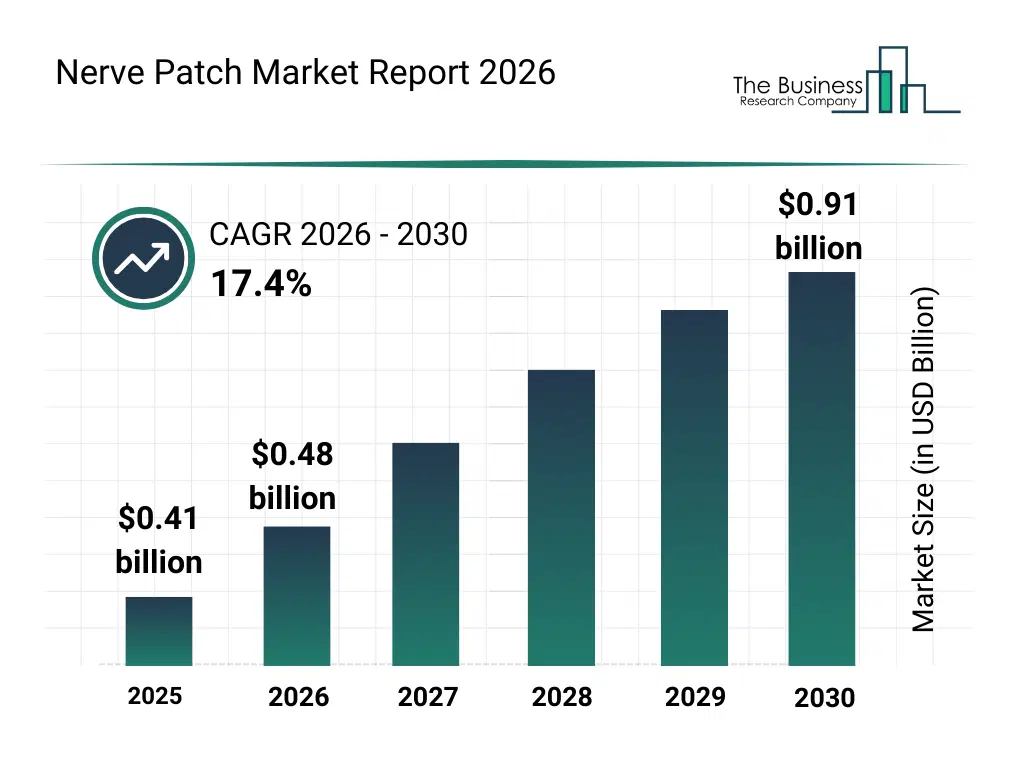
What Is The Nerve Patch Market Size and Share 2026?
The nerve patch market size has grown rapidly in recent years. It will grow from $0.41 billion in 2025 to $0.48 billion in 2026 at a compound annual growth rate (CAGR) of 17.7%. The growth in the historic period can be attributed to increasing incidence of traumatic nerve injuries, growing adoption of biomaterial-based implants, rising demand for peripheral nerve repair procedures, expansion of neurosurgical infrastructure, and increasing clinical success rates of regenerative therapies.What Is The Nerve Patch Market Growth Forecast?
The nerve patch market size is expected to see rapid growth in the next few years. It will grow to $0.91 billion in 2030 at a compound annual growth rate (CAGR) of 17.4%. The growth in the forecast period can be attributed to growing preference for minimally invasive nerve repair, increasing investment in regenerative medicine research, rising demand for advanced biologics for nerve regeneration, expanding healthcare expenditure in developing regions, and growing focus on improving sensory and motor function recovery outcomes. Major trends in the forecast period include technology advancements in bioengineered scaffolds, innovations in stem cell-integrated nerve patches, developments in nanotechnology-based regenerative materials, research and developments in three-dimensional bioprinted implants, and advancements in growth factor-loaded nerve regeneration systems.
Global Nerve Patch Market Segmentation
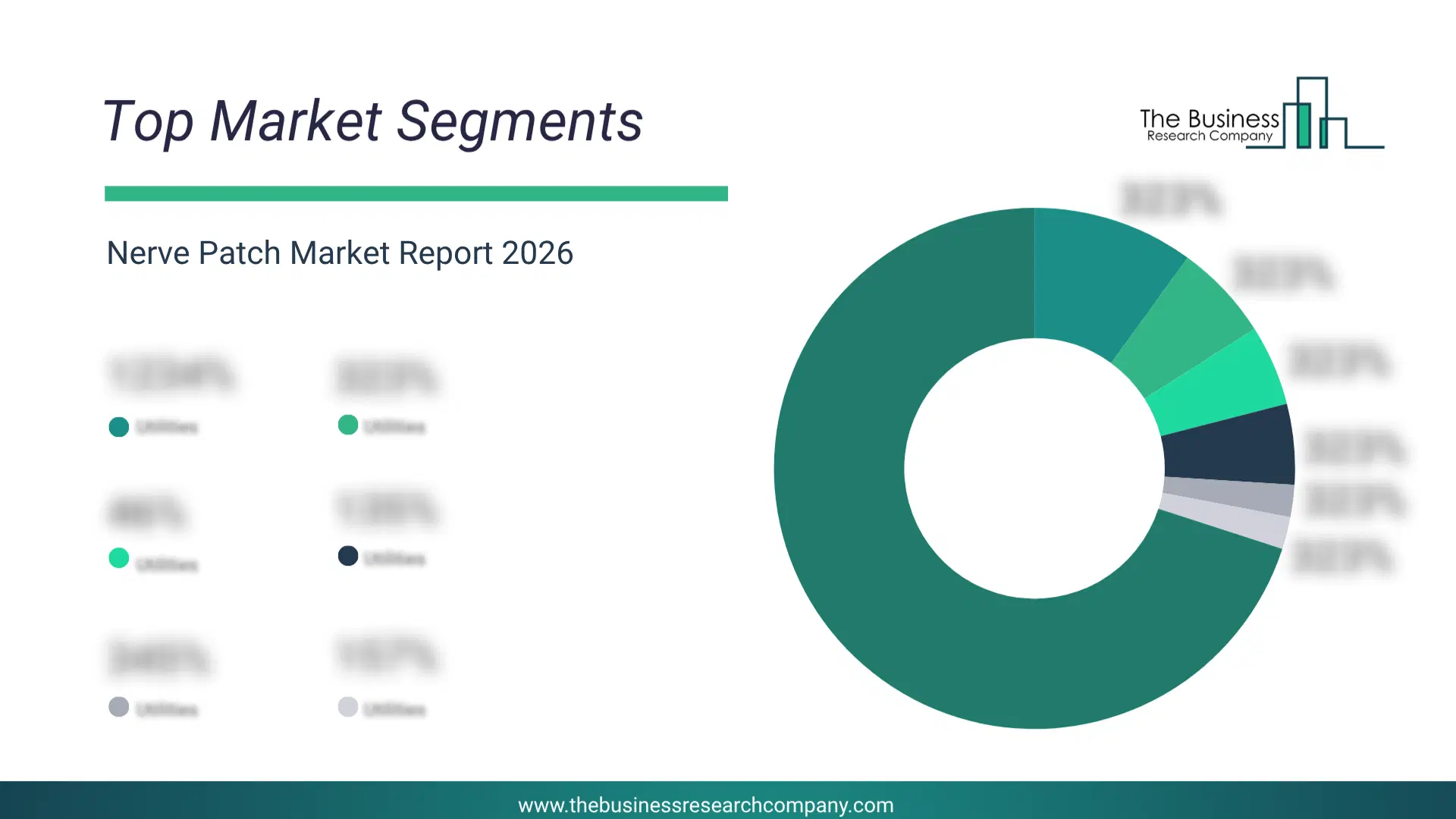
1) By Product Type: Biological Nerve Patches, Synthetic Nerve Patches, Hybrid Composite Nerve Patches, Collagen Based Nerve Patches, Polymer Based Nerve Patches, Biologic Growth Factor Integrated Nerve Patches 2) By Distribution Channel: Direct Hospital And Clinic Sales, Medical Device Distributors, Online Medical Procurement Platforms, Tender Based Government Or Defense Supply 3) By Application: Peripheral Nerve Repair, Central Nerve Repair, Brachial Plexus Injury, Spinal Cord Injury, Cranial Nerve Injury, Nerve Damage Due To Trauma Or Surgical Complications, Diabetic Neuropathy Intervention 4) By End User: Hospitals, Specialized Surgical Centers, Ambulatory Surgical Centers, Research Institutes And Universities Subsegments: 1) By Biological Nerve Patches: Autologous Nerve Graft, Allogenic Nerve Graft, Xenogeneic Nerve Graft, Extracellular Matrix Derived Patch, Decellularized Nerve Scaffold 2) By Synthetic Nerve Patches: Polylactic Acid Patch, Polyglycolic Acid Patch, Polycaprolactone Patch, Polyurethane Based Patch, Synthetic Polymer Composite Patch 3) By Hybrid Composite Nerve Patches: Polymer And Collagen Composite Patch, Polymer And Extracellular Matrix Composite Patch, Biologic And Synthetic Composite Patch, Growth Factor Loaded Composite Patch, Nanofiber Reinforced Composite Patch 4) By Collagen Based Nerve Patches: Type I Collagen Patch, Type III Collagen Patch, Crosslinked Collagen Patch, Freeze Dried Collagen Patch, Collagen Hydrogel Patch 5) By Polymer Based Nerve Patches: Polylactic Acid Based Patch, Polyglycolic Acid Based Patch, Polycaprolactone Based Patch, Polyethylene Glycol Based Patch, Biodegradable Polymer Blend 6) By Biologic Growth Factor Integrated Nerve Patches: Nerve Growth Factor Loaded Patch, Brain Derived Neurotrophic Factor Loaded Patch, Glial Cell Line Derived Neurotrophic Factor Patch, Vascular Endothelial Growth Factor Patch, Fibroblast Growth Factor Loaded PatchWhat Are The Drivers Of The Nerve Patch Market?
The increasing adoption of advanced biomaterials and regenerative medicine technologies is expected to propel the growth of the nerve patch market going forward. Biomaterials and regenerative medicine technologies refer to an interdisciplinary field that develops and applies engineered materials and biological approaches to repair, replace, restore, or regenerate damaged tissues and organs by interacting with the body’s biological systems. Adoption has increased due to advances in material science, including biodegradable polymers and bioactive scaffolds, as well as rising clinical confidence in regenerative approaches that reduce the need for autografts and minimize surgical complications. The nerve patch supports this trend by offering next-generation biomaterial-based patches that provide structural support, promote nerve regeneration, and enhance surgical precision in nerve repair procedures. For instance, in July 2024, according to data published by the European Medicines Agency (EMA), a European Union–based regulatory authority, the number of bioengineered nerve repair products undergoing clinical evaluation or holding market authorization in the EU increased from 18 products in 2021 to 29 products in 2024, representing growth of more than 60% over three years. Therefore, the increasing adoption of advanced biomaterials and regenerative medicine technologies is driving the growth of the nerve patch industry. The rising focus on improving functional recovery after peripheral nerve injuries is expected to propel the growth of the nerve patch market going forward. Functional recovery is the process of restoring nerve function and reducing long-term disability following nerve trauma, disease, or degeneration, and it is essential for maintaining mobility, sensation, and quality of life. The increased focus on functional recovery is driven by the growing burden of neurological conditions that involve peripheral nerve damage and require long-term clinical intervention. The nerve patch supports functional recovery by enabling nerve regeneration through advanced biomaterials and regenerative scaffolds that improve healing outcomes. For instance, in October 2025, according to the World Health Organization (WHO), a Switzerland-based global health agency, its Global Status Report on Neurology highlighted that neurological conditions affect more than 40% of the global population over 3 billion people worldwide and remain a leading cause of disability and death, underscoring the urgent need for improved therapies that restore nerve function and enhance long-term quality of life. Therefore, the rising focus on improving functional recovery after peripheral nerve injuries is driving the growth of the nerve patch industry.Key Players In The Global Nerve Patch Market
Major companies operating in the nerve patch market are Applied Biological Materials Inc., Baxter International Inc., Polyganics B.V., Shanghai P&P Biotech Co. Ltd., Jiangsu Ruier Medical Devices Co. Ltd., MicroPort NeuroTech, AxoGen Europe GmbH, Renerva LLC, BioWave Corporation, Neural Repair Technologies Inc., Tissium S.A., Collagen Matrix Inc., CheckPoint Surgical Inc., BMT Medizintechnik GmbH, Synovis Micro Companies Alliance Inc., Neuraptive Therapeutics Inc., Alafair Biosciences Inc., BioAxone BioSciences Inc., Shanghai Kindly Medical Instruments, NerveGen Pharma Corp.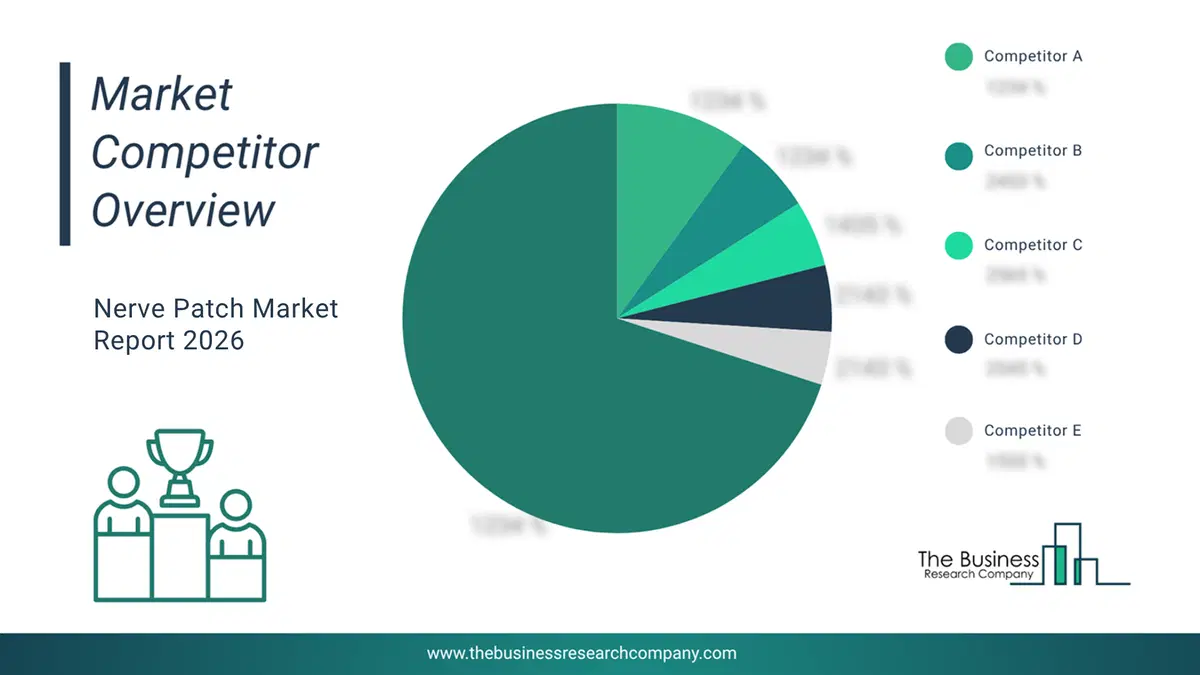
This chart is for illustrative purposes; the full report includes a detailed competitor analysis and comprehensive overview of the top 10 companies in the market.
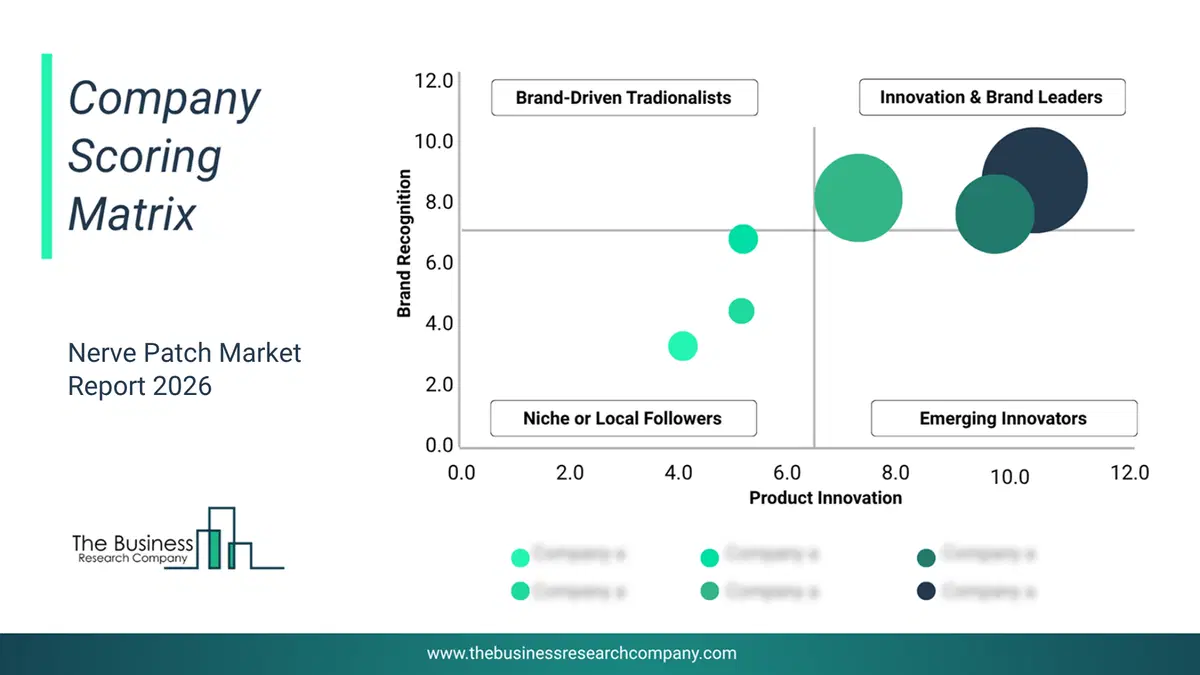
This chart maps companies by product innovation and brand strength, with bubble size indicating relative revenue, helping identify market leaders, challengers, and niche players. This is an illustrative chart; the full report provides a complete and accurate competitive analysis.
Global Nerve Patch Market Trends and Insights
Major companies operating in the nerve patch market are focusing on regulatory-cleared implantable repair materials, such as Remplir, to support nerve regeneration, bridge damaged peripheral nerves, and improve surgical outcomes. Remplir refers to a biocompatible collagen wrap designed to provide structural support around injured nerve tissue, promote axonal growth, and gradually resorb as the nerve heals, creating an optimal environment for nerve repair. For instance, in April 2025, Orthocell Ltd., an Australia-based regenerative medicine company, obtained 510(k) clearance from the United States Food and Drug Administration (FDA) for Remplir, its flagship nerve repair product. Designed for clinical use in peripheral nerve injuries, the product features a sterile, single-use implantable collagen wrap available in multiple size variants, maintains mechanical strength when wet, and fosters axonal regrowth to restore nerve function following injury.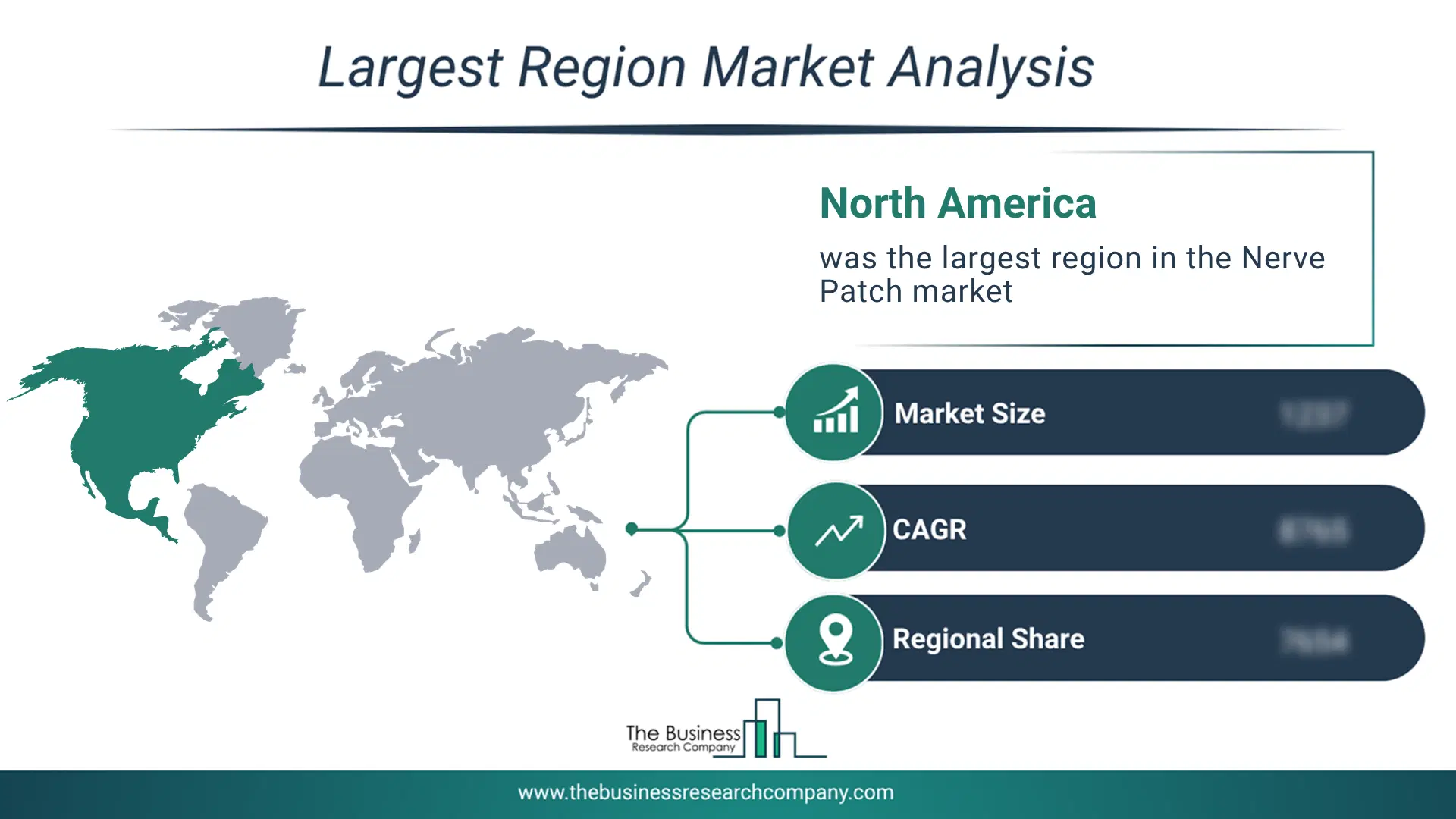
Regional Insights
North America was the largest region in the nerve patch market in 2025. Asia-Pacific is expected to be the fastest-growing region in the forecast period. The regions covered in this market report are Asia-Pacific, South East Asia, Western Europe, Eastern Europe, North America, South America, Middle East, Africa. The countries covered in this market report are Australia, Brazil, China, France, Germany, India, Indonesia, Japan, Taiwan, Russia, South Korea, UK, USA, Canada, Italy, Spain.What Defines the Nerve Patch Market?
The nerve patch market consists of sales of nerve regeneration patches, bioengineered scaffolds, collagen-based nerve repair patches, synthetic polymer nerve healing patches, and cell-embedded nerve repair matrices. The market value includes the value of related goods sold by the manufacturer or included within the therapy or surgical offering. The nerve patch market includes sales of bioengineered scaffolds, collagen-based patches, synthetic polymer patches, and biologics supported with surgical compatibility features. Values in this market are factory-gate values, meaning the value of goods sold by the original creators or manufacturers whether to other companies (including distributors, hospitals, and medical device suppliers) or directly to end users such as healthcare facilities and surgeons. The value of goods also includes associated services provided by the creators, such as clinical support, customization, and technology integration.How is Market Value Defined and Measured?
The market value is defined as the revenues that enterprises gain from the sale of goods and/or services within the specified market and geography through sales, grants, or donations in terms of the currency (in USD unless otherwise specified). The revenues for a specified geography are consumption values that are revenues generated by organizations in the specified geography within the market, irrespective of where they are produced. It does not include revenues from resales along the supply chain, either further along the supply chain or as part of other products.
This chart presents market attractiveness based on a quantitative evaluation of growth, competition, strategic alignment, and risk, offering a clear view of opportunity areas for decision-making. This chart is for illustrative purposes; the full report contains the complete analysis.

This chart highlights the Total Addressable Market (TAM) by estimating the maximum revenue opportunity using an assumption-driven approach, supporting strategic planning and opportunity sizing across markets. The chart is illustrative; the full report provides a more comprehensive analysis.
What Key Data and Analysis Are Included in the Nerve Patch Market Report 2026?
The nerve patch market research report is one of a series of new reports from The Business Research Company that provides market statistics, including industry global market size, regional shares, competitors with the market share, detailed market segments, market trends and opportunities, and any further data you may need to thrive in the nerve patch industry. The market research report delivers a complete perspective of everything you need, with an in-depth analysis of the current and future state of the industry.Nerve Patch Market Report Forecast Analysis
| Report Attribute | Details |
|---|---|
| Market Size Value In 2026 | $0.48 billion |
| Revenue Forecast In 2030 | $0.91 billion |
| Growth Rate | CAGR of 17.4% from 2026 to 2030 |
| Base Year For Estimation | 2025 |
| Actual Estimates/Historical Data | 2020-2025 |
| Forecast Period | 2026 - 2030 |
| Market Representation | Revenue in USD Billion and CAGR from 2026 to 2030 |
| Segments Covered | Product Type, Distribution Channel, Application, End User |
| Regional Scope | Asia-Pacific, Western Europe, Eastern Europe, North America, South America, Middle East, Africa |
| Country Scope | The countries covered in the report are Australia, Brazil, China, France, Germany, India, Indonesia, Japan, Taiwan, Russia, South Korea, UK, USA, Canada, Italy, Spain. |
| Key Companies Profiled | Applied Biological Materials Inc., Baxter International Inc., Polyganics B.V., Shanghai P&P Biotech Co. Ltd., Jiangsu Ruier Medical Devices Co. Ltd., MicroPort NeuroTech, AxoGen Europe GmbH, Renerva LLC, BioWave Corporation, Neural Repair Technologies Inc., Tissium S.A., Collagen Matrix Inc., CheckPoint Surgical Inc., BMT Medizintechnik GmbH, Synovis Micro Companies Alliance Inc., Neuraptive Therapeutics Inc., Alafair Biosciences Inc., BioAxone BioSciences Inc., Shanghai Kindly Medical Instruments, NerveGen Pharma Corp. |
| Customization Scope | Request for Customization |
| Pricing And Purchase Options | Explore Purchase Options |