
Neural Implants Market Report 2026
Global Outlook – By Product (F And B Spinal Cord Stimulation (SCS), Deep Brain Stimulation (DBS), Vagus Nerve Stimulation (VNS)), By Application (Chronic Pain, Parkinson’s Disease (PD), Epilepsy, Other Applications), By End-User (Hospitals, Specialized Neurological Centers (SNCs), Outpatient Surgery Centers) – Market Size, Trends, Strategies, and Forecast to 2030
Neural Implants Market Overview
• Neural Implants market size has reached to $5.91 billion in 2025 • Expected to grow to $9.2 billion in 2030 at a compound annual growth rate (CAGR) of 9% • Growth Driver: The Rising Prevalence Of Neurological Disorders Fueling The Growth Of The Market Due To Increasing Age-Related And Lifestyle-Linked Disease Burden • Market Trend: Innovative Deep Brain Stimulation (DBS) Device Revolutionizes Treatment For Movement Disorders • North America was the largest region in 2025 and Asia-Pacific is the fastest growing region.What Is Covered Under Neural Implants Market?
Neural implants, also known as brain-computer interfaces (BCIs) or neural prosthetics, refer to medical devices designed to interface with the nervous system to restore or enhance neural function. These implants are intended to restore sensory function, treat neurological diseases, and improve cognitive ability. The main types of neural implant products include F and B (Frequency and Burst) spinal cord stimulation (SCS), deep brain stimulation (DBS), and vagus nerve stimulation (VNS). F and B Spinal Cord Stimulation (SCS) devices are tiny implants that provide electrical signals to the spinal cord to help treat chronic pain. They are used in various applications, including chronic pain, Parkinson’s disease (PD), epilepsy, and others, by several end-users, such as hospitals, specialized neurological centers (SNCs), and outpatient surgery centers.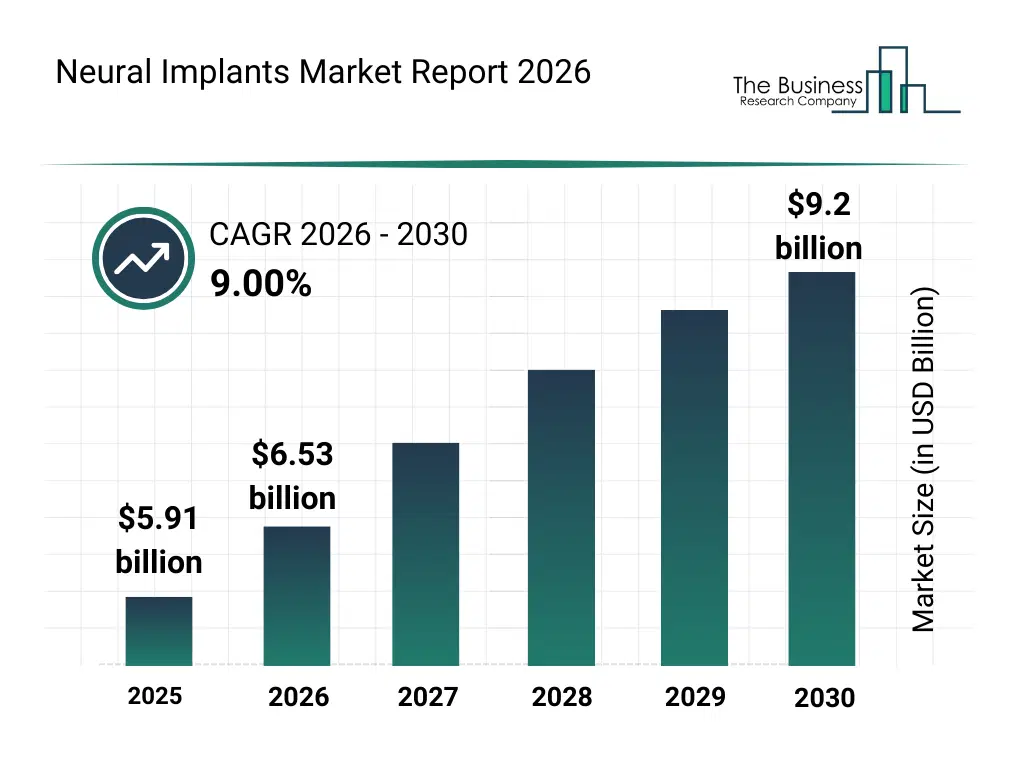
What Is The Neural Implants Market Size and Share 2026?
The neural implants market size has grown rapidly in recent years. It will grow from $5.91 billion in 2025 to $6.53 billion in 2026 at a compound annual growth rate (CAGR) of 10.4%. The growth in the historic period can be attributed to increasing prevalence of neurological disorders, growth in chronic pain patient population, rising adoption of deep brain stimulation therapies, expansion of neurology specialty centers, increasing clinical evidence supporting neuromodulation.What Is The Neural Implants Market Growth Forecast?
The neural implants market size is expected to see strong growth in the next few years. It will grow to $9.2 billion in 2030 at a compound annual growth rate (CAGR) of 9.0%. The growth in the forecast period can be attributed to advancements in implantable neurotechnology, growing geriatric population with neurological conditions, rising demand for personalized neurology treatments, expansion of outpatient neurological procedures, increasing investment in neurotechnology research. Major trends in the forecast period include rising adoption of neurostimulation therapies for chronic disorders, growing use of implantable devices for movement disorders, increasing clinical acceptance of brain-computer interface technologies, expansion of neuromodulation applications beyond pain management, rising demand for long-term neurological disorder management solutions.
Global Neural Implants Market Segmentation
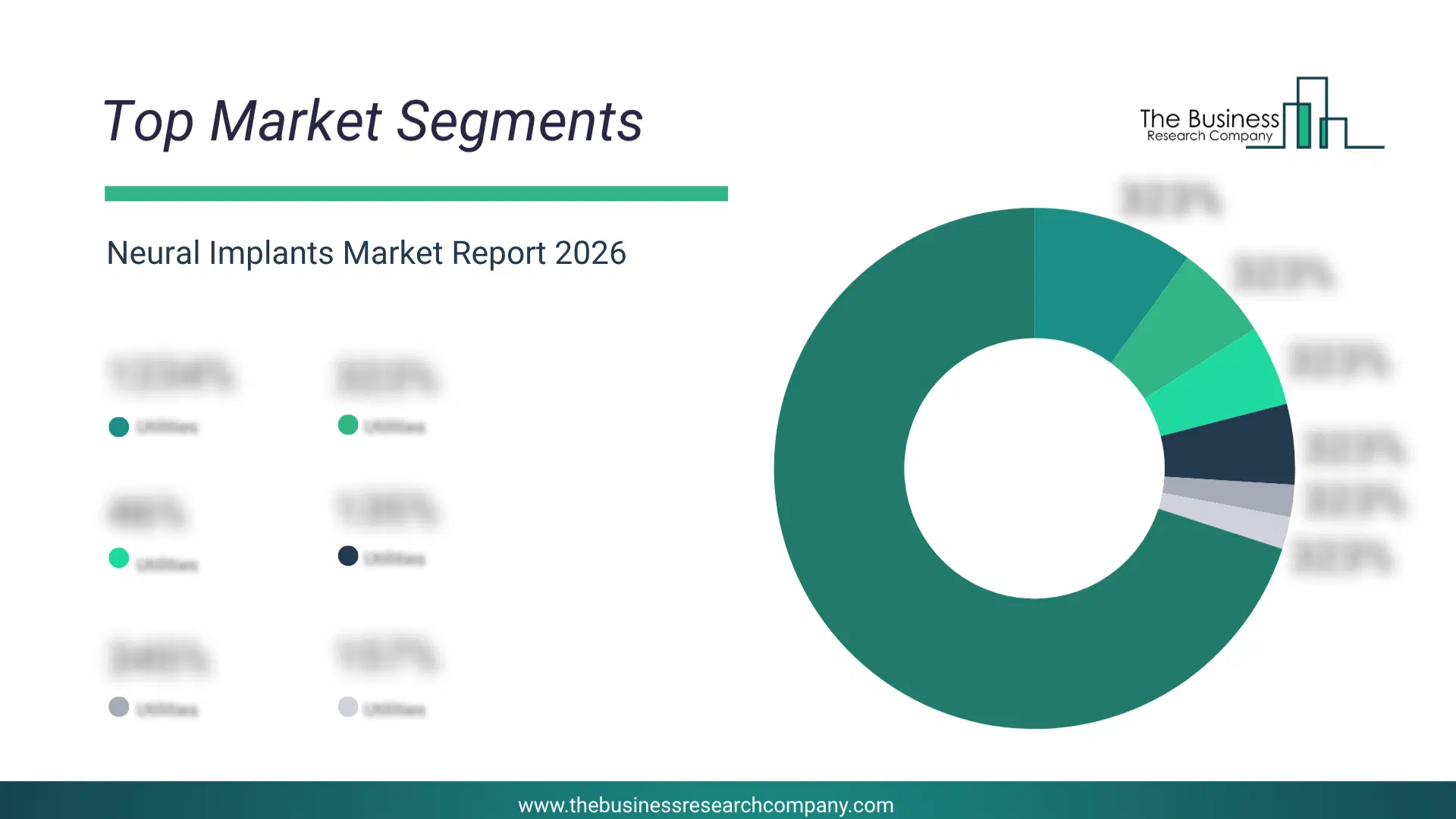
1) By Product: F And B Spinal Cord Stimulation (SCS), Deep Brain Stimulation (DBS), Vagus Nerve Stimulation (VNS) 2) By Application: Chronic Pain, Parkinson’s Disease (PD), Epilepsy, Other Applications 3) By End-User: Hospitals, Specialized Neurological Centers (SNCs), Outpatient Surgery Centers Subsegments: 1) By F And B Spinal Cord Stimulation (SCS): Traditional Spinal Cord Stimulation, High-Frequency Spinal Cord Stimulation, Burst Spinal Cord Stimulation 2) By Deep Brain Stimulation (DBS): Subthalamic Nucleus (Stn) Dbs, Globus Pallidus Internus (Gpi) Dbs, Ventral Intermediate Nucleus (Vim) Dbs 3) By Vagus Nerve Stimulation (VNS): Implantable Vagus Nerve Stimulators, Non-Invasive Vagus Nerve StimulatorsWhat Is The Driver Of The Neural Implants Market?
The rising prevalence of neurological disorders is expected to propel the growth of the neural implants market going forward. A neurological disorder refers to any disorder of the nervous system that includes anatomical, biochemical, or electrical abnormalities in the brain, spinal cord, or peripheral nerves. Neurological disorders have seen an increase due to several reasons, such as aging populations, genetic predispositions, and changes in diagnostic criteria. Neural implants treat and manage various neurological diseases by interfacing directly with the nervous system to restore or enhance neural functions. These implants provide a tailored approach, which may improve therapy efficacy while decreasing adverse effects, particularly in illnesses such as Parkinson's disease, epilepsy, and spinal cord injuries. For instance, in 2024, according to the Department of Health and Human Services, a US-based federal cabinet-level department that protects the health and well-being of Americans through various programs, in 2023, more than 6 million Americans were living with Alzheimer’s disease, and forecasts project that this number will increase significantly each year as the population ages, reaching 13 million by 2060. Therefore, the rising prevalence of neurological disorders is driving the growth of the neural implants industry.Key Players In The Global Neural Implants Market
Major companies operating in the neural implants market are Medtronic plc, Abbott Laboratories, Boston Scientific Corporation, LivaNova PLC, Nevro Corp., NeuroPace Inc., Axonics Modulation Technologies Inc., Saluda Medical, Nuvectra Corporation, Cerbomed GmbH, Inspire Medical Systems Inc., Synchron Inc., Blackrock Neurotech, Neuralink, BrainGate, Bioinduction Ltd, SetPoint Medical, CereGate, Gyrus ACMI, Aleva Neurotherapeutics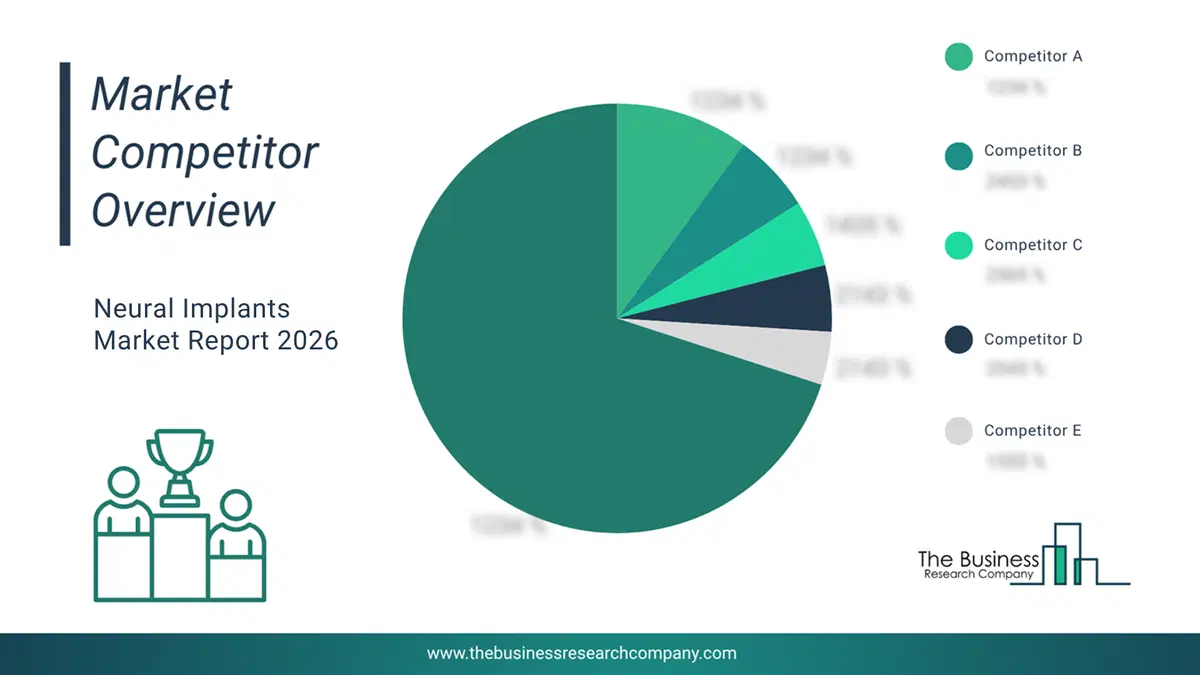
This chart is for illustrative purposes; the full report includes a detailed competitor analysis and comprehensive overview of the top 10 companies in the market.
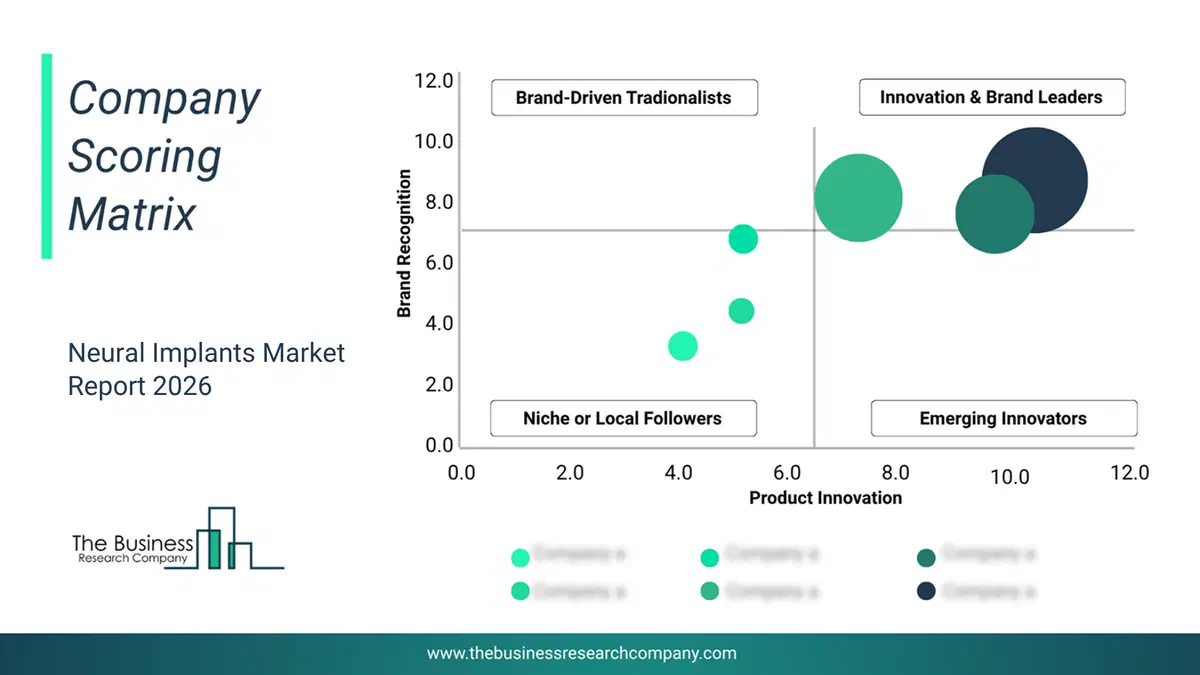
This chart maps companies by product innovation and brand strength, with bubble size indicating relative revenue, helping identify market leaders, challengers, and niche players. This is an illustrative chart; the full report provides a complete and accurate competitive analysis.
Global Neural Implants Market Trends and Insights
Major companies operating in the neural implant market are focused on developing innovative products, such as deep brain stimulation (DBS) devices, to treat movement disorders, such as Parkinson's disease and essential tremors, and gain a competitive edge in the market. Deep Brain Stimulation (DBS) devices are medical implants used to treat neurological disorders by delivering electrical impulses to specific areas of the brain. For instance, in January 2024, Abbott Laboratories, a US-based medical devices and healthcare company, launched Liberta RC, the world's smallest rechargeable deep brain stimulation (DBS) device with remote programming, to treat people living with movement disorders. It has the fewest recharges of any FDA-approved DBS system, requiring only 10 recharge sessions per year for most users. This product is linked to Abbott's proprietary NeuroSphere virtual clinic, allowing customers to contact clinicians, confirm proper settings and functionality, and receive updated treatment settings remotely. The system employs a wireless charger that can be put over the product, allowing users to remain active while wearing it. The device provides customers with useful notifications and customized settings to ensure a personalized charging experience.What Are Latest Mergers And Acquisitions In The Neural Implants Market?
In October 2023, Butterfly Network, a US-based digital health company, partnered with Forest Neurotech. The partnership aims to combine the expertise of both firms to develop a minimally invasive whole-brain neural interface using ultrasound technology. This collaboration is expected to transform the field of brain-computer interfaces and contribute to the development of individualized treatments for a variety of neurological and cognitive conditions. Forest Neurotech is a US-based tech-enabled research company that develops an ultrasound-based brain-computer interface (BCI) and software platform.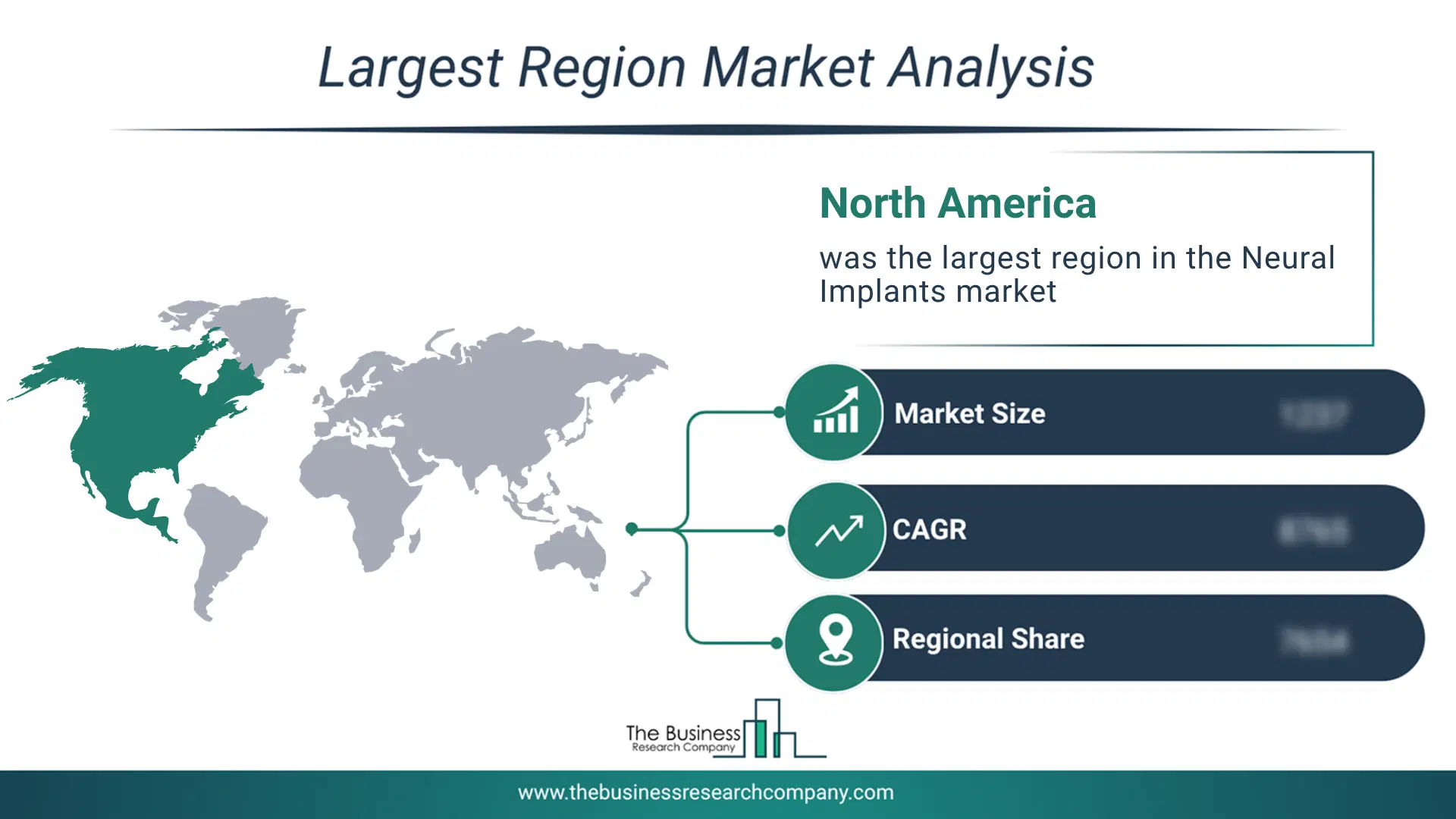
Regional Outlook
North America was the largest region in the neural implants market in 2025. Asia-Pacific is expected to be the fastest-growing region in the forecast period. The regions covered in this market report are Asia-Pacific, South East Asia, Western Europe, Eastern Europe, North America, South America, Middle East, Africa. The countries covered in this market report are Australia, Brazil, China, France, Germany, India, Indonesia, Japan, Taiwan, Russia, South Korea, UK, USA, Canada, Italy, SpainWhat Defines the Neural Implants Market?
The neural implants market consists of sales of electrodes, implantable devices, connectivity modules, surgical tools, and accessories. Values in this market are ‘factory gate’ values, that is the value of goods sold by the manufacturers or creators of the goods, whether to other entities (including downstream manufacturers, wholesalers, distributors and retailers) or directly to end customers. The value of goods in this market includes related services sold by the creators of the goods.How is Market Value Defined and Measured?
The market value is defined as the revenues that enterprises gain from the sale of goods and/or services within the specified market and geography through sales, grants, or donations in terms of the currency (in USD unless otherwise specified). The revenues for a specified geography are consumption values that are revenues generated by organizations in the specified geography within the market, irrespective of where they are produced. It does not include revenues from resales along the supply chain, either further along the supply chain or as part of other products.
This chart presents market attractiveness based on a quantitative evaluation of growth, competition, strategic alignment, and risk, offering a clear view of opportunity areas for decision-making. This chart is for illustrative purposes; the full report contains the complete analysis.

This chart highlights the Total Addressable Market (TAM) by estimating the maximum revenue opportunity using an assumption-driven approach, supporting strategic planning and opportunity sizing across markets. The chart is illustrative; the full report provides a more comprehensive analysis.
What Key Data and Analysis Are Included in the Neural Implants Market Report 2026?
The neural implants market research report is one of a series of new reports from The Business Research Company that provides market statistics, including industry global market size, regional shares, competitors with the market share, detailed market segments, market trends and opportunities, and any further data you may need to thrive in the neural implants industry. The market research report delivers a complete perspective of everything you need, with an in-depth analysis of the current and future state of the industry.Neural Implants Market Report Forecast Analysis
| Report Attribute | Details |
|---|---|
| Market Size Value In 2026 | $6.53 billion |
| Revenue Forecast In 2030 | $9.2 billion |
| Growth Rate | CAGR of 9% from 2026 to 2030 |
| Base Year For Estimation | 2025 |
| Actual Estimates/Historical Data | 2020-2025 |
| Forecast Period | 2026 - 2030 |
| Market Representation | Revenue in USD Billion and CAGR from 2026 to 2030 |
| Segments Covered | Product, Application, End-User |
| Regional Scope | Asia-Pacific, Western Europe, Eastern Europe, North America, South America, Middle East, Africa |
| Country Scope | The countries covered in the report are Australia, Brazil, China, France, Germany, India, Indonesia, Japan, Taiwan, Russia, South Korea, UK, USA, Canada, Italy, Spain. |
| Key Companies Profiled | Medtronic plc, Abbott Laboratories, Boston Scientific Corporation, LivaNova PLC, Nevro Corp., NeuroPace Inc., Axonics Modulation Technologies Inc., Saluda Medical, Nuvectra Corporation, Cerbomed GmbH, Inspire Medical Systems Inc., Synchron Inc., Blackrock Neurotech, Neuralink, BrainGate, Bioinduction Ltd, SetPoint Medical, CereGate, Gyrus ACMI, Aleva Neurotherapeutics |
| Customization Scope | Request for Customization |
| Pricing And Purchase Options | Explore Purchase Options |