

Neurocutaneous Disorder Market Report 2026
Global Outlook – By Type Of Neurocutaneous Disorder (Neurofibromatosis, Tuberous Sclerosis Complex, Sturge-Weber Syndrome, Angiomatosis, Hypomelanosis Of Ito), By Treatment Type (Pharmacological Treatment, Surgical Intervention, Laser Therapy, Physical Therapy, Psychosocial Support), By Age Group (Pediatric Patients (0-18 Years), Adult Patients (19-65 Years), Geriatric Patients (65 Years And Above)), By Severity Of Condition (Mild Cases, Moderate Cases, Severe Cases, Critical Cases), By End User (Hospitals, Specialist Clinics, Homecare Settings, Research Organizations, Pharmaceutical Companies) - Market Size, Trends, Strategies, and Forecast to 2030
Neurocutaneous Disorder Market Overview
• Neurocutaneous Disorder market size has reached to $2.22 billion in 2025 • Expected to grow to $3.29 billion in 2030 at a compound annual growth rate (CAGR) of 8.1% • Growth Driver: Increasing Prevalence Of Genetic Disorders Fueling The Growth Of The Market Due To Rising Diagnostic Awareness • Market Trend: Regulatory Approvals Drive Expanded Treatment Options In Neurocutaneous Disorders • North America was the largest region in 2025 and Asia-Pacific is the fastest growing region.What Is Covered Under Neurocutaneous Disorder Market?
A neurocutaneous disorder refers to a group of genetic conditions that simultaneously affect the nervous system and the skin, often manifesting from birth due to mutations that disrupt normal cell growth and development. These disorders typically present with visible skin abnormalities such as birthmarks, lesions, or tumors, accompanied by neurological complications including seizures, developmental delays, or cognitive impairments. The main types of neurocutaneous disorders are neurofibromatosis, tuberous sclerosis complex, Sturge-Weber syndrome, angiomatosis, and hypomelanosis of Ito. Neurofibromatosis includes NF1, NF2, and schwannomatosis, which are genetic conditions that lead to tumor growth along nerves in the body. It includes various treatment types, such as pharmacological treatment, surgical intervention, laser therapy, and physical therapy and psychosocial support, and caters to different age groups, such as pediatric patients (0-18 years), adult patients (19-65 years), and geriatric patients (65 years and above). It includes various ranges of severity of conditions, such as mild cases, moderate cases, severe cases, and critical cases, serving end-users, such as hospitals, specialist clinics, homecare settings, research organizations, and pharmaceutical companies.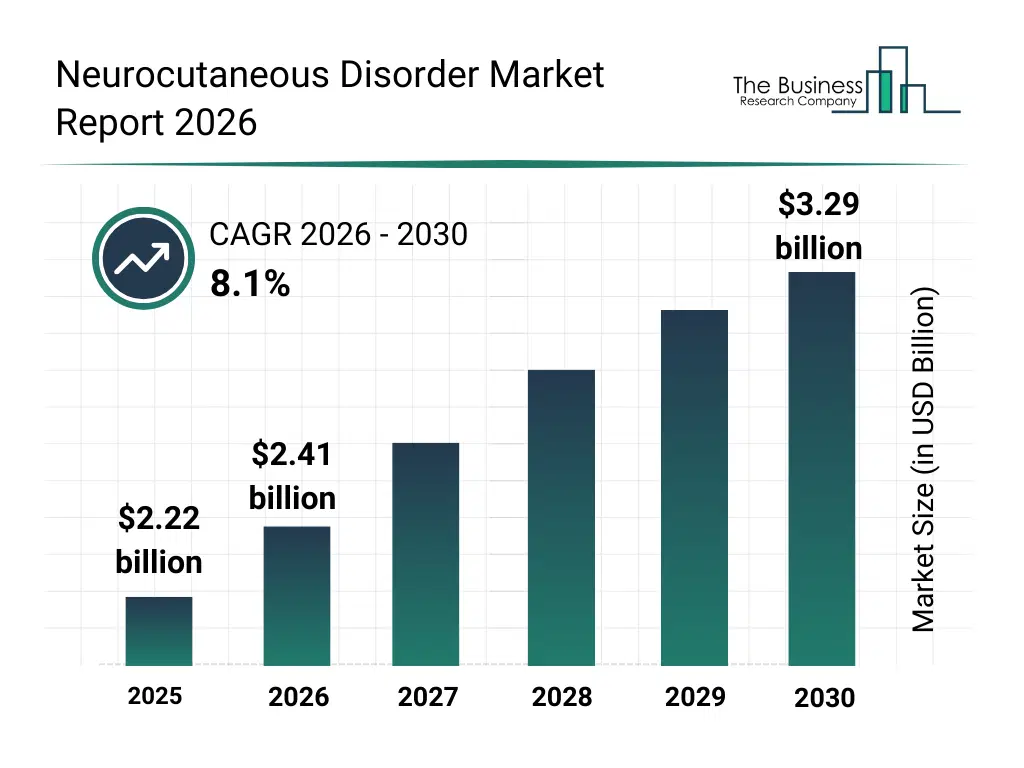
What Is The Neurocutaneous Disorder Market Size and Share 2026?
The neurocutaneous disorder market size has grown strongly in recent years. It will grow from $2.22 billion in 2025 to $2.41 billion in 2026 at a compound annual growth rate (CAGR) of 8.3%. The growth in the historic period can be attributed to improved awareness of rare genetic disorders, advances in neurological and dermatological diagnostics, expansion of specialized treatment centers, increased availability of symptomatic therapies, growth of rare disease research initiatives.What Is The Neurocutaneous Disorder Market Growth Forecast?
The neurocutaneous disorder market size is expected to see strong growth in the next few years. It will grow to $3.29 billion in 2030 at a compound annual growth rate (CAGR) of 8.1%. The growth in the forecast period can be attributed to increasing development of gene-based therapies, rising investments in rare disease drug development, expansion of precision medicine approaches, growing adoption of digital patient monitoring tools, increasing focus on early intervention strategies. Major trends in the forecast period include increasing adoption of genetic testing for early diagnosis, growing focus on multidisciplinary care approaches, expansion of targeted therapeutic options, rising use of advanced imaging and diagnostic tools, enhanced emphasis on long-term disease management.
Global Neurocutaneous Disorder Market Segmentation
1) By Type Of Neurocutaneous Disorder: Neurofibromatosis, Tuberous Sclerosis Complex, Sturge-Weber Syndrome, Angiomatosis, Hypomelanosis Of Ito 2) By Treatment Type: Pharmacological Treatment, Surgical Intervention, Laser Therapy, Physical Therapy, Psychosocial Support 3) By Age Group: Pediatric Patients (0-18 Years), Adult Patients (19-65 Years), Geriatric Patients (65 Years And Above) 4) By Severity Of Condition: Mild Cases, Moderate Cases, Severe Cases, Critical Cases 5) By End User: Hospitals, Specialist Clinics, Homecare Settings, Research Organizations, Pharmaceutical Companies Subsegments: 1) By Neurofibromatosis: Peripheral Neurofibromatosis, Central Neurofibromatosis, Plexiform Neurofibromatosis 2) By Tuberous Sclerosis Complex: Classic Tuberous Sclerosis, Infantile-Onset Tuberous Sclerosis, Adult-Onset Tuberous Sclerosis 3) By Sturge-Weber Syndrome: Facial Sturge-Weber Syndrome, Cerebral Sturge-Weber Syndrome, Ophthalmic Sturge-Weber Syndrome 4) By Angiomatosis: Generalized Angiomatosis, Localized Angiomatosis, Mixed Angiomatosis 5) By Hypomelanosis Of Ito: Linear Hypomelanosis, Segmental Hypomelanosis, Whorled HypomelanosisWhat Is The Driver Of The Neurocutaneous Disorder Market?
The increasing prevalence of genetic disorders is expected to propel the growth of the neurocutaneous disorder market going forward. Genetic disorders are conditions caused by abnormalities in an individual's DNA, which can be inherited or arise spontaneously. Neurocutaneous disorders, such as tuberous sclerosis complex and neurofibromatosis, are caused by specific genetic mutations that affect both the nervous system and the skin, leading to neurological symptoms alongside characteristic skin abnormalities. Factors such as advances in genetic testing and increased awareness are enabling earlier diagnosis, contributing to a higher reported prevalence. For instance, in November 2024, according to the Centers for Disease Control and Prevention (CDC), a US-based government agency, about 1 in every 33 newborns in the US is born with a birth defect, many linked to genetic causes. Therefore, the increasing prevalence of genetic disorders is driving the growth of the neurocutaneous disorder industry.Key Players In The Global Neurocutaneous Disorder Market
Major companies operating in the neurocutaneous disorder market are Merck KGaA, Novartis AG, Recursion Pharmaceuticals Inc., Marinus Pharmaceuticals Inc., Healx Limited, NF2 Therapeutics Inc., NFlection Therapeutics Inc., SpringWorks Therapeutics, Pfizer Inc., Johnson & Johnson, AstraZeneca PLC, GSK plc, Takeda Pharmaceutical Company Limited, Eli Lilly and Company, Bristol Myers Squibb, Teva Pharmaceutical Industries, Vertex Pharmaceuticals, Regeneron Pharmaceuticals, Horizon Therapeutics, Aleva NeurOthersapeutics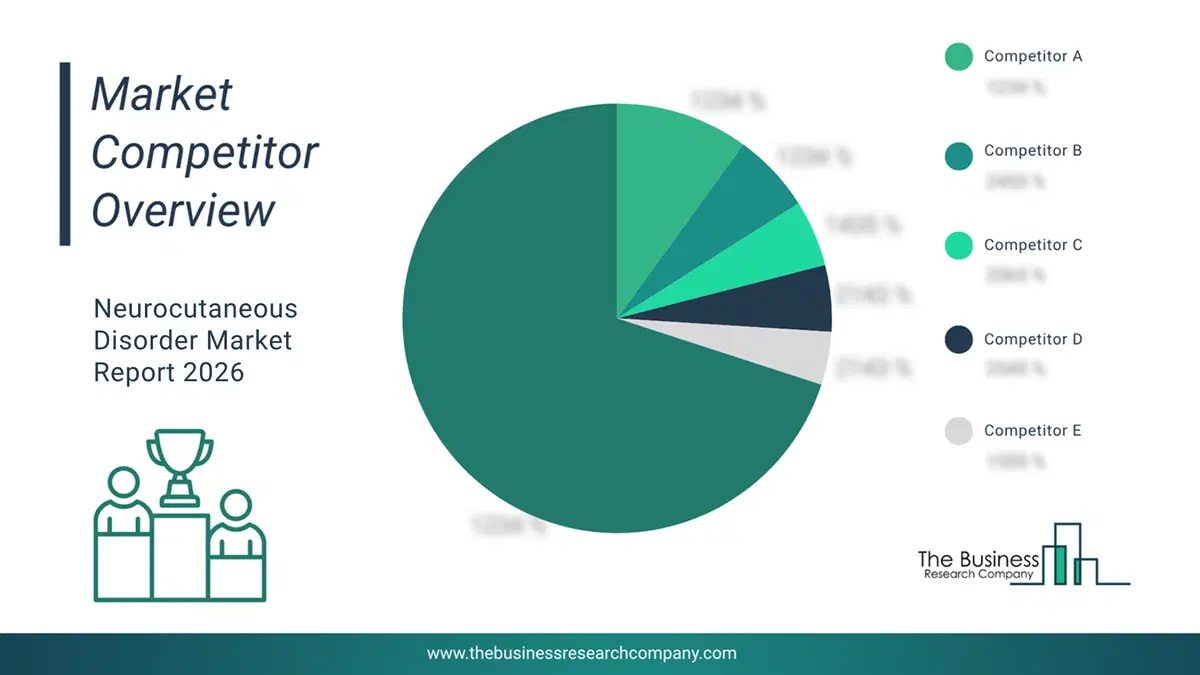
This chart is for illustrative purposes; the full report includes a detailed competitor analysis and comprehensive overview of the top 10 companies in the market.
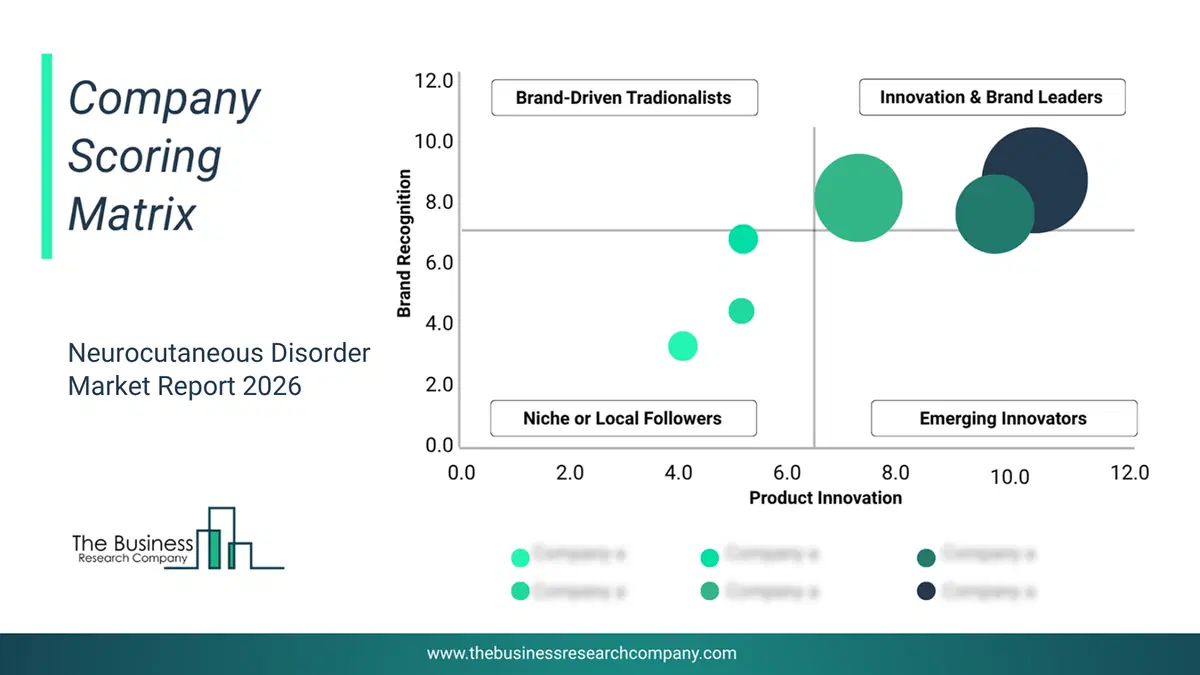
This chart maps companies by product innovation and brand strength, with bubble size indicating relative revenue, helping identify market leaders, challengers, and niche players. This is an illustrative chart; the full report provides a complete and accurate competitive analysis.
Global Neurocutaneous Disorder Market Trends and Insights
Major companies operating in the neurocutaneous disorder market are focusing on obtaining regulatory approvals to expand their treatment portfolios, enhance patient outcomes, and capitalize on the growing demand for innovative therapies. Regulatory approvals refer to official permissions from government agencies that allow a company to legally market, sell, or test a drug or therapy after confirming its safety and effectiveness. For instance, in September 2025, AstraZeneca plc, a UK-based pharmaceutical and biotechnology company, received the Food and Drug Administration (FDA) approval for selumetinib (brand name Koselugo) to treat pediatric patients aged 1 year and older with neurofibromatosis type 1 (NF1) who have symptomatic, inoperable plexiform neurofibromas (PNs). This approval expands the previous indication, which covered children aged 2 years and older. Selumetinib, a MEK inhibitor, works by blocking the MAPK pathway responsible for tumor growth in NF1. Patients receive oral selumetinib twice daily until disease progression or unacceptable side effects occur, with common adverse effects including gastrointestinal, skin, cardiac, and ocular toxicities. This approval offers a crucial therapeutic option for young children facing these challenging and often disfiguring tumors, which are frequently difficult to manage surgically.What Are Latest Mergers And Acquisitions In The Neurocutaneous Disorder Market?
In October 2023, the Children’s Tumor Foundation (CTF), a US-based nonprofit organization specializing in treatments for neurofibromatosis (NF), partnered with the Global Coalition For Adaptive Research (GCAR) to conduct a clinical trial for neurofibromatosis (NF) patients. Through this partnership, Children’s Tumor Foundation (CTF) and Global Coalition For Adaptive Research (GCAR) aim to implement a “first-of-its-kind” global Phase 1 / Phase 2 platform-basket trial for patients with neurofibromatosis (NF) and related schwannomatosis, enabling multiple therapies to be tested simultaneously across different manifestations of the disease under a single master protocol, thereby streamlining clinical development and accelerating access to potential treatments. Global Coalition For Adaptive Research (GCAR) is a US-based research organization focusing on adaptive and innovative clinical trial designs for rare and complex diseases.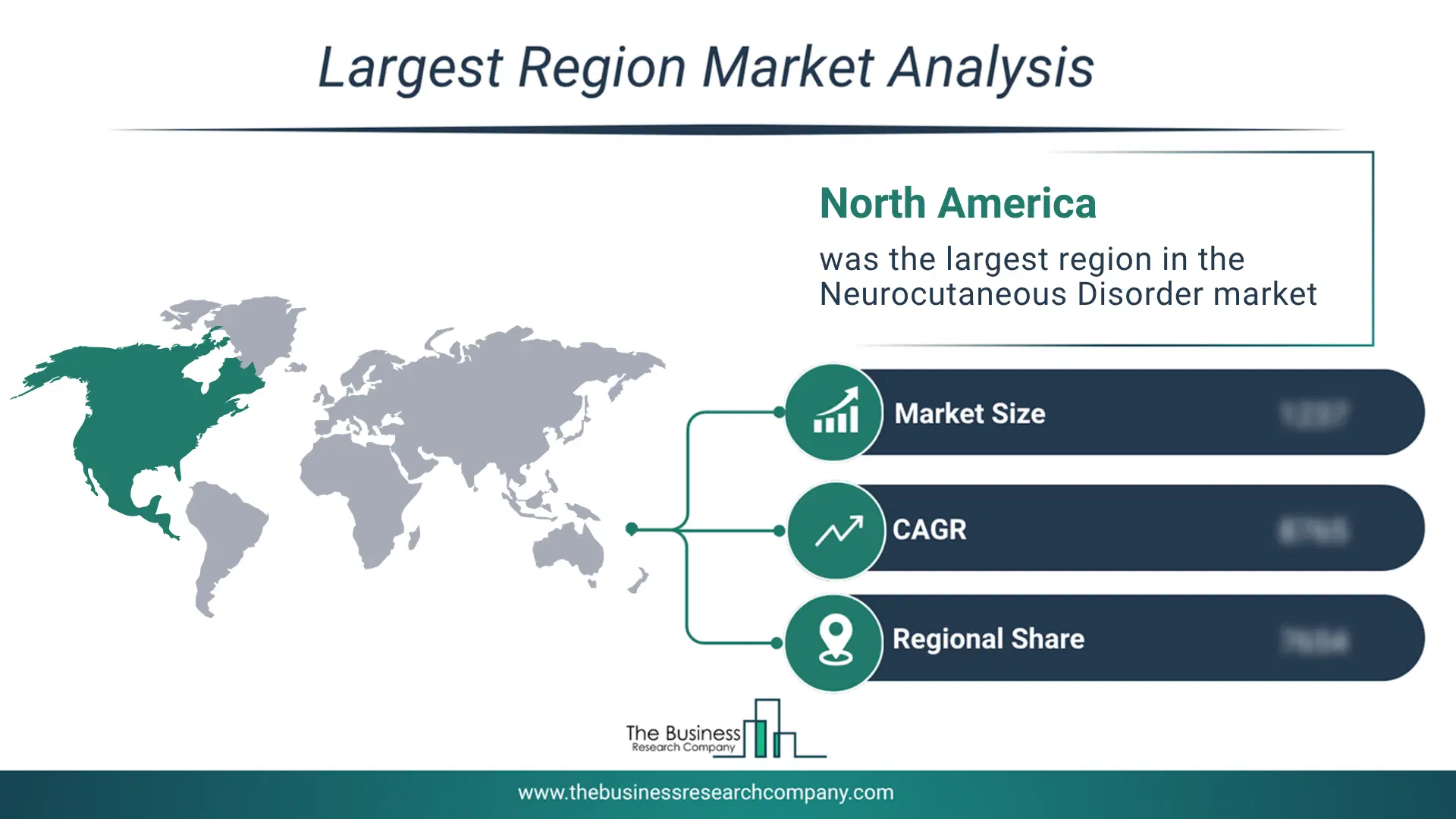
Regional Outlook
North America was the largest region in the neurocutaneous disorder market in 2025. Asia-Pacific is expected to be the fastest-growing region in the forecast period. The regions covered in this market report are Asia-Pacific, South East Asia, Western Europe, Eastern Europe, North America, South America, Middle East, Africa. The countries covered in this market report are Australia, Brazil, China, France, Germany, India, Indonesia, Japan, Taiwan, Russia, South Korea, UK, USA, Canada, Italy, Spain.What Defines the Neurocutaneous Disorder Market?
The neurocutaneous disorder market includes revenues earned by entities by providing services, such as pharmacological treatment, medical consultation and diagnosis, psychological and behavioral support, and clinical trials and research participation. Values in this market are ‘factory gate’ values, that is the value of goods sold by the manufacturers or creators of the goods, whether to other entities (including downstream manufacturers, wholesalers, distributors, and retailers) or directly to end customers. The value of goods in this market includes related services sold by the creators of the goods.How is Market Value Defined and Measured?
The market value is defined as the revenues that enterprises gain from the sale of goods and/or services within the specified market and geography through sales, grants, or donations in terms of the currency (in USD unless otherwise specified). The revenues for a specified geography are consumption values that are revenues generated by organizations in the specified geography within the market, irrespective of where they are produced. It does not include revenues from resales along the supply chain, either further along the supply chain or as part of other products.
This chart presents market attractiveness based on a quantitative evaluation of growth, competition, strategic alignment, and risk, offering a clear view of opportunity areas for decision-making. This chart is for illustrative purposes; the full report contains the complete analysis.

This chart highlights the Total Addressable Market (TAM) by estimating the maximum revenue opportunity using an assumption-driven approach, supporting strategic planning and opportunity sizing across markets. The chart is illustrative; the full report provides a more comprehensive analysis.
What Key Data and Analysis Are Included in the Neurocutaneous Disorder Market Report 2026?
The neurocutaneous disorder market research report is one of a series of new reports from The Business Research Company that provides market statistics, including industry global market size, regional shares, competitors with the market share, detailed market segments, market trends and opportunities, and any further data you may need to thrive in the neurocutaneous disorder industry. The market research report delivers a complete perspective of everything you need, with an in-depth analysis of the current and future state of the industry.Neurocutaneous Disorder Market Report Forecast Analysis
| Report Attribute | Details |
|---|---|
| Market Size Value In 2026 | $2.41 billion |
| Revenue Forecast In 2030 | $3.29 billion |
| Growth Rate | CAGR of 8.1% from 2026 to 2030 |
| Base Year For Estimation | 2025 |
| Actual Estimates/Historical Data | 2020-2025 |
| Forecast Period | 2026 - 2030 |
| Market Representation | Revenue in USD Billion and CAGR from 2026 to 2030 |
| Segments Covered | Type Of Neurocutaneous Disorder, Treatment Type, Age Group, Severity Of Condition, End User |
| Regional Scope | Asia-Pacific, Western Europe, Eastern Europe, North America, South America, Middle East, Africa |
| Country Scope | The countries covered in the report are Australia, Brazil, China, France, Germany, India, Indonesia, Japan, Taiwan, Russia, South Korea, UK, USA, Canada, Italy, Spain |
| Key Companies Profiled | Merck KGaA, Novartis AG, Recursion Pharmaceuticals Inc., Marinus Pharmaceuticals Inc., Healx Limited, NF2 Therapeutics Inc., NFlection Therapeutics Inc., SpringWorks Therapeutics, Pfizer Inc., Johnson & Johnson, AstraZeneca PLC, GSK plc, Takeda Pharmaceutical Company Limited, Eli Lilly and Company, Bristol Myers Squibb, Teva Pharmaceutical Industries, Vertex Pharmaceuticals, Regeneron Pharmaceuticals, Horizon Therapeutics, Aleva NeurOthersapeutics |
| Customization Scope | Request for Customization |
| Pricing And Purchase Options | Explore Purchase Options |