

Neuroendocrine Carcinoma Market Report 2026
Global Outlook – By Type (Gastroenteropancreatic Neuroendocrine Tumors, Carcinoid Tumors, Pheochromocytoma, Medullary Thyroid Carcinoma), By Diagnostic Tools (Imaging, Biopsy, Serology), By Treatment (Chemotherapy, Radiotherapy, Surgery, Other Treatments), By Distribution Channel (Hospital Pharmacies, Retail Pharmacies, Online Pharmacies), By End-User (Hospitals, Clinics, Oncology Centers, Ambulatory Surgery Centers) - Market Size, Trends, Strategies, and Forecast to 2030
Neuroendocrine Carcinoma Market Overview
• Neuroendocrine Carcinoma market size has reached to $1.75 billion in 2025 • Expected to grow to $2.47 billion in 2030 at a compound annual growth rate (CAGR) of 7.1% • Growth Driver: Growth Of Targeted Therapies Driving The Market Expansion • Market Trend: Advancements In Targeted Radiopharmaceutical Therapy For Neuroendocrine Carcinoma Treatment • North America was the largest region in 2025 and Asia-Pacific is the fastest growing region.What Is Covered Under Neuroendocrine Carcinoma Market?
Neuroendocrine carcinoma (NEC) refers to a rare and aggressive type of cancer that originates in neuroendocrine cells, which have traits of both nerve cells and hormone-producing cells. They are used for identifying and treating tumors that can develop in various organs, including the lungs, pancreas, and gastrointestinal tract, often requiring a combination of surgery, chemotherapy, and targeted therapies. The main types of neuroendocrine carcinoma are gastroenteropancreatic neuroendocrine tumors, carcinoid tumors, pheochromocytoma, and medullary thyroid carcinoma. Gastroenteropancreatic neuroendocrine tumors are rare malignancies originating from neuroendocrine cells in the gastrointestinal tract or pancreas. It includes various diagnostic tools such as imaging, biopsy, and serology, with several treatments including chemotherapy, radiotherapy, surgery, and others. It is distributed through various distribution channels, such as hospital pharmacies, retail pharmacies, and online pharmacies, and used by several end users, including hospitals, clinics, oncology centers, and ambulatory surgery centers.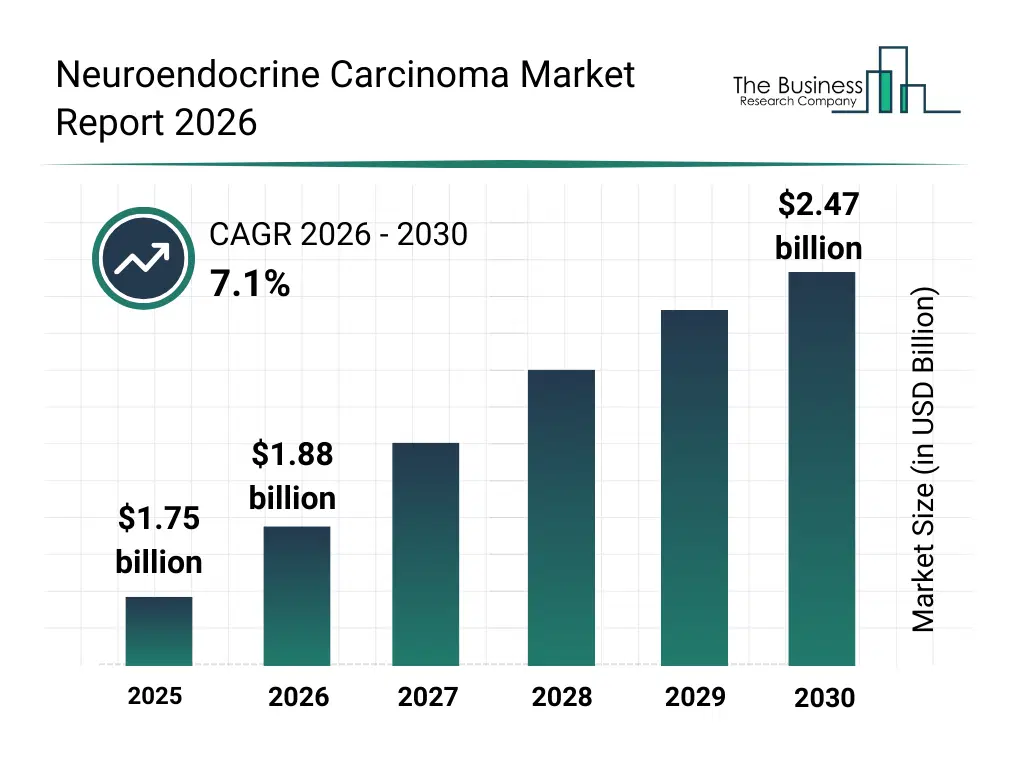
What Is The Neuroendocrine Carcinoma Market Size and Share 2026?
The neuroendocrine carcinoma market size has grown strongly in recent years. It will grow from $1.75 billion in 2025 to $1.88 billion in 2026 at a compound annual growth rate (CAGR) of 7.3%. The growth in the historic period can be attributed to rising prevalence of neuroendocrine carcinoma, increased use of imaging for early detection, early adoption of surgical tumor removal, development of initial chemotherapy protocols, growing clinical awareness of nec subtypes.What Is The Neuroendocrine Carcinoma Market Growth Forecast?
The neuroendocrine carcinoma market size is expected to see strong growth in the next few years. It will grow to $2.47 billion in 2030 at a compound annual growth rate (CAGR) of 7.1%. The growth in the forecast period can be attributed to expanding use of targeted biologic therapies, rising investment in immunotherapy research, increasing availability of precision diagnostic tools, development of advanced radiotherapy systems, growing adoption of multidisciplinary oncology centers. Major trends in the forecast period include rising adoption of chemotherapy for aggressive tumor management, increasing use of targeted therapies in advanced nec cases, growing utilization of radiotherapy for localized tumor control, expansion of biopsy and serology-based diagnostic approaches, increasing demand for multidisciplinary treatment planning.
Global Neuroendocrine Carcinoma Market Segmentation
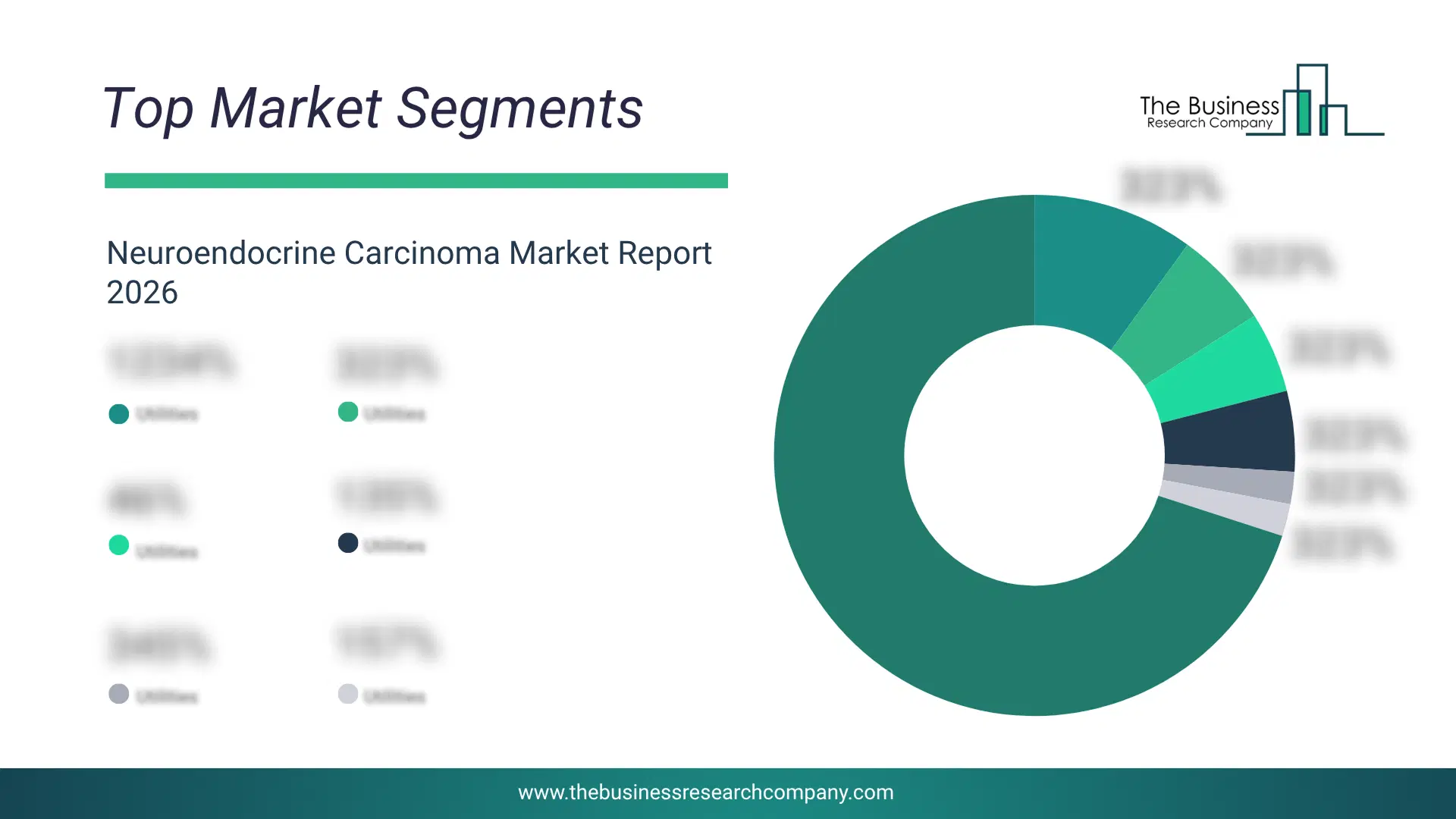
1) By Type: Gastroenteropancreatic Neuroendocrine Tumors, Carcinoid Tumors, Pheochromocytoma, Medullary Thyroid Carcinoma 2) By Diagnostic Tools: Imaging, Biopsy, Serology 3) By Treatment: Chemotherapy, Radiotherapy, Surgery, Other Treatments 4) By Distribution Channel: Hospital Pharmacies, Retail Pharmacies, Online Pharmacies 5) By End-User: Hospitals, Clinics, Oncology Centers, Ambulatory Surgery Centers Subsegments: 1) By Gastroenteropancreatic Neuroendocrine Tumors (GEP-NETs): Pancreatic Neuroendocrine Tumors (pNETs), Small Intestinal Neuroendocrine Tumors, Gastric Neuroendocrine Tumors, Colorectal Neuroendocrine Tumors 2) By Carcinoid Tumors: Pulmonary Carcinoid Tumors, Gastrointestinal Carcinoid Tumors 3) By Pheochromocytoma: Adrenal Pheochromocytoma, Extra-Adrenal Paraganglioma 4) By Medullary Thyroid Carcinoma: Sporadic Medullary Thyroid Carcinoma, Hereditary Medullary Thyroid Carcinoma (MEN2-Associated)What Is The Driver Of The Neuroendocrine Carcinoma Market?
The growth of targeted therapies is expected to propel the growth of the neuroendocrine carcinoma market going forward. Targeted therapies are treatments designed to precisely address and disrupt the molecular processes or genetic alterations that cause a disease, especially cancer. The demand for targeted therapies rises due to factors such as their precision in treating specific genetic mutations, advancements in personalized medicine, and better patient outcomes with fewer side effects. Neuroendocrine carcinoma enables the development of targeted therapies that specifically address the tumor’s genetic and biochemical profiles, enhancing treatment precision and effectiveness. For instance, in July 2023, according to the report published by the American Society of Gene & Cell Therapy (ASGCT), a US-based professional membership organization, and Citeline, a US-based provider of drugs and devices, at the end of Q1 2023, there were 247 gene therapies in Phase II, but this number rose by 5% to reach 260 by the end of Q2. Therefore, the growth of targeted therapies is driving the growth of the neuroendocrine carcinoma industry.Key Players In The Global Neuroendocrine Carcinoma Market
Major companies operating in the neuroendocrine carcinoma market are Pfizer Inc., Merck & Co. Inc., AbbVie Inc., Bristol-Myers Squibb Company, AstraZeneca plc, Novartis AG, Amgen Inc., Boehringer Ingelheim GmbH, Exelixis Inc., Lantheus Holdings Inc., HUTCHMED Limited, Dana-Farber Cancer Institute Inc., Abdera Therapeutics Inc., Orano Med S.A, Eckert & Ziegler Radiopharma GmbH, Callisto Pharmaceuticals Inc., RadioMedix Inc., Clarity Pharmaceuticals Limited, Delcath Systems Inc., Provectus Biopharmaceuticals Inc.
This chart is for illustrative purposes; the full report includes a detailed competitor analysis and comprehensive overview of the top 10 companies in the market.
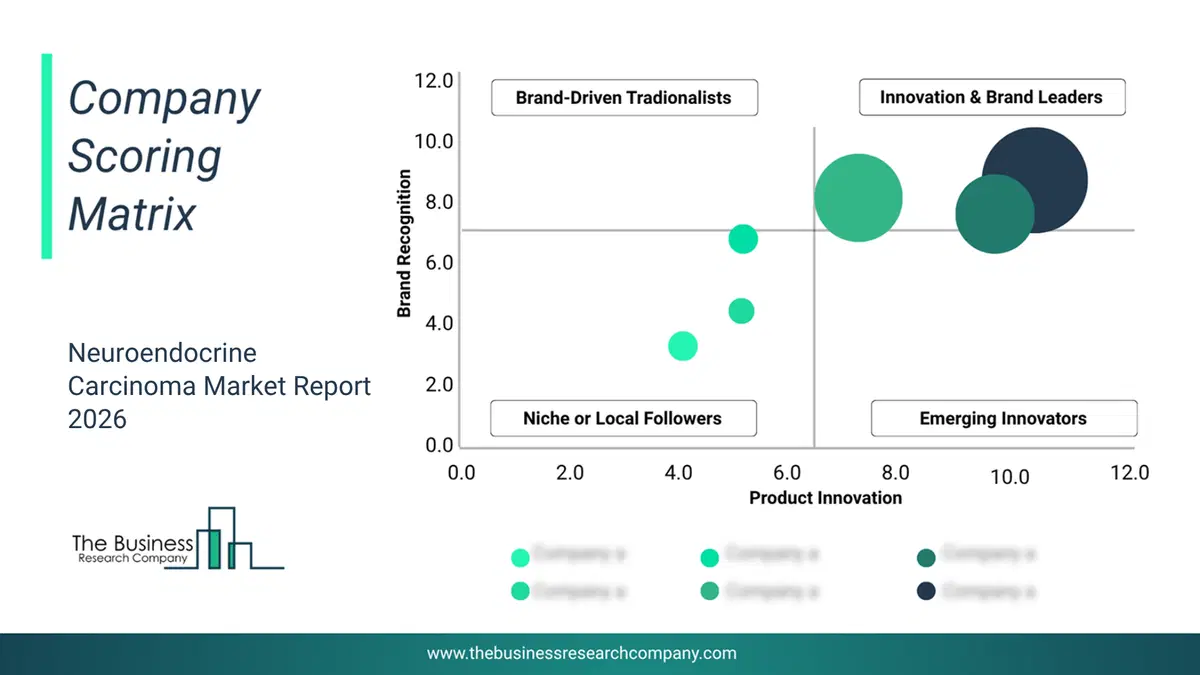
This chart maps companies by product innovation and brand strength, with bubble size indicating relative revenue, helping identify market leaders, challengers, and niche players. This is an illustrative chart; the full report provides a complete and accurate competitive analysis.
Global Neuroendocrine Carcinoma Market Trends and Insights
Major companies operating in the neuroendocrine carcinoma market are focusing on developing advanced therapies, such as targeted radiopharmaceutical therapy, to improve treatment precision and patient outcomes. Targeted radiopharmaceutical therapy involves using radioactive molecules that specifically target and deliver radiation to cancer cells, minimizing harm to healthy tissue. For instance, in September 2024, Abdera Therapeutics Inc., a Canada-based biotechnology company, received the Food and Drug Administration (FDA)-granted orphan drug designation for ABD-147 for the treatment of neuroendocrine carcinoma. It is designed to selectively target tumors expressing the DLL3 protein, commonly upregulated in aggressive neuroendocrine cancers such as small cell lung cancer (SCLC) and large cell neuroendocrine carcinoma (LCNEC). This designation offers significant development advantages, including tax credits for clinical trials and the potential for market exclusivity, positioning ABD-147 as a promising treatment in this specialized oncology space.What Are Latest Mergers And Acquisitions In The Neuroendocrine Carcinoma Market?
In February 2024, Bristol-Myers Squibb Company, a US-based pharmaceutical company, acquired RayzeBio, Inc. for $4.1 billion. With this acquisition, Bristol-Myers Squibb aims to strengthen its oncology pipeline, particularly in the treatment of neuroendocrine tumors and other hard-to-treat cancers, by leveraging RayzeBio's expertise in targeted therapies and innovative drug development. RayzeBio Inc. is a US-based company that provides treatment for gastroenteropancreatic neuroendocrine tumors.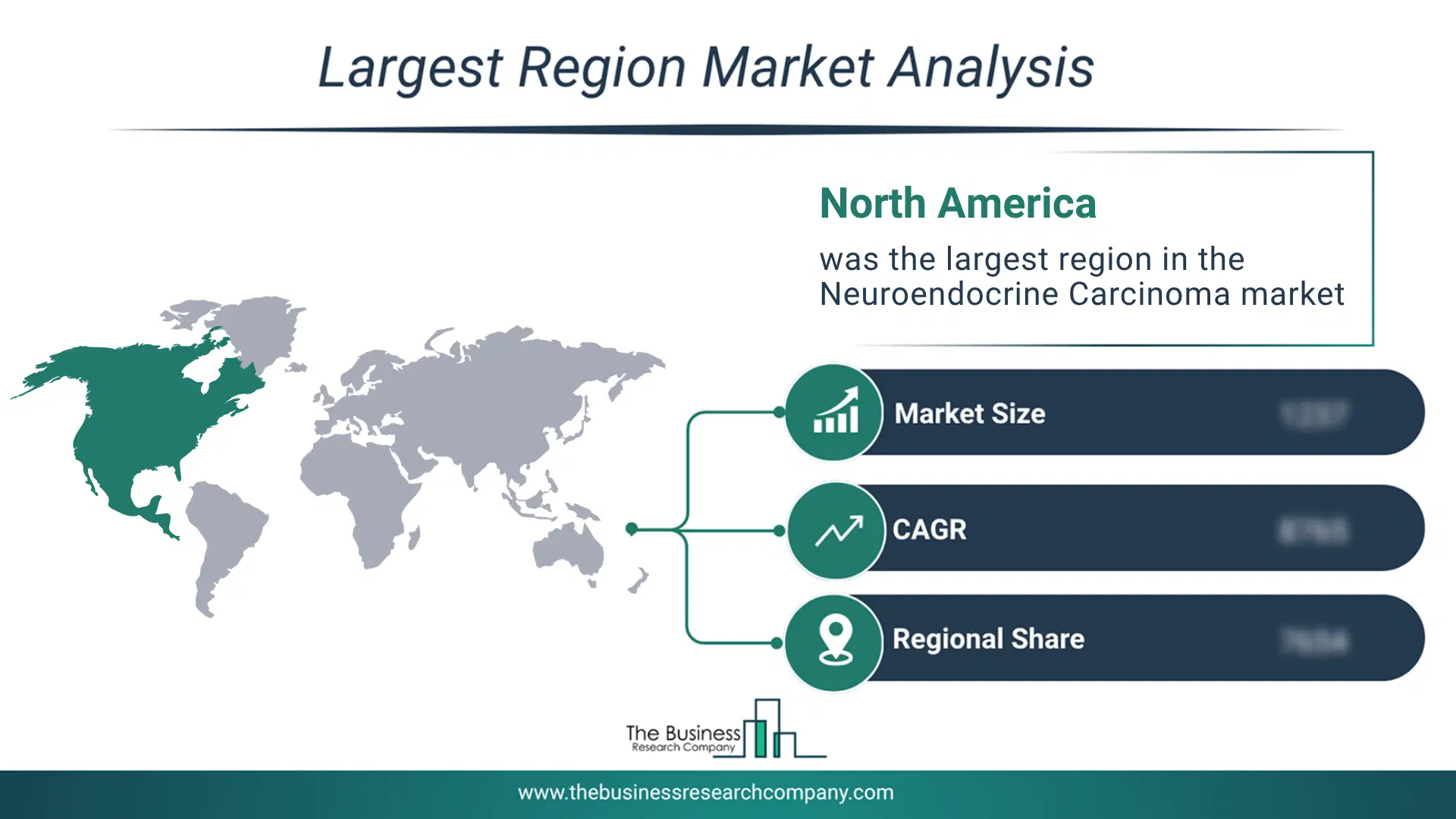
Regional Outlook
North America was the largest region in the neuroendocrine carcinoma market in 2025. Asia-Pacific is expected to be the fastest-growing region in the forecast period. The regions covered in this market report are Asia-Pacific, South East Asia, Western Europe, Eastern Europe, North America, South America, Middle East, Africa. The countries covered in this market report are Australia, Brazil, China, France, Germany, India, Indonesia, Japan, Taiwan, Russia, South Korea, UK, USA, Canada, Italy, Spain.What Defines the Neuroendocrine Carcinoma Market?
The neuroendocrine carcinoma market consists of revenues earned by entities by providing services such as hormonal symptom management, long-term care plans, pain management, immunotherapy, and targeted therapy. The market value includes the value of related goods sold by the service provider or included within the service offering. The neuroendocrine carcinoma market also consists of sales of products including somatostatin analogs, positron emission tomography (PET) scanners, needles and equipment, infusion pumps, and drugs. Values in this market are ‘factory gate’ values, that is, the value of goods sold by the manufacturers or creators of the goods, whether to other entities (including downstream manufacturers, wholesalers, distributors, and retailers) or directly to end customers. The value of goods in this market includes related services sold by the creators of the goods.How is Market Value Defined and Measured?
The market value is defined as the revenues that enterprises gain from the sale of goods and/or services within the specified market and geography through sales, grants, or donations in terms of the currency (in USD unless otherwise specified). The revenues for a specified geography are consumption values that are revenues generated by organizations in the specified geography within the market, irrespective of where they are produced. It does not include revenues from resales along the supply chain, either further along the supply chain or as part of other products.
This chart presents market attractiveness based on a quantitative evaluation of growth, competition, strategic alignment, and risk, offering a clear view of opportunity areas for decision-making. This chart is for illustrative purposes; the full report contains the complete analysis.

This chart highlights the Total Addressable Market (TAM) by estimating the maximum revenue opportunity using an assumption-driven approach, supporting strategic planning and opportunity sizing across markets. The chart is illustrative; the full report provides a more comprehensive analysis.
What Key Data and Analysis Are Included in the Neuroendocrine Carcinoma Market Report 2026?
The neuroendocrine carcinoma market research report is one of a series of new reports from The Business Research Company that provides market statistics, including industry global market size, regional shares, competitors with the market share, detailed market segments, market trends and opportunities, and any further data you may need to thrive in the neuroendocrine carcinoma industry. The market research report delivers a complete perspective of everything you need, with an in-depth analysis of the current and future state of the industry.Neuroendocrine Carcinoma Market Report Forecast Analysis
| Report Attribute | Details |
|---|---|
| Market Size Value In 2026 | $1.88 billion |
| Revenue Forecast In 2030 | $2.47 billion |
| Growth Rate | CAGR of 7.1% from 2026 to 2030 |
| Base Year For Estimation | 2025 |
| Actual Estimates/Historical Data | 2020-2025 |
| Forecast Period | 2026 - 2030 |
| Market Representation | Revenue in USD Billion and CAGR from 2026 to 2030 |
| Segments Covered | Type, Diagnostic Tools, Treatment, Distribution Channel, End-User |
| Regional Scope | Asia-Pacific, Western Europe, Eastern Europe, North America, South America, Middle East, Africa |
| Country Scope | The countries covered in the report are Australia, Brazil, China, France, Germany, India, Indonesia, Japan, Taiwan, Russia, South Korea, UK, USA, Canada, Italy, Spain |
| Key Companies Profiled | Pfizer Inc., Merck & Co. Inc., AbbVie Inc., Bristol-Myers Squibb Company, AstraZeneca plc, Novartis AG, Amgen Inc., Boehringer Ingelheim GmbH, Exelixis Inc., Lantheus Holdings Inc., HUTCHMED Limited, Dana-Farber Cancer Institute Inc., Abdera Therapeutics Inc., Orano Med S.A, Eckert & Ziegler Radiopharma GmbH, Callisto Pharmaceuticals Inc., RadioMedix Inc., Clarity Pharmaceuticals Limited, Delcath Systems Inc., Provectus Biopharmaceuticals Inc. |
| Customization Scope | Request for Customization |
| Pricing And Purchase Options | Explore Purchase Options |