

Neuroendocrine Tumor Treatment Market Report 2026
Global Outlook – By Product (Somatostatin Analogs (SSAs), Targeted Therapy, Chemotherapy, Other Products), By Indication (Lungs, Pancreas, Gastrointestinal, Other Indications), By End-User (Hospitals, Oncology Centers, Other End-Users) - Market Size, Trends, Strategies, and Forecast to 2030
Neuroendocrine Tumor Treatment Market Overview
• Neuroendocrine Tumor Treatment market size has reached to $2.39 billion in 2025 • Expected to grow to $3.98 billion in 2030 at a compound annual growth rate (CAGR) of 10.7% • Growth Driver: Rising Neuroendocrine Tumors Fuel Treatment Market Growth • Market Trend: Pediatric Approval Marks Breakthrough Expansion In Radioligand Therapy For GEP-NETs • North America was the largest region in 2025.What Is Covered Under Neuroendocrine Tumor Treatment Market?
Neuroendocrine tumor treatment refers to the process of medical interventions and therapies aimed at managing and controlling neuroendocrine tumors (NETs). Neuroendocrine tumors are a rare type of cancer arising from neuroendocrine cells that regulate hormone production throughout the body. Neuroendocrine tumor treatment involves various approaches to target and control tumor growth, relieve symptoms, and improve the patient's quality of life. The main types of products in neuroendocrine tumor treatment are somatostatin analogs (SSAs), targeted therapy, chemotherapy, and others. Somatostatin analogs (SSAs) refer to synthetic drugs that mimic the action of somatostatin, a naturally occurring hormone in the body. It had various indications, such as lungs, pancreas, gastrointestinal, and others. The main end-users are hospitals, oncology centers, and others.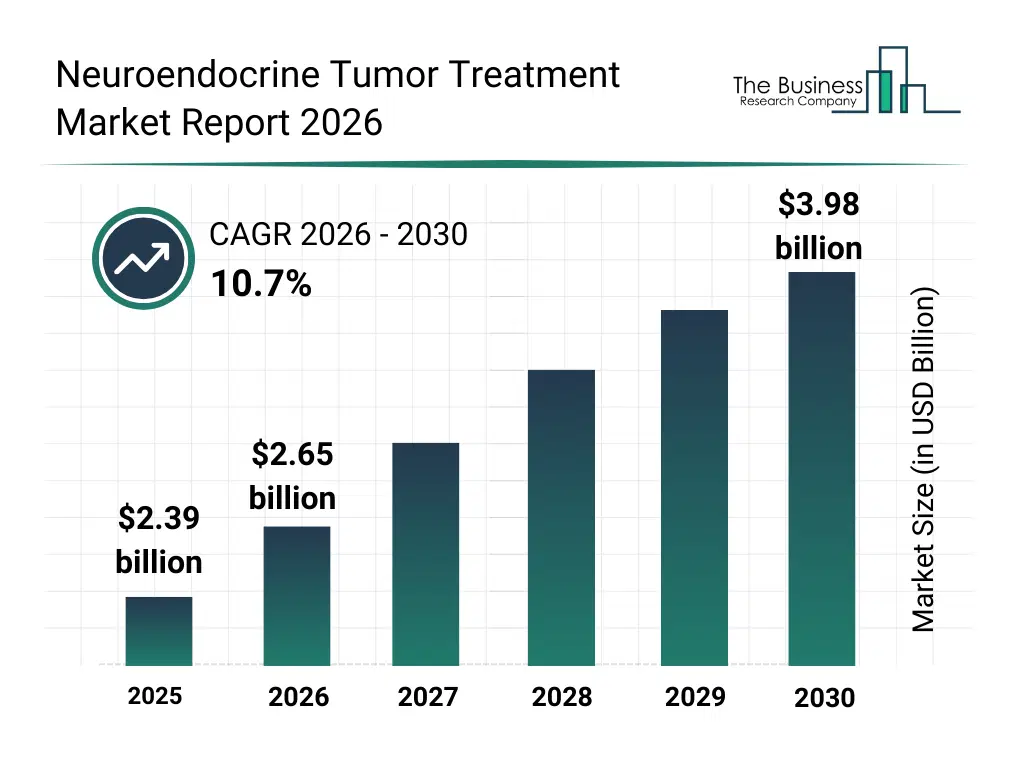
What Is The Neuroendocrine Tumor Treatment Market Size and Share 2026?
The neuroendocrine tumor treatment market size has grown rapidly in recent years. It will grow from $2.39 billion in 2025 to $2.65 billion in 2026 at a compound annual growth rate (CAGR) of 10.5%. The growth in the historic period can be attributed to early adoption of somatostatin analogs, increasing incidence of neuroendocrine tumors, initial development of targeted therapies, growth in advanced diagnostic imaging, rising awareness of rare cancer categories.What Is The Neuroendocrine Tumor Treatment Market Growth Forecast?
The neuroendocrine tumor treatment market size is expected to see rapid growth in the next few years. It will grow to $3.98 billion in 2030 at a compound annual growth rate (CAGR) of 10.7%. The growth in the forecast period can be attributed to growing investment in prrt innovations, increasing adoption of personalized oncology treatment, expansion of immunotherapy in net treatment, rising availability of oncology care centers, development of new combination chemotherapy regimens. Major trends in the forecast period include increasing use of somatostatin analogs for tumor growth control, growing adoption of targeted therapy options, rising utilization of chemotherapy in advanced net cases, expansion of peptide receptor radionuclide therapy (prrt), increasing demand for multidisciplinary oncology care.
Global Neuroendocrine Tumor Treatment Market Segmentation
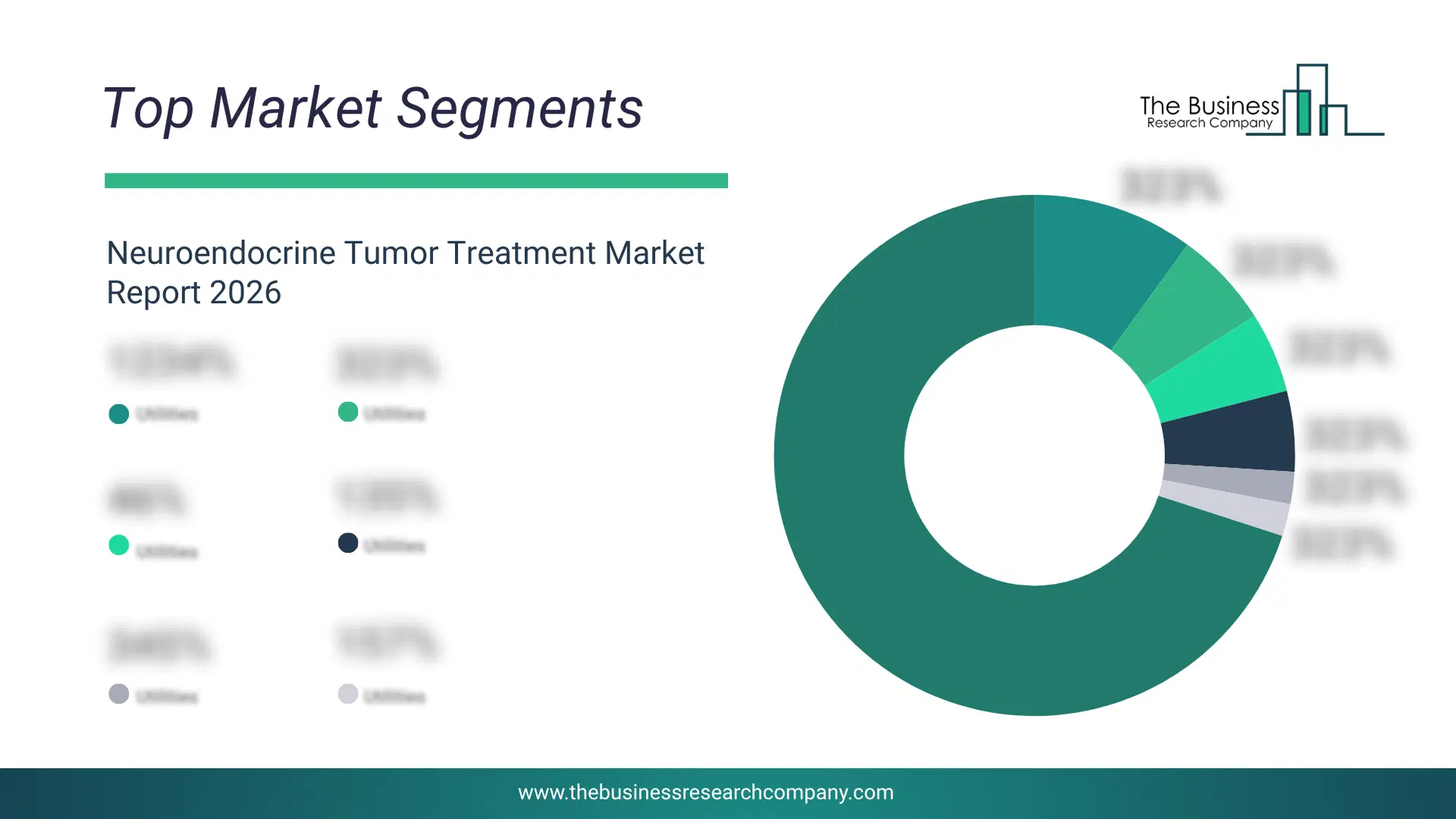
1) By Product: Somatostatin Analogs (SSAs), Targeted Therapy, Chemotherapy, Other Products 2) By Indication: Lungs, Pancreas, Gastrointestinal, Other Indications 3) By End-User: Hospitals, Oncology Centers, Other End-Users Subsegments: 1) By Somatostatin Analogs (SSAs): Octreotide, Lanreotide 2) By Targeted Therapy: Tyrosine Kinase Inhibitors (TKIs), Peptide Receptor Radionuclide Therapy (PRRT) 3) By Chemotherapy: Traditional Chemotherapy Agents, Combination Chemotherapy Regimens 4) By Other Products: Immunotherapy, Supportive Care MedicationsWhat Is The Driver Of The Neuroendocrine Tumor Treatment Market?
The growing prevalence of neuroendocrine tumors is expected to propel the growth of the neuroendocrine tumor treatment market going forward. Neuroendocrine tumors (NETs) are a type of rare tumor that originates from neuroendocrine cells. Neuroendocrine tumor treatment is an essential process for curing neuroendocrine tumors and is used to control symptoms, control tumor growth, and use radiation therapy to kill tumor cells. For instance, in 2024, according to NeuroEndocrine Cancer Australia (NECA), an Australia-based advocacy, education, and research organization, an estimated 21.1 per 100,000 people will be diagnosed with neuroendocrine tumors (NETs) in 2024 translating to around 5,755 new diagnoses and the 39-year prevalence is estimated at 29,351 people living with NETs. Therefore, the growing prevalence of neuroendocrine tumors is driving the growth of the neuroendocrine tumor treatment industry.Key Players In The Global Neuroendocrine Tumor Treatment Market
Major companies operating in the neuroendocrine tumor treatment market are Pfizer Inc, F Hoffmann‑La Roche AG, Novartis AG, Sanofi SA, Takeda Pharmaceutical, Ipsen Pharma SAS, Jiangsu Hengrui Medicine, Provectus Biopharmaceuticals, NanoValent Pharmaceuticals, Camurus, ITM Solucin, Radiomedix, Clarity Pharmaceuticals, TaiRx, Peloton Therapeutics, Ascentage Pharma, Debiopharm, Boehringer Ingelheim International GmbH, Hutchison MediPharma Ltd, Exelixis Inc, EpicentRx Inc, Tarveda Therapeutics, Teclison Ltd, Novatek Pharmaceuticals, Phanes Therapeutics, Fujifilm Pharmaceuticals, Jazz Pharmaceuticals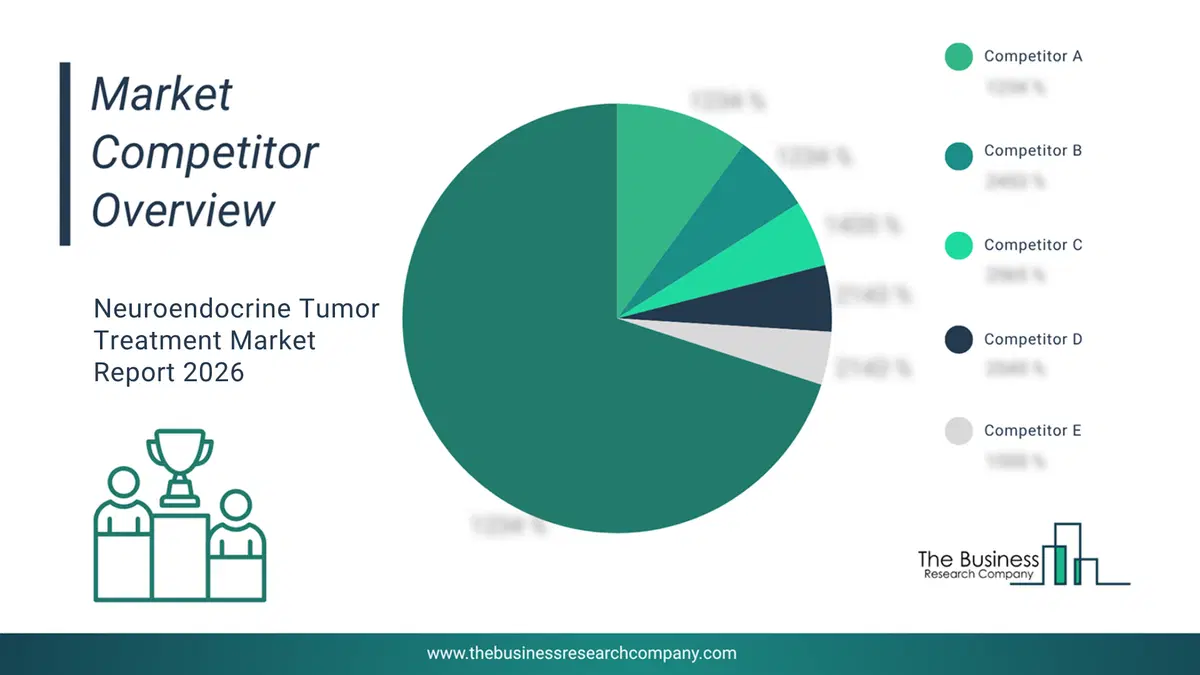
This chart is for illustrative purposes; the full report includes a detailed competitor analysis and comprehensive overview of the top 10 companies in the market.
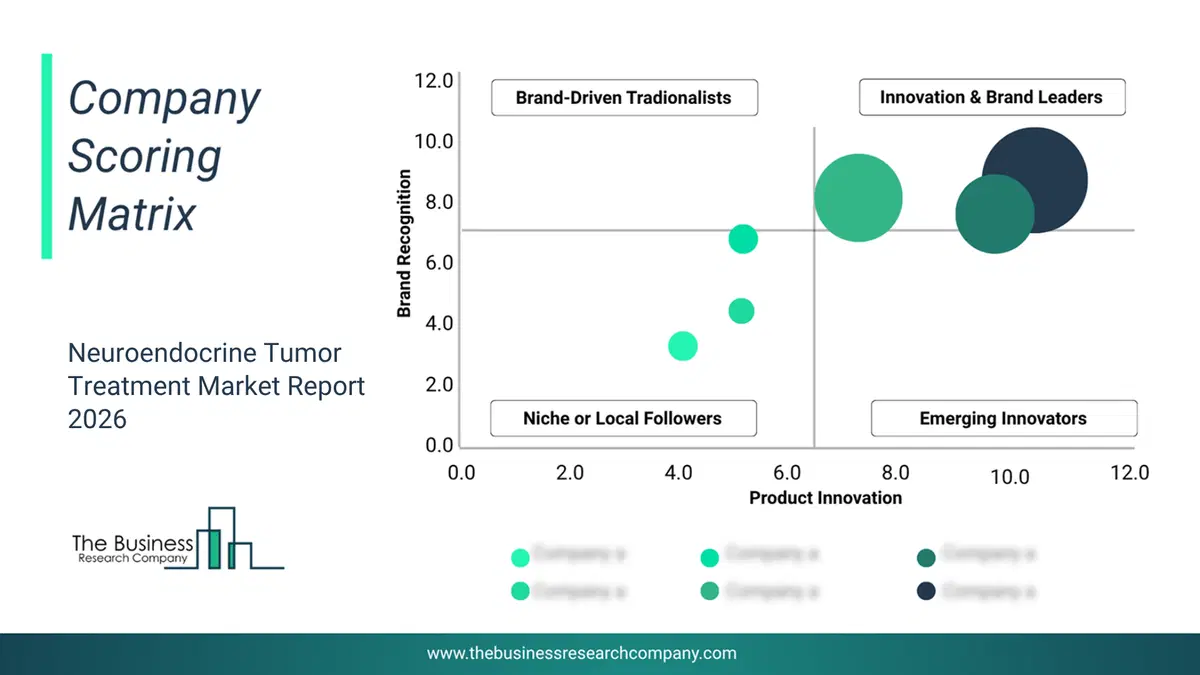
This chart maps companies by product innovation and brand strength, with bubble size indicating relative revenue, helping identify market leaders, challengers, and niche players. This is an illustrative chart; the full report provides a complete and accurate competitive analysis.
Global Neuroendocrine Tumor Treatment Market Trends and Insights
Major companies operating in the neuroendocrine tumor treatment market are focusing on developing advanced therapeutic solutions, such as radioligand therapies, to improve clinical outcomes and expand treatment options for patients with GEP-NETs. Radioligand therapy refers to a targeted treatment approach that delivers radioactive isotopes directly to tumor cells expressing specific receptors, enabling precise tumor cell destruction while minimizing damage to surrounding tissues. For instance, in April 2024, Novartis, a Switzerland-based healthcare company, announced the U.S. Food and Drug Administration (FDA) approval of Lutathera, the first radioligand therapy specifically indicated for pediatric patients aged 12 years and older with somatostatin receptor-positive gastroenteropancreatic neuroendocrine tumors. This approval expands access to targeted radiopharmaceutical treatment for younger NET patients and reinforces the growing role of radioligand therapies in enhancing treatment efficacy, clinical decision-making, and patient care.What Are Latest Mergers And Acquisitions In The Neuroendocrine Tumor Treatment Market?
In March 2024, Merck & Co., Inc., a US-based pharmaceutical company, acquired Harpoon Therapeutics for approximately $650 million. With this acquisition, Merck aims to expand and diversify its oncology pipeline by integrating Harpoon’s next-generation T-cell engager technologies targeting difficult-to-treat solid and neuroendocrine tumors. Harpoon Therapeutics is a US-based developer of novel T-cell engager immunotherapies designed to treat cancers expressing targets.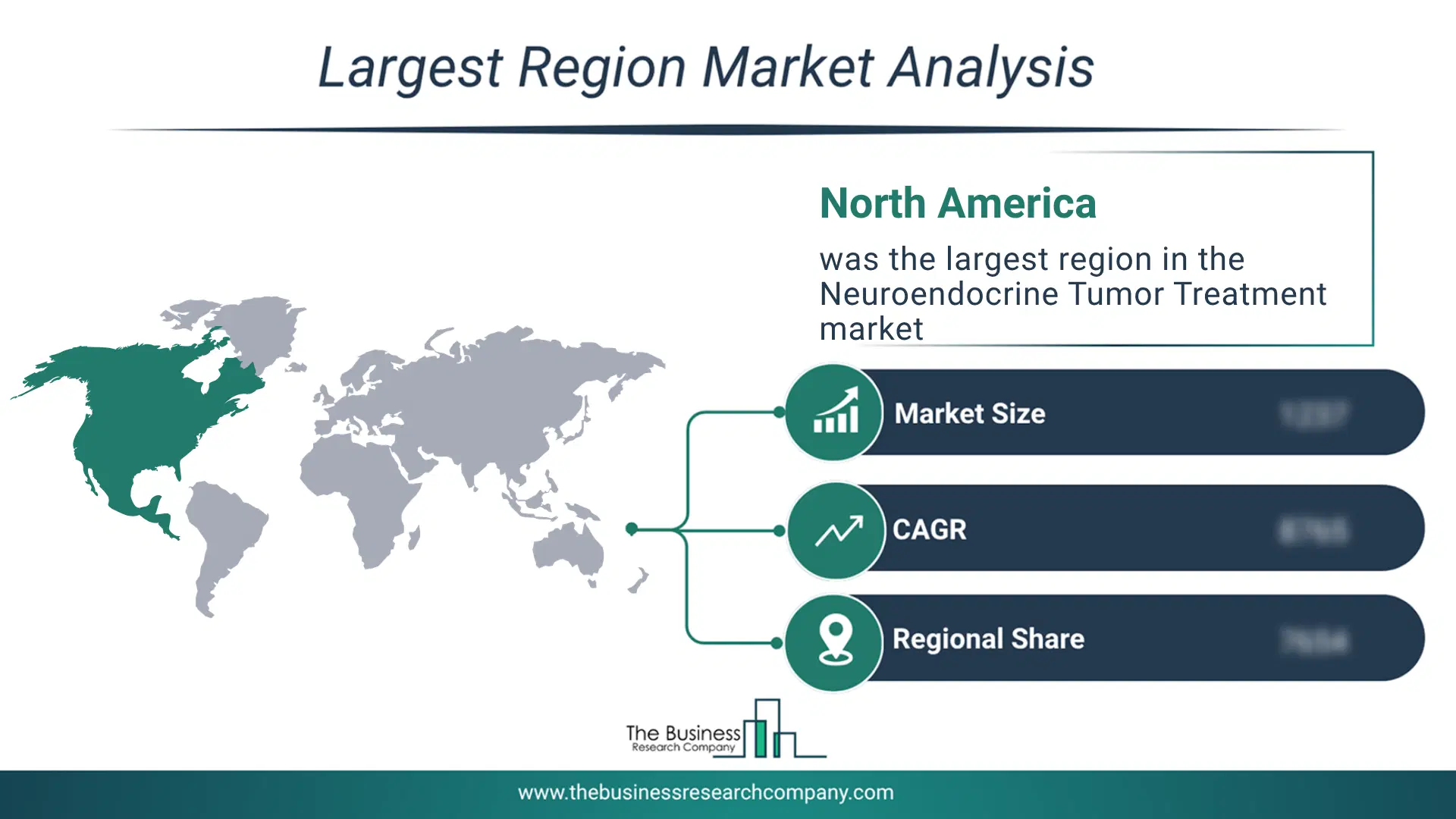
Regional Outlook
North America was the largest region in the neuroendocrine tumor treatment market in 2025. The regions covered in this market report are Asia-Pacific, South East Asia, Western Europe, Eastern Europe, North America, South America, Middle East, Africa. The countries covered in this market report are Australia, Brazil, China, France, Germany, India, Indonesia, Japan, Taiwan, Russia, South Korea, UK, USA, Canada, Italy, Spain.What Defines the Neuroendocrine Tumor Treatment Market?
The neuroendocrine tumor treatment market includes of revenues earned by entities by providing neuroendocrine tumor treatment services such as surgery, radiation therapy, peptide receptor radionuclide therapy, somatostatin analogs, diagnosis, staging and supportive care services. The market value includes the value of related goods sold by the service provider or included within the service offering. Only goods and services traded between entities or sold to end consumers are included.How is Market Value Defined and Measured?
The market value is defined as the revenues that enterprises gain from the sale of goods and/or services within the specified market and geography through sales, grants, or donations in terms of the currency (in USD unless otherwise specified). The revenues for a specified geography are consumption values that are revenues generated by organizations in the specified geography within the market, irrespective of where they are produced. It does not include revenues from resales along the supply chain, either further along the supply chain or as part of other products.
This chart presents market attractiveness based on a quantitative evaluation of growth, competition, strategic alignment, and risk, offering a clear view of opportunity areas for decision-making. This chart is for illustrative purposes; the full report contains the complete analysis.

This chart highlights the Total Addressable Market (TAM) by estimating the maximum revenue opportunity using an assumption-driven approach, supporting strategic planning and opportunity sizing across markets. The chart is illustrative; the full report provides a more comprehensive analysis.
What Key Data and Analysis Are Included in the Neuroendocrine Tumor Treatment Market Report 2026?
The neuroendocrine tumor treatment market research report is one of a series of new reports from The Business Research Company that provides market statistics, including industry global market size, regional shares, competitors with the market share, detailed market segments, market trends and opportunities, and any further data you may need to thrive in the neuroendocrine tumor treatment industry. The market research report delivers a complete perspective of everything you need, with an in-depth analysis of the current and future state of the industry.Neuroendocrine Tumor Treatment Market Report Forecast Analysis
| Report Attribute | Details |
|---|---|
| Market Size Value In 2026 | $2.65 billion |
| Revenue Forecast In 2030 | $3.98 billion |
| Growth Rate | CAGR of 10.7% from 2026 to 2030 |
| Base Year For Estimation | 2025 |
| Actual Estimates/Historical Data | 2020-2025 |
| Forecast Period | 2026 - 2030 |
| Market Representation | Revenue in USD Billion and CAGR from 2026 to 2030 |
| Segments Covered | Product, Indication, End-User |
| Regional Scope | Asia-Pacific, Western Europe, Eastern Europe, North America, South America, Middle East, Africa |
| Country Scope | The countries covered in the report are Australia, Brazil, China, France, Germany, India, Indonesia, Japan, Taiwan, Russia, South Korea, UK, USA, Canada, Italy, Spain |
| Key Companies Profiled | Pfizer Inc, F Hoffmann‑La Roche AG, Novartis AG, Sanofi SA, Takeda Pharmaceutical, Ipsen Pharma SAS, Jiangsu Hengrui Medicine, Provectus Biopharmaceuticals, NanoValent Pharmaceuticals, Camurus, ITM Solucin, Radiomedix, Clarity Pharmaceuticals, TaiRx, Peloton Therapeutics, Ascentage Pharma, Debiopharm, Boehringer Ingelheim International GmbH, Hutchison MediPharma Ltd, Exelixis Inc, EpicentRx Inc, Tarveda Therapeutics, Teclison Ltd, Novatek Pharmaceuticals, Phanes Therapeutics, Fujifilm Pharmaceuticals, Jazz Pharmaceuticals |
| Customization Scope | Request for Customization |
| Pricing And Purchase Options | Explore Purchase Options |