
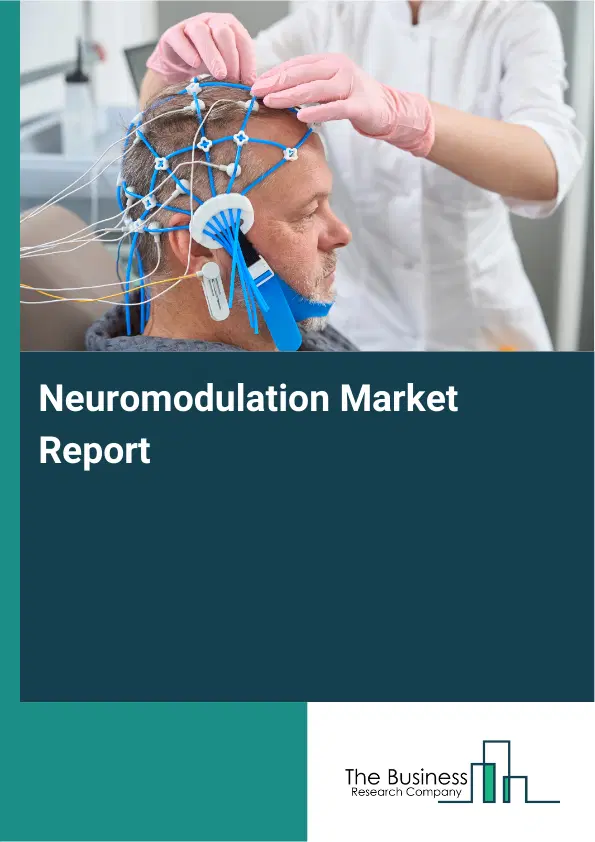
Neuromodulation Market Report 2026
Global Outlook – By Technology (Internal Neuromodulation, External Neuromodulation (Non-invasive)), By Biomaterial (Polymeric Biomaterial, Metallic Biomaterial, Ceramic Biomaterial), By Application (Chronic Pain, Urinary And Fecal Incontinence, Migraine, Failed Back Syndrome, Parkinson Disease, Epilepsy, Tremor, Depression, Other Applications), By End-User (Hospitals, Clinics, Home Healthcare) – Market Size, Trends, Strategies, and Forecast to 2030
Neuromodulation Market Overview
• Neuromodulation market size has reached to $7.62 billion in 2025 • Expected to grow to $12.88 billion in 2030 at a compound annual growth rate (CAGR) of 11.1% • Growth Driver: Surge In Healthcare Expenditure Driving The Growth Of The Market Through Increased Research And Adoption Of Advanced Therapies • Market Trend: Advancements In Implantable Pulse Generator (IPG) Technology Enable More Personalized And Efficient Neuromodulation Therapies • North America was the largest region in 2025.What Is Covered Under Neuromodulation Market?
Neuromodulation is the modification of nerve activity (or modulation) by delivering electrical or pharmacological substances directly to a specific location. It is a reversible procedure performed to relieve pain. The main technologies involved in neuromodulation are internal neuromodulation and external neuromodulation (non-invasive). Internal neuromodulation involves implanting an electrode near a target nerve and delivering a low-voltage electric current through it. The biomaterials include polymeric biomaterial, metallic biomaterial, and ceramic biomaterial that are used for treating chronic pain, urinary and fecal incontinence, migraine, failed back syndrome, Parkinson’s disease, epilepsy, tremor, depression, and others by various end-users including hospitals, clinics, and home healthcare.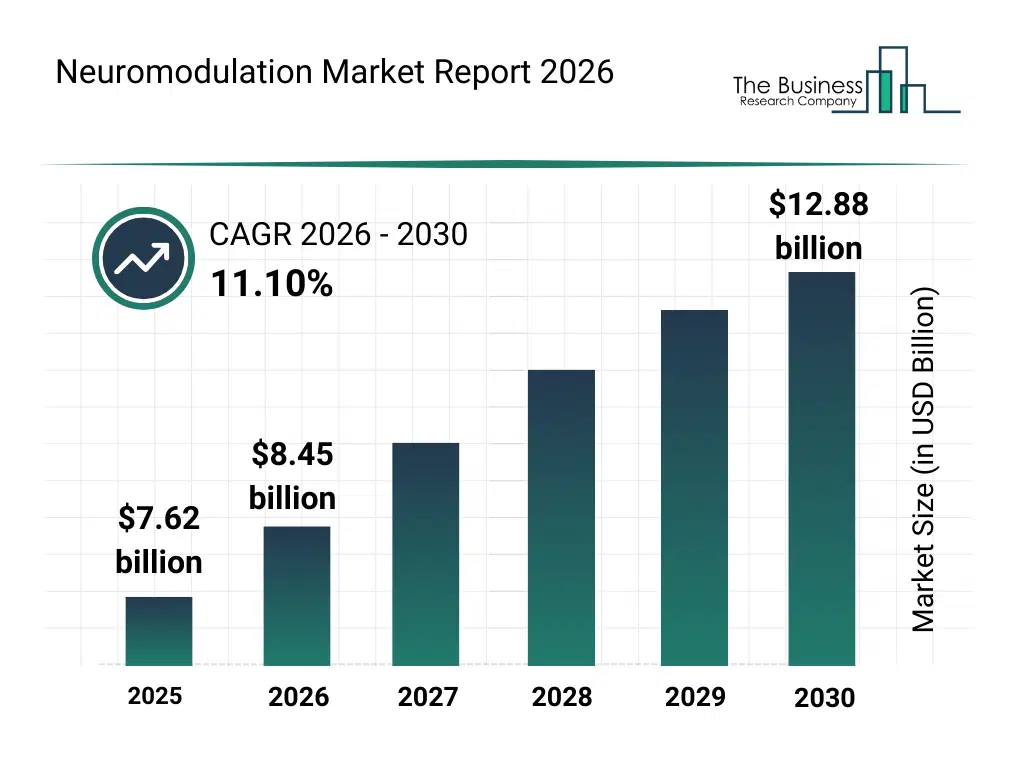
What Is The Neuromodulation Market Size and Share 2026?
The neuromodulation market size has grown rapidly in recent years. It will grow from $7.62 billion in 2025 to $8.45 billion in 2026 at a compound annual growth rate (CAGR) of 10.9%. The growth in the historic period can be attributed to rising prevalence of chronic pain conditions, growing incidence of neurological disorders, increased acceptance of minimally invasive therapies, expansion of specialized pain management centers, availability of advanced implantable devices.What Is The Neuromodulation Market Growth Forecast?
The neuromodulation market size is expected to see rapid growth in the next few years. It will grow to $12.88 billion in 2030 at a compound annual growth rate (CAGR) of 11.1%. The growth in the forecast period can be attributed to increasing adoption of ai-assisted neuromodulation systems, rising demand for home-based neuromodulation therapies, expansion of indications in psychiatric and neurological disorders, growing focus on patient-specific stimulation protocols, continuous technological advancements in biomaterials and device miniaturization. Major trends in the forecast period include increasing adoption of implantable neuromodulation devices, rising use of non-invasive neuromodulation therapies, growing integration of smart and programmable stimulators, expansion of neuromodulation applications beyond pain, enhanced focus on personalized neurotherapy.
Global Neuromodulation Market Segmentation
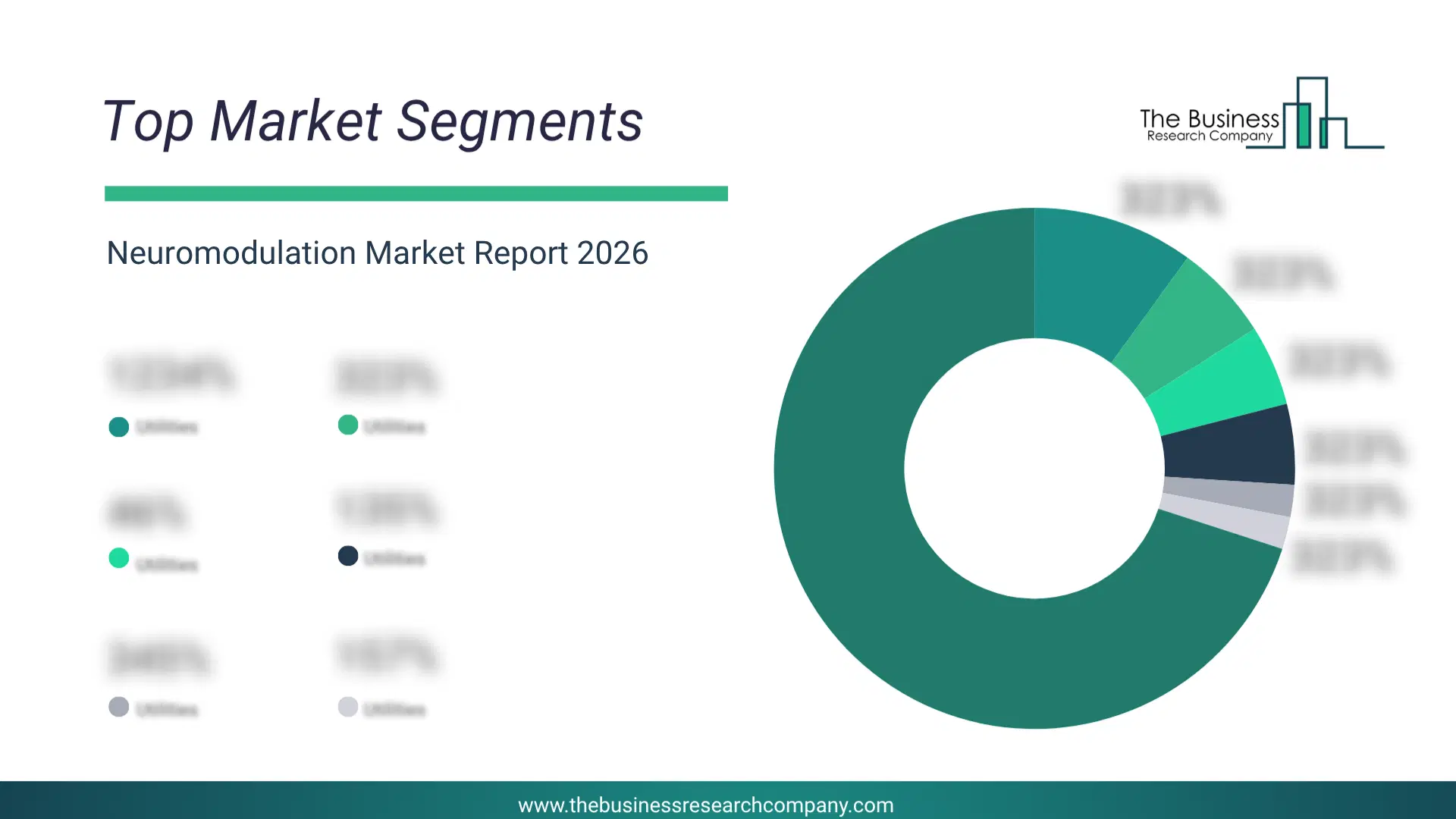
1) By Technology: Internal Neuromodulation, External Neuromodulation (Non-invasive) 2) By Biomaterial: Polymeric Biomaterial, Metallic Biomaterial, Ceramic Biomaterial 3) By Application: Chronic Pain, Urinary And Fecal Incontinence, Migraine, Failed Back Syndrome, Parkinson Disease, Epilepsy, Tremor, Depression, Other Applications 4) By End-User: Hospitals, Clinics, Home Healthcare Subsegments: 1) By Internal Neuromodulation: Implantable Devices, Intrathecal Drug Delivery Systems 2) By External Neuromodulation (Non-invasive): Transcranial Magnetic Stimulation (TMS), Transcranial Direct Current Stimulation (tDCS), Transcutaneous Electrical Nerve Stimulation (TENS), Peripheral Nerve Stimulation (PNS)What Is The Driver Of The Neuromodulation Market?
Rising healthcare expenditures are expected to propel the growth of the neuromodulation market going forward. Healthcare expenditure refers to the total amount of money spent on health care and related activities, including the provision of health services, private and public health insurance, health research, and public health activities. Growing expenditures contribute to the development and adoption of new therapies and diagnostic methods for neurological disorders, and increased funding allows for more research into new neuromodulation technologies, improving their efficacy, safety, and targeting capabilities. For instance, in May 2024, according to the Office for National Statistics, a UK-based government department, total healthcare expenditure saw a 5.6% increase in nominal terms in 2023, an increase of 0.9% growth compared to 2022. Therefore, rising healthcare expenditure is driving the growth of the neuromodulation industry.Key Players In The Global Neuromodulation Market
Major companies operating in the neuromodulation market are Abbott Laboratories, Soterix Medical Inc., Boston Scientific Corporation, Medtronic plc, Synapse Biomedical Inc., Nevro Corp, NeuroPace Inc., LivaNova PLC, NeuroSigma Inc., Neuronetics Inc., Bioness Inc., Aleva Neurotherapeutics S.A., Integer Holdings Corporation, Inspire Medical Systems Inc., Saluda Medical Pty Ltd, Inbrain Neuroelectronics SAS, Pixium Vision SA, Neuromod Devices Limited, Cognito Therapeutics Inc., PathMaker Neurosystems Inc., Dignify Therapeutics Inc., Neuros Medical Inc., Koninklijke Philips N.V., Omron Corporation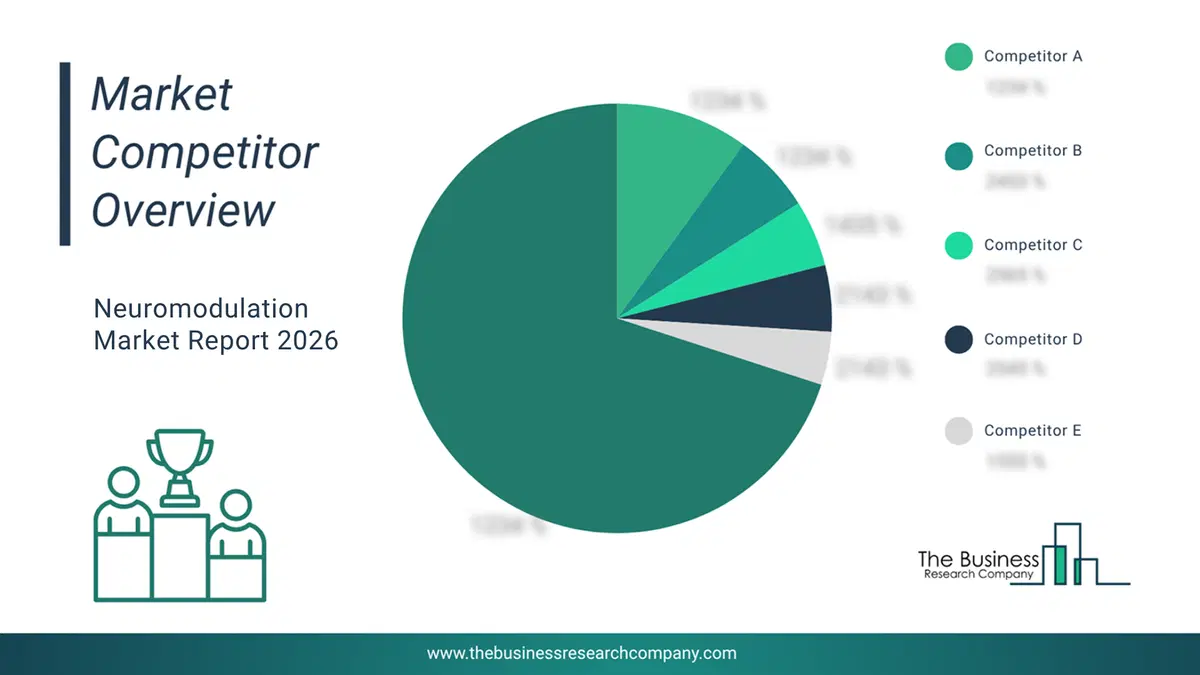
This chart is for illustrative purposes; the full report includes a detailed competitor analysis and comprehensive overview of the top 10 companies in the market.
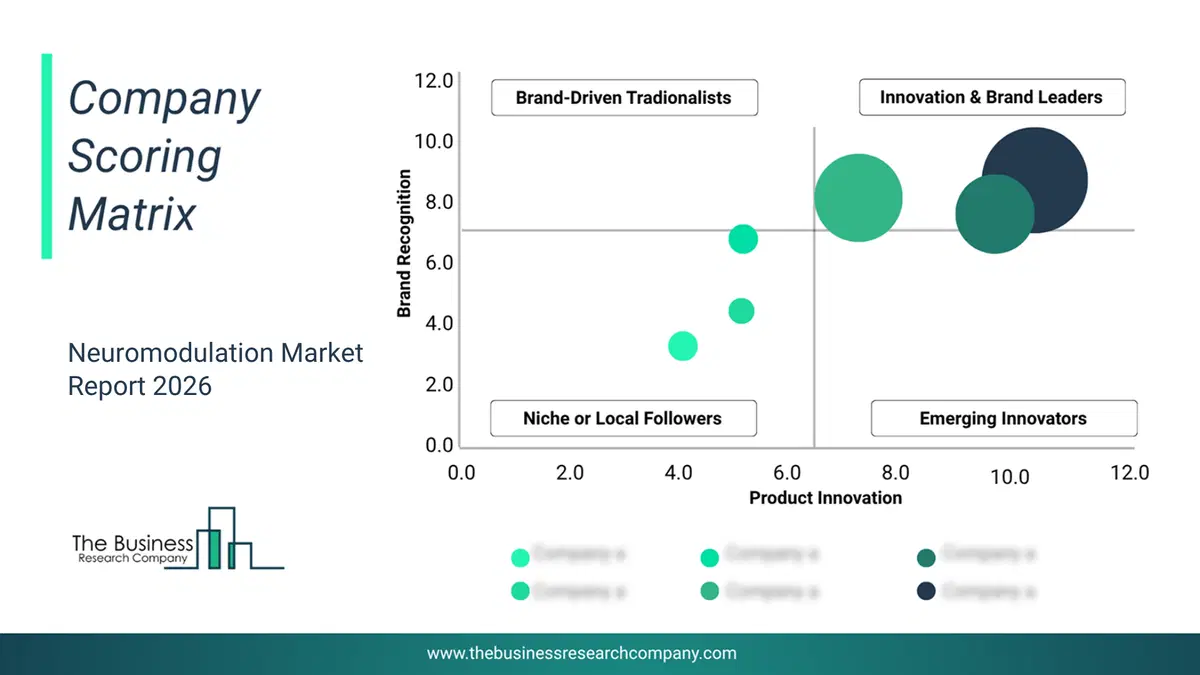
This chart maps companies by product innovation and brand strength, with bubble size indicating relative revenue, helping identify market leaders, challengers, and niche players. This is an illustrative chart; the full report provides a complete and accurate competitive analysis.
Global Neuromodulation Market Trends and Insights
Major companies operating in the neuromodulation market are focusing on developing next-generation devices, such as advanced implantable pulse generators (IPGs), to improve therapeutic precision, enhance patient comfort, and maintain a competitive edge. An IPG is a compact, battery-powered device implanted under the skin, typically in the chest or abdomen, that delivers targeted electrical stimulation to manage neurological disorders. These innovations aim to provide greater customization, improved battery performance, and streamlined implantation procedures. For instance, in July 2023, Boston Scientific Corporation, a US-based biotechnology and biomedical engineering firm, received FDA approval for its Vercise Neural Navigator 5 software with STIMVIEW XT technology, designed for use with the fourth-generation Vercise Genus Deep Brain Stimulation (DBS) System. The platform includes both rechargeable and non-rechargeable IPGs and supports five MR-Conditional implantable pulse generators (IPGs), offering the most therapy options to personalize DBS therapy for individuals with Parkinson’s disease or essential tremor.What Are Latest Mergers And Acquisitions In The Neuromodulation Market?
In December 2024, electroCore Inc., a US-based bioelectronic medicine company, acquired NeuroMetrix Inc. for an undisclosed amount. Through this acquisition, electroCore aims to enhance its wearable neuromodulation capabilities for chronic pain by integrating NeuroMetrix’s Quell platform and expanding its portfolio of non-invasive bioelectronic therapies. NeuroMetrix Inc. is a US-based medical device company that develops wearable neuromodulation solutions targeting chronic pain management.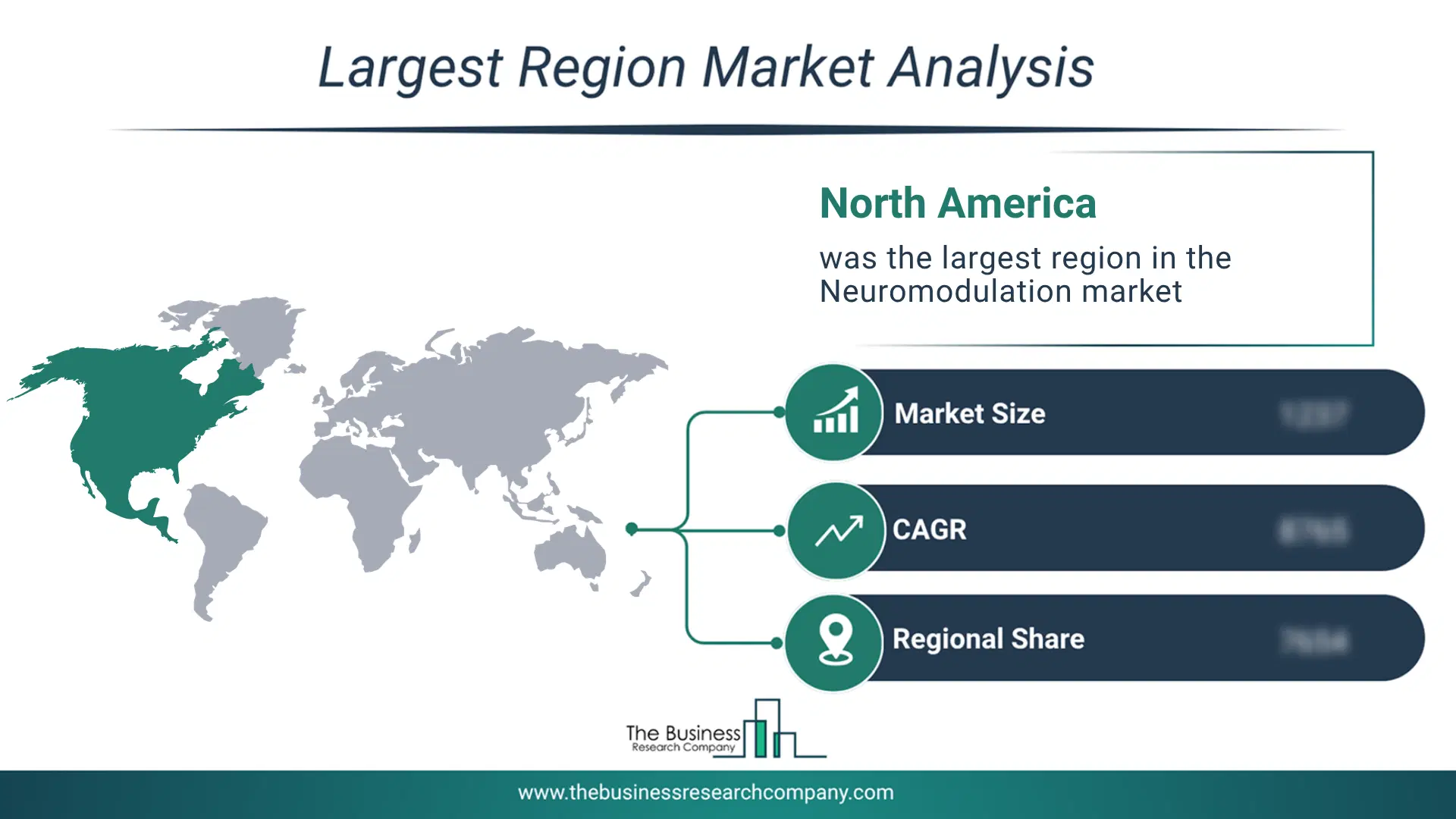
Regional Outlook
North America was the largest region in the neuromodulation market in 2025. The regions covered in this market report are Asia-Pacific, South East Asia, Western Europe, Eastern Europe, North America, South America, Middle East, Africa. The countries covered in this market report are Australia, Brazil, China, France, Germany, India, Indonesia, Japan, Taiwan, Russia, South Korea, UK, USA, Canada, Italy, SpainWhat Defines the Neuromodulation Market?
The neuromodulation market includes revenues earned by entities through sacral nerve stimulation for pelvic disorders and incontinence, deep brain stimulation (DBS) treatment for Parkinson's disease, and spinal cord stimulation for ischemic disorders (angina, peripheral vascular disease). The market value includes the value of related goods sold by the service provider or included within the service offering. Only goods and services traded between entities or sold to end consumers are included.How is Market Value Defined and Measured?
The market value is defined as the revenues that enterprises gain from the sale of goods and/or services within the specified market and geography through sales, grants, or donations in terms of the currency (in USD unless otherwise specified). The revenues for a specified geography are consumption values that are revenues generated by organizations in the specified geography within the market, irrespective of where they are produced. It does not include revenues from resales along the supply chain, either further along the supply chain or as part of other products.
This chart presents market attractiveness based on a quantitative evaluation of growth, competition, strategic alignment, and risk, offering a clear view of opportunity areas for decision-making. This chart is for illustrative purposes; the full report contains the complete analysis.

This chart highlights the Total Addressable Market (TAM) by estimating the maximum revenue opportunity using an assumption-driven approach, supporting strategic planning and opportunity sizing across markets. The chart is illustrative; the full report provides a more comprehensive analysis.
What Key Data and Analysis Are Included in the Neuromodulation Market Report 2026?
The neuromodulation market research report is one of a series of new reports from The Business Research Company that provides market statistics, including industry global market size, regional shares, competitors with the market share, detailed market segments, market trends and opportunities, and any further data you may need to thrive in the neuromodulation industry. The market research report delivers a complete perspective of everything you need, with an in-depth analysis of the current and future state of the industry.Neuromodulation Market Report Forecast Analysis
| Report Attribute | Details |
|---|---|
| Market Size Value In 2026 | $8.45 billion |
| Revenue Forecast In 2030 | $12.88 billion |
| Growth Rate | CAGR of 11.1% from 2026 to 2030 |
| Base Year For Estimation | 2025 |
| Actual Estimates/Historical Data | 2020-2025 |
| Forecast Period | 2026 - 2030 |
| Market Representation | Revenue in USD Billion and CAGR from 2026 to 2030 |
| Segments Covered | Technology, Biomaterial, Application, End-User |
| Regional Scope | Asia-Pacific, Western Europe, Eastern Europe, North America, South America, Middle East, Africa |
| Country Scope | The countries covered in the report are Australia, Brazil, China, France, Germany, India, Indonesia, Japan, Taiwan, Russia, South Korea, UK, USA, Canada, Italy, Spain. |
| Key Companies Profiled | Abbott Laboratories, Soterix Medical Inc., Boston Scientific Corporation, Medtronic plc, Synapse Biomedical Inc., Nevro Corp, NeuroPace Inc., LivaNova PLC, NeuroSigma Inc., Neuronetics Inc., Bioness Inc., Aleva Neurotherapeutics S.A., Integer Holdings Corporation, Inspire Medical Systems Inc., Saluda Medical Pty Ltd, Inbrain Neuroelectronics SAS, Pixium Vision SA, Neuromod Devices Limited, Cognito Therapeutics Inc., PathMaker Neurosystems Inc., Dignify Therapeutics Inc., Neuros Medical Inc., Koninklijke Philips N.V., Omron Corporation |
| Customization Scope | Request for Customization |
| Pricing And Purchase Options | Explore Purchase Options |