
Neuromuscular Blocking Drug Market Report 2026
Global Outlook – By Type (Non-Polarizing Agents, Depolarizing Agents), By Application (Hospital Pharmacy, Retail Pharmacy, Online Pharmacy, Other Applications), By End-Users (Hospitals, Homecare, Specialty Clinics, Other End-Users) – Market Size, Trends, Strategies, and Forecast to 2030
Neuromuscular Blocking Drug Market Overview
• Neuromuscular Blocking Drug market size has reached to $4.08 billion in 2025 • Expected to grow to $5.23 billion in 2030 at a compound annual growth rate (CAGR) of 5% • Growth Driver: Increasing Prevalence Of Surgical Procedures Is Driving The Growth Of The Neuromuscular Blocking Drug Market • Market Trend: Technological Advancements Driving Innovation in the Neuromuscular Blocking Drug Market to Enhance Patient Safety and Clinical Efficiency • North America was the largest region in 2025.What Is Covered Under Neuromuscular Blocking Drug Market?
A neuromuscular blocking drug is a medication that interrupts the transmission of nerve impulses to muscles, leading to temporary paralysis of skeletal muscles. These drugs work by either blocking the action of acetylcholine (a neurotransmitter) at the neuromuscular junction, where nerves communicate with muscles, or by mimicking acetylcholine and overstimulating the muscle receptor, causing it to become unresponsive. Neuromuscular blocking drugs are primarily used in medical settings, particularly during surgeries or other medical procedures, to facilitate intubation (inserting a breathing tube) and ensure muscle relaxation. The main types of neuromuscular blocking drugs are non-polarizing agents and depolarizing agents. Non-polarizing agents are neuromuscular blockers that work by competing with the neurotransmitter acetylcholine at the neuromuscular junction, preventing muscle contraction. These types of drugs can be applicable for hospital pharmacy, retail pharmacy, online pharmacy, and others and cater to various end users, including hospitals, homecare, specialty clinics, and others.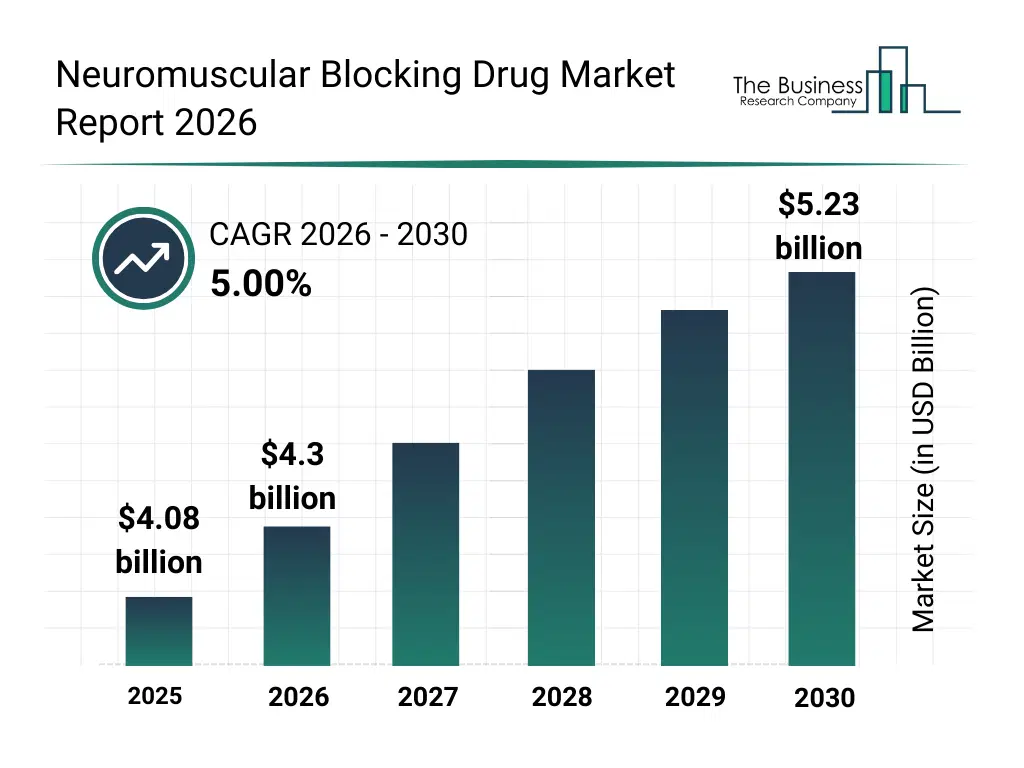
What Is The Neuromuscular Blocking Drug Market Size and Share 2026?
The neuromuscular blocking drug market size has grown strongly in recent years. It will grow from $4.08 billion in 2025 to $4.3 billion in 2026 at a compound annual growth rate (CAGR) of 5.3%. The growth in the historic period can be attributed to limited availability of neuromuscular blocking drugs, growing number of surgical procedures, reliance on conventional anesthesia protocols, increasing hospital infrastructure, rising awareness of perioperative patient care.What Is The Neuromuscular Blocking Drug Market Growth Forecast?
The neuromuscular blocking drug market size is expected to see strong growth in the next few years. It will grow to $5.23 billion in 2030 at a compound annual growth rate (CAGR) of 5.0%. The growth in the forecast period can be attributed to development of rapid-onset and intermediate-acting agents, integration of digital anesthesia monitoring systems, expansion of specialty clinics, rising adoption of short-acting agents for outpatient surgeries, increasing regulatory focus on drug safety and efficacy. Major trends in the forecast period include rising demand for non-polarizing and depolarizing neuromuscular blocking drugs, growth in surgical procedures requiring muscle relaxation, increased adoption of short-acting and rapid-onset agents, expansion of hospital pharmacy and online pharmacy channels, focus on patient safety and optimized anesthesia protocols.
Global Neuromuscular Blocking Drug Market Segmentation
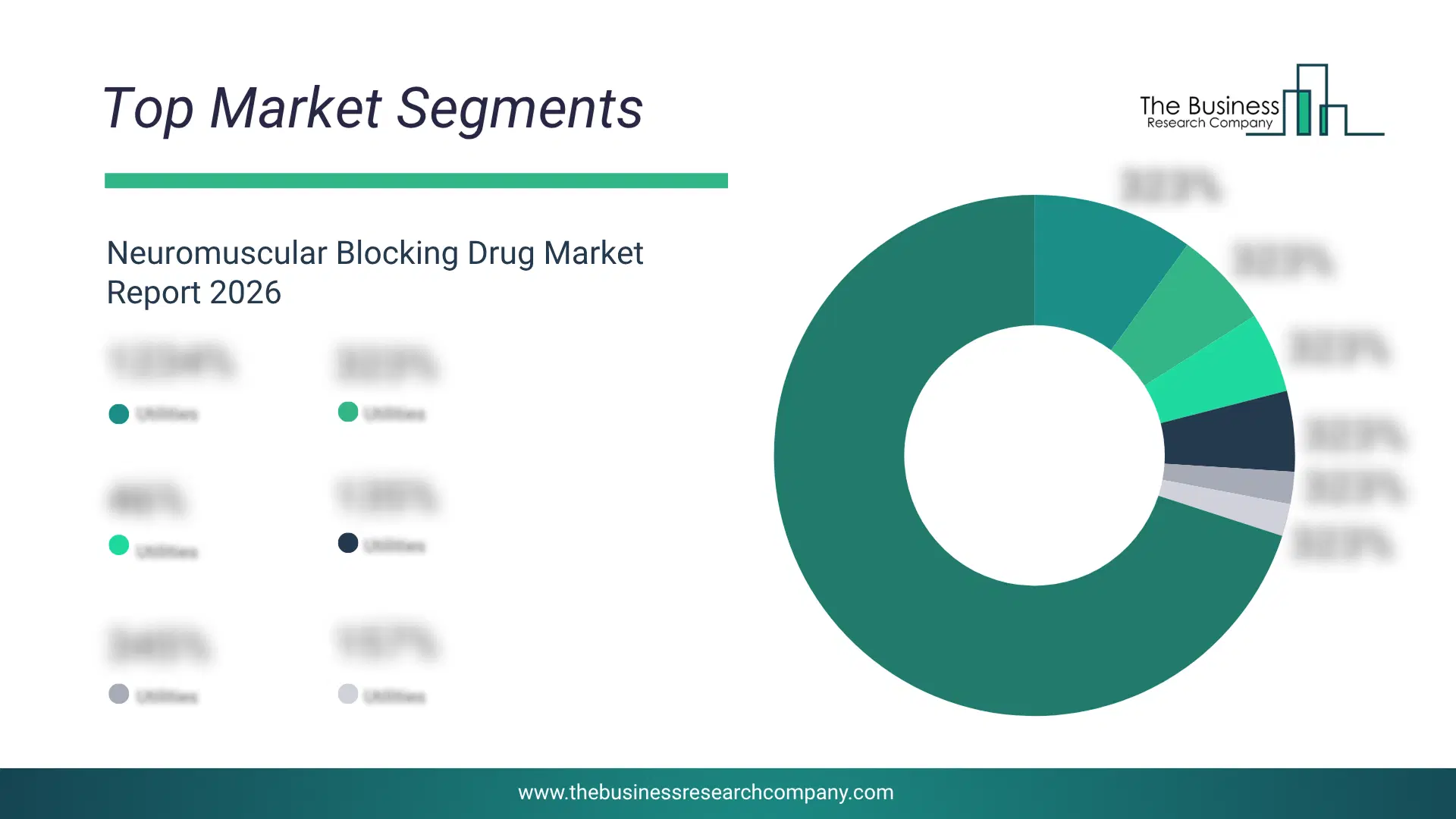
1) By Type: Non-Polarizing Agents, Depolarizing Agents 2) By Application: Hospital Pharmacy, Retail Pharmacy, Online Pharmacy, Other Applications 3) By End-Users: Hospitals, Homecare, Specialty Clinics, Other End-Users Subsegments: 1) By Non-Polarizing Agents: Benzylisoquinolines, Steroidal Agents, Long-Acting Agents, Intermediate-Acting Agents, Short-Acting Agents, 2) By Depolarizing Agents: Succinylcholine, Analogues of Succinylcholine, Rapid-Onset Agents, Short-Acting Agents, Intermediate-Acting AgentsWhat Is The Driver Of The Neuromuscular Blocking Drug Market?
The increasing number of surgical procedures is expected to propel the growth of the neuromuscular blocking drug market going forward. Surgical procedures are medical operations involving incisions, excisions, or other techniques to treat injuries, diseases, or conditions. The increasing number of surgical procedures is due to improved diagnostic tools, greater access to healthcare, a focus on the quality of life, and rising patient awareness and expectations. Neuromuscular blocking drugs are used in surgical procedures to induce muscle relaxation and facilitate various aspects of the operation. For instance, in September 2023, according to the National Library of Medicine, a US-based federal government, as of 2023, 7,733 robotic surgical systems were installed worldwide, and more than 10 million robotic surgeries have been carried out. Therefore, the increasing prevalence of surgical procedures drives the growth of the neuromuscular blocking drug industry.Key Players In The Global Neuromuscular Blocking Drug Market
Major companies operating in the neuromuscular blocking drug market are Pfizer Inc., Merck & Co Inc., AbbVie Inc., Fresenius Kabi AG, AstraZeneca PLC, Novartis AG, Teva Pharmaceutical Industries Limited, Baxter International Inc., Astellas Pharma Inc., Daiichi Sankyo Company Limited, Ipsen S.A., B. Braun Melsungen AG, Aurobindo Pharma Limited, Hikma Pharmaceuticals PLC, Mallinckrodt Pharmaceuticals plc, Mylan N.V., Sagent Pharmaceuticals Inc., Cadila Healthcare Limited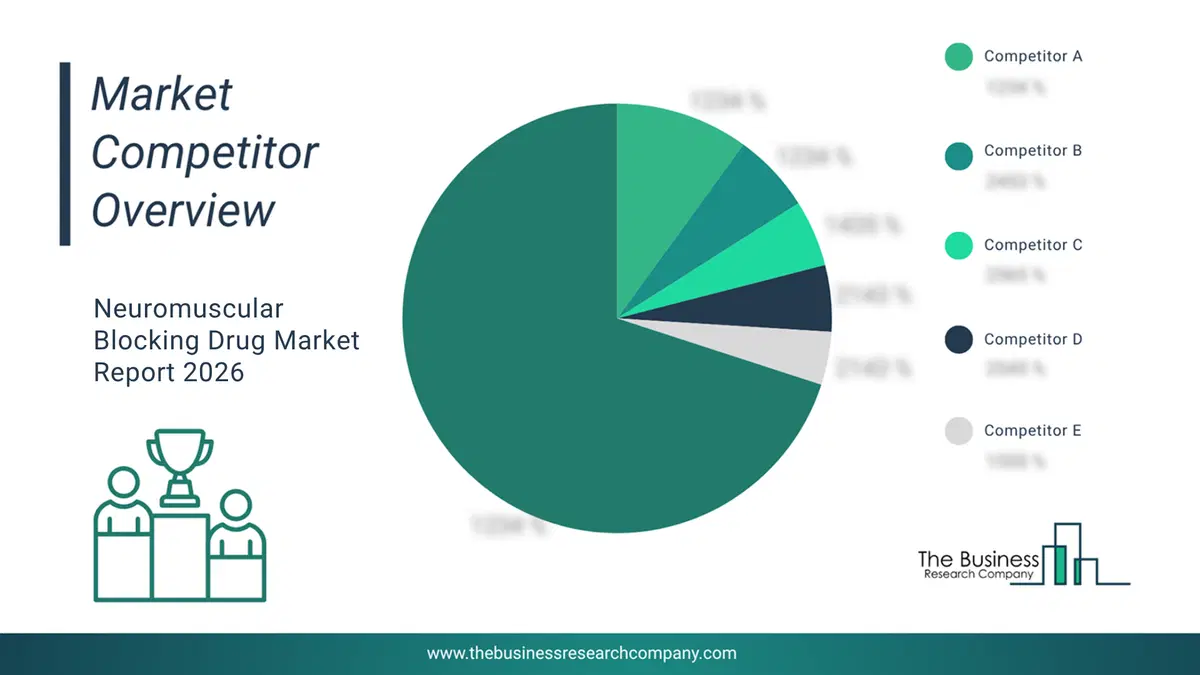
This chart is for illustrative purposes; the full report includes a detailed competitor analysis and comprehensive overview of the top 10 companies in the market.
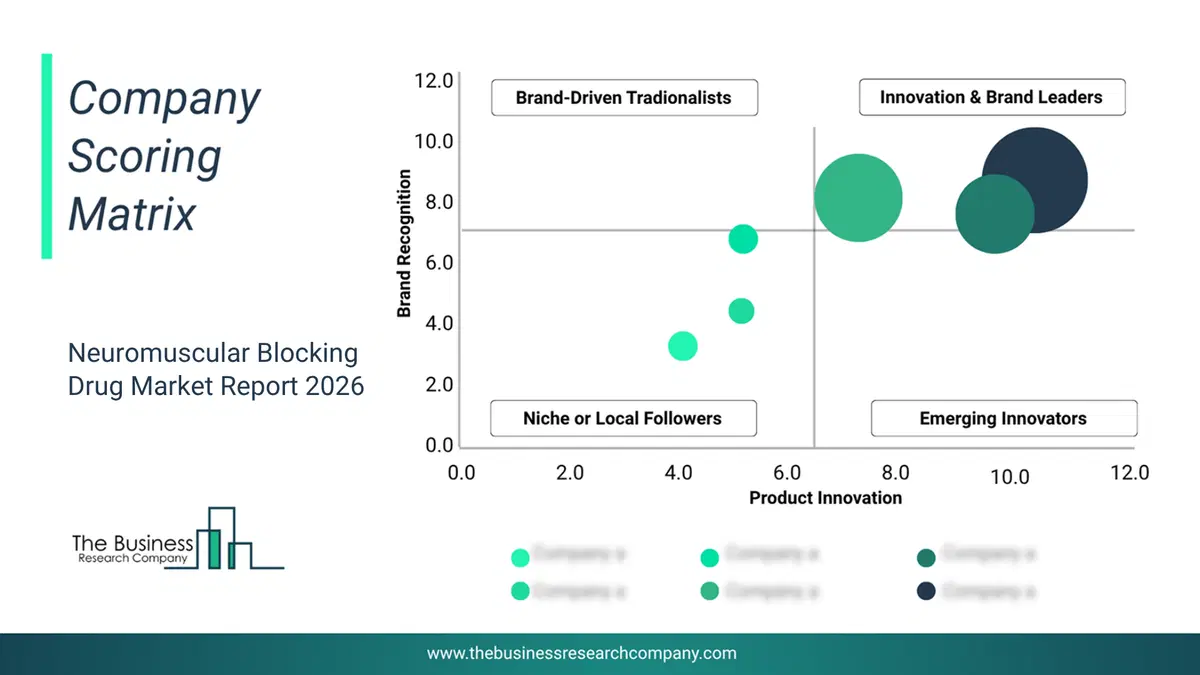
This chart maps companies by product innovation and brand strength, with bubble size indicating relative revenue, helping identify market leaders, challengers, and niche players. This is an illustrative chart; the full report provides a complete and accurate competitive analysis.
Global Neuromuscular Blocking Drug Market Trends and Insights
Major companies operating in the neuromuscular blocking drug market are focusing on developing technological advancements, such as RFID-enabled drug delivery, to meet the rising demand for improved patient safety and efficient hospital inventory management. RFID-enabled drug delivery involves embedding radio-frequency identification (RFID) tags on pharmaceutical vials or packaging, which allows hospitals to automatically track, authenticate, and manage medications through digital systems reducing manual errors, ensuring correct dosing, and helping with recall management, compared with traditional bar-code or manual inventory systems. For instance, in May 2023, Fresenius Kabi, a Germany-based pharmaceutical manufacturer, launched its RFID-pre-tagged Rocuronium Bromide Injection, a non-depolarizing neuromuscular blocking agent, making it fully compatible with major RFID kit and tray systems. This product retains the same active ingredient rocuronium bromide but adds a smart RAIN RFID label (GS1-compliant) that simplifies point-of-care tracking, enhances traceability, and improves patient safety by enabling real-time verification and reducing risk of wrong-dose errors. The RFID technology also streamlines hospital inventory workflows by enabling automated stock reconciliation and recall alerts.What Are Latest Mergers And Acquisitions In The Neuromuscular Blocking Drug Market?
In September 2023, Biogen Inc., a US-based biotechnology company, acquired Reata Pharmaceuticals for an undisclosed amount. Through this acquisition, Biogen aims to enhance its rare disease portfolio by integrating the FDA-approved SKYCLARYS (omaveloxolone) for Friedreich's ataxia and complementing its existing treatments for spinal muscular atrophy and amyotrophic lateral sclerosis to address unmet medical needs and drive growth. Reata Pharmaceuticals is a US-based pharmaceutical company that offers rare neuromuscular blocking drugs.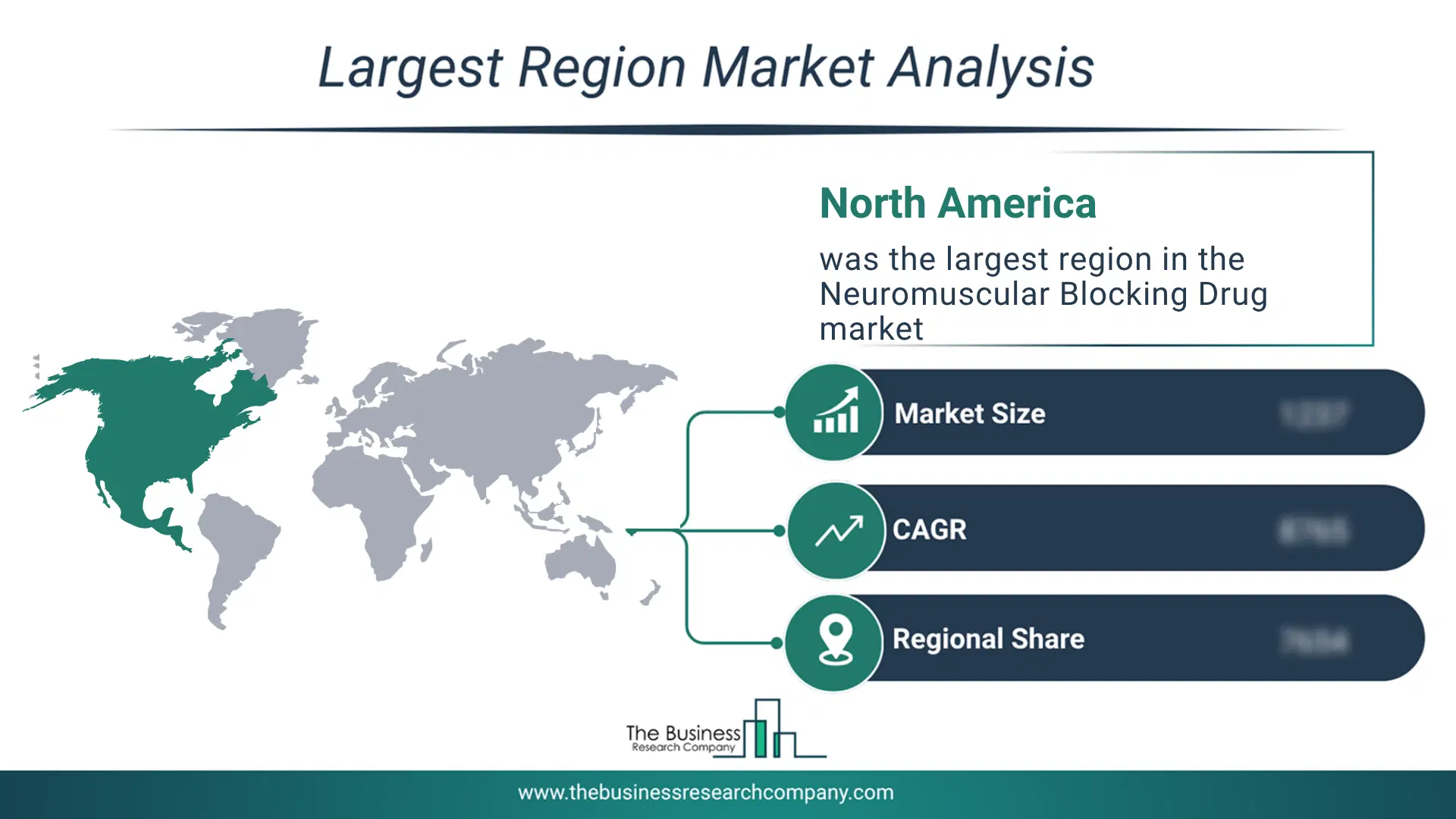
Regional Insights
North America was the largest region in the neuromuscular blocking drug market in 2025. The regions covered in this market report are Asia-Pacific, South East Asia, Western Europe, Eastern Europe, North America, South America, Middle East, Africa. The countries covered in this market report are Australia, Brazil, China, France, Germany, India, Indonesia, Japan, Taiwan, Russia, South Korea, UK, USA, Canada, Italy, Spain.What Defines the Neuromuscular Blocking Drug Market?
The neuromuscular blocking drug market consists of sales of ganta curium, rapacuronium, alcuronium, tubocurarine, and metocurine. Values in this market are ‘factory gate’ values, that is, the value of goods sold by the manufacturers or creators of the goods, whether to other entities (including downstream manufacturers, wholesalers, distributors, and retailers) or directly to end customers. The value of goods in this market includes related services sold by the creators of the goods.How is Market Value Defined and Measured?
The market value is defined as the revenues that enterprises gain from the sale of goods and/or services within the specified market and geography through sales, grants, or donations in terms of the currency (in USD unless otherwise specified). The revenues for a specified geography are consumption values that are revenues generated by organizations in the specified geography within the market, irrespective of where they are produced. It does not include revenues from resales along the supply chain, either further along the supply chain or as part of other products.
This chart presents market attractiveness based on a quantitative evaluation of growth, competition, strategic alignment, and risk, offering a clear view of opportunity areas for decision-making. This chart is for illustrative purposes; the full report contains the complete analysis.

This chart highlights the Total Addressable Market (TAM) by estimating the maximum revenue opportunity using an assumption-driven approach, supporting strategic planning and opportunity sizing across markets. The chart is illustrative; the full report provides a more comprehensive analysis.
What Key Data and Analysis Are Included in the Neuromuscular Blocking Drug Market Report 2026?
The neuromuscular blocking drug market research report is one of a series of new reports from The Business Research Company that provides market statistics, including industry global market size, regional shares, competitors with the market share, detailed market segments, market trends and opportunities, and any further data you may need to thrive in the neuromuscular blocking drug industry. The market research report delivers a complete perspective of everything you need, with an in-depth analysis of the current and future state of the industry.Neuromuscular Blocking Drug Market Report Forecast Analysis
| Report Attribute | Details |
|---|---|
| Market Size Value In 2026 | $4.3 billion |
| Revenue Forecast In 2030 | $5.23 billion |
| Growth Rate | CAGR of 5.3% from 2026 to 2030 |
| Base Year For Estimation | 2025 |
| Actual Estimates/Historical Data | 2020-2025 |
| Forecast Period | 2026 - 2030 |
| Market Representation | Revenue in USD Billion and CAGR from 2026 to 2030 |
| Segments Covered | Type, Application, End-Users |
| Regional Scope | Asia-Pacific, Western Europe, Eastern Europe, North America, South America, Middle East, Africa |
| Country Scope | The countries covered in the report are Australia, Brazil, China, France, Germany, India, Indonesia, Japan, Taiwan, Russia, South Korea, UK, USA, Canada, Italy, Spain. |
| Key Companies Profiled | Pfizer Inc., Merck & Co Inc., AbbVie Inc., Fresenius Kabi AG, AstraZeneca PLC, Novartis AG, Teva Pharmaceutical Industries Limited, Baxter International Inc., Astellas Pharma Inc., Daiichi Sankyo Company Limited, Ipsen S.A., B. Braun Melsungen AG, Aurobindo Pharma Limited, Hikma Pharmaceuticals PLC, Mallinckrodt Pharmaceuticals plc, Mylan N.V., Sagent Pharmaceuticals Inc., Cadila Healthcare Limited |
| Customization Scope | Request for Customization |
| Pricing And Purchase Options | Explore Purchase Options |