
Neuromyelitis Optica Spectrum Disorder Market Report 2026
Global Outlook – By Type (Neuromyelitis Optica Spectrum Disorder With Aquaporin-4 Antibodies, Neuromyelitis Optica Spectrum Disorder Without Aquaporin-4 Antibodies), By Diagnosis (Imaging Tests, Magnetic Resonance Imaging (MRI), Blood Tests, Other Diagnosis), By Treatment Type (C5 Protein Inhibitor, Monoclonal Antibodies, Plasma Exchange Therapy, Corticosteroids, Immunoglobulin Therapy, Medication, Other Treatment Types), By Distribution Channel (Hospital Pharmacy, Retail Pharmacy, Online Pharmacy), By End-User (Hospitals, Specialty Clinics, Homecare, Other End-Users) - Market Size, Trends, Strategies, and Forecast to 2030
Neuromyelitis Optica Spectrum Disorder Market Overview
• Neuromyelitis Optica Spectrum Disorder market size has reached to $2.54 billion in 2025 • Expected to grow to $3.76 billion in 2030 at a compound annual growth rate (CAGR) of 8.1% • Growth Driver: Rising Multiple Sclerosis Cases Fueling The Growth Of The Market Due To Improved Diagnostics And Increased Awareness • Market Trend: Advancements In Complement Inhibition Transform NMOSD Treatment Landscape • North America was the largest region in 2025 and Asia-Pacific is the fastest growing region.What Is Covered Under Neuromyelitis Optica Spectrum Disorder Market?
Neuromyelitis optica spectrum disorder (NMOSD) is a rare, autoimmune disease that affects the central nervous system, primarily targeting the spinal cord and optic nerves. It is characterized by severe inflammation and demyelination (damage to the protective covering of nerve fibers) in these areas, leading to symptoms such as vision loss, paralysis, and loss of sensory function. The main types of neuromyelitis optica spectrum disorder are neuromyelitis optica spectrum disorder with aquaporin-4 antibodies and neuromyelitis optica spectrum disorder without aquaporin-4 antibodies. Neuromyelitis optica spectrum disorder with aquaporin-4 antibodies occurs when the immune system attacks nerve fibers, causing inflammation, vision loss, and paralysis. It is diagnosed by several diagnoses, such as imaging tests, magnetic resonance imaging (MRI), blood tests, and others, and it is treated with several treatment types, including C5 protein inhibitors, monoclonal antibodies, plasma exchange therapy, corticosteroids, immunoglobulin therapy, medication, and others. It is distributed through various distribution channels such as hospital pharmacy, retail pharmacy, and online pharmacy and is used by several end-users, including hospitals, specialty clinics, home care, and others.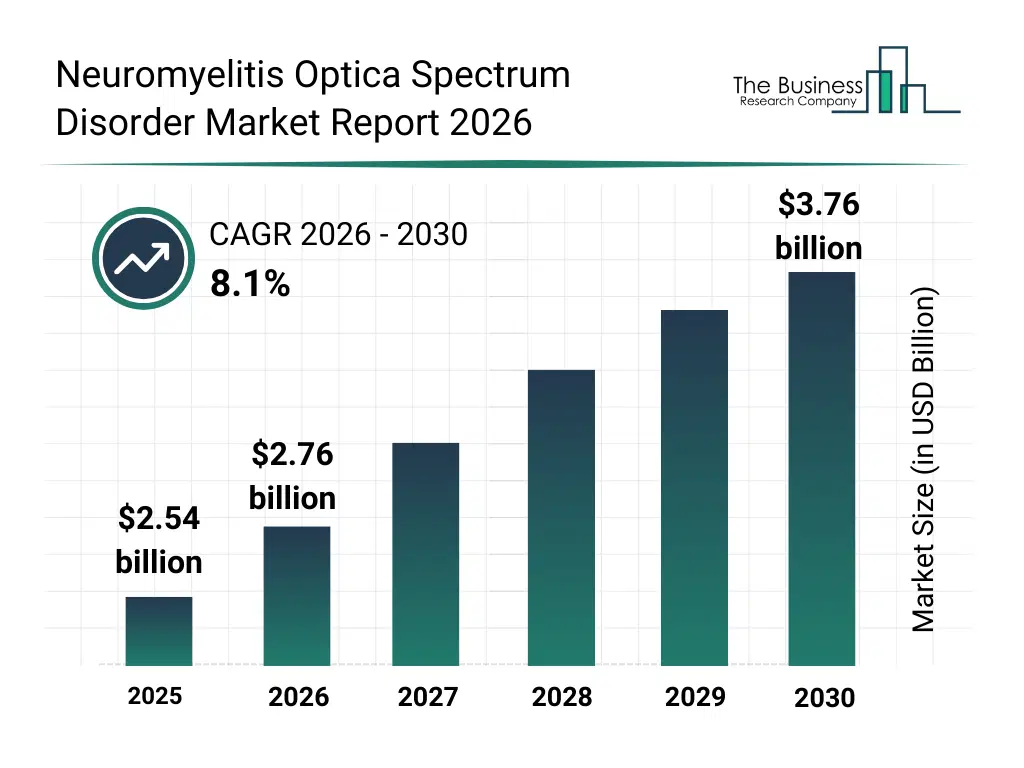
What Is The Neuromyelitis Optica Spectrum Disorder Market Size and Share 2026?
The neuromyelitis optica spectrum disorder market size has grown strongly in recent years. It will grow from $2.54 billion in 2025 to $2.76 billion in 2026 at a compound annual growth rate (CAGR) of 8.4%. The growth in the historic period can be attributed to increasing awareness of nmosd, early development of immunosuppressive treatments, initial use of corticosteroids for flare control, adoption of imaging for differential diagnosis, rising identification of aqp4 antibodies.What Is The Neuromyelitis Optica Spectrum Disorder Market Growth Forecast?
The neuromyelitis optica spectrum disorder market size is expected to see strong growth in the next few years. It will grow to $3.76 billion in 2030 at a compound annual growth rate (CAGR) of 8.1%. The growth in the forecast period can be attributed to growing demand for targeted biologics, increasing development of mog-antibody therapies, expansion of advanced diagnostic platforms, rising investment in autoimmune research, development of next-generation immunotherapy solutions. Major trends in the forecast period include increasing adoption of monoclonal antibody therapies, rising use of advanced imaging techniques for early diagnosis, growing demand for plasma exchange and immunoglobulin therapy, expansion of aqp4-positive and mog-antibody testing, increasing focus on relapse prevention and long-term disease management.
Global Neuromyelitis Optica Spectrum Disorder Market Segmentation
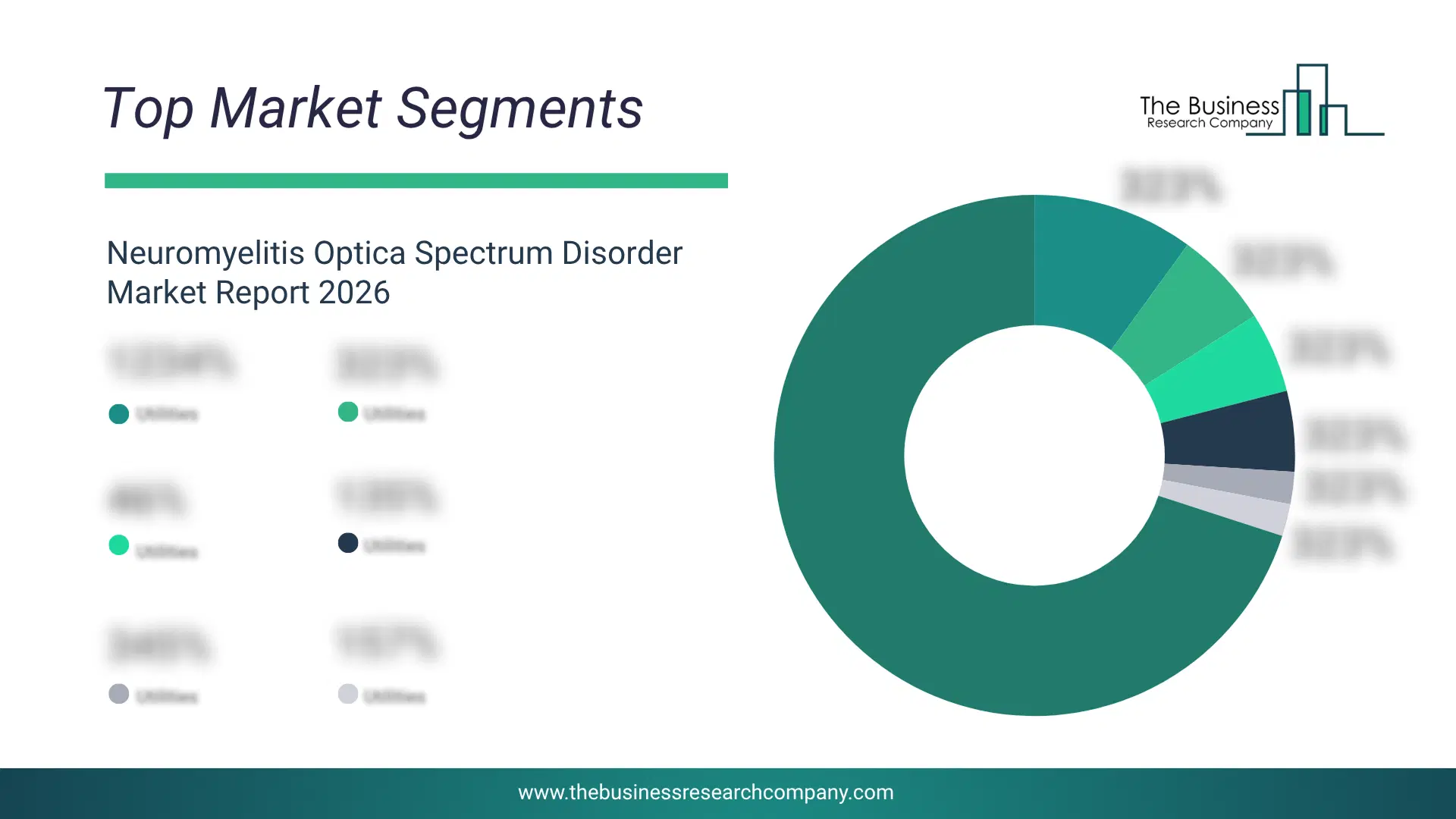
1) By Type: Neuromyelitis Optica Spectrum Disorder With Aquaporin-4 Antibodies, Neuromyelitis Optica Spectrum Disorder Without Aquaporin-4 Antibodies 2) By Diagnosis: Imaging Tests, Magnetic Resonance Imaging (MRI), Blood Tests, Other Diagnosis 3) By Treatment Type: C5 Protein Inhibitor, Monoclonal Antibodies, Plasma Exchange Therapy, Corticosteroids, Immunoglobulin Therapy, Medication, Other Treatment Types 4) By Distribution Channel: Hospital Pharmacy, Retail Pharmacy, Online Pharmacy 5) By End-User: Hospitals, Specialty Clinics, Homecare, Other End-Users Subsegments: 1) By Neuromyelitis Optica Spectrum Disorder With Aquaporin-4 Antibodies: Relapsing NMOSD With AQP4-IgG, Monophasic NMOSD With AQP4-IgG, Severe Optic Neuritis With AQP4-IgG, Longitudinally Extensive Transverse Myelitis (LETM) With AQP4-IgG 2) By Neuromyelitis Optica Spectrum Disorder Without Aquaporin-4 Antibodies: NMOSD With Myelin Oligodendrocyte Glycoprotein (MOG) Antibodies (MOG-IgG), Seronegative NMOSD, Idiopathic NMOSD Cases, NMOSD Associated With Other Autoimmune DisordersWhat Is The Driver Of The Neuromyelitis Optica Spectrum Disorder Market?
The increasing prevalence of multiple sclerosis is expected to propel the growth of the neuromyelitis optica spectrum disorder market going forward. Multiple sclerosis is a chronic autoimmune disease affecting the central nervous system, causing inflammation, nerve damage, and neurological symptoms. The increasing prevalence of multiple sclerosis is due to improvising diagnostic techniques, environmental influences, and genetic predisposition. Advancements in medical imaging, such as MRI, have allowed for earlier and more accurate diagnoses, leading to an apparent rise in cases. As more individuals are diagnosed with MS, there is a heightened awareness of neurological autoimmune diseases, leading to improved diagnostic methods and greater recognition of neuromyelitis optica spectrum disorder. For instance, in May 2024, according to the Multiple Sclerosis Trust, a UK-based national charity, the UK sees approximately 7,100 new multiple sclerosis cases annually, and some 135 persons are diagnosed with MS each week. Therefore, the increasing prevalence of multiple sclerosis drives the growth of the neuromyelitis optica spectrum disorder industry.Key Players In The Global Neuromyelitis Optica Spectrum Disorder Market
Major companies operating in the neuromyelitis optica spectrum disorder market are F. Hoffmann-La Roche Ltd, Laboratory Corporation of America Holding, Chugai Pharmaceutical Co. Ltd, Mayo Foundation for Medical Education and Research, Penn Medicine, Genentech Inc, Oregon Health & Science University, Arup Laboratories, Argenx SE, Metropolis Healthcare, Rush University Medical Center, Mitsubishi Tanabe Pharma Corporation, Viela Bio, Alexion Pharmaceuticals, Horizon Therapeutics plc, UCB S.A, Teva Pharmaceutical Industries Ltd, Novartis AG, Sanofi S.A, Pfizer Inc, Eli Lilly and Company, Immune Pharmaceuticals Inc.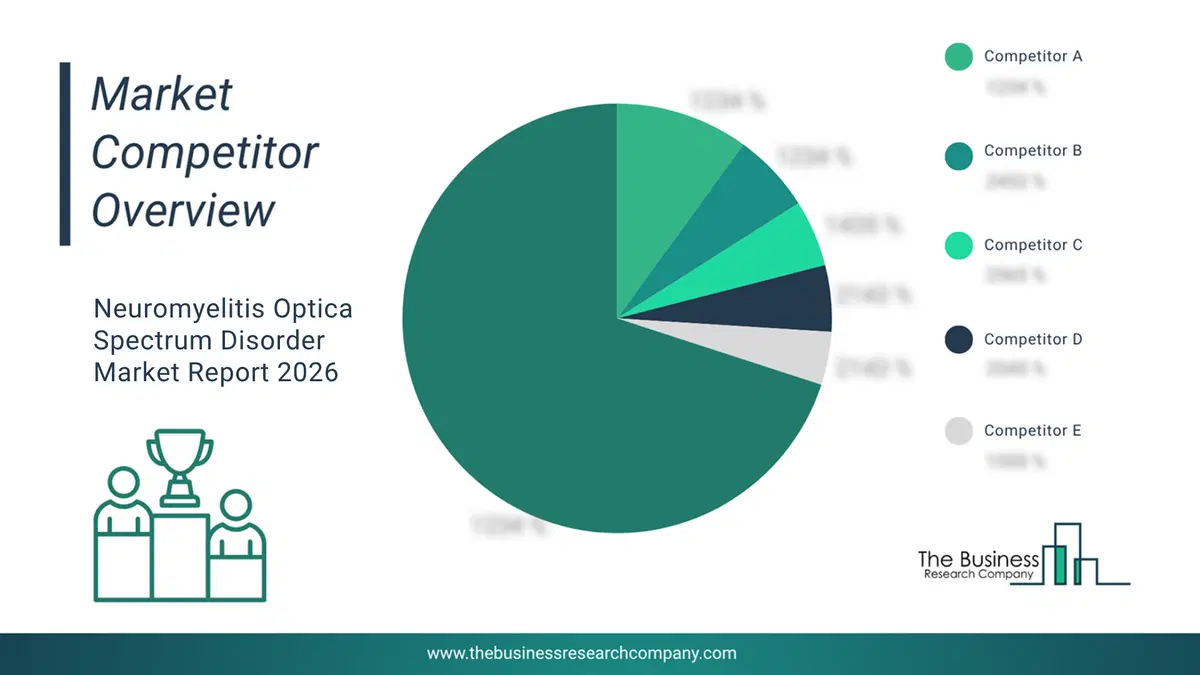
This chart is for illustrative purposes; the full report includes a detailed competitor analysis and comprehensive overview of the top 10 companies in the market.
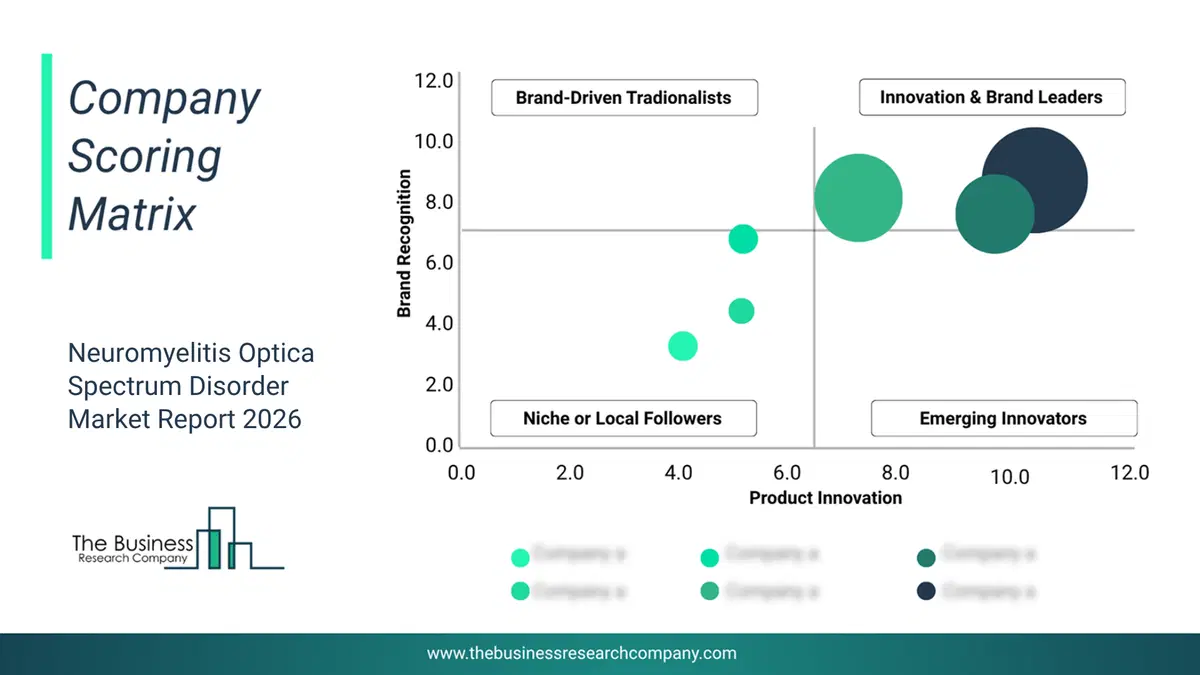
This chart maps companies by product innovation and brand strength, with bubble size indicating relative revenue, helping identify market leaders, challengers, and niche players. This is an illustrative chart; the full report provides a complete and accurate competitive analysis.
Global Neuromyelitis Optica Spectrum Disorder Market Trends and Insights
Major companies operating in the neuromyelitis optica spectrum disorder market are focusing on developing innovative products, such as long-acting complement inhibitors, to enhance treatment efficacy and improve patient outcomes. Long-acting complement inhibitors are treatments that suppress the complement system for an extended duration, preventing inflammation and nerve damage in neuromyelitis optica spectrum disorder (NMOSD). They help minimize relapses and support long-term disease control. For instance, in March 2024, Alexion Pharmaceuticals, a US-based biopharmaceutical company, and AstraZeneca, a UK-based pharmaceutical industry, received approval for ULTOMIRIS (ravulizumab-cwvz) for the treatment of adults with anti-aquaporin-4 (AQP4) antibody-positive neuromyelitis optica spectrum disorder (NMOSD). This approval marks Ultomiris as the first and only long-acting C5 complement inhibitor available for NMOSD treatment. The decision was based on the Phase III CHAMPION-NMOSD trial, where Ultomiris demonstrated a 98.6% reduction in relapse risk over 73 weeks compared to a placebo. Trial participants experienced no relapses, and no new safety concerns were identified.What Are Latest Mergers And Acquisitions In The Neuromyelitis Optica Spectrum Disorder Market?
In October 2023, Amgen, a US-based biotechnology company, acquired Horizon Therapeutics plc for $27.8 billion. With this acquisition, Amgen expands its portfolio in the rare disease and autoimmune disease market, strengthening its position with first-in-class treatments such as UPLIZNA (ibalizumab-con) for neuromyelitis optica spectrum disorder (NMOSD) for adult patients who are anti-aquaporin-4 (AQP4) antibody positive. Horizon Therapeutics plc is an Ireland-based biotechnology company that provides treatment of neuromyelitis optica spectrum disorder.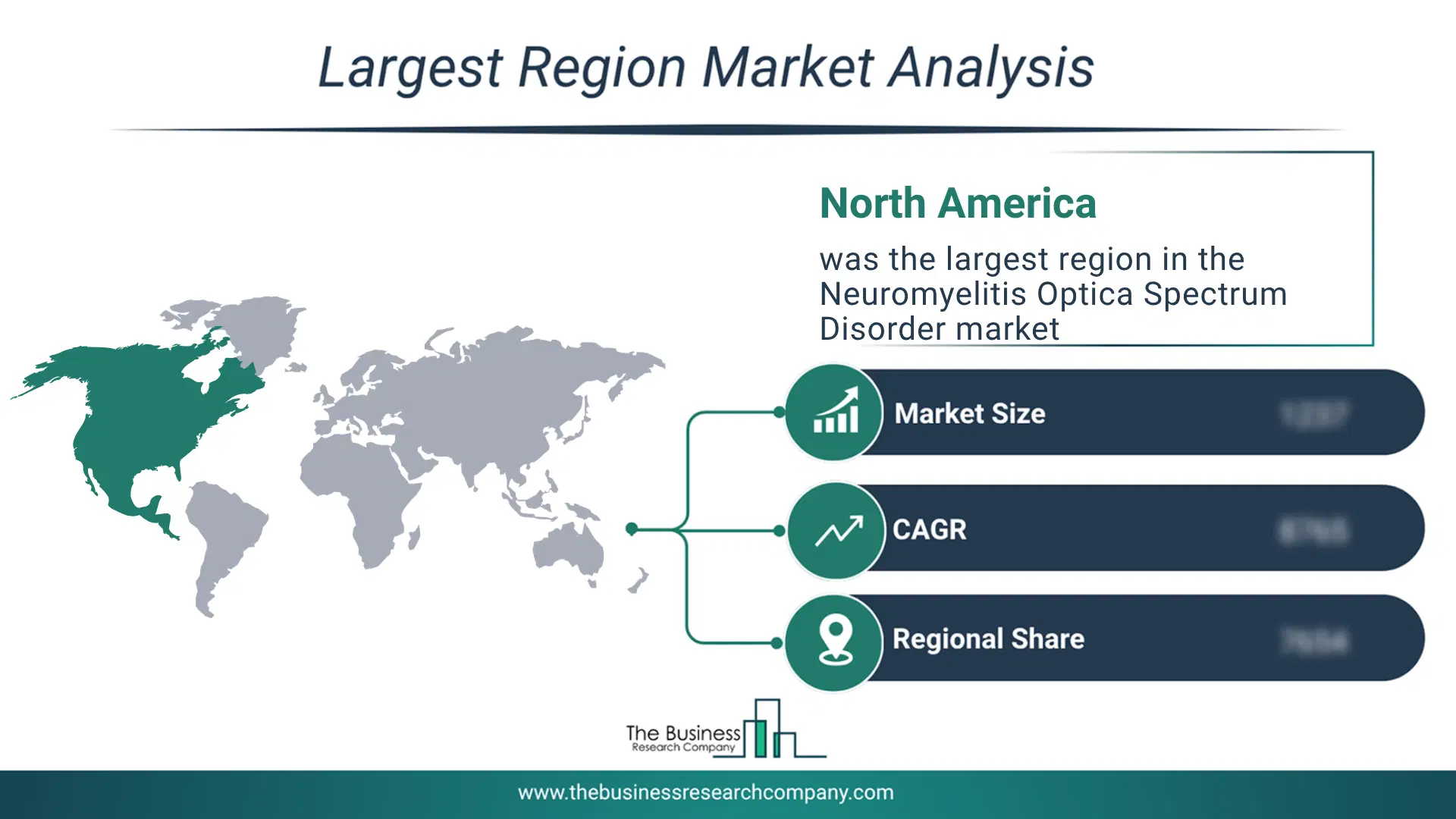
Regional Outlook
North America was the largest region in the neuromyelitis optica spectrum disorder market in 2025. Asia-Pacific is expected to be the fastest-growing region in the forecast period. The regions covered in this market report are Asia-Pacific, South East Asia, Western Europe, Eastern Europe, North America, South America, Middle East, Africa. The countries covered in this market report are Australia, Brazil, China, France, Germany, India, Indonesia, Japan, Taiwan, Russia, South Korea, UK, USA, Canada, Italy, Spain.What Defines the Neuromyelitis Optica Spectrum Disorder Market?
The neuromyelitis optica spectrum disorder market consists of revenues earned by entities by providing services such as rehabilitation services, patient assistance programs, and intravenous immunoglobulin (IVIG) therapy. The market value includes the value of related goods sold by the service provider or included within the service offering. The neuromyelitis optica spectrum disorder market includes sales of immunosuppressants, corticosteroids, and symptomatic treatments. Values in this market are ‘factory gate’ values, that is, the value of goods sold by the manufacturers or creators of the goods, whether to other entities (including downstream manufacturers, wholesalers, distributors, and retailers) or directly to end customers. The value of goods in this market includes related services sold by the creators of the goods.How is Market Value Defined and Measured?
The market value is defined as the revenues that enterprises gain from the sale of goods and/or services within the specified market and geography through sales, grants, or donations in terms of the currency (in USD unless otherwise specified). The revenues for a specified geography are consumption values that are revenues generated by organizations in the specified geography within the market, irrespective of where they are produced. It does not include revenues from resales along the supply chain, either further along the supply chain or as part of other products.
This chart presents market attractiveness based on a quantitative evaluation of growth, competition, strategic alignment, and risk, offering a clear view of opportunity areas for decision-making. This chart is for illustrative purposes; the full report contains the complete analysis.

This chart highlights the Total Addressable Market (TAM) by estimating the maximum revenue opportunity using an assumption-driven approach, supporting strategic planning and opportunity sizing across markets. The chart is illustrative; the full report provides a more comprehensive analysis.
What Key Data and Analysis Are Included in the Neuromyelitis Optica Spectrum Disorder Market Report 2026?
The neuromyelitis optica spectrum disorder market research report is one of a series of new reports from The Business Research Company that provides market statistics, including industry global market size, regional shares, competitors with the market share, detailed market segments, market trends and opportunities, and any further data you may need to thrive in the neuromyelitis optica spectrum disorder industry. The market research report delivers a complete perspective of everything you need, with an in-depth analysis of the current and future state of the industry.Neuromyelitis Optica Spectrum Disorder Market Report Forecast Analysis
| Report Attribute | Details |
|---|---|
| Market Size Value In 2026 | $2.76 billion |
| Revenue Forecast In 2030 | $3.76 billion |
| Growth Rate | CAGR of 8.1% from 2026 to 2030 |
| Base Year For Estimation | 2025 |
| Actual Estimates/Historical Data | 2020-2025 |
| Forecast Period | 2026 - 2030 |
| Market Representation | Revenue in USD Billion and CAGR from 2026 to 2030 |
| Segments Covered | Type, Diagnosis, Treatment Type, Distribution Channel, End-User |
| Regional Scope | Asia-Pacific, Western Europe, Eastern Europe, North America, South America, Middle East, Africa |
| Country Scope | The countries covered in the report are Australia, Brazil, China, France, Germany, India, Indonesia, Japan, Taiwan, Russia, South Korea, UK, USA, Canada, Italy, Spain |
| Key Companies Profiled | F. Hoffmann-La Roche Ltd, Laboratory Corporation of America Holding, Chugai Pharmaceutical Co. Ltd, Mayo Foundation for Medical Education and Research, Penn Medicine, Genentech Inc, Oregon Health & Science University, Arup Laboratories, Argenx SE, Metropolis Healthcare, Rush University Medical Center, Mitsubishi Tanabe Pharma Corporation, Viela Bio, Alexion Pharmaceuticals, Horizon Therapeutics plc, UCB S.A, Teva Pharmaceutical Industries Ltd, Novartis AG, Sanofi S.A, Pfizer Inc, Eli Lilly and Company, Immune Pharmaceuticals Inc. |
| Customization Scope | Request for Customization |
| Pricing And Purchase Options | Explore Purchase Options |