

Neuroprosthetics Market Report 2026
Global Outlook – By Type (Motor Neuroprosthetics, Auditory Neuroprosthetics Or Cochlear implants, Visual Neuroprosthetics Or Retinal implants, Cognitive Neuroprosthetics ), By Technique (Spinal Cord Stimulation, Deep Brain Stimulation, Vagus Nerve Stimulation, Sacral Nerve Stimulation, Transcranial Magnetic Stimulation ), By Application (Motor Neuron Disorders, Physiological Disorders, Cognitive Disorders ) - Market Size, Trends, Strategies, and Forecast to 2030
Neuroprosthetics Market Overview
• Neuroprosthetics market size has reached to $11.63 billion in 2025 • Expected to grow to $23.1 billion in 2030 at a compound annual growth rate (CAGR) of 14.6% • Growth Driver: Neuroprosthetics Market Soars As Hearing Loss Prevalence Reaches Alarming Global Levels • Market Trend: Next-Generation Neural Electrodes Advance Precision In Minimally Invasive Brain Diagnostics • North America was the largest region in 2025 and Asia-Pacific is the fastest growing region.What Is Covered Under Neuroprosthetics Market?
Neuroprosthetics is the study of neuroprostheses and brain-machine interfaces. Neuroprosthetic devices substitute the cognitive or sensory functions that have been impaired due to nervous system disorders. They encompass various artificial devices or systems that can enhance the output or input of a neural system. The major purpose of neuroprosthetics is to allow brain-injured patients to participate in day-to-day life and improve their quality of life. The main types of neuroprosthetics are motor neuroprosthetics, auditory neuroprosthetics/ cochlear implants, visual neuroprosthetics/ retinal implants, and cognitive neuroprosthetics. As an orthosis, motor neuroprosthesis (MN) includes electrical stimulation of brain areas to promote the activities and involvement of persons who have had a stroke in their natural environment. The various techniques used are spinal cord stimulation, deep brain stimulation, vagus nerve stimulation, sacral nerve stimulation, and transcranial magnetic stimulation which are applied in various disorders such as motor neuron disorders, physiological disorders, and cognitive disorders.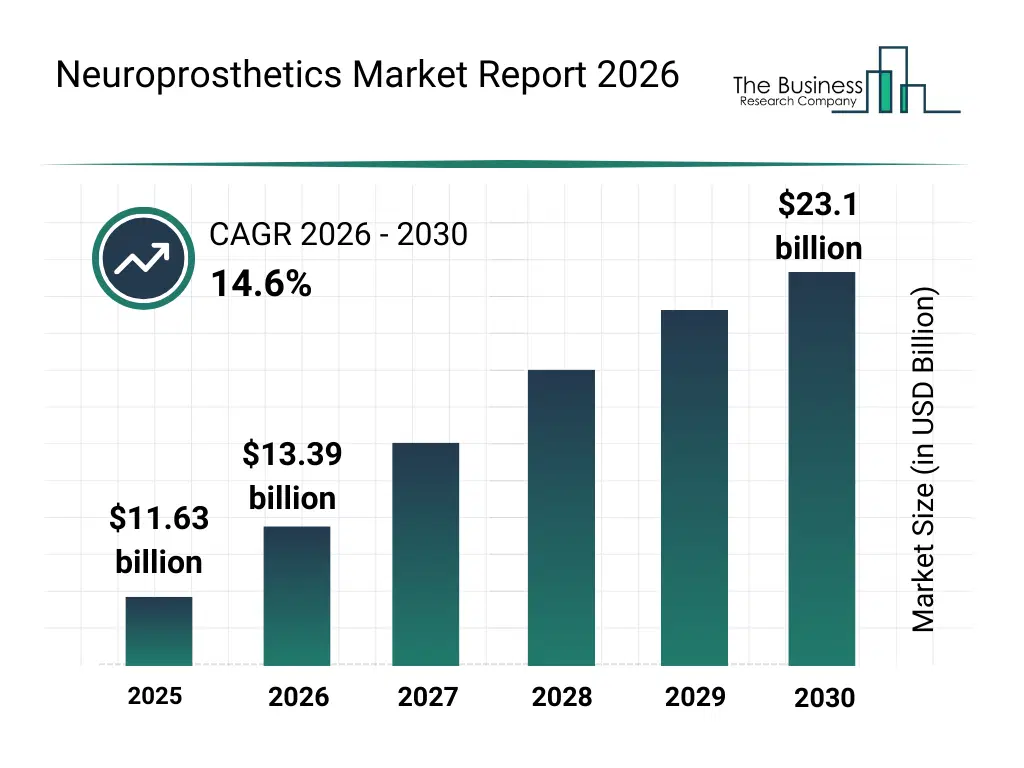
What Is The Neuroprosthetics Market Size and Share 2026?
The neuroprosthetics market size has grown rapidly in recent years. It will grow from $11.63 billion in 2025 to $13.39 billion in 2026 at a compound annual growth rate (CAGR) of 15.1%. The growth in the historic period can be attributed to early development of functional electrical stimulation systems, increased research in brain-machine interfaces, rising prevalence of motor neuron disorders, advancements in cochlear implant technologies, initial adoption of deep brain stimulation.What Is The Neuroprosthetics Market Growth Forecast?
The neuroprosthetics market size is expected to see rapid growth in the next few years. It will grow to $23.1 billion in 2030 at a compound annual growth rate (CAGR) of 14.6%. The growth in the forecast period can be attributed to growing demand for advanced prosthetic limbs with neural control, increasing investment in cognitive neuroprosthetics, expanding applications of vagus nerve stimulation, rising adoption of retinal implant innovations, development of next-generation exoskeletons for rehabilitation. Major trends in the forecast period include rising adoption of motor neuroprosthetic systems, increasing use of auditory neuroprosthetics for hearing restoration, advancements in retinal and visual prosthetic technologies, growing integration of cognitive neuroprosthetics in therapy, expansion of neurostimulation techniques for functional recovery.
Global Neuroprosthetics Market Segmentation
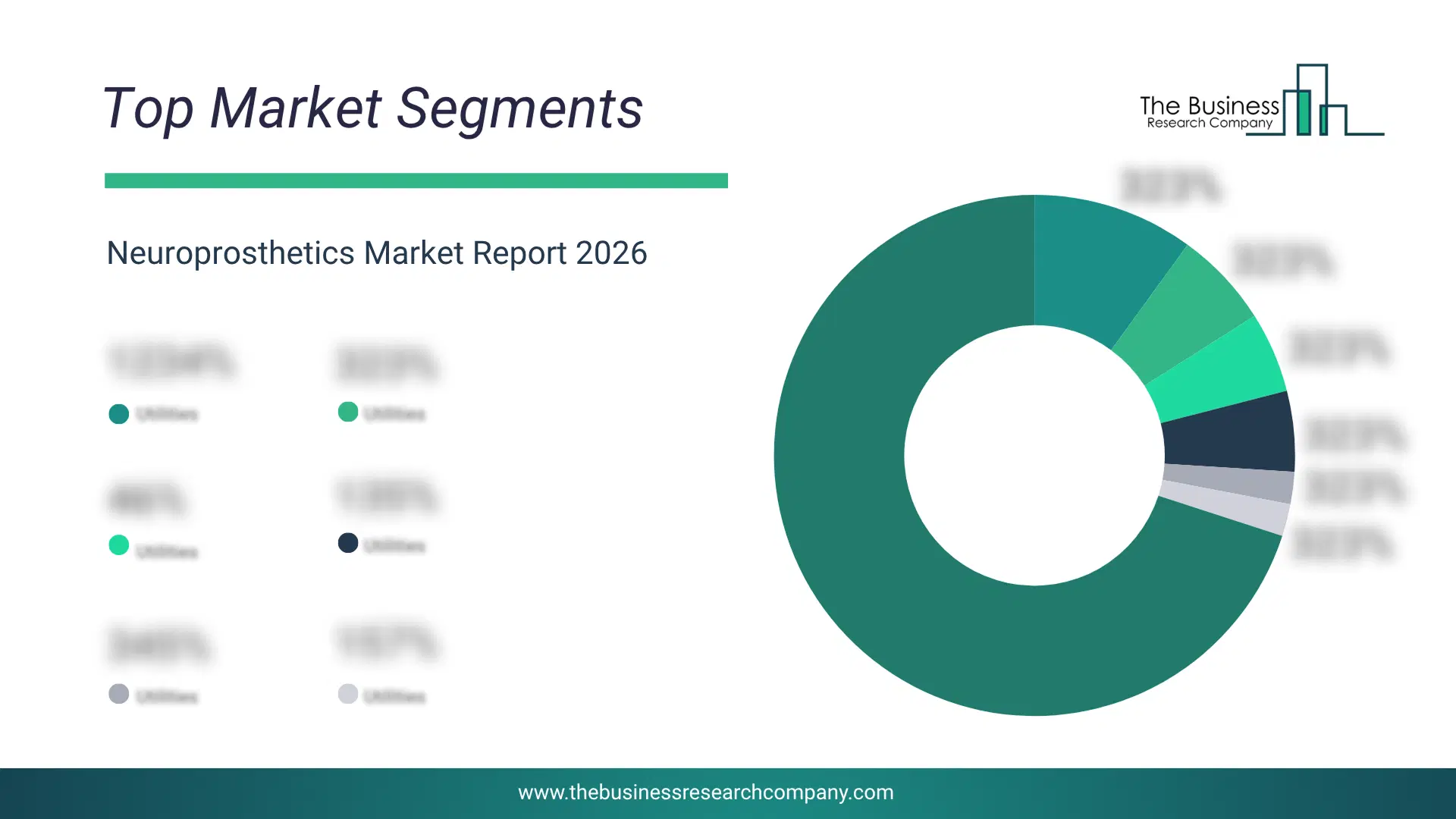
1) By Type: Motor Neuroprosthetics, Auditory Neuroprosthetics Or Cochlear implants, Visual Neuroprosthetics Or Retinal implants, Cognitive Neuroprosthetics 2) By Technique: Spinal Cord Stimulation, Deep Brain Stimulation, Vagus Nerve Stimulation, Sacral Nerve Stimulation, Transcranial Magnetic Stimulation 3) By Application: Motor Neuron Disorders, Physiological Disorders, Cognitive Disorders Subsegments: 1) By Motor Neuroprosthetics: Functional Electrical Stimulation (FES) Systems, Brain-Machine Interfaces (BMIs), Prosthetic Limbs With Neural Control, Exoskeletons For Rehabilitation 2) By Auditory Neuroprosthetics Or Cochlear Implants: Cochlear Implants (Single and Multi-Channel), Auditory Brainstem Implants (ABI), Bone-Anchored Hearing Aids (BAHA) 3) By Visual Neuroprosthetics Or Retinal Implants: Retinal Prostheses, Optogenetic Implants, Visual Cortical Implants 4) By Cognitive Neuroprosthetics: Deep Brain Stimulation (DBS) Devices, Cognitive Enhancement Implants, Neurostimulation Devices For Cognitive DisordersWhat Is The Driver Of The Neuroprosthetics Market?
The rising prevalence of hearing loss is expected to propel the growth of the neuroprosthetics market going forward. Hearing loss, also known as hearing impairment or deafness, refers to a partial or total inability to hear sounds in one or both ears, significantly affecting communication, quality of life, and social participation. Neuroprosthetics, such as cochlear implants and auditory prostheses, help restore hearing, improve speech perception, and provide auditory rehabilitation. For instance, in February 2025, according to the World Health Organization (WHO), a Switzerland-based United Nations agency, global projections indicate that nearly 2.5 billion people will experience some level of hearing loss by 2050, with over 700 million expected to require hearing rehabilitation, while unaddressed hearing impairment already incurs nearly US$1 trillion in annual costs and more than 1 billion young adults remain at risk of preventable, permanent damage from unsafe listening practices. Therefore, the rising prevalence of hearing loss is driving the neuroprosthetics industry.Key Players In The Global Neuroprosthetics Market
Major companies operating in the neuroprosthetics market are Abbott Laboratories, Boston Scientific Corp., Cochlear Ltd., Demant AS, LivaNova plc, MED-EL GmbH, Neuropace Inc., Nevro Corp., Oticon US Inc., Retina Implant AG, Second Sight Medical Products Inc., Sonova Holding AG, St. Jude Medical Inc., Aleva Neurotherapeutics SA, Axonics Modulation Technologies Inc., Bionic Vision Technologies Pty Ltd., Blackrock Microsystems LLC, Cognixion, Cyberonics Inc., Medtronic plc, NeuroKinetics Inc., NeuroMetrix Inc., Pixium Vision SA, SPR Therapeutics Inc., Synapse Biomedical Inc., Synchron Inc.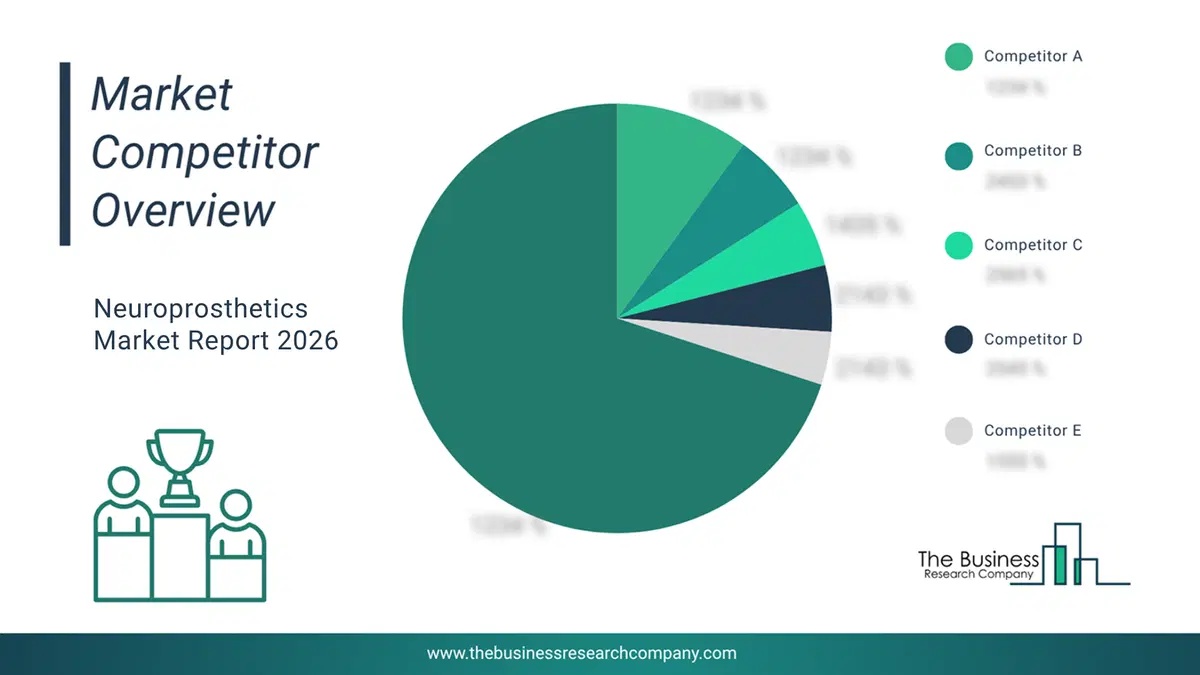
This chart is for illustrative purposes; the full report includes a detailed competitor analysis and comprehensive overview of the top 10 companies in the market.
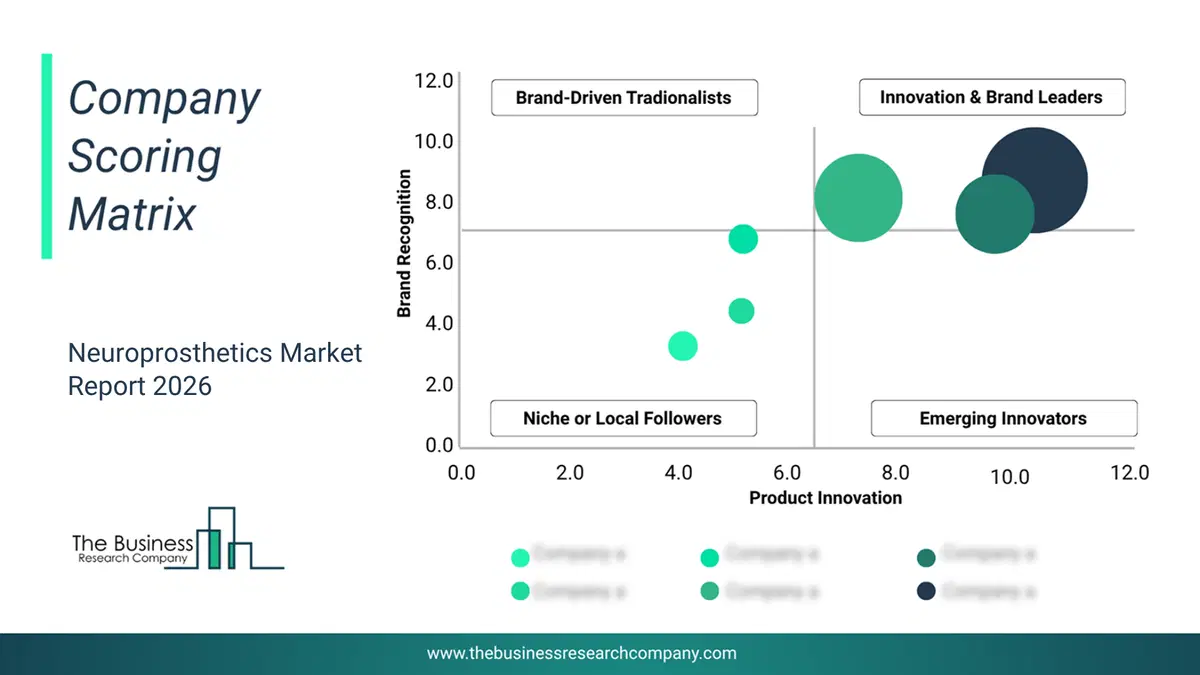
This chart maps companies by product innovation and brand strength, with bubble size indicating relative revenue, helping identify market leaders, challengers, and niche players. This is an illustrative chart; the full report provides a complete and accurate competitive analysis.
Global Neuroprosthetics Market Trends and Insights
Major companies operating in the neuroprosthetics market are focusing on developing innovative advancements such as sEEG electrode systems to improve neural interfacing capabilities and enhance minimally invasive diagnostic and therapeutic procedures. An sEEG electrode system is a specialized neural device designed to record and stimulate subsurface brain activity, enabling high-precision mapping and neuromodulation. For instance, in May 2023, NeuroOne Medical Technologies Corporation, a US-based medical technology company, launched the Evo sEEG Electrodes in the United States. NeuroOne’s new electrodes deliver secure, high-accuracy subsurface brain mapping with improved signal clarity and compatibility with robotic neurosurgical platforms. This innovation broadens the clinical utility of stereoelectroencephalography by enabling less invasive procedures and supporting expansion into applications such as epilepsy evaluation, chronic pain management, and Parkinson’s disease interventions.What Are Latest Mergers And Acquisitions In The Neuroprosthetics Market?
In January 2025, Synchron, a US-based developer of endovascular brain-computer-interface neuroprosthetic systems, entered into a strategic partnership with Team Gleason to expand awareness of its brain-computer-interface community and strengthen engagement among individuals living with paralysis. With this collaboration, Synchron aims to accelerate awareness, engagement, and clinical trial participation for its brain-computer-interface technology to advance user-centered neuroprosthetic innovation for individuals with severe paralysis. Team Gleason is a US-based provider of assistive technology advocacy, community support, and outreach services for people living with neurological movement disorders, particularly amyotrophic lateral sclerosis.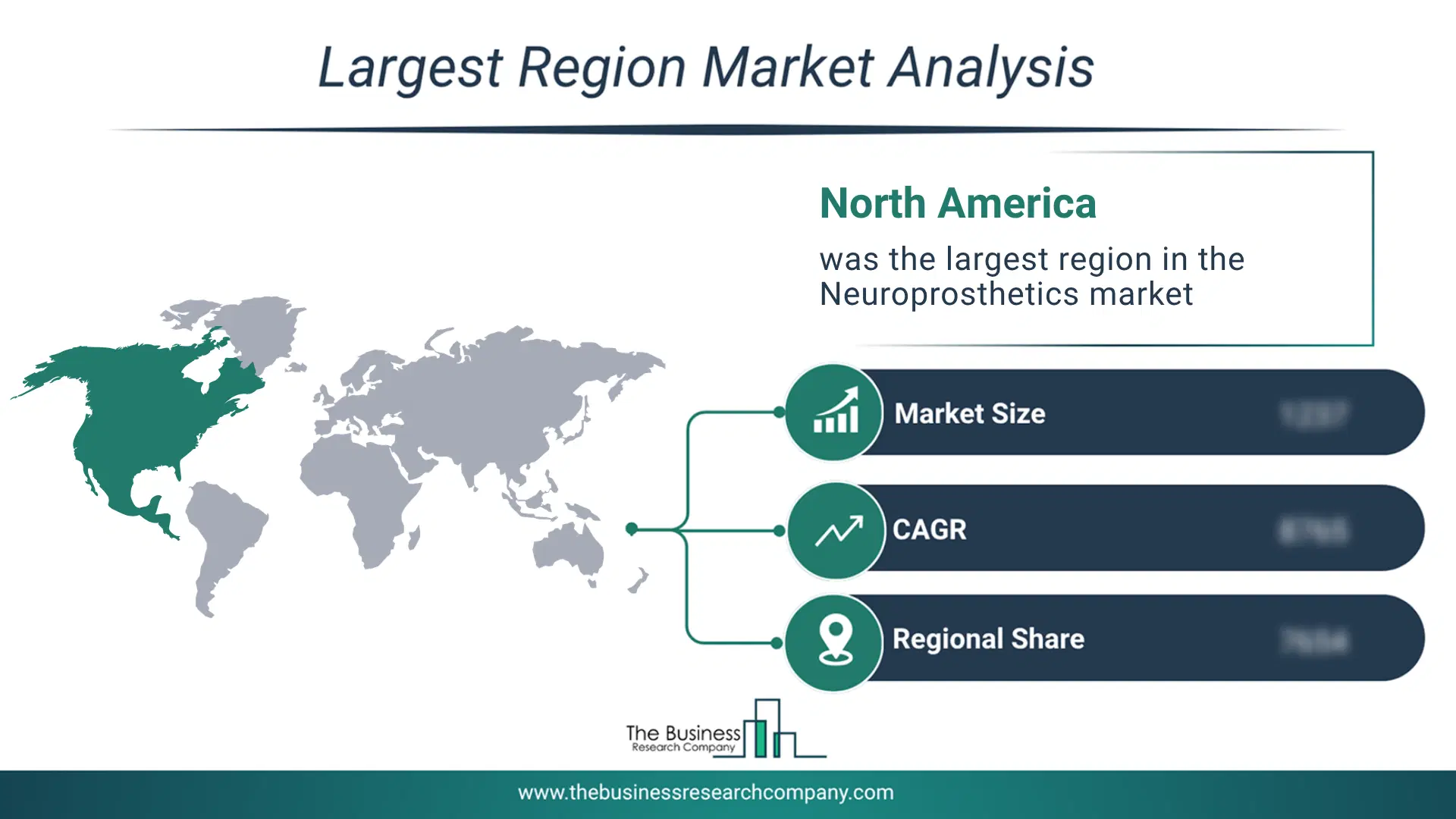
Regional Outlook
North America was the largest region in the neuroprosthetics market in 2025. Asia-Pacific is expected to be the fastest-growing region in the forecast period. The regions covered in this market report are Asia-Pacific, South East Asia, Western Europe, Eastern Europe, North America, South America, Middle East, Africa. The countries covered in this market report are Australia, Brazil, China, France, Germany, India, Indonesia, Japan, Taiwan, Russia, South Korea, UK, USA, Canada, Italy, Spain.What Defines the Neuroprosthetics Market?
The neuroprosthetics market includes revenues earned by entities by peripheral nerve, brain-computer interface, electro stimulation, neurostimulation, cochlear implant, stimulation, femoral nerve and carbon nanotube. The market value includes the value of related goods sold by the service provider or included within the service offering. Only goods and services traded between entities or sold to end consumers are included.How is Market Value Defined and Measured?
The market value is defined as the revenues that enterprises gain from the sale of goods and/or services within the specified market and geography through sales, grants, or donations in terms of the currency (in USD unless otherwise specified). The revenues for a specified geography are consumption values that are revenues generated by organizations in the specified geography within the market, irrespective of where they are produced. It does not include revenues from resales along the supply chain, either further along the supply chain or as part of other products.
This chart presents market attractiveness based on a quantitative evaluation of growth, competition, strategic alignment, and risk, offering a clear view of opportunity areas for decision-making. This chart is for illustrative purposes; the full report contains the complete analysis.

This chart highlights the Total Addressable Market (TAM) by estimating the maximum revenue opportunity using an assumption-driven approach, supporting strategic planning and opportunity sizing across markets. The chart is illustrative; the full report provides a more comprehensive analysis.
What Key Data and Analysis Are Included in the Neuroprosthetics Market Report 2026?
The neuroprosthetics market research report is one of a series of new reports from The Business Research Company that provides market statistics, including industry global market size, regional shares, competitors with the market share, detailed market segments, market trends and opportunities, and any further data you may need to thrive in the neuroprosthetics industry. The market research report delivers a complete perspective of everything you need, with an in-depth analysis of the current and future state of the industry.Neuroprosthetics Market Report Forecast Analysis
| Report Attribute | Details |
|---|---|
| Market Size Value In 2026 | $13.39 billion |
| Revenue Forecast In 2030 | $23.1 billion |
| Growth Rate | CAGR of 14.6% from 2026 to 2030 |
| Base Year For Estimation | 2025 |
| Actual Estimates/Historical Data | 2020-2025 |
| Forecast Period | 2026 - 2030 |
| Market Representation | Revenue in USD Billion and CAGR from 2026 to 2030 |
| Segments Covered | Type, Technique, Application |
| Regional Scope | Asia-Pacific, Western Europe, Eastern Europe, North America, South America, Middle East, Africa |
| Country Scope | The countries covered in the report are Australia, Brazil, China, France, Germany, India, Indonesia, Japan, Taiwan, Russia, South Korea, UK, USA, Canada, Italy, Spain |
| Key Companies Profiled | Abbott Laboratories, Boston Scientific Corp., Cochlear Ltd., Demant AS, LivaNova plc, MED-EL GmbH, Neuropace Inc., Nevro Corp., Oticon US Inc., Retina Implant AG, Second Sight Medical Products Inc., Sonova Holding AG, St. Jude Medical Inc., Aleva Neurotherapeutics SA, Axonics Modulation Technologies Inc., Bionic Vision Technologies Pty Ltd., Blackrock Microsystems LLC, Cognixion, Cyberonics Inc., Medtronic plc, NeuroKinetics Inc., NeuroMetrix Inc., Pixium Vision SA, SPR Therapeutics Inc., Synapse Biomedical Inc., Synchron Inc. |
| Customization Scope | Request for Customization |
| Pricing And Purchase Options | Explore Purchase Options |