
Next Generation Complement Therapeutics Market Report 2026
Global Outlook – By Type Of Therapy (Monotherapy, Adjunctive Therapy), By Molecule Type (Biologic, Small Molecule), By Route Of Administration (Intravenous, Oral, Intravitreal, Subcutaneous), By Indication (Paroxysmal Nocturnal Hemoglobinuria, Geographic Atrophy (GA) Secondary To Age-Related Macular Degeneration, Generalized Myasthenia Gravis, Atypical Hemolytic Uremic Syndrome, Other Indications), By Therapeutic Area (Hematology, Ophthalmology, Neurology, Immunology Or Rheumatology, Other Therapeutic Areas) – Market Size, Trends, Strategies, and Forecast to 2030
Next Generation Complement Therapeutics Market Overview
• Next Generation Complement Therapeutics market size has reached to $7.38 billion in 2025 • Expected to grow to $15.29 billion in 2030 at a compound annual growth rate (CAGR) of 15.6% • Growth Driver: Rise In Chronic Diseases Fueling The Growth Of The Market Due To Increasing Demand For Targeted Anti-Inflammatory Treatments • Market Trend: Next-Generation Complement Therapeutics Offering Targeted, Long-acting Treatments For Complement-mediated Disorders • North America was the largest region in 2025 and Asia-Pacific is the fastest growing region.What Is Covered Under Next Generation Complement Therapeutics Market?
Next-generation complement therapeutics are advanced treatments designed to precisely modulate the complement system, a key component of the immune response. These new therapies utilize innovative approaches such as antibody-based therapies, RNA medicines, and gene editing to target complex immune and inflammatory disorders more effectively, with fewer side effects than traditional treatments. The main types of next-generation complement therapeutics are monotherapy and adjunctive therapy. A monotherapy approach means using a complement-targeted drug alone, without combining it with other therapies. These therapies include different molecule types, such as biologics and small molecules, and are administered through several routes of administration, including intravenous, oral, intravitreal, and subcutaneous. These therapies address a range of indications, such as paroxysmal nocturnal hemoglobinuria (PNH), geographic atrophy (GA) secondary to age-related macular degeneration, generalized myasthenia gravis, atypical hemolytic uremic syndrome (aHUS), and others, and are used in several therapeutic areas, including hematology, ophthalmology, neurology, immunology, rheumatology, and others.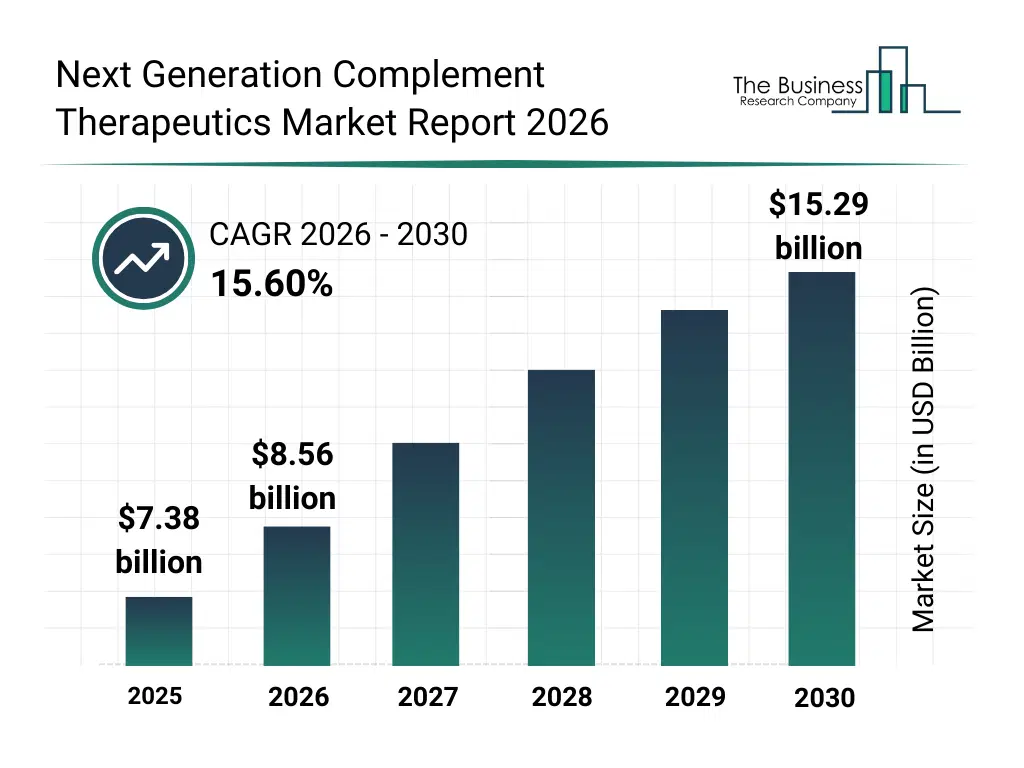
What Is The Next Generation Complement Therapeutics Market Size and Share 2026?
The next generation complement therapeutics market size has grown rapidly in recent years. It will grow from $7.38 billion in 2025 to $8.56 billion in 2026 at a compound annual growth rate (CAGR) of 16.0%. The growth in the historic period can be attributed to limited availability of complement-targeting therapeutics, reliance on conventional immunosuppressive therapies, growing prevalence of rare hematologic and autoimmune disorders, regulatory approvals for first-generation complement inhibitors, increasing clinical trials in hematology and ophthalmology.What Is The Next Generation Complement Therapeutics Market Growth Forecast?
The next generation complement therapeutics market size is expected to see rapid growth in the next few years. It will grow to $15.29 billion in 2030 at a compound annual growth rate (CAGR) of 15.6%. The growth in the forecast period can be attributed to development of novel c3, c5, factor b and factor d inhibitors, expansion of combination therapy approaches, rising adoption of gene and rna-based medicines, increasing investment in rare disease research, growing healthcare expenditure on advanced immune therapies. Major trends in the forecast period include rising adoption of targeted complement therapies for rare diseases, growth in monotherapy and adjunctive therapy approaches, increasing use of biologics and small molecule complement inhibitors, expansion of ophthalmology, hematology, and immunology applications, integration of personalized medicine and gene-based therapeutics.
Global Next Generation Complement Therapeutics Market Segmentation
1) By Type Of Therapy: Monotherapy, Adjunctive Therapy 2) By Molecule Type: Biologic, Small Molecule 3) By Route Of Administration: Intravenous, Oral, Intravitreal, Subcutaneous 4) By Indication: Paroxysmal Nocturnal Hemoglobinuria, Geographic Atrophy (GA) Secondary To Age-Related Macular Degeneration, Generalized Myasthenia Gravis, Atypical Hemolytic Uremic Syndrome, Other Indications 5) By Therapeutic Area: Hematology, Ophthalmology, Neurology, Immunology Or Rheumatology, Other Therapeutic Areas Subsegments: 1) By Monotherapy: C3 Inhibitors, C5 Inhibitors, Factor D Inhibitors, Factor B Inhibitors, C1 Inhibitors, MASP-2 Inhibitors 2) By Adjunctive Therapy: Combination With Immunosuppressants, Combination With Steroids, Combination With Plasma Exchange, Combination With Biologics, Combination With Chemotherapeutics, Combination With AnticoagulantsWhat Is The Driver Of The Next Generation Complement Therapeutics Market?
The rise in prevalence of chronic diseases is expected to drive the growth of the next-generation complement therapeutics market going forward. Chronic disease is a long-lasting health condition that requires ongoing management to control symptoms and improve quality of life. The rise in chronic diseases is driven by sedentary lifestyles that limit physical activity, disrupt metabolism, and elevate long-term health risks. Next-generation complement therapeutics treat chronic diseases by precisely targeting and modulating the overactive complement system to reduce inflammation and prevent tissue damage. For instance, in June 2024, according to the National Health Service, a UK-based government department, 3,615,330 individuals registered with a general practitioner (GP) were diagnosed with non-diabetic hyperglycemia or pre-diabetes (a condition with elevated blood sugar levels, not high enough to be classified as diabetes) in 2023, marking an 18% increase from 3,065,825 cases in 2022. Therefore, the rise in prevalence of chronic diseases is driving the growth of the next-generation complement therapeutics market.Key Players In The Global Next Generation Complement Therapeutics Market
Major companies operating in the next generation complement therapeutics market are AstraZeneca PLC, Novartis AG, Amgen Inc., Regeneron Pharmaceuticals Inc., Genentech Inc., Genmab A/S, Mallinckrodt Pharmaceuticals Ltd., Alnylam Pharmaceuticals Inc., Apellis Pharmaceuticals Inc., Omeros Corporation, CANbridge Pharmaceuticals Inc., Alexion Pharmaceuticals Inc., Molecular Partners AG, NovelMed Therapeutics Inc., InflaRx GmbH, Amyndas Pharmaceuticals S.A., Kira Pharmaceuticals Inc., ReAlta Life Sciences Inc.
This chart is for illustrative purposes; the full report includes a detailed competitor analysis and comprehensive overview of the top 10 companies in the market.
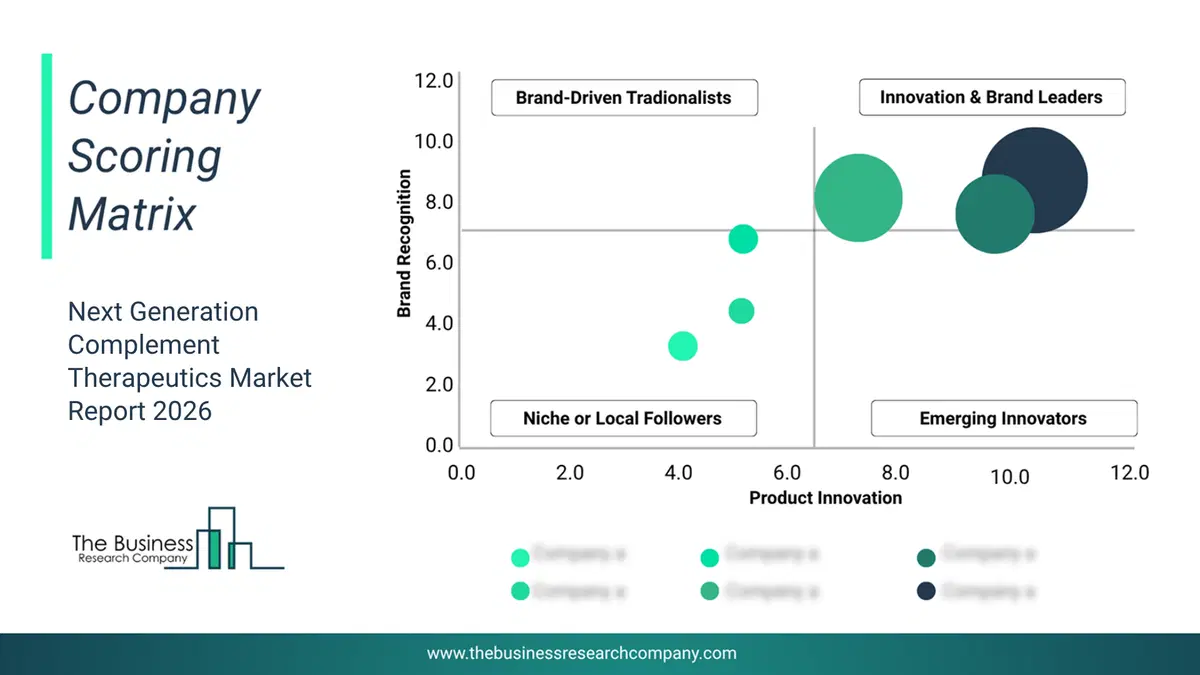
This chart maps companies by product innovation and brand strength, with bubble size indicating relative revenue, helping identify market leaders, challengers, and niche players. This is an illustrative chart; the full report provides a complete and accurate competitive analysis.
Global Next Generation Complement Therapeutics Market Trends and Insights
Major companies operating in the Next Generation Complement Therapeutics market are focusing on developing innovative solutions, such as targeted C5 complement inhibitors, to meet the rising demand for effective treatments for rare and severe complement-mediated diseases. Targeted C5 complement inhibitors are designed to selectively block the C5 protein in the complement cascade, preventing the formation of the membrane attack complex, which is a critical step in immune-mediated tissue damage. For instance, in February 2024, Chugai Pharmaceutical Co., Ltd., a Japan-based biopharmaceutical company, launched PEGPH20 (Pegcetacoplan), an innovative C5-targeted complement inhibitor. PEGPH20 is a synthetic peptide conjugate designed to selectively inhibit complement C5 activation, thereby preventing hemolysis and inflammation associated with conditions such as paroxysmal nocturnal hemoglobinuria (PNH) and other complement-driven disorders. The therapy provides benefits such as subcutaneous administration, improved patient compliance, and a favorable safety profile compared to traditional systemic complement inhibitors.What Are Latest Mergers And Acquisitions In The Next Generation Complement Therapeutics Market?
In March 2023, Pharmaron Inc., a China-based healthcare technology company, partnered with Complement Therapeutics Inc. to accelerate the development of complement-targeted therapies. With this partnership, Pharmaron and Complement Therapeutics aim to enhance efficiency, data quality, and time-to-market for novel therapeutics by combining Pharmaron’s integrated preclinical and clinical R&D capabilities with Complement’s drug discovery expertise, while supporting the development of innovative treatments for rare and autoimmune diseases. Complement Therapeutics Inc. is a US-based biotechnology company that specializes in developing therapies targeting the complement system for rare and autoimmune conditions.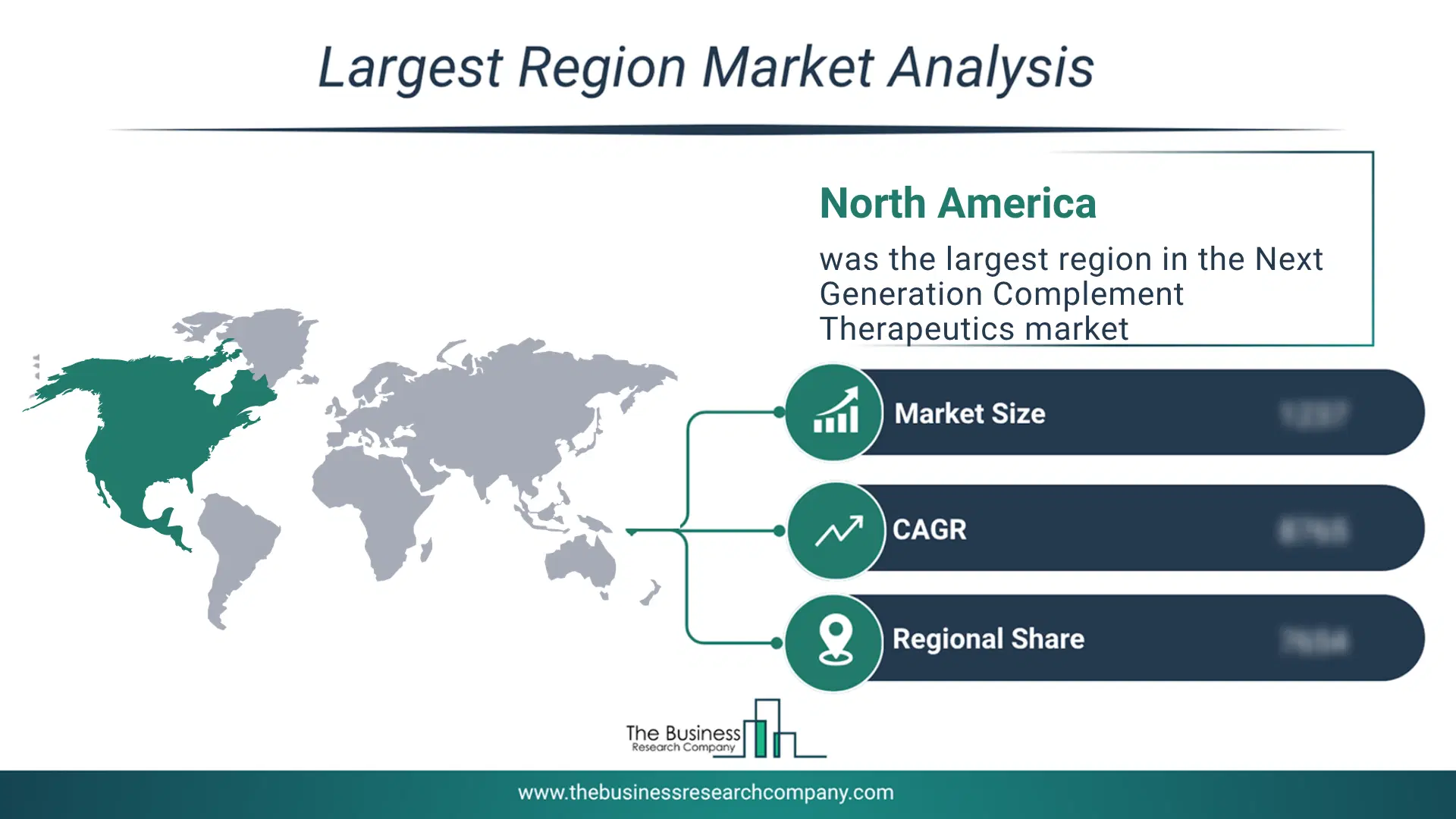
Regional Insights
North America was the largest region in the next generation complement therapeutics market in 2025. Asia-Pacific is expected to be the fastest-growing region in the forecast period. The regions covered in this market report are Asia-Pacific, South East Asia, Western Europe, Eastern Europe, North America, South America, Middle East, Africa. The countries covered in this market report are Australia, Brazil, China, France, Germany, India, Indonesia, Japan, Taiwan, Russia, South Korea, UK, USA, Canada, Italy, Spain.What Defines the Next Generation Complement Therapeutics Market?
The next-generation complement therapeutics market consists of revenues earned by entities by providing services such as antibody engineering services, preclinical research services, biomanufacturing services, clinical trial management services, and regulatory consulting services. The market value includes the value of related goods sold by the service provider or included within the service offering. The next-generation complement therapeutics market also includes sales of monoclonal antibodies, gene editing tools, small molecule inhibitors, recombinant proteins, and fusion proteins. Values in this market are ‘factory gate’ values, that is, the value of goods sold by the manufacturers or creators of the goods, whether to other entities (including downstream manufacturers, wholesalers, distributors, and retailers) or directly to end customers. The value of goods in this market includes related services sold by the creators of the goods.How is Market Value Defined and Measured?
The market value is defined as the revenues that enterprises gain from the sale of goods and/or services within the specified market and geography through sales, grants, or donations in terms of the currency (in USD unless otherwise specified). The revenues for a specified geography are consumption values that are revenues generated by organizations in the specified geography within the market, irrespective of where they are produced. It does not include revenues from resales along the supply chain, either further along the supply chain or as part of other products.
This chart presents market attractiveness based on a quantitative evaluation of growth, competition, strategic alignment, and risk, offering a clear view of opportunity areas for decision-making. This chart is for illustrative purposes; the full report contains the complete analysis.

This chart highlights the Total Addressable Market (TAM) by estimating the maximum revenue opportunity using an assumption-driven approach, supporting strategic planning and opportunity sizing across markets. The chart is illustrative; the full report provides a more comprehensive analysis.
What Key Data and Analysis Are Included in the Next Generation Complement Therapeutics Market Report 2026?
The next generation complement therapeutics market research report is one of a series of new reports from The Business Research Company that provides market statistics, including industry global market size, regional shares, competitors with the market share, detailed market segments, market trends and opportunities, and any further data you may need to thrive in the next generation complement therapeutics industry. The market research report delivers a complete perspective of everything you need, with an in-depth analysis of the current and future state of the industry.Next Generation Complement Therapeutics Market Report Forecast Analysis
| Report Attribute | Details |
|---|---|
| Market Size Value In 2026 | $8.56 billion |
| Revenue Forecast In 2030 | $15.29 billion |
| Growth Rate | CAGR of 16.0% from 2026 to 2030 |
| Base Year For Estimation | 2025 |
| Actual Estimates/Historical Data | 2020-2025 |
| Forecast Period | 2026 - 2030 |
| Market Representation | Revenue in USD Billion and CAGR from 2026 to 2030 |
| Segments Covered | Type Of Therapy, Molecule Type, Route Of Administration, Indication, Therapeutic Area |
| Regional Scope | Asia-Pacific, Western Europe, Eastern Europe, North America, South America, Middle East, Africa |
| Country Scope | The countries covered in the report are Australia, Brazil, China, France, Germany, India, Indonesia, Japan, Taiwan, Russia, South Korea, UK, USA, Canada, Italy, Spain. |
| Key Companies Profiled | AstraZeneca PLC, Novartis AG, Amgen Inc., Regeneron Pharmaceuticals Inc., Genentech Inc., Genmab A/S, Mallinckrodt Pharmaceuticals Ltd., Alnylam Pharmaceuticals Inc., Apellis Pharmaceuticals Inc., Omeros Corporation, CANbridge Pharmaceuticals Inc., Alexion Pharmaceuticals Inc., Molecular Partners AG, NovelMed Therapeutics Inc., InflaRx GmbH, Amyndas Pharmaceuticals S.A., Kira Pharmaceuticals Inc., ReAlta Life Sciences Inc. |
| Customization Scope | Request for Customization |
| Pricing And Purchase Options | Explore Purchase Options |