
Next Generation Drug Conjugates Market Report 2026
Global Outlook – By Next-Generation Drug Conjugates Type (Peptide Receptor Radionuclide Therapy, Ligand Mediated RNAI Conjugate, Ligand Conjugated Anti Sense Medicine, Peptide Drug Conjugate), By Targeting Ligand Type (Amino Sugar, Lipid, Peptide, Small Molecule, Virus-Like Particles), By Payload Type (Oligonucleotide, Radionuclide, Peptide, Small Molecule), By Therapy (Monotherapy, Combination Therapy), By Indication (Gastroenteropancreatic Neuroendocrine Tumors, Prostate Cancer, Leptomeningeal Carcinomatosis Caused By Breast Cancer Brain Metastases, Hereditary Transthyretin Amyloidosis, Atherosclerotic Cardiovascular Diseases, Severe Hypertriglyceridemia, Hereditary Angioedema, Acute Hepatic Porphyria, Other Indications) – Market Size, Trends, Strategies, and Forecast to 2030
Next Generation Drug Conjugates Market Overview
• Next Generation Drug Conjugates market size has reached to $2.47 billion in 2025 • Expected to grow to $5.1 billion in 2030 at a compound annual growth rate (CAGR) of 15.7% • Growth Driver: Rising Prevalence Of Cancer Is Driving The Growth Of The Next Generation Drug Conjugates Market • Market Trend: Strategic Partnerships Driving Innovation In Next-Generation Drug Conjugates • North America was the largest region in 2025.What Is Covered Under Next Generation Drug Conjugates Market?
Next-generation drug conjugates refer to advanced formulations of drug conjugates designed to improve the efficacy and safety of targeted therapies. Next-generation drug conjugates utilize advanced targeting technologies and enhanced payloads to deliver potent therapies directly to disease cells with greater precision and reduced side effects. The main types of next-generation drug conjugates are peptide receptor radionuclide therapy, ligand mediated RNAI conjugate, ligand conjugated anti sense medicine, and peptide drug conjugate. Peptide Receptor Radionuclide Therapy (PRRT) is a targeted cancer treatment that uses radioactive peptides to bind to and destroy tumor cells expressing specific receptors. The targeting ligands include amino sugars, lipids, peptides, small molecules, and virus-like particles, with payload types such as oligonucleotides, radionuclides, peptides, and small molecules. The therapy can be administered as monotherapy or combination therapy for various indications, including gastroenteropancreatic neuroendocrine tumors, prostate cancer, leptomeningeal carcinomatosis caused by breast cancer brain metastases, hereditary transthyretin amyloidosis, atherosclerotic cardiovascular diseases, severe hypertriglyceridemia, hereditary angioedema, acute hepatic porphyria, and others.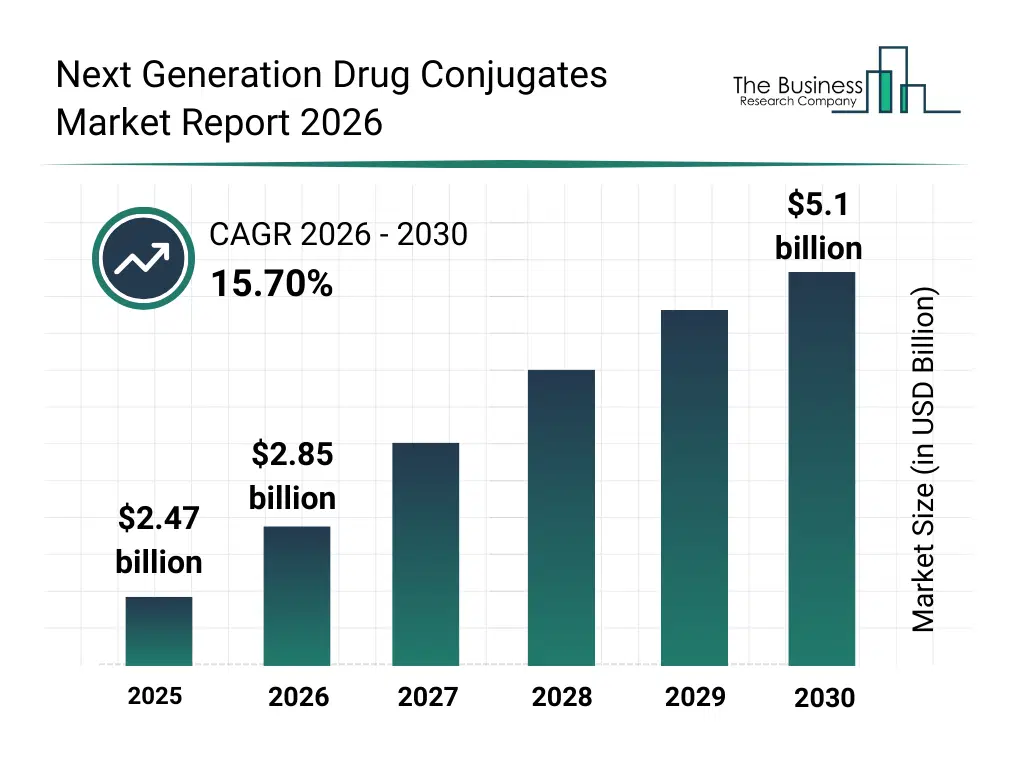
What Is The Next Generation Drug Conjugates Market Size and Share 2026?
The next generation drug conjugates market size has grown rapidly in recent years. It will grow from $2.47 billion in 2025 to $2.85 billion in 2026 at a compound annual growth rate (CAGR) of 15.5%. The growth in the historic period can be attributed to limitations of conventional chemotherapy, advancements in biologics research, increased cancer prevalence, growth of specialty pharma companies, clinical success of early drug conjugates.What Is The Next Generation Drug Conjugates Market Growth Forecast?
The next generation drug conjugates market size is expected to see rapid growth in the next few years. It will grow to $5.1 billion in 2030 at a compound annual growth rate (CAGR) of 15.7%. The growth in the forecast period can be attributed to expansion of personalized medicine, growing oncology drug pipelines, innovation in linker and payload chemistry, rising r&d investments, increasing regulatory approvals. Major trends in the forecast period include rising adoption of targeted drug delivery systems, increasing focus on precision oncology therapies, expansion of advanced payload technologies, growing clinical use of conjugated therapeutics, higher demand for safer high-efficacy drugs.
Global Next Generation Drug Conjugates Market Segmentation
1) By Next-Generation Drug Conjugates Type: Peptide Receptor Radionuclide Therapy, Ligand Mediated RNAI Conjugate, Ligand Conjugated Anti Sense Medicine, Peptide Drug Conjugate 2) By Targeting Ligand Type: Amino Sugar, Lipid, Peptide, Small Molecule, Virus-Like Particles 3) By Payload Type: Oligonucleotide, Radionuclide, Peptide, Small Molecule 4) By Therapy: Monotherapy, Combination Therapy 5) By Indication: Gastroenteropancreatic Neuroendocrine Tumors, Prostate Cancer, Leptomeningeal Carcinomatosis Caused By Breast Cancer Brain Metastases, Hereditary Transthyretin Amyloidosis, Atherosclerotic Cardiovascular Diseases, Severe Hypertriglyceridemia, Hereditary Angioedema, Acute Hepatic Porphyria, Other Indications Subsegments: 1) By Peptide Receptor Radionuclide Therapy (PRRT): Somatostatin Analogues, Radiolabeled Peptides 2) By Ligand Mediated RNAi Conjugate: SiRNA Ligand Conjugates, ShRNA Ligand Conjugates 3) By Ligand Conjugated Anti-Sense Medicine: Oligonucleotide Ligand Conjugates, Antisense Oligonucleotide Ligand Conjugates 4) By Peptide Drug Conjugate: Cytotoxic Peptide Conjugates, Therapeutic Peptide ConjugatesWhat Is The Driver Of The Next Generation Drug Conjugates Market?
The rising prevalence of cancer is expected to propel the growth of the next-generation drug conjugates market going forward. Cancer refers to a group of diseases characterized by the uncontrolled growth and spread of abnormal cells in the body. The rise in cancer incidence is primarily due to an aging population, lifestyle factors, environmental exposures, improved detection, genetic factors, and infectious agents. Next-generation drug conjugates help mitigate cancer by delivering targeted therapies directly to cancer cells, enhancing treatment efficacy while minimizing damage to healthy tissues. For instance, in February 2025, according to Cancer Australia, an Australia-based government agency, there were 4,641 new pancreatic cancer cases in 2024, with 2,414 in males and 2,227 in females, marking an increase from 3,968 cases in 2023. Therefore, the rising prevalence of cancer is driving the growth of the next-generation drug conjugates market.Key Players In The Global Next Generation Drug Conjugates Market
Major companies operating in the next generation drug conjugates market are Pfizer Inc., Johnson & Johnson, Merck & Co. Inc., AbbVie Inc., Novartis International AG, AstraZeneca PLC, Daiichi Sankyo Company Limited, Eisai Co Ltd., Bicycle Therapeutics plc, Zymeworks Inc., Genentech Inc., MacroGenics Inc., Abzena plc, Innate Pharma S.A., CytomX Therapeutics Inc., ImmunoGen Inc., Ascentage Pharma Group International, Mersana Therapeutics Inc., Antengene Corporation Limited, Nurix Therapeutics Inc., Tubulis GmbH
This chart is for illustrative purposes; the full report includes a detailed competitor analysis and comprehensive overview of the top 10 companies in the market.
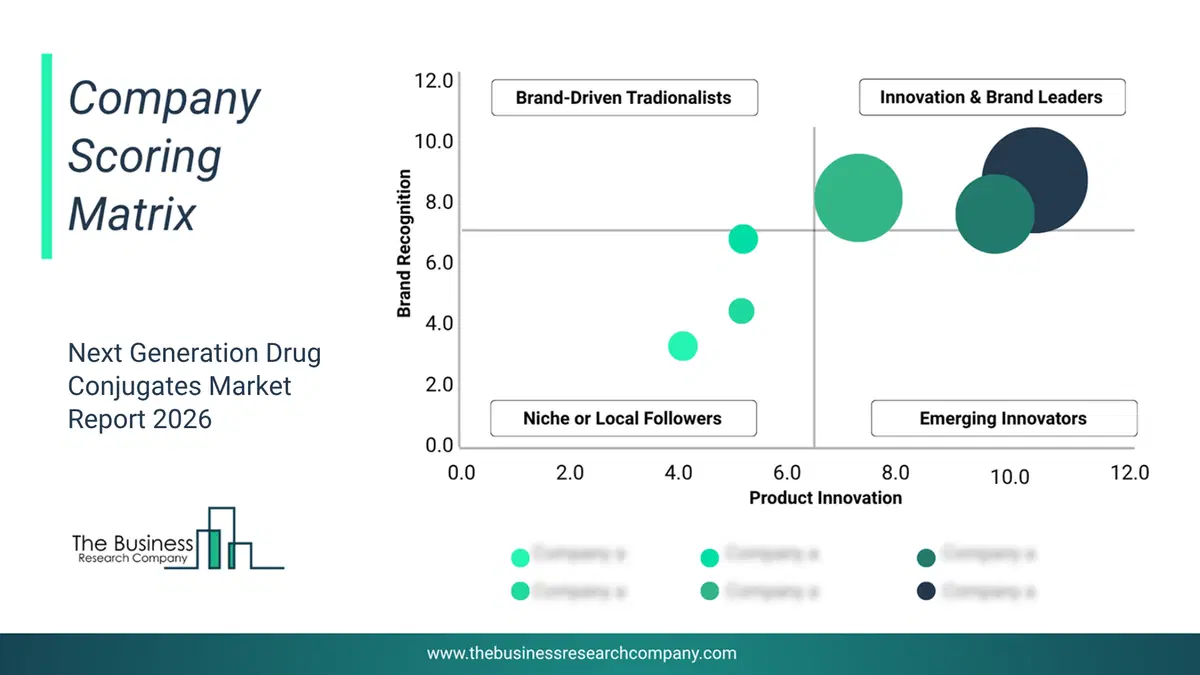
This chart maps companies by product innovation and brand strength, with bubble size indicating relative revenue, helping identify market leaders, challengers, and niche players. This is an illustrative chart; the full report provides a complete and accurate competitive analysis.
Global Next Generation Drug Conjugates Market Trends and Insights
Major companies operating in the next-generation drug conjugates market are adopting a strategic partnerships approach to enhance research and development capabilities, accelerate product innovation, and expand their market presence. Strategic partnerships refer to a process in which companies leverage each other's strengths and resources to achieve mutual benefits and success. For instance, in November 2023, Prelude Therapeutics Incorporated, a US-based clinical-stage precision oncology company, partnered with AbCellera Biologics Inc., a Canada-based biotechnology company, to develop first-in-class precision antibody-drug conjugates (ADCs) for oncology. The partnership will concentrate on the discovery, development, and commercialization of innovative antibody-drug conjugates (ADCs), starting with a program that targets a SMARCA degrader linked to a novel antibody. This strategy aims to broaden the therapeutic applications of Prelude's small-molecule SMARCA2 selective degraders to a wider patient population, especially those with cancers unrelated to SMARCA4 mutations.What Are Latest Mergers And Acquisitions In The Next Generation Drug Conjugates Market?
In March 2024, Johnson & Johnson, a US-based manufacturer of pharmaceutical products and medical devices, acquired Ambrx Biopharma for $2 billion. Through this acquisition, Johnson & Johnson aims to enhance its oncology portfolio and advance the development of next-generation antibody drug conjugates aimed at transforming cancer treatment. Ambrx Biopharma is a US-based clinical-stage biopharmaceutical company and involves next-generation drug conjugates.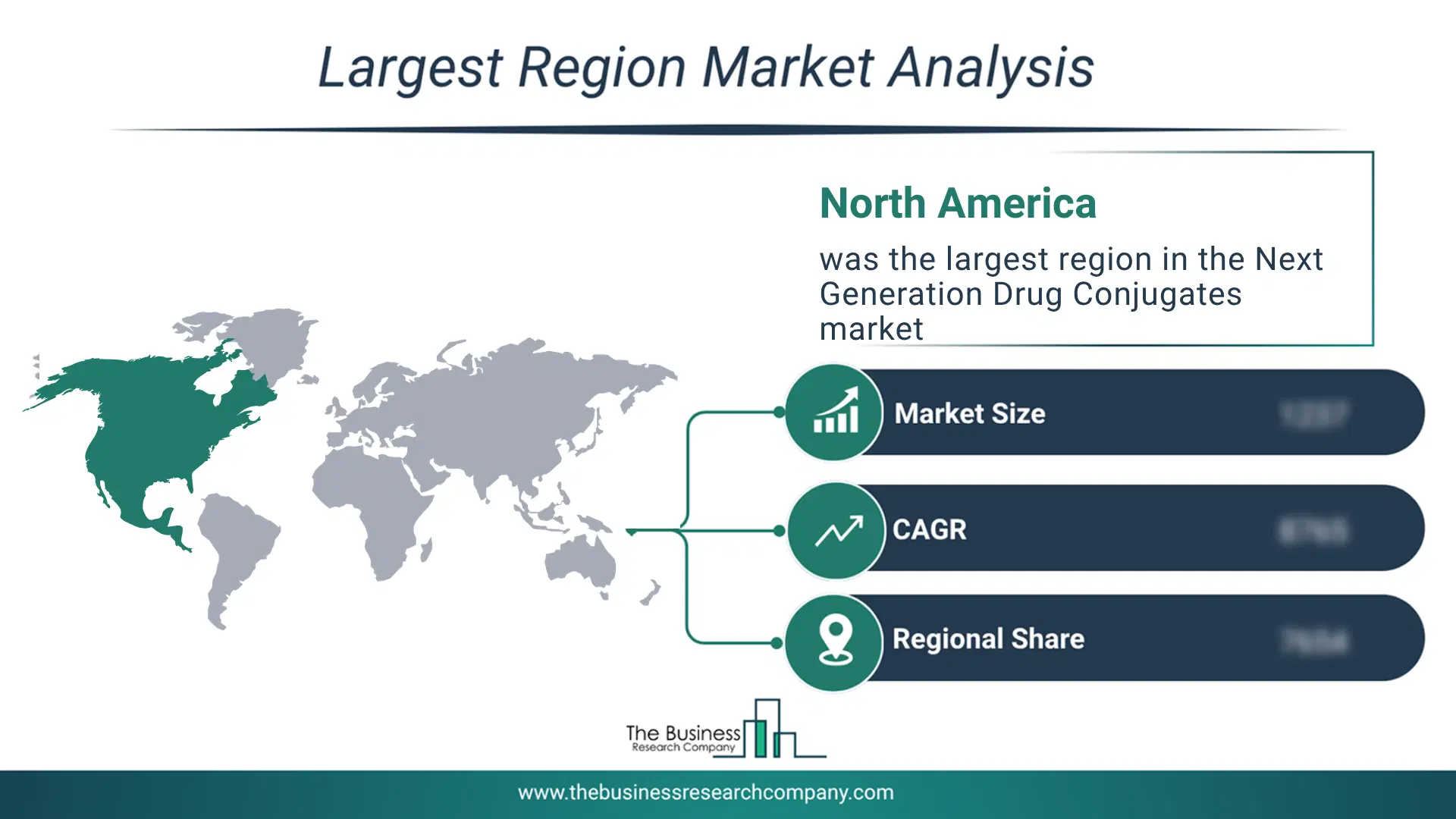
Regional Insights
North America was the largest region in the next generation drug conjugates market in 2025. The regions covered in this market report are Asia-Pacific, South East Asia, Western Europe, Eastern Europe, North America, South America, Middle East, Africa. The countries covered in this market report are Australia, Brazil, China, France, Germany, India, Indonesia, Japan, Taiwan, Russia, South Korea, UK, USA, Canada, Italy, Spain.What Defines the Next Generation Drug Conjugates Market?
The next-generation drug conjugates market consists of revenues earned by entities by providing services such as targeted cancer therapies, gene therapy conjugates, and combination therapies. The market value includes the value of related goods sold by the service provider or included within the service offering. The next-generation drug conjugates market also includes sales of small molecule drug conjugates, RNA-targeted conjugates, and enzyme-linked drug conjugates. Values in this market are ‘factory gate’ values, that is, the value of goods sold by the manufacturers or creators of the goods, whether to other entities (including downstream manufacturers, wholesalers, distributors, and retailers) or directly to end customers. The value of goods in this market includes related services sold by the creators of the goods.How is Market Value Defined and Measured?
The market value is defined as the revenues that enterprises gain from the sale of goods and/or services within the specified market and geography through sales, grants, or donations in terms of the currency (in USD unless otherwise specified). The revenues for a specified geography are consumption values that are revenues generated by organizations in the specified geography within the market, irrespective of where they are produced. It does not include revenues from resales along the supply chain, either further along the supply chain or as part of other products.
This chart presents market attractiveness based on a quantitative evaluation of growth, competition, strategic alignment, and risk, offering a clear view of opportunity areas for decision-making. This chart is for illustrative purposes; the full report contains the complete analysis.

This chart highlights the Total Addressable Market (TAM) by estimating the maximum revenue opportunity using an assumption-driven approach, supporting strategic planning and opportunity sizing across markets. The chart is illustrative; the full report provides a more comprehensive analysis.
What Key Data and Analysis Are Included in the Next Generation Drug Conjugates Market Report 2026?
The next generation drug conjugates market research report is one of a series of new reports from The Business Research Company that provides market statistics, including industry global market size, regional shares, competitors with the market share, detailed market segments, market trends and opportunities, and any further data you may need to thrive in the next generation drug conjugates industry. The market research report delivers a complete perspective of everything you need, with an in-depth analysis of the current and future state of the industry.Next Generation Drug Conjugates Market Report Forecast Analysis
| Report Attribute | Details |
|---|---|
| Market Size Value In 2026 | $2.85 billion |
| Revenue Forecast In 2030 | $5.1 billion |
| Growth Rate | CAGR of 15.5% from 2026 to 2030 |
| Base Year For Estimation | 2025 |
| Actual Estimates/Historical Data | 2020-2025 |
| Forecast Period | 2026 - 2030 |
| Market Representation | Revenue in USD Billion and CAGR from 2026 to 2030 |
| Segments Covered | Next-Generation Drug Conjugates Type, Targeting Ligand Type, Payload Type, Therapy, Indication |
| Regional Scope | Asia-Pacific, Western Europe, Eastern Europe, North America, South America, Middle East, Africa |
| Country Scope | The countries covered in the report are Australia, Brazil, China, France, Germany, India, Indonesia, Japan, Taiwan, Russia, South Korea, UK, USA, Canada, Italy, Spain. |
| Key Companies Profiled | Pfizer Inc., Johnson & Johnson, Merck & Co. Inc., AbbVie Inc., Novartis International AG, AstraZeneca PLC, Daiichi Sankyo Company Limited, Eisai Co Ltd., Bicycle Therapeutics plc, Zymeworks Inc., Genentech Inc., MacroGenics Inc., Abzena plc, Innate Pharma S.A., CytomX Therapeutics Inc., ImmunoGen Inc., Ascentage Pharma Group International, Mersana Therapeutics Inc., Antengene Corporation Limited, Nurix Therapeutics Inc., Tubulis GmbH |
| Customization Scope | Request for Customization |
| Pricing And Purchase Options | Explore Purchase Options |