
Next-Generation Sequencing Data Analysis Market Report 2026
Global Outlook – By Product (Services, Next-Generation Sequencing (NGS) Commercial Software), By Read Length (Short Read Sequencing, Long Read Sequencing, Very Long Read Sequencing), By Mode (In-House, Outsourced), By Workflow (Primary, Secondary, Tertiary), By End-User (Academic Research, Clinical Research, Hospitals And Clinics, Pharma And Biotech Entities, Other End-Users) - Market Size, Trends, Strategies, and Forecast to 2030
Next-Generation Sequencing Data Analysis Market Overview
• Next-Generation Sequencing Data Analysis market size has reached to $1.48 billion in 2025 • Expected to grow to $3.93 billion in 2030 at a compound annual growth rate (CAGR) of 21.5% • Growth Driver: Rising Cancer Prevalence Driving Growth In The Next-Generation Sequencing Data Analysis Market • Market Trend: Advancements In Bioinformatics Software Revolutionize NGS Data Analysis For Clinical And Research Applications • North America was the largest region in 2025 and Asia-Pacific is the fastest growing region.What Is Covered Under Next-Generation Sequencing Data Analysis Market?
Next-generation sequencing (NGS) data analysis is the process of understanding the large amounts of data generated by high-throughput sequencing technologies for DNA or RNA. Its primary purpose is to decipher genetic variants and mutations, which helps with illness detection, biomarker discovery, and biological process understanding. This study is critical for increasing customized medicine, focused treatments, and improving diagnostic precision. The main product types of next-generation sequencing data analysis are services and next-generation sequencing (NGS) commercial software. Services refer to a broad range of professional offerings dedicated to handling and analyzing complex genomic data, aiding researchers and clinicians in extracting valuable insights from their sequencing results. The read length includes short read sequencing, long read sequencing, and very long read sequencing with different modes, such as in-house and outsourced. They are used for various workflows, including primary, secondary, and tertiary. They are used by several end-users, including academic research, clinical research, hospitals and clinics, pharma and biotech entities, and others.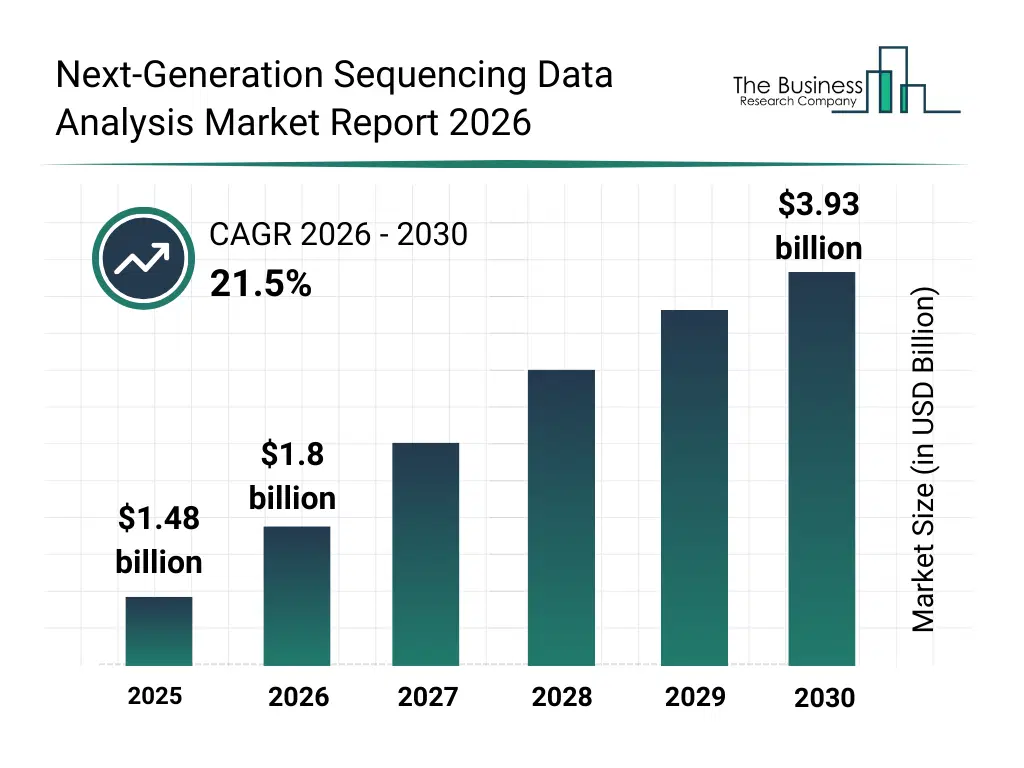
What Is The Next-Generation Sequencing Data Analysis Market Size and Share 2026?
The next-generation sequencing data analysis market size has grown exponentially in recent years. It will grow from $1.48 billion in 2025 to $1.8 billion in 2026 at a compound annual growth rate (CAGR) of 21.9%. The growth in the historic period can be attributed to growth in ngs data generation volumes, increasing use of genomic data in research, expansion of clinical sequencing programs, improvements in computational infrastructure, rising adoption of outsourced bioinformatics services.What Is The Next-Generation Sequencing Data Analysis Market Growth Forecast?
The next-generation sequencing data analysis market size is expected to see exponential growth in the next few years. It will grow to $3.93 billion in 2030 at a compound annual growth rate (CAGR) of 21.5%. The growth in the forecast period can be attributed to increasing integration of ai in variant interpretation, rising demand for real-time genomic insights, expansion of personalized medicine applications, growing investments in secure genomic data platforms, increasing regulatory focus on data compliance. Major trends in the forecast period include increasing adoption of AI-driven bioinformatics platforms, rising demand for cloud-based ngs data analysis, growing use of long-read sequencing analytics, expansion of integrated genomic pipelines, enhanced focus on data interpretation accuracy.
Global Next-Generation Sequencing Data Analysis Market Segmentation
1) By Product: Services, Next-Generation Sequencing (NGS) Commercial Software 2) By Read Length: Short Read Sequencing, Long Read Sequencing, Very Long Read Sequencing 3) By Mode: In-House, Outsourced 4) By Workflow: Primary, Secondary, Tertiary 5) By End-User: Academic Research, Clinical Research, Hospitals And Clinics, Pharma And Biotech Entities, Other End-Users Subsegments: 1) By Services: Data Analysis Services, Bioinformatics Services, Consulting Services, Training and Support Services 2) By Next-Generation Sequencing (NGS) Commercial Software: Data Management Software, Alignment Software, Variant Calling Software, Visualization Software, Pipeline Management Software, Specialized Analysis SoftwareWhat Is The Driver Of The Next-Generation Sequencing Data Analysis Market?
The increasing cancer prevalence is expected to propel the growth of the next-generation sequencing data analysis market going forward. Cancer refers to a group of diseases characterized by the uncontrolled growth and spread of abnormal cells in the body, which can potentially lead to serious health complications or death if not treated. Poor lifestyle habits, including smoking, excessive alcohol consumption, and diets rich in processed foods and low in fruits and vegetables, can significantly increase the risk of cancer. Next-generation sequencing data analysis helps cancer treatment by enabling precise identification of genetic mutations, leading to personalized therapies and more effective treatment strategies tailored to the specific genetic profile of an individual's cancer. For instance, in February 2024, according to the World Health Organization, a Switzerland-based intergovernmental organization, by 2050, over 35 million new cancer cases were projected, representing a 77% increase compared to the estimated 20 million cases in 2022. Therefore, the increasing cancer prevalence is driving the growth of the next-generation sequencing data analysis industry.Key Players In The Global Next-Generation Sequencing Data Analysis Market
Major companies operating in the next-generation sequencing data analysis market are Thermo Fisher Scientific Inc., Agilent Technologies Inc., Illumina Inc., QIAGEN N.V., MedGenome Inc., Element Biosciences Inc., Seven Bridges Genomics Inc., Synthego Corp., Eurofins Genomics India Pvt. Ltd., Fabric Genomics Inc., Strand Life Sciences Pvt. Ltd., Admera Health LLC, Congenica Ltd., DNASTAR Inc., Golden Helix Inc., Geneious, SciGenom Labs Pvt. Ltd., Partek Incorporated, PathoQuest SAS, BioDatomics Inc., BGI Genomics Co. Ltd
This chart is for illustrative purposes; the full report includes a detailed competitor analysis and comprehensive overview of the top 10 companies in the market.
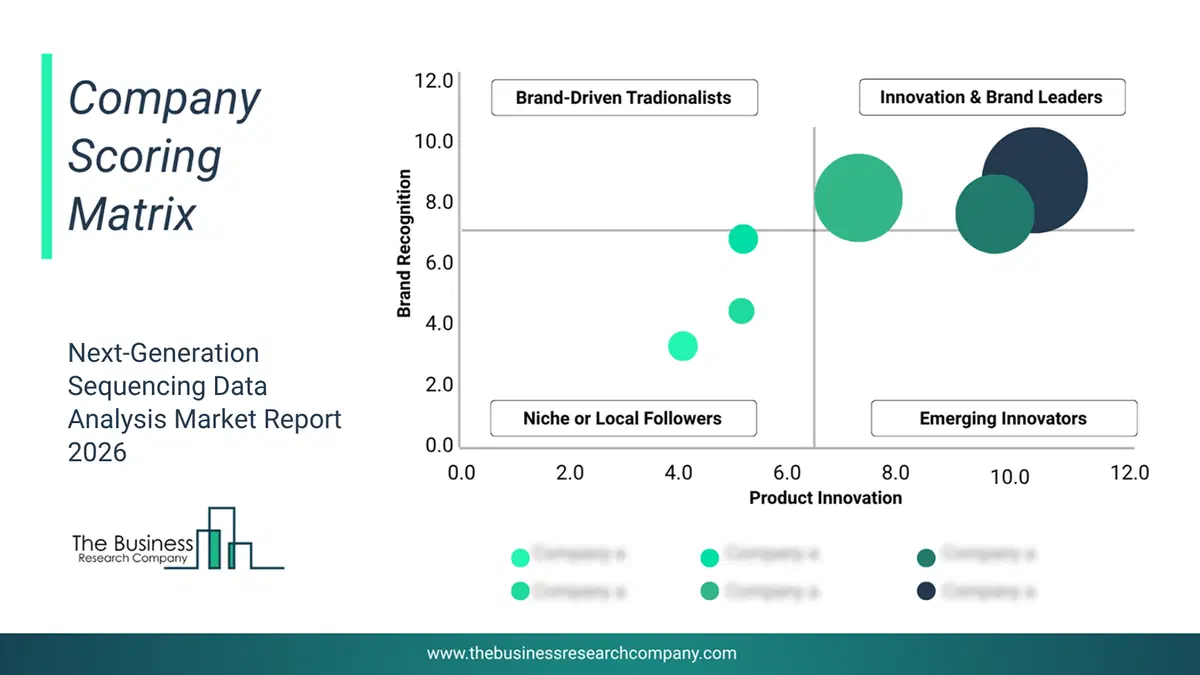
This chart maps companies by product innovation and brand strength, with bubble size indicating relative revenue, helping identify market leaders, challengers, and niche players. This is an illustrative chart; the full report provides a complete and accurate competitive analysis.
Global Next-Generation Sequencing Data Analysis Market Trends and Insights
Major companies operating in the next-generation sequencing data analysis market are focused on developing advanced secondary analysis bioinformatics software to enable faster and more precise identification of genetic variants for research and clinical applications. Secondary analysis bioinformatics software is designed to process raw sequencing data from next-generation sequencing (NGS) and convert it into interpretable formats, such as variant call files (VCF), which detail genetic variants. This software streamlines the analysis of NGS data for research and clinical purposes. For instance, in January 2024, QIAGEN Digital Insights, a US-based bioinformatics business of QIAGEN, launched the QIAGEN CLC Genomics Workbench Premium with LightSpeed technology. This software facilitates next-generation sequencing (NGS) for somatic cancer analysis and rapidly processes whole genome sequencing (WGS) samples. It can analyze 34x human genomes in 25 minutes and 50x exomes in 90 seconds using LightSpeed technology, which efficiently converts raw FASTQ data into interpretable formats. With costs as low as $1 for genomes and a few cents for exomes using cloud infrastructure, it's a cost-effective solution for high-throughput labs. The program runs on ordinary hardware or cloud platforms, providing flexibility and excellent accuracy, making it ideal for clinical applications while minimizing its carbon footprint.What Are Latest Mergers And Acquisitions In The Next-Generation Sequencing Data Analysis Market?
In January 2023, QIAGEN, a Germany-based sample and assay technology company, acquired Verogen for an undisclosed amount. QIAGEN aims to strengthen its position in the forensic and human identification markets, and by gaining exclusive distribution rights to Verogen’s MiSeq FGx Sequencing System and its suite of forensic kits, as well as access to the GEDmatch database and GEDmatch PRO portal, QIAGEN seeks to enhance its capabilities in providing advanced genetic analysis tools for solving complex forensic cases. Verogen is a US-based company specializing in next-generation sequencing technologies, including data analysis software.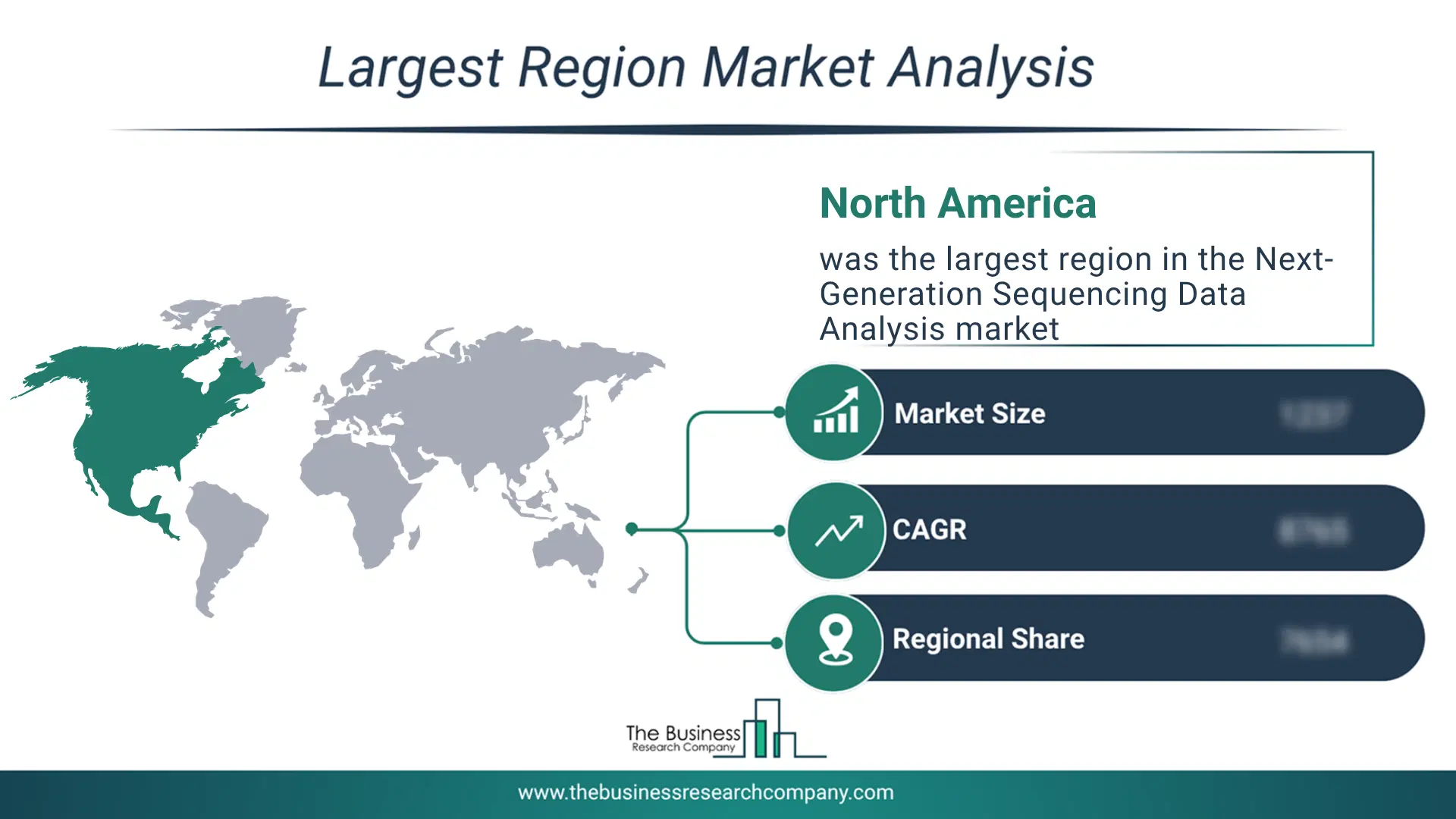
Regional Outlook
North America was the largest region in the next-generation sequencing data analysis market in 2025. Asia-Pacific is expected to be the fastest-growing region in the forecast period. The regions covered in this market report are Asia-Pacific, South East Asia, Western Europe, Eastern Europe, North America, South America, Middle East, Africa. The countries covered in this market report are Australia, Brazil, China, France, Germany, India, Indonesia, Japan, Taiwan, Russia, South Korea, UK, USA, Canada, Italy, Spain.What Defines the Next-Generation Sequencing Data Analysis Market?
The next-generation sequencing data analysis market consists of revenues earned by entities by providing services such as data processing, sequence alignment, gene expression analysis, genomic profiling, report generation. The market value includes the value of related goods sold by the service provider or included within the service offering. Only goods and services traded between entities or sold to end consumers are included.How is Market Value Defined and Measured?
The market value is defined as the revenues that enterprises gain from the sale of goods and/or services within the specified market and geography through sales, grants, or donations in terms of the currency (in USD unless otherwise specified). The revenues for a specified geography are consumption values that are revenues generated by organizations in the specified geography within the market, irrespective of where they are produced. It does not include revenues from resales along the supply chain, either further along the supply chain or as part of other products.
This chart presents market attractiveness based on a quantitative evaluation of growth, competition, strategic alignment, and risk, offering a clear view of opportunity areas for decision-making. This chart is for illustrative purposes; the full report contains the complete analysis.

This chart highlights the Total Addressable Market (TAM) by estimating the maximum revenue opportunity using an assumption-driven approach, supporting strategic planning and opportunity sizing across markets. The chart is illustrative; the full report provides a more comprehensive analysis.
What Key Data and Analysis Are Included in the Next-Generation Sequencing Data Analysis Market Report 2026?
The next-generation sequencing data analysis market research report is one of a series of new reports from The Business Research Company that provides market statistics, including industry global market size, regional shares, competitors with the market share, detailed market segments, market trends and opportunities, and any further data you may need to thrive in the next-generation sequencing data analysis industry. The market research report delivers a complete perspective of everything you need, with an in-depth analysis of the current and future state of the industry.Next-Generation Sequencing Data Analysis Market Report Forecast Analysis
| Report Attribute | Details |
|---|---|
| Market Size Value In 2026 | $1.8 billion |
| Revenue Forecast In 2030 | $3.93 billion |
| Growth Rate | CAGR of 21.5% from 2026 to 2030 |
| Base Year For Estimation | 2025 |
| Actual Estimates/Historical Data | 2020-2025 |
| Forecast Period | 2026 - 2030 |
| Market Representation | Revenue in USD Billion and CAGR from 2026 to 2030 |
| Segments Covered | Product, Read Length, Mode, Workflow, End-User |
| Regional Scope | Asia-Pacific, Western Europe, Eastern Europe, North America, South America, Middle East, Africa |
| Country Scope | The countries covered in the report are Australia, Brazil, China, France, Germany, India, Indonesia, Japan, Taiwan, Russia, South Korea, UK, USA, Canada, Italy, Spain |
| Key Companies Profiled | Thermo Fisher Scientific Inc., Agilent Technologies Inc., Illumina Inc., QIAGEN N.V., MedGenome Inc., Element Biosciences Inc., Seven Bridges Genomics Inc., Synthego Corp., Eurofins Genomics India Pvt. Ltd., Fabric Genomics Inc., Strand Life Sciences Pvt. Ltd., Admera Health LLC, Congenica Ltd., DNASTAR Inc., Golden Helix Inc., Geneious, SciGenom Labs Pvt. Ltd., Partek Incorporated, PathoQuest SAS, BioDatomics Inc., BGI Genomics Co. Ltd |
| Customization Scope | Request for Customization |
| Pricing And Purchase Options | Explore Purchase Options |