
Next-Generation Sequencing (NGS) In Precision Medicine Market Report 2026
Global Outlook – By Product And Service (Sequencing Instruments, Consumables And Reagents, Library Preparation Kits, Bioinformatics Software, Next-Generation Sequencing (NGS) Services), By Technology (Whole Genome Sequencing (WGS), Whole Exome Sequencing (Wes), Targeted Sequencing, Ribonucleic Acid (RNA) Sequencing, Single-Cell Sequencing), By Application (Oncology, Infectious Disease, Rare And Inherited Disorders, Prenatal And Reproductive Health, Pharmacogenomics), By End Use (Hospitals And Clinics, Academic And Research Institutions, Biopharmaceutical Companies, Diagnostic Laboratories, Contract Research Organizations (CROs)) – Market Size, Trends, Strategies, and Forecast to 2030
Next-Generation Sequencing (NGS) In Precision Medicine Market Overview
• Next-Generation Sequencing (NGS) In Precision Medicine market size has reached to $6.42 billion in 2025 • Expected to grow to $14.05 billion in 2030 at a compound annual growth rate (CAGR) of 16.9% • Growth Driver: Rising Incidence Of Genetic Disorders Driving The Growth Of The Market Due To Enhanced Detection And Diagnosis Capabilities • Market Trend: Multimodal DNA And RNA Library Kit Advances Efficiency In Multiomic NGS For Precision Medicine • North America was the largest region in 2025.What Is Covered Under Next-Generation Sequencing (NGS) In Precision Medicine Market?
Next-generation sequencing (NGS) in precision medicine refers to an advanced genomic technology that enables the rapid and comprehensive decoding of deoxyribonucleic acid (DNA) and ribonucleic acid (RNA) sequences at an unprecedented scale and speed, offering far deeper insights than traditional sequencing methods. It serves as a core component of precision medicine by providing a detailed view of individual genetic variation and molecular profiles, which form the basis for highly informed medical understanding and decision-making. The main types of products and services in next-generation sequencing (NGS) in precision medicine are sequencing instruments, consumables and reagents, library preparation kits, bioinformatics software, and next-generation sequencing (NGS) services. Sequencing instruments are specialized machines used to read and decode the DNA or RNA sequence of biological samples. It includes various technologies, such as whole genome sequencing (WGS), whole exome sequencing (WES), targeted sequencing, ribonucleic acid (RNA) sequencing, and single-cell sequencing, and finds applications in oncology, infectious disease, rare and inherited disorders, prenatal and reproductive health, and pharmacogenomics. Key end users include hospitals and clinics, academic and research institutions, biopharmaceutical companies, diagnostic laboratories, and contract research organizations (CROs).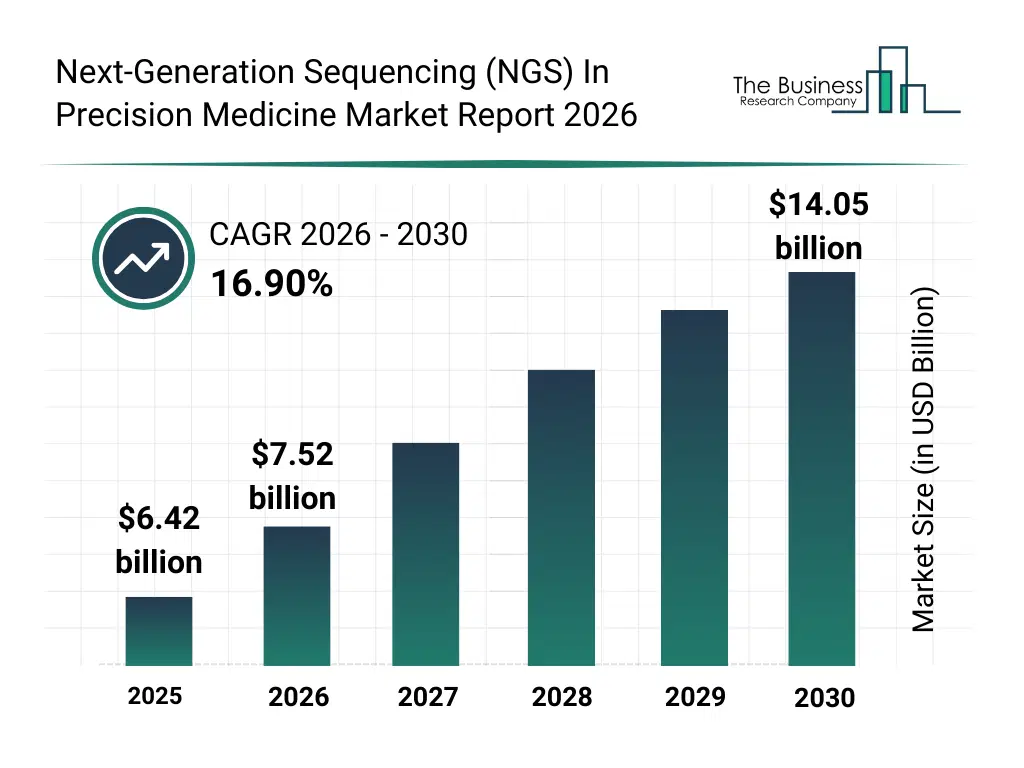
What Is The Next-Generation Sequencing (NGS) In Precision Medicine Market Size and Share 2026?
The next-generation sequencing (ngs) in precision medicine market size has grown rapidly in recent years. It will grow from $6.42 billion in 2025 to $7.52 billion in 2026 at a compound annual growth rate (CAGR) of 17.2%. The growth in the historic period can be attributed to development of high-throughput sequencers, rising awareness of personalized medicine, growth in genomic research, expansion of bioinformatics software, adoption of precision medicine in clinical trials.What Is The Next-Generation Sequencing (NGS) In Precision Medicine Market Growth Forecast?
The next-generation sequencing (ngs) in precision medicine market size is expected to see rapid growth in the next few years. It will grow to $14.05 billion in 2030 at a compound annual growth rate (CAGR) of 16.9%. The growth in the forecast period can be attributed to technological advancements in sequencing instruments, integration of ai in genomics, growth in cloud-based sequencing services, increasing collaborations between pharma and biotech companies, expansion of precision medicine in emerging regions. Major trends in the forecast period include AI-powered genomic analysis, cloud-based sequencing solutions, personalized medicine expansion, automation in sequencing workflows, real-time genomic data interpretation.
Global Next-Generation Sequencing (NGS) In Precision Medicine Market Segmentation
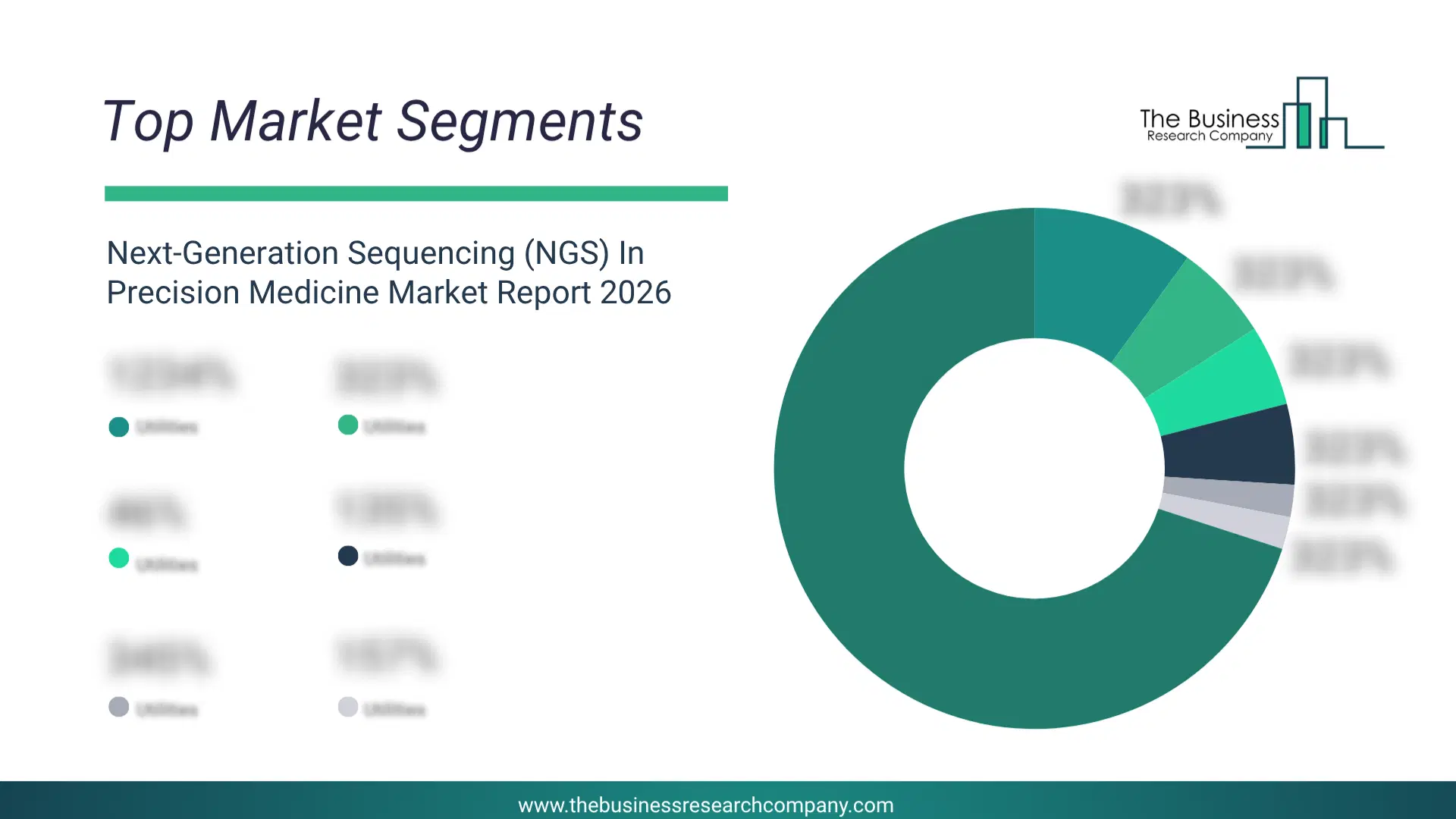
1) By Product And Service: Sequencing Instruments, Consumables And Reagents, Library Preparation Kits, Bioinformatics Software, Next-Generation Sequencing (NGS) Services 2) By Technology: Whole Genome Sequencing (WGS), Whole Exome Sequencing (Wes), Targeted Sequencing, Ribonucleic Acid (RNA) Sequencing, Single-Cell Sequencing 3) By Application: Oncology, Infectious Disease, Rare And Inherited Disorders, Prenatal And Reproductive Health, Pharmacogenomics 4) By End Use: Hospitals And Clinics, Academic And Research Institutions, Biopharmaceutical Companies, Diagnostic Laboratories, Contract Research Organizations (CROs) Subsegments: 1) By Sequencing Instruments: Benchtop Sequencers, High Throughput Sequencers 2) By Consumables And Reagents: Sequencing Reagents, Sequencing Chips, Flow Cells, Sample Preparation Reagents 3) By Library Preparation Kits: Deoxyribonucleic Acid (DNA) Library Preparation Kits, Ribonucleic Acid (RNA) Library Preparation Kits, Whole Genome Amplification Kits, Target Enrichment Kits 4) By Bioinformatics Software: Data Analysis Software, Data Management Software, Sequence Alignment Software, Variant Calling Software 5) By Next-Generation Sequencing Services: Whole Genome Sequencing Services, Whole Exome Sequencing Services, Targeted Sequencing Services, Ribonucleic Acid (RNA) Sequencing Services, Epigenomic Sequencing ServicesWhat Is The Driver Of The Next-Generation Sequencing (NGS) In Precision Medicine Market?
The rising incidence of genetic disorders is expected to propel the growth of the next-generation sequencing (NGS) in precision medicine market going forward. Genetic disorders refer to diseases or conditions caused by abnormalities in a person’s DNA, which can be inherited or occur due to mutations. The incidence of genetic disorders is rising as advances in diagnostic technologies, such as genetic screening and next-generation sequencing, are allowing doctors to identify cases that previously went undetected, leading to a higher reported prevalence. Next-generation sequencing in precision medicine helps detect genetic mutations, enabling accurate diagnosis, personalized treatment, and early intervention for genetic disorders. For instance, in May 2024, according to the National Health Service, a UK-based government department, in England, approximately 17,000 people live with sickle cell disease, an inherited blood disorder, with around 250 new cases diagnosed each year. Therefore, the rising incidence of genetic disorders is driving the growth of the next-generation sequencing (NGS) in precision medicine industry.Key Players In The Global Next-Generation Sequencing (NGS) In Precision Medicine Market
Major companies operating in the next-generation sequencing (ngs) in precision medicine market are Thermo Fisher Scientific Inc., Eurofins Scientific SE, Agilent Technologies Inc., Illumina Inc., Bio-Rad Laboratories Inc., Exact Sciences Corporation, QIAGEN N.V., Natera Inc., Tempus Labs Inc., 10x Genomics Inc., BGI Genomics Co. Ltd., Guardant Health Inc., Caris Life Sciences Inc., Fulgent Genetics Inc., Twist Bioscience Corporation, Pacific Biosciences of California Inc., Macrogen Inc., Ultima Genomics Inc., Personalis Inc., Element Biosciences Inc., Genomenon Inc., Strand Life Sciences Pvt. Ltd., Singular Genomics Systems Inc.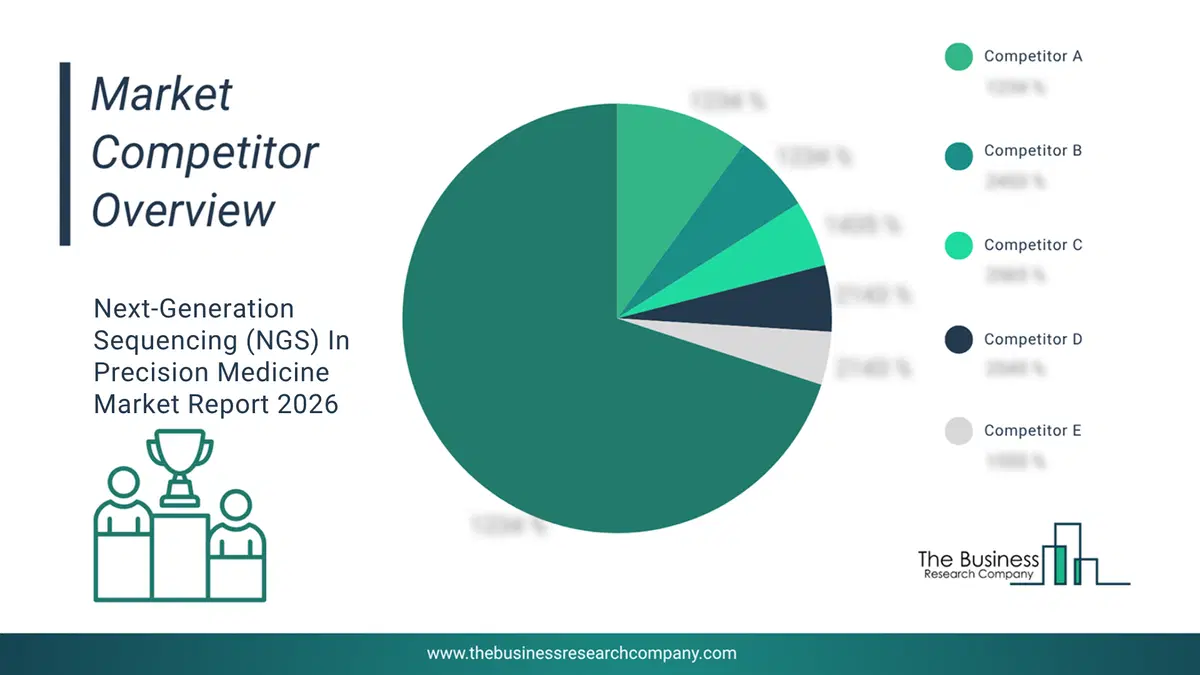
This chart is for illustrative purposes; the full report includes a detailed competitor analysis and comprehensive overview of the top 10 companies in the market.
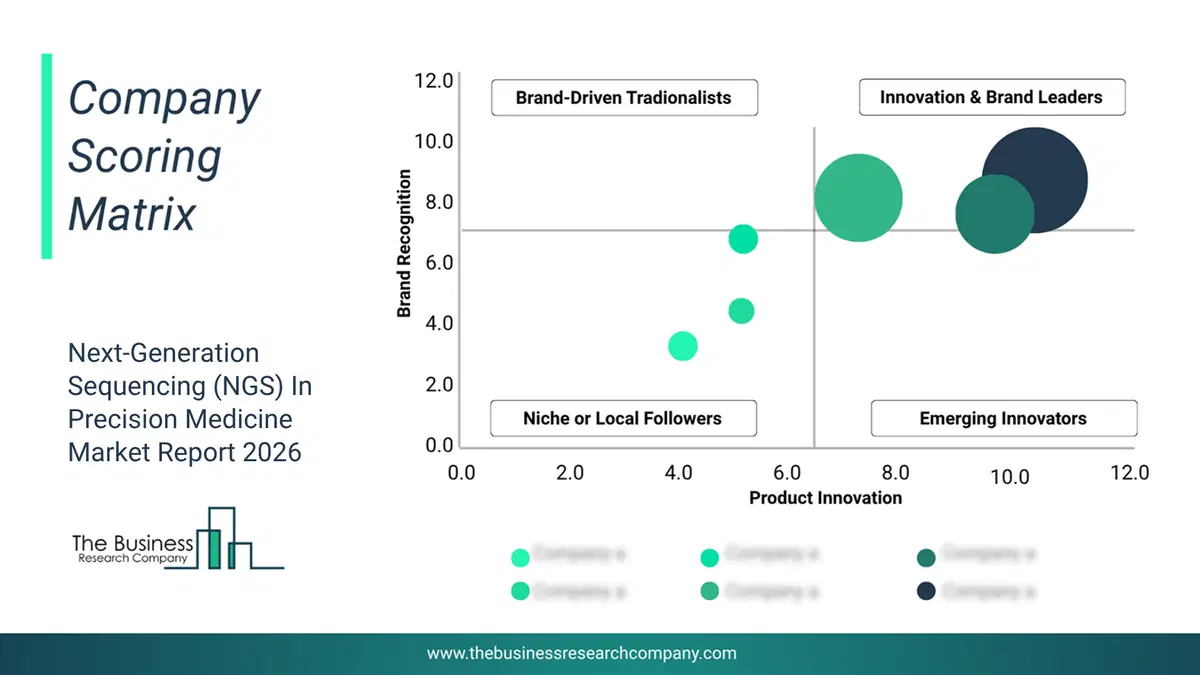
This chart maps companies by product innovation and brand strength, with bubble size indicating relative revenue, helping identify market leaders, challengers, and niche players. This is an illustrative chart; the full report provides a complete and accurate competitive analysis.
Global Next-Generation Sequencing (NGS) In Precision Medicine Market Trends and Insights
Major companies operating in the next-generation sequencing (NGS) in precision medicine market are focusing on developing innovative solutions, such as multimodal DNA and RNA library kits, to enhance the efficiency and accuracy of genomic analyses. A multimodal DNA and RNA library kit is a laboratory kit that allows simultaneous preparation of sequencing libraries from both DNA and RNA in a single workflow, enabling comprehensive analysis of a sample’s genome and transcriptome. For instance, in May 2024, Qiagen N.V., a Germany-based provider of sample and assay technologies for molecular diagnostics, launched the QIAseq Multimodal DNA and RNA Library Kit, a next-generation sequencing solution that facilitates multiomic studies and advances precision medicine by enabling streamlined DNA and RNA library preparation from a single sample. This kit supports whole genome and whole transcriptome sequencing and downstream target enrichment, facilitating multiomic studies by combining optimized chemistry for DNA and RNA simultaneously. It reduces the need for large sample amounts and labor-intensive procedures found in traditional separate DNA and RNA workflows. By enhancing efficiency in multiomic research, this kit advances precision medicine through better biomarker discovery and disease understanding, particularly in cancer research.What Are Latest Mergers And Acquisitions In The Next-Generation Sequencing (NGS) In Precision Medicine Market?
In June 2025, Qiagen N.V., a Germany-based provider of sample and assay technologies that offers comprehensive NGS solutions that are central to precision medicine, partnered with Incyte Corporation to develop a companion diagnostic panel for patients with myeloproliferative neoplasms. This collaboration aims to develop a multimodal next-generation sequencing (NGS) companion diagnostic panel to accurately identify mutant CALR and other gene alterations in myeloproliferative neoplasms (MPNs) to guide patient selection and support Incyte’s targeted therapies, ultimately improving treatment outcomes globally. Incyte Corporation is a US-based biopharmaceutical company that discovers, develops, and commercializes innovative medicines.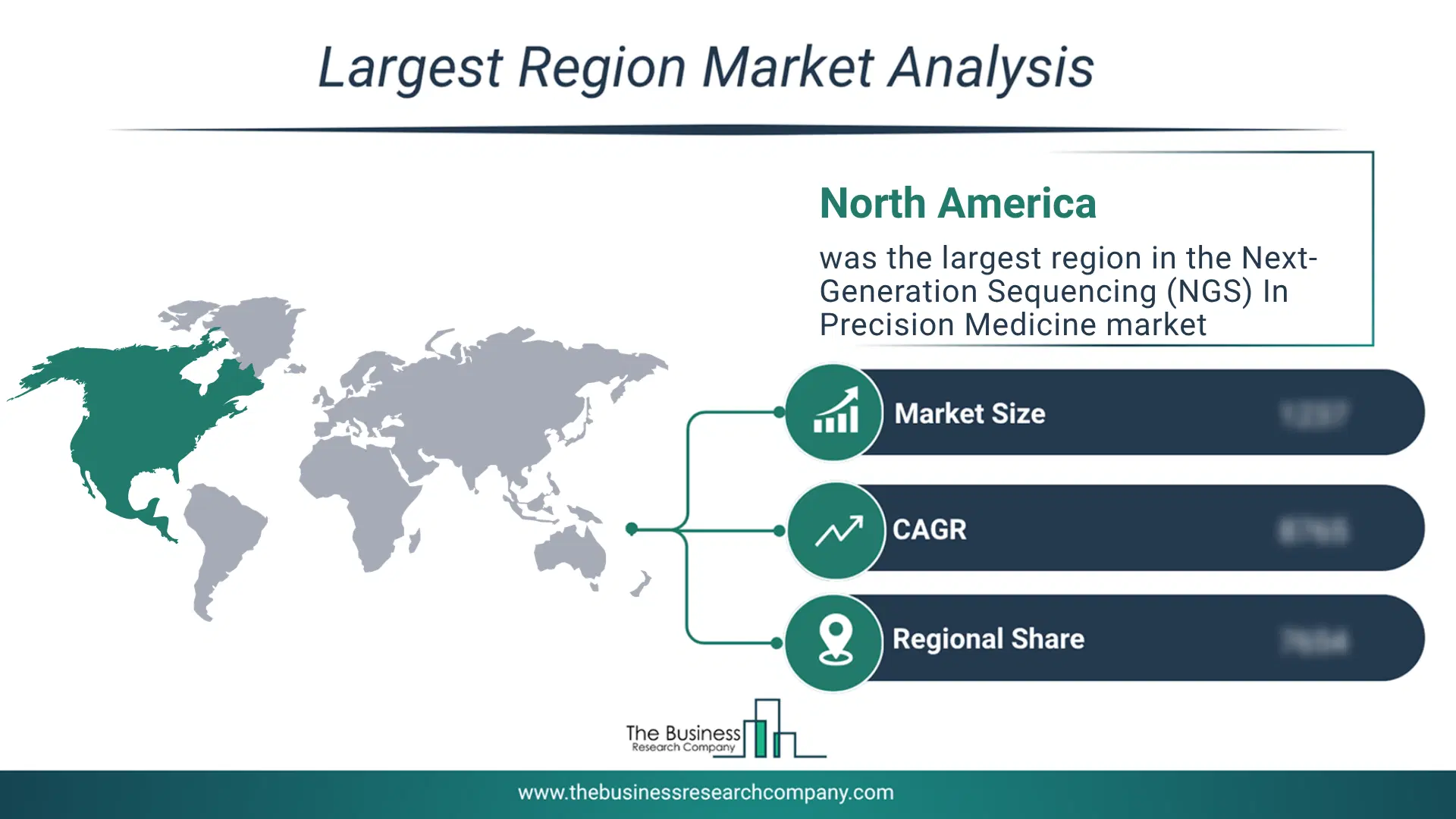
Regional Outlook
North America was the largest region in the next-generation sequencing (NGS) in precision medicine market in 2025. Asia-Pacific is expected to be the fastest-growing region in the forecast period. The regions covered in this market report are Asia-Pacific, South East Asia, Western Europe, Eastern Europe, North America, South America, Middle East, Africa. The countries covered in this market report are Australia, Brazil, China, France, Germany, India, Indonesia, Japan, Taiwan, Russia, South Korea, UK, USA, Canada, Italy, SpainWhat Defines the Next-Generation Sequencing (NGS) In Precision Medicine Market?
The next-generation sequencing (NGS) in precision medicine market consists of revenues earned by entities by providing services such as whole genome sequencing, metagenomic sequencing, hereditary cancer screening, pharmacogenomics testing, and rare disease diagnosis. The market value includes the value of related goods sold by the service provider or included within the service offering. The next-generation sequencing (NGS) in precision medicine market also includes sales of sequencing instruments, reagents and consumables, bioinformatics software, data analysis tools, and sequencing panels and assays. Values in this market are ‘factory gate’ values, that is the value of goods sold by the manufacturers or creators of the goods, whether to other entities (including downstream manufacturers, wholesalers, distributors and retailers) or directly to end customers. The value of goods in this market includes related services sold by the creators of the goods.How is Market Value Defined and Measured?
The market value is defined as the revenues that enterprises gain from the sale of goods and/or services within the specified market and geography through sales, grants, or donations in terms of the currency (in USD unless otherwise specified). The revenues for a specified geography are consumption values that are revenues generated by organizations in the specified geography within the market, irrespective of where they are produced. It does not include revenues from resales along the supply chain, either further along the supply chain or as part of other products.
This chart presents market attractiveness based on a quantitative evaluation of growth, competition, strategic alignment, and risk, offering a clear view of opportunity areas for decision-making. This chart is for illustrative purposes; the full report contains the complete analysis.

This chart highlights the Total Addressable Market (TAM) by estimating the maximum revenue opportunity using an assumption-driven approach, supporting strategic planning and opportunity sizing across markets. The chart is illustrative; the full report provides a more comprehensive analysis.
What Key Data and Analysis Are Included in the Next-Generation Sequencing (NGS) In Precision Medicine Market Report 2026?
The next-generation sequencing (ngs) in precision medicine market research report is one of a series of new reports from The Business Research Company that provides market statistics, including industry global market size, regional shares, competitors with the market share, detailed market segments, market trends and opportunities, and any further data you may need to thrive in the next-generation sequencing (ngs) in precision medicine industry. The market research report delivers a complete perspective of everything you need, with an in-depth analysis of the current and future state of the industry.Next-Generation Sequencing (NGS) In Precision Medicine Market Report Forecast Analysis
| Report Attribute | Details |
|---|---|
| Market Size Value In 2026 | $7.52 billion |
| Revenue Forecast In 2030 | $14.05 billion |
| Growth Rate | CAGR of 16.9% from 2026 to 2030 |
| Base Year For Estimation | 2025 |
| Actual Estimates/Historical Data | 2020-2025 |
| Forecast Period | 2026 - 2030 |
| Market Representation | Revenue in USD Billion and CAGR from 2026 to 2030 |
| Segments Covered | Product And Service, Technology, Application, End Use |
| Regional Scope | Asia-Pacific, Western Europe, Eastern Europe, North America, South America, Middle East, Africa |
| Country Scope | The countries covered in the report are Australia, Brazil, China, France, Germany, India, Indonesia, Japan, Taiwan, Russia, South Korea, UK, USA, Canada, Italy, Spain. |
| Key Companies Profiled | Thermo Fisher Scientific Inc., Eurofins Scientific SE, Agilent Technologies Inc., Illumina Inc., Bio-Rad Laboratories Inc., Exact Sciences Corporation, QIAGEN N.V., Natera Inc., Tempus Labs Inc., 10x Genomics Inc., BGI Genomics Co. Ltd., Guardant Health Inc., Caris Life Sciences Inc., Fulgent Genetics Inc., Twist Bioscience Corporation, Pacific Biosciences of California Inc., Macrogen Inc., Ultima Genomics Inc., Personalis Inc., Element Biosciences Inc., Genomenon Inc., Strand Life Sciences Pvt. Ltd., Singular Genomics Systems Inc. |
| Customization Scope | Request for Customization |
| Pricing And Purchase Options | Explore Purchase Options |