
NGS-Based RNA-Sequencing Market Report 2026
Global Outlook – By Product And Service (Sample Preparation Products, Sequencing Platforms and Consumables, Sequencing Services, Data Analysis, Storage, and Management), By Technology (Sequencing by Synthesis, Ion Semiconductor Sequencing, Single-molecule Real-time Sequencing, Nanopore Sequencing), By Application (Expression Profiling Analysis, Small RNA Sequencing, De Novo Transcriptome Assembly), By End User (Research & Academia, Pharmaceutical & Biotechnology Companies, Other End Users) – Market Size, Trends, Strategies, and Forecast to 2030
NGS-Based RNA-Sequencing Market Overview
• NGS-Based RNA-Sequencing market size has reached to $4.2 billion in 2025 • Expected to grow to $12.73 billion in 2030 at a compound annual growth rate (CAGR) of 24.7% • Growth Driver: Thriving Pharmaceutical Industry Driving Ngs-Based Rna-Sequencing Market • Market Trend: Innovation In Sequencing Workflows Boosts Throughput And Reproducibility • North America was the largest region in 2025 and Asia-Pacific is the fastest growing region.Market Gains By 2030 – Top Opportunities By Segment
Market Gain identifies the most promising market opportunities by highlighting the segments or products expected to generate the highest incremental revenue growth over the next five years.
What Is Covered Under NGS-Based RNA-Sequencing Market?
NGS-based RNA-sequencing is used to identify and measure the amount of ribonucleic acid (RNA) present in a biological sample at a certain moment, using next-generation sequencing (NGS). The massively parallel sequencing technology known as next-generation sequencing (NGS) provides extremely high throughput, scalability, and speed. This approach can ascertain the nucleotide sequence of whole genomes or specific DNA or RNA portions. The main products and services of NGS-based RNA sequencing are sample preparation products, sequencing platforms and consumables, sequencing services, and data analysis, storage, & management. Sample preparation products enable DNA or RNA to stick to the sequencing flowcell and enable identification of the sample. Sample preparation entails the procedures required to convert nucleic acid mixtures from biological samples into various types of libraries that are prepared for NGS technologies. Sequencing by synthesis, ion semiconductor sequencing, single-molecule real-time sequencing, and nanopore sequencing are the technologies. These sequencing techniques are used in expression profiling analysis, small RNA sequencing, de novo transcriptome assembly, and variant calling and transcriptome epigenetics. NGS-based RNA-sequencing is used by research & academia, hospitals & clinics, pharmaceutical & biotechnology companies, and other end users.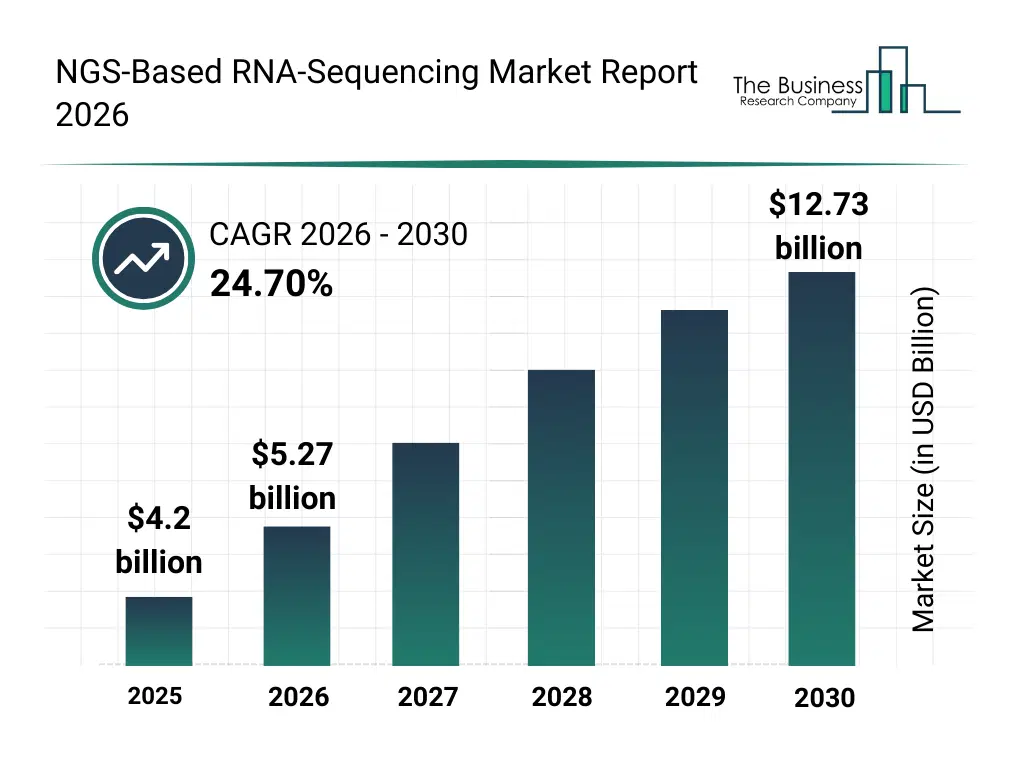
What Is The NGS-Based RNA-Sequencing Market Size and Share 2026?
The ngs-based rna-sequencing market size has grown exponentially in recent years. It will grow from $4.2 billion in 2025 to $5.27 billion in 2026 at a compound annual growth rate (CAGR) of 25.3%. The growth in the historic period can be attributed to expansion of genomic research initiatives, declining cost of sequencing technologies, increased use of rna-seq in academic research, availability of advanced sequencing platforms, growth of bioinformatics capabilities.What Is The NGS-Based RNA-Sequencing Market Growth Forecast?
The ngs-based rna-sequencing market size is expected to see exponential growth in the next few years. It will grow to $12.73 billion in 2030 at a compound annual growth rate (CAGR) of 24.7%. The growth in the forecast period can be attributed to increasing adoption of rna sequencing in clinical diagnostics, rising investments in precision medicine, expansion of pharmaceutical research applications, growing demand for integrated data analysis solutions, increasing focus on multi-omics research. Major trends in the forecast period include increasing adoption of high-throughput rna sequencing platforms, rising demand for single-cell rna sequencing, growing use of cloud-based bioinformatics analysis, expansion of transcriptomics in precision medicine, enhanced focus on data accuracy and scalability.
Global NGS-Based RNA-Sequencing Market Segmentation
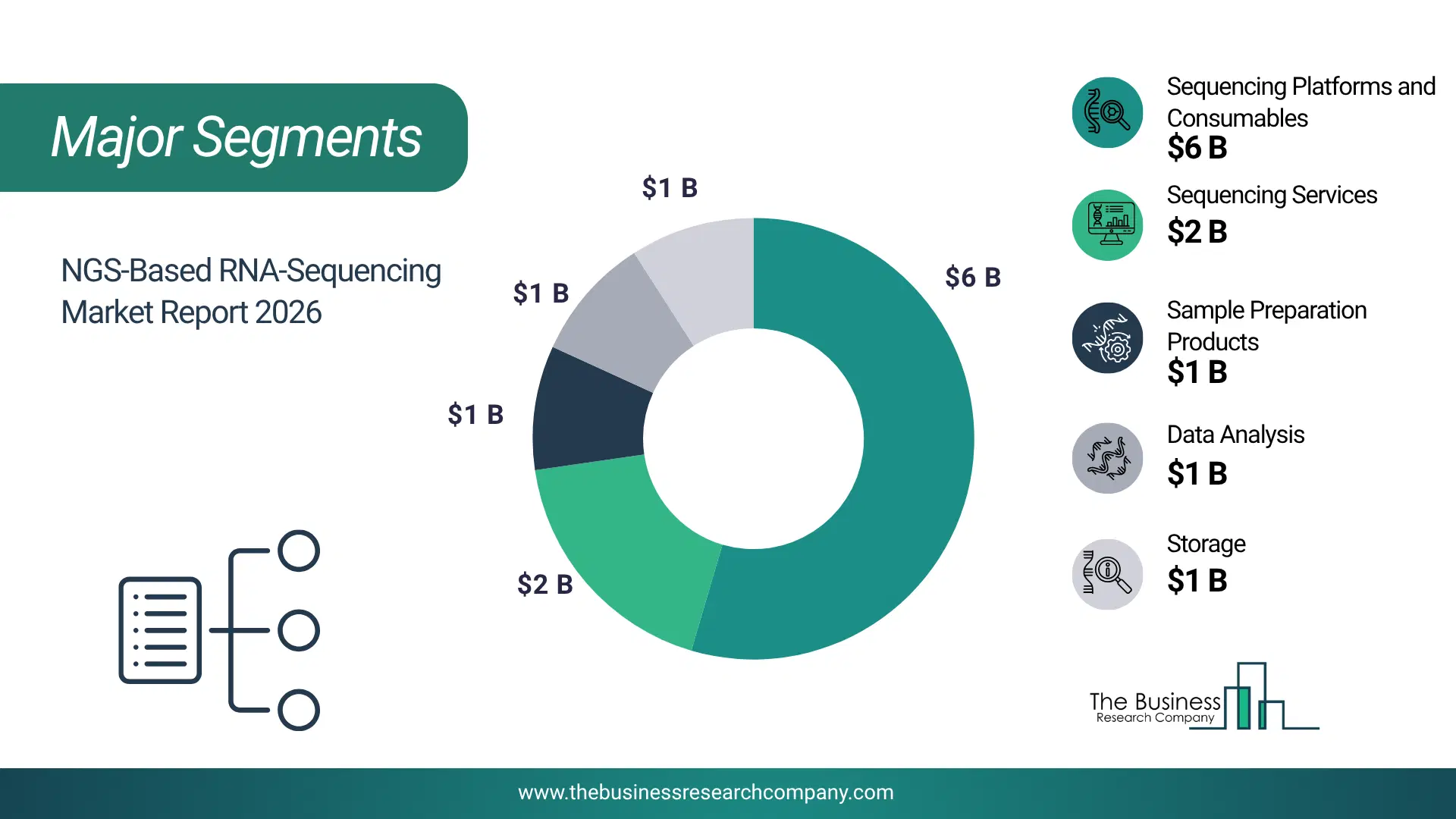
1) By Product And Service: Sample Preparation Products, Sequencing Platforms and Consumables, Sequencing Services, Data Analysis, Storage, and Management 2) By Technology: Sequencing by Synthesis, Ion Semiconductor Sequencing, Single-molecule Real-time Sequencing, Nanopore Sequencing 3) By Application: Expression Profiling Analysis, Small RNA Sequencing, De Novo Transcriptome Assembly 4) By End User: Research & Academia, Pharmaceutical & Biotechnology Companies, Other End Users Subsegments: 1) By Sample Preparation Products: RNA Extraction Kits, Library Preparation Kits, Reverse Transcription Kits, Quality Control Reagents 2) By Sequencing Platforms And Consumables: Sequencing Instruments, Sequencing Consumables 3) By Sequencing Services: Contract Sequencing Services, Custom Library Preparation Services, Consultation And Experimental Design Services 4) By Data Analysis, Storage, And Management: Bioinformatics Software, Data Analysis Services, Cloud-Based Data Storage Solutions, Data Management Platforms The top segments in the ngs-based rna-sequencing market will be: • Sequencing Platforms and Consumables will reach $5.59 Billion by 2030. • Sequencing Services will reach $1.87 Billion by 2030. • Sample Preparation Products will reach $1.5 Billion by 2030. • Data Analysis will reach $1.01 Billion by 2030. • Storage will reach $0.69 Billion by 2030.What Is The Driver Of The NGS-Based RNA-Sequencing Market?
The growing pharmaceutical industry is expected to propel the growth of the NGS-based RNA-sequencing market going forward. The pharmaceutical industry is a sector that involves the discovery, development, and production of drugs and medicines by both governmental and private entities. The pharmaceutical industry uses NGS-based RNA-sequencing to comprehensively analyze gene expression, identify potential drug targets, assess drug responses, and understand disease mechanisms, facilitating drug discovery and development with a deeper understanding of molecular processes. For instance, in June 2025, according to the Centers for Medicare & Medicaid Services (CMS), a US-based federal agency, prescription drug outlays rose 11.4% in 2023 to $449.7 billion, accelerating from 7.8% growth in 2022. Therefore, the growing pharmaceutical industry is driving the growth of the NGS-based RNA-sequencing industry.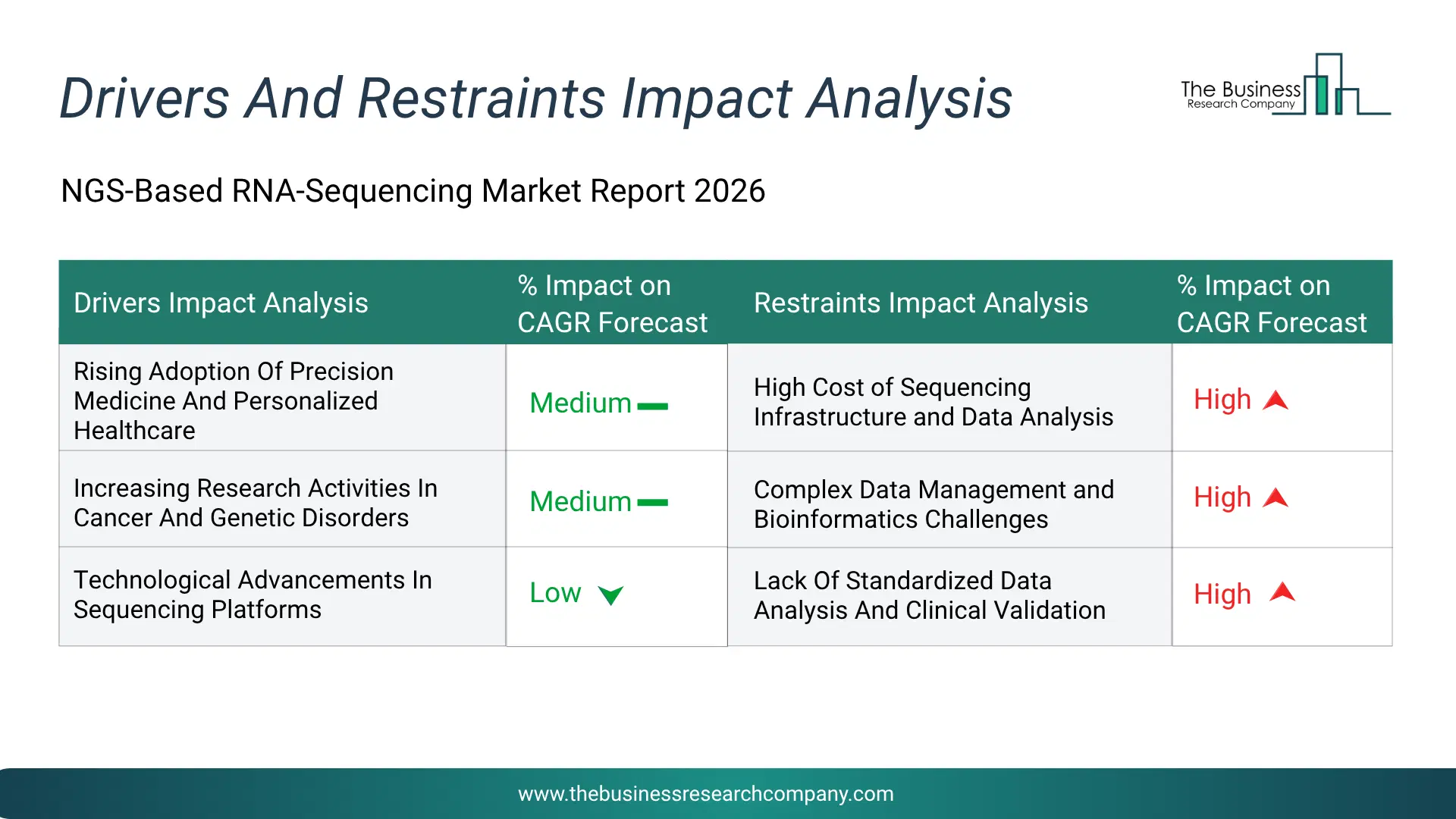
Infographic Chart Showing Key Market Drivers Analysis And Restraints For Ngs-Based Rna-Sequencing Market
The chart presents an impact analysis of key drivers and restraints, quantifying their relative influence on the market's growth rate and helping assess the balance between growth enablers and limiting factors. This chart offers a high-level perspective; the full report contains more detailed insights.
How Will The Drivers Impact Growth In The Global NGS-Based RNA-Sequencing Market?
• Rising Adoption Of Precision Medicine And Personalized Healthcare (Medium) – During the forecast period, the rising adoption of precision medicine and personalized healthcare is expected to become a key growth driver for the NGS-Based RNA-Sequencing market by 2030. Healthcare providers are increasingly incorporating transcriptomic profiling into clinical decision-making to better understand patient-specific disease biology and optimize therapeutic interventions. RNA sequencing enables comprehensive analysis of gene expression signatures that support individualized treatment planning and disease monitoring. The growing emphasis on targeted therapies and molecular diagnostics is further strengthening demand for advanced sequencing solutions across healthcare systems. • Increasing Research Activities In Cancer And Genetic Disorders (Medium) – During the forecast period, the increasing research activities in cancer and genetic disorders are expected to emerge as a major factor driving the expansion of the NGS-Based RNA-Sequencing market by 2030. Research organizations are expanding transcriptomic investigations to uncover novel biomarkers, regulatory pathways, and disease-associated molecular mechanisms across diverse therapeutic areas. Growing collaboration between biotechnology companies, pharmaceutical manufacturers, and academic institutions is accelerating translational research and therapeutic innovation. The expanding availability of large-scale genomic datasets is also enhancing the value of RNA sequencing in disease research. • Technological Advancements In Sequencing Platforms (Low) – During the forecast period, technological advancements in sequencing platforms are expected to act as a key growth catalyst for the NGS-Based RNA-Sequencing market by 2030. Continuous innovation in sequencing hardware, automation technologies, and integrated informatics is improving workflow efficiency while reducing turnaround times for transcriptomic analysis. Enhanced scalability, improved sequencing performance, and streamlined laboratory operations are enabling broader deployment across research institutions and clinical laboratories. The availability of more user-friendly and high-throughput sequencing solutions is further supporting market adoption.How Will The Restraints Impact Growth In The Global NGS-Based RNA-Sequencing Market?
• High Cost of Sequencing Infrastructure and Data Analysis (Medium) – During the forecast period, the despite declining sequencing costs, the overall investment required for NGS-based RNA sequencing remains substantial. Laboratories must invest in sophisticated sequencing instruments, computational infrastructure, and specialized software. Additionally, skilled personnel are required for sample preparation, data processing, and interpretation. These costs can be prohibitive for smaller institutions and laboratories. As a result, adoption may be limited in cost-sensitive markets and developing regions. • Complex Data Management and Bioinformatics Challenges (Medium) – During the forecast period, the rNA sequencing generates enormous volumes of complex data that require advanced storage, processing, and interpretation capabilities. Organizations often face challenges related to data integration, standardization, and quality control. The shortage of trained bioinformatics professionals further complicates analysis workflows. Interpreting transcriptomic data accurately remains technically demanding, particularly in clinical settings. These complexities can slow implementation and reduce operational efficiency for end users. • Lack Of Standardized Data Analysis And Clinical Validation (Low) – During the forecast period, the lack of standardized data analysis and clinical validation is expected to restrain the growth of the RNA sequencing market. RNA sequencing workflows involve multiple analytical methods, computational pipelines, and interpretation approaches that often vary across laboratories, research institutions, and clinical settings. The absence of universally accepted standards for data processing, normalization, transcript quantification, and result interpretation can lead to inconsistencies and reduce the reproducibility of sequencing outcomes. In clinical applications, limited validation of RNA sequencing biomarkers and analytical methods may restrict their routine adoption for disease diagnosis, prognosis, and treatment selection. In addition, healthcare providers and regulatory authorities require robust clinical evidence and standardized protocols before integrating RNA sequencing into routine clinical practice. These validation and standardization challenges increase implementation complexity, extend regulatory approval timelines, and reduce confidence among end users. Consequently, the lack of standardized data analysis and clinical validation remains a significant restraint on the growth of the RNA sequencing market.Key Players In The Global NGS-Based RNA-Sequencing Market
Major companies operating in the ngs-based rna-sequencing market are Illumina Inc., Thermo Fisher Scientific Inc., Oxford Nanopore Technologies Ltd., Agilent Technologies Inc., BGI Group, QIAGEN N.V., Eurofins Scientific SE, Bio-Rad Laboratories Inc., F. Hoffmann-La Roche Ltd., Takara Bio Inc., GENEWIZ Inc., Novogene Corporation, Macrogen Inc., Zymo Research Corp., Lexogen GmbH, Partek Incorporated, GATC Biotech AG, Genohub LLC, BaseClear B.V., Otogenetics Corporation, SeqLL LLC, GenXPro GmbH, Genotypic Technology Pvt. Ltd.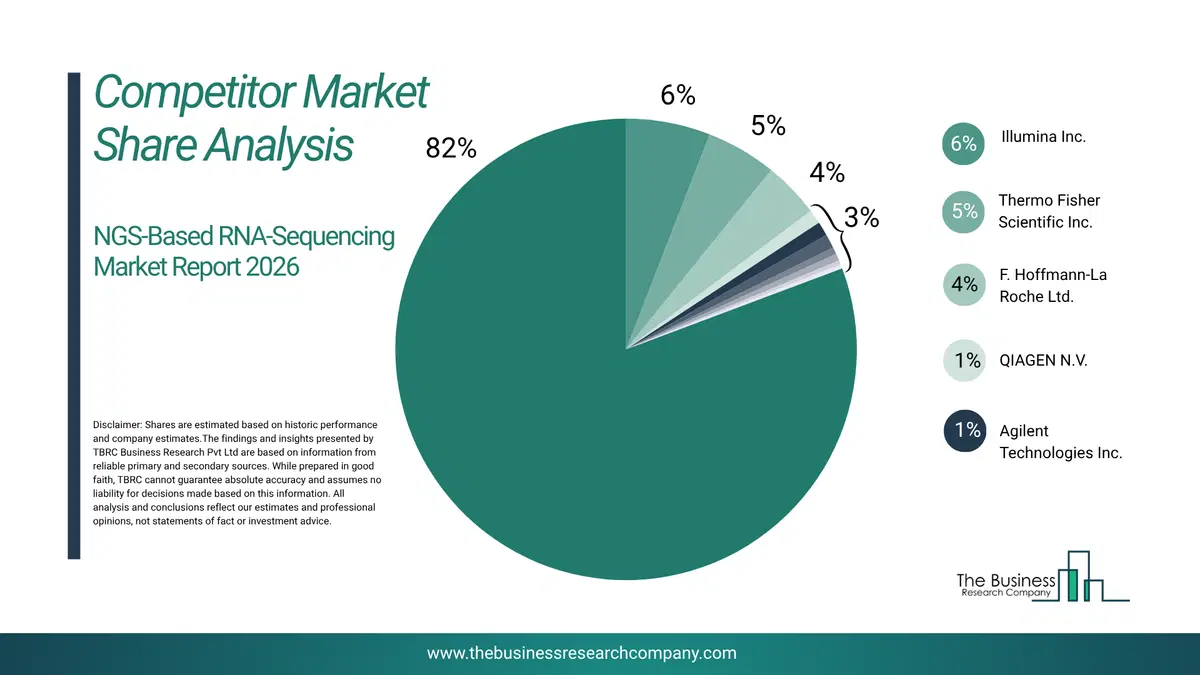
This chart is for illustrative purposes; the full report includes a detailed competitor analysis and comprehensive overview of the top 10 companies in the market.
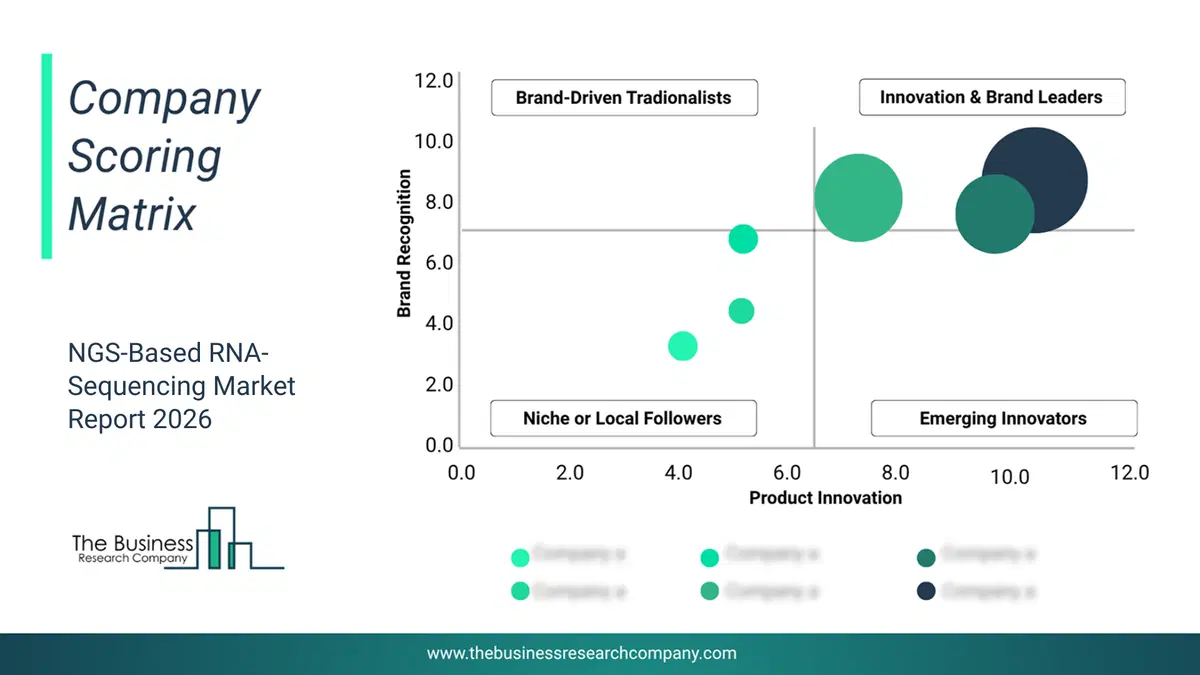
This chart maps companies by product innovation and brand strength, with bubble size indicating relative revenue, helping identify market leaders, challengers, and niche players. This is an illustrative chart; the full report provides a complete and accurate competitive analysis.
Global NGS-Based RNA-Sequencing Market Trends and Insights
Major companies operating in the NGS-based RNA-sequencing market are focusing on developing innovative products such as advanced small RNA-seq kits to streamline workflows and improve the accuracy and efficiency of RNA expression analysis. Advanced small RNA-seq kits are next-generation library preparation tools designed to capture and sequence small RNAs with high precision, helping researchers reduce workflow time, minimize artifacts such as adapter dimers, and achieve more accurate and reproducible expression profiling. For Instance, in October 2025, Lexogen, an Austria-based biotechnology company, launched the miRVEL Profiling Small RNA-Seq Library Prep Kit, designed to simplify and optimize small RNA research workflows. This innovative kit delivers a faster and more reliable workflow, allowing ready-to-sequence libraries to be prepared in under seven hours with minimal hands-on effort. It features advanced adapter blocking technology to prevent adapter dimer formation, ensures reproducible results across varying input amounts, and includes built-in 8 nt unique dual indices (UDIs) for accurate multiplexing and read assignment. The miRVEL Profiling Kit supports a broad range of applications, including RNA interference studies, host-defense mechanism investigations, and plant or agricultural small RNA research. Additionally, it is compatible with Lexogen’s SPLIT RNA extraction kits and TraPR small RNA enrichment system, providing an integrated, end-to-end solution for small RNA analysis.What Are Latest Mergers And Acquisitions In The NGS-Based RNA-Sequencing Market?
In November 2024, ARCHIMED SAS, a France-based private equity firm, acquired SeqCenter LLC for an undisclosed amount. With this acquisition, ARCHIMED aimed to strengthen its diagnostics and life-science tools portfolio by scaling SeqCenter’s next-generation sequencing (NGS) capabilities, accelerating its international expansion, and driving innovation in high-throughput, cost-efficient DNA/RNA sequencing services. SeqCenter LLC is a US-based genetic sequencing services company that specializes in providing rapid, reliable, and affordable DNA and RNA sequencing for applications in research, biotech, diagnostics, agriculture, and environmental health.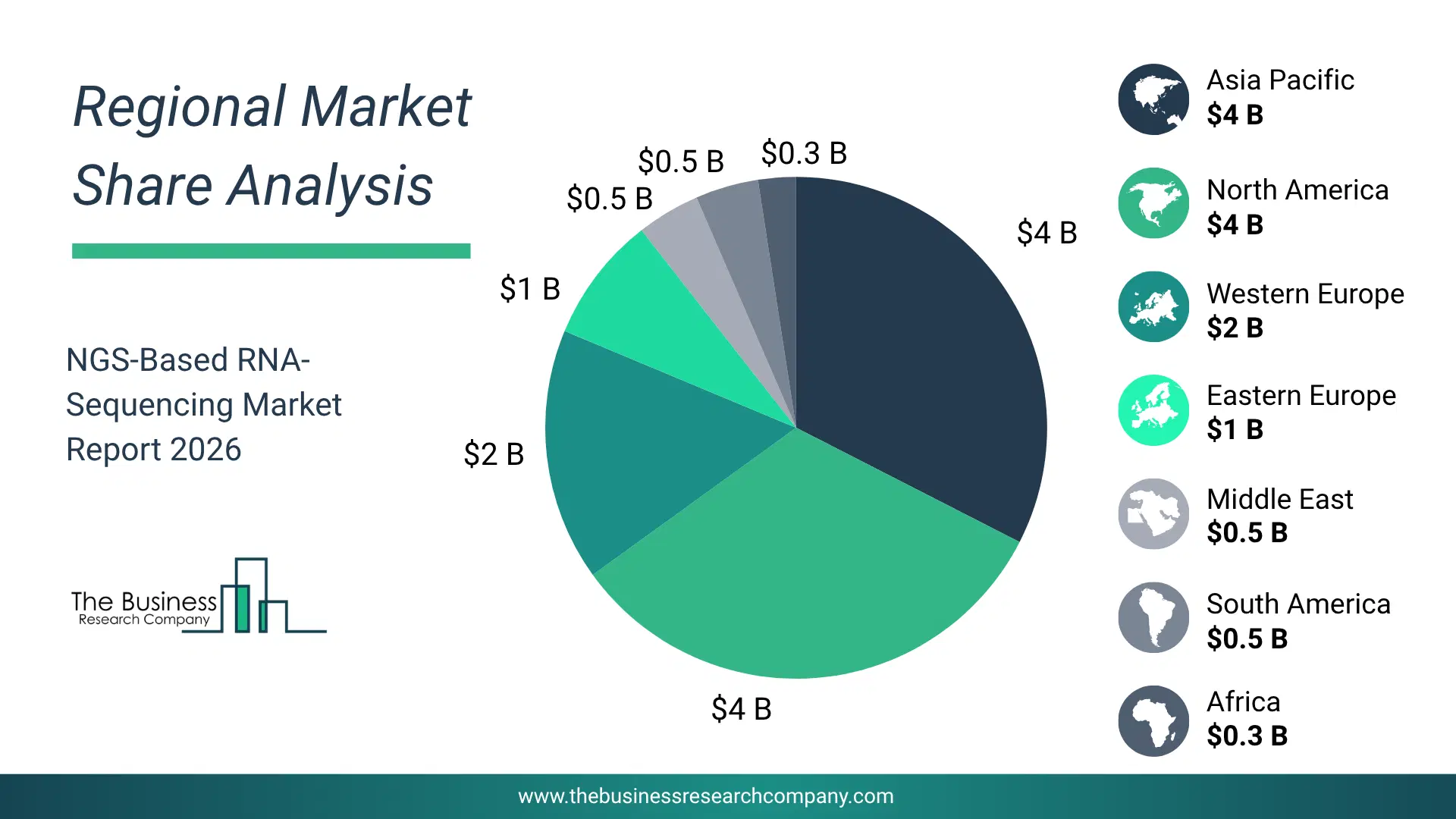
Regional Outlook
North America was the largest region in the NGS-based RNA sequencing market in 2025. Asia-Pacific is expected to be the fastest-growing region in the forecast period. The regions covered in this market report are Asia-Pacific, South East Asia, Western Europe, Eastern Europe, North America, South America, Middle East, Africa. The countries covered in this market report are Australia, Brazil, China, France, Germany, India, Indonesia, Japan, Taiwan, Russia, South Korea, UK, USA, Canada, Italy, SpainWhat Defines the NGS-Based RNA-Sequencing Market?
The NGS-based RNA-sequencing market includes revenues earned by ribosomal RNA (rRNA), transfer RNA (tRNA), long ncRNA and many smaller ncRNAs such as microRNA. The market value includes the value of related goods sold by the service provider or included within the service offering. Only goods and services traded between entities or sold to end consumers are included.How is Market Value Defined and Measured?
The market value is defined as the revenues that enterprises gain from the sale of goods and/or services within the specified market and geography through sales, grants, or donations in terms of the currency (in USD unless otherwise specified). The revenues for a specified geography are consumption values that are revenues generated by organizations in the specified geography within the market, irrespective of where they are produced. It does not include revenues from resales along the supply chain, either further along the supply chain or as part of other products.
This chart presents market attractiveness based on a quantitative evaluation of growth, competition, strategic alignment, and risk, offering a clear view of opportunity areas for decision-making. This chart is for illustrative purposes; the full report contains the complete analysis.

This chart highlights the Total Addressable Market (TAM) by estimating the maximum revenue opportunity using an assumption-driven approach, supporting strategic planning and opportunity sizing across markets. The chart is illustrative; the full report provides a more comprehensive analysis.
What Key Data and Analysis Are Included in the NGS-Based RNA-Sequencing Market Report 2026?
The ngs-based rna-sequencing market research report is one of a series of new reports from The Business Research Company that provides market statistics, including industry global market size, regional shares, competitors with the market share, detailed market segments, market trends and opportunities, and any further data you may need to thrive in the ngs-based rna-sequencing industry. The market research report delivers a complete perspective of everything you need, with an in-depth analysis of the current and future state of the industry.NGS-Based RNA-Sequencing Market Report Forecast Analysis
| Report Attribute | Details |
|---|---|
| Market Size Value In 2026 | $5.27 billion |
| Revenue Forecast In 2030 | $12.73 billion |
| Growth Rate | CAGR of 25.3% from 2026 to 2030 |
| Base Year For Estimation | 2025 |
| Actual Estimates/Historical Data | 2020-2025 |
| Forecast Period | 2026 - 2030 |
| Market Representation | Revenue in USD Billion and CAGR from 2026 to 2030 |
| Segments Covered | Product And Service, Technology, Application, End User |
| Regional Scope | Asia-Pacific, Western Europe, Eastern Europe, North America, South America, Middle East, Africa |
| Country Scope | The countries covered in the report are Australia, Brazil, China, France, Germany, India, Indonesia, Japan, Taiwan, Russia, South Korea, UK, USA, Canada, Italy, Spain. |
| Key Companies Profiled | Illumina Inc., Thermo Fisher Scientific Inc., Oxford Nanopore Technologies Ltd., Agilent Technologies Inc., BGI Group, QIAGEN N.V., Eurofins Scientific SE, Bio-Rad Laboratories Inc., F. Hoffmann-La Roche Ltd., Takara Bio Inc., GENEWIZ Inc., Novogene Corporation, Macrogen Inc., Zymo Research Corp., Lexogen GmbH, Partek Incorporated, GATC Biotech AG, Genohub LLC, BaseClear B.V., Otogenetics Corporation, SeqLL LLC, GenXPro GmbH, Genotypic Technology Pvt. Ltd. |
| Customization Scope | Request for Customization |
| Pricing And Purchase Options | Explore Purchase Options |