

Non-Muscle Invasive Bladder Cancer Market Report 2026
Global Outlook – By Stage (Carcinoma In Situ (CIS), T1 Stage, Ta Stage), By Treatment (Immunotherapy, Chemotherapy, Surgery, Intravesical Therapy, Other Treatments), By Tumor (Low-Grade Tumours, High-Grade Tumours), By End-User (Hospital Pharmacy, Retail Pharmacy, Online Pharmacy) - Market Size, Trends, Strategies, and Forecast to 2030
Non-Muscle Invasive Bladder Cancer Market Overview
• Non-Muscle Invasive Bladder Cancer market size has reached to $3.66 billion in 2025 • Expected to grow to $4.82 billion in 2030 at a compound annual growth rate (CAGR) of 5.6% • Growth Driver: Impact Of Personalized Medicine On Patient Outcomes In Cancer Care • Market Trend: Advancing Immunotherapy With FDA Approval Of ANKTIVA For BCG-Unresponsive Bladder Cancer • North America was the largest region in 2025 and Asia-Pacific is the fastest growing region.What Is Covered Under Non-Muscle Invasive Bladder Cancer Market?
Non-muscle invasive bladder cancer (NMIBC) refers to a type of bladder cancer that is confined to the inner layers of the bladder wall and has not spread to the muscle layer. It is typically diagnosed at an early stage and can often be treated effectively with methods such as transurethral resection, intravesical therapy, or close surveillance. The main stages in the non-muscle invasive bladder cancer market are carcinoma in situ (CIS), T1 stage, and Ta stage. Carcinoma in situ is a form of non-muscle-invasive bladder cancer where abnormal cells are found in the bladder lining but have not spread into deeper tissues. The various treatments include immunotherapy, chemotherapy, surgery, intravesical therapy, and others, and several tumors, including low-grade tumors and high-grade tumors. The different end users encompass hospital pharmacies, retail pharmacies, and online pharmacies.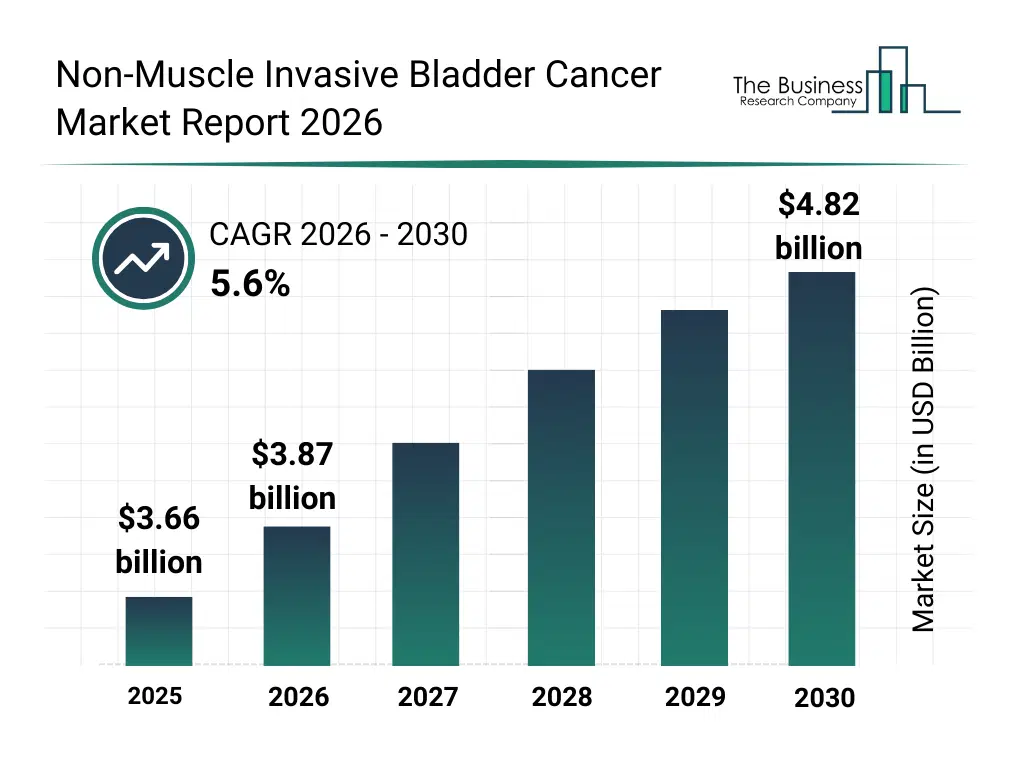
What Is The Non-Muscle Invasive Bladder Cancer Market Size and Share 2026?
The non-muscle invasive bladder cancer market size has grown strongly in recent years. It will grow from $3.66 billion in 2025 to $3.87 billion in 2026 at a compound annual growth rate (CAGR) of 5.9%. The growth in the historic period can be attributed to early diagnosis of bladder cancer, reliance on transurethral resection, limited adoption of intravesical therapy, growth in hospital pharmacy infrastructure, low awareness of nmibc staging.What Is The Non-Muscle Invasive Bladder Cancer Market Growth Forecast?
The non-muscle invasive bladder cancer market size is expected to see strong growth in the next few years. It will grow to $4.82 billion in 2030 at a compound annual growth rate (CAGR) of 5.6%. The growth in the forecast period can be attributed to rising prevalence of bladder cancer, increasing adoption of immunotherapy and chemotherapy, growth in online and retail pharmacy channels, expanding use of advanced diagnostic imaging, advancing personalized treatment approaches. Major trends in the forecast period include rising adoption of ai-powered diagnostic tools, increasing use of genomics and precision medicine approaches, growing implementation of data-driven clinical decision support, expanding deployment of minimally invasive therapeutic techniques, advancing integration of connected health monitoring solutions.
Global Non-Muscle Invasive Bladder Cancer Market Segmentation
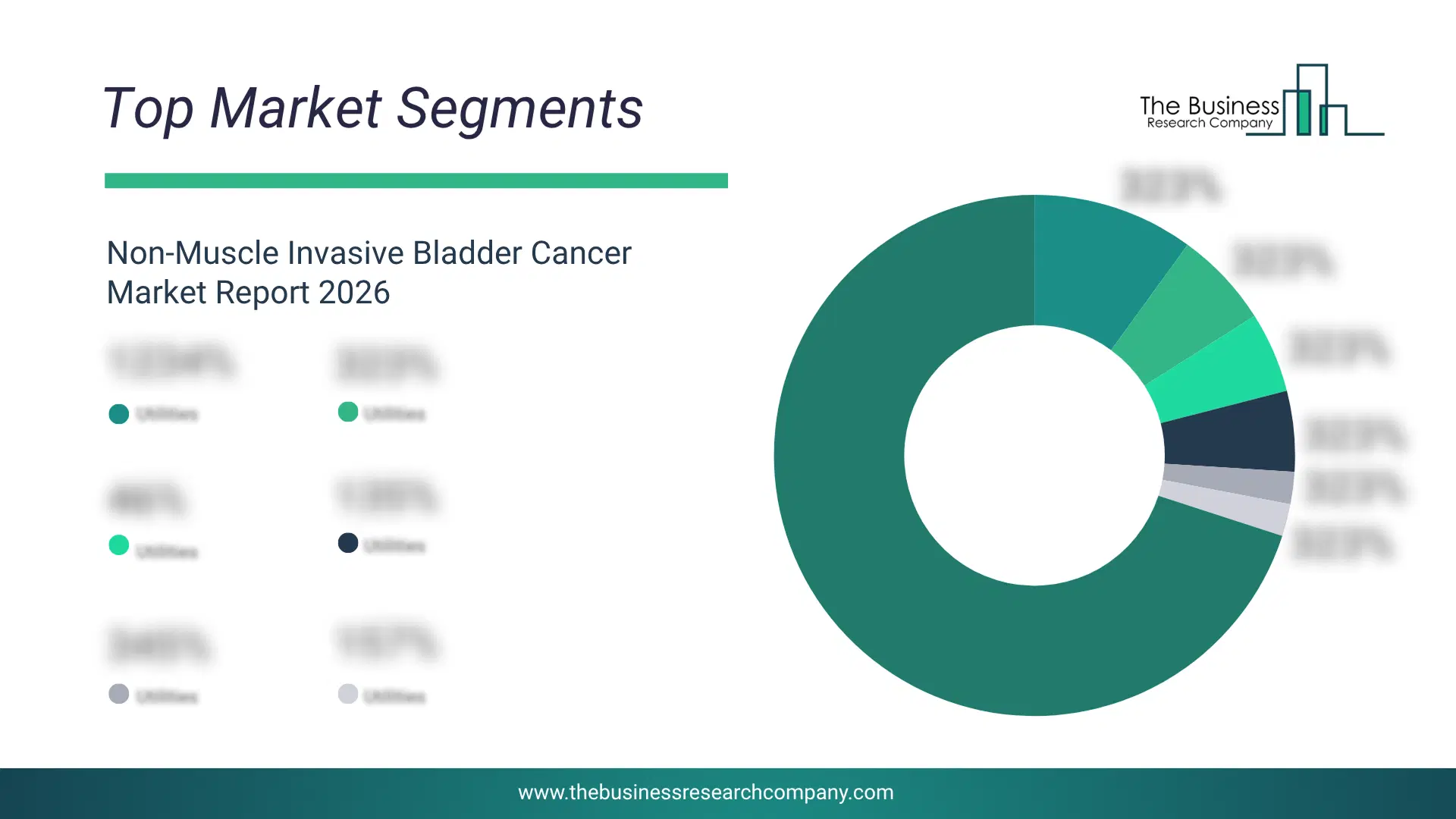
1) By Stage: Carcinoma In Situ (CIS), T1 Stage, Ta Stage 2) By Treatment: Immunotherapy, Chemotherapy, Surgery, Intravesical Therapy, Other Treatments 3) By Tumor: Low-Grade Tumours, High-Grade Tumours 4) By End-User: Hospital Pharmacy, Retail Pharmacy, Online Pharmacy Subsegments: 1) By Carcinoma In Situ (CIS): High-Grade CIS, Low-Grade CIS 2) By T1 Stage: T1a Stage (Superficial Tumors), T1b Stage (Invasive Into Lamina Propria) 3) By Ta Stage: Low-Grade Ta Stage, High-Grade Ta StageWhat Is The Driver Of The Non-Muscle Invasive Bladder Cancer Market?
The growing focus on personalized medicine is expected to propel the growth of the non-muscle invasive bladder cancer market going forward. Personalized medicine involves customizing medical treatment based on an individual's genetic profile, lifestyle, and environment for more effective outcomes. The growing focus on personalized medicine is driven by several factors, such as advancements in genomic research, improved diagnostic tools, and the growing demand for more targeted and effective treatments. Non-muscle invasive bladder cancer supports personalized medicine by enabling tailored treatment plans based on specific tumor characteristics, genetic markers, and individual patient profiles. For instance, in February 2024, according to the Personalized Medicine Coalition, a US-based non-profit organization, in 2023, the FDA approved 16 new personalized treatments for rare disease patients, up from six in 2022. Therefore, this is driving the growth of the non-muscle invasive bladder cancer industry.Key Players In The Global Non-Muscle Invasive Bladder Cancer Market
Major companies operating in the non-muscle invasive bladder cancer market are Johnson & Johnson, Janssen Research & Development LLC, Merck & Co Inc, AstraZeneca plc, Astellas Pharma US Inc, EMD Serono Inc, Genentech Inc, Aura Biosciences Inc, UroGen Pharma Ltd, Protara Therapeutics Inc, Istari Oncology Inc, Heat Biologics Inc, Viventia Bio Inc, ImmunityBio Inc, Altor BioScience Corporation, SURGE Therapeutics Inc, Pfizer Inc, Hoffmann‑La Roche Ltd, CG Oncology Inc, Tyra Biosciences Inc, Prokarium Ltd, ImmVira Pharma Co Ltd, Trigone Pharma Ltd, enGene Holdings Inc, Atonco Pharma Ltd.
This chart is for illustrative purposes; the full report includes a detailed competitor analysis and comprehensive overview of the top 10 companies in the market.
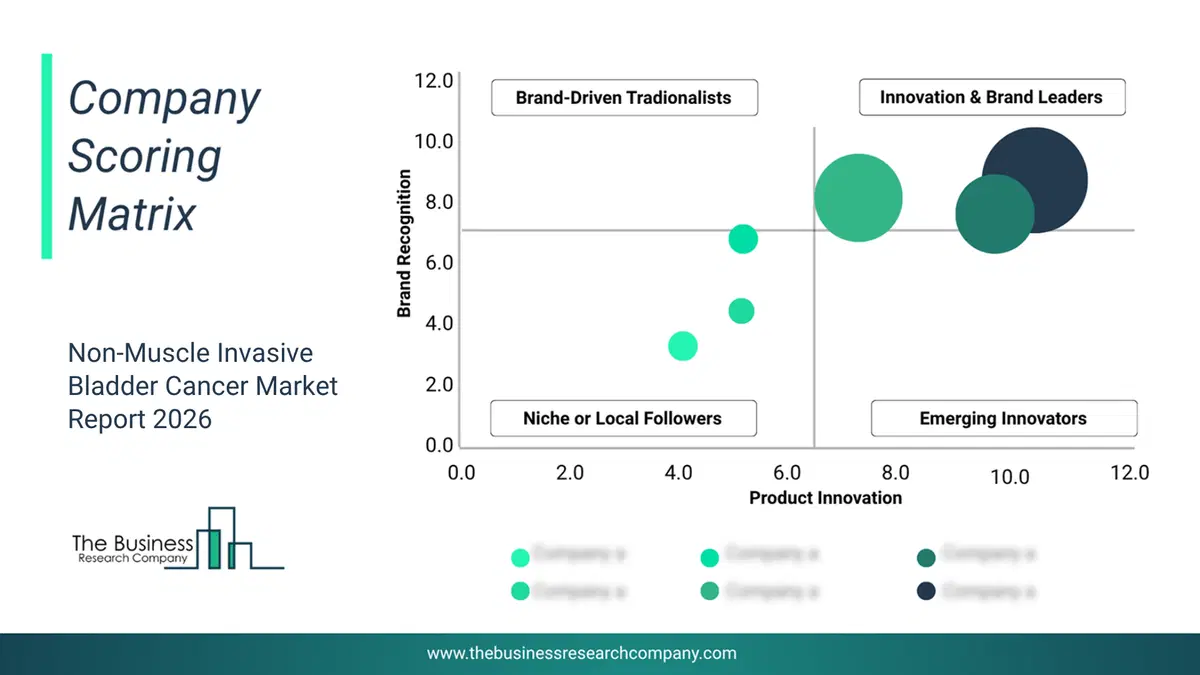
This chart maps companies by product innovation and brand strength, with bubble size indicating relative revenue, helping identify market leaders, challengers, and niche players. This is an illustrative chart; the full report provides a complete and accurate competitive analysis.
Global Non-Muscle Invasive Bladder Cancer Market Trends and Insights
Major companies operating in the non-muscle invasive bladder cancer market are focusing on developing innovative products, such as immunotherapy, to improve treatment options and outcomes for patients. Immunotherapy involves harnessing the body's immune system to detect and combat cancer cells by boosting or activating immune responses. For instance, in March 2024, ImmunityBio Inc., a US-based biotechnology company, received approval from the Food and Drug Administration (FDA) for ANKTIVA (N-803) in the treatment of patients with BCG-unresponsive non-muscle invasive bladder cancer (NMIBC) featuring carcinoma in situ (CIS), with or without papillary tumors. This approval is based on promising clinical trial results, which show that ANKTIVA, when used in combination with Bacillus Calmette-Guérin (BCG), offers a viable treatment option for patients who have not responded to standard BCG therapy. ANKTIVA is a pioneering IL-15 agonist immunotherapy that works by enhancing the immune system, specifically stimulating natural killer (NK) cells and CD8+ killer T cells to target and destroy cancer cells.What Are Latest Mergers And Acquisitions In The Non-Muscle Invasive Bladder Cancer Market?
In April 2024, Ferring Pharmaceuticals, a Switzerland-based biopharmaceutical company that provides a treatment for non-muscle-invasive bladder cancer, partnered with SK Pharmteco to support the production of Adstiladrin (nadofaragene firadenovec-vncg), a gene therapy for high-risk BCG-unresponsive non-muscle-invasive bladder cancer. Through this collaboration, Ferring seeks to expand manufacturing capacity and ensure a reliable global supply of the therapy. SK Pharmteco is a US-based contract development and manufacturing organization.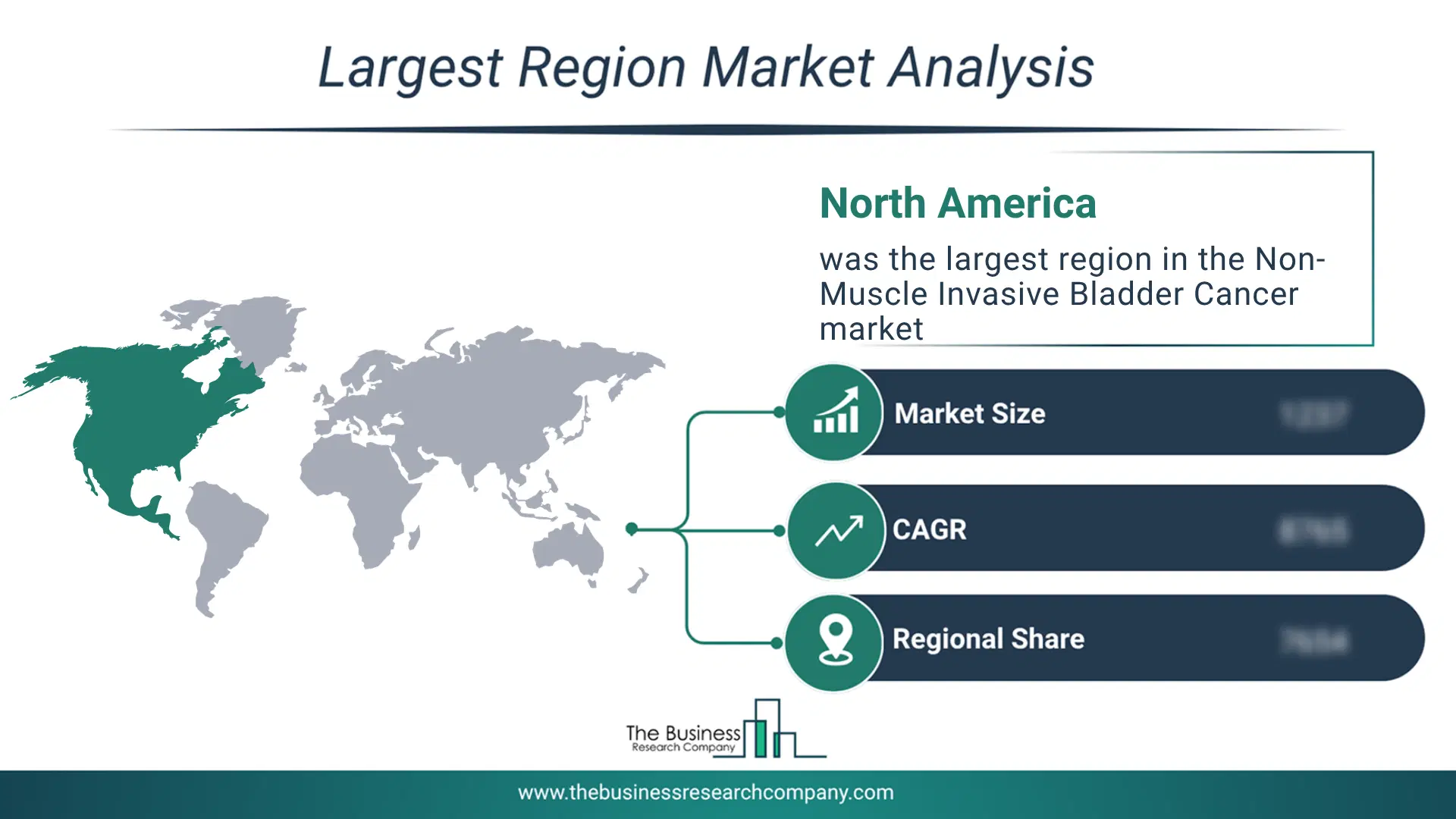
Regional Outlook
North America was the largest region in the non-muscle invasive bladder cancer market in 2025. Asia-Pacific is expected to be the fastest-growing region in the forecast period. The regions covered in this market report are Asia-Pacific, South East Asia, Western Europe, Eastern Europe, North America, South America, Middle East, Africa. The countries covered in this market report are Australia, Brazil, China, France, Germany, India, Indonesia, Japan, Taiwan, Russia, South Korea, UK, USA, Canada, Italy, Spain.What Defines the Non-Muscle Invasive Bladder Cancer Market?
The non-muscle invasive bladder cancer market consists of revenues earned by entities by providing services such as diagnostic services, patient support services, and monitoring services. The market value includes the value of related goods sold by the service provider or included within the service offering. The non-muscle invasive bladder cancer market also includes sales of molecular profiling kits and bladder instillation devices. Values in this market are ‘factory gate’ values, that is, the value of goods sold by the manufacturers or creators of the goods, whether to other entities (including downstream manufacturers, wholesalers, distributors, and retailers) or directly to end customers. The value of goods in this market includes related services sold by the creators of the goods.How is Market Value Defined and Measured?
The market value is defined as the revenues that enterprises gain from the sale of goods and/or services within the specified market and geography through sales, grants, or donations in terms of the currency (in USD unless otherwise specified). The revenues for a specified geography are consumption values that are revenues generated by organizations in the specified geography within the market, irrespective of where they are produced. It does not include revenues from resales along the supply chain, either further along the supply chain or as part of other products.
This chart presents market attractiveness based on a quantitative evaluation of growth, competition, strategic alignment, and risk, offering a clear view of opportunity areas for decision-making. This chart is for illustrative purposes; the full report contains the complete analysis.

This chart highlights the Total Addressable Market (TAM) by estimating the maximum revenue opportunity using an assumption-driven approach, supporting strategic planning and opportunity sizing across markets. The chart is illustrative; the full report provides a more comprehensive analysis.
What Key Data and Analysis Are Included in the Non-Muscle Invasive Bladder Cancer Market Report 2026?
The non-muscle invasive bladder cancer market research report is one of a series of new reports from The Business Research Company that provides market statistics, including industry global market size, regional shares, competitors with the market share, detailed market segments, market trends and opportunities, and any further data you may need to thrive in the non-muscle invasive bladder cancer industry. The market research report delivers a complete perspective of everything you need, with an in-depth analysis of the current and future state of the industry.Non-Muscle Invasive Bladder Cancer Market Report Forecast Analysis
| Report Attribute | Details |
|---|---|
| Market Size Value In 2026 | $3.87 billion |
| Revenue Forecast In 2030 | $4.82 billion |
| Growth Rate | CAGR of 5.6% from 2026 to 2030 |
| Base Year For Estimation | 2025 |
| Actual Estimates/Historical Data | 2020-2025 |
| Forecast Period | 2026 - 2030 |
| Market Representation | Revenue in USD Billion and CAGR from 2026 to 2030 |
| Segments Covered | Stage, Treatment, Tumor, End-User |
| Regional Scope | Asia-Pacific, Western Europe, Eastern Europe, North America, South America, Middle East, Africa |
| Country Scope | The countries covered in the report are Australia, Brazil, China, France, Germany, India, Indonesia, Japan, Taiwan, Russia, South Korea, UK, USA, Canada, Italy, Spain |
| Key Companies Profiled | Johnson & Johnson, Janssen Research & Development LLC, Merck & Co Inc, AstraZeneca plc, Astellas Pharma US Inc, EMD Serono Inc, Genentech Inc, Aura Biosciences Inc, UroGen Pharma Ltd, Protara Therapeutics Inc, Istari Oncology Inc, Heat Biologics Inc, Viventia Bio Inc, ImmunityBio Inc, Altor BioScience Corporation, SURGE Therapeutics Inc, Pfizer Inc, Hoffmann‑La Roche Ltd, CG Oncology Inc, Tyra Biosciences Inc, Prokarium Ltd, ImmVira Pharma Co Ltd, Trigone Pharma Ltd, enGene Holdings Inc, Atonco Pharma Ltd. |
| Customization Scope | Request for Customization |
| Pricing And Purchase Options | Explore Purchase Options |