
Non-PVC IV Bags Market Report 2026
Global Outlook – By Product (Single Chamber, Multi Chamber), By Material (Ethylene Vinyl Acetate, Polypropylene, Copolyester Ether, Other Materials), By Content (Ready-To-Use Sterile Fluids, Liquid Mixture), By Application (Chemotherapy, Targeted Drug Delivery, Glucose Injection, Sodium Chloride Solution, Electrolyte Injection, Nutrient Injection, Other Applications), By End User (Hospitals, Clinics, Emergency Service Centers, Ambulatory Surgical Centers, Other End Users) – Market Size, Trends, Strategies, and Forecast to 2030
Non-PVC IV Bags Market Overview
• Non-PVC IV Bags market size has reached to $2.28 billion in 2025 • Expected to grow to $3.8 billion in 2030 at a compound annual growth rate (CAGR) of 10.8% • Growth Driver: Increasing Patient Traffic Enhance The Non-PVC IV Bags Market • Market Trend: Innovative Polyolefin Shrink Films Enhancing Safety and Sustainability in Non-PVC IV Bags • North America was the largest region in 2025 and Asia-Pacific is the fastest growing region.Market Gains By 2030 – Top Opportunities By Segment
Market Gain identifies the most promising market opportunities by highlighting the segments or products expected to generate the highest incremental revenue growth over the next five years.
What Is Covered Under Non-PVC IV Bags Market?
Non-PVC IV bags refer to bags that do not contain polyvinyl chloride (PVC) as a material and are used in healthcare settings to administer fluids, medications, and nutrients directly into a person's vein. They are widely used in hospitals and emergency medical services due to their resistance to chemicals, heat, and UV light, ensuring the quality and stability of IV fluids. The main types of non-PVC IV bags are single-chamber and multi-chamber. Single-chamber non-PVC IV bags are intravenous bags that contain only one compartment and are made from materials other than polyvinyl chloride (PVC). Different types of materials are used, such as ethylene vinyl acetate, polypropylene, copolyester ether, and others. It has both frozen mixture and liquid mixture content for several applications, including chemotherapy, targeted drug delivery, glucose injection, sodium chloride solution, electrolyte injection, nutrient injection, and others. These bags are used by several end-user industries, such as hospitals, clinics, emergency service centers, ambulatory surgical centers, and others.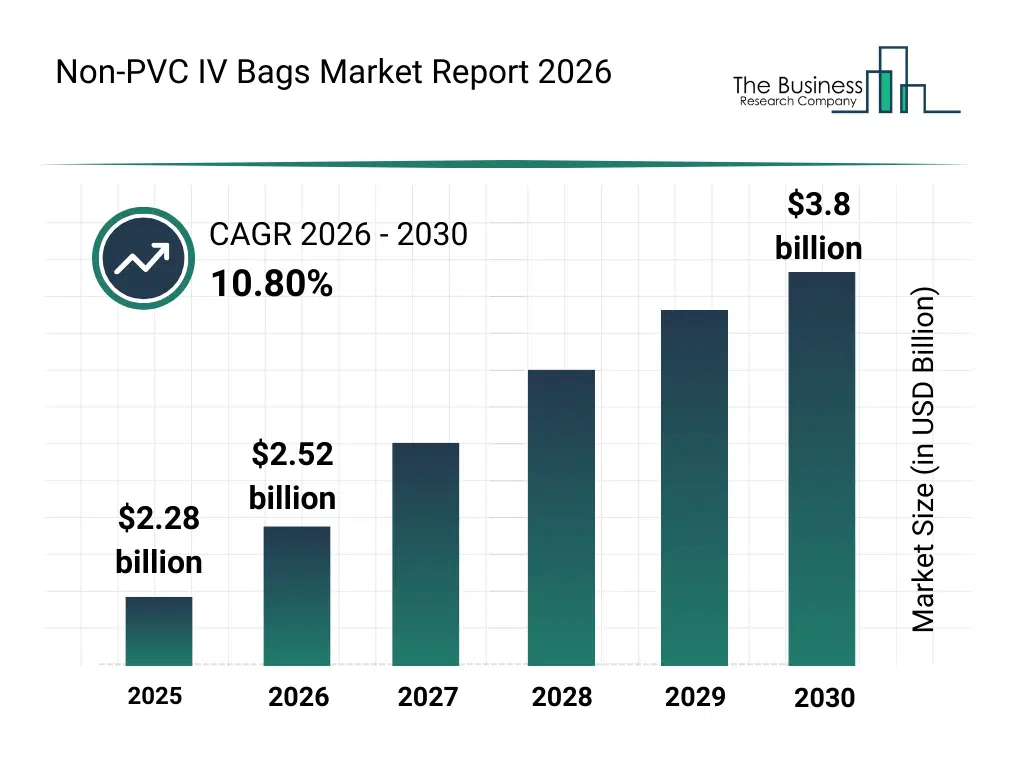
What Is The Non-PVC IV Bags Market Size and Share 2026?
The non-pvc iv bags market size has grown rapidly in recent years. It will grow from $2.28 billion in 2025 to $2.52 billion in 2026 at a compound annual growth rate (CAGR) of 10.5%. The growth in the historic period can be attributed to increasing hospital admissions requiring IV therapy, rising use of infusion-based drug delivery, expansion of chemotherapy treatments, growing awareness of PVC-related health risks, increased use of sterile fluid delivery systems.What Is The Non-PVC IV Bags Market Growth Forecast?
The non-pvc iv bags market size is expected to see rapid growth in the next few years. It will grow to $3.8 billion in 2030 at a compound annual growth rate (CAGR) of 10.8%. The growth in the forecast period can be attributed to increasing demand for sustainable medical consumables, rising adoption of preservative-free IV solutions, expansion of targeted drug delivery therapies, growing investments in advanced infusion packaging, increasing regulatory focus on material safety. Major trends in the forecast period include increasing adoption of pvc-free medical packaging, rising demand for multi-chamber iv bags, growing use of chemically stable polymer materials, expansion of ready-to-use iv solutions, enhanced focus on drug compatibility.
Global Non-PVC IV Bags Market Segmentation
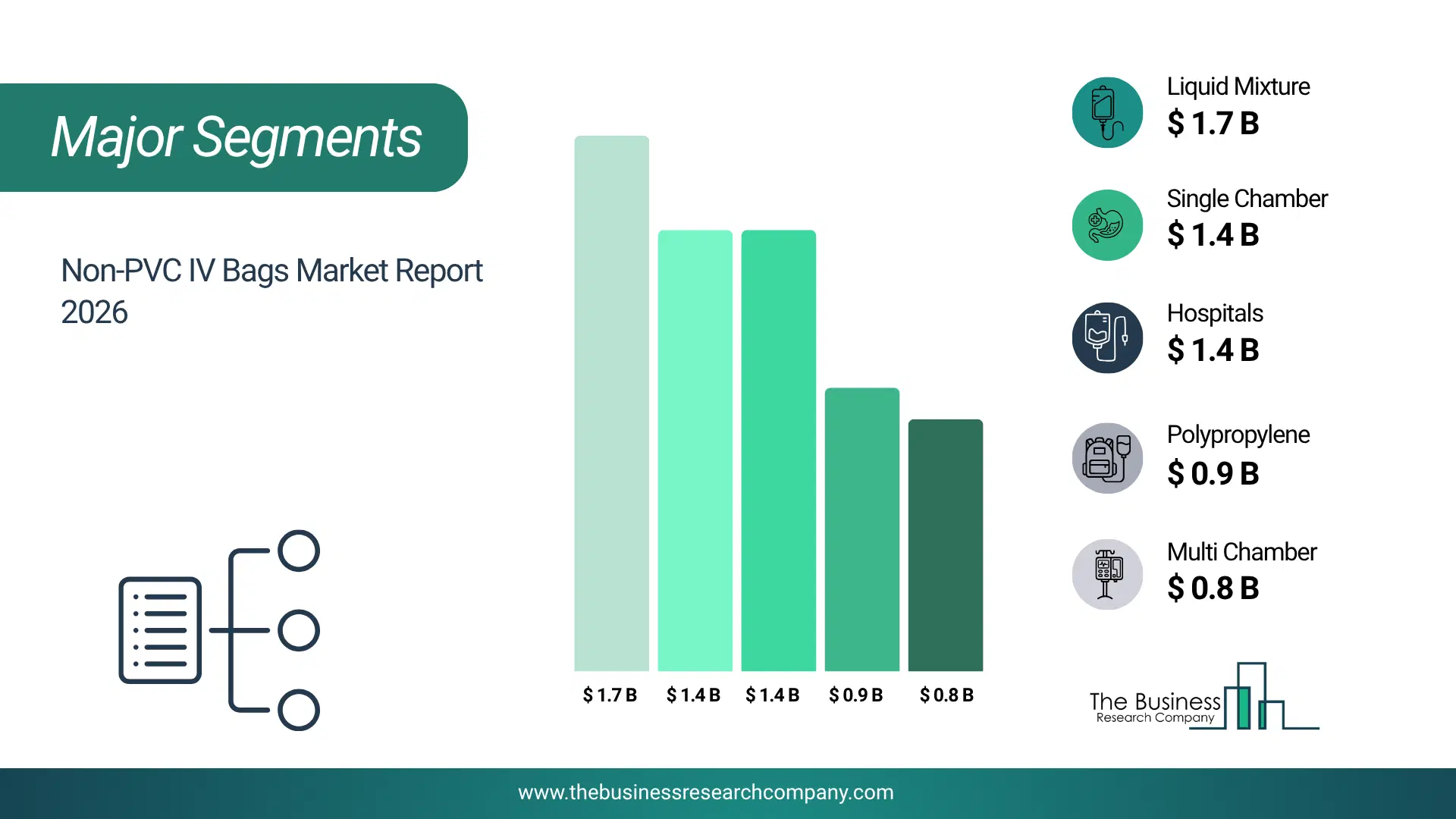
1) By Product: Single Chamber, Multi Chamber 2) By Material: Ethylene Vinyl Acetate, Polypropylene, Copolyester Ether, Other Materials 3) By Content: Ready-To-Use Sterile Fluids, Liquid Mixture 4) By Application: Chemotherapy, Targeted Drug Delivery, Glucose Injection, Sodium Chloride Solution, Electrolyte Injection, Nutrient Injection, Other Applications 5) By End User: Hospitals, Clinics, Emergency Service Centers, Ambulatory Surgical Centers, Other End Users Subsegments: 1) By Single Chamber: Standard Single Chamber Iv Bags, Flexible Single Chamber Iv Bags 2) By Multi Chamber: Dual Chamber Iv Bags, Triple Chamber Iv Bags, Multi-Camber Iv Bags (More Than Three Chambers) The top segments in the non-pvc iv bags market will be: • Liquid Mixture will reach $1777.17 Million by 2025. • Single Chamber will reach $1444.13 Million by 2025. • Hospitals will reach $1423.09 Million by 2025. • Polypropylene will reach $938.42 Million by 2025. • Multi Chamber will reach $833.67 Million by 2025.What Is The Driver Of The Non-PVC IV Bags Market?
The increasing patient traffic within healthcare settings is expected to propel the growth of the non-PVC IV bags market going forward. Patient traffic refers to the flow or volume of patients seeking medical care or services within a healthcare facility, such as a hospital, clinic, or doctor's office. Healthcare admission are on higher demand for healthcare services, and changes in healthcare policies or insurance coverage. Non-PVC IV bags are required for patients due to concerns about the potential leaching of harmful chemicals from PVC materials into intravenous fluids, minimizing the risk of patient exposure to toxins. For instance, in January 2024, according to a report published by the National Health Service, a UK-based publicly funded healthcare system, 1.63 million patients initiated treatment, while over 2.3 million diagnostic tests were conducted in November 2023, maintaining significant pressure on emergency departments nationwide, where more than 2.1 million A (accident) and E (emergency) visits and over 547,000 emergency admissions occurred in December 2023. Therefore, the increasing patient traffic within healthcare settings is driving the growth of the non-PVC IV bags industry.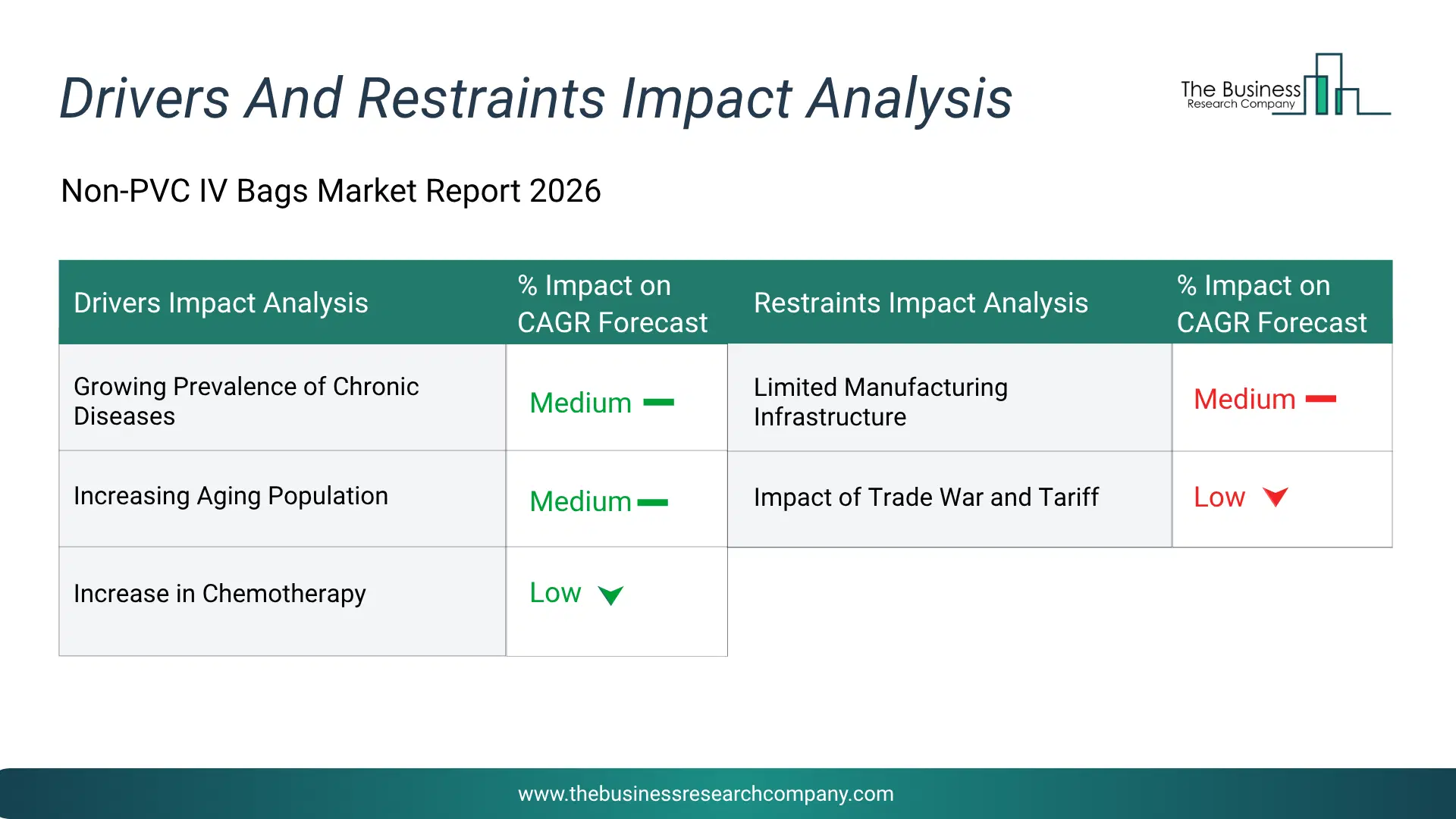
Infographic Chart Showing Key Market Drivers Analysis And Restraints For Non-Pvc Iv Bags Market
The chart presents an impact analysis of key drivers and restraints, quantifying their relative influence on the market's growth rate and helping assess the balance between growth enablers and limiting factors. This chart offers a high-level perspective; the full report contains more detailed insights.
How Will The Drivers Impact Growth In The Global Non-PVC IV Bags Market?
• Growing Prevalence of Chronic Diseases (Medium) – The growing prevalence of chronic diseases will become a key driver of growth in the non-PVC IV bags market by 2030. Patients with these conditions often require long-term and repeated intravenous therapies, which demand safe, durable and chemically stable infusion solutions. Non-PVC IV bags, known for their compatibility with a wide range of medications and reduced risk of leaching harmful substances, are increasingly favoured over traditional PVC options. As the need for continuous and safe IV administration grows, non-PVC IV bags are becoming an essential component in chronic disease management across hospitals, clinics and home care settings. As a result, the growing prevalence of chronic diseases is anticipated to contributing to a 1.2% annual growth in the market. • Increasing Aging Population (Medium) – The increasing aging population will emerge as a major factor driving the expansion of the market by 2030. As older adults typically require more frequent and prolonged intravenous therapies for conditions such as chronic illnesses, dehydration and cancer. Non-PVC IV bags are preferred in these scenarios due to their enhanced drug compatibility, reduced risk of leaching harmful chemicals and improved safety profile for long-term use. As the global elderly population continues to grow, healthcare providers are increasingly turning to non-PVC IV solutions that support safer and more effective treatment, thereby boosting market adoption. Consequently, the increasing aging population is projected to contributing to a 1.0% annual growth in the market. • Increase in Chemotherapy (Low) – The increase in chemotherapy will serve as a key growth catalyst for the market by 2030. Chemotherapy drugs are often aggressive and require IV containers that are chemically stable and do not leach harmful substances. Non-PVC IV bags offer superior compatibility with a wide range of oncology medications, ensuring safe and effective drug delivery. Their non-toxic composition and reduced interaction with active pharmaceutical ingredients make them ideal for repeated and long-term infusion therapies. As cancer treatment volumes rise globally, the need for safer IV packaging solutions such as non-PVC bags continues to drive market growth. Therefore, this increase in chemotherapy is projected to supporting to a 0.8% annual growth in the market. • Rising Demand for Eco-Friendly and Recyclable Medical Packaging Materials (Low) – The rising demand for eco-friendly and recyclable medical packaging materials will become a significant driver contributing to the growth of the market by 2030. Healthcare providers are increasingly seeking medical packaging solutions that reduce long-term waste and minimize harmful chemical exposure. Non-PVC IV bags meet this demand by offering safer alternatives to traditional PVC, which often contains hazardous plasticizers like DEHP. These bags are designed for easier disposal and lower environmental impact, making them suitable for institutions aiming to improve safety standards and adopt responsible material practices. As the preference for recyclable and non-toxic materials grows, the demand for non-PVC IV bags continues to rise across hospitals, clinics and home care settings. Consequently, the rising demand for eco-friendly and recyclable medical packaging materials is projected to contributing to a 0.5% annual growth in the market.How Will The Restraints Impact Growth In The Global Non-PVC IV Bags Market?
• Higher Cost of Non-PVC IV Bags (Medium) – Higher Cost of Non-PVC IV Bags will restrict the growth of the Non-PVC IV Bags market during the forecast period. Non-PVC IV bags are typically more expensive than traditional PVC alternatives due to material and manufacturing costs. The higher cost creates financial barriers for healthcare facilities, particularly in budget-constrained settings. Cost sensitivity can limit adoption and delay the transition from PVC to non-PVC solutions. • Limited Manufacturing Infrastructure (Low) – Limited Manufacturing Infrastructure will restrict the growth of the Non-PVC IV Bags market during the forecast period. Non-PVC IV bag production requires specialized manufacturing capabilities that may be limited in certain regions. Limited production capacity can affect product availability and lead to supply constraints. Manufacturing infrastructure gaps may result in dependence on imports and affect market growth. • Impact of Trade War and Tariff (Low) – Impact of Trade War and Tariff will restrict the growth of the Non-PVC IV Bags market during the forecast period. Non-PVC IV bag production relies on imported materials and specialized components. Trade tariffs and restrictions can increase production costs and affect product availability. Trade barriers may also impact the medical device supply chain, affecting market growth.Key Players In The Global Non-PVC IV Bags Market
Major companies operating in the non-pvc iv bags market are Cardinal Health Inc., Pfizer Inc., Abbott Laboratories, Medline Industries LP, Becton Dickinson and Company, Otsuka Pharmaceutical Co. Ltd., Baxter International Inc., B. Braun Melsungen AG, Fresenius Kabi AG, Grifols S.A., Terumo Corporation, Nipro Corporation, ICU Medical Inc., JW Life Science, Jiangxi Sanxin Medtec Co. Ltd., Angiplast Pvt. Ltd., Technoflex SA, Medi Pharma Plan Co. Ltd., Bausch Advanced Technologies Inc., PolyCine GmbH, Sealed Air Corporation, Kraton Corporation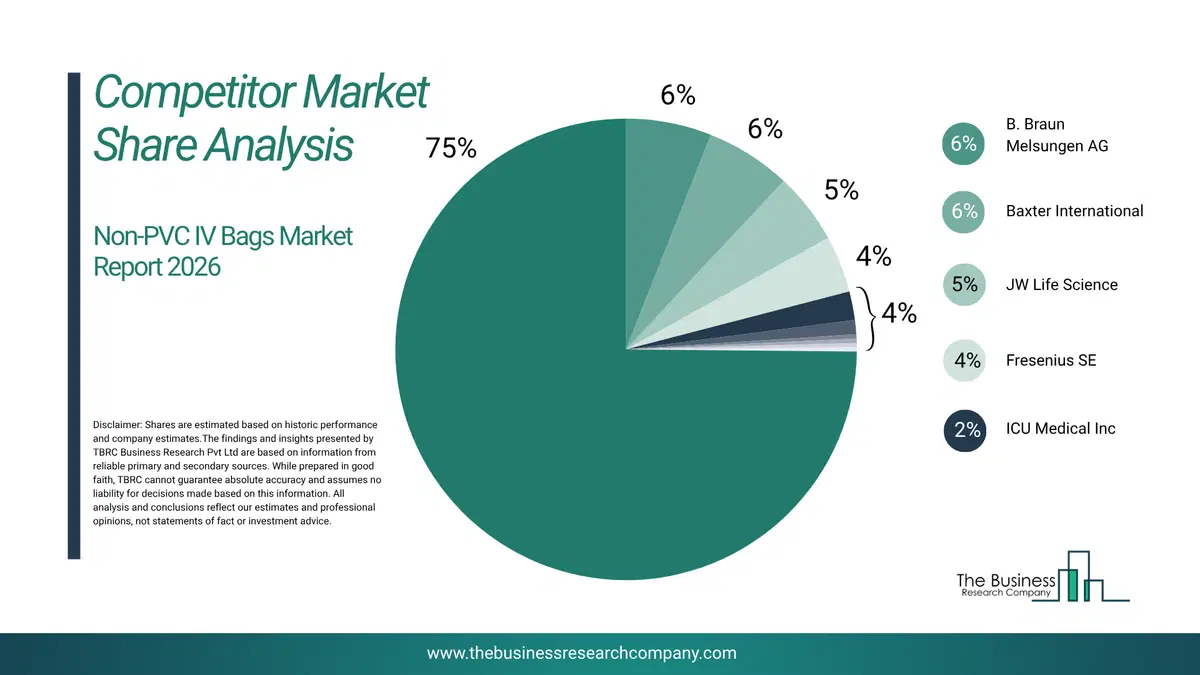
This chart is for illustrative purposes; the full report includes a detailed competitor analysis and comprehensive overview of the top 10 companies in the market.
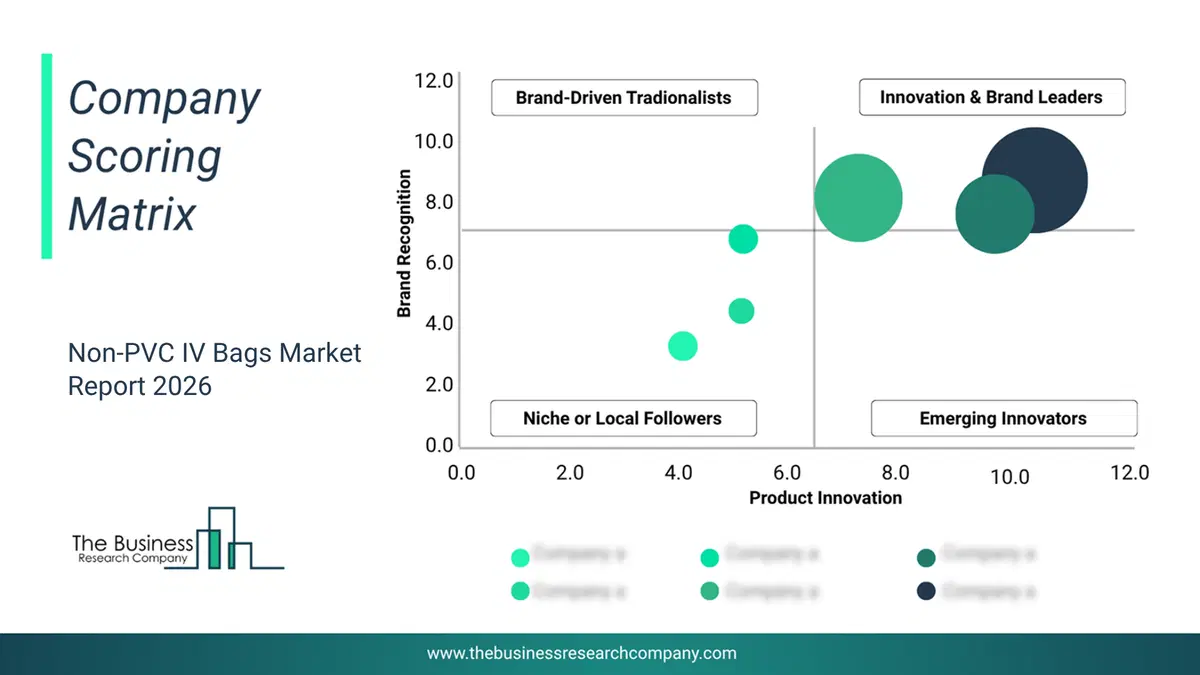
This chart maps companies by product innovation and brand strength, with bubble size indicating relative revenue, helping identify market leaders, challengers, and niche players. This is an illustrative chart; the full report provides a complete and accurate competitive analysis.
Global Non-PVC IV Bags Market Trends and Insights
Major companies operating in the non-PVC IV bags market are developing innovative products, such as polyolefin shrink films to enhance safety, sustainability, and compatibility with various IV solutions. Polyolefin shrink films are durable, flexible, and clear packaging materials widely used for secure, tamper-resistant wrapping in food, consumer goods, electronics, and pharmaceuticals. Their non-toxic nature and high puncture resistance make them ideal for varied temperature conditions. For instance, in February 2024, Innovia Films, a UK-based manufacturer and supplier of biaxially-oriented polypropylene film, launched RayoFloat white APO. It is a floatable, white, low-density polyolefin shrink film designed for light-sensitive products. Its unique features include easy label detachment during PET recycling, aiding in high-quality PET flake production for food-grade use. The film's opaque nature provides light-blocking benefits, ideal for dairy, nutritional, and cosmetic products. Additionally, it supports sustainability with up to 20% post-industrial recycled content and complies with the EU's Packaging and Packaging Waste Regulation (PPWR).What Are Latest Mergers And Acquisitions In The Non-PVC IV Bags Market?
In November 2023, Prange Group, a Germany-based company with a focus on sales and marketing of pharmaceuticals, and Adragos Pharma, a Germany-based contract development and manufacturing organization (CDMO), acquired Fresenius Kabi’s sterile pharmaceutical production site for an undisclosed amount. As a result of the acquisition, the company aims to expand its existing production network in Europe, North America, and Japan. Through this transaction, Fresenius Kabi will enter into a long-term supply agreement for products manufactured at the site. Fresenius Kabi is a Germany-based manufacturer of non-PVC IV bags.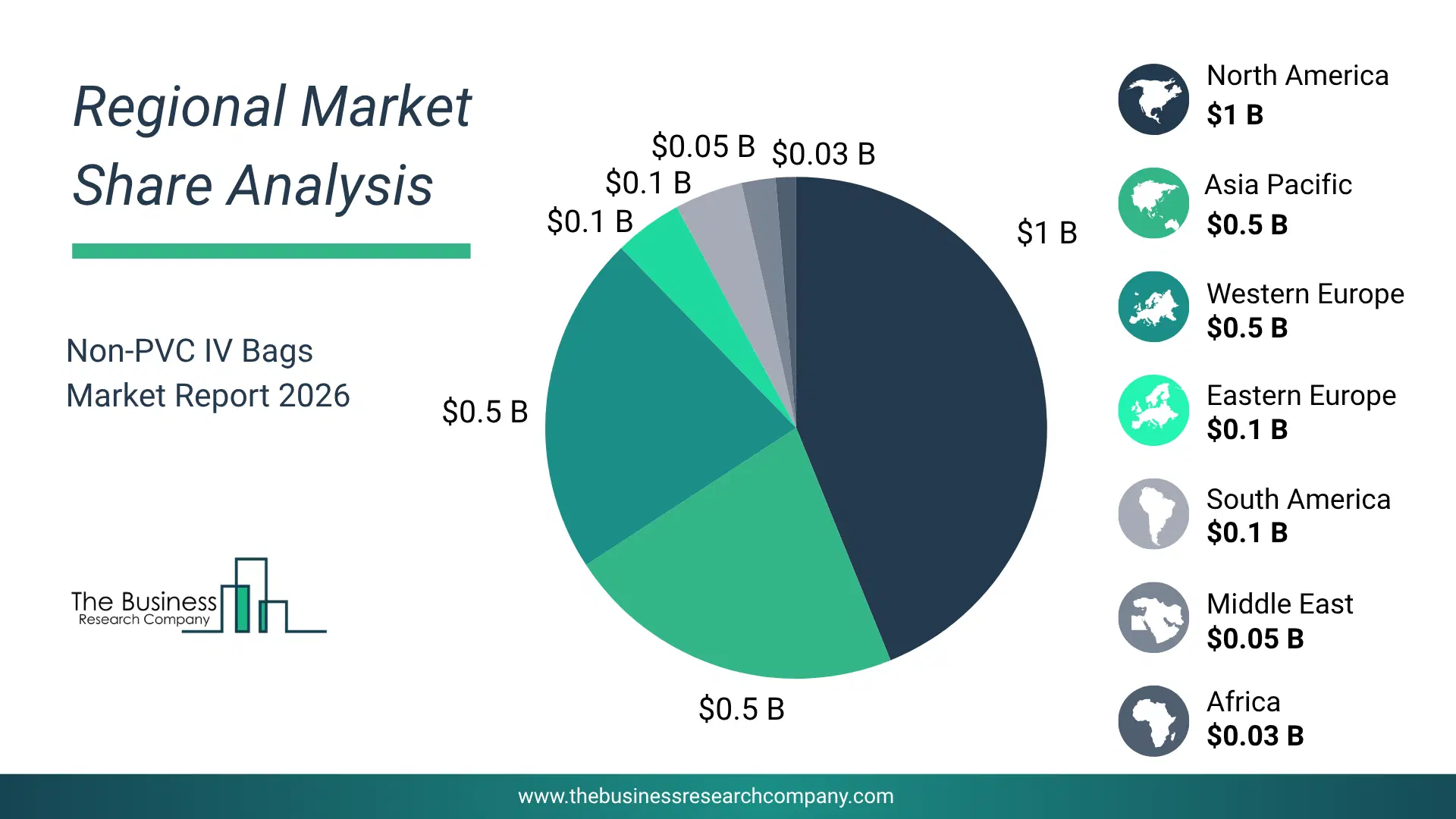
Regional Outlook
North America was the largest region in the non-PVC IV bags market in 2025. Asia-Pacific is expected to be the fastest-growing region in the forecast period. The regions covered in this market report are Asia-Pacific, South East Asia, Western Europe, Eastern Europe, North America, South America, Middle East, Africa. The countries covered in this market report are Australia, Brazil, China, France, Germany, India, Indonesia, Japan, Taiwan, Russia, South Korea, UK, USA, Canada, Italy, SpainWhat Defines the Non-PVC IV Bags Market?
The non-PVC IV bags market consists of sales of sterilizable IV film or bag, IV tubing, and infusion administration sets. Values in this market are ‘factory gate’ values, that is the value of goods sold by the manufacturers or creators of the goods, whether to other entities (including downstream manufacturers, wholesalers, distributors and retailers) or directly to end customers. The value of goods in this market includes related services sold by the creators of the goods.How is Market Value Defined and Measured?
The market value is defined as the revenues that enterprises gain from the sale of goods and/or services within the specified market and geography through sales, grants, or donations in terms of the currency (in USD unless otherwise specified). The revenues for a specified geography are consumption values that are revenues generated by organizations in the specified geography within the market, irrespective of where they are produced. It does not include revenues from resales along the supply chain, either further along the supply chain or as part of other products.
This chart presents market attractiveness based on a quantitative evaluation of growth, competition, strategic alignment, and risk, offering a clear view of opportunity areas for decision-making. This chart is for illustrative purposes; the full report contains the complete analysis.

This chart highlights the Total Addressable Market (TAM) by estimating the maximum revenue opportunity using an assumption-driven approach, supporting strategic planning and opportunity sizing across markets. The chart is illustrative; the full report provides a more comprehensive analysis.
What Key Data and Analysis Are Included in the Non-PVC IV Bags Market Report 2026?
The non-pvc iv bags market research report is one of a series of new reports from The Business Research Company that provides market statistics, including industry global market size, regional shares, competitors with the market share, detailed market segments, market trends and opportunities, and any further data you may need to thrive in the non-pvc iv bags industry. The market research report delivers a complete perspective of everything you need, with an in-depth analysis of the current and future state of the industry.Non-PVC IV Bags Market Report Forecast Analysis
| Report Attribute | Details |
|---|---|
| Market Size Value In 2026 | $2.52 billion |
| Revenue Forecast In 2030 | $3.8 billion |
| Growth Rate | CAGR of 10.5% from 2026 to 2030 |
| Base Year For Estimation | 2025 |
| Actual Estimates/Historical Data | 2020-2025 |
| Forecast Period | 2026 - 2030 |
| Market Representation | Revenue in USD Billion and CAGR from 2026 to 2030 |
| Segments Covered | Product, Material, Content, Application, End User |
| Regional Scope | Asia-Pacific, Western Europe, Eastern Europe, North America, South America, Middle East, Africa |
| Country Scope | The countries covered in the report are Australia, Brazil, China, France, Germany, India, Indonesia, Japan, Taiwan, Russia, South Korea, UK, USA, Canada, Italy, Spain. |
| Key Companies Profiled | Cardinal Health Inc., Pfizer Inc., Abbott Laboratories, Medline Industries LP, Becton Dickinson and Company, Otsuka Pharmaceutical Co. Ltd., Baxter International Inc., B. Braun Melsungen AG, Fresenius Kabi AG, Grifols S.A., Terumo Corporation, Nipro Corporation, ICU Medical Inc., JW Life Science, Jiangxi Sanxin Medtec Co. Ltd., Angiplast Pvt. Ltd., Technoflex SA, Medi Pharma Plan Co. Ltd., Bausch Advanced Technologies Inc., PolyCine GmbH, Sealed Air Corporation, Kraton Corporation |
| Customization Scope | Request for Customization |
| Pricing And Purchase Options | Explore Purchase Options |