
Contact Us
  Search
The Business Research Company Logo
Non-PVC IV Bags Market 2025
Published :September 2025
Pages :329
Format :PDF
Delivery Time :2-3 Business Days
Why 2-3 days? We update the report with the latest data and news before delivery. Let us know if you need us to expedite.
Report Price :$4,490.00

Non-PVC IV Bags Market 2025

By Product (Single Chamber, Multi Chamber), By Material (Ethylene Vinyl Acetate, Polypropylene, Copolyester Ether, Other Materials), By Content (Frozen Mixture, Liquid Mixture), By Application (Chemotherapy, Targeted Drug Delivery, Glucose Injection, Sodium Chloride Solution, Electrolyte Injection, Nutrient Injection, Other Applications), By End User (Hospitals, Clinics, Emergency Service Centers, Ambulatory Surgical Centers, Other End Users), And By Region, Opportunities And Strategies – Global Forecast To 2035
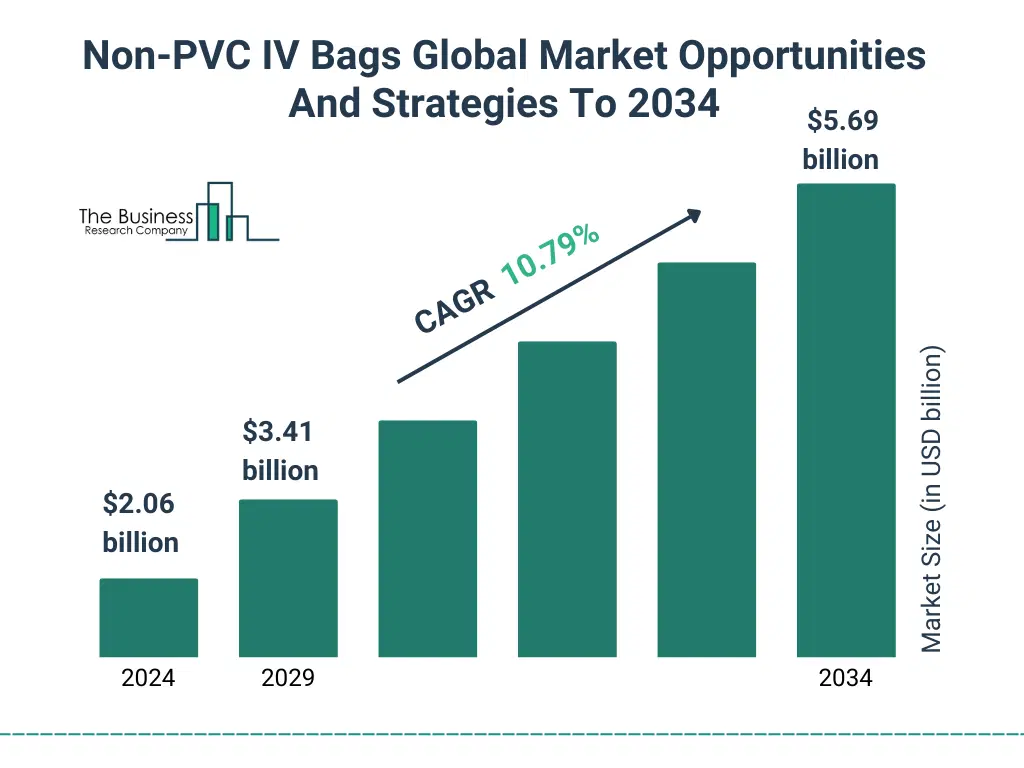
Non-PVC IV Bags Global Market Opportunities And Strategies To 2034 Market Size and growth rate 2025 to 2029: Graph

Non-PVC IV Bags Market Definition

Non‑PVC IV bags are flexible containers designed to hold various intravenous (IV) fluids such as saline, glucose, electrolytes, nutrients, or chemotherapy agents and deliver them directly into a patient’s bloodstream. These bags are constructed using alternative polymers instead of polyvinyl chloride (PVC), offering improved safety profiles by eliminating the risk of plasticizer leaching, reducing environmental impact and enhancing resistance to temperature fluctuations. The non-PVC IV bags market consists of sales, by entities (organizations, sole traders, or partnerships), of non-PVC IV bags that are used for storing and delivering intravenous solutions such as saline, dextrose and medications to patients in healthcare settings.
Research Expert

Book your 30 minutes free consultation with our research experts

Non-PVC IV Bags Market Size

The global non-PVC IV bags market reached a value of nearly $2,063.18 million in 2024, having grown at a compound annual growth rate (CAGR) of 10.25% since 2019. The market is expected to grow from $2,063.18 million in 2024 to $3,411.05 million in 2029 at a rate of 10.58%. The market is then expected to grow at a CAGR of 10.79% from 2029 and reach $5,694.83 million in 2034. Growth in the historic period resulted from the increase in healthcare expenditure, rising demand from biopharmaceutical and biologics sectors, growth in home healthcare services and shift toward single-use medical devices. Factors that negatively affected growth in the historic period were stringent regulatory standards and recycling and waste management issues. Going forward, the growing prevalence of chronic diseases, increasing aging population, increase in chemotherapy and rising demand for eco-friendly and recyclable medical packaging materials will drive the growth. Factor that could hinder the growth of the non-PVC IV bags market in the future include higher cost of non-PVC IV bags, limited manufacturing infrastructure and impact of trade war and tariff.

Non-PVC IV Bags Market Drivers

The key drivers of the non-PVC IV bags market include: Growing Prevalence Of Chronic Diseases Growing prevalence of chronic diseases is expected to propel the growth of the non-PVC IV bags market going forward. The increasing global burden of chronic diseases such as cancer, diabetes and kidney disorders is significantly boosting demand in the non-PVC IV bags. Patients with these conditions often require long-term and repeated intravenous therapies, which demand safe, durable and chemically stable infusion solutions. Non-PVC IV bags, known for their compatibility with a wide range of medications and reduced risk of leaching harmful substances, are increasingly favored over traditional PVC options. As the need for continuous and safe IV administration grows, non-PVC IV bags are becoming an essential component in chronic disease management across hospitals, clinics and home care settings. The growing prevalence of chronic diseases contribution during the forecast period in 2024 is 1.25%.

Non-PVC IV Bags Market Restraints

The key restraints on the non-PVC IV bags market include: Limited Manufacturing Infrastructure Limited manufacturing infrastructure is expected to hamper the growth of the non-PVC IV bags market. Non-PVC materials require specialized handling and production technologies that are not widely available, especially in emerging markets. This lack of advanced infrastructure can lead to variability in product quality, supply chain disruptions and longer lead times. As a result, healthcare providers may hesitate to adopt non-PVC IV bags due to concerns over reliability and consistent supply, ultimately slowing market penetration and limiting the shift away from traditional PVC-based products. Growth affected by limited manufacturing infrastructure during the forecast period in 2024 is -1.50%.

Need data on a specific region in this market?

Opportunities And Recommendations In The Non-PVC IV Bags Market

Opportunities – The top opportunities in the non-PVC IV bags markets segmented by product will arise in the single chamber segment, which will gain $707.54 million of global annual sales by 2029. The top opportunities in the non-PVC IV bags markets segmented by material will arise in the polypropylene segment, which will gain $601.62 million of global annual sales by 2029. The top opportunities in the non-PVC IV bags markets segmented by content will arise in the liquid mixture segment, which will gain $948.49 million of global annual sales by 2029. The top opportunities in the non-PVC IV bags markets segmented by application will arise in the chemotherapy segment, which will gain $620.60 million of global annual sales by 2029. The top opportunities in the non-PVC IV bags markets segmented by end user will arise in the hospitals segment, which will gain $808.38 million of global annual sales by 2029. The non-PVC IV bags market size will gain the most in the USA at $448.57 million. Recommendations- To take advantage of the opportunities, The Business Research Company recommends the non-PVC IV bags companies to focus on product innovation to strengthen market position, focus on multi-chamber non-PVC IV bags to drive growth, focus on copolyester ether to capture high-growth opportunities, focus on frozen mixtures to maximize growth potential, expand in emerging markets, focus on strategic partnerships to drive innovation and regulatory compliance, focus on value-based pricing to reflect product benefits and market position, focus on clinical evidence to drive adoption through targeted promotion, focus on strategic stakeholder engagement to strengthen brand credibility, focus on targeted drug delivery to capture high-growth therapeutic demand and focus on ambulatory surgical centers to capture rapid outpatient growth.
Chat with us