
Non-Small Cell Lung Cancer (NSCLC) Market Report 2026
Global Outlook – By Type (Squamous Cell Carcinoma, Large Cell Carcinoma, Adenocarcinoma, Other Types), By Therapy (Radiotherapy, Laser Therapy, Photodynamic Therapy (PDT), Other Therapies), By Distribution Channel (Hospital Pharmacy, Online Pharmacy, Other Distribution Channels) - Market Size, Trends, And Global Forecast 2026-2030
Non-Small Cell Lung Cancer (NSCLC) Market Overview
• Non-Small Cell Lung Cancer (NSCLC) market size has reached to $42.2 billion in 2025 • Expected to grow to $70.81 billion in 2030 at a compound annual growth rate (CAGR) of 11% • Growth Driver: Rising Tobacco Consumption Fuels Growth In The Non-Small Cell Lung Cancer (NSCLC) Market • Market Trend: FDA Accelerated Approval For Targeted Therapies Enhances Treatment Options In Non-Small Cell Lung Cancer (NSCLC) • North America was the largest region in 2025 and Asia-Pacific is the fastest growing region.Market Gains By 2030 – Top Opportunities By Segment
Market Gain identifies the most promising market opportunities by highlighting the segments or products expected to generate the highest incremental revenue growth over the next five years.
What Is Covered Under Non-Small Cell Lung Cancer (NSCLC) Market?
Non-small cell lung cancer (NSCLC) is a type of epithelial lung cancer that develops in the tissues of the lungs and is characterized by the abnormal growth of cells. It is primarily caused by long-term smoking, genetic mutations, air pollution, and secondhand smoke. The main types of non-small cell lung cancer (NSCLC) are squamous cell carcinoma, large cell carcinoma, adenocarcinoma, and others. Squamous cell carcinoma is a type of cancer that arises from the squamous epithelial cells and can occur in other areas of the body. The various types of therapies are included, such as radiotherapy, laser therapy, photodynamic therapy (PDT), and others, with various distribution channels involved, including hospital pharmacies, online pharmacies, and others.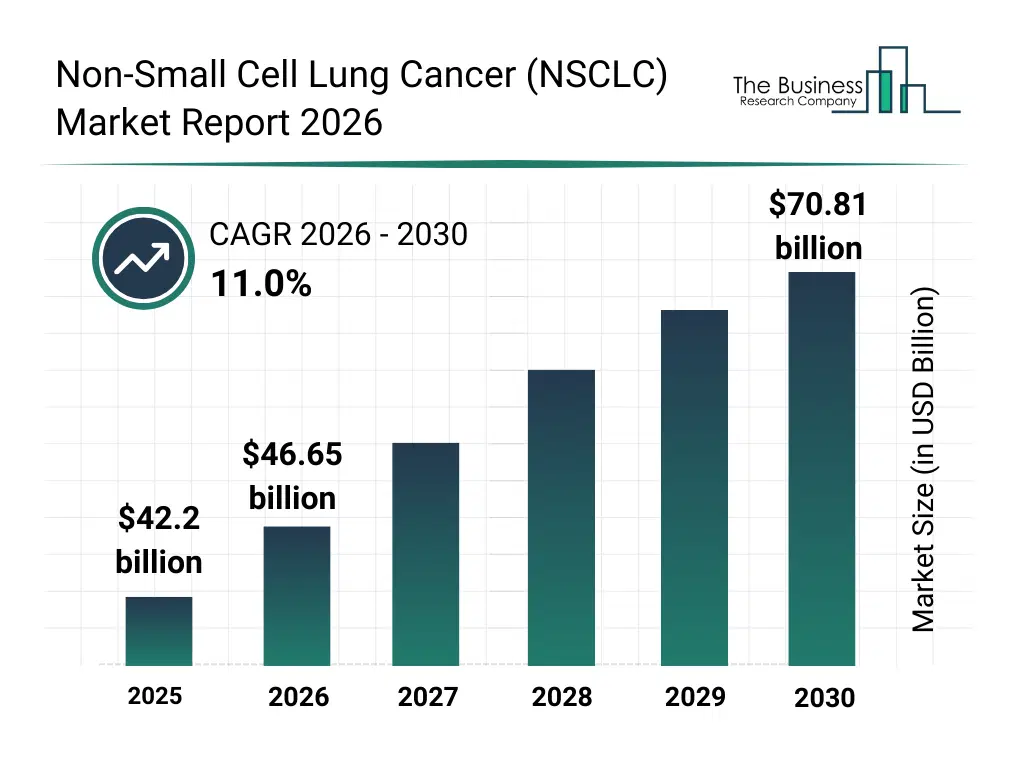
What Is The Non-Small Cell Lung Cancer (NSCLC) Market Size and Share 2026?
The non-small cell lung cancer (nsclc) market size has grown rapidly in recent years. It will grow from $42.2 billion in 2025 to $46.65 billion in 2026 at a compound annual growth rate (CAGR) of 10.5%. The growth in the historic period can be attributed to high prevalence of smoking, exposure to air pollution, late-stage diagnosis, limited targeted therapy options, reliance on conventional chemotherapy.What Is The Non-Small Cell Lung Cancer (NSCLC) Market Growth Forecast?
The non-small cell lung cancer (nsclc) market size is expected to see rapid growth in the next few years. It will grow to $70.81 billion in 2030 at a compound annual growth rate (CAGR) of 11.0%. The growth in the forecast period can be attributed to rising adoption of targeted therapies and immunotherapy, increasing investment in lung cancer diagnostics, growth of personalized medicine, expansion of oncology centers and specialty clinics, development of ai-based predictive models and imaging solutions. Major trends in the forecast period include rising adoption of targeted therapy and immunotherapy, increasing use of advanced radiotherapy techniques, growing implementation of laser therapy and photodynamic therapy, expanding deployment of early diagnosis and screening programs, advancing integration of ai-powered imaging and predictive oncology.
Global Non-Small Cell Lung Cancer (NSCLC) Market Segmentation
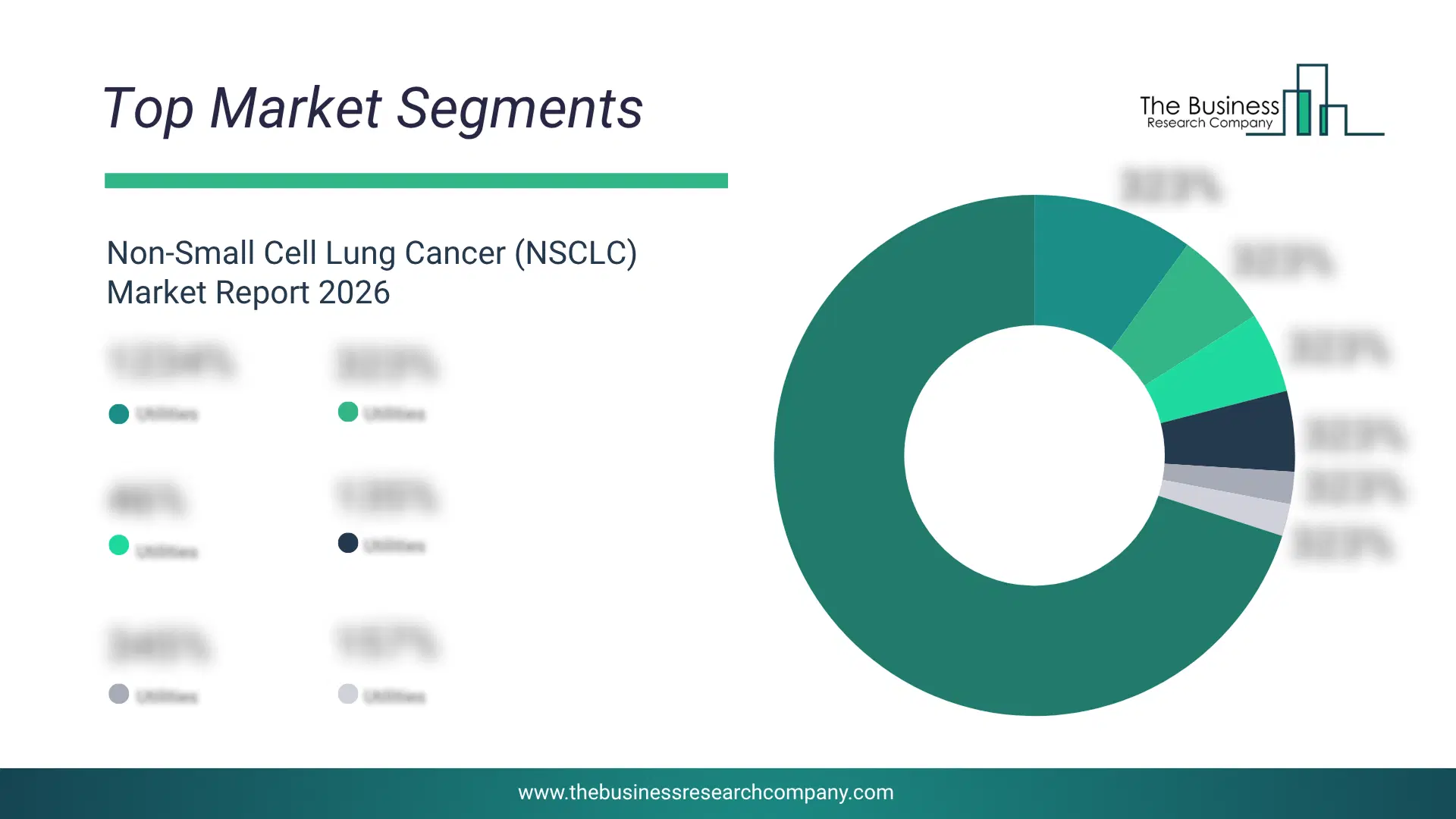
1) By Type: Squamous Cell Carcinoma, Large Cell Carcinoma, Adenocarcinoma, Other Types 2) By Therapy: Radiotherapy, Laser Therapy, Photodynamic Therapy (PDT), Other Therapies 3) By Distribution Channel: Hospital Pharmacy, Online Pharmacy, Other Distribution Channels Subsegments: 1) By Squamous Cell Carcinoma: Keratinizing Squamous Cell Carcinoma, Non-Keratinizing Squamous Cell Carcinoma 2) By Large Cell Carcinoma: Undifferentiated Large Cell Carcinoma, Large Cell Neuroendocrine Carcinoma 3) By Adenocarcinoma: Invasive Adenocarcinoma, Bronchioloalveolar Carcinoma 4) By Other Types: Mixed Cell Type Carcinoma, Sarcomatoid Carcinoma The top segments in the non-small cell lung cancer market will be: • Hospital Pharmacy will reach $29202.14 Million by 2025. • Adenocarcinoma will reach $19098.21 Million by 2025. • Chemotherapy will reach $12288.78 Million by 2025. • Squamous Cell Carcinoma will reach $12177.69 Million by 2025. • Targeted therapy will reach $10898.85 Million by 2025.What Is The Driver Of The Non-Small Cell Lung Cancer (NSCLC) Market?
The increasing rate of tobacco consumption is expected to propel the growth of the non-small cell lung cancer (NSCLC) market going forward. Tobacco consumption refers to the use of tobacco products by individuals, typically in the form of smoking, chewing, or snuffing, which introduces nicotine and other chemicals into the body. Tobacco smoke contains several carcinogens that can damage the DNA (deoxyribonucleic acid) in lung cells, leading to mutations and the uncontrolled growth of cancerous cells, including non-small-cell lung cancer (NSCLC). For instance, in October 2024, according to the 2024 National Youth Tobacco Survey published by US Food and Drug Administration (USFDA), a US-based federal agency, 1.1% of all students (approximately 2.25 million) reported current use of tobacco products, with 10.1% of high school students (about 1.58 million) and 5.4% of middle school students (around 640,000) using tobacco; additionally, 2.8% of students (about 760,000) reported current use of any combustible tobacco product, while 3.0% (approximately 840,000) reported using multiple tobacco products. Therefore, the increasing rate of tobacco consumption is driving the growth of the non-small cell lung cancer (NSCLC) industry.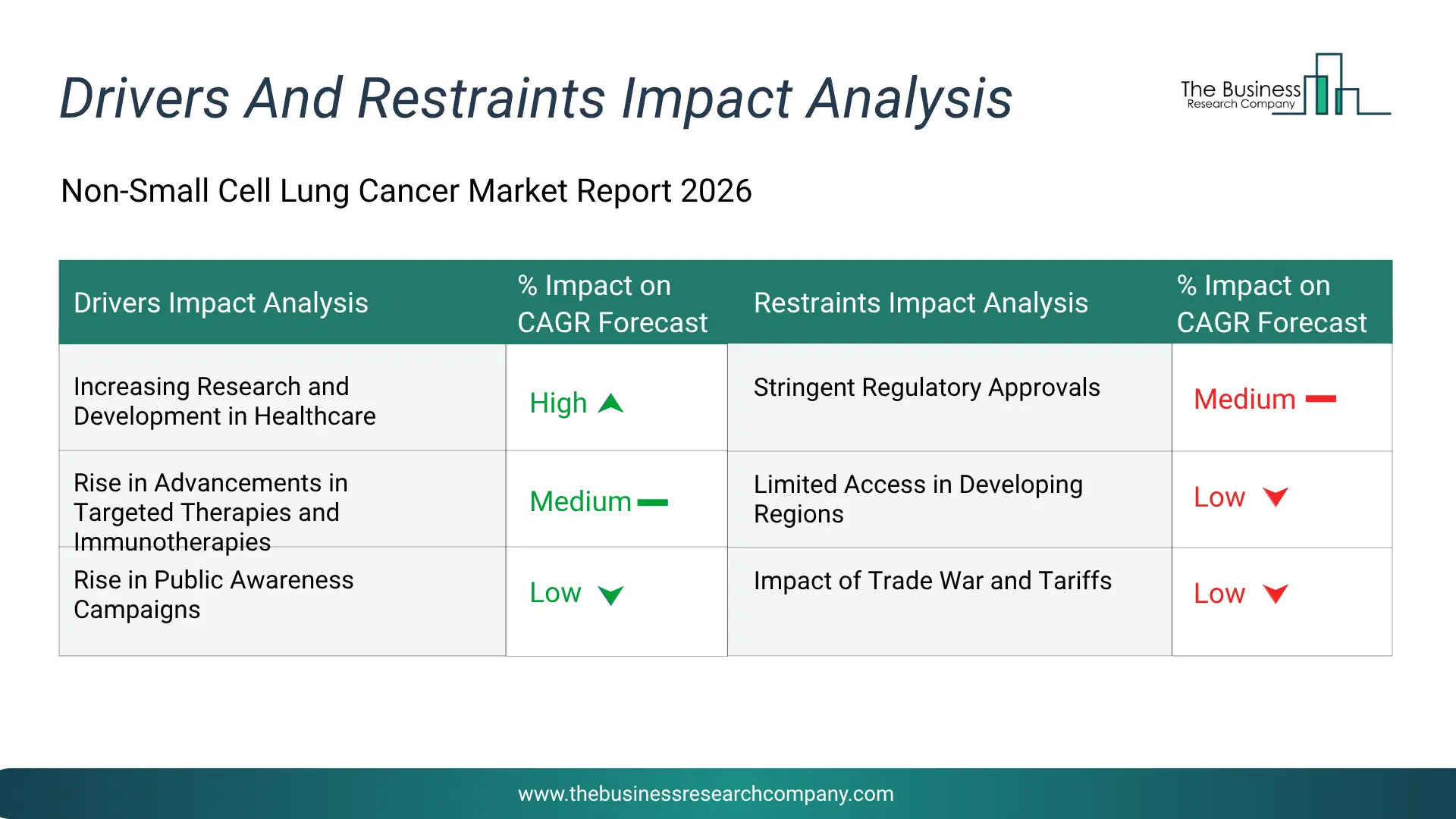
Infographic Chart Showing Key Market Drivers Analysis And Restraints For Non-Small Cell Lung Cancer (Nsclc) Market
The chart presents an impact analysis of key drivers and restraints, quantifying their relative influence on the market's growth rate and helping assess the balance between growth enablers and limiting factors. This chart offers a high-level perspective; the full report contains more detailed insights.
How Will The Drivers Impact Growth In The Global Non-Small Cell Lung Cancer Market?
• Increasing Research and Development in Healthcare (High) – The increasing research and development in healthcare will become a key driver of growth in the Non-Small Cell Lung Cancer market by 2030. It leads to the discovery of new targeted therapies, immunotherapies, and precision medicine approaches, which improve patient outcomes. Advanced R&D also accelerates clinical trials and regulatory approvals for novel drugs. As a result, the increasing research and development in healthcare is anticipated to contributing to a 2.0% annual growth in the market. • Rise in Advancements in Targeted Therapies and Immunotherapies (Medium) – The expanding advancements in targeted therapies and immunotherapies processes will serve as a key growth catalyst for the Non-Small Cell Lung Cancer market by 2030, These therapies often have fewer side effects compared to traditional chemotherapy, making them more appealing to patients and clinicians. As a result, more patients are likely to adopt these treatments, increasing demand. Therefore, this growing advancements in targeted therapies and immunotherapies is projected to supporting to a 1.0% annual growth in the market. • Rise in Public Awareness Campaigns (Low) – The growing focus on Public Awareness Campaigns will emerge as a major factor driving the expansion of the Non-Small Cell Lung Cancer market by 2030. It leads to more individuals seeking screenings and medical consultations, resulting in earlier diagnosis. Early detection increases the demand for advanced treatments and therapies. Additionally, awareness drives funding and support for research, accelerating the development and adoption of innovative Non-Small Cell Lung Cancer treatments. Consequently, the rise In Public Awareness Campaigns is projected to contributing to a 1.5% annual growth in the market.How Will The Restraints Impact Growth In The Global Non-Small Cell Lung Cancer Market?
• Stringent Regulatory Approvals (High) – Stringent Regulatory Approvals will restrict the growth of the Non-Small Cell Lung Cancer market during the forecast period. NSCLC therapies require lengthy and rigorous regulatory review processes, often taking years from clinical trials to market approval. The high bar for demonstrating meaningful survival benefits and manageable safety profiles creates significant barriers for new therapies. Regulatory uncertainty regarding accelerated approval pathways and surrogate endpoints further complicates the drug development landscape. • Limited Access in Developing Regions (Medium) – Limited Access in Developing Regions will restrict the growth of the Non-Small Cell Lung Cancer market during the forecast period. Advanced NSCLC treatments, particularly targeted therapies and immunotherapies, remain unaffordable and inaccessible in many developing regions. Limited healthcare infrastructure, lack of diagnostic capabilities, and absence of reimbursement programs restrict patient access to innovative therapies. This geographic disparity in access limits the overall market potential and creates health outcome inequalities. • Impact of Trade War and Tariffs (Low) – Impact of Trade War and Tariffs will restrict the growth of the Non-Small Cell Lung Cancer market during the forecast period. Trade tensions affect the supply chains for NSCLC drug development and manufacturing, impacting the cost and availability of active pharmaceutical ingredients. Tariffs on imported medicines and treatment components can increase healthcare costs and limit patient access to novel therapies in certain regions.Key Players In The Global Non-Small Cell Lung Cancer (NSCLC) Market
Major companies operating in the non-small cell lung cancer (nsclc) market are Pfizer Inc., F. Hoffmann‑La Roche AG, Merck & Co. Inc., AbbVie Inc., Novartis AG, Sanofi S.A., Bristol‑Myers Squibb Company, AstraZeneca plc, GlaxoSmithKline Plc, Takeda Pharmaceutical Company Limited, Eli Lilly and Company, Amgen Inc., Regeneron Pharmaceuticals Inc., Astellas Pharma Inc., Clovis Oncology, Revolution Medicines, Boehringer Ingelheim GmbH, Johnson & Johnson, Daiichi Sankyo Company Limited, BeiGene Ltd., DualityBio, Gilead Sciences Inc., Mirati Therapeutics Inc., Arcus Biosciences Inc., NeoImmuneTech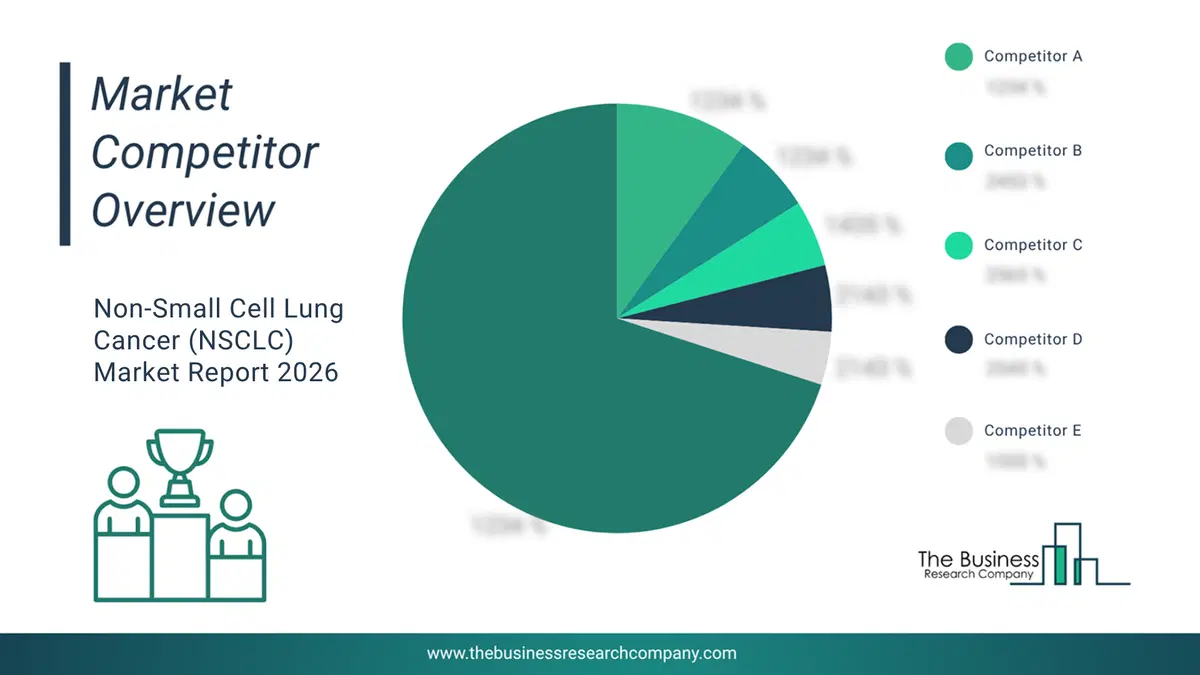
This chart is for illustrative purposes; the full report includes a detailed competitor analysis and comprehensive overview of the top 10 companies in the market.
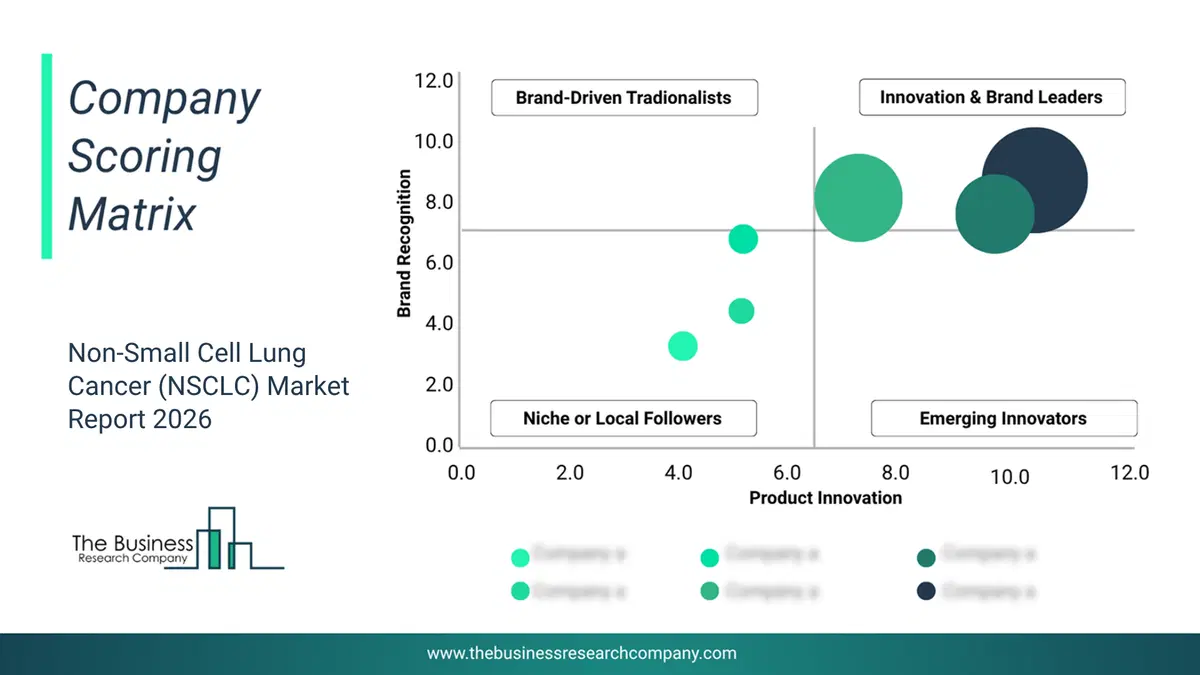
This chart maps companies by product innovation and brand strength, with bubble size indicating relative revenue, helping identify market leaders, challengers, and niche players. This is an illustrative chart; the full report provides a complete and accurate competitive analysis.
Global Non-Small Cell Lung Cancer (NSCLC) Market Trends and Insights
Major companies operating in the non-small cell lung cancer market are focusing on developing targeted therapies, such as FDA accelerated approval for drugs targeting specific genetic mutations, to enhance treatment options for patients. FDA accelerated approval refers to a regulatory pathway in which the U.S. Food and Drug Administration (FDA) grants earlier approval to a therapy that specifically targets a molecular or genetic abnormality in a disease, based on surrogate or intermediate clinical endpoints reasonably likely to predict clinical benefit. For instance, in July 2025, Dizal (Jiangsu) Pharmaceutical Co., Ltd., a China-based research-based biotechnology company, launched sunvozertinib (Zegfrovy) for adult patients with locally advanced or metastatic NSCLC harboring EGFR exon 20 insertion mutations who progressed after platinum-based chemotherapy. Zegfrovy is administered orally at 200 mg once daily with food until disease progression or unacceptable toxicity. The therapy demonstrated a confirmed overall response rate of 46% and a duration of response of 11.1 months in the WU-KONG1B trial. The FDA approval also included the Oncomine Dx Express Test as a companion diagnostic to detect eligible patients. Sunvozertinib carries warnings for interstitial lung disease, gastrointestinal and dermatologic reactions, ocular toxicity, and embryo-fetal toxicity, reflecting its comprehensive safety profile.What Are Latest Mergers And Acquisitions In The Non-Small Cell Lung Cancer (NSCLC) Market?
In December 2023, Pfizer Inc., a US-based biopharmaceutical company providing innovative medicines including small molecules, biologics, and immunotherapies, acquired Seagen for approximately US$43 billion. Through this acquisition, Pfizer aims to strengthen its oncology pipeline, particularly in Non-Small Cell Lung Cancer, by leveraging Seagen’s world-leading antibody-drug conjugate (ADC) technology to develop next-generation cancer therapies. Seagen is a US-based biotechnology company that is actively developing and studying therapies for NSCLC.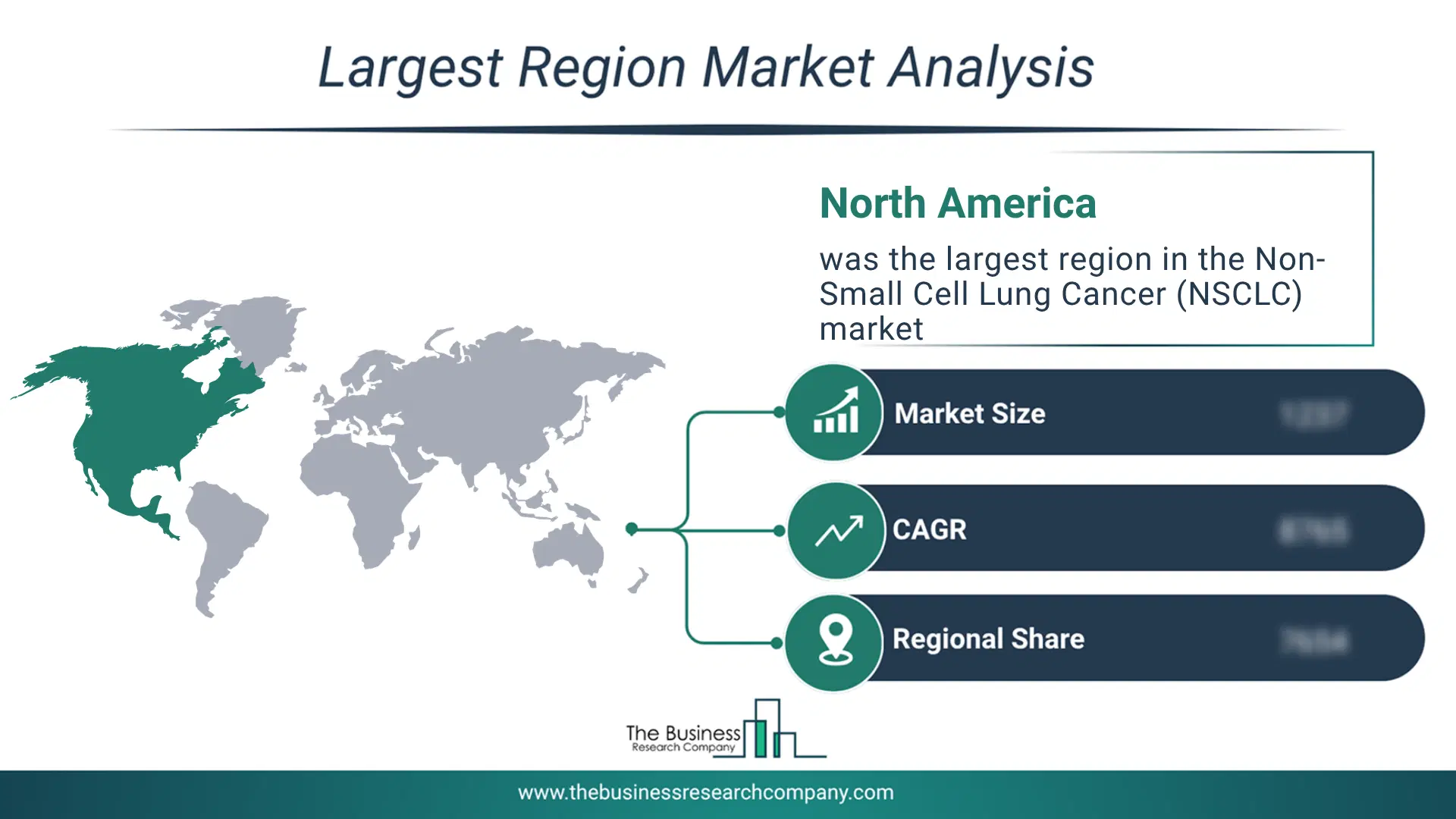
Regional Outlook
North America was the largest region in the non-small cell lung cancer (NSCLC) market in 2025. Asia-Pacific is expected to be the fastest-growing region in the forecast period. The regions covered in this market report are Asia-Pacific, South East Asia, Western Europe, Eastern Europe, North America, South America, Middle East, Africa. The countries covered in this market report are Australia, Brazil, China, France, Germany, India, Indonesia, Japan, Taiwan, Russia, South Korea, UK, USA, Canada, Italy, Spain.What Defines the Non-Small Cell Lung Cancer (NSCLC) Market?
The non-small cell lung cancer (NSCLC) market includes revenues earned by entities by providing services such as targeted therapies, radiation therapies, imaging tests, biopsy, bronchoscopy, and lung function tests. The market value includes the value of related goods sold by the service provider or included within the service offering. The non-small cell lung cancer (NSCLC) market also includes sales of chemotherapy drugs such as cisplatin, carboplatin, and pemetrexed epidermal growth factor receptor (EGFR) inhibitors such as erlotinib, afatinib, and gefitinib, as well as pain medications. Values in this market are ‘factory gate’ values, that is, the value of goods sold by the manufacturers or creators of the goods, whether to other entities (including downstream manufacturers, wholesalers, distributors, and retailers) or directly to end customers. The value of goods in this market includes related services sold by the creators of the goods.How is Market Value Defined and Measured?
The market value is defined as the revenues that enterprises gain from the sale of goods and/or services within the specified market and geography through sales, grants, or donations in terms of the currency (in USD unless otherwise specified). The revenues for a specified geography are consumption values that are revenues generated by organizations in the specified geography within the market, irrespective of where they are produced. It does not include revenues from resales along the supply chain, either further along the supply chain or as part of other products.
This chart presents market attractiveness based on a quantitative evaluation of growth, competition, strategic alignment, and risk, offering a clear view of opportunity areas for decision-making. This chart is for illustrative purposes; the full report contains the complete analysis.

This chart highlights the Total Addressable Market (TAM) by estimating the maximum revenue opportunity using an assumption-driven approach, supporting strategic planning and opportunity sizing across markets. The chart is illustrative; the full report provides a more comprehensive analysis.
What Key Data and Analysis Are Included in the Non-Small Cell Lung Cancer (NSCLC) Market Report 2026?
The non-small cell lung cancer (nsclc) market research report is one of a series of new reports from The Business Research Company that provides market statistics, including industry global market size, regional shares, competitors with the market share, detailed market segments, market trends and opportunities, and any further data you may need to thrive in the non-small cell lung cancer (nsclc) industry. The market research report delivers a complete perspective of everything you need, with an in-depth analysis of the current and future state of the industry.Non-Small Cell Lung Cancer (NSCLC) Market Report Forecast Analysis
| Report Attribute | Details |
|---|---|
| Market Size Value In 2026 | $46.65 billion |
| Revenue Forecast In 2030 | $70.81 billion |
| Growth Rate | CAGR of 10.5% from 2026 to 2030 |
| Base Year For Estimation | 2025 |
| Actual Estimates/Historical Data | 2020-2025 |
| Forecast Period | 2026 - 2030 |
| Market Representation | Revenue in USD Billion and CAGR from 2026 to 2030 |
| Segments Covered | Type, Therapy, Distribution Channel |
| Regional Scope | Asia-Pacific, Western Europe, Eastern Europe, North America, South America, Middle East, Africa |
| Country Scope | The countries covered in the report are Australia, Brazil, China, France, Germany, India, Indonesia, Japan, Taiwan, Russia, South Korea, UK, USA, Canada, Italy, Spain. |
| Key Companies Profiled | Pfizer Inc., F. Hoffmann‑La Roche AG, Merck & Co. Inc., AbbVie Inc., Novartis AG, Sanofi S.A., Bristol‑Myers Squibb Company, AstraZeneca plc, GlaxoSmithKline Plc, Takeda Pharmaceutical Company Limited, Eli Lilly and Company, Amgen Inc., Regeneron Pharmaceuticals Inc., Astellas Pharma Inc., Clovis Oncology, Revolution Medicines, Boehringer Ingelheim GmbH, Johnson & Johnson, Daiichi Sankyo Company Limited, BeiGene Ltd., DualityBio, Gilead Sciences Inc., Mirati Therapeutics Inc., Arcus Biosciences Inc., NeoImmuneTech |
| Customization Scope | Request for Customization |
| Pricing And Purchase Options | Explore Purchase Options |