
Non Sugar Sweeteners Market Report 2026
Global Outlook – By Type (Artificial Non-Sugar Sweeteners, Sugar Alcohols, Novel Sweeteners), By Sales Channel (Direct, Indirect ), By Application (Food Industry, Diabetes Mellitus Treatment, Oral Care) – Market Size, Trends, Strategies, and Forecast to 2030
Non Sugar Sweeteners Market Overview
• Non Sugar Sweeteners market size has reached to $14.46 billion in 2025 • Expected to grow to $17.32 billion in 2030 at a compound annual growth rate (CAGR) of 3.6% • Growth Driver: Rising Diabetes Rates Fuel Growth in Non-Sugar Sweetener Market • Market Trend: Innovations In Natural Sugar Substitutes Reshaping The Non-Sugar Sweeteners Market • North America was the largest region in 2025.What Is Covered Under Non Sugar Sweeteners Market?
A non-sugar sweetener is a substance used to provide a sweet taste to foods and beverages without the caloric content or metabolic effects of sugar. These sweeteners are often used as sugar substitutes in various products to reduce calorie intake, manage blood sugar levels, or prevent dental cavities. Non-sugar sweeteners can be natural or artificial and are significantly sweeter than sugar, requiring only small amounts to achieve the desired sweetness. The main types of non-sugar sweeteners are artificial non-sugar sweeteners, natural non-sugar sweeteners, sugar alcohols, and novel sweeteners. Artificial non-sugar sweeteners are man-made sweetening agents that provide the taste of sugar without the associated calories or carbohydrates. The various sales channels include direct and indirect used by various applications such as the food industry, diabetes mellitus treatment, oral care, and other applications.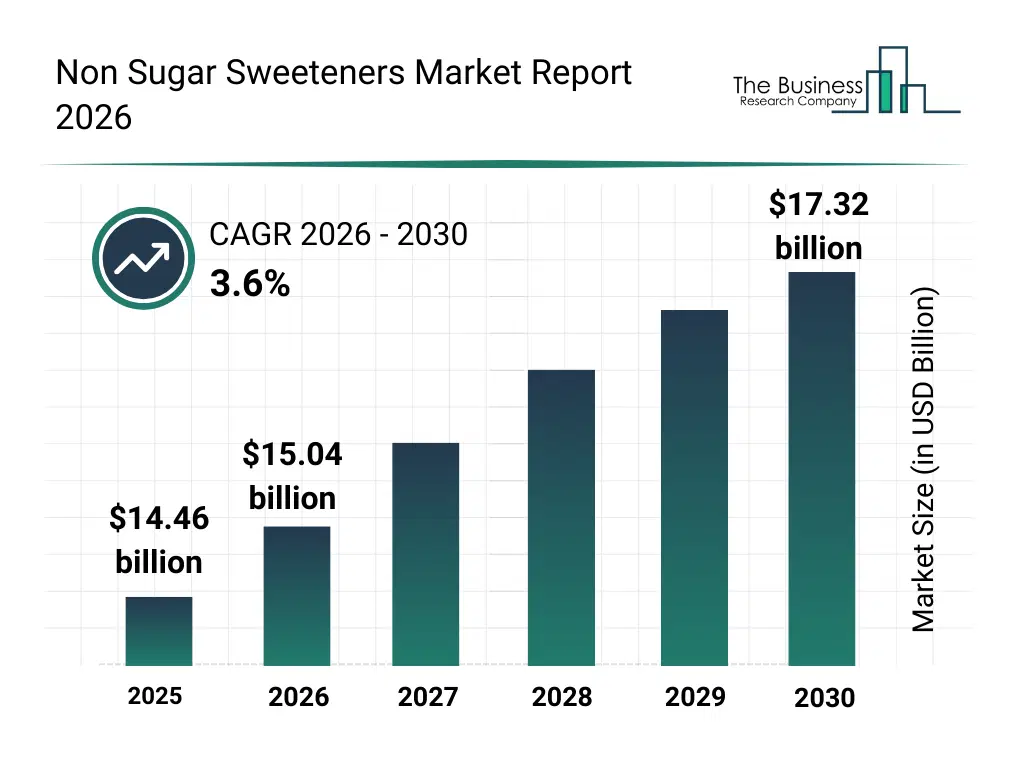
What Is The Non Sugar Sweeteners Market Size and Share 2026?
The non sugar sweeteners market size has grown steadily in recent years. It will grow from $14.46 billion in 2025 to $15.04 billion in 2026 at a compound annual growth rate (CAGR) of 4.0%. The growth in the historic period can be attributed to rising prevalence of diabetes and obesity, increased consumer awareness of sugar reduction, expansion of diet and low-calorie food categories, growing use of sweeteners in oral care products, regulatory approvals for artificial sweeteners.What Is The Non Sugar Sweeteners Market Growth Forecast?
The non sugar sweeteners market size is expected to see steady growth in the next few years. It will grow to $17.32 billion in 2030 at a compound annual growth rate (CAGR) of 3.6%. The growth in the forecast period can be attributed to growing demand for natural and novel sweeteners, expansion of functional food and beverage markets, increasing investment in fermentation-based sweeteners, rising focus on glycemic control solutions, innovation in next-generation sweetener blends. Major trends in the forecast period include increasing adoption of plant-based sweeteners, rising demand for low-calorie food formulations, growing use of blended sweetener systems, expansion of clean-label sweetener products, enhanced focus on taste masking technologies.
Global Non Sugar Sweeteners Market Segmentation
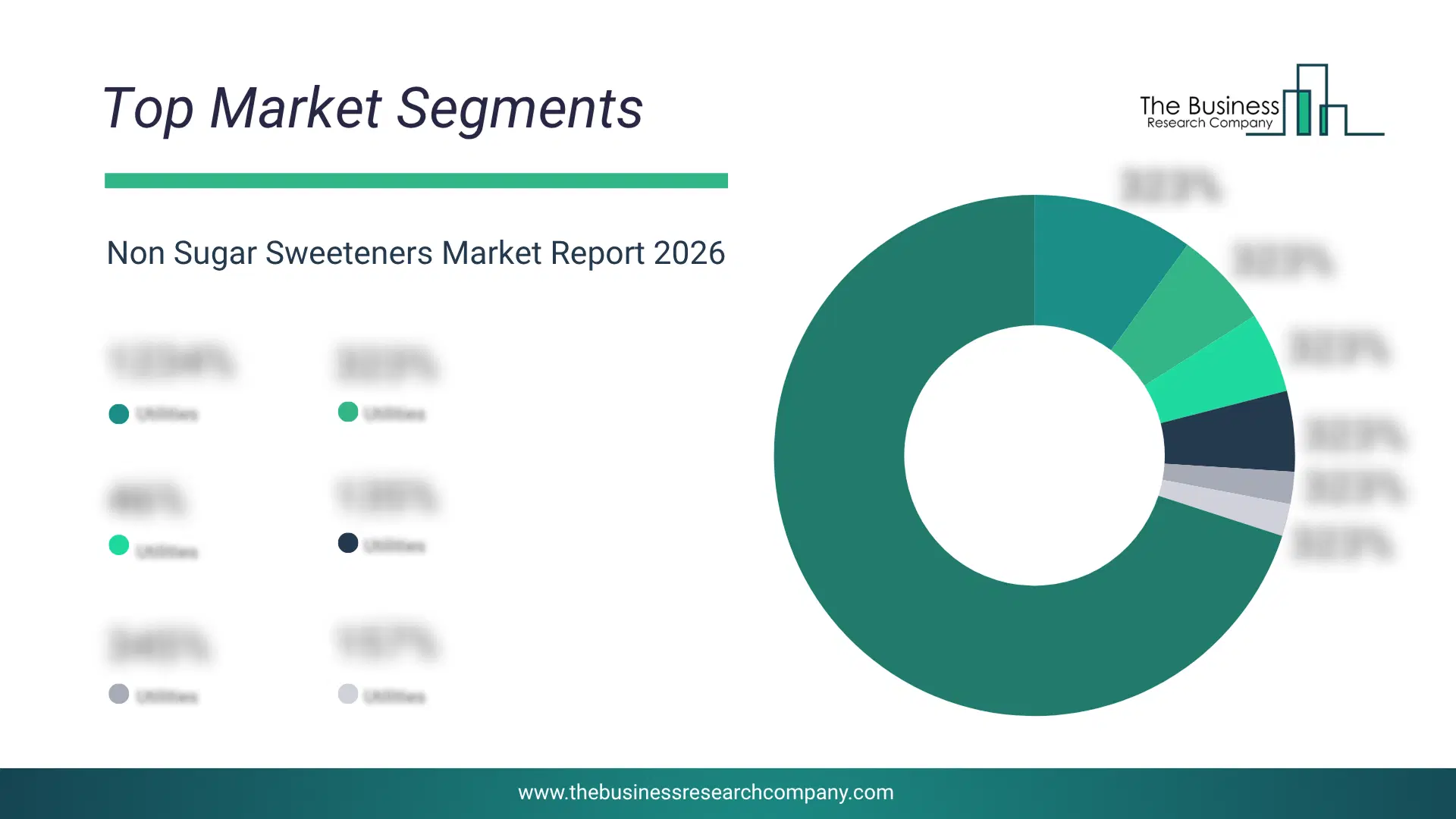
1) By Type: Artificial Non-Sugar Sweeteners, Sugar Alcohols, Novel Sweeteners 2) By Sales Channel: Direct, Indirect 3) By Application: Food Industry, Diabetes Mellitus Treatment, Oral Care Subsegments: 1) By Artificial Non-Sugar Sweeteners: Aspartame, Sucralose, Saccharin, Acesulfame K, Cyclamate, Steviol Glycosides (Rebaudioside A), Neotame, Advantame 2) By Natural Non-Sugar Sweeteners: Stevia (Steviol Glycosides), Monk Fruit Extract (Luohanguo) 3) By Sugar Alcohols: Sorbitol, Xylitol, Erythritol, Mannitol, Maltitol, Isomalt, Lactitol, Hydrogenated Starch Hydrolysates (HSH), Polydextrose 4) By Novel Sweeteners: Allulose, Monk Fruit Extract (Other Novel Forms), Tagatose, Luo Han Guo, Yacon Syrup, Trehalose, Stevia-Based Blends, Sucralose And Stevia Blends, Plant-Derived And New Bio-Based Sweeteners, Synthetic Sweetener BlendsWhat Is The Driver Of The Non Sugar Sweeteners Market?
The increasing number of diabetic patients is expected to propel the growth of the non-sugar sweetener market going forward. Diabetic patients are individuals who are diagnosed with diabetes mellitus, a chronic metabolic disorder characterized by high blood sugar levels. The increasing number of diabetic patients is partly linked to the high consumption of processed foods, as these foods are often high in added sugars, unhealthy fats, and refined carbohydrates, which can lead to obesity, insulin resistance, and ultimately a higher risk of developing type 2 diabetes. Non-sugar sweeteners provide sweetening options that promote calorie control, blood sugar regulation, and general well-being, which is a crucial contribution to the dietary treatment of diabetes. For instance, in February 2025, according to the British Diabetic Association, a UK-based healthcare professional and research charity, there are now 4.6 million people in the UK who have a diagnosis of diabetes, up from 4.4 million people last year. Further, 1.3 million are living with undiagnosed type 2 diabetes. Therefore, increasing numbers of diabetic patients are driving the growth of the non-sugar sweetener market.Key Players In The Global Non Sugar Sweeteners Market
Major companies operating in the non sugar sweeteners market are Cargill Incorporated, Archer Daniels Midland Company, DuPont de Nemours Inc., Ajinomoto Co. Inc., McNeil Nutritionals LLC, Südzucker AG, Ingredion Incorporated, Roquette Frères, Döhler GmbH, Tate & Lyle PLC, PureCircle Ltd., NutraSweet Company, Evolva Holding SA, Hermes Sweeteners Ltd., GLG Life Tech Corporation, Hunan NutraMax Inc., Matsutani Chemical Industry Co. Ltd., Celanese Corporation, Zydus Wellness, Tereos S.A.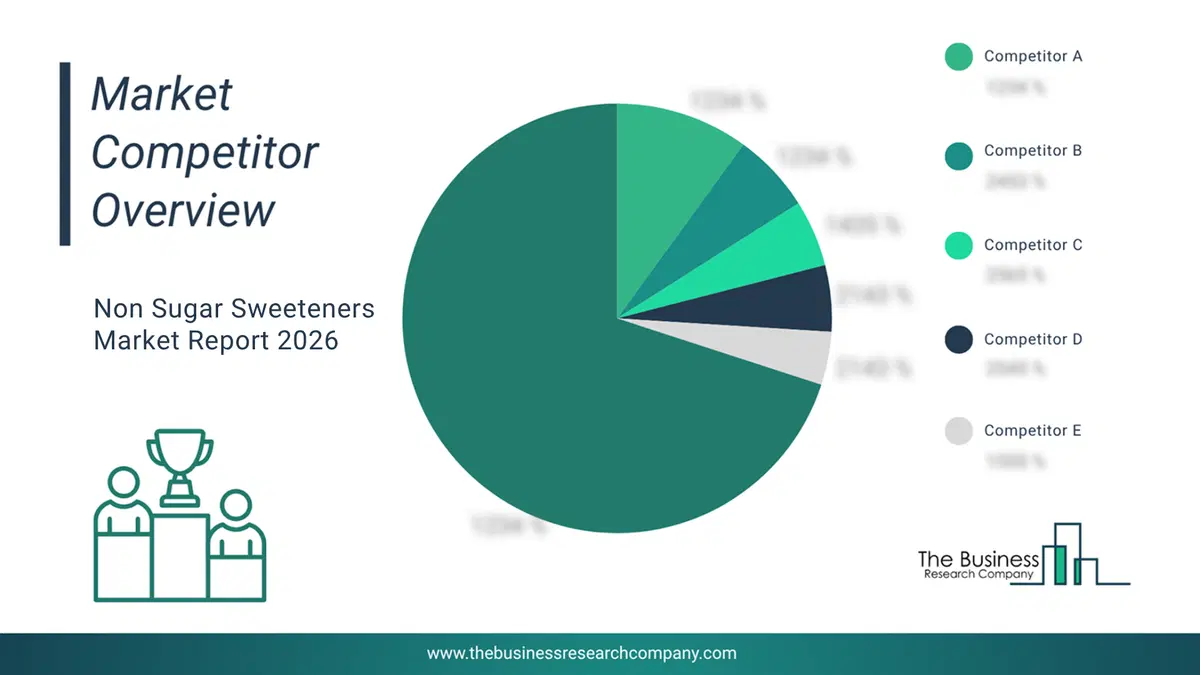
This chart is for illustrative purposes; the full report includes a detailed competitor analysis and comprehensive overview of the top 10 companies in the market.
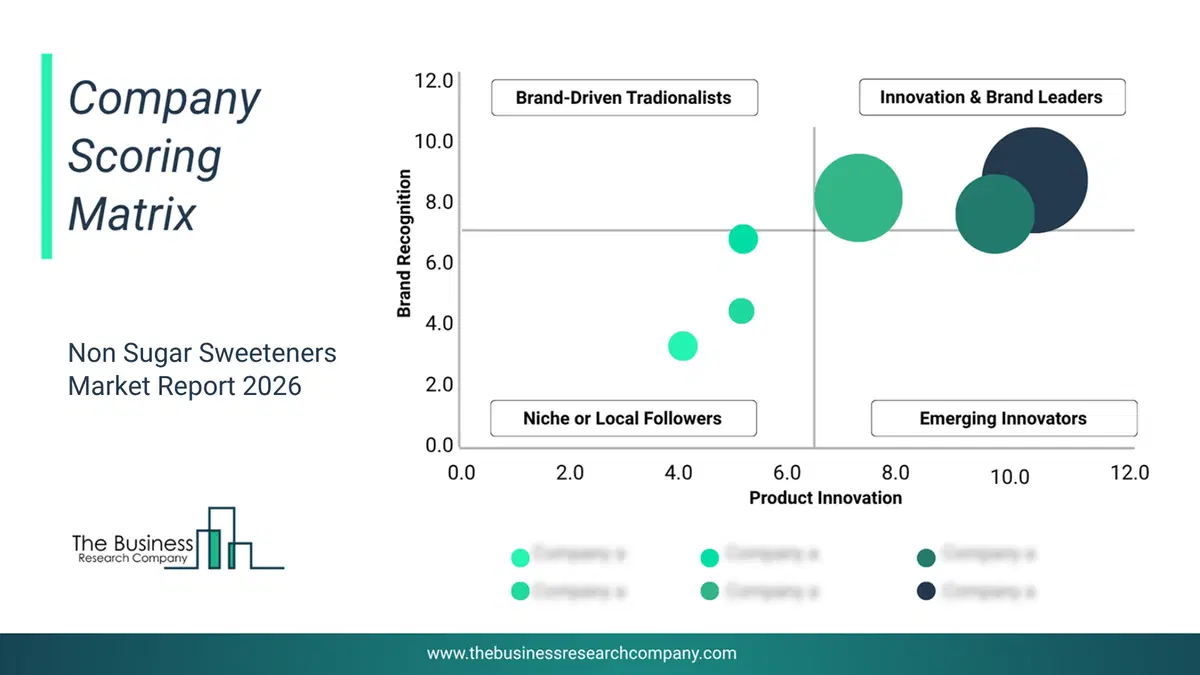
This chart maps companies by product innovation and brand strength, with bubble size indicating relative revenue, helping identify market leaders, challengers, and niche players. This is an illustrative chart; the full report provides a complete and accurate competitive analysis.
Global Non Sugar Sweeteners Market Trends and Insights
Major companies operating in the non-sugar sweeteners market are focusing on developing innovative products, such as natural sugar substitutes, to cater to the increasing demand for healthier, low-calorie alternatives. Natural sugar substitutes are sweeteners derived from natural sources that provide sweetness with fewer calories and a lower impact on blood sugar levels than regular sugar. For instance, in June 2023, Wisdom Natural Brands, a US-based company that manufactures healthcare products, launched two innovative natural sugar substitute product lines Indulge Zero Calorie Sweeteners and 50% Reduced Calorie Sugars. The indulge zero-calorie sweeteners offer a guilt-free sweetening option, perfect for those looking to reduce calorie intake without sacrificing sweetness. These sweeteners are made from natural ingredients and provide the same level of sweetness as sugar without any calories, making them ideal for weight management and blood sugar control. The 50% reduced calorie sugars line combines the natural taste of sugar with half the calories, offering a balanced solution for those seeking to lower their sugar consumption while still enjoying the familiar taste of sugar.What Are Latest Mergers And Acquisitions In The Non Sugar Sweeteners Market?
In July 2024, Ajinomoto Health & Nutrition, a Japan-based provider of health and food ingredient solutions, partnered with Shiru Inc. to develop sweet proteins for use in beverages and specialty food products. Through this collaboration, the companies aim to create innovative, non-sugar sweetener solutions that offer improved taste profiles and metabolic benefits. Shiru Inc., a US-based biotechnology and food ingredient discovery company.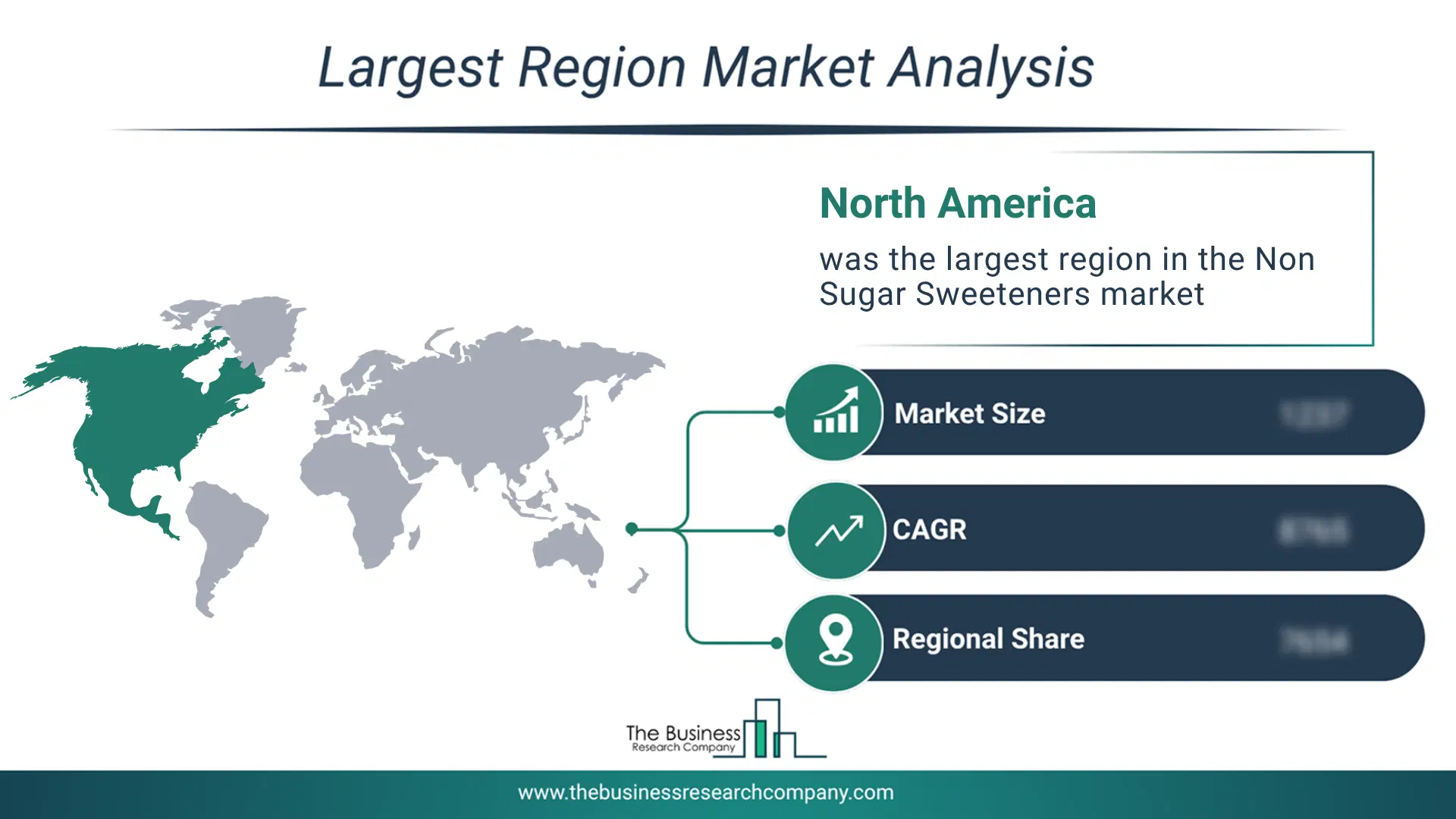
Regional Outlook
North America was the largest region in the non-sugar sweeteners market in 2025. The regions covered in this market report are Asia-Pacific, South East Asia, Western Europe, Eastern Europe, North America, South America, Middle East and Africa. The countries covered in this market report are Australia, Brazil, China, France, Germany, India, Indonesia, Japan, Taiwan, Russia, South Korea, UK, USA, Italy, Spain, CanadaWhat Defines the Non Sugar Sweeteners Market?
The non-sugar sweeteners market consists of sales of allulose, tagatose, erythritol, stevia, sucralose, and aspartame. Values in this market are ‘factory gate’ values, that is, the value of goods sold by the manufacturers or creators of the goods, whether to other entities (including downstream manufacturers, wholesalers, distributors, and retailers) or directly to end customers. The value of goods in this market includes related services sold by the creators of the goods.How is Market Value Defined and Measured?
The market value is defined as the revenues that enterprises gain from the sale of goods and/or services within the specified market and geography through sales, grants, or donations in terms of the currency (in USD unless otherwise specified). The revenues for a specified geography are consumption values that are revenues generated by organizations in the specified geography within the market, irrespective of where they are produced. It does not include revenues from resales along the supply chain, either further along the supply chain or as part of other products.
This chart presents market attractiveness based on a quantitative evaluation of growth, competition, strategic alignment, and risk, offering a clear view of opportunity areas for decision-making. This chart is for illustrative purposes; the full report contains the complete analysis.

This chart highlights the Total Addressable Market (TAM) by estimating the maximum revenue opportunity using an assumption-driven approach, supporting strategic planning and opportunity sizing across markets. The chart is illustrative; the full report provides a more comprehensive analysis.
What Key Data and Analysis Are Included in the Non Sugar Sweeteners Market Report 2026?
The non sugar sweeteners market research report is one of a series of new reports from The Business Research Company that provides market statistics, including industry global market size, regional shares, competitors with the market share, detailed market segments, market trends and opportunities, and any further data you may need to thrive in the non sugar sweeteners industry. The market research report delivers a complete perspective of everything you need, with an in-depth analysis of the current and future state of the industry.Non Sugar Sweeteners Market Report Forecast Analysis
| Report Attribute | Details |
|---|---|
| Market Size Value In 2026 | $15.04 billion |
| Revenue Forecast In 2030 | $17.32 billion |
| Growth Rate | CAGR of 4.0% from 2026 to 2030 |
| Base Year For Estimation | 2025 |
| Actual Estimates/Historical Data | 2020-2025 |
| Forecast Period | 2026 - 2030 |
| Market Representation | Revenue in USD Billion and CAGR from 2026 to 2030 |
| Segments Covered | Type, Sales Channel, Application |
| Regional Scope | Asia-Pacific, Western Europe, Eastern Europe, North America, South America, Middle East, Africa |
| Country Scope | The countries covered in the report are Australia, Brazil, China, France, Germany, India, Indonesia, Japan, Taiwan, Russia, South Korea, UK, USA, Canada, Italy, Spain. |
| Key Companies Profiled | Cargill Incorporated, Archer Daniels Midland Company, DuPont de Nemours Inc., Ajinomoto Co. Inc., McNeil Nutritionals LLC, Südzucker AG, Ingredion Incorporated, Roquette Frères, Döhler GmbH, Tate & Lyle PLC, PureCircle Ltd., NutraSweet Company, Evolva Holding SA, Hermes Sweeteners Ltd., GLG Life Tech Corporation, Hunan NutraMax Inc., Matsutani Chemical Industry Co. Ltd., Celanese Corporation, Zydus Wellness, Tereos S.A. |
| Customization Scope | Request for Customization |
| Pricing And Purchase Options | Explore Purchase Options |