
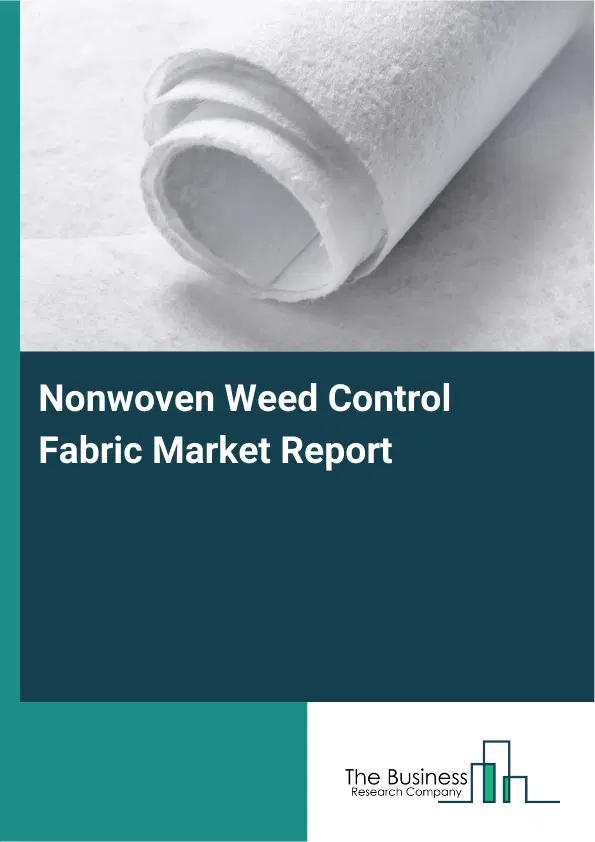
Nonwoven Weed Control Fabric Market Report 2026
Global Outlook – By Material (Polypropylene, Polyester, Other Materials), By Application (Agriculture, Landscaping, Other Applications), By Sales Channel (Direct Sales, Distributors) – Market Size, Trends, Strategies, and Forecast to 2030
Nonwoven Weed Control Fabric Market Overview
• Nonwoven Weed Control Fabric market size has reached to $1.82 billion in 2025 • Expected to grow to $2.45 billion in 2030 at a compound annual growth rate (CAGR) of 6.1% • Growth Driver: Rising Agricultural Industry Fuels Growth In The Nonwoven Weed Control Fabric Market • Market Trend: Technological Advancements In Polypropylene-Based Weed Control Fabrics Drive Sustainability And Durability • North America was the largest region in 2025.What Is Covered Under Nonwoven Weed Control Fabric Market?
Nonwoven weed control fabric is a breathable synthetic material that inhibits weed growth by restricting sunlight while still letting water, air, and nutrients reach plants. They are laid over the soil surface and are commonly used in flower beds, vegetable gardens, and large-scale agricultural fields. The fabric provides long-lasting weed control, reduces maintenance efforts, and enhances soil moisture retention. The main materials used in the nonwoven weed control fabric market are polypropylene, polyester, polyethylene, and others. Polypropylene nonwoven weed control fabric refers to a durable, synthetic material made from polypropylene fibers that are bonded together without weaving. The various applications include agriculture, landscaping, construction, and others, and several sales channels including direct sales and distributors.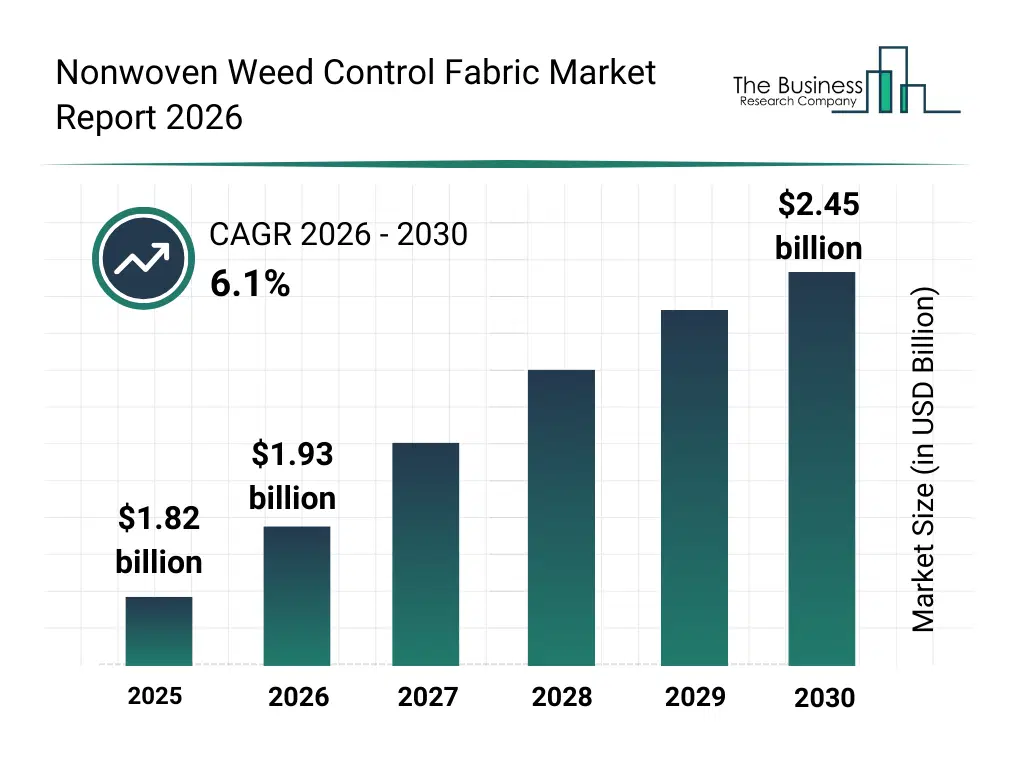
What Is The Nonwoven Weed Control Fabric Market Size and Share 2026?
The nonwoven weed control fabric market size has grown strongly in recent years. It will grow from $1.82 billion in 2025 to $1.93 billion in 2026 at a compound annual growth rate (CAGR) of 6.1%. The growth in the historic period can be attributed to expansion of commercial farming operations, increased use of landscape management solutions, rising adoption of mulching alternatives, availability of synthetic fabric materials, growth in greenhouse cultivation.What Is The Nonwoven Weed Control Fabric Market Growth Forecast?
The nonwoven weed control fabric market size is expected to see strong growth in the next few years. It will grow to $2.45 billion in 2030 at a compound annual growth rate (CAGR) of 6.1%. The growth in the forecast period can be attributed to increasing focus on sustainable farming inputs, rising demand for biodegradable agricultural materials, expansion of landscaping and urban gardening, growing adoption in construction ground stabilization, increasing emphasis on water conservation. Major trends in the forecast period include increasing use of durable weed control fabrics, rising adoption in large-scale agriculture, expansion of biodegradable weed barriers, growing focus on soil moisture retention solutions, enhanced demand for long-life ground covers.
Global Nonwoven Weed Control Fabric Market Segmentation
1) By Material: Polypropylene, Polyester, Other Materials 2) By Application: Agriculture, Landscaping, Other Applications 3) By Sales Channel: Direct Sales, Distributors Subsegments: 1) By Polypropylene: Spunbond Polypropylene, Spunbond–Meltblown–Spunbond (SMS) Polypropylene, Needle-Punched Polypropylene 2) By Polyester: Spunbond Polyester, Needle-Punched Polyester 3) By Other Materials: Biodegradable Nonwoven Fabrics, Natural Fiber Nonwoven Fabrics, Polypropylene–Polyester Blended NonwovensWhat Is The Driver Of The Nonwoven Weed Control Fabric Market?
The rise in the agricultural industry is expected to propel the growth of the nonwoven weed control fabric market going forward. The agricultural sector is growing due to increasing global demand for food, biofuels, and sustainable farming practices. Nonwoven weed control fabric offers a sustainable alternative to herbicides by blocking weed growth while maintaining soil health, making them essential for improving crop yields and efficiency in farming. For instance, in December 2024, according to the Food and Agriculture Organization (FAO), an Italy-based United Nations organization focused on food and agriculture, global production of primary crops reached 9.9 billion tonnes in 2023, increasing by 3% compared with 2022. Therefore, the rise in the agricultural industry is driving the nonwoven weed control fabric industry.Key Players In The Global Nonwoven Weed Control Fabric Market
Major companies operating in the nonwoven weed control fabric market are Kimberly-Clark Corporation, Toray Industries Inc., Berry Global Group Inc., Freudenberg Group, Glatfelter Corporation, Suominen Corporation, Thrace Group, TWE Group, Don & Low Ltd., Beaulieu Technical Textiles, SKAPS Industries, Belton Industries Inc., Ahlstrom Holding 3 Oy, Qingdao Yihe Nonwovens Co. Ltd, Guangzhou Huahao Nonwoven Fabric Co. Ltd, Rayson Non Woven Co. Ltd, Guide Textile Co. Ltd, Fujian Kingsda Nonwoven Co. Ltd, Thinh Gia Huy L.A Co. Ltd, Huizhou Jinhaocheng Nonwoven Fabric Co. Ltd, Guangdong Synwin Non Woven Technology Co. Ltd.
This chart is for illustrative purposes; the full report includes a detailed competitor analysis and comprehensive overview of the top 10 companies in the market.
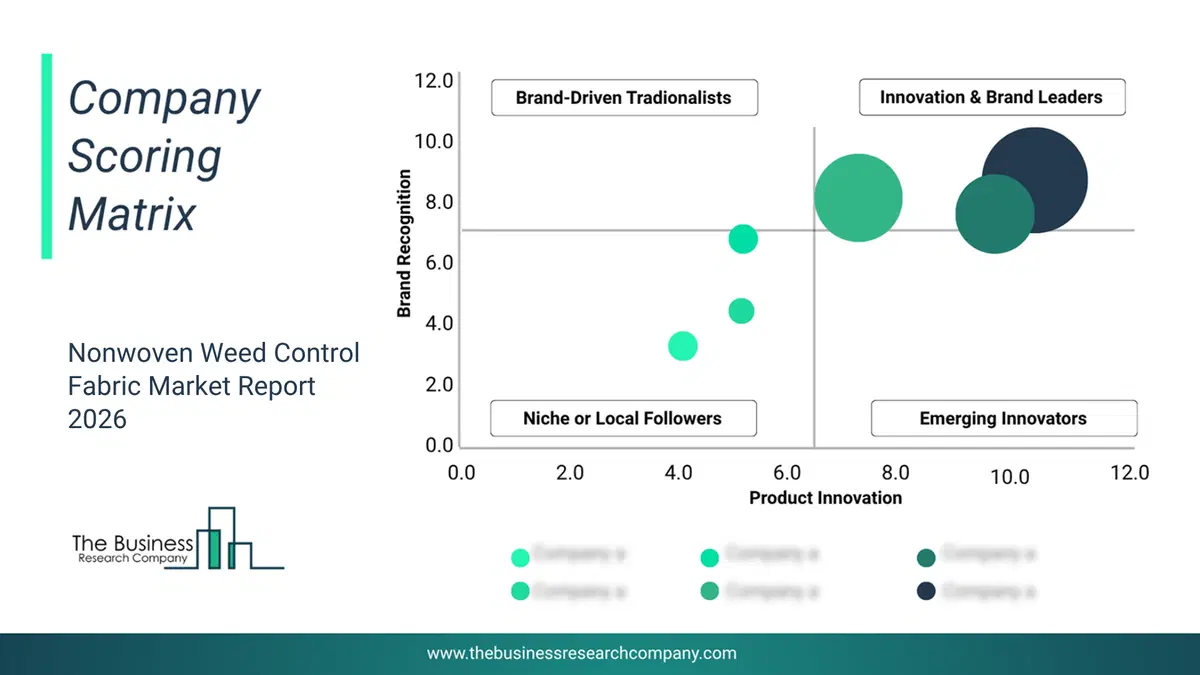
This chart maps companies by product innovation and brand strength, with bubble size indicating relative revenue, helping identify market leaders, challengers, and niche players. This is an illustrative chart; the full report provides a complete and accurate competitive analysis.
Global Nonwoven Weed Control Fabric Market Trends and Insights
Major companies operating in the nonwoven weed control fabric market are developing innovative products with recycled materials to enhance sustainability and meet the growing consumer demand for eco-friendly solutions. The use of recycled materials is intended to lessen the environmental impact of traditional synthetic fabrics by integrating recycled polypropylene or biodegradable alternatives, aligning with global efforts to reduce plastic waste. For instance, in June 2023, Beaulieu Technical Textiles, a Belgium-based textile manufacturing company, launched RECOVER, an innovative line of nonwoven fabrics designed for sustainability and environmental responsibility. It is a durable and eco-friendly weed control fabric made from polypropylene (PP) with 30% recycled content. It reduces carbon emissions by up to 35%, resists ultraviolet (UV) light, and withstands mechanical stress and temperature changes. Its dense fabric blocks light for effective weed control, while the black-and-white design ensures thermal balance and easy placement of plants.What Are Latest Mergers And Acquisitions In The Nonwoven Weed Control Fabric Market?
In January 2023, Nishat Group, a Pakistan-based textile company, acquired Wernerfelt A/S for $4.5 million. This acquisition is in line with Nishat Mills' strategy to improve its product range and expand its market presence, setting the stage for future growth in the competitive textile sector. Wernerfelt A/S is a Denmark-based textile manufacturing company focused on developing breathable fabrics, such as nonwoven fabric, for personal protection and agriculture use.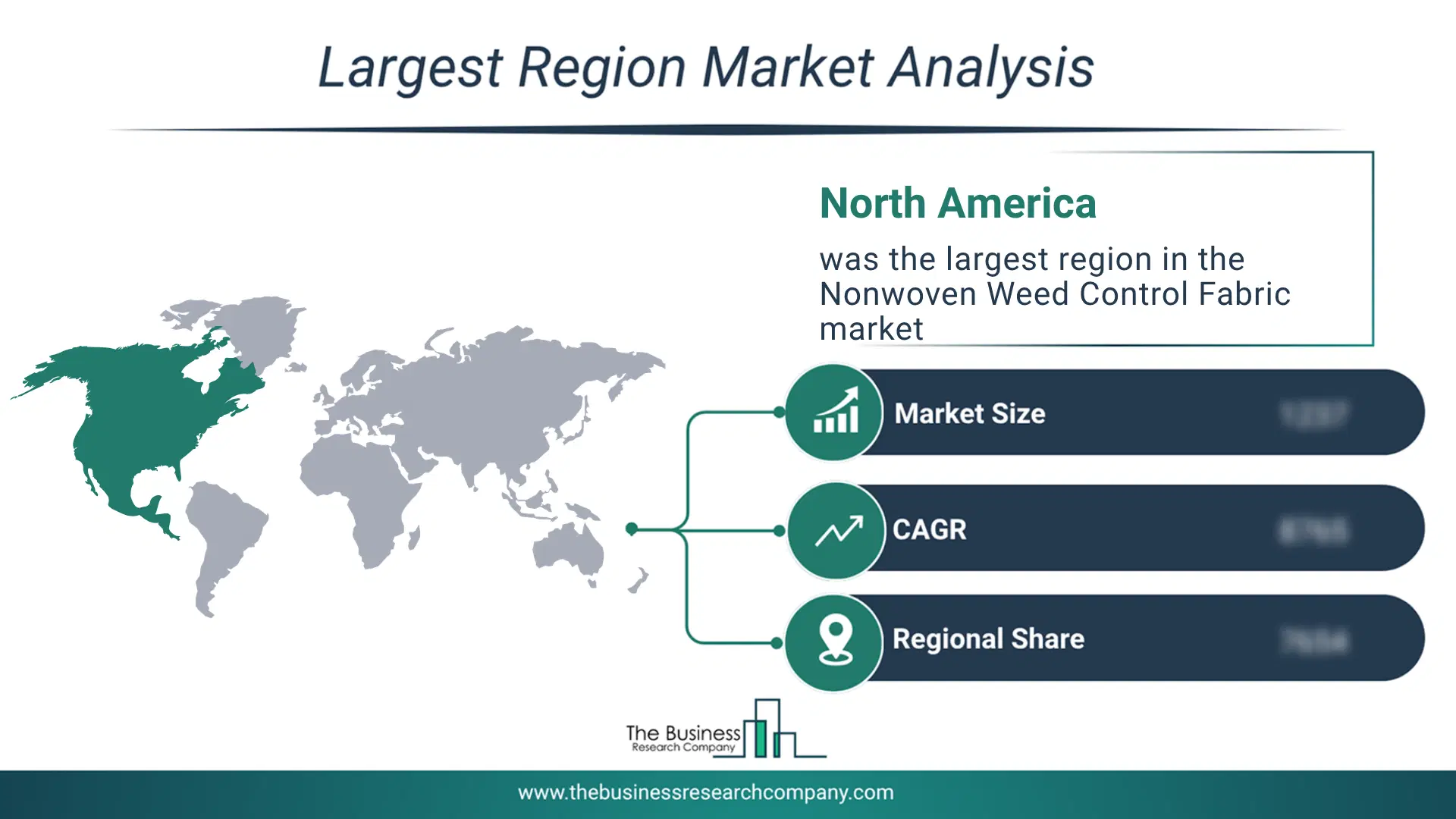
Regional Outlook
North America was the largest region in the nonwoven weed control fabric market in 2025. The regions covered in this market report are Asia-Pacific, South East Asia, Western Europe, Eastern Europe, North America, South America, Middle East, Africa. The countries covered in this market report are Australia, Brazil, China, France, Germany, India, Indonesia, Japan, Taiwan, Russia, South Korea, UK, USA, Canada, Italy, Spain.What Defines the Nonwoven Weed Control Fabric Market?
The nonwoven weed control fabric market consists of sales of landscape weed control fabric, agricultural weed barrier fabric, UV-resistant weed control mats, biodegradable weed control fabric, and heavy-duty weed control sheets. Values in this market are ‘factory gate’ values, that is, the value of goods sold by the manufacturers or creators of the goods, whether to other entities (including downstream manufacturers, wholesalers, distributors, and retailers) or directly to end customers. The value of goods in this market includes related services sold by the creators of the goods.How is Market Value Defined and Measured?
The market value is defined as the revenues that enterprises gain from the sale of goods and/or services within the specified market and geography through sales, grants, or donations in terms of the currency (in USD unless otherwise specified). The revenues for a specified geography are consumption values that are revenues generated by organizations in the specified geography within the market, irrespective of where they are produced. It does not include revenues from resales along the supply chain, either further along the supply chain or as part of other products.
This chart presents market attractiveness based on a quantitative evaluation of growth, competition, strategic alignment, and risk, offering a clear view of opportunity areas for decision-making. This chart is for illustrative purposes; the full report contains the complete analysis.

This chart highlights the Total Addressable Market (TAM) by estimating the maximum revenue opportunity using an assumption-driven approach, supporting strategic planning and opportunity sizing across markets. The chart is illustrative; the full report provides a more comprehensive analysis.
What Key Data and Analysis Are Included in the Nonwoven Weed Control Fabric Market Report 2026?
The nonwoven weed control fabric market research report is one of a series of new reports from The Business Research Company that provides market statistics, including Market Report 2026?global market size, regional shares, competitors with the market share, detailed market segments, market trends and opportunities, and any further data you may need to thrive in the nonwoven weed control fabric Market Report 2026? The market research report delivers a complete perspective of everything you need, with an in-depth analysis of the current and future state of the Market Report 2026?Nonwoven Weed Control Fabric Market Report Forecast Analysis
| Report Attribute | Details |
|---|---|
| Market Size Value In 2026 | $1.93 billion |
| Revenue Forecast In 2030 | $2.45 billion |
| Growth Rate | CAGR of 6.1% from 2026 to 2030 |
| Base Year For Estimation | 2025 |
| Actual Estimates/Historical Data | 2020-2025 |
| Forecast Period | 2026 - 2030 |
| Market Representation | Revenue in USD Billion and CAGR from 2026 to 2030 |
| Segments Covered | Material, Application, Sales Channel |
| Regional Scope | Asia-Pacific, Western Europe, Eastern Europe, North America, South America, Middle East, Africa |
| Country Scope | The countries covered in the report are Australia, Brazil, China, France, Germany, India, Indonesia, Japan, Taiwan, Russia, South Korea, UK, USA, Canada, Italy, Spain. |
| Key Companies Profiled | Kimberly-Clark Corporation, Toray Industries Inc., Berry Global Group Inc., Freudenberg Group, Glatfelter Corporation, Suominen Corporation, Thrace Group, TWE Group, Don & Low Ltd., Beaulieu Technical Textiles, SKAPS Industries, Belton Industries Inc., Ahlstrom Holding 3 Oy, Qingdao Yihe Nonwovens Co. Ltd, Guangzhou Huahao Nonwoven Fabric Co. Ltd, Rayson Non Woven Co. Ltd, Guide Textile Co. Ltd, Fujian Kingsda Nonwoven Co. Ltd, Thinh Gia Huy L.A Co. Ltd, Huizhou Jinhaocheng Nonwoven Fabric Co. Ltd, Guangdong Synwin Non Woven Technology Co. Ltd. |
| Customization Scope | Request for Customization |
| Pricing And Purchase Options | Explore Purchase Options |