
Novel Drug Delivery Systems Market Report 2026
Global Outlook – By Formulation Type (Liposomes, Nanoparticles, Microspheres, Hydrogels, Dendrimers), By Mode Of Novel Drug Delivery System (NDDS) (Targeted Drug Delivery Systems, Controlled Drug Delivery Systems, Modulated Drug Delivery Systems), By Route (Oral Drug Delivery Systems, Injectable Drug Delivery Systems, Pulmonary Drug Delivery Systems, Transdermal Drug Delivery Systems, Other Routes), By Therapeutic Area (Cancer, Cardiovascular Diseases, Neurological Disorders, Infectious Diseases, Autoimmune Diseases), By End-User (Hospital, Specialty Clinics, Research Centers, Other End-Users) – Market Size, Trends, Strategies, and Forecast to 2030
Novel Drug Delivery Systems Market Overview
• Novel Drug Delivery Systems market size has reached to $117.66 billion in 2025 • Expected to grow to $187.53 billion in 2030 at a compound annual growth rate (CAGR) of 9.7% • Growth Driver: The Rising Neurological Disorder Cases Are Expected To Propel The Market Due To Increasing Demand For Targeted Therapies • Market Trend: Oral Thin Films Revolutionize Drug Delivery With Precision And Speed • North America was the largest region in 2025 and Asia-Pacific is the fastest growing region.What Is Covered Under Novel Drug Delivery Systems Market?
Novel drug delivery systems refer to advanced pharmaceutical technologies designed to enhance the efficacy, safety, bioavailability, and targeted delivery of therapeutic agents by controlling the rate, time, and site of drug release within the body. These systems are employed to overcome the limitations of conventional delivery methods, optimize treatment outcomes, and improve patient compliance across various medical and therapeutic applications. The main formulation types in the novel drug delivery systems are liposomes, nanoparticles, microspheres, hydrogels, and dendrimers. Liposomes in novel drug delivery systems are spherical vesicles composed of phospholipid bilayers that encapsulate therapeutic agents, enabling targeted delivery, controlled release, and reduced toxicity of drugs. The modes of novel drug delivery systems (NDDS) are targeted drug delivery systems, controlled drug delivery systems, and modulated drug delivery systems, by the routes including oral drug delivery systems, injectable drug delivery systems, pulmonary drug delivery systems, transdermal drug delivery systems, and others, used in various therapeutic areas such as cancer, cardiovascular diseases, neurological disorders, infectious diseases, and autoimmune diseases, catering to end-users including hospitals, specialty clinics, research centers, and others.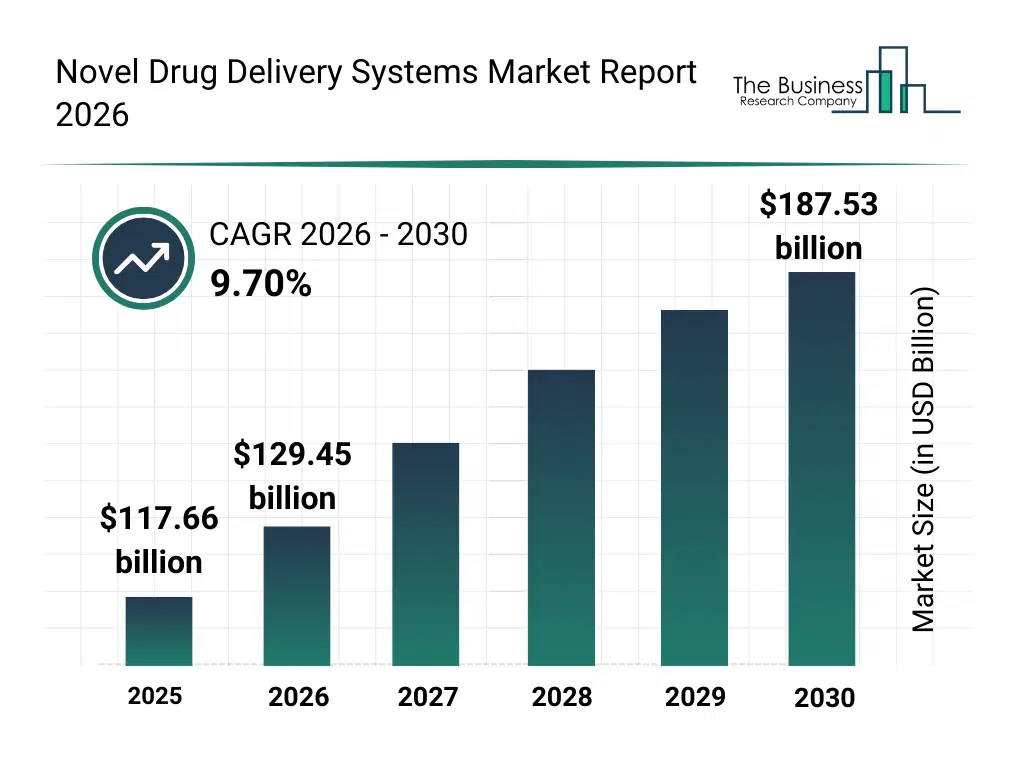
What Is The Novel Drug Delivery Systems Market Size and Share 2026?
The novel drug delivery systems market size has grown rapidly in recent years. It will grow from $117.66 billion in 2025 to $129.45 billion in 2026 at a compound annual growth rate (CAGR) of 10.0%. The growth in the historic period can be attributed to increasing prevalence of chronic diseases, limitations of conventional drug delivery methods, growth in oncology and biologics pipeline, rising healthcare expenditure, advancements in polymer and nanotechnology.What Is The Novel Drug Delivery Systems Market Growth Forecast?
The novel drug delivery systems market size is expected to see strong growth in the next few years. It will grow to $187.53 billion in 2030 at a compound annual growth rate (CAGR) of 9.7%. The growth in the forecast period can be attributed to surge in personalized and precision medicine, growing demand for targeted cancer therapies, increasing investment in pharmaceutical r&d, expansion of biologics and biosimilars, regulatory support for advanced drug delivery technologies. Major trends in the forecast period include expansion of targeted and personalized drug delivery, rising adoption of lipid and polymeric nanoparticles, growth in long-acting and controlled release formulations, increased focus on non-invasive and patient-centric delivery routes, accelerated r&d in combination and hybrid ndds platforms.
Global Novel Drug Delivery Systems Market Segmentation
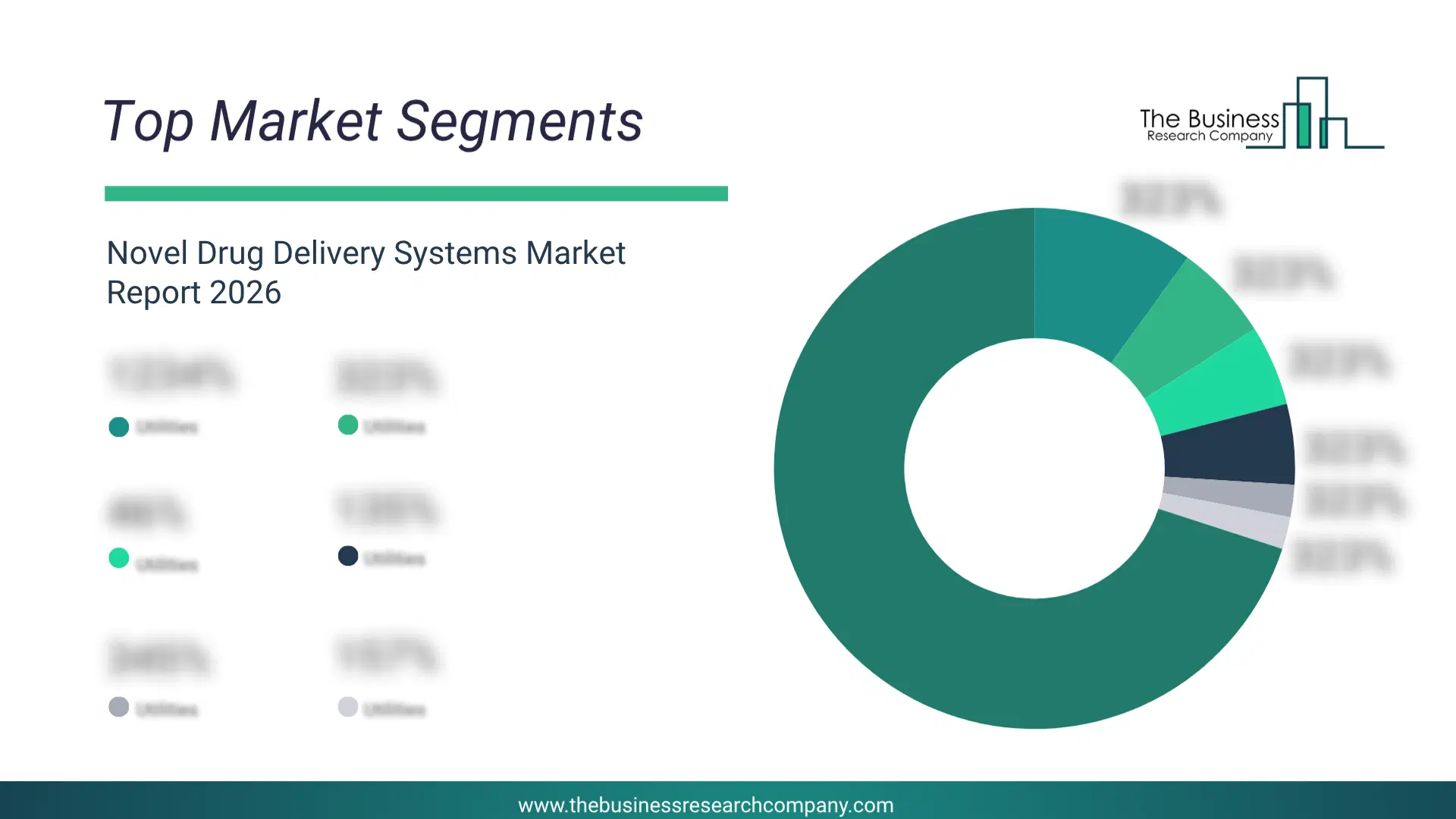
1) By Formulation Type: Liposomes, Nanoparticles, Microspheres, Hydrogels, Dendrimers 2) By Mode Of Novel Drug Delivery System (NDDS): Targeted Drug Delivery Systems, Controlled Drug Delivery Systems, Modulated Drug Delivery Systems 3) By Route: Oral Drug Delivery Systems, Injectable Drug Delivery Systems, Pulmonary Drug Delivery Systems, Transdermal Drug Delivery Systems, Other Routes 4) By Therapeutic Area: Cancer, Cardiovascular Diseases, Neurological Disorders, Infectious Diseases, Autoimmune Diseases 5) By End-User: Hospital, Specialty Clinics, Research Centers, Other End-Users Subsegments: 1) By Liposomes: PEGylated Liposomes, Cationic Liposomes, Stealth Liposomes, Immunoliposomes 2) By Nanoparticles: Polymeric Nanoparticles, Lipid Nanoparticles, Metallic Nanoparticles, Nanocrystals 3) By Microspheres: Biodegradable Microspheres, Magnetic Microspheres, Radioactive Microspheres, Mucoadhesive Microspheres 4) By Hydrogels: Thermosensitive Hydrogels, Ph-Responsive Hydrogels, Injectable Hydrogels, Smart Hydrogels 5) By Dendrimers: PAMAM Dendrimers, PPI Dendrimers, Pegylated Dendrimers, Hybrid DendrimersWhat Is The Driver Of The Novel Drug Delivery Systems Market?
The rising neurological disorder cases are expected to propel the growth in the novel drug delivery systems market going forward. A neurological disorder such as stroke is a medical condition characterized by the sudden loss of neurological function due to an interruption in blood supply to the brain, either through blockage (ischemic stroke) or rupture of a blood vessel (hemorrhagic stroke), leading to brain tissue damage and potentially long-term cognitive, sensory, or motor impairments. The increasing incidence of neurological disorders is primarily driven by factors such as aging populations, increased prevalence of lifestyle-related conditions such as hypertension, diabetes, and obesity, and heightened exposure to chronic stress and environmental risk factors. Novel drug delivery systems help manage neurological disorders by enabling targeted and controlled delivery of therapeutics across the blood-brain barrier. For instance, in November 2024, according to the National Health Service (NHS) England, a UK-based healthcare system, stroke admissions in England rose to 111,137 in 2023/24, with the 50–59 age group recording the highest increase at 12,533 cases. Therefore, the rising neurological disorder cases are driving the growth of the novel drug delivery systems industry.Key Players In The Global Novel Drug Delivery Systems Market
Major companies operating in the novel drug delivery systems market are Pfizer Inc, Johnson And Johnson, F Hoffmann La Roche AG, Merck And Co Inc, AbbVie Inc, Bayer AG, Sanofi SA, Bristol Myers Squibb Company, AstraZeneca PLC, Novartis AG, GlaxoSmithKline PLC, Takeda Pharmaceutical Company Limited, Eli Lilly And Company, Gilead Sciences, Amgen Inc, Teva Pharmaceutical Industries Ltd, Otsuka Pharmaceutical Co Ltd, Regeneron Pharmaceuticals, Samyang Holdings Corporation, Galen Limited, Catalent Inc, Evonik Industries AG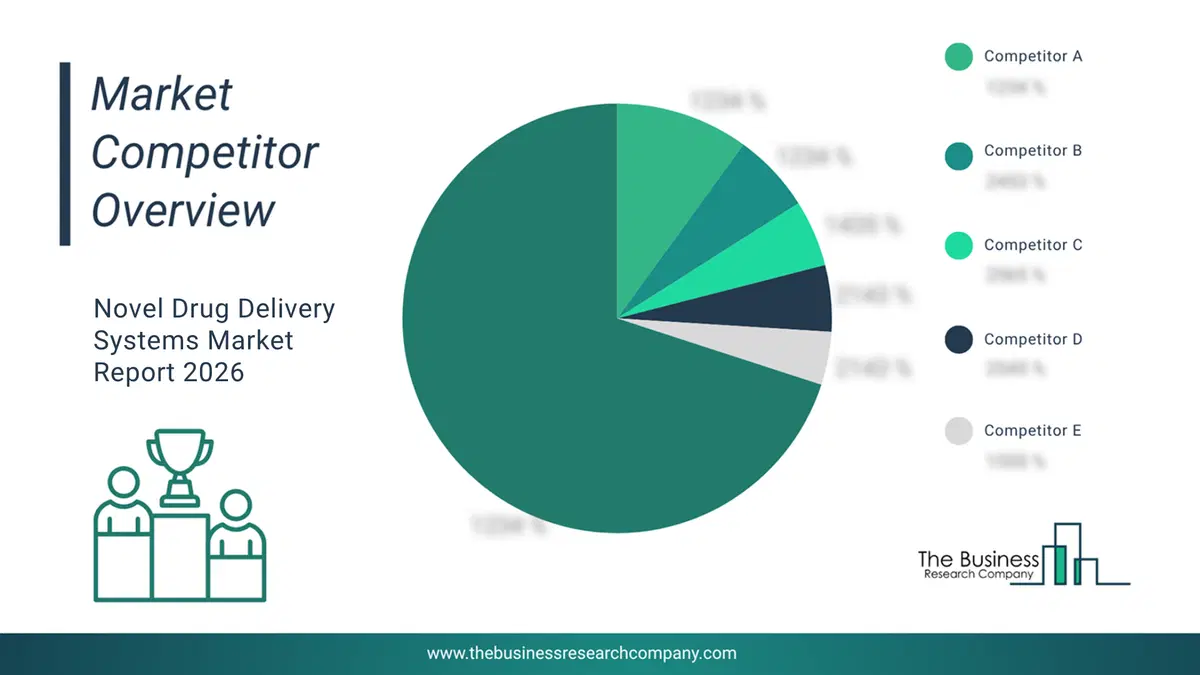
This chart is for illustrative purposes; the full report includes a detailed competitor analysis and comprehensive overview of the top 10 companies in the market.
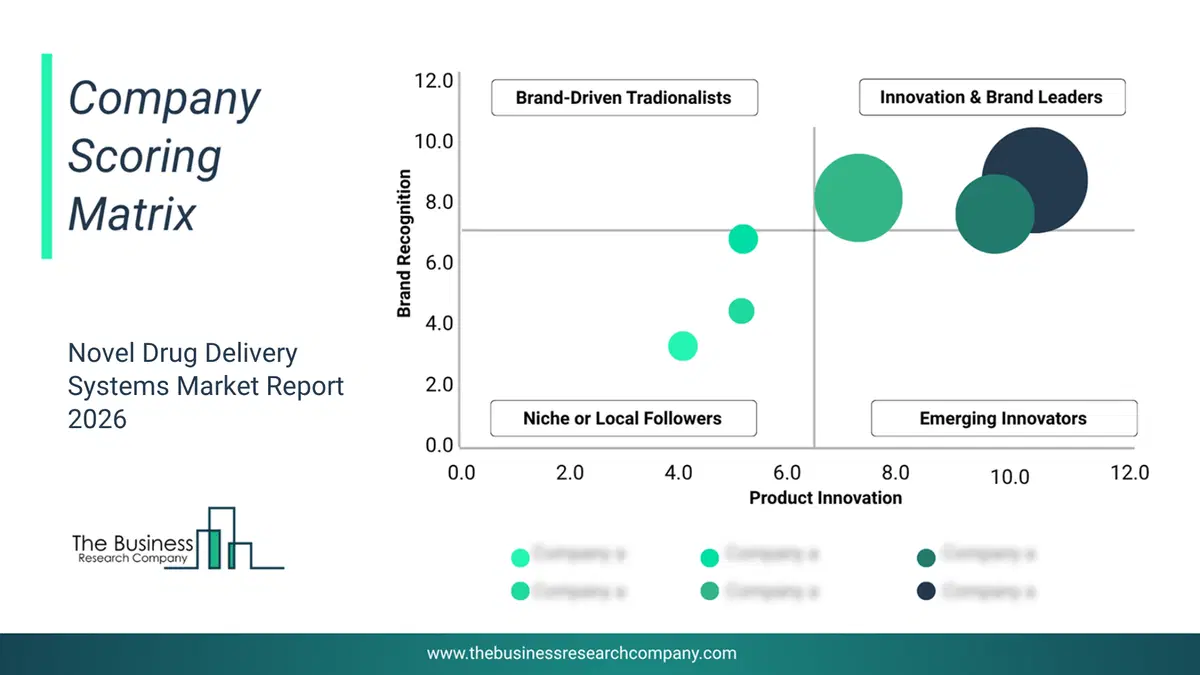
This chart maps companies by product innovation and brand strength, with bubble size indicating relative revenue, helping identify market leaders, challengers, and niche players. This is an illustrative chart; the full report provides a complete and accurate competitive analysis.
Global Novel Drug Delivery Systems Market Trends and Insights
Major companies operating in the novel drug delivery systems market are focusing on developing innovative solutions, such as oral thin films, to enhance patient adherence and therapeutic efficiency. An oral thin film is a drug delivery system consisting of a rapidly dissolving film strip applied in the oral cavity, designed to release medication directly into the bloodstream through the mucosal membrane. For instance, in February 2024, CD Formulation, a US-based pharmaceutical formulation company, launched Oral Thin Film Technology. This product enables rapid drug absorption by bypassing gastrointestinal and liver metabolism, making it especially suitable for patients with swallowing difficulties. It also supports accurate dosing and faster onset of action, enhancing treatment precision and convenience across various therapeutic applications.What Are Latest Mergers And Acquisitions In The Novel Drug Delivery Systems Market?
In April 2023, DifGen Pharmaceuticals LLC, a US-based pharmaceutical company, acquired Aveva Drug Delivery Services Inc. for an undisclosed amount. This deal aims to expand DifGen’s capabilities in complex dosage forms by adding US-based research and development and manufacturing infrastructure for transdermal and thin film drug delivery systems. Aveva Drug Delivery Services Inc. is a US-based pharmaceutical company specializing in transdermal drug delivery and oral dissolvable films.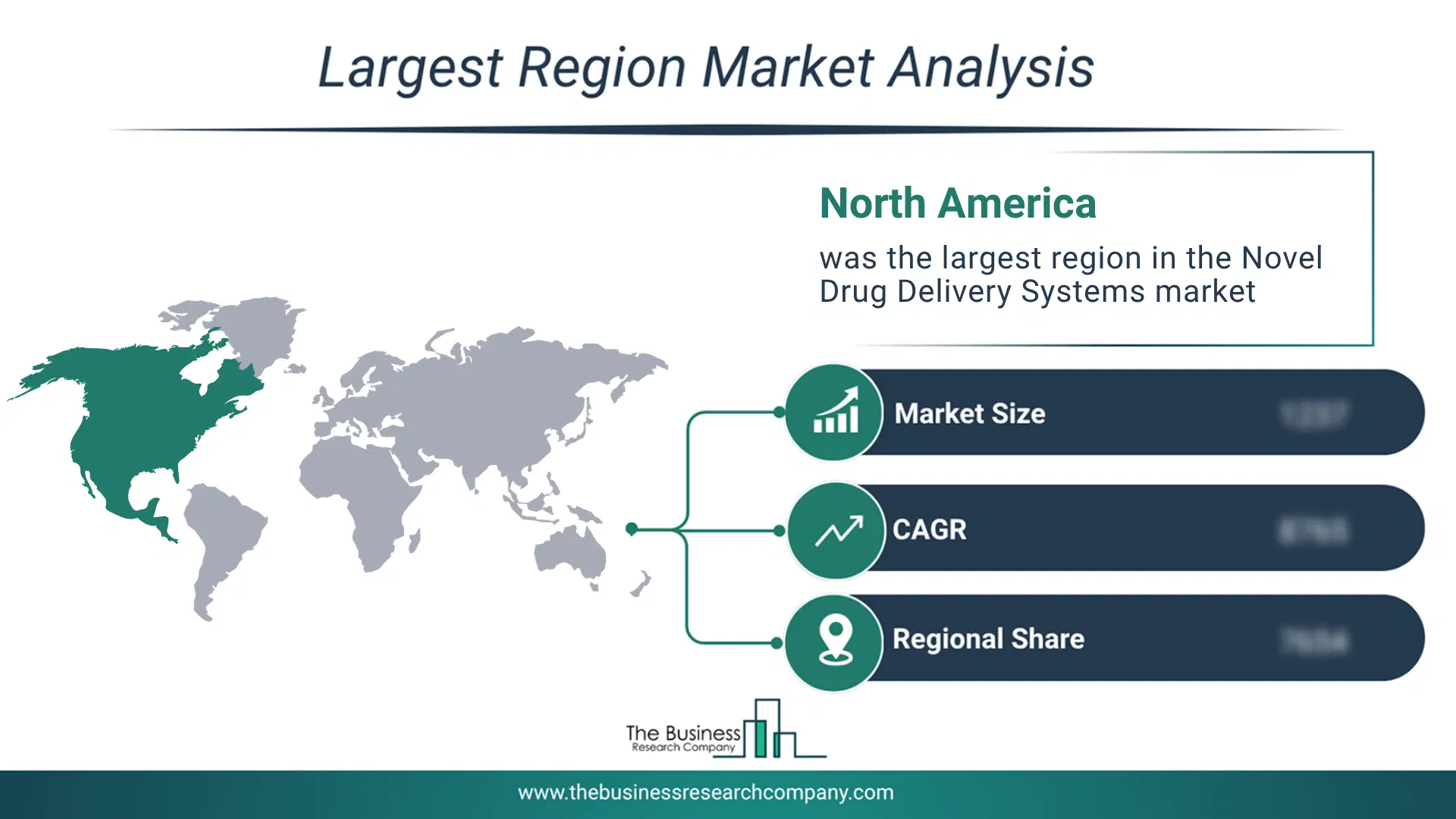
Regional Outlook
North America was the largest region in the novel drug delivery systems market in 2025. Asia-Pacific is expected to be the fastest-growing region in the forecast period. The regions covered in this market report are Asia-Pacific, South East Asia, Western Europe, Eastern Europe, North America, South America, Middle East, Africa. The countries covered in this market report are Australia, Brazil, China, France, Germany, India, Indonesia, Japan, Taiwan, Russia, South Korea, UK, USA, Canada, Italy, SpainWhat Defines the Novel Drug Delivery Systems Market?
The novel drug delivery systems market consists of sales of implants, micelles, exosomes, prodrugs, nasal drug delivery devices, buccal drug delivery films, and ocular drug delivery inserts. Values in this market are ‘factory gate’ values, that is, the value of goods sold by the manufacturers or creators of the goods, whether to other entities (including downstream manufacturers, wholesalers, distributors, and retailers) or directly to end customers. The value of goods in this market includes related services sold by the creators of the goods.How is Market Value Defined and Measured?
The market value is defined as the revenues that enterprises gain from the sale of goods and/or services within the specified market and geography through sales, grants, or donations in terms of the currency (in USD unless otherwise specified). The revenues for a specified geography are consumption values that are revenues generated by organizations in the specified geography within the market, irrespective of where they are produced. It does not include revenues from resales along the supply chain, either further along the supply chain or as part of other products.
This chart presents market attractiveness based on a quantitative evaluation of growth, competition, strategic alignment, and risk, offering a clear view of opportunity areas for decision-making. This chart is for illustrative purposes; the full report contains the complete analysis.

This chart highlights the Total Addressable Market (TAM) by estimating the maximum revenue opportunity using an assumption-driven approach, supporting strategic planning and opportunity sizing across markets. The chart is illustrative; the full report provides a more comprehensive analysis.
What Key Data and Analysis Are Included in the Novel Drug Delivery Systems Market Report 2026?
The novel drug delivery systems market research report is one of a series of new reports from The Business Research Company that provides market statistics, including industry global market size, regional shares, competitors with the market share, detailed market segments, market trends and opportunities, and any further data you may need to thrive in the novel drug delivery systems industry. The market research report delivers a complete perspective of everything you need, with an in-depth analysis of the current and future state of the industry.Novel Drug Delivery Systems Market Report Forecast Analysis
| Report Attribute | Details |
|---|---|
| Market Size Value In 2026 | $129.45 billion |
| Revenue Forecast In 2030 | $187.53 billion |
| Growth Rate | CAGR of 9.7% from 2026 to 2030 |
| Base Year For Estimation | 2025 |
| Actual Estimates/Historical Data | 2020-2025 |
| Forecast Period | 2026 - 2030 |
| Market Representation | Revenue in USD Billion and CAGR from 2026 to 2030 |
| Segments Covered | Formulation Type, Mode Of Novel Drug Delivery System (NDDS), Route, Therapeutic Area, End-User |
| Regional Scope | Asia-Pacific, Western Europe, Eastern Europe, North America, South America, Middle East, Africa |
| Country Scope | The countries covered in the report are Australia, Brazil, China, France, Germany, India, Indonesia, Japan, Taiwan, Russia, South Korea, UK, USA, Canada, Italy, Spain. |
| Key Companies Profiled | Pfizer Inc, Johnson And Johnson, F Hoffmann La Roche AG, Merck And Co Inc, AbbVie Inc, Bayer AG, Sanofi SA, Bristol Myers Squibb Company, AstraZeneca PLC, Novartis AG, GlaxoSmithKline PLC, Takeda Pharmaceutical Company Limited, Eli Lilly And Company, Gilead Sciences, Amgen Inc, Teva Pharmaceutical Industries Ltd, Otsuka Pharmaceutical Co Ltd, Regeneron Pharmaceuticals, Samyang Holdings Corporation, Galen Limited, Catalent Inc, Evonik Industries AG |
| Customization Scope | Request for Customization |
| Pricing And Purchase Options | Explore Purchase Options |