
Nuclear Antigen Antibody Market Report 2026
Global Outlook – By Product Type (Antinuclear Antibody Test Kits, Extractable Nuclear Antigen Antibody Test Kits, Anti Double Stranded Deoxyribonucleic Acid Antibody Test Kits, Anti Histone Antibody Test Kits, Other Product Types), By Disease Indication (Systemic Lupus Erythematosus, Sjögren’s Syndrome, Systemic Sclerosis, Mixed Connective Tissue Disease, Rheumatoid Arthritis, Other Disease Indications), By Technology (Enzyme Linked Immunosorbent Assay, Indirect Immunofluorescence Assay, Multiplex Immunoassay, Immunoblot Assay, Chemiluminescence Immunoassay, Other Technologies), By Distribution Channel (Direct Sales, Distributors And Wholesalers, Online Sales), By End User (Hospitals, Diagnostic Laboratories, Academic And Research Institutes, Specialty Clinics, Other End Users) – Market Size, Trends, Strategies, and Forecast to 2035
Nuclear Antigen Antibody Market Overview
• Nuclear Antigen Antibody market size has reached to $0.64 billion in 2025 • Expected to grow to $0.96 billion in 2030 at a compound annual growth rate (CAGR) of 8.5% • Growth Driver: Rising Demand For Personalized Medicine Fueling The Growth Of The Market Due To Increasing Need For Targeted Disease Diagnosis And Treatment Selection • Market Trend: Innovations In Extractable Nuclear Antigen (ENA) Antibody Screening Enhance Autoimmune Disease Detection • North America was the largest region in 2025 and Asia-Pacific is the fastest growing region.What Is Covered Under Nuclear Antigen Antibody Market?
A nuclear antigen antibody is an antibody that specifically recognizes and binds to antigens located within the nucleus of a cell. These antibodies are commonly used in research, diagnostic testing, and clinical laboratories to detect nuclear proteins and other nuclear components. They play a crucial role in studying cellular processes, identifying autoimmune disorders, and supporting disease diagnosis through techniques such as immunofluorescence, immunohistochemistry, and ELISA. The main product types of nuclear antigen antibodies include antinuclear antibody test kits, extractable nuclear antigen antibody test kits, anti double stranded deoxyribonucleic acid antibody test kits, anti histone antibody test kits, and other product types. Antinuclear antibody test kits refer to diagnostic tools used to detect antibodies that target components within the cell nucleus and support the evaluation of autoimmune conditions. These test kits are used for disease indications including systemic lupus erythematosus, Sjögren’s syndrome, systemic sclerosis, mixed connective tissue disease, rheumatoid arthritis, and other disease indications, and are based on enzyme linked immunosorbent assay, indirect immunofluorescence assay, multiplex immunoassay, immunoblot assay, chemiluminescence immunoassay, and other technologies. They are distributed through direct sales, distributors and wholesalers, and online sales, and they are used by several end users such as hospitals, diagnostic laboratories, academic and research institutes, specialty clinics, and others.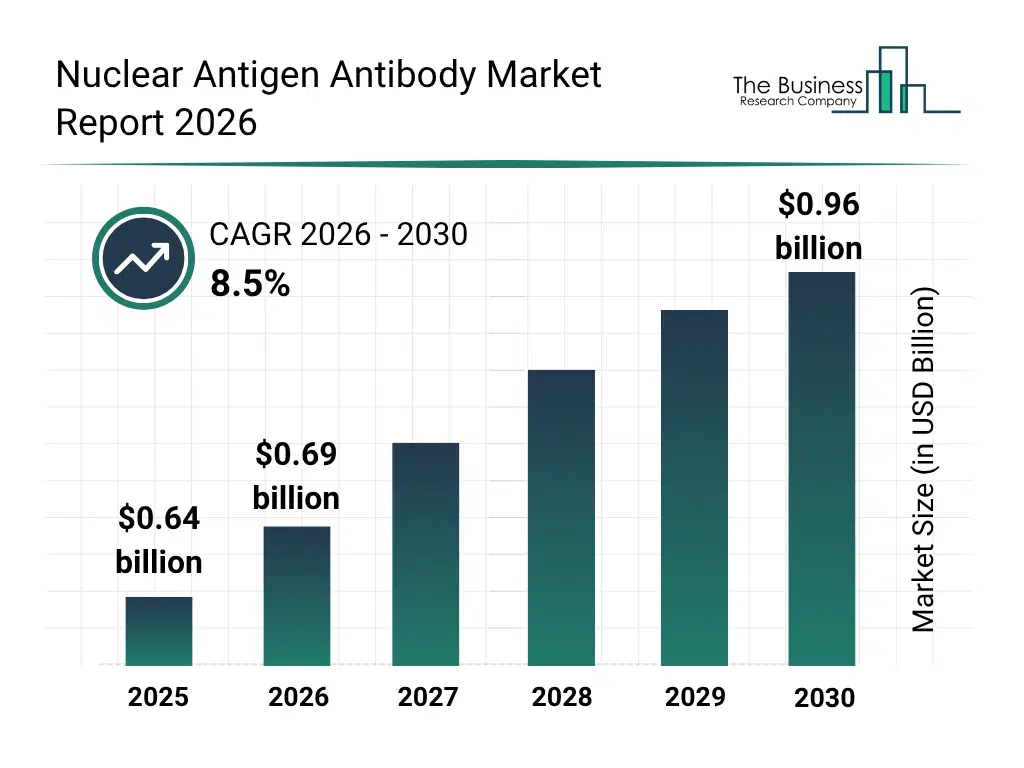
What Is The Nuclear Antigen Antibody Market Size and Share 2026?
The nuclear antigen antibody market size has grown strongly in recent years. It will grow from $0.64 billion in 2025 to $0.69 billion in 2026 at a compound annual growth rate (CAGR) of 8.9%. The growth in the historic period can be attributed to increasing prevalence of autoimmune disorders, growing demand for early autoimmune disease diagnosis, rising adoption of immunofluorescence testing, expansion of clinical diagnostic laboratories, increasing use of antibody testing in rheumatology.What Is The Nuclear Antigen Antibody Market Growth Forecast?
The nuclear antigen antibody market size is expected to see strong growth in the next few years. It will grow to $0.96 billion in 2030 at a compound annual growth rate (CAGR) of 8.5%. The growth in the forecast period can be attributed to growing demand for multiplex autoimmune diagnostics, increasing adoption of automated immunoassay platforms, rising healthcare expenditure on autoimmune disease management, expansion of specialty diagnostic testing, increasing demand for rapid and high-accuracy autoantibody detection. Major trends in the forecast period include rising adoption of multiplex nuclear antibody testing, increasing use of automated antibody detection systems, growing demand for high-sensitivity autoantibody assays, expansion of point-of-care autoimmune diagnostic testing, development of standardized nuclear antigen testing panels.Tariff Impact On Nuclear Antigen Antibody Market
Tariffs are impacting the nuclear antigen antibody market by increasing the cost of imported diagnostic test kits, reagents, antibodies, assay components, laboratory instruments, and specialized detection systems. Product types such as antinuclear antibody and extractable nuclear antigen antibody test kits, along with technology segments relying on imported reagents and analyzers, are likely to face greater cost pressures, particularly across North America, Europe, and Asia-Pacific. However, tariffs may encourage manufacturers to localize reagent and diagnostic-kit production, diversify suppliers, and strengthen regional manufacturing capabilities, potentially improving supply-chain resilience over the long term.
Global Nuclear Antigen Antibody Market Segmentation
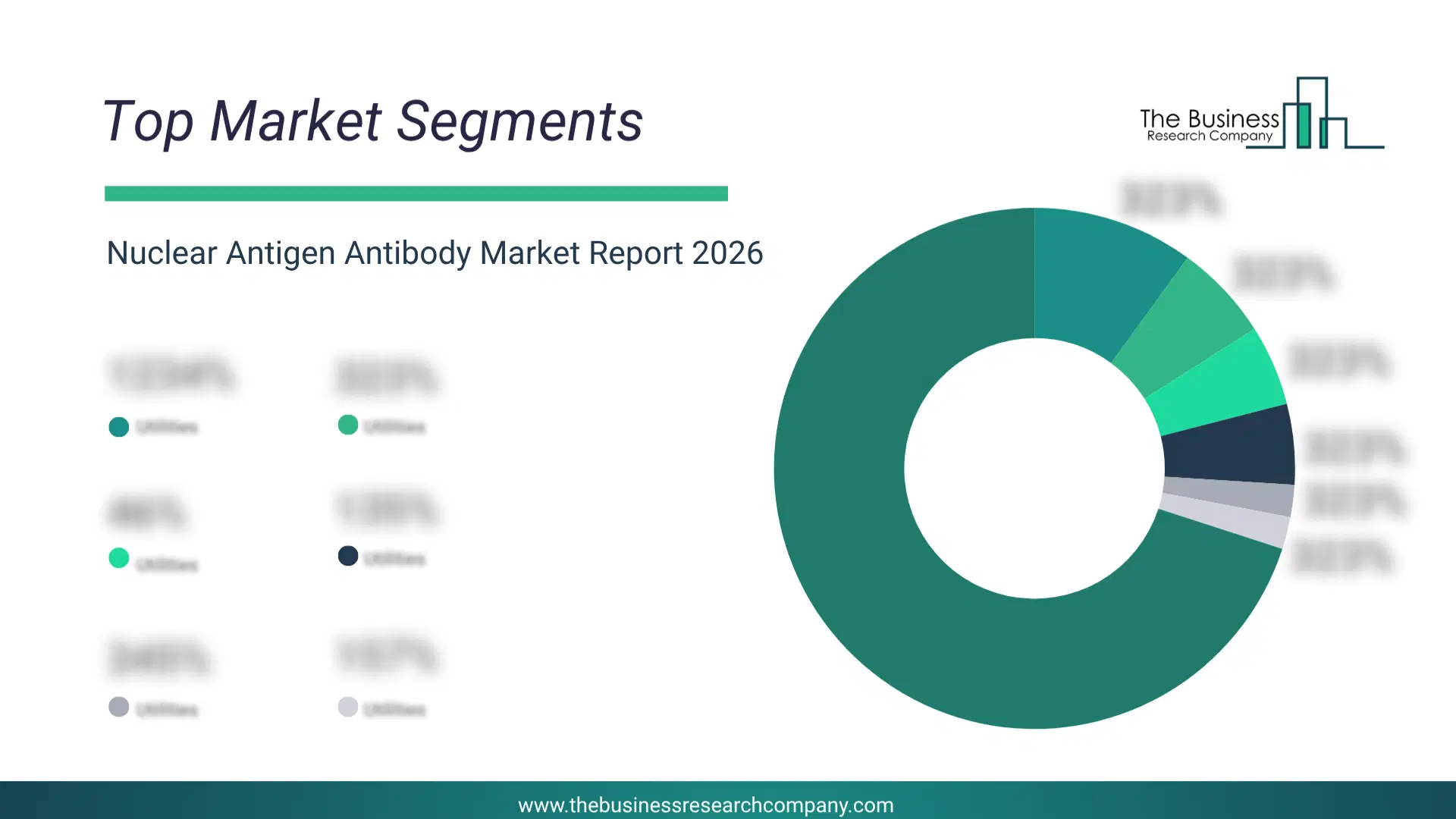
2) By Disease Indication: Systemic Lupus Erythematosus, Sjögren’s Syndrome, Systemic Sclerosis, Mixed Connective Tissue Disease, Rheumatoid Arthritis, Other Disease Indications 3) By Technology: Enzyme Linked Immunosorbent Assay, Indirect Immunofluorescence Assay, Multiplex Immunoassay, Immunoblot Assay, Chemiluminescence Immunoassay, Other Technologies 4) By Distribution Channel: Direct Sales, Distributors And Wholesalers, Online Sales 5) By End User: Hospitals, Diagnostic Laboratories, Academic And Research Institutes, Specialty Clinics, Other End Users Subsegments: 1) By Antinuclear Antibody Test Kits: Indirect Immunofluorescence Antinuclear Antibody Test Kits, Enzyme Linked Immunosorbent Assay Antinuclear Antibody Test Kits, Chemiluminescent Immunoassay Antinuclear Antibody Test Kits, Multiplex Immunoassay Antinuclear Antibody Test Kits 2) By Extractable Nuclear Antigen Antibody Test Kits: Anti Sjögren's Syndrome Related Antigen A Antibody Test Kits, Anti Sjögren's Syndrome Related Antigen B Antibody Test Kits, Anti Smith Antibody Test Kits, Anti U1 Ribonucleoprotein Antibody Test Kits, Anti Topoisomerase I Antibody Test Kits, Anti Histidyl Transfer Ribonucleic Acid Synthetase Antibody Test Kits, Anti Centromere Antibody Test Kits, Multiplex Extractable Nuclear Antigen Panel Test Kits 3) By Anti Double Stranded Deoxyribonucleic Acid Antibody Test Kits: Enzyme Linked Immunosorbent Assay Anti Double Stranded Deoxyribonucleic Acid Antibody Test Kits, Chemiluminescent Immunoassay Anti Double Stranded Deoxyribonucleic Acid Antibody Test Kits, Crithidia Luciliae Immunofluorescence Test Kits, Farr Radioimmunoassay Anti Double Stranded Deoxyribonucleic Acid Test Kits 4) By Anti Histone Antibody Test Kits: Enzyme Linked Immunosorbent Assay Anti Histone Antibody Test Kits, Chemiluminescent Immunoassay Anti Histone Antibody Test Kits, Immunoblot Anti Histone Antibody Test Kits, Multiplex Anti Histone Antibody Test Kits 5) By Other Product Types: Anti Ribosomal P Protein Antibody Test Kits, Anti Nucleosome Antibody Test Kits, Anti Chromatin Antibody Test Kits, Anti Proliferating Cell Nuclear Antigen Antibody Test Kits, Anti Ribonucleic Acid Polymerase III Antibody Test Kits, Anti Polymyositis Or Scleroderma Antibody Test Kits, Anti Ku DNA Repair Protein Antibody Test Kits, Anti Mi 2 Nucleosome Remodeling Deacetylase Complex Antibody Test KitsWhat Is The Driver Of The Nuclear Antigen Antibody Market?
The rising demand for personalized medicine is expected to propel the growth of the nuclear antigen antibody market going forward. Personalized medicine is an approach that leverages an individual’s genetic, molecular, environmental, and lifestyle data to tailor disease prevention, diagnosis, and treatment strategies for better health outcomes. Personalized medicine is increasing due to the growing adoption of genomic diagnostics, which enables the identification of individual genetic variations for personalized disease prevention, diagnosis, and treatment. The rising demand for personalized medicine drives demand for nuclear antigen antibodies by enabling precise detection of disease-specific biomarkers and autoimmune conditions, supporting targeted diagnosis, patient stratification, and the development of individualized treatment strategies. For instance, in May 2026, according to the Personalized Medicine Coalition, a US-based hospital and health care organization, the U.S. Food and Drug Administration’s continued advancement of personalized medicine in 2025, with 16 new personalized medicines approved, accounted for approximately 36% of all newly approved therapeutic molecular entities. Therefore, the rising demand for personalized medicine is driving the growth of the nuclear antigen antibody industry.Key Players In The Global Nuclear Antigen Antibody Market
Major companies operating in the nuclear antigen antibody market are Thermo Fisher Scientific Inc., Hoffmann-La Roche Ltd, Abbott Laboratories, Merck KGaA, Werfen S.A., Bio-Rad Laboratories Inc., DiaSorin S.p.A., Revvity Inc., Grifols S.A., BioVendor – Laboratorni medicina a.s., AESKU.DIAGNOSTICS GmbH & Co. KG, ZEUS Scientific Inc., Mikrogen GmbH, Gold Standard Diagnostics Frankfurt GmbH, MEDICAL & BIOLOGICAL LABORATORIES CO. LTD., HUMAN Gesellschaft fur Biochemica und Diagnostica mbH, Eurospital S.p.A., Trinity Biotech plc, Immuno Concepts N.A. Ltd., Antibodies Incorporated, Viramed Biotech AG, D-Tek S.A.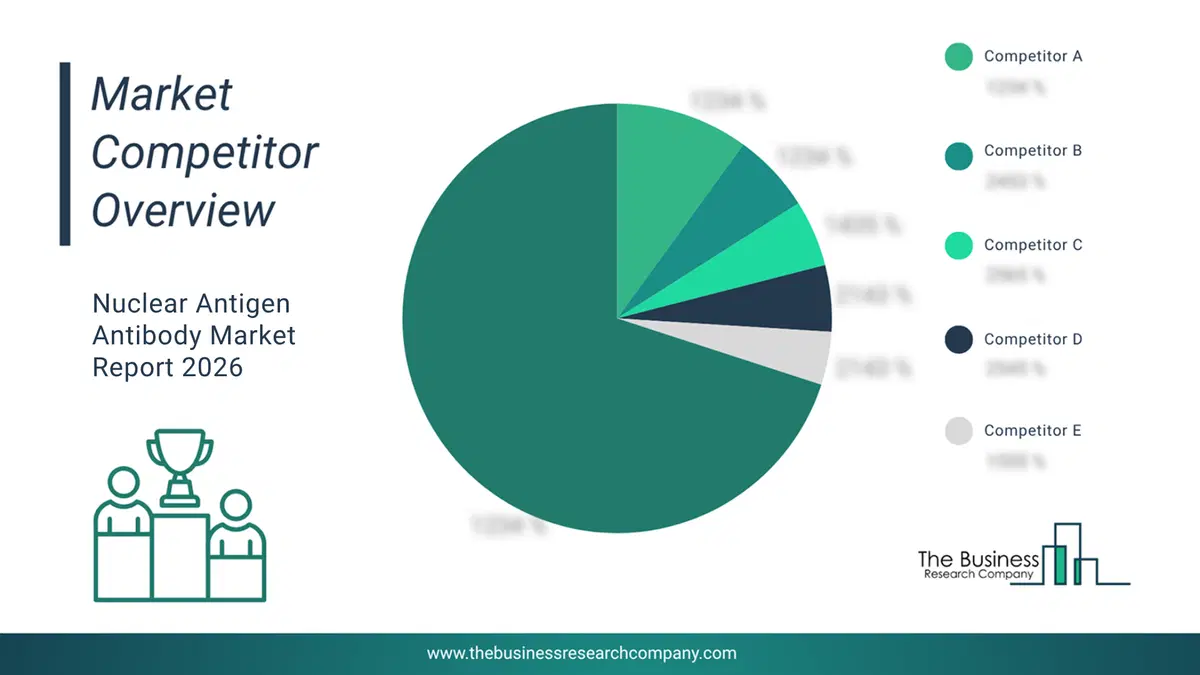
This chart is for illustrative purposes; the full report includes a detailed competitor analysis and comprehensive overview of the top 10 companies in the market.
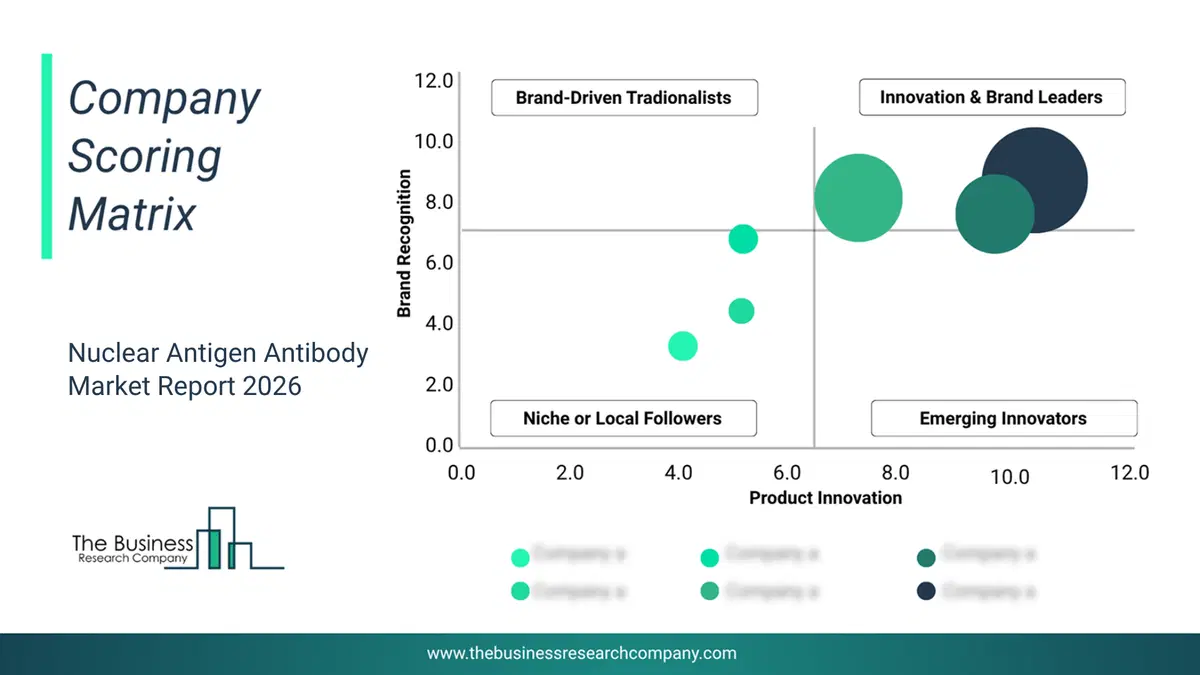
This chart maps companies by product innovation and brand strength, with bubble size indicating relative revenue, helping identify market leaders, challengers, and niche players. This is an illustrative chart; the full report provides a complete and accurate competitive analysis.
Global Nuclear Antigen Antibody Market Trends and Insights
Major companies operating in the nuclear antigen antibody market are focusing on developing advanced screening assays, such as multi-analyte ENA antibody tests, to improve the detection of autoantibodies associated with autoimmune disorders. Extractable nuclear antigen (ENA) antibody screening refers to laboratory testing that identifies antibodies targeting specific nuclear antigens, including Jo-1, Sm, Sm/RNP, SSA, SSB, and Scl-70, which can support the evaluation of autoimmune diseases. For instance, in April 2026, ZEUS Scientific, Inc., a US-based medical diagnostics company, introduced the ENA Screen, a qualitative in vitro diagnostic assay designed to detect antibodies against multiple extractable nuclear antigens in human serum. The assay uses an enzyme immunoassay (EIA) method and is designed to detect commonly tested anti-ENA antibodies, supporting comprehensive autoimmune antibody screening and clinical diagnosis.What Are Latest Mergers And Acquisitions In The Nuclear Antigen Antibody Market?
In September 2026, Leinco Technologies, a US-based provider of primary and secondary antibodies, recombinant proteins, biological buffers, assay substrates, and in vitro diagnostic (IVD) raw materials, acquired QED Biosciences for an undisclosed amount. Through this acquisition, Leinco Technologies aims to expand its antibody portfolio and strengthen its capabilities in developing and supplying antibody-based products for research and diagnostic applications, supporting the development of nuclear antigen antibody testing solutions. QED Biosciences is a US-based biotechnology company that provides antibodies, antibody kits, recombinant proteins, and antigens for the in vitro diagnostics and life sciences research sectors.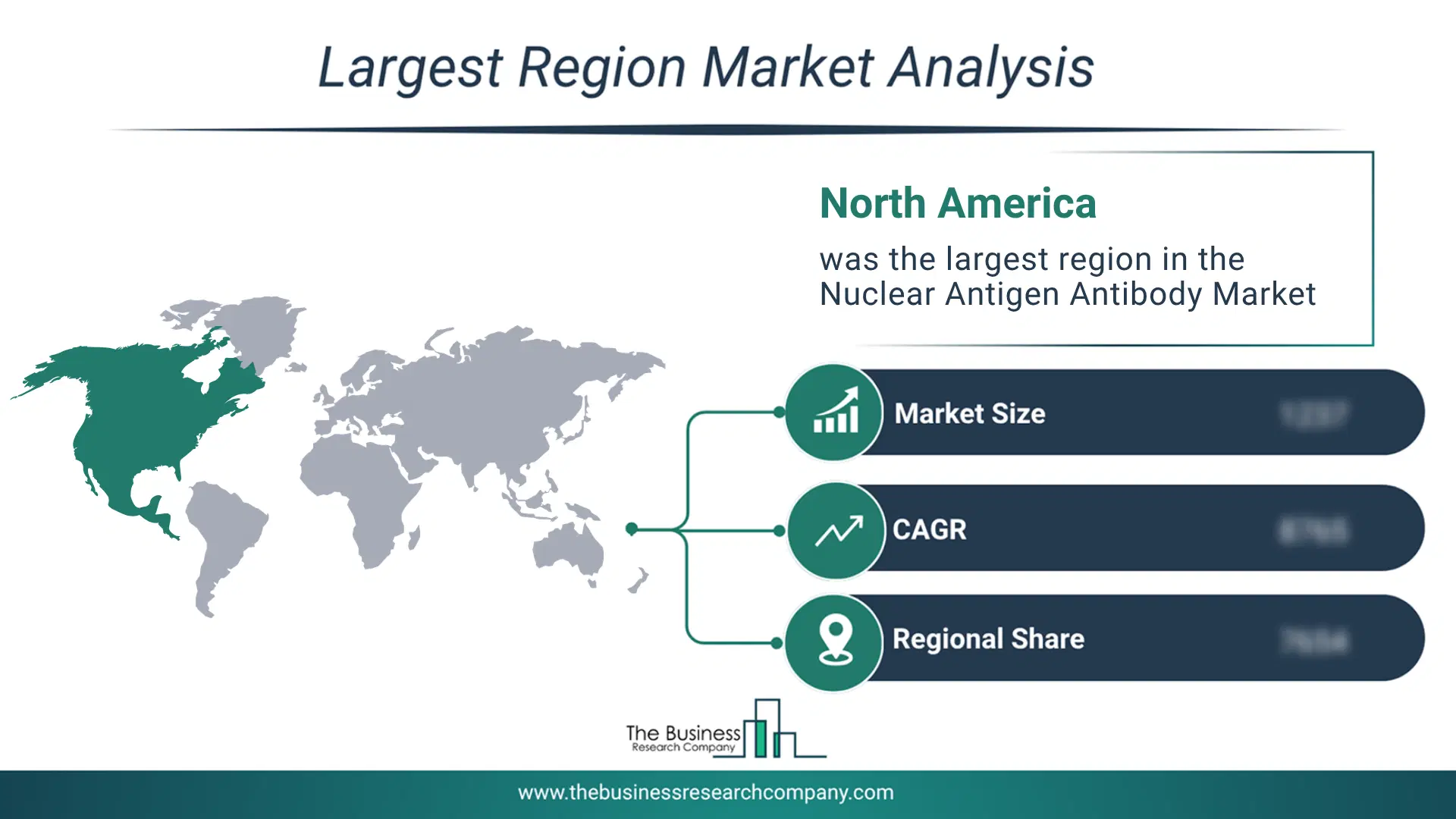
Regional Outlook/Insights
North America was the largest region in the nuclear antigen antibody market in 2025. Asia-Pacific is expected to be the fastest-growing region in the forecast period. The regions covered in this market report are Asia-Pacific, South East Asia, Western Europe, Eastern Europe, North America, South America, Middle East, Africa. The countries covered in this market report are Australia, Brazil, China, France, Germany, India, Indonesia, Japan, Taiwan, Russia, South Korea, UK, USA, Canada, Italy, Spain.What Defines the Nuclear Antigen Antibody Market?
The nuclear antigen antibody market consists of sales of monoclonal nuclear antigen antibodies, polyclonal nuclear antigen antibodies, recombinant nuclear antigen antibodies, and fluorescently labeled nuclear antigen antibodies. Values in this market are "factory gate" values, that is, the value of goods sold by the manufacturers or creators of the goods, whether to other entities (including downstream manufacturers, wholesalers, distributors, and retailers) or directly to end customers. The value of goods in this market includes related services sold by the creators of the goods.How is Market Value Defined and Measured?
The market value is defined as the revenues that enterprises gain from the sale of goods and/or services within the specified market and geography through sales, grants, or donations in terms of the currency (in USD unless otherwise specified). The revenues for a specified geography are consumption values that are revenues generated by organizations in the specified geography within the market, irrespective of where they are produced. It does not include revenues from resales along the supply chain, either further along the supply chain or as part of other products.
This chart presents market attractiveness based on a quantitative evaluation of growth, competition, strategic alignment, and risk, offering a clear view of opportunity areas for decision-making. This chart is for illustrative purposes; the full report contains the complete analysis.

This chart highlights the Total Addressable Market (TAM) by estimating the maximum revenue opportunity using an assumption-driven approach, supporting strategic planning and opportunity sizing across markets. The chart is illustrative; the full report provides a more comprehensive analysis.
What Key Data and Analysis Are Included in the Nuclear Antigen Antibody Market Report 2026?
The nuclear antigen antibody market research report is one of a series of new reports from The Business Research Company that provides market statistics, including industry global market size, regional shares, competitors with the market share, detailed market segments, market trends and opportunities, and any further data you may need to thrive in the nuclear antigen antibody industry. The market research report delivers a complete perspective of everything you need, with an in-depth analysis of the current and future state of the industry.Nuclear Antigen Antibody Market Report Forecast Analysis
| Report Attribute | Details |
|---|---|
| Market Size Value In 2026 | $0.69 billion |
| Revenue Forecast In 2030 | $0.96 billion |
| Growth Rate | CAGR of 8.5% from 2026 to 2035 |
| Base Year For Estimation | 2025 |
| Actual Estimates/Historical Data | 2020-2025 |
| Forecast Period | 2026 - 2030 |
| Market Representation | Revenue in USD Billion and CAGR from 2026 to 2030 |
| Segments Covered | Product Type, Disease Indication, Technology, Distribution Channel, End User |
| Regional Scope | Asia-Pacific, Western Europe, Eastern Europe, North America, South America, Middle East, Africa |
| Country Scope | The countries covered in the report are Australia, Brazil, China, France, Germany, India, Indonesia, Japan, Taiwan, Russia, South Korea, UK, USA, Canada, Italy, Spain. |
| Customization Scope | Request for Customization |
| Pricing And Purchase Options | Explore Purchase Options |