
Nuclear Radiation Scanner Market Report 2026
Global Outlook – By Product Type (Portable Scanners, Fixed Scanners, Handheld Scanners), By Technology (Geiger-Muller Counters, Scintillation Detectors, Semiconductor Detectors, Others Technologies), By Distribution Channel (Direct Sales, Online Sales, Distributors And Resellers, Aftermarket Services), By End-User (Hospitals, Research Institutes, Nuclear Power Plants, Defense And Security Agencies, Other End Users) – Market Size, Trends, Strategies, and Forecast to 2030
Nuclear Radiation Scanner Market Overview
• Nuclear Radiation Scanner market size has reached to $1.34 billion in 2025 • Expected to grow to $1.95 billion in 2030 at a compound annual growth rate (CAGR) of 7.7% • Growth Driver: Rise In Nuclear Power Generation Fueling The Growth Of The Market Due To Increasing Demand For Low-Carbon Energy Sources • Market Trend: Advancements In Nuclear Radiation Scanning With Real-Time Data And Enhanced Security Measures • North America was the largest region in 2025 and Asia-Pacific is the fastest growing region.What Is Covered Under Nuclear Radiation Scanner Market?
A nuclear radiation scanner is a device or instrument designed to detect and measure ionizing radiation emitted from radioactive materials. It identifies alpha, beta, gamma, or neutron radiation to assess the presence and intensity of radioactive sources. A nuclear radiation scanner typically uses various sensors to capture and convert radiation signals into readable data. The main product types of nuclear radiation scanners include portable scanners, fixed scanners, and handheld scanners. Portable scanners are compact devices used to scan documents and images on the go, typically via USB or wireless connection. It uses various technologies such as Geiger-Muller counters, scintillation detectors, semiconductor detectors, and others and is distributed through direct sales, online sales, distributors and resellers, and aftermarket services. It is used by various end-users, including hospitals, research institutes, nuclear power plants, defense and security agencies, and others.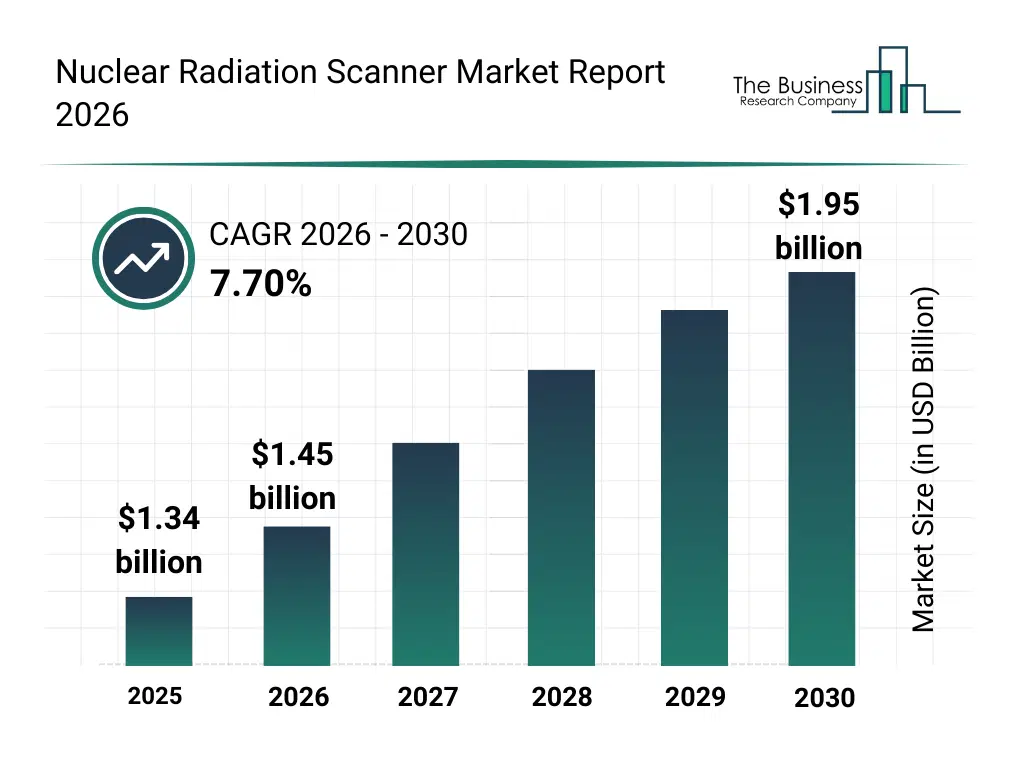
What Is The Nuclear Radiation Scanner Market Size and Share 2026?
The nuclear radiation scanner market size has grown strongly in recent years. It will grow from $1.34 billion in 2025 to $1.45 billion in 2026 at a compound annual growth rate (CAGR) of 8.0%. The growth in the historic period can be attributed to limited radiation detection technologies, reliance on fixed monitoring systems, increasing nuclear power installations, rising safety concerns in hospitals and research institutes, growth in defense and security monitoring programs.What Is The Nuclear Radiation Scanner Market Growth Forecast?
The nuclear radiation scanner market size is expected to see strong growth in the next few years. It will grow to $1.95 billion in 2030 at a compound annual growth rate (CAGR) of 7.7%. The growth in the forecast period can be attributed to development of portable and handheld scanner technologies, integration with iot and cloud-based monitoring, adoption of ai-based radiation analysis, expansion of nuclear energy and medical imaging applications, rising government regulations and safety standards. Major trends in the forecast period include rising demand for portable and handheld radiation scanners, adoption of advanced scintillation and semiconductor detector technologies, integration with nuclear safety and environmental monitoring systems, increased focus on defense, security, and homeland safety applications, growing usage in research institutes and healthcare radiation monitoring.
Global Nuclear Radiation Scanner Market Segmentation
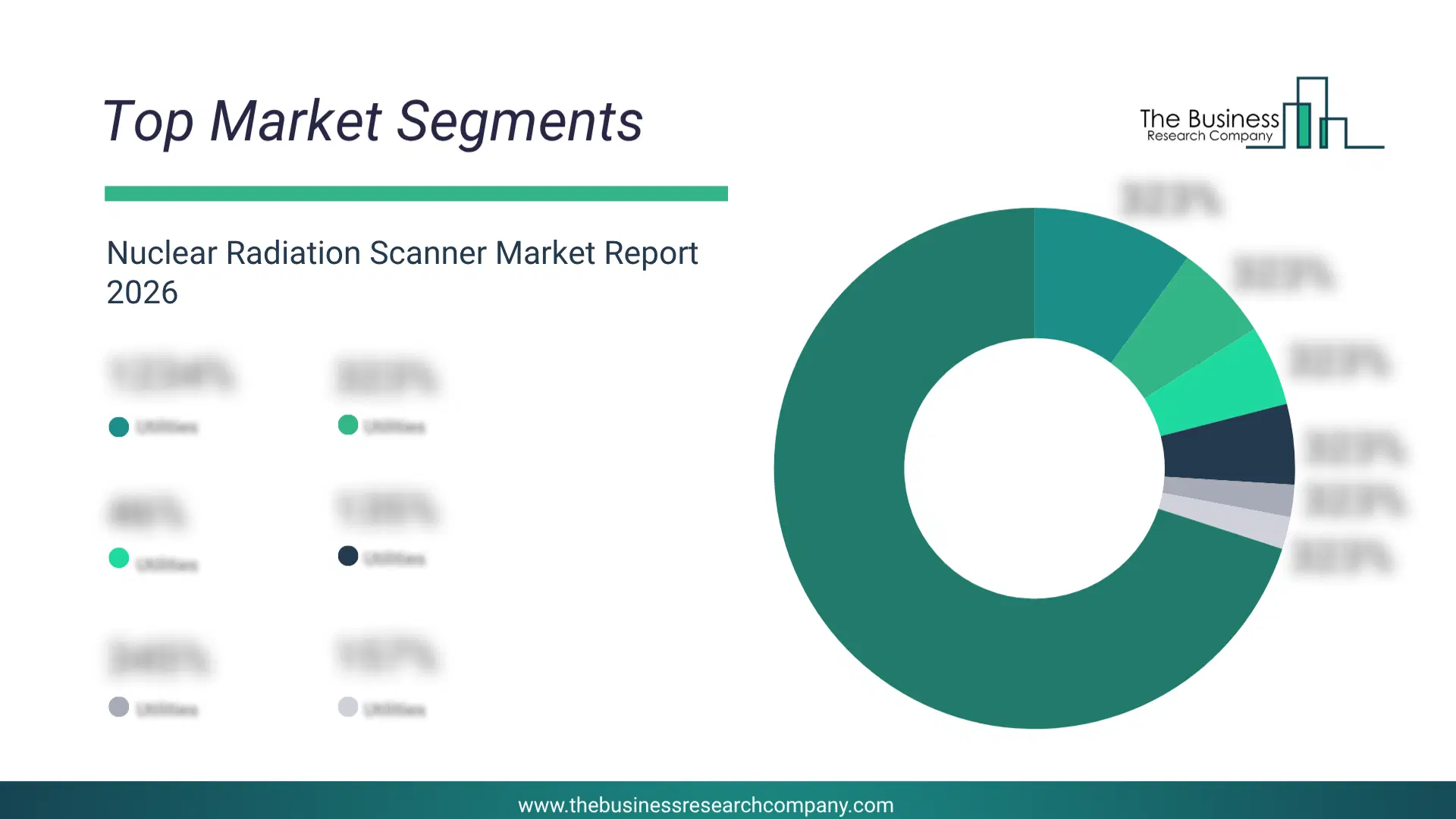
1) By Product Type: Portable Scanners, Fixed Scanners, Handheld Scanners 2) By Technology: Geiger-Muller Counters, Scintillation Detectors, Semiconductor Detectors, Others Technologies 3) By Distribution Channel: Direct Sales, Online Sales, Distributors And Resellers, Aftermarket Services 4) By End-User: Hospitals, Research Institutes, Nuclear Power Plants, Defense And Security Agencies, Other End Users Subsegments: 1) By Portable Scanners: Backpack Radiation Detectors, Vehicle-Mounted Radiation Detectors, Portable Radiation Portal Monitors 2) By Fixed Scanners: Fixed Radiation Portal Monitors, Area Radiation Monitors, Continuous Emission Monitoring Systems 3) By Handheld Scanners: Handheld Gamma Spectrometers, Handheld Geiger Counters, Personal Radiation DetectorsWhat Is The Driver Of The Nuclear Radiation Scanner Market?
The rising nuclear power generation is anticipated to fuel the growth of the nuclear radiation scanner market in the coming years. Nuclear power is the energy generated from controlled nuclear reactions, usually through fission, to produce electricity. Nuclear power generation is rising due to the growing demand for low-carbon energy sources, as it provides a reliable and large-scale alternative to fossil fuels while helping to reduce greenhouse gas emissions. Nuclear radiation scanners are essential in nuclear power generation to ensure the safety of personnel and the environment by detecting and monitoring radiation levels, preventing harmful exposure, and maintaining regulatory compliance. For instance, in February 2025, according to a report published by the European Commission, a Belgium-based executive body, the 13 European Union nuclear electricity generating nations generated a total of 619,601 gigawatt hours (GWh) in 2023, marking a 1.7% rise compared to the output in 2022. Therefore, the rising incidence of nuclear power generation will boost the growth of the nuclear radiation scanner industry.Key Players In The Global Nuclear Radiation Scanner Market
Major companies operating in the nuclear radiation scanner market are Bruker Corporation, HORIBA Ltd, LANDAUER INC, Canon Electron Tubes And Devices Co Ltd, Atomtex Co, Berkeley Nucleonics Corporation, Rotem Industries Ltd, LND Inc, AMPTEK Inc, Radiation Monitoring Devices Inc, Mediso Ltd, Advacam s r o, Arktis Radiation Detectors Ltd, CapeSym Inc, M C TEC B V, Radiation Detection Technologies Inc, US Nuclear Corp, John Caunt Scientific Ltd, ELSE NUCLEAR S r l, Mirion Technologies Inc, Canberra Industries Inc, Thermo Fisher Scientific Radiation Detection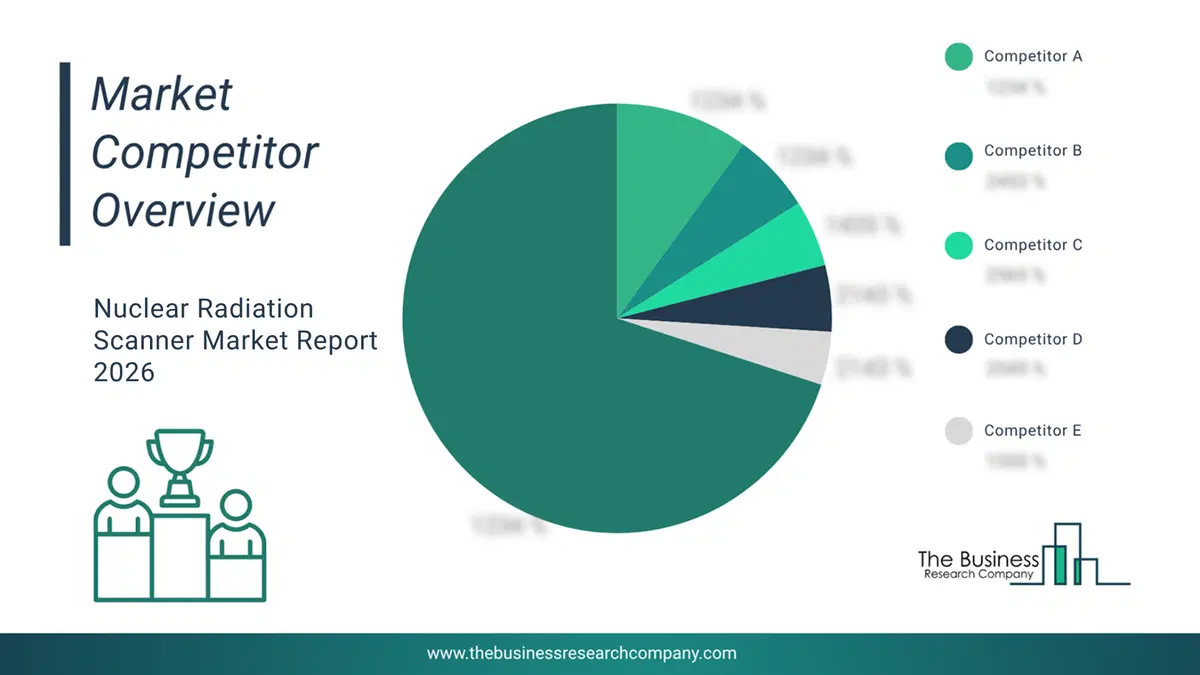
This chart is for illustrative purposes; the full report includes a detailed competitor analysis and comprehensive overview of the top 10 companies in the market.
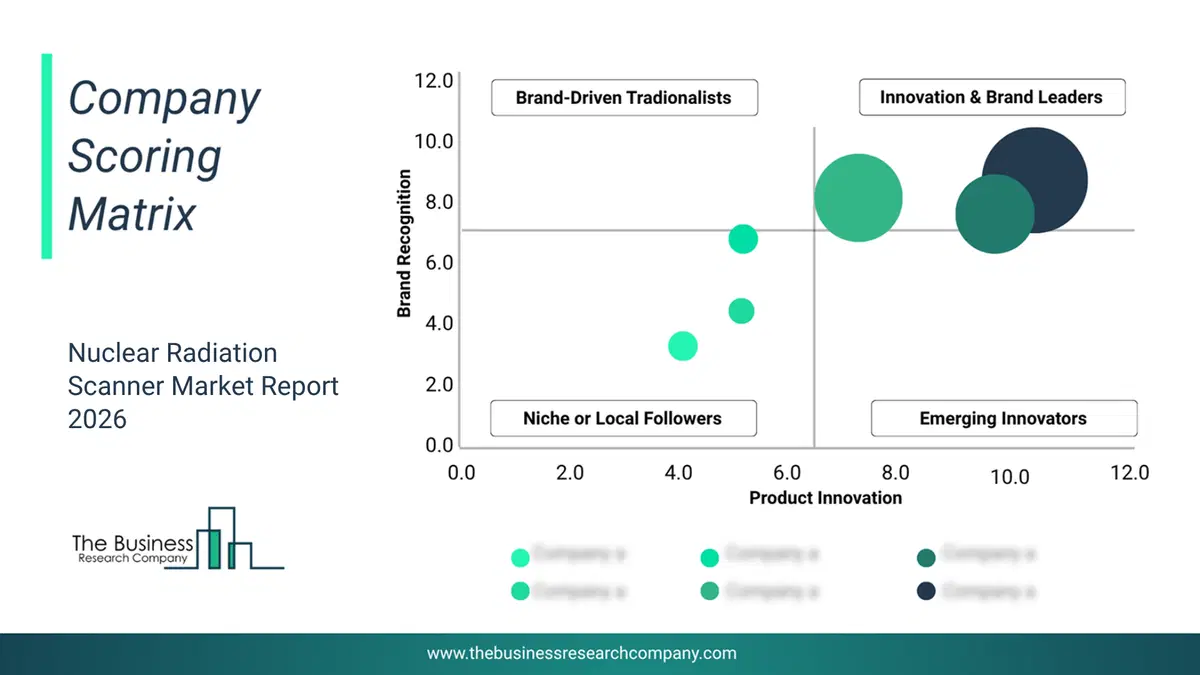
This chart maps companies by product innovation and brand strength, with bubble size indicating relative revenue, helping identify market leaders, challengers, and niche players. This is an illustrative chart; the full report provides a complete and accurate competitive analysis.
Global Nuclear Radiation Scanner Market Trends and Insights
Major companies operating in the nuclear radiation scanner market are focusing on developing advanced solutions, such as software tools, to enable greater task accuracy and consistency. Software tools are digital programs or applications designed to perform specific tasks, enhance productivity, or assist in developing and managing other software or systems. For instance, in June 2023, the International Atomic Energy Agency, an Austria-based center for nuclear cooperation, developed the Mobile-Integrated Nuclear Security Network, a software tool to offer real-time radiation data. It ensures efficient nuclear security by providing real-time radiation data for busy locations such as border crossings, seaports, and airports. This tool enables decision-makers to visualize radiation data and make well-informed decisions to protect the public in the event of a possible nuclear or radioactive material occurrence. Its vendor-neutral design is a crucial feature of M-INSN. It allows it to be integrated with any detection equipment and gives administrators immediate access to radiation data and users' exact positions, including radiation experts and security officers. Furthermore, an interactive map that shows the state of the equipment is updated regularly, providing vital information for monitoring nuclear security activities.What Are Latest Mergers And Acquisitions In The Nuclear Radiation Scanner Market?
In January 2025, Bertin Technologies, a France-based developer of technical equipment, acquired VF Nuclear for an undisclosed amount. With this acquisition, VF Nuclear and Bertin Technologies will have a significant presence in Europe to provide a wide range of radiation-detecting devices that align with nuclear safety and health physics regulations. VF Nuclear is a Czech Republic-based manufacturer of nuclear radiation scanners and related radiation monitoring equipment.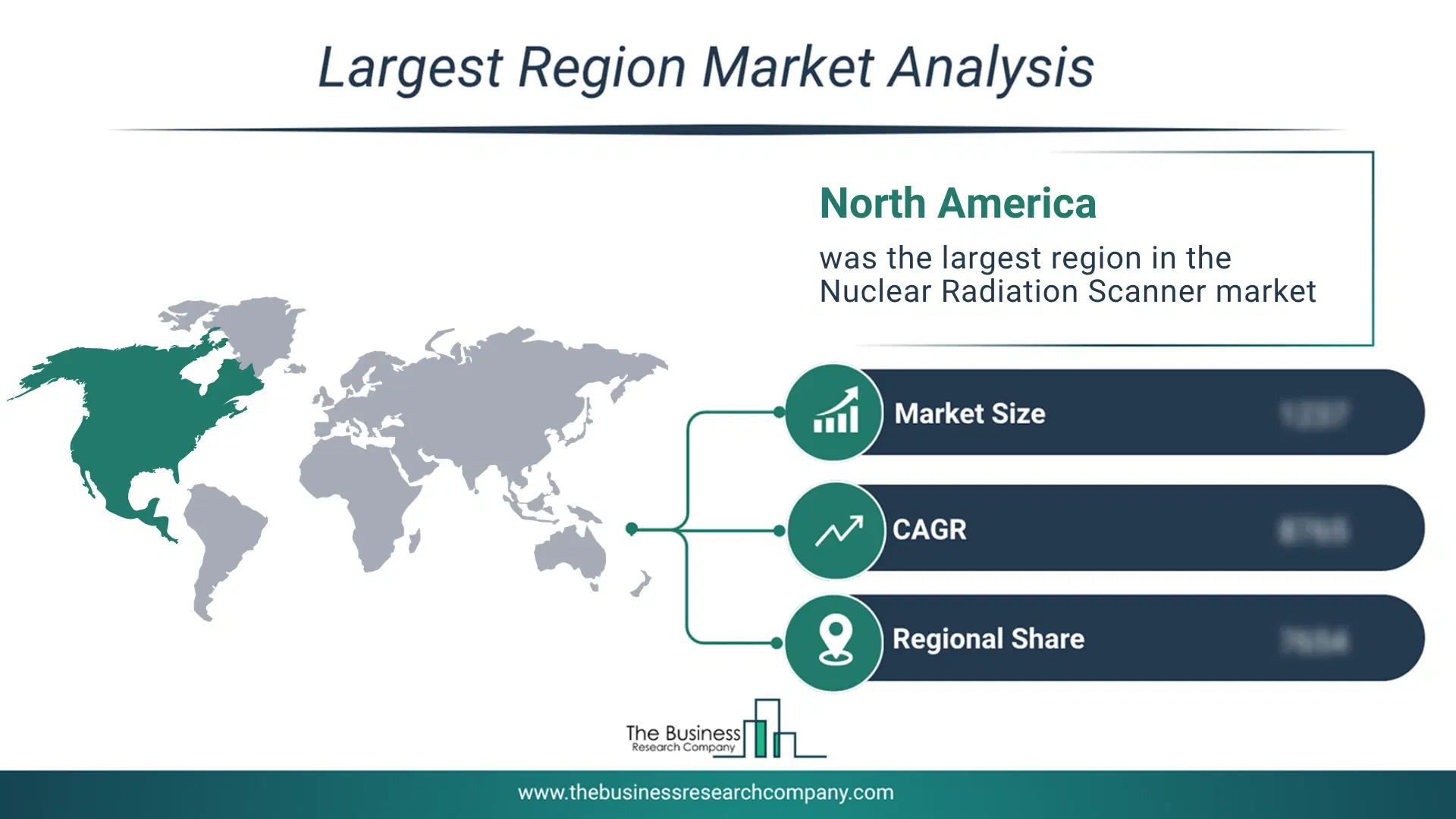
Regional Outlook
North America was the largest region in the nuclear radiation scanner market in 2025. Asia-Pacific is expected to be the fastest-growing region in the forecast period. The regions covered in this market report are Asia-Pacific, South East Asia, Western Europe, Eastern Europe, North America, South America, Middle East, Africa. The countries covered in this market report are Australia, Brazil, China, France, Germany, India, Indonesia, Japan, Taiwan, Russia, South Korea, UK, USA, Canada, Italy, SpainWhat Defines the Nuclear Radiation Scanner Market?
The nuclear radiation scanner market consists of sales of personal dosimeters, radiation portal monitors, area radiation monitors, and neutron detectors. Values in this market are ‘factory gate’ values, that is the value of goods sold by the manufacturers or creators of the goods, whether to other entities (including downstream manufacturers, wholesalers, distributors and retailers) or directly to end customers. The value of goods in this market includes related services sold by the creators of the goods.How is Market Value Defined and Measured?
The market value is defined as the revenues that enterprises gain from the sale of goods and/or services within the specified market and geography through sales, grants, or donations in terms of the currency (in USD unless otherwise specified). The revenues for a specified geography are consumption values that are revenues generated by organizations in the specified geography within the market, irrespective of where they are produced. It does not include revenues from resales along the supply chain, either further along the supply chain or as part of other products.
This chart presents market attractiveness based on a quantitative evaluation of growth, competition, strategic alignment, and risk, offering a clear view of opportunity areas for decision-making. This chart is for illustrative purposes; the full report contains the complete analysis.

This chart highlights the Total Addressable Market (TAM) by estimating the maximum revenue opportunity using an assumption-driven approach, supporting strategic planning and opportunity sizing across markets. The chart is illustrative; the full report provides a more comprehensive analysis.
What Key Data and Analysis Are Included in the Nuclear Radiation Scanner Market Report 2026?
The nuclear radiation scanner market research report is one of a series of new reports from The Business Research Company that provides market statistics, including industry global market size, regional shares, competitors with the market share, detailed market segments, market trends and opportunities, and any further data you may need to thrive in the nuclear radiation scanner industry. The market research report delivers a complete perspective of everything you need, with an in-depth analysis of the current and future state of the industry.Nuclear Radiation Scanner Market Report Forecast Analysis
| Report Attribute | Details |
|---|---|
| Market Size Value In 2026 | $1.45 billion |
| Revenue Forecast In 2030 | $1.95 billion |
| Growth Rate | CAGR of 7.7% from 2026 to 2030 |
| Base Year For Estimation | 2025 |
| Actual Estimates/Historical Data | 2020-2025 |
| Forecast Period | 2026 - 2030 |
| Market Representation | Revenue in USD Billion and CAGR from 2026 to 2030 |
| Segments Covered | Product Type, Technology, Distribution Channel, End-User |
| Regional Scope | Asia-Pacific, Western Europe, Eastern Europe, North America, South America, Middle East, Africa |
| Country Scope | The countries covered in the report are Australia, Brazil, China, France, Germany, India, Indonesia, Japan, Taiwan, Russia, South Korea, UK, USA, Canada, Italy, Spain. |
| Key Companies Profiled | Bruker Corporation, HORIBA Ltd, LANDAUER INC, Canon Electron Tubes And Devices Co Ltd, Atomtex Co, Berkeley Nucleonics Corporation, Rotem Industries Ltd, LND Inc, AMPTEK Inc, Radiation Monitoring Devices Inc, Mediso Ltd, Advacam s r o, Arktis Radiation Detectors Ltd, CapeSym Inc, M C TEC B V, Radiation Detection Technologies Inc, US Nuclear Corp, John Caunt Scientific Ltd, ELSE NUCLEAR S r l, Mirion Technologies Inc, Canberra Industries Inc, Thermo Fisher Scientific Radiation Detection |
| Customization Scope | Request for Customization |
| Pricing And Purchase Options | Explore Purchase Options |