
Nucleic Acid Labeling Market Report 2026
Global Outlook – By Product Type (Kits, Reagents, Instruments), By Labeling Type (Radioisotope Or Radioactive Labels, Non-Radioactive Labels), By Method (Enzyme-Based, Chemical-Based), By Application (DNA Sequencing, Polymerase Chain Reaction, Fluorescence In Situ Hybridization (FISH), Microarrays, Blotting, In Situ Hybridization, Other Applications), By End-User (Hospitals Or Clinics, Diagnostic Centers, Other End-Users) - Market Size, Trends, Strategies, and Forecast to 2030
Nucleic Acid Labeling Market Overview
• Nucleic Acid Labeling market size has reached to $2.77 billion in 2025 • Expected to grow to $4.42 billion in 2030 at a compound annual growth rate (CAGR) of 9.9% • Growth Driver: Nucleic Acid Labeling Market Surges Amidst Rising Infectious Diseases • Market Trend: Investment’S Surge In Nucleic Acid Technologies • North America was the largest region in 2025 and Asia-Pacific is the fastest growing region.What Is Covered Under Nucleic Acid Labeling Market?
Nucleic acid labeling refers to the process of introducing detectable tags or markers into DNA or RNA molecules. These tags can be used to visualize and detect specific nucleic acid sequences or to track their presence, location, or activity in various experimental or diagnostic applications. The main product types in nucleic acid labeling are kits, reagents, and instruments. A reagent is a substance or compound used in diagnostic tests or laboratory experiments to detect, analyze, or measure specific components in biological samples. The various labeling types include radioisotope or radioactive labels, non-radioactive labels, and various methods, including enzyme-based and chemical-based. These are used in various applications such as DNA sequencing, polymerase chain reaction, fluorescence in situ hybridization (fish), microarrays, blotting, in situ hybridization, and others and also by various end users such as hospitals or clinics, diagnostic centers, and others.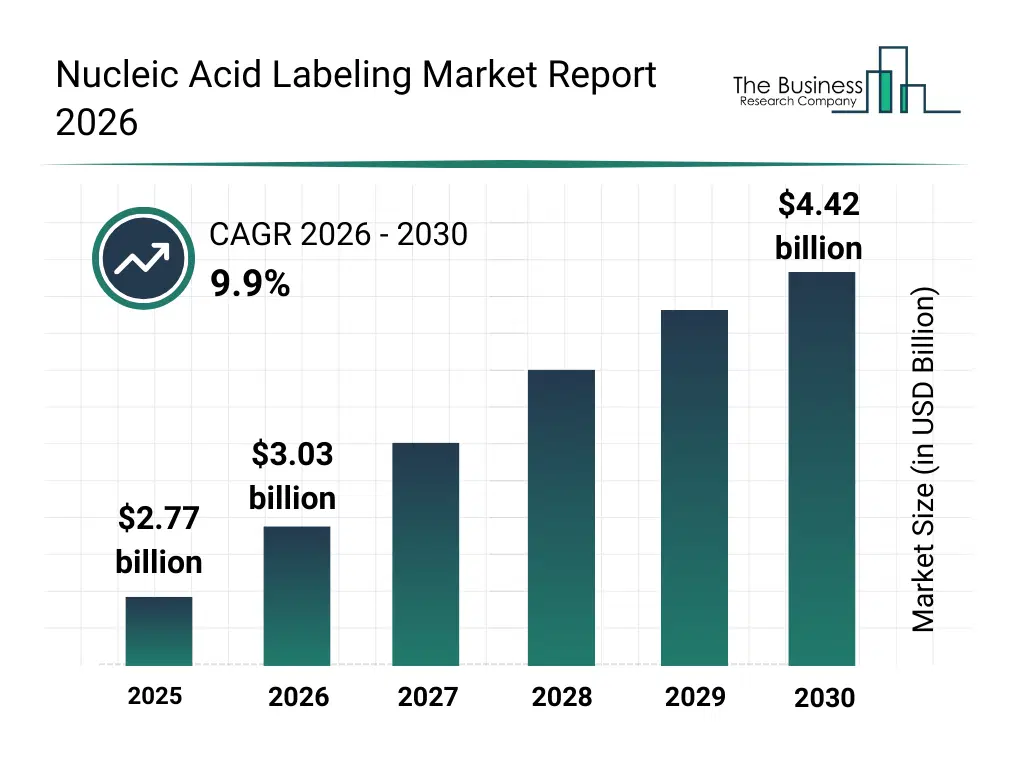
What Is The Nucleic Acid Labeling Market Size and Share 2026?
The nucleic acid labeling market size has grown strongly in recent years. It will grow from $2.77 billion in 2025 to $3.03 billion in 2026 at a compound annual growth rate (CAGR) of 9.4%. The growth in the historic period can be attributed to limited availability of sensitive labeling reagents, low awareness of nucleic acid labeling applications, high cost of instruments, reliance on traditional labeling methods, slow adoption of high-throughput technologies.What Is The Nucleic Acid Labeling Market Growth Forecast?
The nucleic acid labeling market size is expected to see strong growth in the next few years. It will grow to $4.42 billion in 2030 at a compound annual growth rate (CAGR) of 9.9%. The growth in the forecast period can be attributed to advancements in fluorescent and non-radioactive labels, increasing r&d in genomics and molecular diagnostics, growing demand for high-throughput and multiplex assays, rising adoption in hospitals and diagnostic centers, increasing funding for research applications. Major trends in the forecast period include rising adoption of nucleic acid labeling techniques, increasing development of advanced labeling kits and reagents, growing applications in diagnostic and research fields, rising focus on multiplex and high-throughput labeling methods, increasing integration of imaging and analytical instruments.
Global Nucleic Acid Labeling Market Segmentation
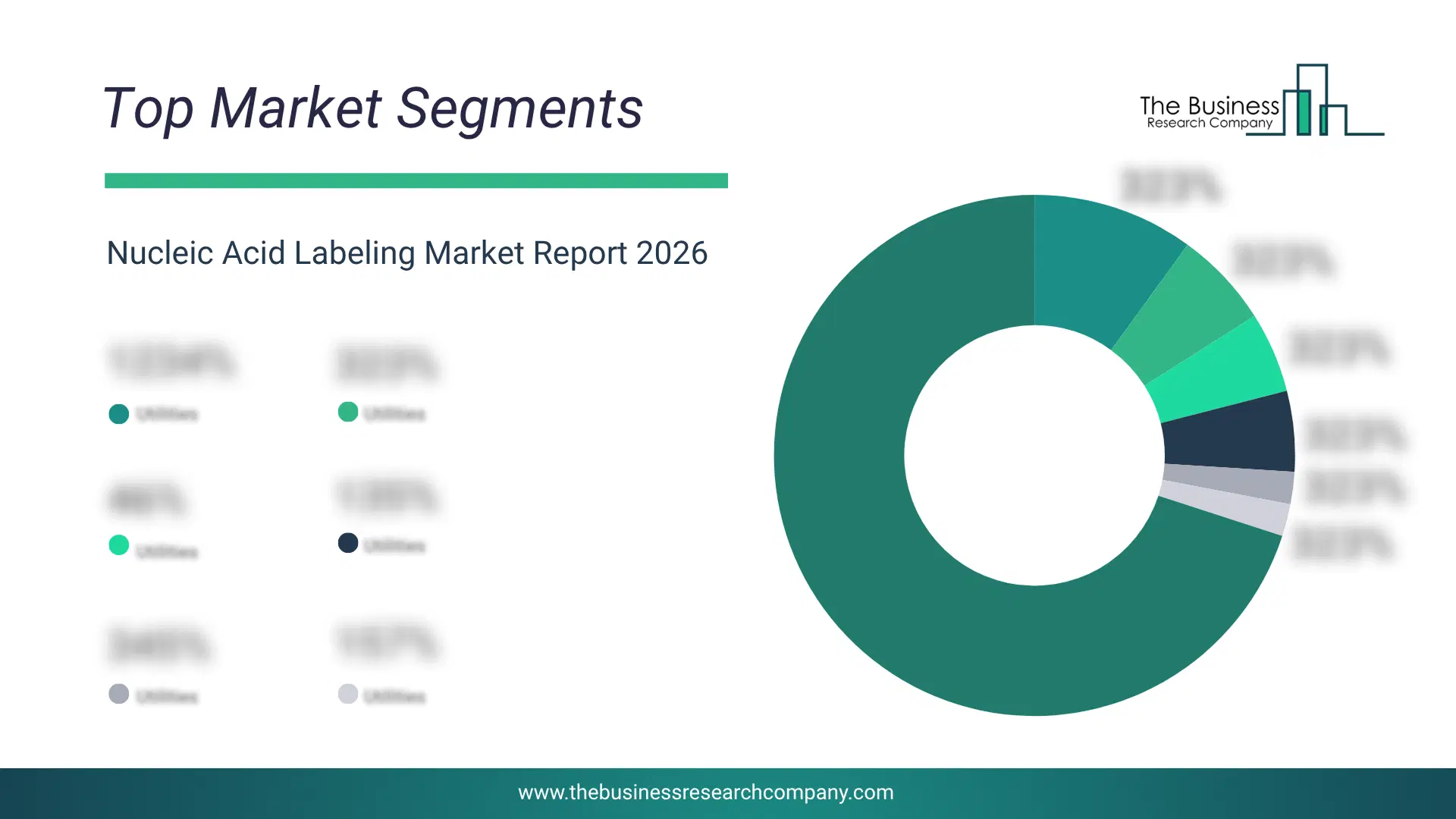
1) By Product Type: Kits, Reagents, Instruments 2) By Labeling Type: Radioisotope Or Radioactive Labels, Non-Radioactive Labels 3) By Method: Enzyme-Based, Chemical-Based 4) By Application: DNA Sequencing, Polymerase Chain Reaction, Fluorescence In Situ Hybridization (FISH), Microarrays, Blotting, In Situ Hybridization, Other Applications 5) By End-User: Hospitals Or Clinics, Diagnostic Centers, Other End-Users Subsegments: 1) By Kits: DNA Labeling Kits, RNA Labeling Kits, Multiplex Labeling Kits 2) By Reagents: Labeling Reagents, Buffer Solutions, Conjugation Reagents 3) By Instruments: Nucleic Acid Analyzers, Microarray Processors, Imaging SystemsWhat Is The Driver Of The Nucleic Acid Labeling Market?
The rise in infectious diseases is expected to propel the growth of the nucleic acid labeling market going forward. Infectious diseases are conditions caused by organisms, usually microscopic, such as parasites, fungi, viruses, and bacteria, that are transmitted from one individual to another through indirect or direct contact. Nucleic acid labeling techniques offer improved specificity, sensitivity, multiplexing capability, visualization, real-time monitoring, and automation for the detection of infectious diseases such as tuberculosis, hepatitis, and gonorrhea. For instance, in March 2024, according to the Centers for Disease Control and Prevention, a US-based national public health agency, tuberculosis (TB) cases increased by 1,295, from 8,320 in 2022 to 9,615 in 2023. This corresponds to a rise in incidence rate from 2.5 per 100,000 persons in 2022 to 2.9 per 100,000 in 2023, reflecting a notable year-on-year increase. Therefore, the rise in infectious diseases propels the growth of the nucleic acid labeling industry.Key Players In The Global Nucleic Acid Labeling Market
Major companies operating in the nucleic acid labeling market are Thermo Fisher Scientific Inc., Merck Group, Roche Diagnostics Corporation, GE Healthcare Bio Sciences AB, Agilent Technologies Inc., PerkinElmer Inc., Bio-Rad Laboratories Inc., Cytiva, Qiagen N.V., Biotium Inc., Illumina Inc., LGC Group, Promega Corporation, New England Biolabs, Enzo Biochem Inc., LI-COR Biosciences Inc., Eurogentec S.A., OriGene Technologies Inc., BaseClear B.V., Vector Laboratories Inc., Bio-Synthesis Inc., BioCat GmbH, Jena Bioscience GmbH, LubioScience GmbH, GeneCopoeia Inc., Mirus Bio LLC, Daicel Arbor Biosciences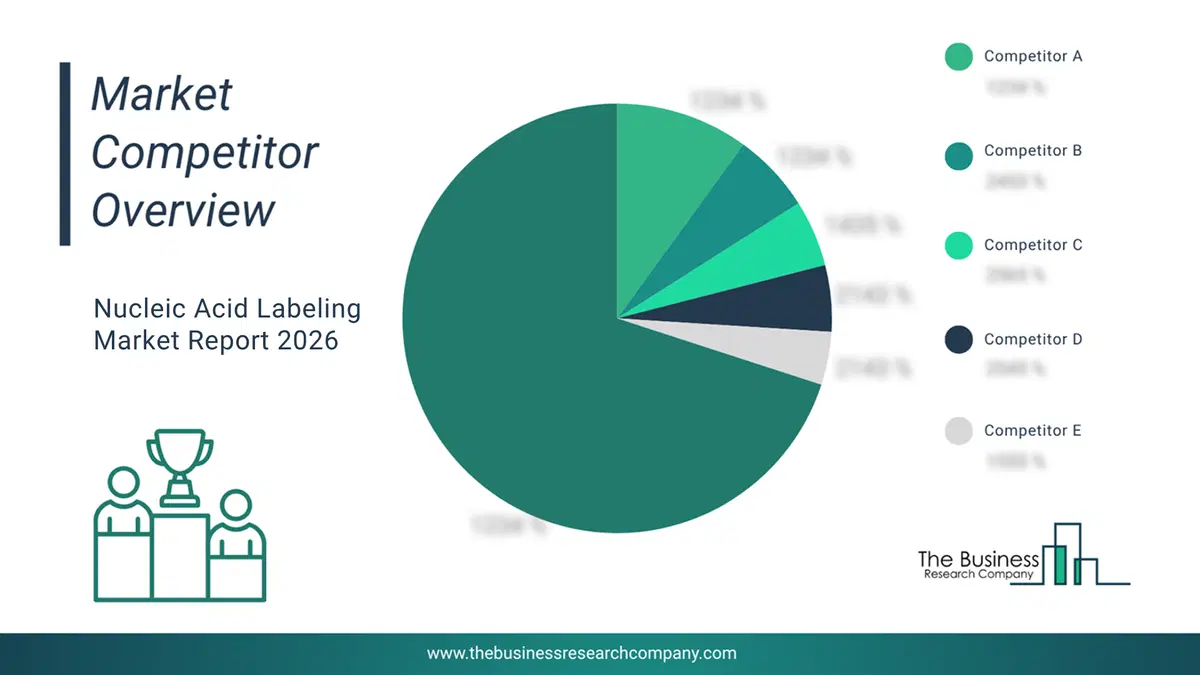
This chart is for illustrative purposes; the full report includes a detailed competitor analysis and comprehensive overview of the top 10 companies in the market.
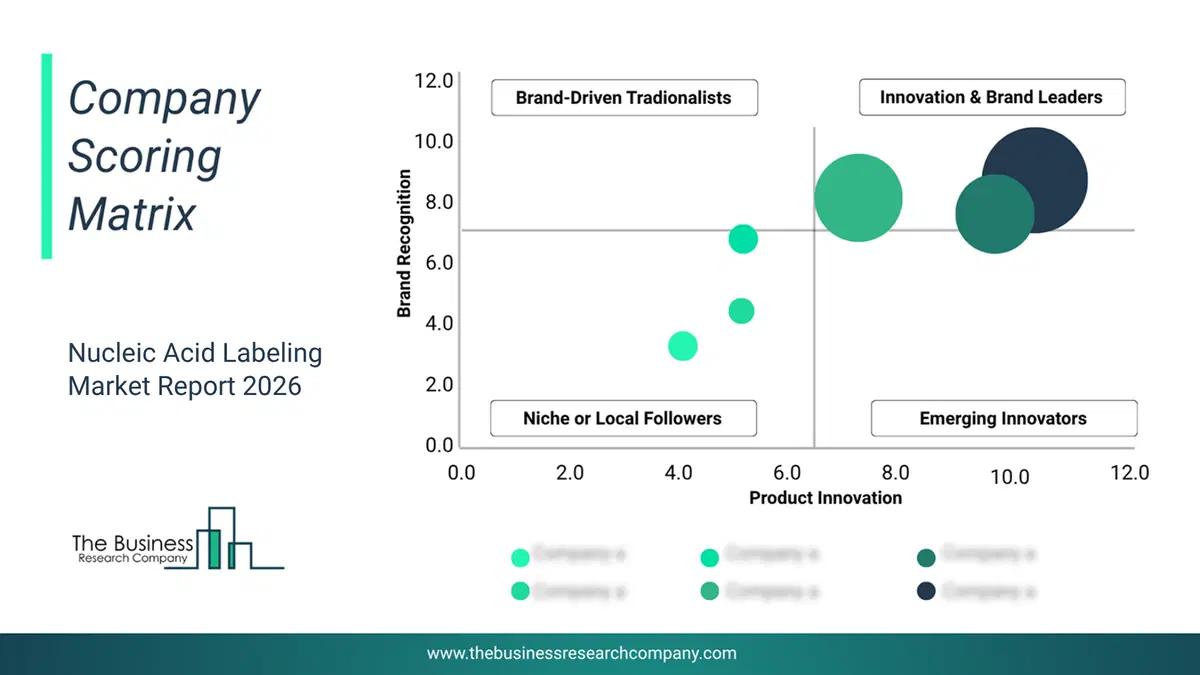
This chart maps companies by product innovation and brand strength, with bubble size indicating relative revenue, helping identify market leaders, challengers, and niche players. This is an illustrative chart; the full report provides a complete and accurate competitive analysis.
Global Nucleic Acid Labeling Market Trends and Insights
Major companies operating in the nucleic acid labeling market are investing to increase their profitability in the market. Investments in nucleic acid labelling refer to financial contributions, funding, or capital injections made by individuals, organizations, venture capitalists, or other entities into initiatives, companies, or projects related to nucleic acid labelling technologies, research, and development. For instance, in January 2023, Agilent Technologies Inc., a US-based software, instruments provider for laboratories, invested $725 million to boost its therapeutic nucleic acids production capacity twofold, responding to the surging demand for high-quality active pharmaceutical ingredients. The expansion, aligned with the company's strategic focus on flourishing markets, aims to meet the increasing needs for siRNA, antisense, and CRISPR guide RNA molecules used in drugs targeting diverse diseases such as cancer, cardiovascular issues, and rare and infectious diseases.What Are Latest Mergers And Acquisitions In The Nucleic Acid Labeling Market?
In January 2023, ALS Limited, an Australia-based company that operates testing labs, acquired Invitek Molecular GmbH for an undisclosed sum. With this acquisition, Invitek aims to expand the scope of its expertise, as we also provide in-vitro diagnostics firms throughout the world with custom development and contract manufacturing services, from concept to marketable product realization. Invitek Molecular GmbH is a Germany-based manufacturer of molecular diagnostic tools company that operates in the nucleic acid labeling market.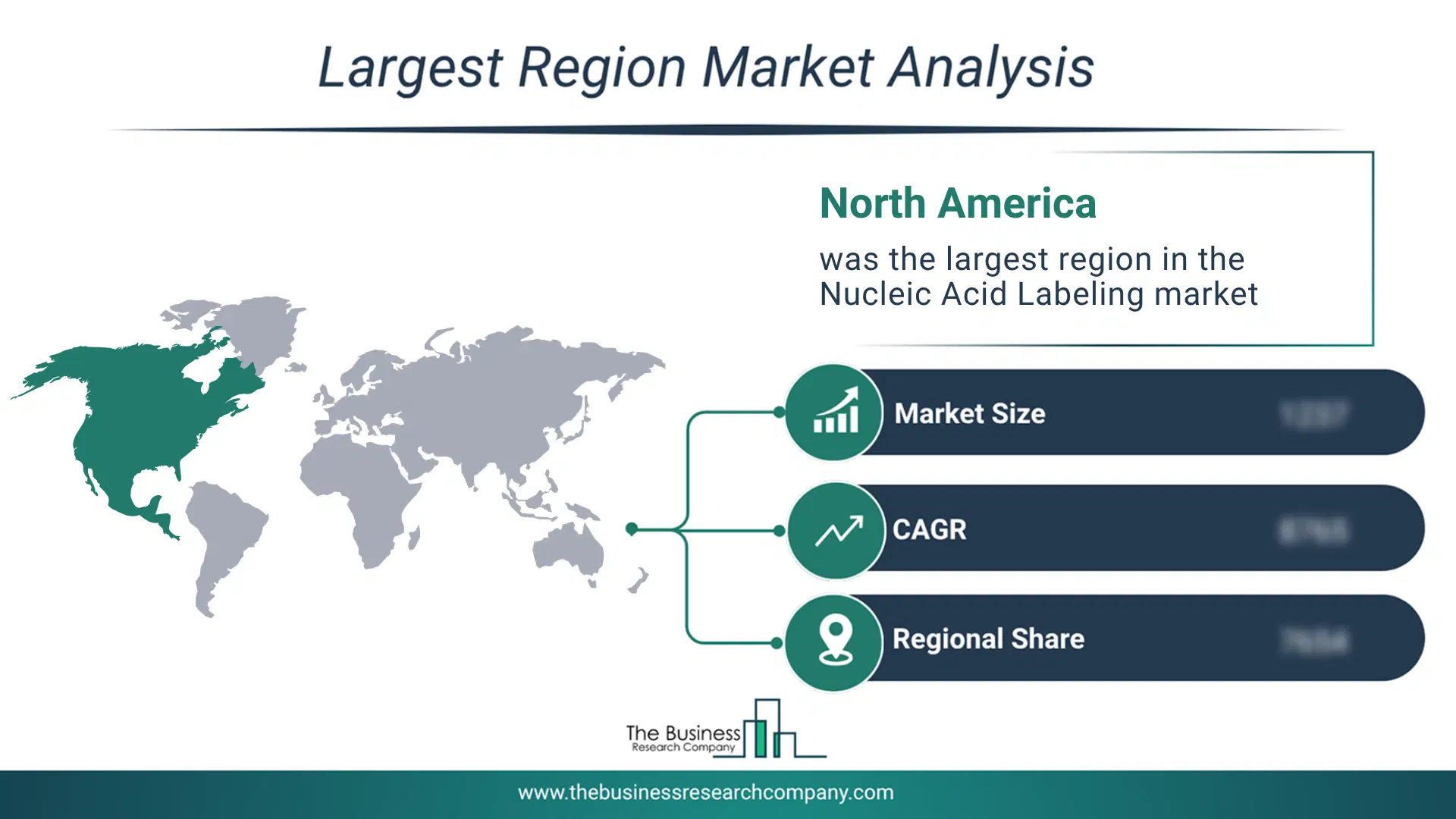
Regional Outlook
North America was the largest region in the nucleic acid labeling market in 2025. Asia-Pacific is expected to be the fastest-growing region in the forecast period. The regions covered in this market report are Asia-Pacific, South East Asia, Western Europe, Eastern Europe, North America, South America, Middle East, Africa. The countries covered in this market report are Australia, Brazil, China, France, Germany, India, Indonesia, Japan, Taiwan, Russia, South Korea, UK, USA, Canada, Italy, Spain.What Defines the Nucleic Acid Labeling Market?
The nucleic acid labeling market consists of revenues earned by entities by providing services such as radiolabeling, biotinylation, fluorescence labeling, and enzyme labeling. The market value includes the value of related goods sold by the service provider or included within the service offering. The nucleic acid labeling market also includes sales of labeled nucleotides, labeling kits, labeling enzymes and detection reagents. Values in this market are ‘factory gate’ values, that is, the value of goods sold by the manufacturers or creators of the goods, whether to other entities (including downstream manufacturers, wholesalers, distributors, and retailers) or directly to end customers. The value of goods in this market includes related services sold by the creators of the goods.How is Market Value Defined and Measured?
The market value is defined as the revenues that enterprises gain from the sale of goods and/or services within the specified market and geography through sales, grants, or donations in terms of the currency (in USD unless otherwise specified). The revenues for a specified geography are consumption values that are revenues generated by organizations in the specified geography within the market, irrespective of where they are produced. It does not include revenues from resales along the supply chain, either further along the supply chain or as part of other products.
This chart presents market attractiveness based on a quantitative evaluation of growth, competition, strategic alignment, and risk, offering a clear view of opportunity areas for decision-making. This chart is for illustrative purposes; the full report contains the complete analysis.

This chart highlights the Total Addressable Market (TAM) by estimating the maximum revenue opportunity using an assumption-driven approach, supporting strategic planning and opportunity sizing across markets. The chart is illustrative; the full report provides a more comprehensive analysis.
What Key Data and Analysis Are Included in the Nucleic Acid Labeling Market Report 2026?
The nucleic acid labeling market research report is one of a series of new reports from The Business Research Company that provides market statistics, including industry global market size, regional shares, competitors with the market share, detailed market segments, market trends and opportunities, and any further data you may need to thrive in the nucleic acid labeling industry. The market research report delivers a complete perspective of everything you need, with an in-depth analysis of the current and future state of the industry.Nucleic Acid Labeling Market Report Forecast Analysis
| Report Attribute | Details |
|---|---|
| Market Size Value In 2026 | $3.03 billion |
| Revenue Forecast In 2030 | $4.42 billion |
| Growth Rate | CAGR of 9.9% from 2026 to 2030 |
| Base Year For Estimation | 2025 |
| Actual Estimates/Historical Data | 2020-2025 |
| Forecast Period | 2026 - 2030 |
| Market Representation | Revenue in USD Billion and CAGR from 2026 to 2030 |
| Segments Covered | Product Type, Labeling Type, Method, Application, End-User |
| Regional Scope | Asia-Pacific, Western Europe, Eastern Europe, North America, South America, Middle East, Africa |
| Country Scope | The countries covered in the report are Australia, Brazil, China, France, Germany, India, Indonesia, Japan, Taiwan, Russia, South Korea, UK, USA, Canada, Italy, Spain |
| Key Companies Profiled | Thermo Fisher Scientific Inc., Merck Group, Roche Diagnostics Corporation, GE Healthcare Bio Sciences AB, Agilent Technologies Inc., PerkinElmer Inc., Bio-Rad Laboratories Inc., Cytiva, Qiagen N.V., Biotium Inc., Illumina Inc., LGC Group, Promega Corporation, New England Biolabs, Enzo Biochem Inc., LI-COR Biosciences Inc., Eurogentec S.A., OriGene Technologies Inc., BaseClear B.V., Vector Laboratories Inc., Bio-Synthesis Inc., BioCat GmbH, Jena Bioscience GmbH, LubioScience GmbH, GeneCopoeia Inc., Mirus Bio LLC, Daicel Arbor Biosciences |
| Customization Scope | Request for Customization |
| Pricing And Purchase Options | Explore Purchase Options |