

Oncogene Inhibitor Market Report 2026
Global Outlook – By Type (Oral, Injection), By Drug Class (Small Molecule Drugs, Biologics, Combination Therapies), By Indication (Breast Cancer, Ovarian Cancer, Lung Cancer, Pancreas Cancer, Other Indications), By Distribution Channel (Hospital Pharmacies, Retail Pharmacies, Online Pharmacies), By End-Users (Hospitals, Specialty Clinics, Other End-Users) – Market Size, Trends, Strategies, and Forecast to 2030
Oncogene Inhibitor Market Overview
• Oncogene Inhibitor market size has reached to $43.27 billion in 2025 • Expected to grow to $65.45 billion in 2030 at a compound annual growth rate (CAGR) of 8.6% • Growth Driver: Surge In Cancer Prevalence Fueling The Growth Of The Market Due To Unhealthy Lifestyles And Increasing Cases Of Cancer • Market Trend: Delphia Therapeutics Advances Oncogene Inhibition With Activation Lethality Approach • North America was the largest region in 2025 and Asia-Pacific is the fastest growing region.What Is Covered Under Oncogene Inhibitor Market?
An oncogene inhibitor is a type of drug or therapeutic agent designed to block the activity of oncogenes, genes that have the potential to cause cancer when mutated or overexpressed. These inhibitors target the abnormal proteins produced by oncogenes, which drive uncontrolled cell growth and tumor development. By blocking these proteins, oncogene inhibitors can slow down or stop the progression of certain cancers. The main types of oncogene inhibitor are oral and injection. Oral refers to medications or treatments that are taken by mouth, typically in the form of pills, tablets, capsules, or liquids. These are used for various drug classes, including small molecule drugs, biologics, and combination therapies. The various indications include breast cancer, ovarian cancer, lung cancer, pancreatic cancer, and other indications that are distributed through various distribution channels such as hospital pharmacies, retail pharmacies, and online pharmacies and are used by various end users such as hospitals, specialty clinics, and others.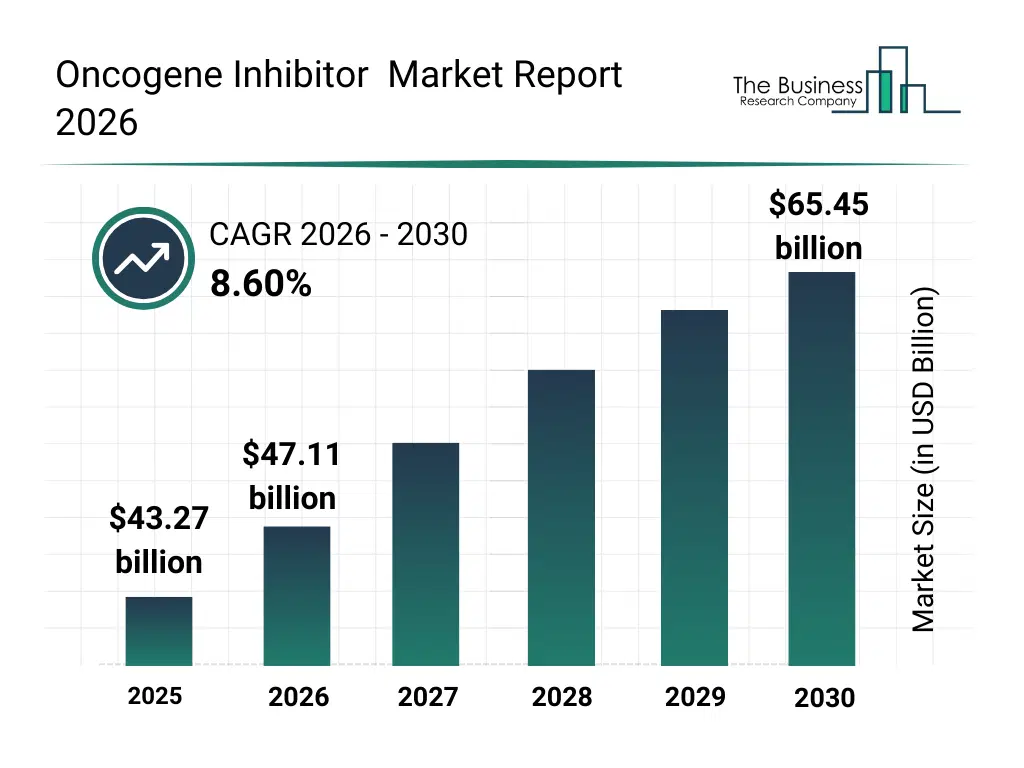
What Is The Oncogene Inhibitor Market Size and Share 2026?
The oncogene inhibitor market size has grown strongly in recent years. It will grow from $43.27 billion in 2025 to $47.11 billion in 2026 at a compound annual growth rate (CAGR) of 8.9%. The growth in the historic period can be attributed to limited availability of targeted therapies, reliance on conventional chemotherapy, increasing cancer prevalence, growing hospital and specialty clinic infrastructure, rising awareness about oncogene-targeted treatments.What Is The Oncogene Inhibitor Market Growth Forecast?
The oncogene inhibitor market size is expected to see strong growth in the next few years. It will grow to $65.45 billion in 2030 at a compound annual growth rate (CAGR) of 8.6%. The growth in the forecast period can be attributed to advancement in small molecule inhibitors and biologics, expansion of gene therapy and monoclonal antibody research, rising adoption of personalized medicine, increasing oncology-focused R&D investments, integration of digital health and AI in cancer treatment. Major trends in the forecast period include rising development of targeted cancer therapies, increased adoption of oral and injectable oncogene inhibitors, expansion of combination therapy approaches, growing focus on personalized medicine, enhanced research in rare and difficult-to-treat cancers.
Global Oncogene Inhibitor Market Segmentation
1) By Type: Oral, Injection 2) By Drug Class: Small Molecule Drugs, Biologics, Combination Therapies 3) By Indication: Breast Cancer, Ovarian Cancer, Lung Cancer, Pancreas Cancer, Other Indications 4) By Distribution Channel: Hospital Pharmacies, Retail Pharmacies, Online Pharmacies 5) By End-Users: Hospitals, Specialty Clinics, Other End-Users Subsegments: 1) By Oral Oncogene Inhibitors: Small Molecule Inhibitors, Targeted Therapy Pills, Tyrosine Kinase Inhibitors (TKIs) 2) By Injection Oncogene Inhibitors: Monoclonal Antibodies (mAbs), Peptide Receptor Radioligand Therapy (PRRT), Small Molecule Inhibitors (Injectable), Gene Therapy InjectionsWhat Is The Driver Of The Oncogene Inhibitor Market?
An increase in the prevalence of cancer is expected to propel the growth of the oncogene inhibitor market going forward. Cancer refers to a group of diseases characterized by the uncontrolled growth and spread of abnormal cells in the body. Cancer is increasing due to unhealthy lifestyles, as habits such as smoking, poor diet, lack of exercise, and alcohol use weaken the body and promote the growth of cancerous cells. Oncogene inhibitors help cancer by targeting and blocking specific genes that drive cancer cell growth, thereby slowing or stopping tumor development and progression. For instance, in July 2024, according to a report published by Cancer Research UK, a UK-based charity, the average annual number of new melanoma skin cancer cases in the UK is expected to increase from approximately 20,800 in 2023-2025 to around 26,500 in 2038-2040. Therefore, an increase in the prevalence of cancer is driving the growth of the oncogene inhibitor industry.Key Players In The Global Oncogene Inhibitor Market
Major companies operating in the oncogene inhibitor market are Pfizer Inc., Johnson & Johnson Services Inc., F. Hoffmann-La Roche Ltd, Merck & Co. Inc., AbbVie Inc., Bayer AG, Bristol-Myers Squibb Company, Novartis AG, GlaxoSmithKline plc, Takeda Pharmaceutical Company Limited, Eli Lilly and Company, Mirati Therapeutics Inc., AstraZeneca PLC, Incyte Corporation, Blueprint Medicines Corporation, Astex Pharmaceuticals Inc., G1 Therapeutics Inc., Nurix Therapeutics Inc., GenFleet Therapeutics Co Ltd., Relay Therapeutics Inc.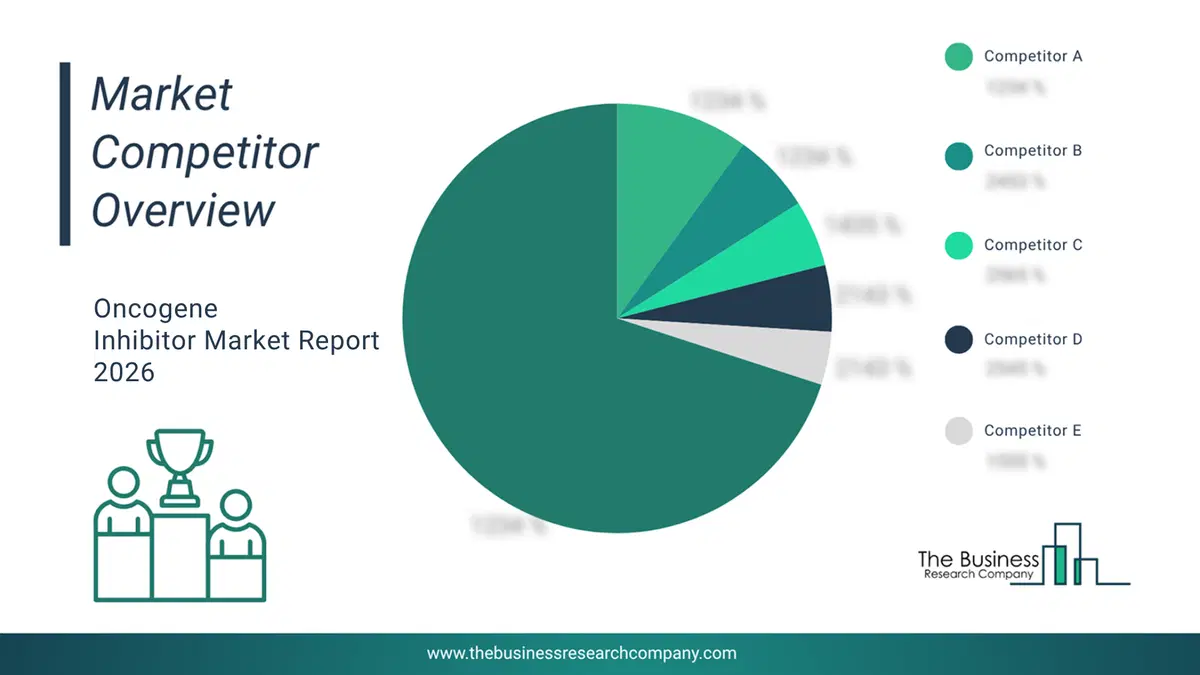
This chart is for illustrative purposes; the full report includes a detailed competitor analysis and comprehensive overview of the top 10 companies in the market.
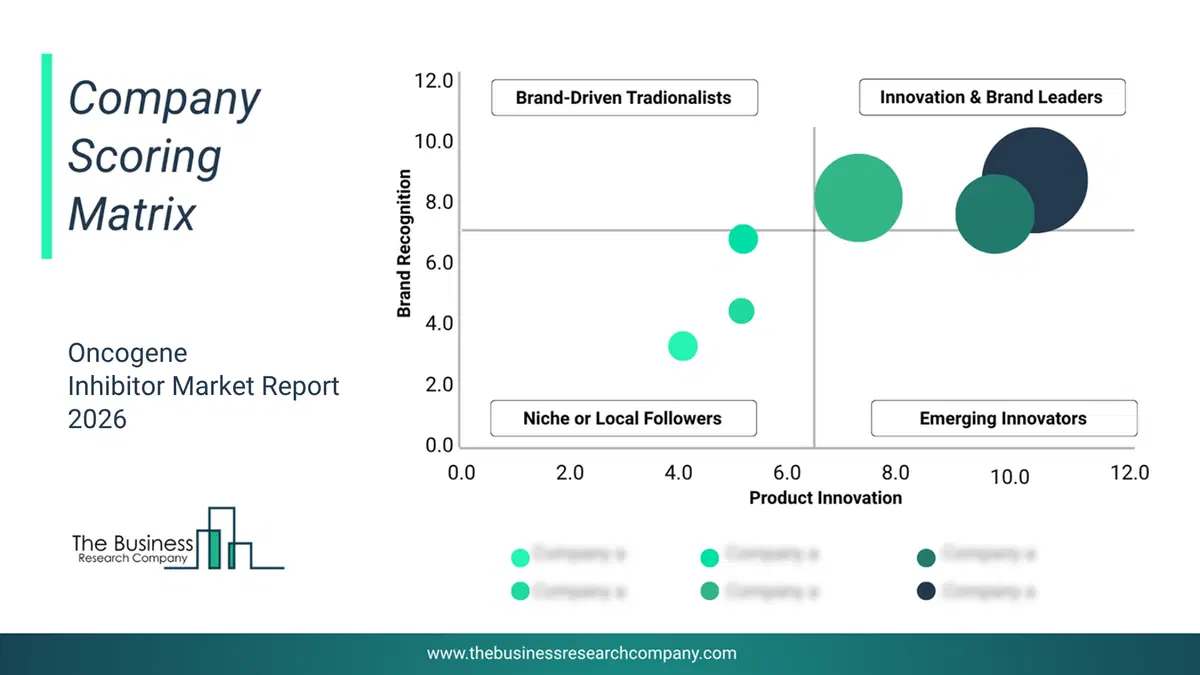
This chart maps companies by product innovation and brand strength, with bubble size indicating relative revenue, helping identify market leaders, challengers, and niche players. This is an illustrative chart; the full report provides a complete and accurate competitive analysis.
Global Oncogene Inhibitor Market Trends and Insights
Major companies operating in the oncogene inhibitor market are focusing on developing innovative treatment options, such as novel functional genomic approaches, to enhance the precision and efficacy of cancer treatments. Novel functional genomic approaches refer to advanced methodologies that integrate various genomic, transcriptomic, and epigenomic data to understand gene functions and their roles in diseases such as cancer. For instance, in May 2024, Delphia Therapeutics, a US-based biotechnology company, introduced a novel approach called activation lethality to exploit cancer’s vulnerability to oncogene overactivation. Leading oncology drug developers Kevin Marks, Bill Sellers, and Mike Dillon have secured $67 million in funding to advance this strategy. Activation lethality targets the excessive activation of oncogenes, genes that, when mutated or highly expressed, can drive cancer development. Some cancer cells rely on this overactivation for survival, and by inducing lethal stress through targeted intervention, this approach selectively kills those cancer cells while sparing healthy ones.What Are Latest Mergers And Acquisitions In The Oncogene Inhibitor Market?
In November 2023, Revolution Medicines Inc., a US-based biotech company, acquired EQRx for an undisclosed amount. Through this acquisition, EQRx benefits by aligning with a company that has a strong focus on developing RAS(ON) inhibitor drugs for RAS-driven cancers, potentially accelerating the development and commercialization of its oncology programs. Additionally, the acquisition offers EQRx greater access to resources, expertise, and infrastructure, enhancing its ability to advance innovative oncogene inhibitor therapies. EQRx Inc. is a US-based biotech company that offers oncogene inhibitors.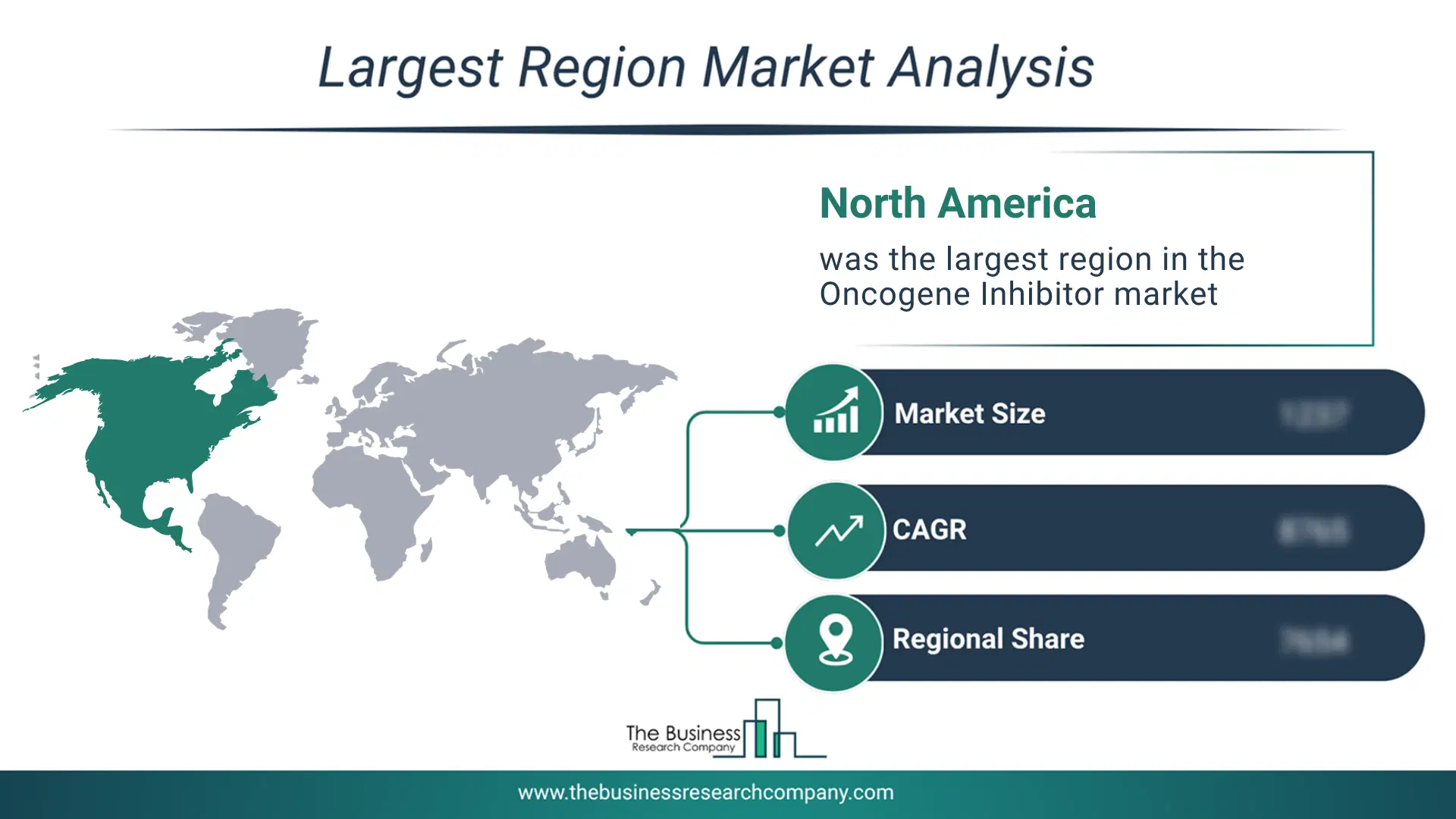
Regional Insights
North America was the largest region in the oncogene inhibitor market in 2025. Asia-Pacific is expected to be the fastest-growing region in the forecast period. The regions covered in this market report are Asia-Pacific, South East Asia, Western Europe, Eastern Europe, North America, South America, Middle East, Africa. The countries covered in this market report are Australia, Brazil, China, France, Germany, India, Indonesia, Japan, Taiwan, Russia, South Korea, UK, USA, Canada, Italy, Spain.What Defines the Oncogene Inhibitor Market?
The oncogene inhibitor market consists of sales of imatinib, erlotinib, gefitinib, vemurafenib, dabrafenib, crizotinib, and ceritinib. Values in this market are ‘factory gate’ values, that is, the value of goods sold by the manufacturers or creators of the goods, whether to other entities (including downstream manufacturers, wholesalers, distributors, and retailers) or directly to end customers. The value of goods in this market includes related services sold by the creators of the goods.How is Market Value Defined and Measured?
The market value is defined as the revenues that enterprises gain from the sale of goods and/or services within the specified market and geography through sales, grants, or donations in terms of the currency (in USD unless otherwise specified). The revenues for a specified geography are consumption values that are revenues generated by organizations in the specified geography within the market, irrespective of where they are produced. It does not include revenues from resales along the supply chain, either further along the supply chain or as part of other products.
This chart presents market attractiveness based on a quantitative evaluation of growth, competition, strategic alignment, and risk, offering a clear view of opportunity areas for decision-making. This chart is for illustrative purposes; the full report contains the complete analysis.

This chart highlights the Total Addressable Market (TAM) by estimating the maximum revenue opportunity using an assumption-driven approach, supporting strategic planning and opportunity sizing across markets. The chart is illustrative; the full report provides a more comprehensive analysis.
What Key Data and Analysis Are Included in the Oncogene Inhibitor Market Report 2026?
The oncogene inhibitor market research report is one of a series of new reports from The Business Research Company that provides market statistics, including industry global market size, regional shares, competitors with the market share, detailed market segments, market trends and opportunities, and any further data you may need to thrive in the oncogene inhibitor industry. The market research report delivers a complete perspective of everything you need, with an in-depth analysis of the current and future state of the industry.Oncogene Inhibitor Market Report Forecast Analysis
| Report Attribute | Details |
|---|---|
| Market Size Value In 2026 | $47.11 billion |
| Revenue Forecast In 2030 | $65.45 billion |
| Growth Rate | CAGR of 8.9% from 2026 to 2030 |
| Base Year For Estimation | 2025 |
| Actual Estimates/Historical Data | 2020-2025 |
| Forecast Period | 2026 - 2030 |
| Market Representation | Revenue in USD Billion and CAGR from 2026 to 2030 |
| Segments Covered | Type, Drug Class, Indication, Distribution Channel, End-Users |
| Regional Scope | Asia-Pacific, Western Europe, Eastern Europe, North America, South America, Middle East, Africa |
| Country Scope | The countries covered in the report are Australia, Brazil, China, France, Germany, India, Indonesia, Japan, Taiwan, Russia, South Korea, UK, USA, Canada, Italy, Spain. |
| Key Companies Profiled | Pfizer Inc., Johnson & Johnson Services Inc., F. Hoffmann-La Roche Ltd, Merck & Co. Inc., AbbVie Inc., Bayer AG, Bristol-Myers Squibb Company, Novartis AG, GlaxoSmithKline plc, Takeda Pharmaceutical Company Limited, Eli Lilly and Company, Mirati Therapeutics Inc., AstraZeneca PLC, Incyte Corporation, Blueprint Medicines Corporation, Astex Pharmaceuticals Inc., G1 Therapeutics Inc., Nurix Therapeutics Inc., GenFleet Therapeutics Co Ltd., Relay Therapeutics Inc. |
| Customization Scope | Request for Customization |
| Pricing And Purchase Options | Explore Purchase Options |