
Oncology Molecular Diagnostics Market Report 2026
Global Outlook – By Product (Instruments, Reagents, Other Products), By Technology (Polymerase Chain Reaction (PCR), In-Situ Hybridization (ISH), Isothermic Nucleic Acid Amplification Technology (INNAT), Chips And Microarrays, Sequencing, Mass Spectroscopy, Transcription Mediated Amplification (TMA), Other Technologies), By End User (Hospitals, Diagnostic Centers, Academic And Research Institutes, Other End Users) – Market Size, Trends, Strategies, and Forecast to 2030
Oncology Molecular Diagnostics Market Overview
• Oncology Molecular Diagnostics market size has reached to $5.65 billion in 2025 • Expected to grow to $10.13 billion in 2030 at a compound annual growth rate (CAGR) of 12.4% • Growth Driver: Rising Demand For Personalized Medicine Driving Growth In The Oncology Molecular Diagnostics Market • Market Trend: Revolutionizing Oncology Molecular Diagnostics Through Advanced Genomics Technology • North America was the largest region in 2025 and Western Europe is the fastest growing region.Market Gains By 2030 – Top Opportunities By Segment
Market Gain identifies the most promising market opportunities by highlighting the segments or products expected to generate the highest incremental revenue growth over the next five years.
What Is Covered Under Oncology Molecular Diagnostics Market?
The oncology molecular diagnostics refers to a procedure for diagnosing cancers and related services. Molecular diagnostics are tests that diagnose genetic information, proteins, or related molecules and provide health or disease information. The main products in oncology molecular diagnostics market are instruments, reagents, and others. The oncology molecular diagnostics instruments are used for diagnosing cancer. The various technologies involved are polymerase chain reaction (PCR), in-situ hybridization (ISH), isothermic nucleic acid amplification technology (INNAT), chips and microarrays, sequencing, mass spectroscopy, transcription-mediated amplification (TMA), and others. These are used by various end-users, such as hospitals, diagnostic centers, academic and research institutes, and others.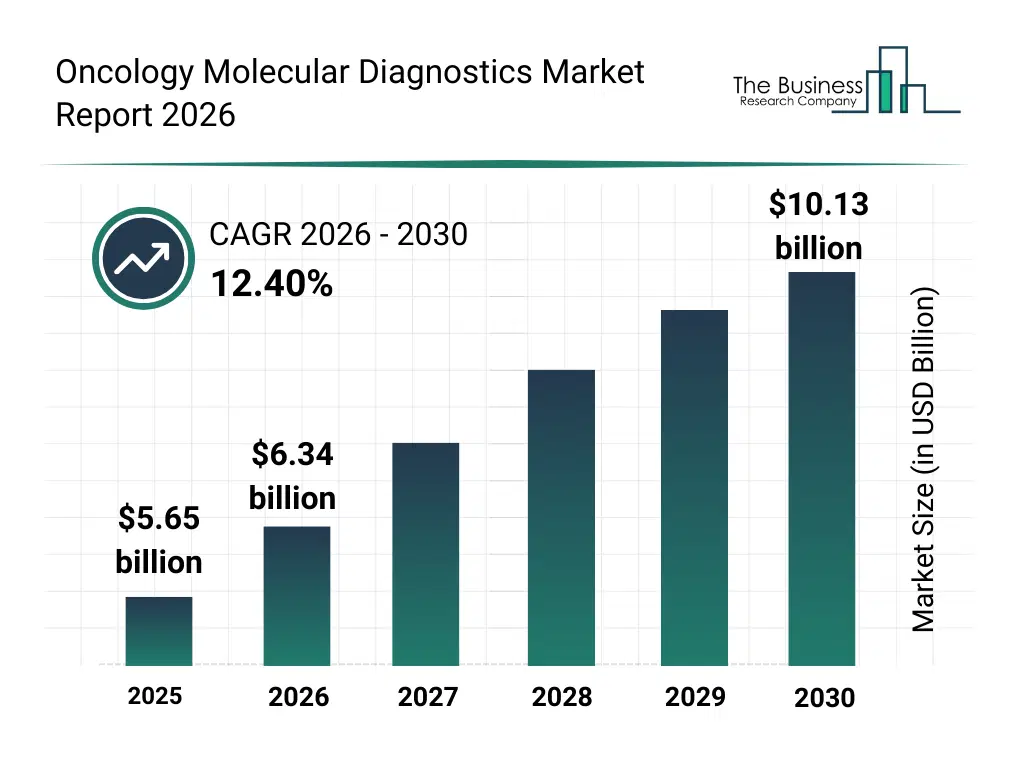
What Is The Oncology Molecular Diagnostics Market Size and Share 2026?
The oncology molecular diagnostics market size has grown rapidly in recent years. It will grow from $5.65 billion in 2025 to $6.34 billion in 2026 at a compound annual growth rate (CAGR) of 12.2%. The growth in the historic period can be attributed to increasing cancer prevalence, adoption of PCR and sequencing, oncology research funding, hospital diagnostic expansion, regulatory approvals for molecular tests.What Is The Oncology Molecular Diagnostics Market Growth Forecast?
The oncology molecular diagnostics market size is expected to see rapid growth in the next few years. It will grow to $10.13 billion in 2030 at a compound annual growth rate (CAGR) of 12.4%. The growth in the forecast period can be attributed to precision oncology adoption, liquid biopsy advancements, personalized treatment demand, AI-driven data interpretation, emerging market penetration. Major trends in the forecast period include growth in companion diagnostics, rising use of liquid biopsy, expansion of biomarker-based testing, increasing cancer screening programs, demand for early and accurate cancer detection.
Global Oncology Molecular Diagnostics Market Segmentation
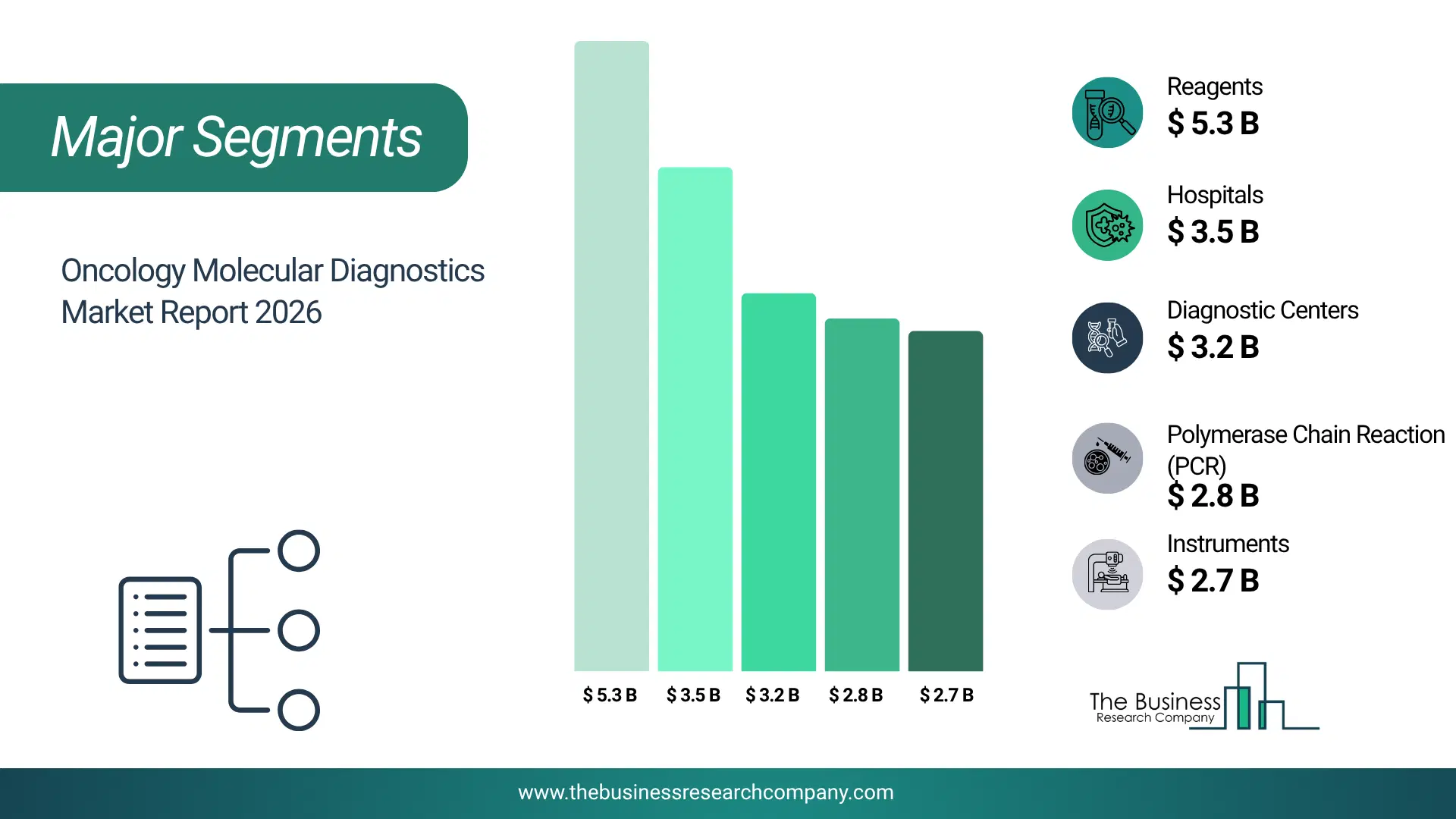
1) By Product: Instruments, Reagents, Other Products 2) By Technology: Polymerase Chain Reaction (PCR), In-Situ Hybridization (ISH), Isothermic Nucleic Acid Amplification Technology (INNAT), Chips And Microarrays, Sequencing, Mass Spectroscopy, Transcription Mediated Amplification (TMA), Other Technologies 3) By End User: Hospitals, Diagnostic Centers, Academic And Research Institutes, Other End Users Subsegments: 1) By Instruments: Polymerase Chain Reaction (PCR) Machines, Sequencers, Microarray Platforms, Fluorescence In Situ Hybridization (FISH) Instruments 2) By Reagents: DNA And RNA Extraction Kits, PCR Reagents And Kits, NGS Library Preparation Kits, Diagnostic Assay Reagents 3) By Other Products: Software For Data Analysis And Interpretation, Quality Control And Calibration Products, Consumables, For Molecular Testing, Biomarkers For Oncology Testing The top segments in the oncology molecular diagnostics market will be: • Reagents will reach $5344.26 Million by 2030. • Hospitals will reach $3530.82 Million by 2030. • Diagnostic Centers will reach $3200.59 Million by 2030. • Polymerase Chain Reaction (PCR) will reach $2852.98 Million by 2030. • Instruments will reach $2721.47 Million by 2030.What Is The Driver Of The Oncology Molecular Diagnostics Market?
The increasing demand for personalized medicine is expected to propel the growth of the oncology molecular diagnostics market going forward. Personalized medicine refers to an innovative approach to medical treatment and healthcare that tailors medical decisions, practices, interventions, and drug therapies to the individual patient. Oncology molecular diagnostics are instrumental in the era of personalized medicine for cancer patients as they provide customized treatment plans, optimized drug selection, and more precise, effective, and individualized treatment strategies, ultimately improving patient outcomes and quality of life. For instance, in February 2024, the Personalized Medicine Coalition, a US-based nonprofit organization, reported that in 2023, the FDA approved 16 new personalized treatments for rare disease patients, up from six in 2022. Therefore, the increasing demand for personalized medicine is driving the growth of the oncology molecular diagnostics industry.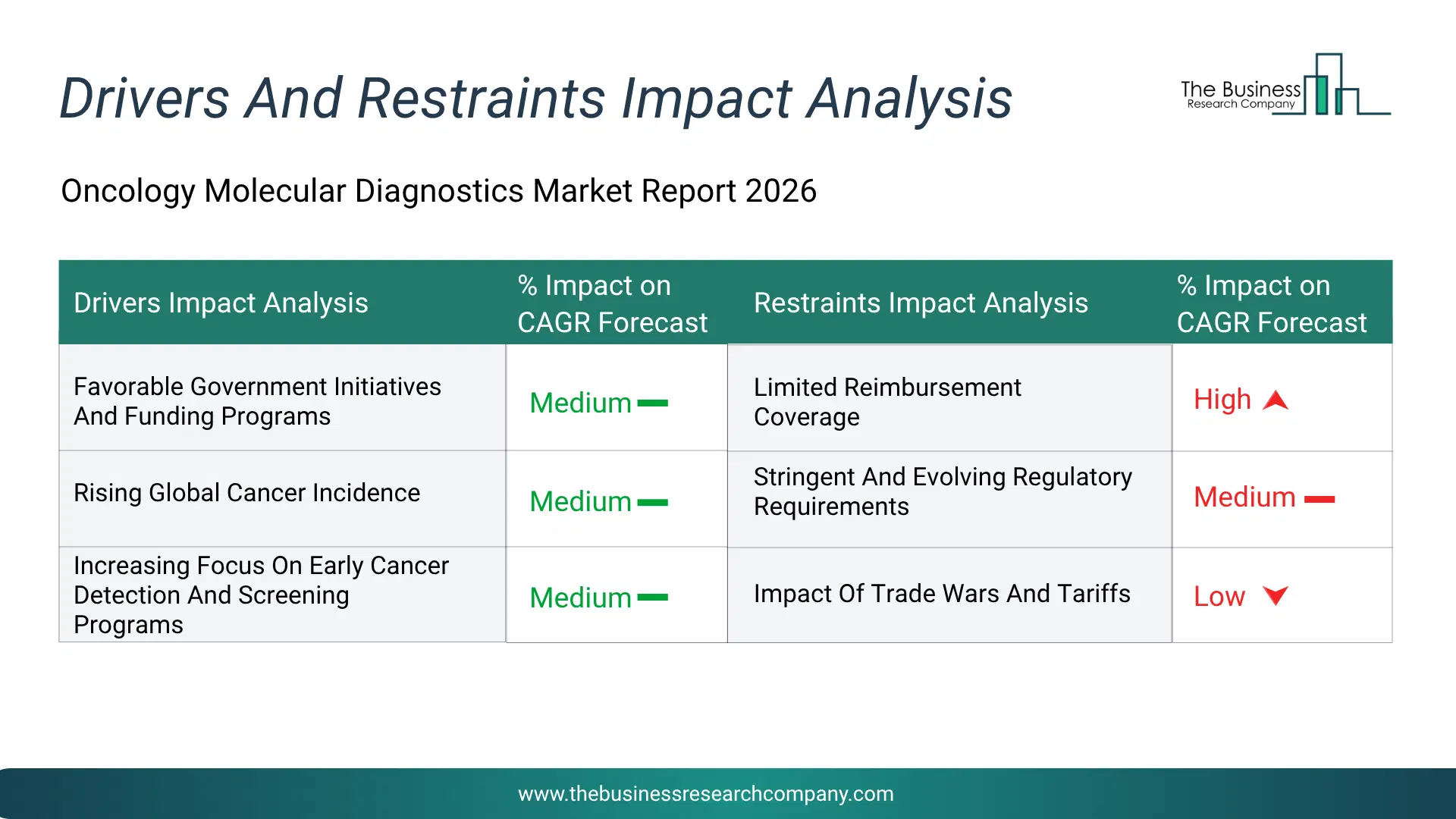
Infographic Chart Showing Key Market Drivers Analysis And Restraints For Oncology Molecular Diagnostics Market
The chart presents an impact analysis of key drivers and restraints, quantifying their relative influence on the market's growth rate and helping assess the balance between growth enablers and limiting factors. This chart offers a high-level perspective; the full report contains more detailed insights.
How Will The Drivers Impact Growth In The Global Oncology Molecular Diagnostics Market?
• Favorable Government Initiatives And Funding Programs (Medium) – During the forecast period, favorable government initiatives and funding programs are expected to be key driver propel the growth in the oncology molecular diagnostics market. As governments and public health authorities continue to invest in genomic research, precision medicine initiatives, and national healthcare data infrastructure, a larger share of healthcare systems is expected to adopt advanced molecular diagnostic technologies to support early cancer detection and personalized treatment strategies. Increasing public sector focus on integrating genomic data into clinical practice is expected to drive demand for technologies such as next-generation sequencing (NGS), biomarker testing, and liquid biopsy solutions. The growing implementation of large-scale genomics programs and cross-border data-sharing initiatives is expected to accelerate the adoption of oncology molecular diagnostics, supporting continued growth in the oncology molecular diagnostics market. The favorable government initiatives and funding programs growth contribution during the forecast period in 2025 is 1.8%. • Rising Global Cancer Incidence (Medium) – During the forecast period, rising global cancer incidence is expected to drive growth in the oncology molecular diagnostics market. As the global burden of cancer continues to increase, a larger number of patients is expected to require early detection, accurate diagnosis, and personalized treatment strategies to manage disease progression and improve survival outcomes. Cancer patients are more likely to require advanced diagnostic solutions to identify genetic mutations and disease characteristics, increasing demand for technologies such as next-generation sequencing (NGS), liquid biopsy, and biomarker-based testing. The growing need for effective cancer screening, monitoring, and targeted therapy selection is expected to accelerate the adoption of oncology molecular diagnostics, supporting continued growth in the oncology molecular diagnostics market. The rising global cancer incidence growth contribution during the forecast period in 2025 is 1.3%. • Increasing Focus On Early Cancer Detection And Screening Programs (Medium) – During the forecast period, increasing focus on early cancer detection and screening programs is expected to propel growth in the oncology molecular diagnostics market. As healthcare systems and research organizations continue to prioritize early detection and prevention strategies, a larger share of patients is expected to undergo routine screening and diagnostic testing to identify cancer at earlier and more treatable stages. Early detection approaches are more likely to improve survival outcomes and reduce the need for complex treatments, increasing demand for advanced molecular diagnostic solutions such as liquid biopsy, next-generation sequencing (NGS), and biomarker-based screening tests. The growing emphasis on screening programs and early-stage diagnosis is expected to accelerate the adoption of oncology molecular diagnostics, supporting continued growth in the oncology molecular diagnostics market. The increasing focus on early cancer detection and screening programs growth contribution during the forecast period in 2025 is 1.0%. • Expansion Of Targeted Therapies And Companion Diagnostics (Low) – During the forecast period, the expansion of targeted therapies and companion diagnostics is expected to be a key driver propelling growth in the oncology molecular diagnostics market. As the development of targeted cancer therapies continues to increase, a larger share of patients is expected to require molecular testing to identify specific genetic mutations and biomarkers that determine treatment eligibility. Targeted therapies are more likely to rely on companion diagnostic tests to ensure accurate patient selection, increasing demand for technologies such as next-generation sequencing (NGS), PCR-based assays, and biomarker profiling solutions. The growing number of FDA-approved targeted therapies and associated companion diagnostics is expected to accelerate the adoption of oncology molecular diagnostics, supporting continued growth in the oncology molecular diagnostics market. The expansion of targeted therapies and companion diagnostics growth contribution during the forecast period in 2025 is 0.8%.How Will The Restraints Impact Growth In The Global Oncology Molecular Diagnostics Market?
• Limited Reimbursement Coverage (Medium) – During the forecast period, limited reimbursement coverage is restricting the growth of the oncology molecular diagnostics market. Increasing challenges related to reimbursement policies, insurance coverage limitations, and declining payment rates for oncology services are creating financial constraints for healthcare providers and diagnostic laboratories. From an operational and financial perspective, reduced reimbursement rates and complex billing structures are making it difficult for oncology centers to sustain advanced diagnostic services, particularly those requiring high-cost technologies and specialized infrastructure. These reimbursement limitations, combined with rising operational costs and increasing claim denials, are increasing hesitation among providers regarding the adoption and expansion of molecular diagnostic testing, thereby limiting patient access to advanced cancer diagnostics and slowing overall market growth. Growth affected by limited reimbursement coverage during the forecast period in 2025 is -2.0%. • Stringent And Evolving Regulatory Requirements (Medium) – During the forecast period, stringent and evolving regulatory requirements are restricting the growth of the oncology molecular diagnostics market. Increasing reliance on regulatory approvals for molecular diagnostic tests, particularly companion diagnostics that are required for the safe and effective use of targeted therapies, is creating development and commercialization constraints for diagnostic companies. From a compliance and operational perspective, developing oncology molecular diagnostics requires adherence to complex regulatory guidelines, including extensive clinical validation, co-development with therapeutic products, and rigorous approval processes to demonstrate safety and effectiveness. These regulatory requirements, combined with continuously evolving standards and increasing scrutiny from agencies such as the FDA, are increasing the time, cost, and complexity associated with bringing new diagnostic solutions to market, leading to delays and limiting widespread adoption of advanced oncology molecular diagnostics. Growth affected by stringent and evolving regulatory requirements during the forecast period in 2025 is -1.0%. • Impact Of Trade Wars And Tariffs (Medium) – During the forecast period, the impact of trade wars and tariffs is restricting the growth of the oncology molecular diagnostics market. Increasing reliance on globally distributed supply chains for diagnostic instruments, reagents, and critical components is creating vulnerabilities in the presence of rising tariffs and geopolitical trade tensions. From a supply chain and cost perspective, tariffs on imported medical devices, raw materials, and laboratory equipment are increasing production and procurement costs, while also leading to delays, shortages, and disruptions in the availability of essential diagnostic products. These trade-related challenges, combined with retaliatory tariffs and shifting international trade policies, are increasing operational uncertainty and limiting investment in research and development, thereby restricting the large-scale adoption of oncology molecular diagnostics solutions. Growth affected by impact of trade wars and tariffs during the forecast period in 2025 is -0.3%.Key Players In The Global Oncology Molecular Diagnostics Market
Major companies operating in the oncology molecular diagnostics market are F. Hoffmann-La Roche AG, Bayer AG, Thermo Fisher Scientific Inc., Abbott Laboratories, Danaher Corporation, Siemens Healthcare AG, Becton Dickinson and Company, Agilent Technologies Inc., HTG Molecular Diagnostics Inc., Hologic Inc., Illumina Inc., bioMérieux SA, Beckman Coulter Inc., Sysmex Corporation, Bio-Rad Laboratories Inc., Qiagen N.V., Exact Sciences Corp., Bio-Techne Corporation, OPKO Health Inc., Myriad Genetics Inc., Guardant Health AMEA, Veracyte Inc., Adaptive Biotechnologies Corp., Foundation Medicine Inc., Pacific Biosciences of California Inc., NanoString Technologies Inc., Genomic Health Inc.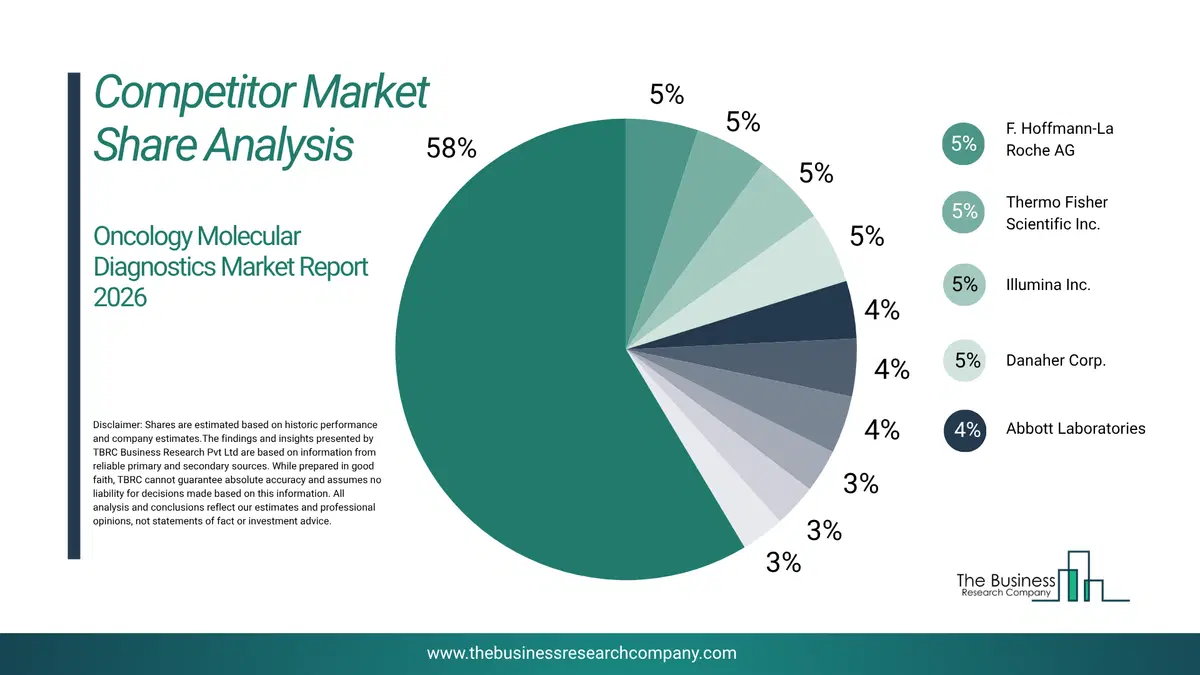
This chart is for illustrative purposes; the full report includes a detailed competitor analysis and comprehensive overview of the top 10 companies in the market.
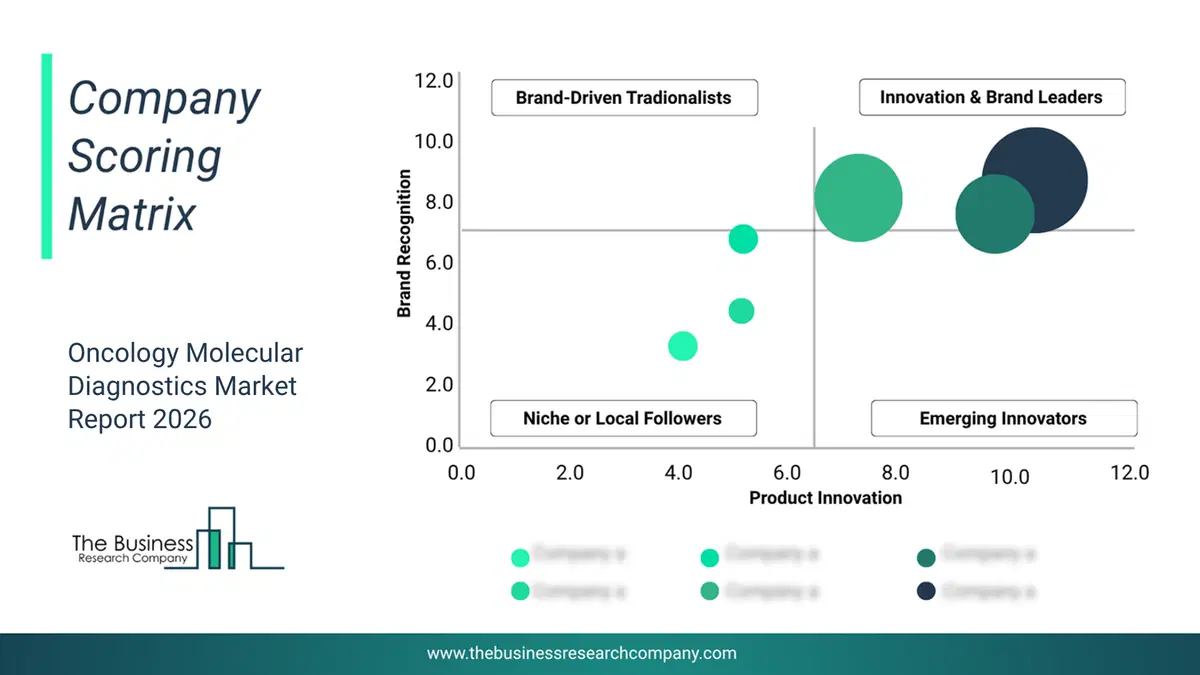
This chart maps companies by product innovation and brand strength, with bubble size indicating relative revenue, helping identify market leaders, challengers, and niche players. This is an illustrative chart; the full report provides a complete and accurate competitive analysis.
Global Oncology Molecular Diagnostics Market Trends and Insights
Major companies operating in the oncology molecular diagnostics market are focusing on advancing genomics technologies such as next-generation cancer genome sequencing, computational analytics, and innovative tumor modeling to improve early cancer detection, mutation identification, and personalized treatment strategies. These advancements enhance diagnostic precision, reduce turnaround times, and support the growing demand for localized, high-accuracy molecular testing. For instance, in May 2024, OncoHelix-CoLab, a Canada-based precision oncology provider specializing in genomic and immunologic profiling, advanced molecular diagnostics, and immune-profile testing, launched a state-of-the-art laboratory at Burjeel Medical City in the UAE. Developed through a collaboration between Burjeel Holdings and OncoHelix, the facility strengthens regional diagnostic capabilities by enabling complex molecular and immunology tests to be conducted locally rather than sent abroad. Its specialized offerings include advanced assays for multiple cancers, such as prostate cancer, supported through partnerships like its collaboration with Nanostics for the ClarityDX Prostate test.What Are Latest Mergers And Acquisitions In The Oncology Molecular Diagnostics Market?
In June 2023, INEX Innovate Pte Ltd, a Singapore based molecular diagnostic technology company, acquired Yourgene Health (Taiwan) Co., Ltd. for an undisclosed amount. With this acquisition, INEX Innovate’s aim is to enhance INEX's capabilities in fetal health, oncology research and development, and bioinformatics. Yourgene Health is a Taiwan based genomics company, an international molecular diagnostics group that is extending its genetic testing to include oncology.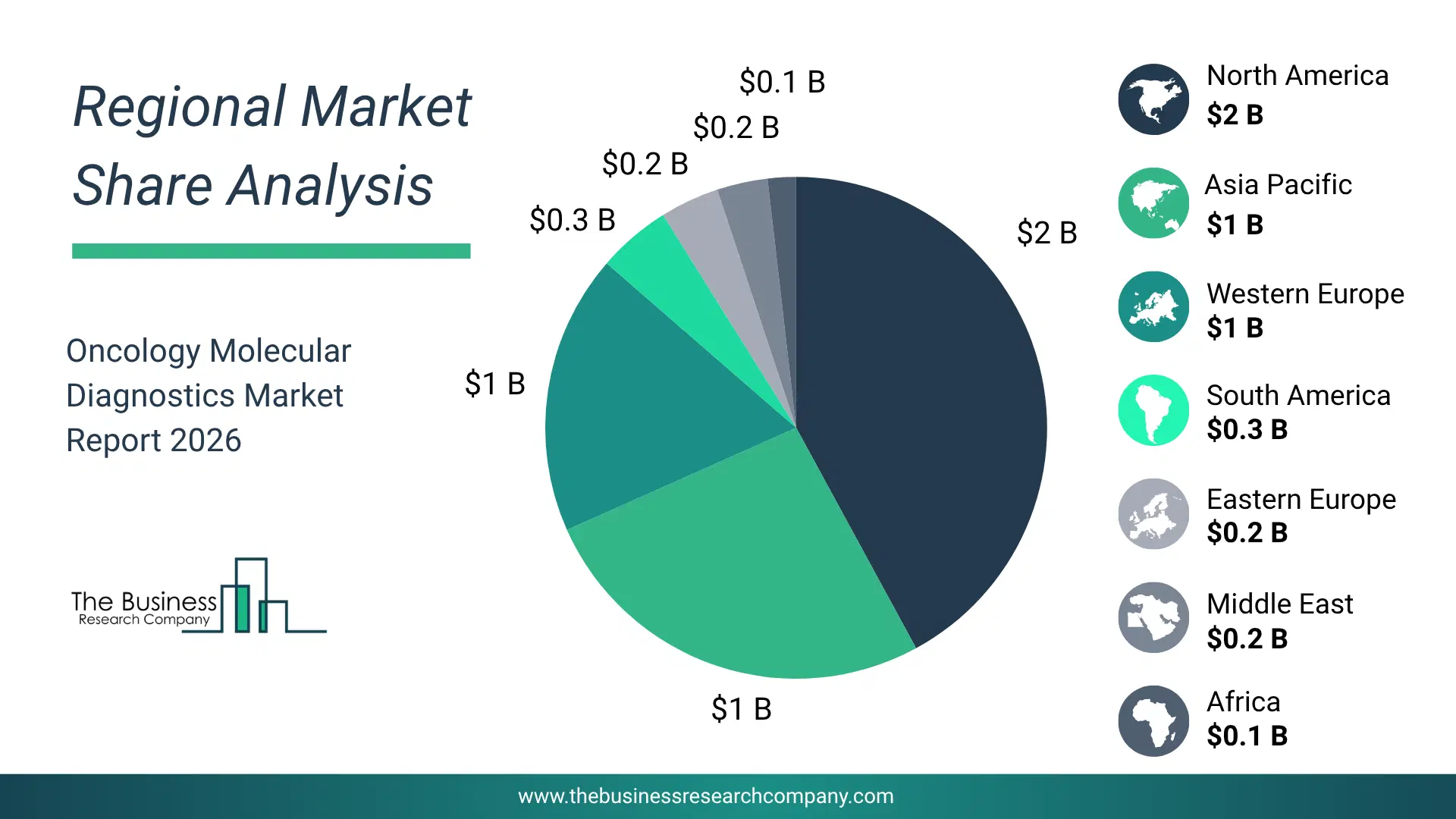
Regional Outlook
North America was the largest region in the oncology molecular diagnostics market in 2025. Western Europe was the second largest region in the global oncology molecular diagnostics market report. The regions covered in this market report are Asia-Pacific, South East Asia, Western Europe, Eastern Europe, North America, South America, Middle East, Africa. The countries covered in this market report are Australia, Brazil, China, France, Germany, India, Indonesia, Japan, Taiwan, Russia, South Korea, UK, USA, Canada, Italy, SpainWhat Defines the Oncology Molecular Diagnostics Market?
The oncology molecular diagnostics market includes revenues earned by oncology molecular diagnostics tools and kits. The market value includes the value of related goods sold by the service provider or included within the service offering. Only goods and services traded between entities or sold to end consumers are included.How is Market Value Defined and Measured?
The market value is defined as the revenues that enterprises gain from the sale of goods and/or services within the specified market and geography through sales, grants, or donations in terms of the currency (in USD unless otherwise specified). The revenues for a specified geography are consumption values that are revenues generated by organizations in the specified geography within the market, irrespective of where they are produced. It does not include revenues from resales along the supply chain, either further along the supply chain or as part of other products.
This chart presents market attractiveness based on a quantitative evaluation of growth, competition, strategic alignment, and risk, offering a clear view of opportunity areas for decision-making. This chart is for illustrative purposes; the full report contains the complete analysis.

This chart highlights the Total Addressable Market (TAM) by estimating the maximum revenue opportunity using an assumption-driven approach, supporting strategic planning and opportunity sizing across markets. The chart is illustrative; the full report provides a more comprehensive analysis.
What Key Data and Analysis Are Included in the Oncology Molecular Diagnostics Market Report 2026?
The oncology molecular diagnostics market research report is one of a series of new reports from The Business Research Company that provides market statistics, including industry global market size, regional shares, competitors with the market share, detailed market segments, market trends and opportunities, and any further data you may need to thrive in the oncology molecular diagnostics industry. The market research report delivers a complete perspective of everything you need, with an in-depth analysis of the current and future state of the industry.Oncology Molecular Diagnostics Market Report Forecast Analysis
| Report Attribute | Details |
|---|---|
| Market Size Value In 2026 | $6.34 billion |
| Revenue Forecast In 2030 | $10.13 billion |
| Growth Rate | CAGR of 12.2% from 2026 to 2030 |
| Base Year For Estimation | 2025 |
| Actual Estimates/Historical Data | 2020-2025 |
| Forecast Period | 2026 - 2030 - 2035 |
| Market Representation | Revenue in USD Billion and CAGR from 2026 to 2030 |
| Segments Covered | Product, Technology, End User |
| Regional Scope | Asia-Pacific, Western Europe, Eastern Europe, North America, South America, Middle East, Africa |
| Country Scope | The countries covered in the report are Australia, Brazil, China, France, Germany, India, Indonesia, Japan, Taiwan, Russia, South Korea, UK, USA, Canada, Italy, Spain. |
| Key Companies Profiled | F. Hoffmann-La Roche AG, Bayer AG, Thermo Fisher Scientific Inc., Abbott Laboratories, Danaher Corporation, Siemens Healthcare AG, Becton Dickinson and Company, Agilent Technologies Inc., HTG Molecular Diagnostics Inc., Hologic Inc., Illumina Inc., bioMérieux SA, Beckman Coulter Inc., Sysmex Corporation, Bio-Rad Laboratories Inc., Qiagen N.V., Exact Sciences Corp., Bio-Techne Corporation, OPKO Health Inc., Myriad Genetics Inc., Guardant Health AMEA, Veracyte Inc., Adaptive Biotechnologies Corp., Foundation Medicine Inc., Pacific Biosciences of California Inc., NanoString Technologies Inc., Genomic Health Inc. |
| Customization Scope | Request for Customization |
| Pricing And Purchase Options | Explore Purchase Options |