
Oncology Precision Medicine Market Report 2026
Global Outlook – By Product Type (Diagnostics, Therapeutics, Inhibitor Drugs, Monoclonal Antibodies, Cell And Gene Therapy, Antiviral And Anti-Retroviral Drugs), By Technology (Genomics, Proteomics, Bioinformatics, Other Technologies), By Biomarker Types (Genetic Biomarkers, Protein Biomarkers, Epigenetic Biomarkers, Metabolic Biomarkers, Other Biomarker Types), By Applications (Breast Cancer, Lung Cancer, Colorectal Cancer, Prostate Cancer, Cervical Cancer, Kidney Cancer, Liver Cancer, Bladder Cancer, Other Applications), By End-Users (Hospitals, Diagnostic Laboratories, Research Institutions, Pharmaceutical Companies, Other End-Users) – Market Size, Trends, Strategies, and Forecast to 2030
Oncology Precision Medicine Market Overview
• Oncology Precision Medicine market size has reached to $125.14 billion in 2025 • Expected to grow to $226.55 billion in 2030 at a compound annual growth rate (CAGR) of 12.5% • Growth Driver: The Growing Prevalence Of Cancer Is Enhancing The Market Growth Due To Aging Populations • Market Trend: Advancing Personalized Cancer Care Through Collaborative Technology And Multidisciplinary Expertise • North America was the largest region in 2025.What Is Covered Under Oncology Precision Medicine Market?
Oncology precision medicine refers to a personalized approach to cancer care that uses genetic, molecular, and clinical information to tailor treatment strategies to the individual characteristics of each patient’s tumor. It aims to improve outcomes by selecting therapies that specifically target the unique biological features of a patient’s cancer, leading to more effective and less toxic treatments. The main product types in oncology precision medicine are diagnostics, therapeutics, inhibitor drugs, monoclonal antibodies, cell and gene therapy, and antiviral and anti-retroviral drugs. Diagnostics is the process of identifying diseases or medical conditions through examination, testing, and analysis of symptoms or samples. The key technologies are genomics, proteomics, bioinformatics, and others. Different biomarker types are genetic biomarkers, protein biomarkers, epigenetic biomarkers, metabolic biomarkers, and others. The various applications involved are breast cancer, lung cancer, colorectal cancer, prostate cancer, cervical cancer, kidney cancer, liver cancer, bladder cancer, and others, and they are used by several end users such as hospitals, diagnostic laboratories, research institutions, pharmaceutical companies, and others.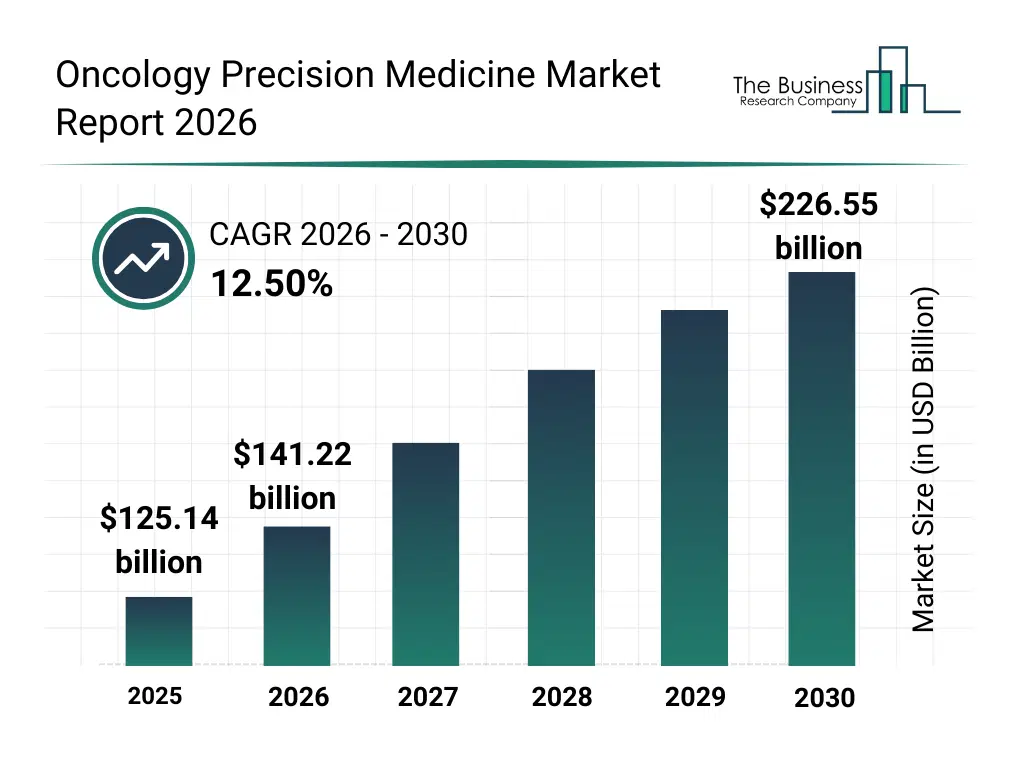
What Is The Oncology Precision Medicine Market Size and Share 2026?
The oncology precision medicine market size has grown rapidly in recent years. It will grow from $125.14 billion in 2025 to $141.22 billion in 2026 at a compound annual growth rate (CAGR) of 12.9%. The growth in the historic period can be attributed to limited availability of genomic testing, reliance on standard chemotherapy protocols, increasing cancer prevalence, early development of molecular diagnostics, adoption of hospital-based oncology research programs.What Is The Oncology Precision Medicine Market Growth Forecast?
The oncology precision medicine market size is expected to see rapid growth in the next few years. It will grow to $226.55 billion in 2030 at a compound annual growth rate (CAGR) of 12.5%. The growth in the forecast period can be attributed to advancements in CAR-T and gene therapies, growth in targeted kinase and immune checkpoint inhibitors, rising investments in precision oncology research, integration of bioinformatics and AI in clinical decision-making, expansion of biomarker-guided clinical trials. Major trends in the forecast period include rising adoption of personalized cancer therapies, increasing use of companion diagnostics and molecular diagnostics, growth in liquid biopsy and next-generation sequencing assays, expansion of targeted therapeutics and monoclonal antibodies, increasing focus on biomarker-based patient stratification.
Global Oncology Precision Medicine Market Segmentation
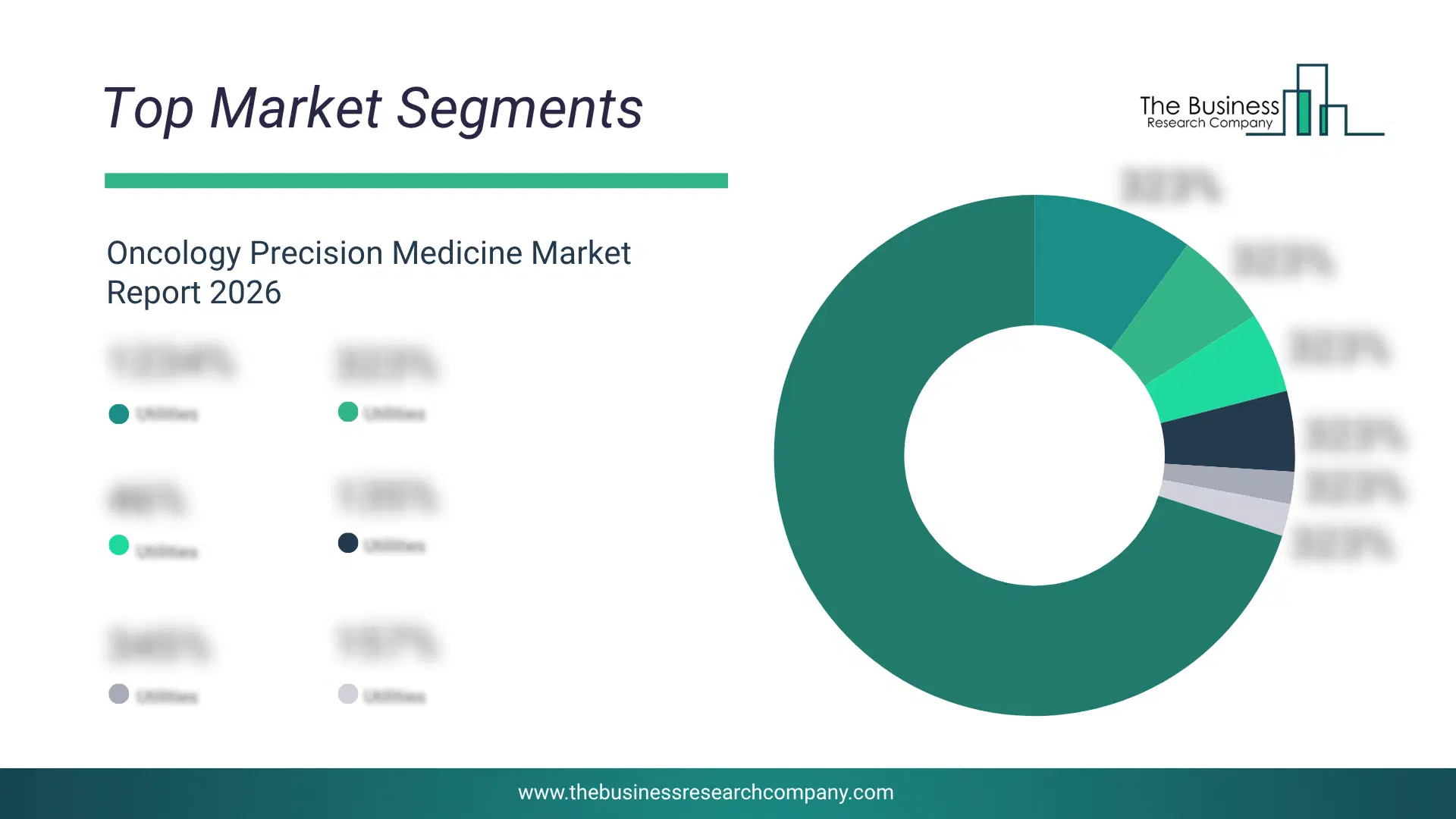
1) By Product Type: Diagnostics, Therapeutics, Inhibitor Drugs, Monoclonal Antibodies, Cell And Gene Therapy, Antiviral And Anti-Retroviral Drugs 2) By Technology: Genomics, Proteomics, Bioinformatics, Other Technologies 3) By Biomarker Types: Genetic Biomarkers, Protein Biomarkers, Epigenetic Biomarkers, Metabolic Biomarkers, Other Biomarker Types 4) By Applications: Breast Cancer, Lung Cancer, Colorectal Cancer, Prostate Cancer, Cervical Cancer, Kidney Cancer, Liver Cancer, Bladder Cancer, Other Applications 5) By End-Users: Hospitals, Diagnostic Laboratories, Research Institutions, Pharmaceutical Companies, Other End-Users Subsegments: 1) By Diagnostics: Companion Diagnostics, Molecular Diagnostics, Liquid Biopsy, Imaging Diagnostics, Next-Generation Sequencing Assays 2) By Therapeutics: Tyrosine Kinase Inhibitors (TKIs), Poly ADP-Ribose Polymerase Inhibitors (PARP Inhibitors), Cyclin-Dependent Kinase 4 And 6 Inhibitors (CDK4/6 Inhibitors), B-Raf Proto-Oncogene Serine Or Threonine Kinase Inhibitors (BRAF Inhibitors), Mitogen-Activated Protein Kinase Kinase Inhibitors (MEK Inhibitors) 3) By Inhibitor Drugs: Tyrosine Kinase Inhibitors (TKIs), Poly ADP-Ribose Polymerase Inhibitors (PARP Inhibitors), Cyclin-Dependent Kinase 4 And 6 Inhibitors (CDK4/6 Inhibitors), B-Raf Proto-Oncogene Serine Or Threonine Kinase Inhibitors (BRAF Inhibitors), Mitogen-Activated Protein Kinase Kinase Inhibitors (MEK Inhibitors) 4) By Monoclonal Antibodies: Naked Monoclonal Antibodies, Conjugated Monoclonal Antibodies, Bispecific Antibodies, Immune Checkpoint Inhibitors, Radiolabeled Antibodies 5) By Cell And Gene Therapy: CAR-T Cell Therapies, T-Cell Receptor (TCR) Therapies, Tumor-Infiltrating Lymphocyte (TIL) Therapies, Oncolytic Viral Therapies, Gene Editing And Replacement Therapies 6) By Antiviral And Anti-Retroviral Drugs: Reverse Transcriptase Inhibitors, Protease Inhibitors, Integrase Strand Transfer Inhibitors, Entry Inhibitors, Antiviral Agents Targeting Virus-Related CancersWhat Is The Driver Of The Oncology Precision Medicine Market?
The growing prevalence of cancer is expected to propel the growth of the oncology precision medicine market going forward. Cancer is a disease in which abnormal cells grow uncontrollably and can spread to other parts of the body, disrupting normal bodily functions. The growing prevalence of cancer is due to aging populations, as prolonged lifespans lead to the accumulation of deoxyribonucleic acid (DNA) mutations, diminished repair systems, chronic inflammaging, weakening immune surveillance, and tissue microenvironments that increasingly support tumor growth. Oncology precision medicine is useful for cancer by providing personalized treatments based on the unique genetic makeup of each tumor, improving effectiveness and reducing side effects. For instance, in February 2024, according to the World Health Organization (WHO), a Switzerland-based intergovernmental organization, the estimated 20 million new cases of cancer in 2022 are expected to rise by 77% to over 35 million cases in 2050. Therefore, the growing prevalence of cancer is driving the growth of the oncology precision medicine industry.Key Players In The Global Oncology Precision Medicine Market
Major companies operating in the oncology precision medicine market are Roche Holding AG, Bristol Myers Squibb Company, Abbott Laboratories, Novartis AG, Gilead Sciences Inc., Laboratory Corporation of America Holdings, Quest Diagnostics Inc., Agilent Technologies Inc., Illumina Inc., bioMérieux S.A., Bio-Rad Laboratories Inc., Exact Sciences Corporation, Almac Group Limited, OPKO Health Inc., Natera Inc., Myriad Genetics Inc., Pacific Biosciences of California Inc., Asuragen Inc., BGI Group, ANGLE plc.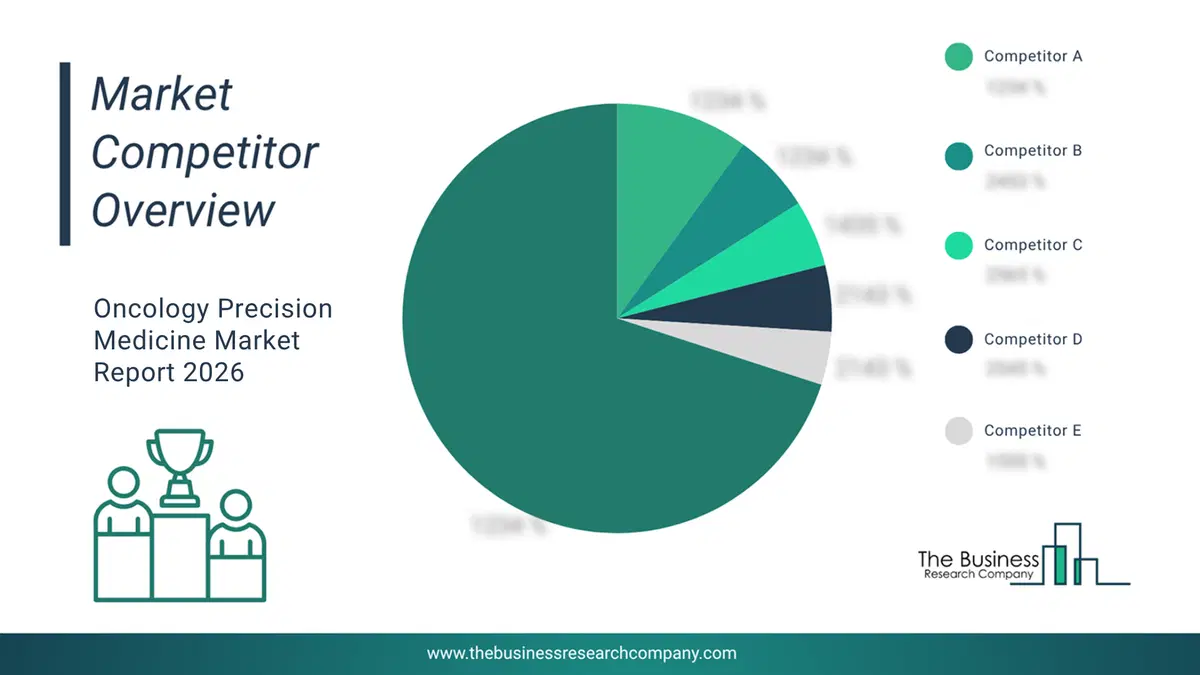
This chart is for illustrative purposes; the full report includes a detailed competitor analysis and comprehensive overview of the top 10 companies in the market.
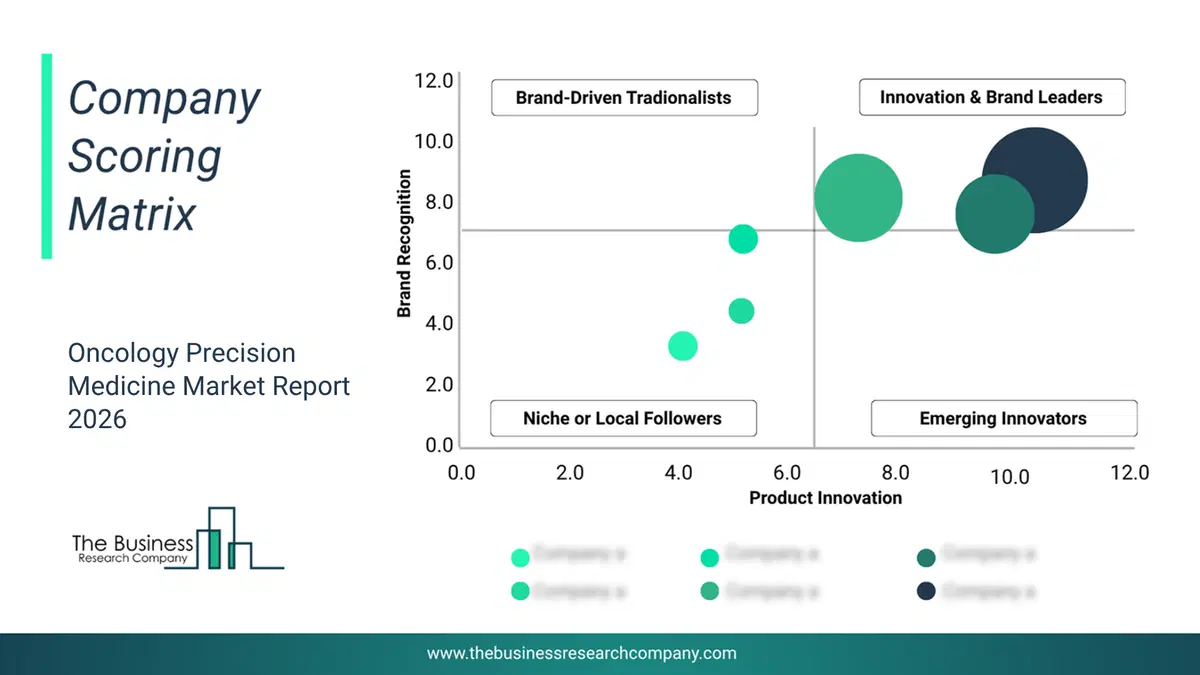
This chart maps companies by product innovation and brand strength, with bubble size indicating relative revenue, helping identify market leaders, challengers, and niche players. This is an illustrative chart; the full report provides a complete and accurate competitive analysis.
Global Oncology Precision Medicine Market Trends and Insights
Major companies operating in the oncology precision medicine market are focusing on developing innovative solutions, such as molecular tumor board initiatives, to facilitate multidisciplinary collaboration and optimize personalized treatment planning. Molecular tumor boards are multidisciplinary teams of experts who review and interpret complex genetic and molecular test results to recommend personalized cancer treatment strategies. For instance, in April 2025, McKesson Corporation, a US-based healthcare services and information technology company, launched the Precision Care Companion initiative to support biomarker-driven cancer care by providing education, technology enhancements, and operational assistance to oncology practices. This comprehensive program brings together physicians, clinical staff, business leaders, and pharmaceutical partners to create a collaborative environment that speeds the integration of advanced genomic testing and targeted therapies, ultimately helping providers deliver more personalized and effective cancer treatments while improving patient outcomes.What Are Latest Mergers And Acquisitions In The Oncology Precision Medicine Market?
In February 2024, AbbVie Inc., a US-based biopharmaceutical company, acquired Immunogen for $10.1 billion. Through this acquisition, AbbVie aims to accelerate its entry into the solid tumor space and enhance its oncology portfolio by leveraging Immunogen’s commercial infrastructure, established global reach, and promising antibody drug conjugate pipeline beyond ovarian cancer. ImmunoGen Inc. is a US-based biotechnology company that provides antibody-drug conjugates that deliver precision-targeted therapies for treating cancer based on specific tumor biomarkers.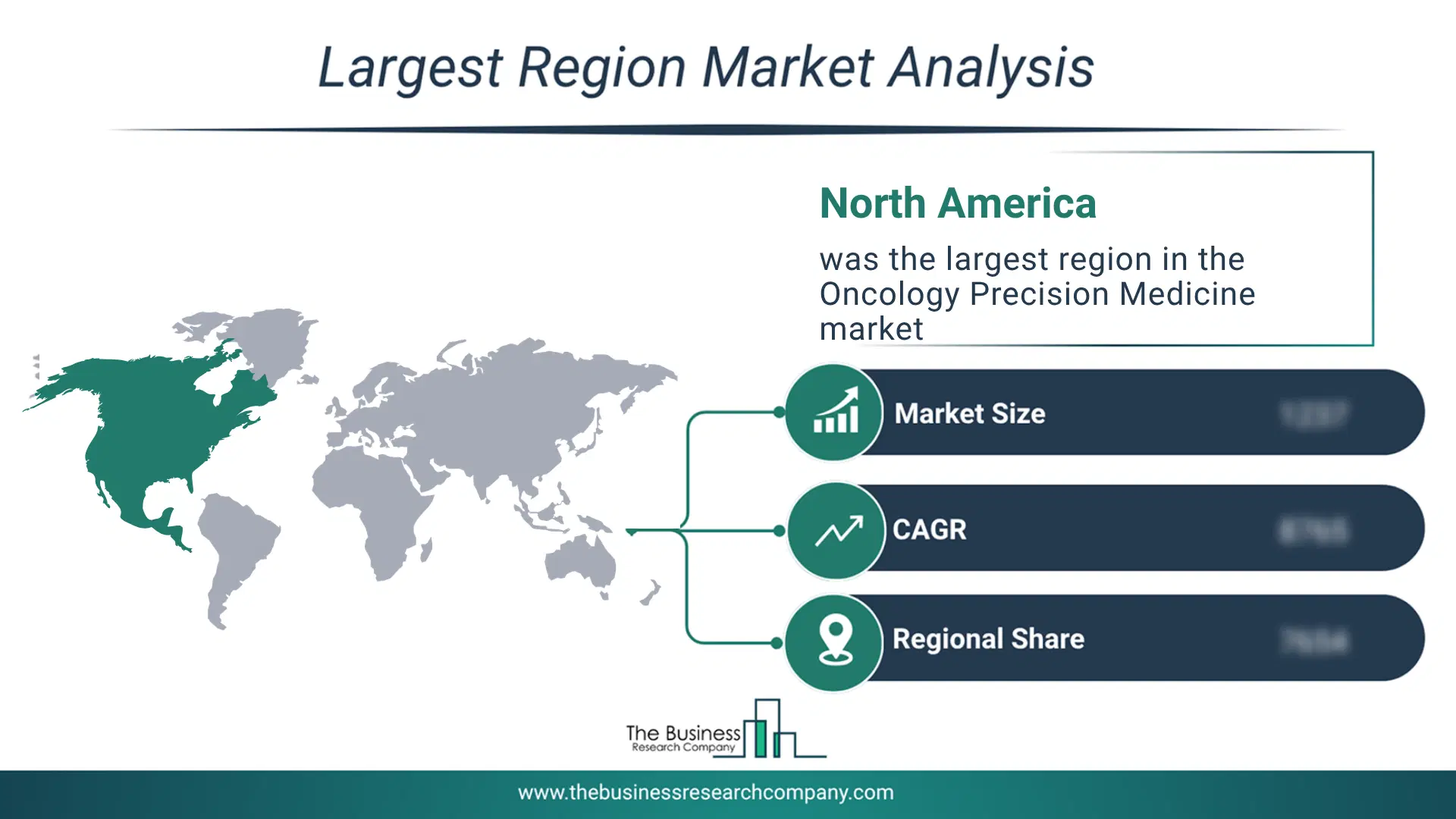
Regional Insights
North America was the largest region in the oncology precision medicine market in 2025. The regions covered in this market report are Asia-Pacific, South East Asia, Western Europe, Eastern Europe, North America, South America, Middle East, Africa. The countries covered in this market report are Australia, Brazil, China, France, Germany, India, Indonesia, Japan, Taiwan, Russia, South Korea, UK, USA, Canada, Italy, Spain.What Defines the Oncology Precision Medicine Market?
The oncology precision medicine market consists of revenues earned by entities by providing services such as personalized treatment planning, molecular tumor profiling services, companion diagnostics services, clinical decision support services, and patient risk assessment and stratification. The market value includes the value of related goods sold by the service provider or included within the service offering. The oncology precision medicine market also includes sales of next-generation sequencing (NGS) machines, polymerase chain reaction (PCR) systems, flow cytometers, and robotic sample preparation systems. Values in this market are ‘factory gate’ values, that is the value of goods sold by the manufacturers or creators of the goods, whether to other entities (including downstream manufacturers, wholesalers, distributors and retailers) or directly to end customers. The value of goods in this market includes related services sold by the creators of the goods.How is Market Value Defined and Measured?
The market value is defined as the revenues that enterprises gain from the sale of goods and/or services within the specified market and geography through sales, grants, or donations in terms of the currency (in USD unless otherwise specified). The revenues for a specified geography are consumption values that are revenues generated by organizations in the specified geography within the market, irrespective of where they are produced. It does not include revenues from resales along the supply chain, either further along the supply chain or as part of other products.
This chart presents market attractiveness based on a quantitative evaluation of growth, competition, strategic alignment, and risk, offering a clear view of opportunity areas for decision-making. This chart is for illustrative purposes; the full report contains the complete analysis.

This chart highlights the Total Addressable Market (TAM) by estimating the maximum revenue opportunity using an assumption-driven approach, supporting strategic planning and opportunity sizing across markets. The chart is illustrative; the full report provides a more comprehensive analysis.
What Key Data and Analysis Are Included in the Oncology Precision Medicine Market Report 2026?
The oncology precision medicine market research report is one of a series of new reports from The Business Research Company that provides market statistics, including industry global market size, regional shares, competitors with the market share, detailed market segments, market trends and opportunities, and any further data you may need to thrive in the oncology precision medicine industry. The market research report delivers a complete perspective of everything you need, with an in-depth analysis of the current and future state of the industry.Oncology Precision Medicine Market Report Forecast Analysis
| Report Attribute | Details |
|---|---|
| Market Size Value In 2026 | $141.22 billion |
| Revenue Forecast In 2030 | $226.55 billion |
| Growth Rate | CAGR of 12.9% from 2026 to 2030 |
| Base Year For Estimation | 2025 |
| Actual Estimates/Historical Data | 2020-2025 |
| Forecast Period | 2026 - 2030 |
| Market Representation | Revenue in USD Billion and CAGR from 2026 to 2030 |
| Segments Covered | Product Type, Technology, Biomarker Types, Applications, End-Users |
| Regional Scope | Asia-Pacific, Western Europe, Eastern Europe, North America, South America, Middle East, Africa |
| Country Scope | The countries covered in the report are Australia, Brazil, China, France, Germany, India, Indonesia, Japan, Taiwan, Russia, South Korea, UK, USA, Canada, Italy, Spain. |
| Key Companies Profiled | Roche Holding AG, Bristol Myers Squibb Company, Abbott Laboratories, Novartis AG, Gilead Sciences Inc., Laboratory Corporation of America Holdings, Quest Diagnostics Inc., Agilent Technologies Inc., Illumina Inc., bioMérieux S.A., Bio-Rad Laboratories Inc., Exact Sciences Corporation, Almac Group Limited, OPKO Health Inc., Natera Inc., Myriad Genetics Inc., Pacific Biosciences of California Inc., Asuragen Inc., BGI Group, ANGLE plc. |
| Customization Scope | Request for Customization |
| Pricing And Purchase Options | Explore Purchase Options |