
Online Grocery Market Report 2026
Global Outlook – By Product (Fresh Produce, Staple And Cooking Essentials, Ready-To-Eat Food, Snacks And Beverages, Bakery And Confectionery, Dairy Products, Breakfast And Cereal), By Food Platform (Mobile Application, Website), By Delivery Type (Instant Delivery, Schedule Delivery), By End User (Individual, Distributors, Other End Users) – Market Size, Trends, Strategies, and Forecast to 2030
Online Grocery Market Overview
• Online Grocery market size has reached to $655.51 billion in 2025 • Expected to grow to $1721.3 billion in 2030 at a compound annual growth rate (CAGR) of 21.3% • Growth Driver: Shifting Preferences Toward Digital Shopping For Convenience And Safety Propels The Online Grocery Market • Market Trend: Focus On B2B Memberships And Subscription Models For Enhanced Customer Benefits • Asia-Pacific was the largest region in 2025 and North America is the fastest growing region.Market Gains By 2030 – Top Opportunities By Segment
Market Gain identifies the most promising market opportunities by highlighting the segments or products expected to generate the highest incremental revenue growth over the next five years.
What Is Covered Under Online Grocery Market?
Online grocery refers to the digital purchase of food and household items through websites or mobile apps, with the convenience of home delivery or pickup. Online grocery shopping is a convenient, efficient, and cost-effective replacement for traditional grocery store purchases, offering a large selection of items. The main products of online grocery are fresh produce, staples and cooking essentials, ready-to-eat food, snacks and beverages, bakery and confectionery, dairy products, breakfast, and cereal. Fresh produce, encompassing vegetables, fruits, and other unprocessed plant-based items, is easily accessible through online grocery shopping—a straightforward, time-saving, and cost-effective alternative to traditional in-store shopping, offering a diverse selection of fresh food with assured quality. They can be ordered through food platforms such as mobile applications and websites and delivered with instant delivery or scheduled delivery. Online grocery shopping is used by end users such as individuals, distributors, and others.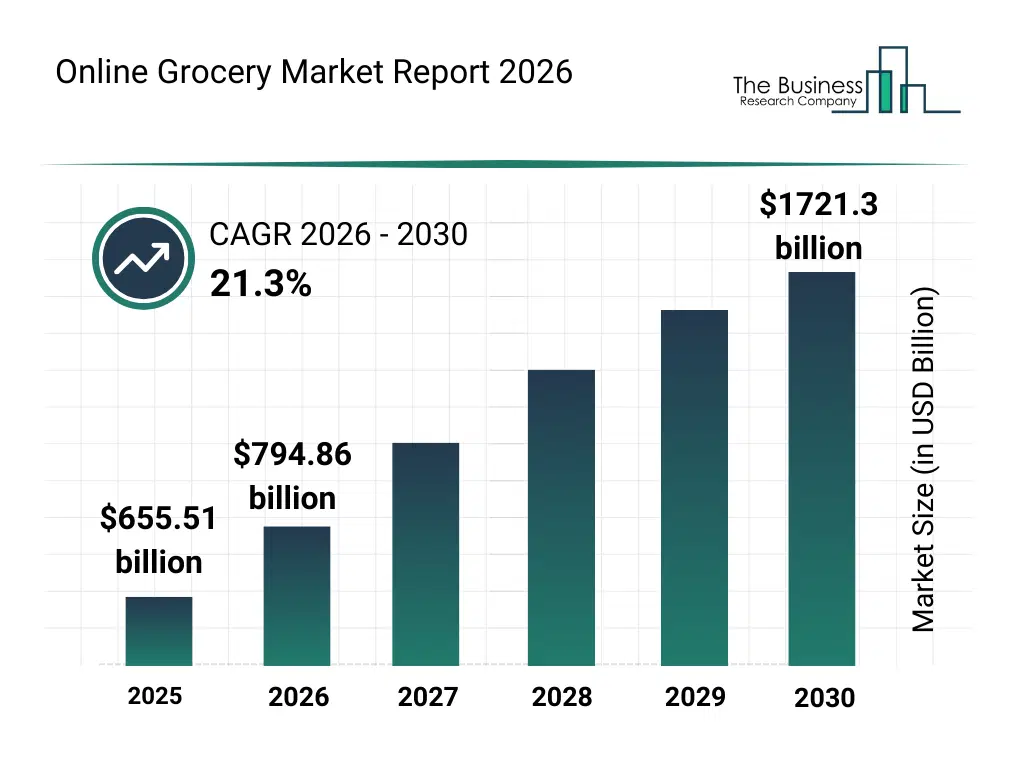
What Is The Online Grocery Market Size and Share 2026?
The online grocery market size has grown exponentially in recent years. It will grow from $655.51 billion in 2025 to $794.86 billion in 2026 at a compound annual growth rate (CAGR) of 21.3%. The growth in the historic period can be attributed to rising internet penetration, growth of smartphone usage, increasing urban population, expansion of digital payment systems, changing consumer lifestyles.What Is The Online Grocery Market Growth Forecast?
The online grocery market size is expected to see exponential growth in the next few years. It will grow to $1721.3 billion in 2030 at a compound annual growth rate (CAGR) of 21.3%. The growth in the forecast period can be attributed to AI-driven demand forecasting, expansion of dark stores, growth of quick commerce models, increasing focus on sustainable sourcing, rising penetration in tier 2 and tier 3 cities. Major trends in the forecast period include personalized grocery recommendations, sustainable packaging adoption, expansion of instant delivery services, growth of private label online brands, increased demand for contactless shopping.
Global Online Grocery Market Segmentation
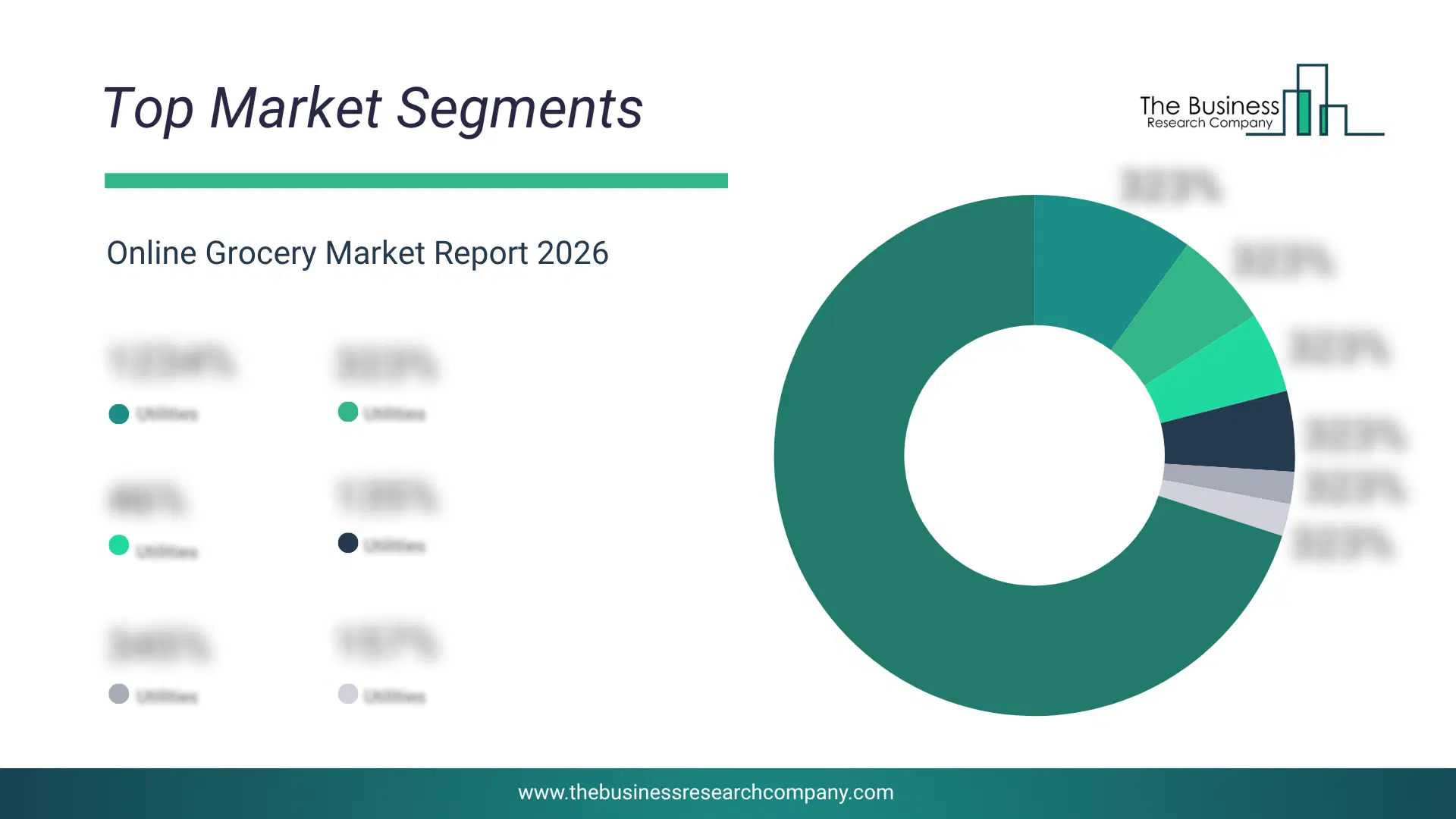
1) By Product: Fresh Produce, Staple And Cooking Essentials, Ready-To-Eat Food, Snacks And Beverages, Bakery And Confectionery, Dairy Products, Breakfast And Cereal 2) By Food Platform: Mobile Application, Website 3) By Delivery Type: Instant Delivery, Schedule Delivery 4) By End User: Individual, Distributors, Other End Users Subsegments: 1) By Fresh Produce: Fruits, Vegetables, Herbs 2) By Staple And Cooking Essentials: Grains (Rice, Pasta), Cooking Oils, Spices And Seasonings 3) By Ready-To-Eat Food: Pre-Packaged Meals, Frozen Dinners, Meal Kits 4) By Snacks And Beverages: Chips And Crackers, Soft Drinks, Juices And Health Drinks 5) By Bakery And Confectionery: Bread And Rolls, Pastries And Cakes, Chocolates And Sweets 6) By Dairy Products: Milk And Cream, Cheese, Yogurt 7) By Breakfast And Cereal: Breakfast Cereals, Oatmeal, Granola Bars The top segments in the online grocery market will be: • Fresh Produce will reach $675.45 Billion by 2030. • Staple And Cooking Essentials will reach $413.46 Billion by 2030. • Snacks And Beverages will reach $217.84 Billion by 2030. • Ready-To-Eat Food will reach $161.96 Billion by 2030. • Dairy Products will reach $103.44 Billion by 2030.What Is The Driver Of The Online Grocery Market?
A shifting preference towards digital shopping for convenience and safety is expected to propel the growth of the online grocery market in the coming years. Digital shopping, often known as shopping online or e-commerce, is the process of buying products or services via an internet connection using a mobile app or a website. Digital shopping in grocery stores is convenient and time-saving, allowing customers to browse, choose, and purchase goods from the convenience of their own homes, with the bonus of doorstep delivery. For instance, in December 2025, according to US Census Bureau, a US-based government agency, e-commerce sales in the third quarter of 2025, adjusted for seasonal variation but not for price changes, reached US$ 310.3 billion, reflecting a 5.1% increase from the third quarter of 2024 and accounted for 16.4% of total retail sales. Therefore, shifting preferences towards digital shopping for convenience and safety is driving the online grocery industry.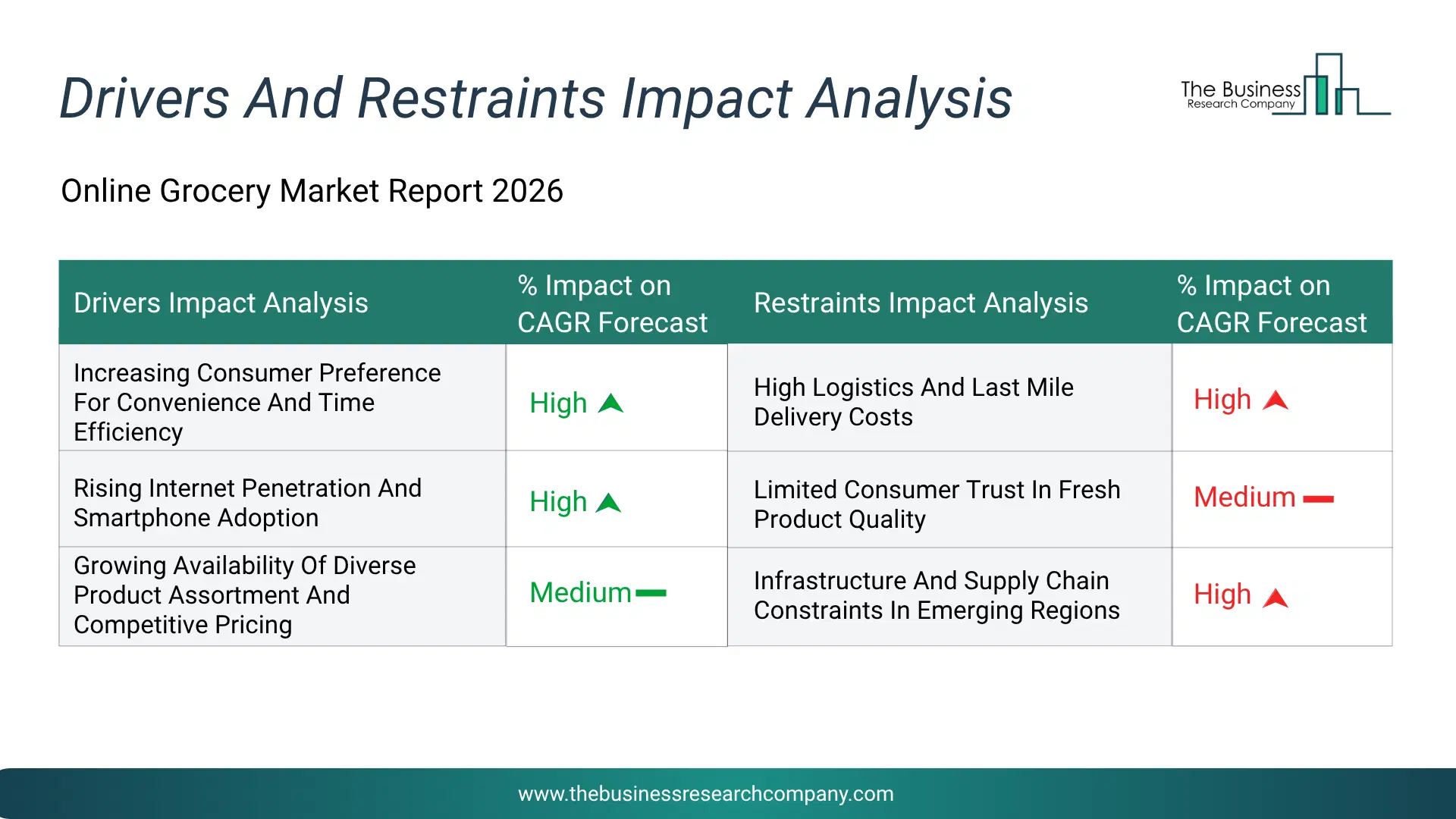
Infographic Chart Showing Key Market Drivers Analysis And Restraints For Online Grocery Market
The chart presents an impact analysis of key drivers and restraints, quantifying their relative influence on the market's growth rate and helping assess the balance between growth enablers and limiting factors. This chart offers a high-level perspective; the full report contains more detailed insights.
How Will The Drivers Impact Growth In The Global Online Grocery Market?
• Increasing Consumer Preference For Convenience And Time Efficiency (High) – During the forecast period, the increasing consumer preference for convenience and time efficiency is expected to become a key growth driver for the online grocery market by 2030. The rising demand for convenience is a primary driver of the online grocery market, as consumers increasingly seek time-saving alternatives to traditional shopping. Online platforms allow users to browse, compare, and purchase products anytime without visiting physical stores, reducing travel and waiting time. Busy urban lifestyles, dual-income households, and long working hours further amplify this shift toward digital grocery solutions. Additionally, features such as doorstep delivery, scheduled slots, and easy reordering enhance user experience. This growing preference for efficiency directly boosts adoption and expands the overall market size. • Rising Internet Penetration And Smartphone Adoption (High) – During the forecast period, the rising internet penetration and smartphone adoption is expected to emerge as a major factor driving the expansion of the online grocery market by 2030. The expansion of internet connectivity and widespread smartphone usage significantly fuels the growth of the online grocery market. With more consumers gaining access to mobile apps and digital payment systems, online grocery platforms are becoming easily accessible across urban and semi-urban areas. This digital infrastructure enables seamless browsing, ordering, and tracking of deliveries, improving customer engagement. Furthermore, the integration of user-friendly interfaces and AI-based recommendations enhances shopping efficiency. As digital inclusion grows globally, it continuously drives higher participation in online grocery services. • Growing Availability Of Diverse Product Assortment And Competitive Pricing (Medium) – During the forecast period, the growing availability of diverse product assortment and competitive pricing is expected to act as a key growth catalyst for the online grocery market by 2030. Online grocery platforms offer a wider assortment of products compared to physical stores, including fresh produce, packaged goods, organic items, and international brands. This variety attracts consumers who prefer one-stop shopping experiences with better product comparisons and availability. Additionally, online retailers frequently provide discounts, subscription benefits, and dynamic pricing, making purchases more cost-effective. The ability to compare prices across multiple sellers increases transparency and encourages value-driven buying behavior. These factors collectively strengthen customer retention and accelerate market growth.How Will The Restraints Impact Growth In The Global Online Grocery Market?
• High Logistics And Last Mile Delivery Costs (High) – During the forecast period, the online grocery market faces significant challenges due to high logistics and last-mile delivery costs, which directly impact profitability. Delivering perishable goods requires cold chain infrastructure, optimized routing, and timely fulfillment, increasing operational complexity. Unlike other e-commerce categories, grocery orders often have lower margins but higher delivery frequency, making cost recovery difficult. Additionally, failed deliveries or returns further add to expenses. These factors restrict scalability and act as a major restraint on overall market growth. • Limited Consumer Trust In Fresh Product Quality (High) – During the forecast period, the consumer hesitation regarding the quality and freshness of perishable items such as fruits, vegetables, and dairy products limits the adoption of online grocery services. Many buyers prefer physically inspecting items before purchase, which online platforms cannot fully replicate. Concerns over incorrect substitutions, damaged goods, or inconsistent quality reduce repeat purchases. Although companies invest in quality assurance and easy return policies, trust-building remains a gradual process. This lack of confidence acts as a barrier to widespread market penetration. • Infrastructure And Supply Chain Constraints In Emerging Regions (Medium) – During the forecast period, the in many developing and semi-urban regions, inadequate infrastructure such as poor road connectivity, limited warehousing, and unreliable delivery networks restricts online grocery expansion. Efficient operations require advanced inventory management systems, fulfillment centers, and strong supplier coordination, which are often lacking in these areas. Additionally, fluctuating supply of fresh produce and fragmented vendor networks create inefficiencies. These structural limitations hinder service reliability and slow down market growth in high-potential regions.Key Players In The Global Online Grocery Market
Major companies operating in the online grocery market are Amazon.com Inc., The Kroger Company, Alibaba Group, Target Corporation, Koninklijke Ahold Delhaize N.V., Edeka group, Albertsons Companies, Inc., Getir, Uber Eats, Delivery Hero, Doordash, ALDI Inc., Flipkart Supermart, Just Eat, Jio Mart, Auchan SA, ASDA Groceries, Instacart, Safeway Inc., FreshDirect LLC.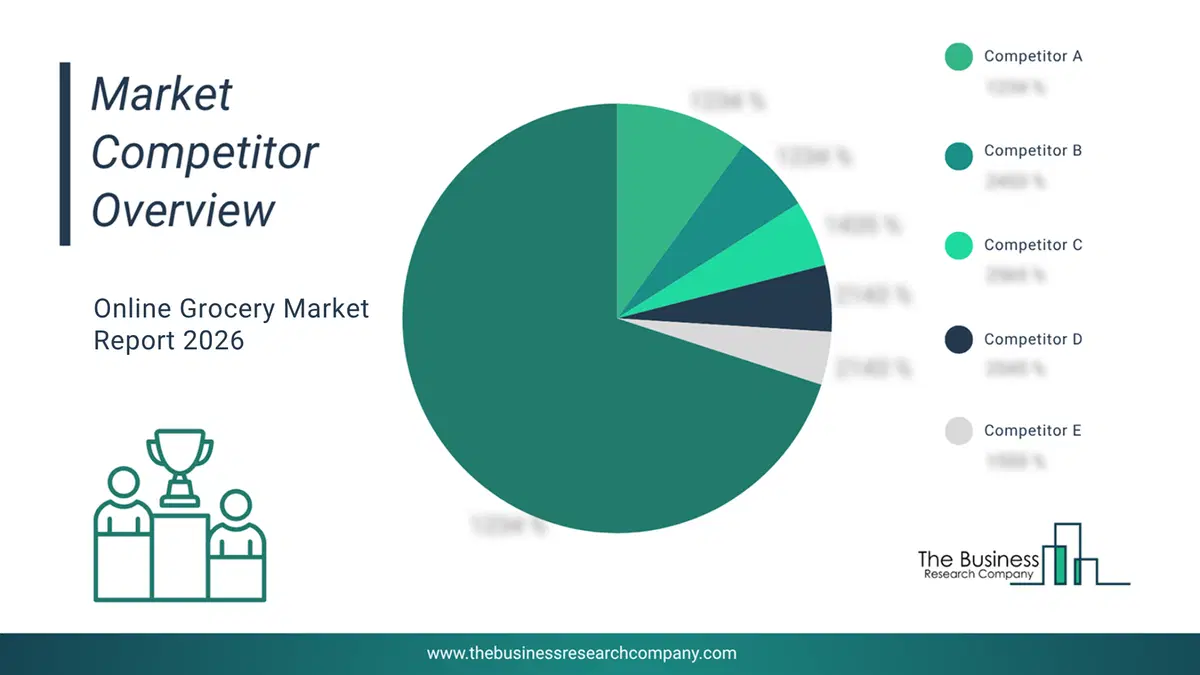
This chart is for illustrative purposes; the full report includes a detailed competitor analysis and comprehensive overview of the top 10 companies in the market.
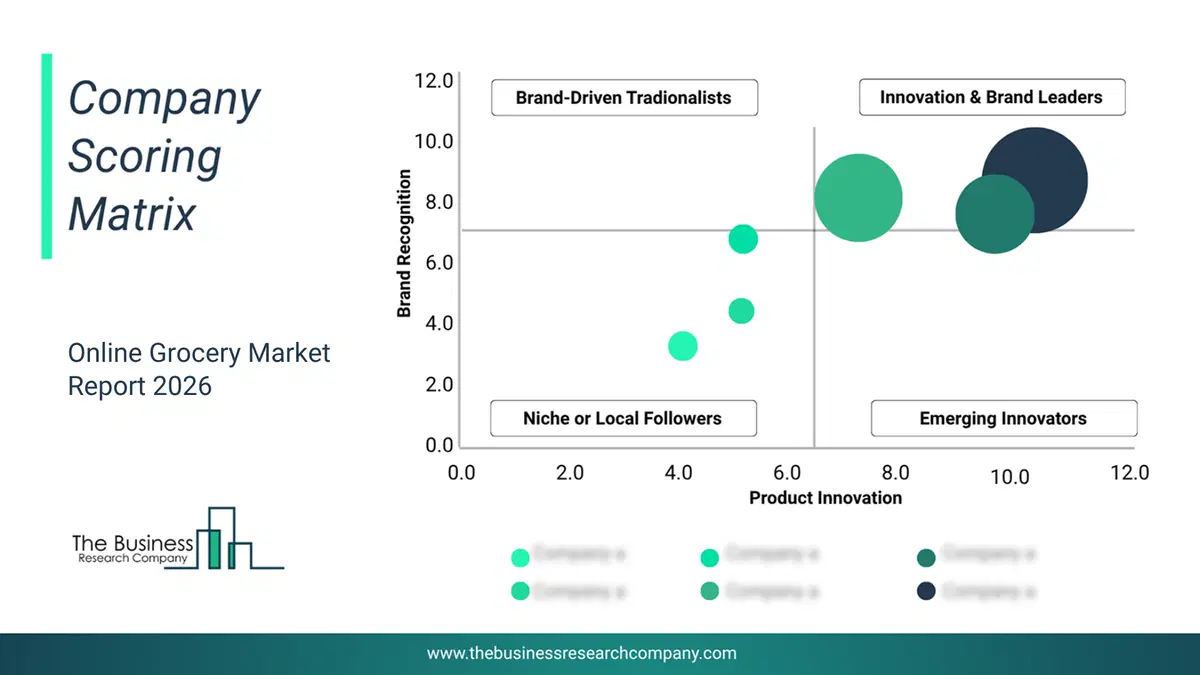
This chart maps companies by product innovation and brand strength, with bubble size indicating relative revenue, helping identify market leaders, challengers, and niche players. This is an illustrative chart; the full report provides a complete and accurate competitive analysis.
Global Online Grocery Market Trends and Insights
Major companies operating in the online grocery markets are adopting subscription models and membership programs, such as the B2B membership platform, to better meet the needs of their existing consumers. A B2B membership platform in online grocery serves as a digital hub connecting businesses within the supply chain, facilitating transactions and collaboration among suppliers, distributors, and retailers. For instance, in October 2023, Bundl Technologies Private Limited (Swiggy), an India-based company that operates an online food ordering platform, launched Swiggy One Lite. Swiggy One Lite is a new and more economical variant of Swiggy One, the membership club, that provides advantages for meals, groceries, and pick-up and delivery services. Swiggy One Lite provides several perks, including free delivery, special deals, and discounts, for a starting price of Rs 99 for three months. One Lite is available as a B2B membership, packaged with offerings from major brand partners in the telecom and banking sectors.What Are Latest Mergers And Acquisitions In The Online Grocery Market?
In March 2025, Talabat Holdings Ltd., a UAE-based technology and online delivery company, acquired InstaShop for about $32 million. With this acquisition, Talabat aims to strengthen and scale its grocery and retail offerings across the middle east and north africa (MENA) region by expanding its merchant partner network, enabling cross-listing between platforms, and driving operational efficiencies through shared logistics and fleet optimization. InstaShop Ltd. is a UAE-based e-commerce company that specializes in providing on-demand grocery and retail delivery services by connecting consumers with local supermarkets, pharmacies, and other retailers through a digital marketplace platform.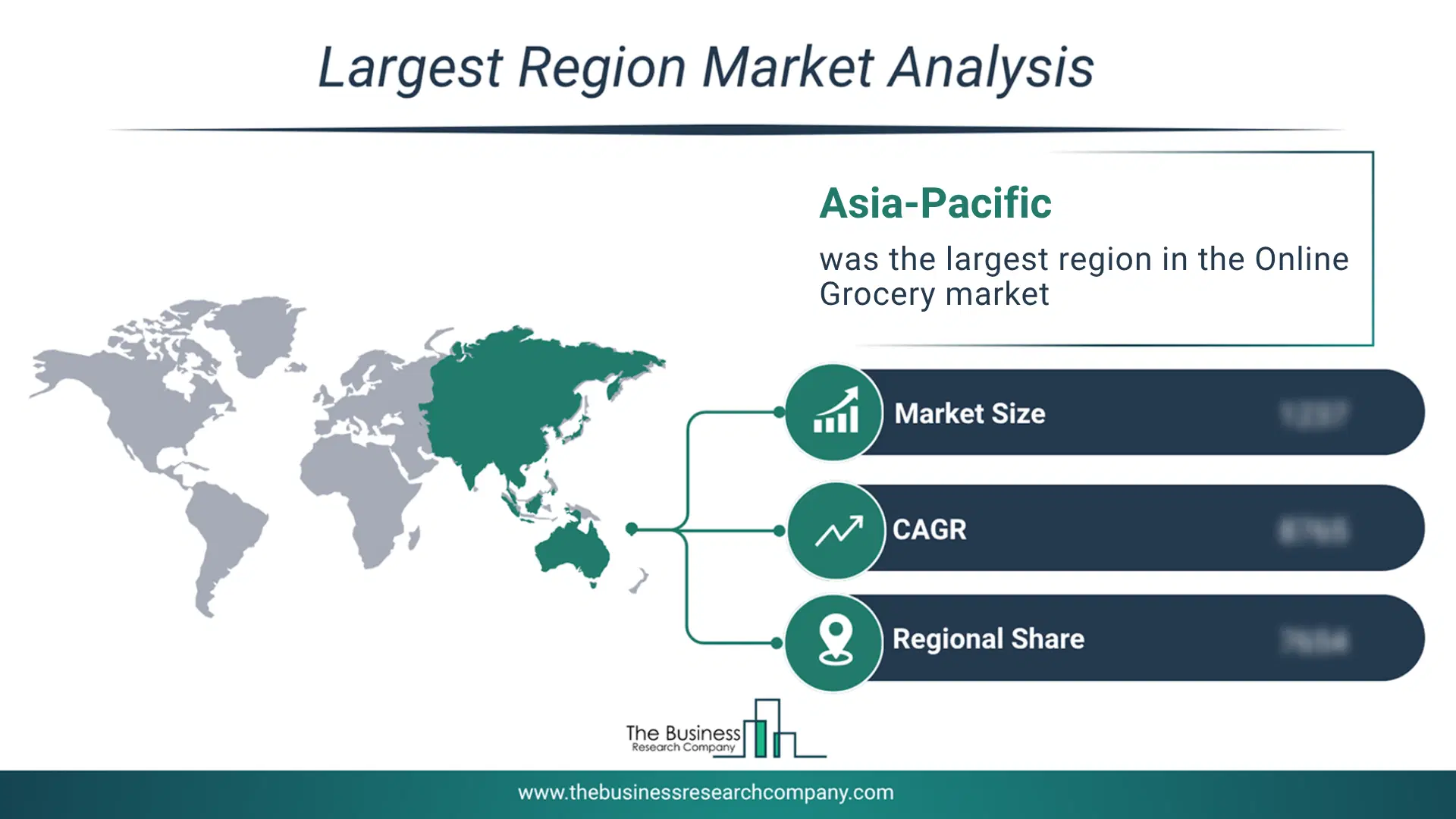
Regional Outlook
Asia-Pacific was the largest region in the online grocery market in 2025. North America is expected to be the fastest-growing region in the forecast period. The regions covered in this market report are Asia-Pacific, South East Asia, Western Europe, Eastern Europe, North America, South America, Middle East and Africa. The countries covered in this market report are Australia; Brazil; China; France; Germany; India; Indonesia; Japan; Taiwan; Russia; South Korea; UK; USA; Canada; Italy; Spain.What Defines the Online Grocery Market?
The online grocery market consists of revenues earned by entities by providing services such as in-store pickup, home delivery, flexible shopping, and 24/7 ordering. The market value includes the value of related goods sold by the service provider or included within the service offering. Only goods and services traded between entities or sold to end consumers are included.How is Market Value Defined and Measured?
The market value is defined as the revenues that enterprises gain from the sale of goods and/or services within the specified market and geography through sales, grants, or donations in terms of the currency (in USD unless otherwise specified). The revenues for a specified geography are consumption values that are revenues generated by organizations in the specified geography within the market, irrespective of where they are produced. It does not include revenues from resales along the supply chain, either further along the supply chain or as part of other products.
This chart presents market attractiveness based on a quantitative evaluation of growth, competition, strategic alignment, and risk, offering a clear view of opportunity areas for decision-making. This chart is for illustrative purposes; the full report contains the complete analysis.

This chart highlights the Total Addressable Market (TAM) by estimating the maximum revenue opportunity using an assumption-driven approach, supporting strategic planning and opportunity sizing across markets. The chart is illustrative; the full report provides a more comprehensive analysis.
What Key Data and Analysis Are Included in the Online Grocery Market Report 2026?
The online grocery market research report is one of a series of new reports from The Business Research Company that provides market statistics, including industry global market size, regional shares, competitors with the market share, detailed market segments, market trends and opportunities, and any further data you may need to thrive in the online grocery industry. The market research report delivers a complete perspective of everything you need, with an in-depth analysis of the current and future state of the industry.Online Grocery Market Report Forecast Analysis
| Report Attribute | Details |
|---|---|
| Market Size Value In 2026 | $794.86 billion |
| Revenue Forecast In 2030 | $1721.3 billion |
| Growth Rate | CAGR of 21.3% from 2026 to 2030 |
| Base Year For Estimation | 2025 |
| Actual Estimates/Historical Data | 2020-2025 |
| Forecast Period | 2026 - 2030 |
| Market Representation | Revenue in USD Billion and CAGR from 2026 to 2030 |
| Segments Covered | Product, Food Platform, Delivery Type, End User |
| Regional Scope | Asia-Pacific, Western Europe, Eastern Europe, North America, South America, Middle East, Africa |
| Country Scope | The countries covered in the report are Australia, Brazil, China, France, Germany, India, Indonesia, Japan, Taiwan, Russia, South Korea, UK, USA, Canada, Italy, Spain. |
| Key Companies Profiled | Amazon.com Inc., The Kroger Company, Alibaba Group, Target Corporation, Koninklijke Ahold Delhaize N.V., Edeka group, Albertsons Companies, Inc., Getir, Uber Eats, Delivery Hero, Doordash, ALDI Inc., Flipkart Supermart, Just Eat, Jio Mart, Auchan SA, ASDA Groceries, Instacart, Safeway Inc., FreshDirect LLC. |
| Customization Scope | Request for Customization |
| Pricing And Purchase Options | Explore Purchase Options |