
Opioid-Induced Constipation Treatment Market Report 2026
Global Outlook – By Drug Class (Laxatives, Peripherally Acting μ-opioid Receptor Antagonists, Serotonin Receptor Agonists), By Type (Oral, Parenteral), By Distribution Channel (Hospital Pharmacies, Online Pharmacies, Retail Pharmacies) - Market Size, Trends, Strategies, and Forecast to 2030
Opioid-Induced Constipation Treatment Market Overview
• Opioid-Induced Constipation Treatment market size has reached to $1.9 billion in 2025 • Expected to grow to $2.54 billion in 2030 at a compound annual growth rate (CAGR) of 5.9% • Growth Driver: Rising Opioid Use For Pain Management Fuels Growth In Opioid-Induced Constipation Treatment Market • Market Trend: Adoption Of Mechanism-Targeted Therapies In Opioid-Induced Constipation (OIC) Treatment • North America was the largest region in 2025 and Asia-Pacific is the fastest growing region.What Is Covered Under Opioid-Induced Constipation Treatment Market?
Opioid-induced constipation (OIC) treatment refers to the various approaches and medications used to manage constipation caused by the use of opioid medications. These treatments aim to alleviate the symptoms of constipation without compromising the pain-relieving effects of opioids, thereby improving the patient's overall quality of life and maintaining effective pain management with both pharmacological with non-pharmacological approaches. The drug classes of opioid-induced constipation treatment include laxatives, peripherally acting mu-opioid receptor antagonists, serotonin receptor agonists, and prostaglandin. Laxatives are medications used to promote bowel movements and relieve constipation by increasing stool frequency and softening stool consistency. They can be administered through various types or routes including oral and parenteral including subcutaneous injection and distributed through hospital pharmacies, online pharmacies, and retail pharmacies.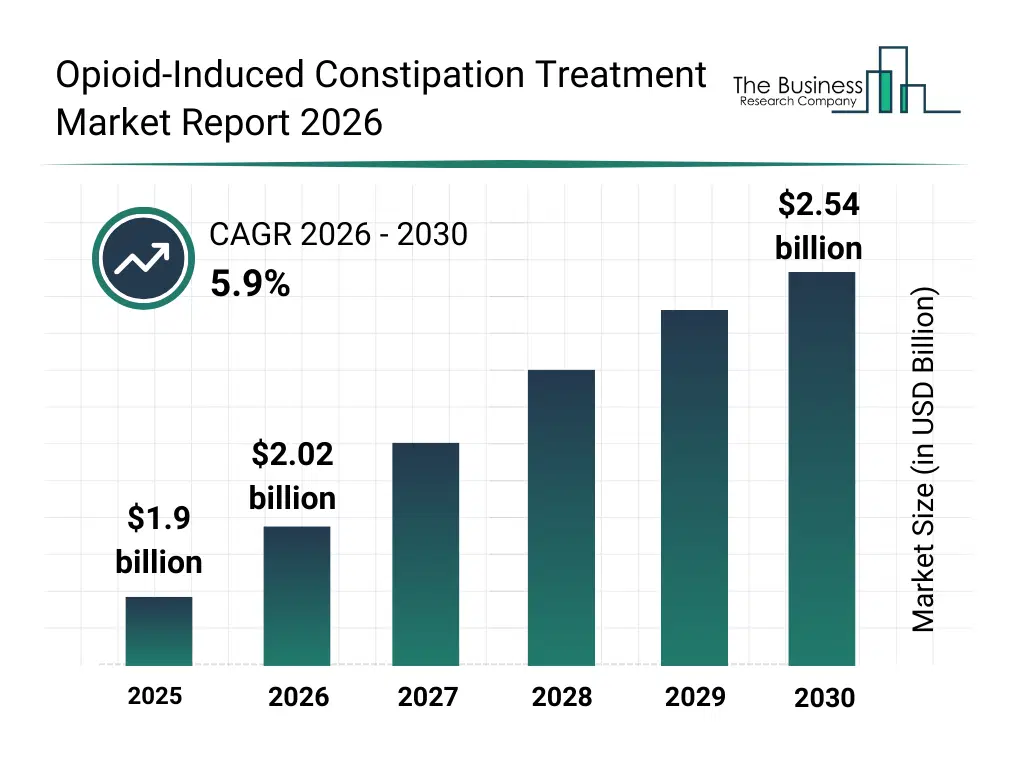
What Is The Opioid-Induced Constipation Treatment Market Size and Share 2026?
The opioid-induced constipation treatment market size has grown strongly in recent years. It will grow from $1.9 billion in 2025 to $2.02 billion in 2026 at a compound annual growth rate (CAGR) of 6.7%. The growth in the historic period can be attributed to widespread opioid use for chronic pain management, limited effectiveness of traditional laxatives, growing prevalence of cancer-related pain, lack of early OIC-specific therapies, increasing hospitalization due to opioid side effects.What Is The Opioid-Induced Constipation Treatment Market Growth Forecast?
The opioid-induced constipation treatment market size is expected to see strong growth in the next few years. It will grow to $2.54 billion in 2030 at a compound annual growth rate (CAGR) of 5.9%. The growth in the forecast period can be attributed to rising demand for PAMORA-based therapies, increasing long-term opioid prescriptions in aging populations, growing clinical focus on patient-centric pain management, expansion of online and retail pharmacy access, increasing investment in gastrointestinal disorder drug development. Major trends in the forecast period include rising adoption of peripherally acting μ-opioid receptor antagonists, increasing preference for targeted OIC therapies without affecting analgesia, growing use of combination pharmacological and non-pharmacological treatments, rising focus on improving quality of life in chronic pain patients, increasing awareness and diagnosis of opioid-induced constipation.
Global Opioid-Induced Constipation Treatment Market Segmentation
1) By Drug Class: Laxatives, Peripherally Acting μ-opioid Receptor Antagonists, Serotonin Receptor Agonists 2) By Type: Oral, Parenteral 3) By Distribution Channel: Hospital Pharmacies, Online Pharmacies, Retail Pharmacies Subsegments: 1) By Laxatives: Osmotic Laxatives, Stimulant Laxatives, Bulk-Forming Laxatives 2) By Peripherally Acting μ-Opioid Receptor Antagonists: Naloxegol, Methylnaltrexone, Alvimopan 3) By Serotonin Receptor Agonists: Prucalopride, TegaserodWhat Is The Driver Of The Opioid-Induced Constipation Treatment Market?
The rise in the administration of opioids for cancer and non-cancer pain is expected to propel the growth of the opioid-induced constipation treatment market going forward. Cancer pain refers to pain associated with cancer and its treatment, while non-cancer pain refers to pain from conditions unrelated to cancer. Administration of opioids for cancer and non-cancer pain is driven by the need to effectively manage moderate to severe pain, considering factors such as the intensity and duration of pain, patient response to other treatments, and the overall goal of improving quality of life while minimizing potential risks of addiction and side effects. Opioid-induced constipation (OIC) treatment helps patients with cancer and non-cancer pain by relieving constipation caused by opioid use, thereby improving overall comfort, adherence to pain management regimens, and quality of life without compromising pain relief. For instance, in November 2024, according to the Centers for Disease Control and Prevention, a US-based public health agency, in 2023, rate of 37.5 opioid prescriptions dispensed per 100 persons. Further, states with the highest opioid dispensing rates per 100 persons in 2023 include Arkansas (71.5), Alabama (71.4), Mississippi (63.1), and Louisiana (62.7). Therefore, the rise in the administration of opioids for cancer and non-cancer pain is driving the growth of the opioid-induced constipation treatment industry.Key Players In The Global Opioid-Induced Constipation Treatment Market
Major companies operating in the opioid-induced constipation treatment market are Pfizer Inc., AstraZeneca plc, Takeda Pharmaceutical Company Limited, Bausch Health Companies Inc., Ironwood Pharmaceuticals Inc., Collegium Pharmaceutical Inc., Cumberland Pharmaceuticals Inc., RedHill Biopharma Ltd., Theravance Biopharma Inc., Mundipharma International Limited, Daiichi Sankyo Co Ltd, Progenics Pharmaceuticals Inc, Shionogi & Co Ltd, Purdue Pharma, Nektar Therapeutics, S L A Pharma AG, Bristol‑Myers Squibb Company, Fresenius Kabi AG, Viatris Inc, Novartis AG, Teva Pharmaceutical Industries Ltd, F Hoffmann‑La Roche Ltd, Aurobindo Pharma, Abbott Laboratories, Daewoong Pharmaceutical Company
This chart is for illustrative purposes; the full report includes a detailed competitor analysis and comprehensive overview of the top 10 companies in the market.
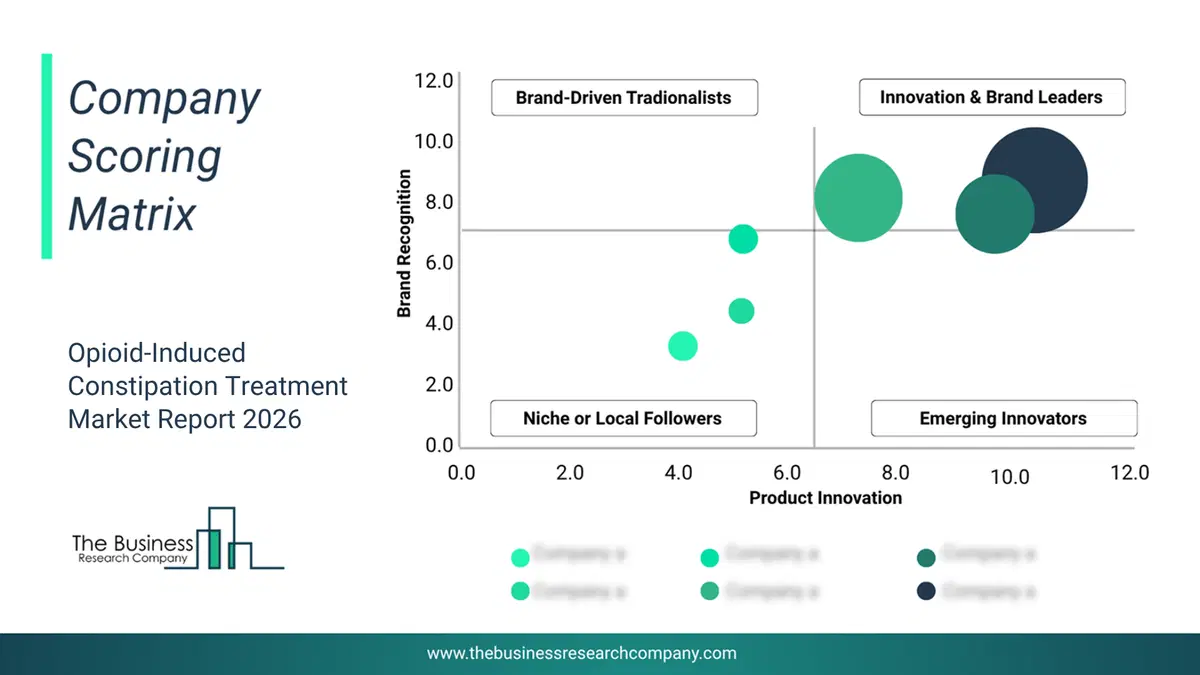
This chart maps companies by product innovation and brand strength, with bubble size indicating relative revenue, helping identify market leaders, challengers, and niche players. This is an illustrative chart; the full report provides a complete and accurate competitive analysis.
Global Opioid-Induced Constipation Treatment Market Trends and Insights
Major companies are operating in the opioid-induced constipation treatment market focusing on developing innovation such as peripherally acting μ-opioid receptor antagonists (PAMORAs) for targeted gut receptor modulation to enhance efficacy, improve patient compliance, and reduce systemic side effects during opioid therapy. A PAMORA selectively blocks μ-opioid receptors in the gastrointestinal tract without crossing the blood–brain barrier, thereby restoring bowel function while maintaining central analgesia unlike traditional laxatives, which do not address the underlying receptor-mediated cause of constipation. For instance, in May 2025, Luye Pharma, a China-based pharmaceutical company, launched Mimeixin, an oral oxycodone/naloxone sustained-release tablet designed for OIC. The product delivers once-daily analgesia while antagonizing gut opioid receptors, offering improved bowel regularity and reduced gastrointestinal side effects compared to older therapies, and provides a patient-friendly alternative that combines pain control and constipation management in a single tablet.What Are Latest Mergers And Acquisitions In The Opioid-Induced Constipation Treatment Market?
In August 2023, Grünenthal GmbH, a Germany-based pharmaceutical company completed a joint venture collaboration with Kyowa Kirin International. This collaboration includes a portfolio of 13 brands across six therapeutic areas, with a primary focus on pain management, including medications for breakthrough cancer pain, opioid-induced constipation, and osteoporosis. Grünenthal owns a 51% majority share in the joint venture collaboration, while Kyowa Kirin owns a 49% share. Grünenthal intends to acquire the remaining 49% share at the beginning of 2026. Kyowa Kirin International is a Japan-based pharmaceutical company developing medication for opioid-induced constipation including peripherally acting mu-opioid receptor antagonists.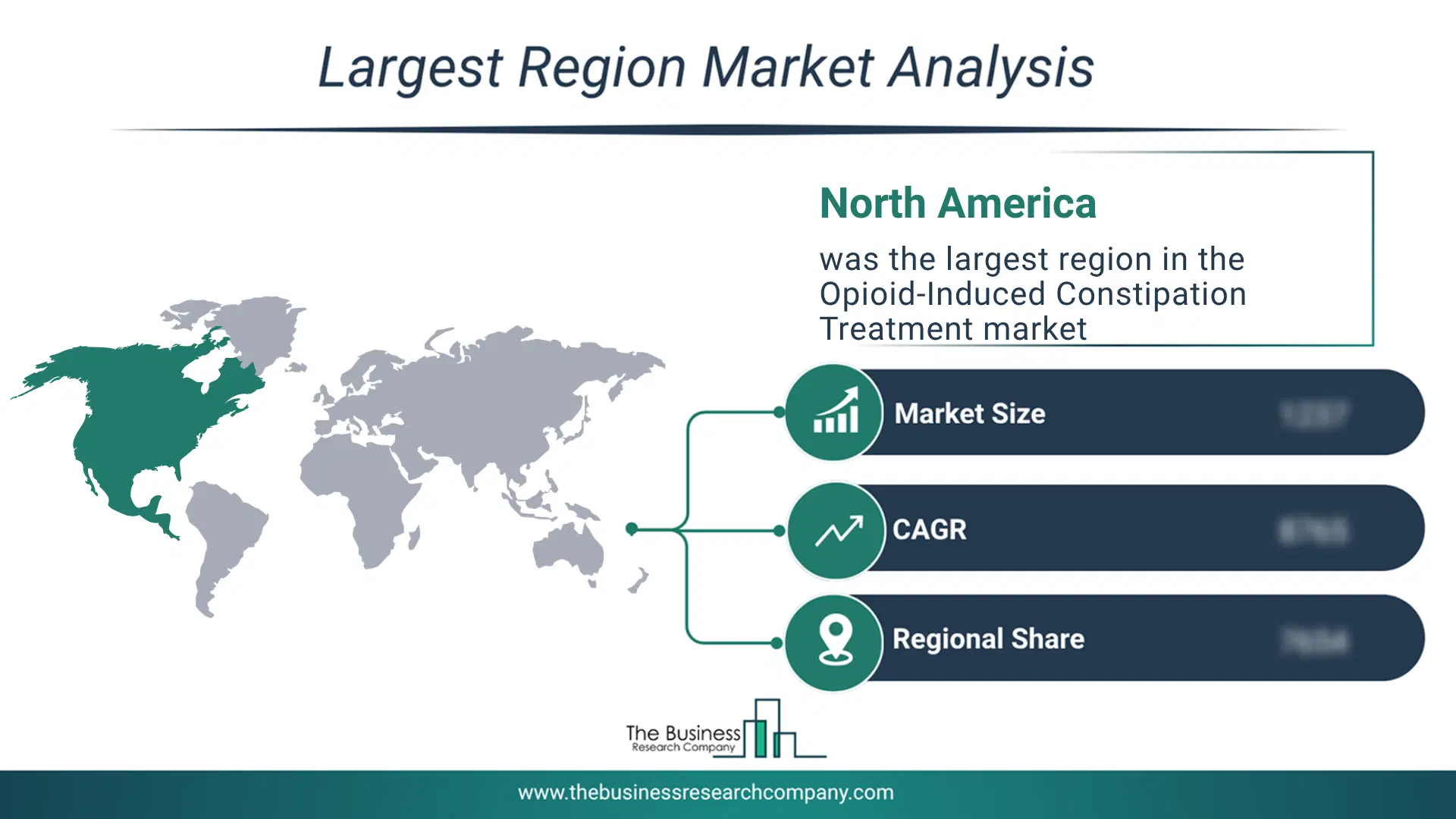
Regional Outlook
North America was the largest region in the opioid-induced constipation treatment market in 2025. Asia-Pacific is expected to be the fastest-growing region in the forecast period. The regions covered in this market report are Asia-Pacific, South East Asia, Western Europe, Eastern Europe, North America, South America, Middle East, Africa. The countries covered in this market report are Australia, Brazil, China, France, Germany, India, Indonesia, Japan, Taiwan, Russia, South Korea, UK, USA, Canada, Italy, Spain.What Defines the Opioid-Induced Constipation Treatment Market?
The opioid-induced constipation treatment market includes revenues earned by entities by providing services such as medical consultation, dietary and lifestyle counselling, diagnostic and telehealth services. The market value includes the value of related goods sold by the service provider or included within the service offering. The opioid-induced constipation treatment market also includes sales of tablets, injections, syrups, fibre supplements, lubricants, enemas, suppositories and probiotics. Values in this market are ‘factory gate’ values, that is the value of goods sold by the manufacturers or creators of the goods, whether to other entities (including downstream manufacturers, wholesalers, distributors and retailers) or directly to end customers. The value of goods in this market includes related services sold by the creators of the goods.How is Market Value Defined and Measured?
The market value is defined as the revenues that enterprises gain from the sale of goods and/or services within the specified market and geography through sales, grants, or donations in terms of the currency (in USD unless otherwise specified). The revenues for a specified geography are consumption values that are revenues generated by organizations in the specified geography within the market, irrespective of where they are produced. It does not include revenues from resales along the supply chain, either further along the supply chain or as part of other products.
This chart presents market attractiveness based on a quantitative evaluation of growth, competition, strategic alignment, and risk, offering a clear view of opportunity areas for decision-making. This chart is for illustrative purposes; the full report contains the complete analysis.

This chart highlights the Total Addressable Market (TAM) by estimating the maximum revenue opportunity using an assumption-driven approach, supporting strategic planning and opportunity sizing across markets. The chart is illustrative; the full report provides a more comprehensive analysis.
What Key Data and Analysis Are Included in the Opioid-Induced Constipation Treatment Market Report 2026?
The opioid-induced constipation treatment market research report is one of a series of new reports from The Business Research Company that provides market statistics, including industry global market size, regional shares, competitors with the market share, detailed market segments, market trends and opportunities, and any further data you may need to thrive in the opioid-induced constipation treatment industry. The market research report delivers a complete perspective of everything you need, with an in-depth analysis of the current and future state of the industry.Opioid-Induced Constipation Treatment Market Report Forecast Analysis
| Report Attribute | Details |
|---|---|
| Market Size Value In 2026 | $2.02 billion |
| Revenue Forecast In 2030 | $2.54 billion |
| Growth Rate | CAGR of 5.9% from 2026 to 2030 |
| Base Year For Estimation | 2025 |
| Actual Estimates/Historical Data | 2020-2025 |
| Forecast Period | 2026 - 2030 |
| Market Representation | Revenue in USD Billion and CAGR from 2026 to 2030 |
| Segments Covered | Drug Class, Type, Distribution Channel |
| Regional Scope | Asia-Pacific, Western Europe, Eastern Europe, North America, South America, Middle East, Africa |
| Country Scope | The countries covered in the report are Australia, Brazil, China, France, Germany, India, Indonesia, Japan, Taiwan, Russia, South Korea, UK, USA, Canada, Italy, Spain |
| Key Companies Profiled | Pfizer Inc., AstraZeneca plc, Takeda Pharmaceutical Company Limited, Bausch Health Companies Inc., Ironwood Pharmaceuticals Inc., Collegium Pharmaceutical Inc., Cumberland Pharmaceuticals Inc., RedHill Biopharma Ltd., Theravance Biopharma Inc., Mundipharma International Limited, Daiichi Sankyo Co Ltd, Progenics Pharmaceuticals Inc, Shionogi & Co Ltd, Purdue Pharma, Nektar Therapeutics, S L A Pharma AG, Bristol‑Myers Squibb Company, Fresenius Kabi AG, Viatris Inc, Novartis AG, Teva Pharmaceutical Industries Ltd, F Hoffmann‑La Roche Ltd, Aurobindo Pharma, Abbott Laboratories, Daewoong Pharmaceutical Company |
| Customization Scope | Request for Customization |
| Pricing And Purchase Options | Explore Purchase Options |