

Optical Networking Global Market Opportunities And Strategies To 2035
By Component (Optical Fibers, Optical Switches, Optical Amplifiers, Optical Splitters, Optical Transceivers, Optical Circulators), By Service (Network Design, Data Center Network Maintenance And Support), By Technology (Synchronous Optical Networking, Wavelength Division Multiplexing, Coarse Wavelength Division Multiplexing, Dense Wavelength Division Multiplexing, Reconfigurable Optical Add-Drop Multiplexer, Fiber Channels), By End User (Military And Defense, Banking, Financial Services, And Insurance, Information Technology And Telecommunications, Government, Other End Users), And By Region, Opportunities And Strategies – Global Forecast To 2035
Optical Networking Market Definition
Optical networking refers to a communication technology that uses light signals transmitted through optical fibers to transfer data at high speed across short and long distances. Its primary purpose is to enable high-capacity, low-latency, and long-distance data transmission, making it essential for modern digital infrastructure such as internet, cloud computing, data centers, and telecommunications networks. The optical networking market consists of sales of optical networking by entities (organizations, sole traders and partnerships) that provide optical communication equipment, components, and related services that enable high-speed data transmission using light signals over fiber optic infrastructure.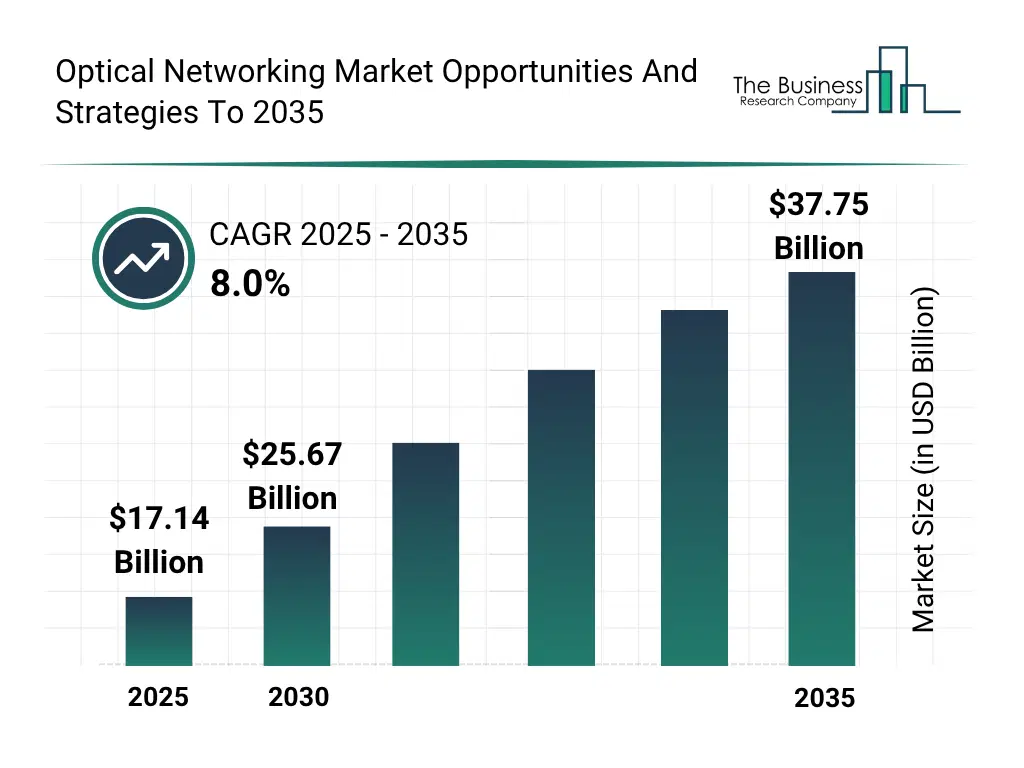
Optical Networking Market Size
The global optical networking market reached a value of nearly $17,137.3 million in 2025, having grown at a compound annual growth rate (CAGR) of 9.3% since 2020. The market is expected to grow from $17,137.3 million in 2025 to $25,672.1 million in 2030 at a rate of 8.4%. The market is then expected to grow at a CAGR of 8.0% from 2030 and reach $37,749.8 million in 2035. Growth in the historic period resulted from surge in data traffic demand, rise in broadband and internet penetration, increase in cloud computing adoption and growing deployment of fiber-based enterprise and campus networks. Factors that negatively affected growth in the historic period were high cost of fiber infrastructure deployment and limited existing fiber infrastructure in developing regions. Going forward, increase in 5G network expansion, rise in data center deployments, increase in ai and big data usage and proliferation of IoT devices will drive the growth. Factors that could hinder the growth of the optical networking market in the future include complexity in integrating with legacy systems, increase in capital expenditure for network upgrades and impact of trade wars and tariffs.
Optical Networking Market Segmentation
The optical networking market is segmented by component, by service, by technology, by end User.By Component –
The optical networking market is segmented by component into:
- a) Optical Fibers
- b) Optical Switches
- c) Optical Amplifiers
- d) Optical Splitters
- e) Optical Transceivers
- f) Optical Circulators
By Service –
The optical networking market is segmented by service into:
- a) Network Design
- b) Data Center Network Maintenance And Support
By Technology –
The optical networking market is segmented by technology into:
- a) Synchronous Optical Networking
- b) Wavelength Division Multiplexing
- c) Coarse Wavelength Division Multiplexing
- d) Dense Wavelength Division Multiplexing
- e) Reconfigurable Optical Add-Drop Multiplexer
- f) Fiber Channels
By End User –
The optical networking market is segmented by end user into:
- a) Military And Defense
- b) Banking, Financial Services, And Insurance
- c) Information Technology And Telecommunications
- d) Government
- e) Other End Users
By Geography - The optical networking market is segmented by geography into:
- China
- India
- Japan
- Australia
- Indonesia
- South Korea
- USA
- Canada
- Brazil
- France
- Germany
- UK
- Italy
- Spain
- Russia
-
o Asia Pacific
o Africa