

Optogenetics Market Report 2026
Global Outlook – By Product (Lasers, Actuators, Sensors), By Application (Neuroscience, Behavioral Tracking, Retinal Disease Treatment, Other Applications), By End User (Hospitals And Clinics, Diagnostics Centers, Research Centers, Other End Users) – Market Size, Trends, Strategies, and Forecast to 2030
Optogenetics Market Overview
• Optogenetics market size has reached to $40.9 billion in 2025 • Expected to grow to $81.05 billion in 2030 at a compound annual growth rate (CAGR) of 14.5% • Growth Driver: Optogenetics Market Driven By Increased Funding For Neuroscience Research • Market Trend: Advancing Compact Ultrafast Lasers To Enhance Optogenetics And Neural Imaging Precision • North America was the largest region in 2025.What Is Covered Under Optogenetics Market?
Optogenetics is a comprehensive technique that uses optical systems and genetic engineering technologies to accurately regulate and monitor the biological processes of a cell, group of cells, tissues, or organ with high temporal and spatial resolution. Optogenetics is to monitor and control the physiological activity of neurons and other cell types that include light sensors frequently employed to identify the underlying causes of ailments such as Parkinson's, memory illnesses, anxiety, addiction issues, mood swings, and other conditions. The main products of optogenetics include lasers, actuators and sensors. Laser refers to a device that emits light through a process of optical amplification at particular wavelengths producing a very narrow beam of light. Their various applications include neuroscience, behavioral tracking, retinal disease treatment and others for use by end-users such as hospitals and clinics, diagnostics centers, research centers and others.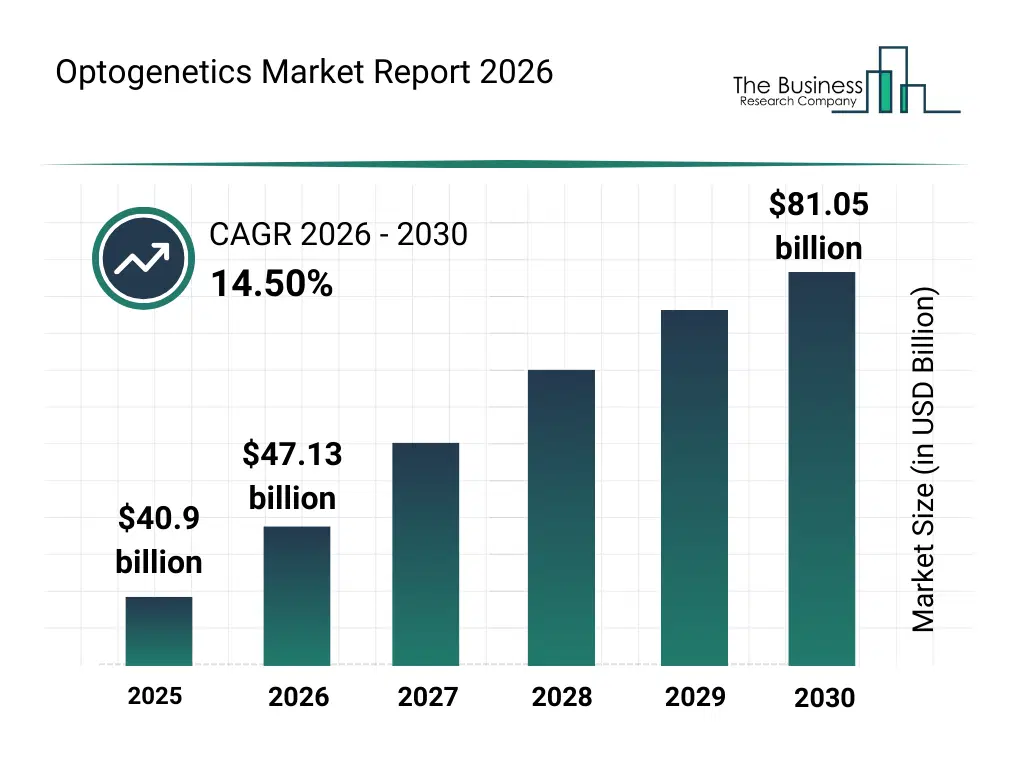
What Is The Optogenetics Market Size and Share 2026?
The optogenetics market size has grown rapidly in recent years. It will grow from $40.9 billion in 2025 to $47.13 billion in 2026 at a compound annual growth rate (CAGR) of 15.2%. The growth in the historic period can be attributed to advancements in genetic engineering tools, increased neuroscience research funding, adoption of optical stimulation techniques, growth of academic and laboratory research, improvements in optical sensor sensitivity.What Is The Optogenetics Market Growth Forecast?
The optogenetics market size is expected to see rapid growth in the next few years. It will grow to $81.05 billion in 2030 at a compound annual growth rate (CAGR) of 14.5%. The growth in the forecast period can be attributed to increasing use of optogenetics in disease research, rising investments in brain research initiatives, expansion of translational neuroscience studies, growing integration with ai-based data analysis, continuous development of advanced optical actuators. Major trends in the forecast period include increasing adoption of light-based neural control techniques, rising use of genetically encoded optical sensors, growing integration of optogenetics with neuroscience research, expansion of behavioral and neural circuit mapping studies, enhanced focus on precision neuromodulation.
Global Optogenetics Market Segmentation
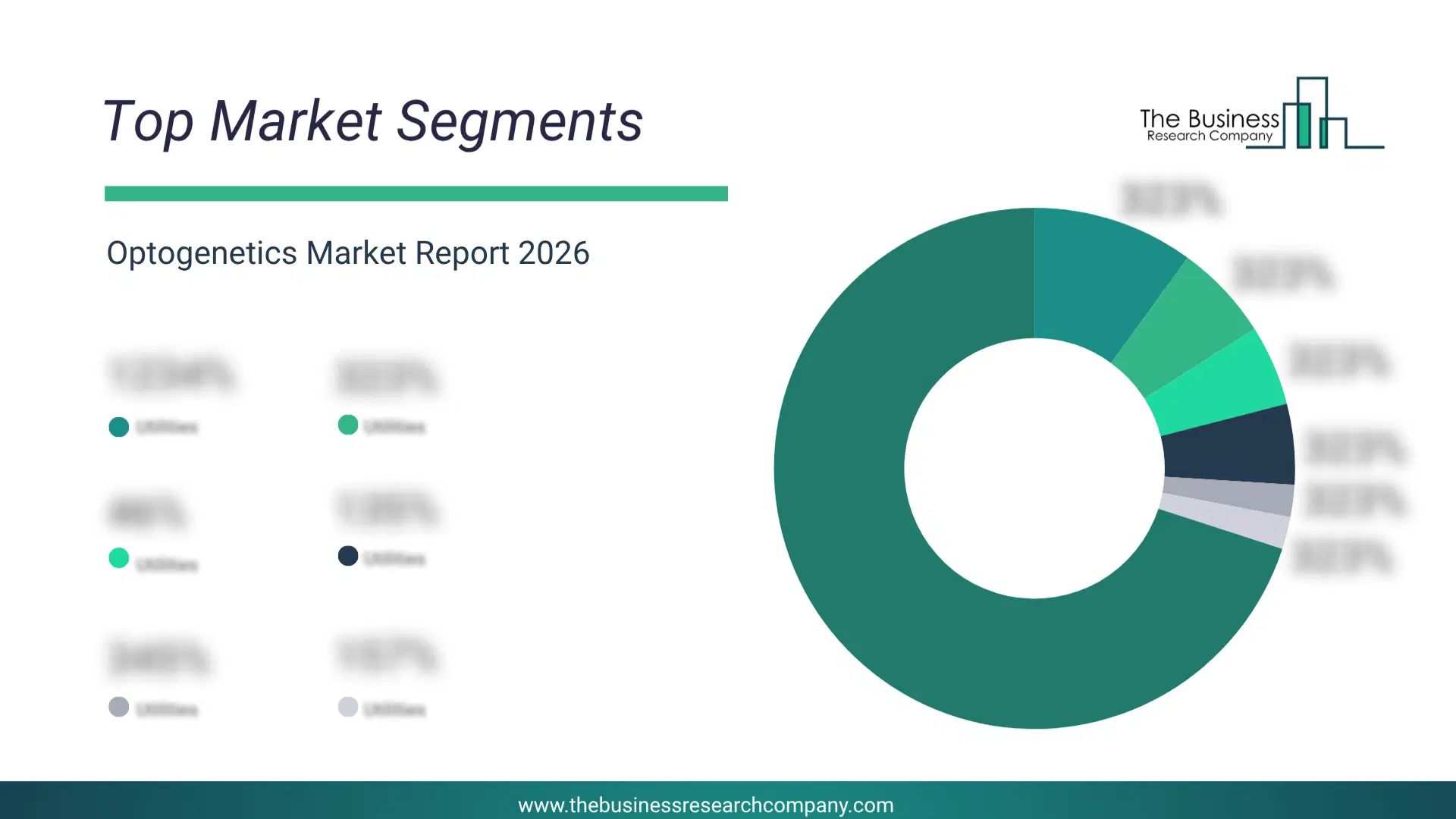
1) By Product: Lasers, Actuators, Sensors 2) By Application: Neuroscience, Behavioral Tracking, Retinal Disease Treatment, Other Applications 3) By End User: Hospitals And Clinics, Diagnostics Centers, Research Centers, Other End Users Subsegments: 1) By Lasers: Continuous Wave Lasers, Pulsed Lasers, Fiber-Coupled Lasers 2) By Actuators: Channelrhodopsins, Halorhodopsins, Opto-xRs 3) By Sensors: Calcium Sensors, Voltage Sensors, Genetically Encoded IndicatorsWhat Is The Driver Of The Optogenetics Market?
Increasing funding for neuroscience research is fueling the growth of the optogenetics market. Neuroscience research refers to the scientific investigation and study of the nervous system, including the brain, spinal cord, and peripheral nerves. Optogenetics is a cutting-edge technique in neuroscience research, utilizes light to precisely control and manipulate the activity of specific neurons in living tissues, revolutionizing the field and providing researchers with a powerful tool to understand the intricacies of neural circuits. For instance, in March 2023, according to the National Institutes of Health (NIH), a US-based government agency responsible for conducting and supporting medical research, funding for neuroscience amounted to approximately $11.3 billion in fiscal year 2022, with projections indicating an expected increase to $12.1 billion in 2023. Thus, increasing funding for neuroscience research will propel the growth of the optogenetics industry going forward.Key Players In The Global Optogenetics Market
Major companies operating in the optogenetics market are Elliot Scientific Ltd., Shanghai Laser & Optics Century Co. Ltd., GenSight Biologics, Coherent Inc., Thorlabs Inc., Prizmatix Ltd., Bruker Corporation, Merck KGaA, The Jackson Laboratory, Applied Genetic Technologies Corporation, Circuit Therapeutics Inc., Bionic Sight LLC, Teledyne Photometrics, Campden Instruments, Nanoscope Therapeutics Inc., Laserglow Technologies, Hubner Group, Physical Sciences Inc., Ray Therapeutics, OptoGenTech, opto biolabs, Neurolux, Ugenex Therapeutics, Scientifica, Cobolt Inc., Inscopix, Mightex Systems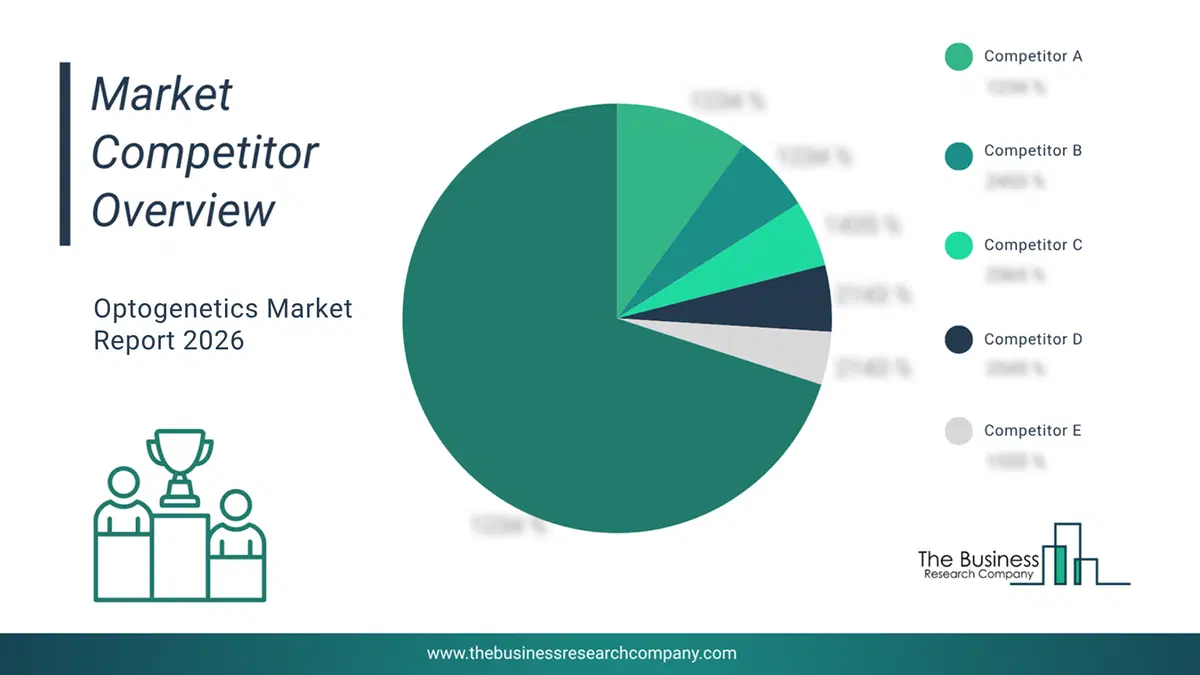
This chart is for illustrative purposes; the full report includes a detailed competitor analysis and comprehensive overview of the top 10 companies in the market.
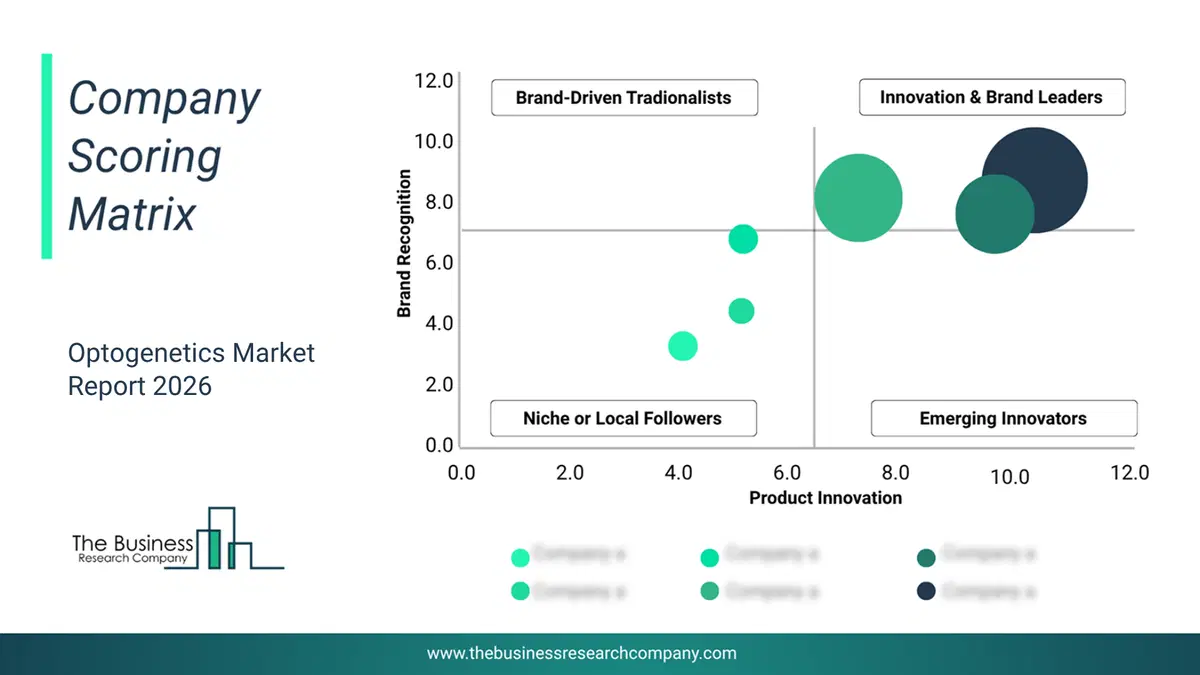
This chart maps companies by product innovation and brand strength, with bubble size indicating relative revenue, helping identify market leaders, challengers, and niche players. This is an illustrative chart; the full report provides a complete and accurate competitive analysis.
Global Optogenetics Market Trends and Insights
Major companies operating in the optogenetics market are focusing on developing innovative products such as compact femtosecond lasers to improve imaging resolution, enhance experimental control, and support advanced optogenetics applications. Femtosecond lasers refer to ultrafast laser systems capable of delivering extremely short pulses, enabling precise stimulation and high-resolution imaging of neural tissue without causing thermal damage. For instance, in June 2025, Coherent, Inc., a US-based photonics company, launched the Osprey, a compact femtosecond laser engineered for applications including optogenetics, microsurgery, and medical device manufacturing. The Osprey delivers up to 5 µJ pulse energy with sub‑350 fs pulse widths, offering high beam quality, pointing stability, and a rugged design suitable for integration into advanced microscopy and medical tools.What Are Latest Mergers And Acquisitions In The Optogenetics Market?
In February 2025, Verana Health, a US-based digital health company specializing in real-world data and analytics, partnered with Nanoscope Therapeutics to accelerate research into retinitis pigmentosa using Verana’s Qdata Retinitis Pigmentosa dataset of more than 70,000 de-identified patients. Through this collaboration, Nanoscope will leverage real-world insights to refine patient stratification, optimise trial design and support the clinical development and commercialisation of its MCO-010 optogenetic gene therapy for inherited retinal degeneration. Nanoscope Therapeutics is a US-based biotechnology company developing gene-agnostic, sight-restoring optogenetic therapies for patients with advanced retinal degenerative diseases.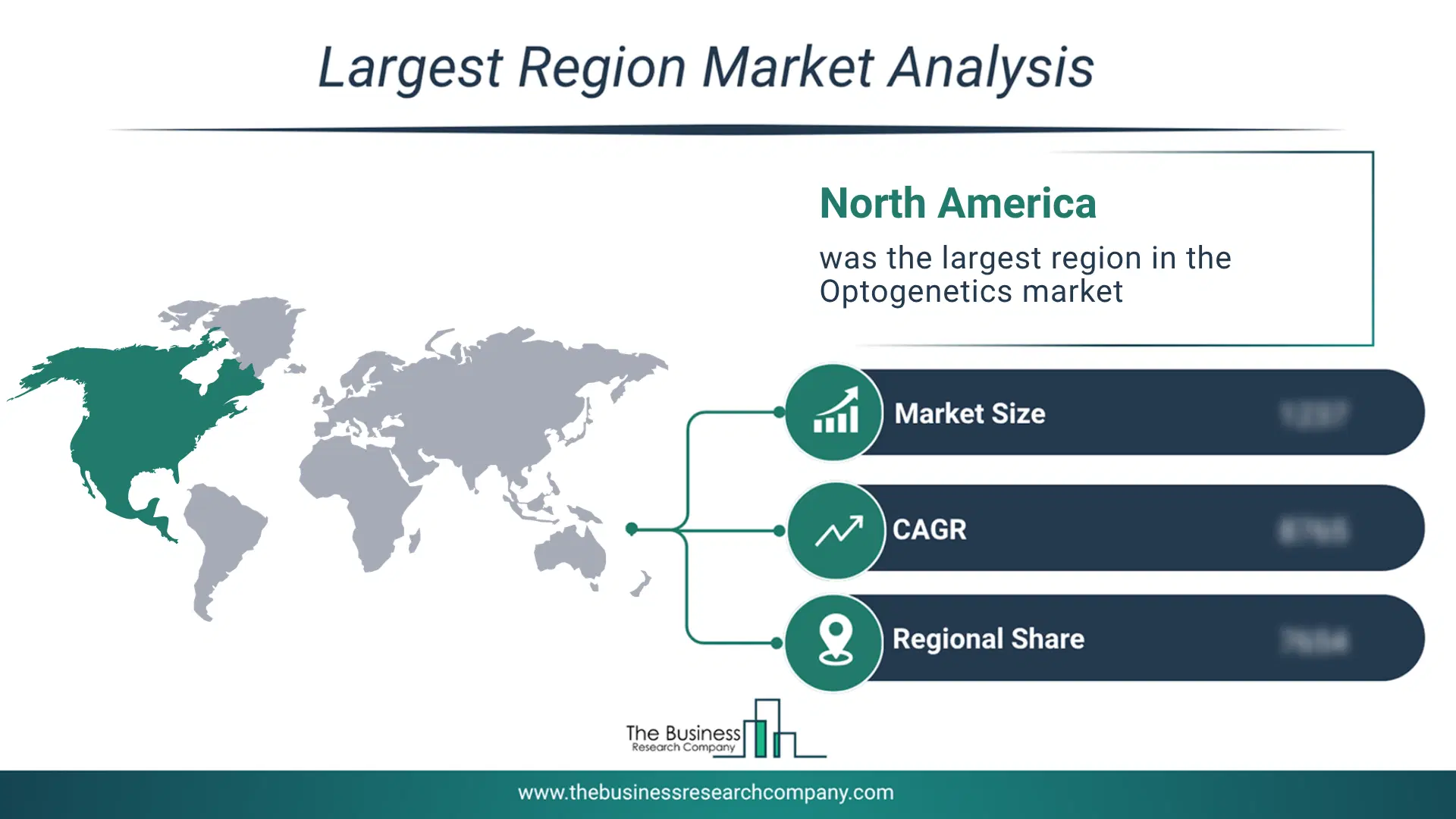
Regional Outlook
North America was the largest region in the optogenetics market in 2025. The regions covered in this market report are Asia-Pacific, South East Asia, Western Europe, Eastern Europe, North America, South America, Middle East, Africa. The countries covered in this market report are Australia, Brazil, China, France, Germany, India, Indonesia, Japan, Taiwan, Russia, South Korea, UK, USA, Canada, Italy, SpainWhat Defines the Optogenetics Market?
The optogenetics market consists of sales of optical cannula, fiber-optic cable, and light sources. Values in this market are ‘factory gate’ values, that is the value of goods sold by the manufacturers or creators of the goods, whether to other entities (including downstream manufacturers, wholesalers, distributors and retailers) or directly to end customers. The value of goods in this market includes related services sold by the creators of the goods.How is Market Value Defined and Measured?
The market value is defined as the revenues that enterprises gain from the sale of goods and/or services within the specified market and geography through sales, grants, or donations in terms of the currency (in USD unless otherwise specified). The revenues for a specified geography are consumption values that are revenues generated by organizations in the specified geography within the market, irrespective of where they are produced. It does not include revenues from resales along the supply chain, either further along the supply chain or as part of other products.
This chart presents market attractiveness based on a quantitative evaluation of growth, competition, strategic alignment, and risk, offering a clear view of opportunity areas for decision-making. This chart is for illustrative purposes; the full report contains the complete analysis.

This chart highlights the Total Addressable Market (TAM) by estimating the maximum revenue opportunity using an assumption-driven approach, supporting strategic planning and opportunity sizing across markets. The chart is illustrative; the full report provides a more comprehensive analysis.
What Key Data and Analysis Are Included in the Optogenetics Market Report 2026?
The optogenetics market research report is one of a series of new reports from The Business Research Company that provides market statistics, including industry global market size, regional shares, competitors with the market share, detailed market segments, market trends and opportunities, and any further data you may need to thrive in the optogenetics industry. The market research report delivers a complete perspective of everything you need, with an in-depth analysis of the current and future state of the industry.Optogenetics Market Report Forecast Analysis
| Report Attribute | Details |
|---|---|
| Market Size Value In 2026 | $47.13 billion |
| Revenue Forecast In 2030 | $81.05 billion |
| Growth Rate | CAGR of 14.5% from 2026 to 2030 |
| Base Year For Estimation | 2025 |
| Actual Estimates/Historical Data | 2020-2025 |
| Forecast Period | 2026 - 2030 |
| Market Representation | Revenue in USD Billion and CAGR from 2026 to 2030 |
| Segments Covered | Product, Application, End User |
| Regional Scope | Asia-Pacific, Western Europe, Eastern Europe, North America, South America, Middle East, Africa |
| Country Scope | The countries covered in the report are Australia, Brazil, China, France, Germany, India, Indonesia, Japan, Taiwan, Russia, South Korea, UK, USA, Canada, Italy, Spain. |
| Key Companies Profiled | Elliot Scientific Ltd., Shanghai Laser & Optics Century Co. Ltd., GenSight Biologics, Coherent Inc., Thorlabs Inc., Prizmatix Ltd., Bruker Corporation, Merck KGaA, The Jackson Laboratory, Applied Genetic Technologies Corporation, Circuit Therapeutics Inc., Bionic Sight LLC, Teledyne Photometrics, Campden Instruments, Nanoscope Therapeutics Inc., Laserglow Technologies, Hubner Group, Physical Sciences Inc., Ray Therapeutics, OptoGenTech, opto biolabs, Neurolux, Ugenex Therapeutics, Scientifica, Cobolt Inc., Inscopix, Mightex Systems |
| Customization Scope | Request for Customization |
| Pricing And Purchase Options | Explore Purchase Options |